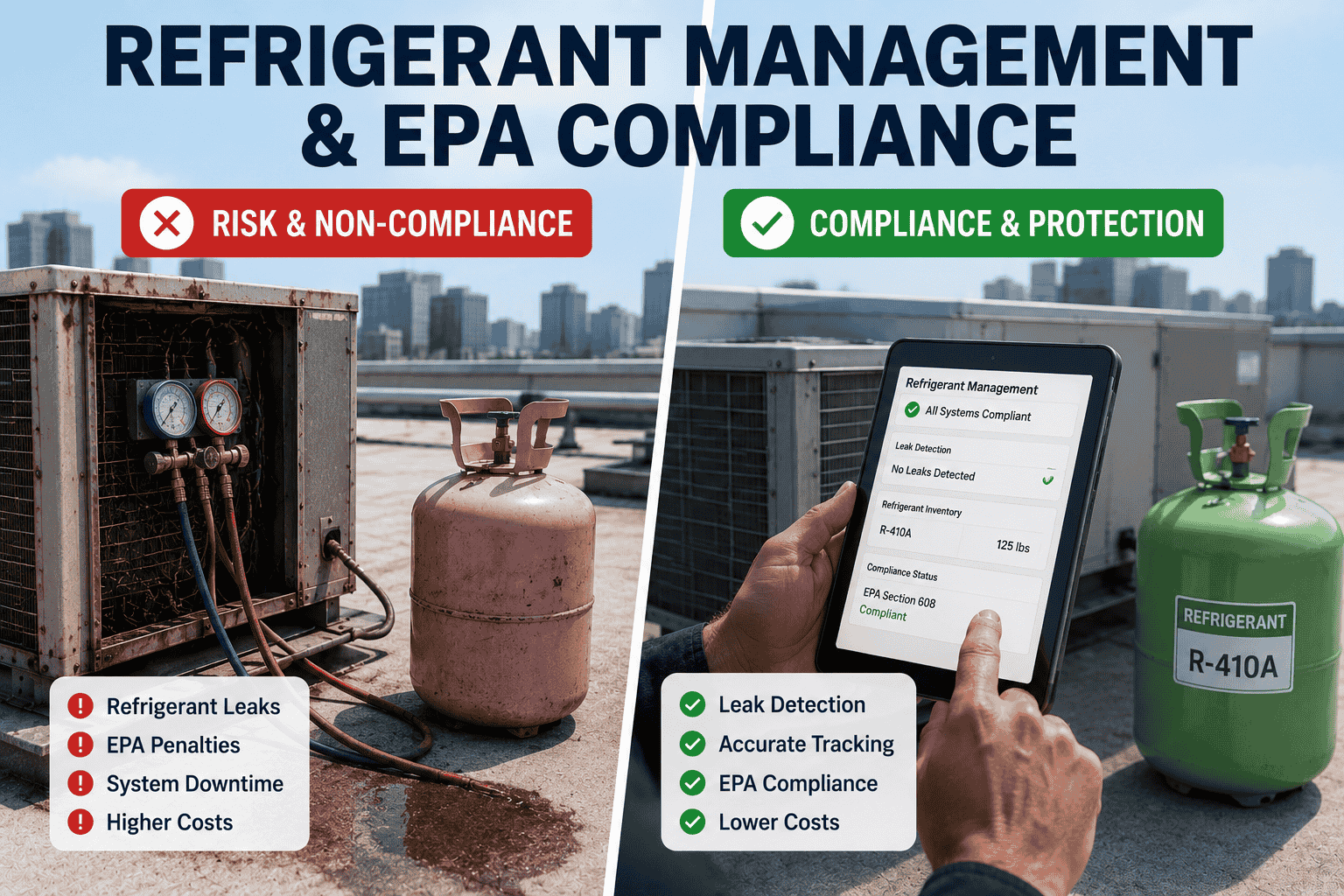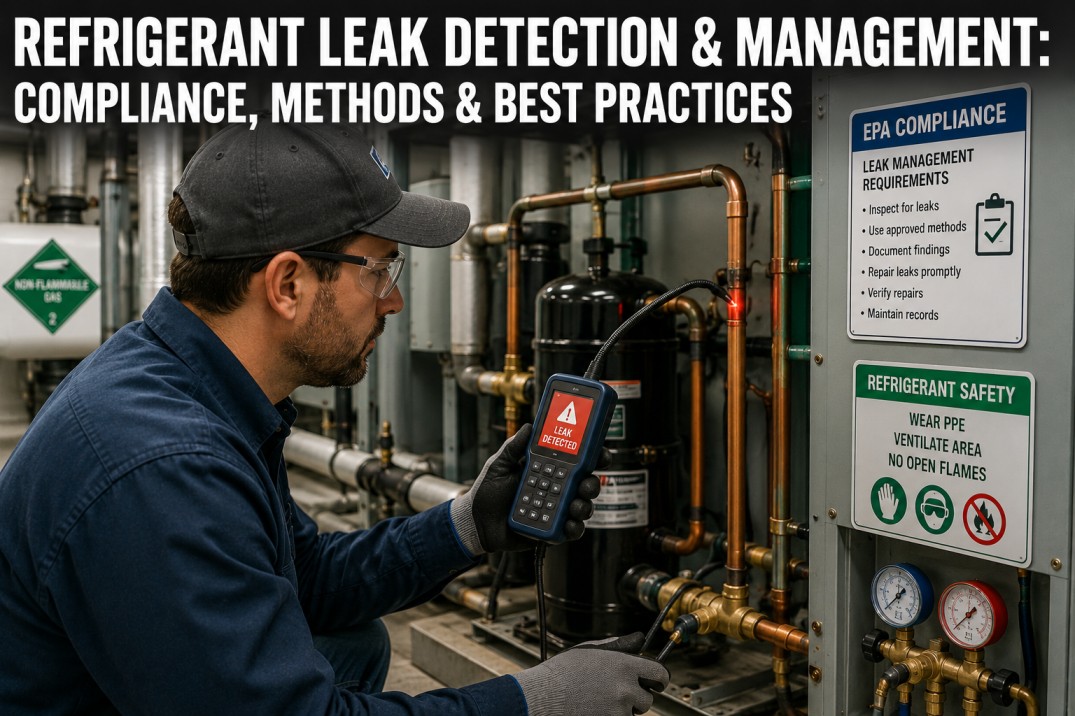
Refrigerant leak detection and management is both a regulatory requirement under EPA Section 608 and an economic necessity for commercial building owners. With refrigerant costs rising dramatically due to HFC allocation cuts under the AIM Act and environmental regulations tightening globally, an effective leak detection program can reduce refrigerant loss by 60% to 80%, save thousands in replacement refrigerant costs, and ensure compliance with increasingly stringent reporting requirements. This guide covers every aspect of refrigerant leak management from detection methods and monitoring systems through repair documentation, reporting protocols, and compliance strategies.
Detect, Track, and Manage Refrigerant Leaks Systematically
iFactory's Compliance Management module provides complete refrigerant leak tracking with automated EPA reporting, repair documentation, and compliance deadline alerts. Book a demo to see how structured leak management reduces cost and regulatory risk.
EPA Section 608 Leak Detection Requirements: What the Law Requires
Federal regulations mandate specific leak detection, repair, and reporting activities based on system charge size.
| System Charge Size | Leak Detection Required | Repair Timeline | Verification Test | Reporting |
|---|---|---|---|---|
| 50-200 lbs | Annual leak test required | 30 days to repair | None required | Annual report to EPA |
| 200-500 lbs | Semi-annual leak test required | 30 days to repair | Required after repair | Semi-annual report to EPA |
| 500+ lbs (comfort cooling) | Quarterly leak test required | 30 days to repair | Required after repair | Quarterly report to EPA |
| 500+ lbs (commercial refrigeration) | Monthly leak test required | 30 days to repair | Required after repair | Monthly report to EPA |
| 2,000+ lbs | Continuous monitoring system required | 30 days to repair | Required after repair | Monthly + immediate leak notification |
Leak Detection Methods: Comparing Technologies for HVAC Applications
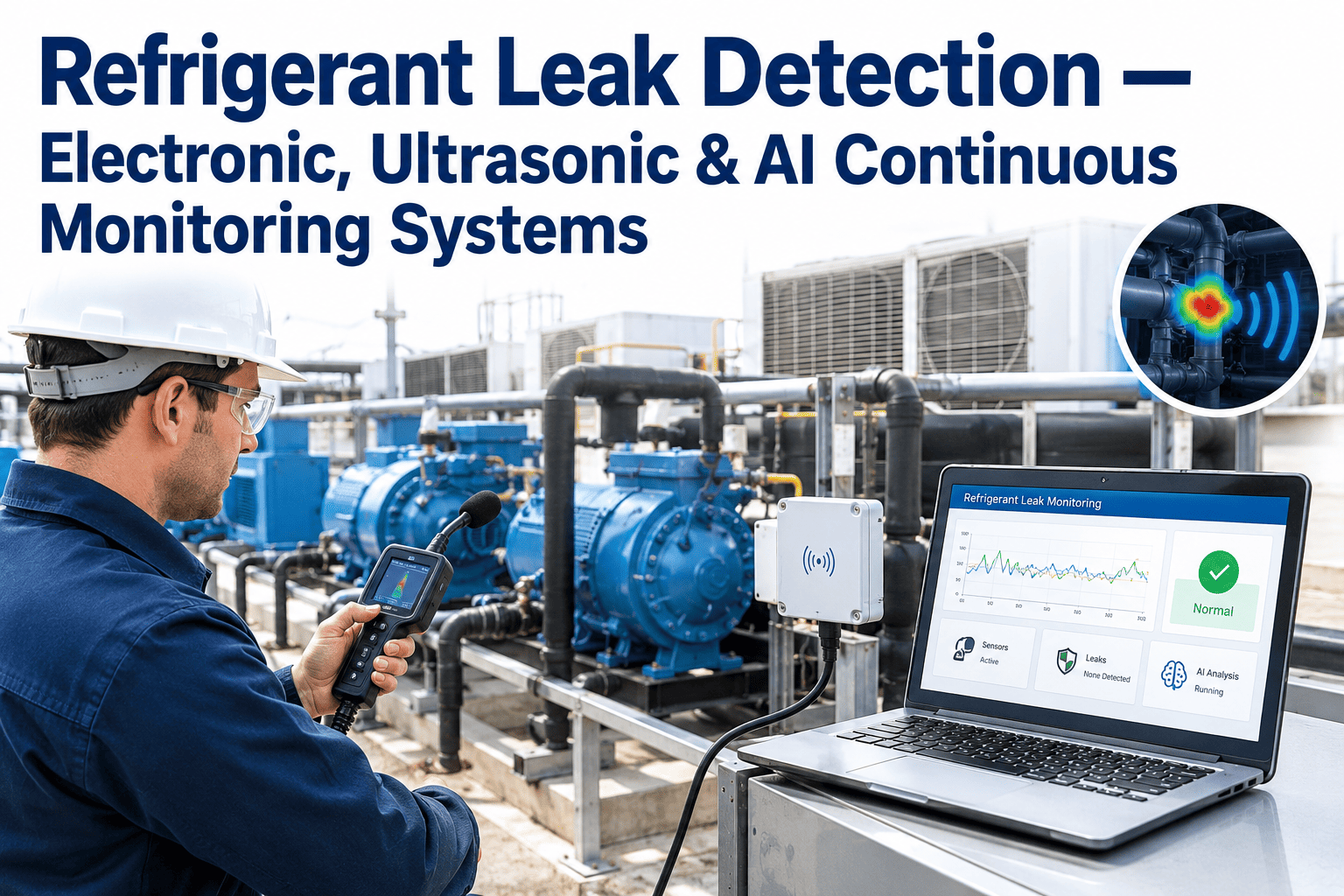
Different detection methods serve different purposes from routine leak checks to pinpointing repair locations.
Electronic Leak Detectors
Handheld devices using heated diode, infrared, or ultrasonic sensors. Sensitivity: 0.1-0.5 oz/yr. Best for: pinpointing leak location during service. Cost: $200-1,500. Must be A2L-rated for R-32/R-454B. Most common tool for service technicians.
Ultrasonic Leak Detection
Detects high-frequency sound of gas escaping through an orifice. Sensitivity: depends on pressure differential. Best for: locating leaks in pressurized systems without contaminating refrigerant. Cost: $500-3,000. Works on any refrigerant type.
Dye Injection
Fluorescent dye injected into system, visible under UV light. Sensitivity: visible at 3-5 oz/yr leak rate. Best for: slow leaks hard to find by other methods. Cost: $20-50 per application. Note: may clog expansion valves if overused.
Continuous Monitoring Systems
Fixed sensors installed in equipment rooms connected to alarm system. Detect refrigerant concentration in air. Sensitivity: 25% of LFL for A2L, 5 ppm for HFC. Cost: $2K-20K per system. Required for systems with 2,000+ lbs charge.
Automate Refrigerant Compliance Tracking and Reporting
iFactory's platform tracks refrigerant usage, calculates leak rates, generates compliance reports, and alerts you to regulatory deadlines automatically. Book a demo to see how automated compliance management eliminates manual paperwork.
Leak Repair Documentation: What EPA Requires for Compliance
Proper documentation of leak repairs is essential for EPA compliance and protecting against enforcement actions.
Pre-Repair Requirements
Before repair: verify leak location using approved detection method, document initial system charge, calculate annual leak rate (total refrigerant added / full charge x 100%), determine if system exceeds EPA leak rate threshold (30% for commercial refrigeration, 20% for comfort cooling, 10% for industrial process).
Repair Documentation
Record: date of leak discovery, detection method used, exact leak location, repair method (braze, replace component, tighten fitting), technician name and EPA certification number, refrigerant type and quantity added, system operating pressures before and after repair, and any components replaced.
Post-Repair Verification
After repair: conduct verification test per EPA requirements (pressure test, standing vacuum, or operation test depending on system size), document test results, calculate post-repair leak rate, update system maintenance log. If leak rate still exceeds threshold after two repair attempts, submit retrofit or replacement plan to EPA.
Leak Prevention: Design, Installation & Maintenance Practices
Preventing leaks is more cost-effective than detecting and repairing them. Design and installation quality determine long-term leak rates.
Industry Average Leak Rate
Commercial building average. Poor installations: 30-50% annually. Best-in-class: under 5% annually. Leak rate directly correlates with installation quality, maintenance frequency, and component quality.
Installation Quality Impact
Proper brazing with nitrogen purge reduces joint failures 80%. Vibration isolation extends fitting life. Schrader valve caps reduce valve leaks 90%. Installation quality is the single largest determinant of leak rate over equipment life.
Preventive Maintenance Impact
Regular inspection catches loose fittings and early corrosion. Torque checks on mechanical connections. Coil cleaning prevents chemical corrosion of tubes. Annual leak testing catches small leaks before they become large.
Retrofit vs Replace Decision
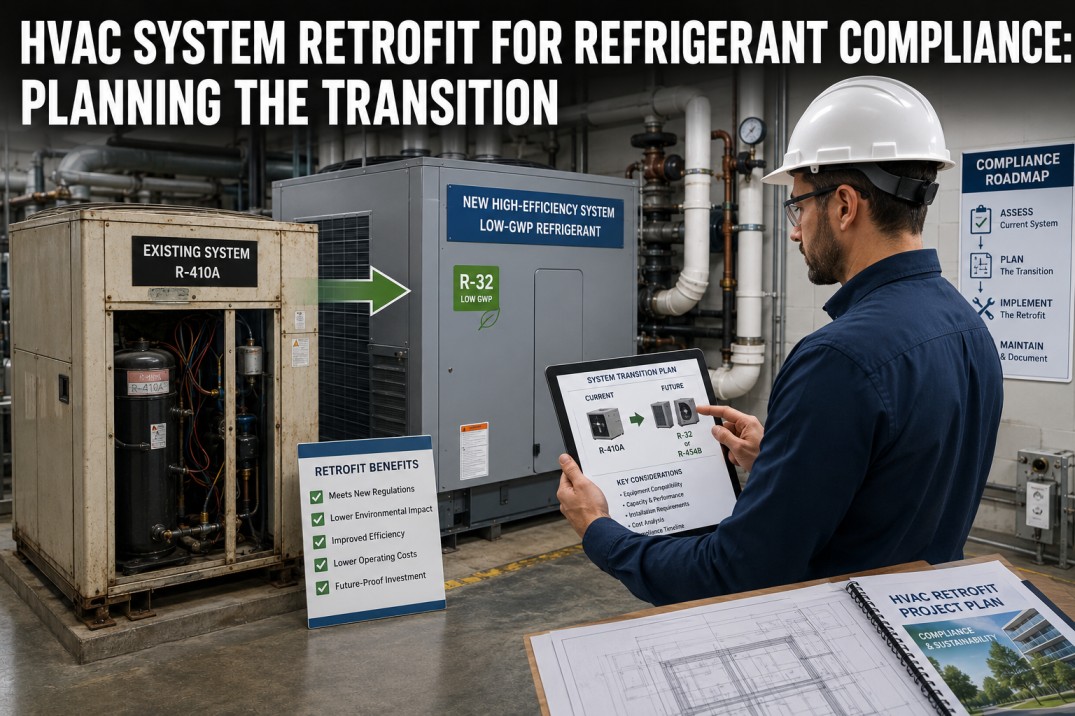
Multiple leaks indicate systemic issues. Equipment over 15 years with multiple leaks: replace. Equipment under 10 years with single leak: repair. Between 10-15 years: evaluate on case-by-case basis considering condition, efficiency, and refrigerant availability.
Building a Refrigerant Management Plan: Program Structure
A formal refrigerant management plan documents procedures, assigns responsibilities, and ensures consistent compliance.
Program Structure
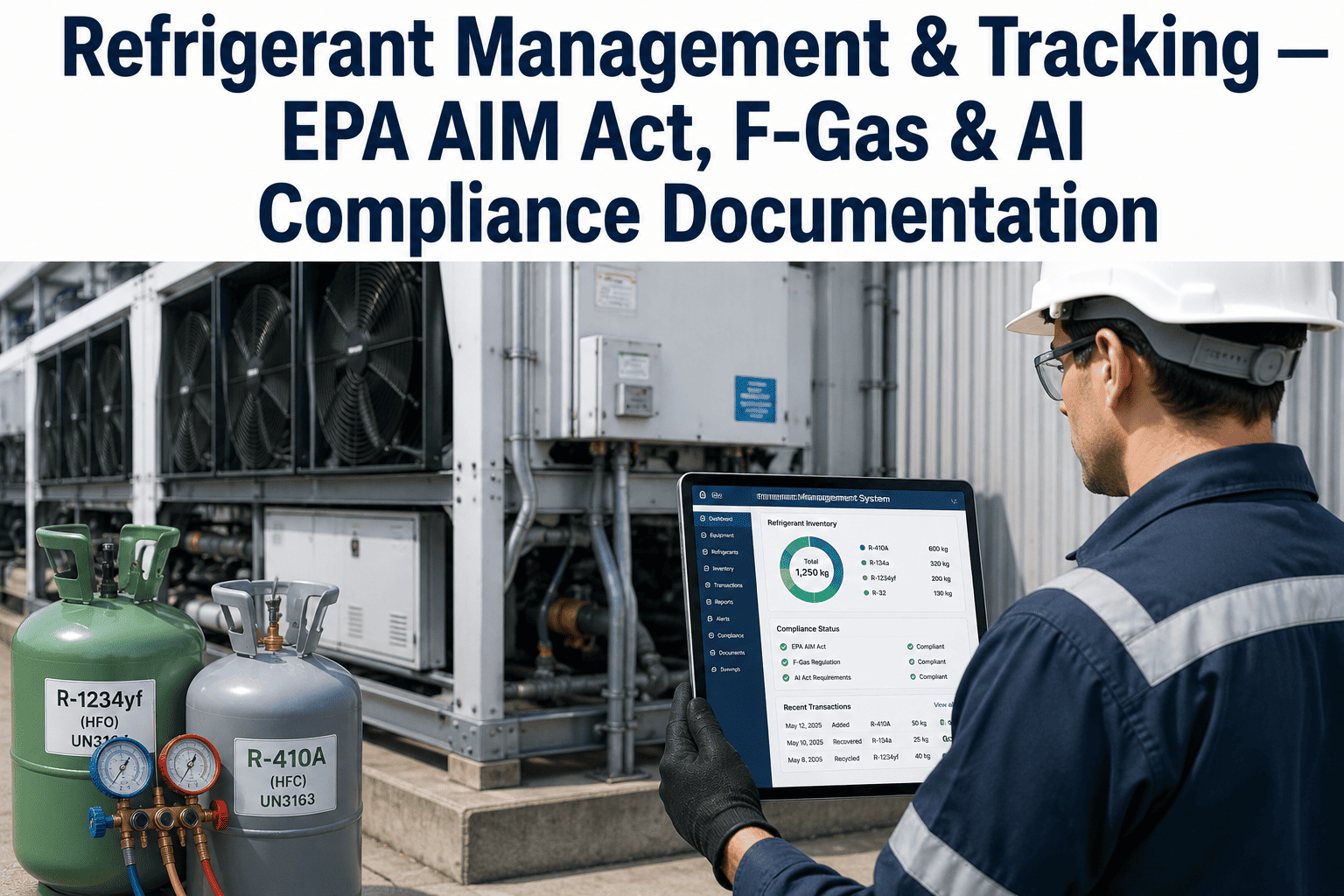
Designate refrigerant compliance manager responsible for all regulatory reporting. Establish leak testing schedule per EPA requirements for each system. Document standard operating procedures for leak detection, repair, verification, and recordkeeping. Maintain centralized refrigerant inventory tracking all purchases, usage, and disposal.
Recordkeeping System
Maintain records for each system: equipment ID, refrigerant type, full charge weight, installation date, all leak test dates and results, all repair dates and details, refrigerant added each service event, verification test results, and annual leak rate calculations. Retain records minimum 3 years per EPA requirement.
Continuous Improvement
Track leak rate trends by equipment type, age, and manufacturer. Identify high-leak-rate equipment for accelerated replacement. Analyze root causes of recurring leaks on same equipment. Benchmark program performance against industry averages. Review and update refrigerant management plan annually.
Frequently Asked Questions
What are the EPA leak detection requirements for commercial HVAC?
EPA Section 608 requires leak detection based on system charge size. Systems with 50+ lbs of refrigerant must have periodic leak tests: annually for 50-200 lbs, semi-annually for 200-500 lbs, quarterly for 500+ lbs comfort cooling. Leaks must be repaired within 30 days of discovery. If the annual leak rate exceeds 20% for comfort cooling 30% for commercial refrigeration and the owner elects not to repair, a retrofit or retirement plan must be submitted to the EPA.
How do I detect refrigerant leaks?
Five methods: electronic leak detectors handheld devices sensitive to 0.1-0.5 oz/yr for pinpointing, ultrasonic detection that hears gas escaping for pressurized systems, dye injection with UV light for slow hard-to-find leaks, bubble test with soap solution for accessible joints, and continuous monitoring systems with fixed sensors for large systems over 2,000 lbs. For routine annual leak tests, electronic detectors are most common. For pinpointing after a measured loss, combination of electronic and bubble test is standard.
How much refrigerant loss is acceptable before repair is required?
Under EPA Section 608, repair is required when the annual leak rate exceeds: 20% for comfort cooling (AC, chillers), 30% for commercial refrigeration, 10% for industrial process refrigeration. Annual leak rate = total refrigerant added over 12 months / full charge weight x 100. If the rate exceeds threshold, you have 30 days to complete repair. After two unsuccessful repair attempts, you must submit a retrofit or replacement plan.
What documentation is required for refrigerant leak repairs?
Required documentation for each repair event: date and location of leak discovery, detection method used, exact leak location, repair method, technician name and EPA certification number, refrigerant type and quantity added, pre- and post-repair operating pressures, verification test method and results, and updated annual leak rate calculation. Records must be maintained for a minimum of 3 years and be available for EPA inspection upon request.
How do I create a refrigerant management plan?
A comprehensive refrigerant management plan includes: designated compliance manager, complete equipment inventory with refrigerant types and charge quantities, leak testing schedule per EPA requirements, standard procedures for leak detection, repair, and verification, documentation system for all refrigerant transactions, training requirements for technicians, emergency response procedures, continuous improvement metrics, and annual program review cycle. The plan should be a living document reviewed and updated annually.
Complete Refrigerant Leak Management With iFactory
iFactory's Compliance Management delivers end-to-end refrigerant leak management from detection tracking and repair documentation through EPA reporting and continuous improvement analytics. Book a demo to see how data-driven leak management protects your operation.