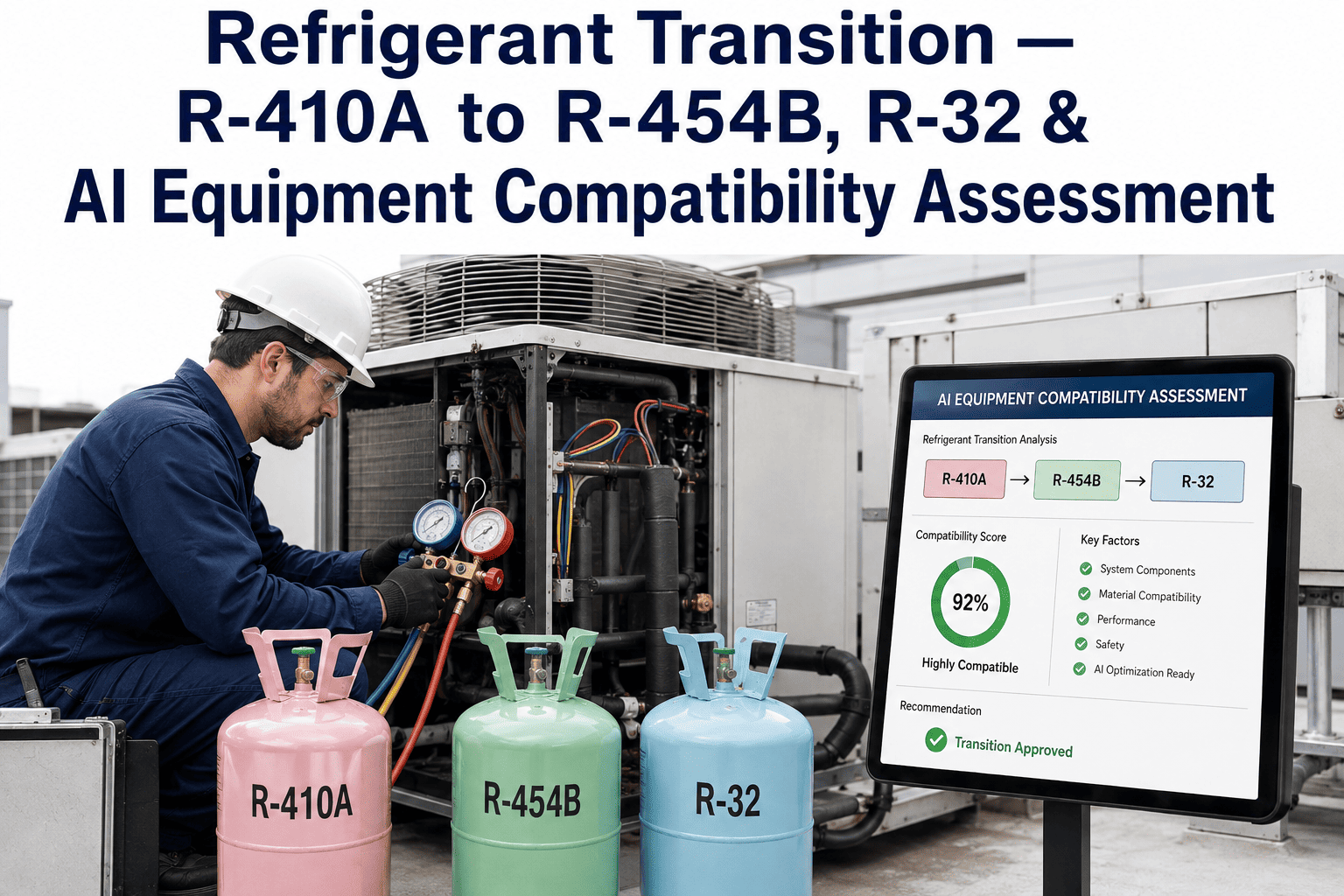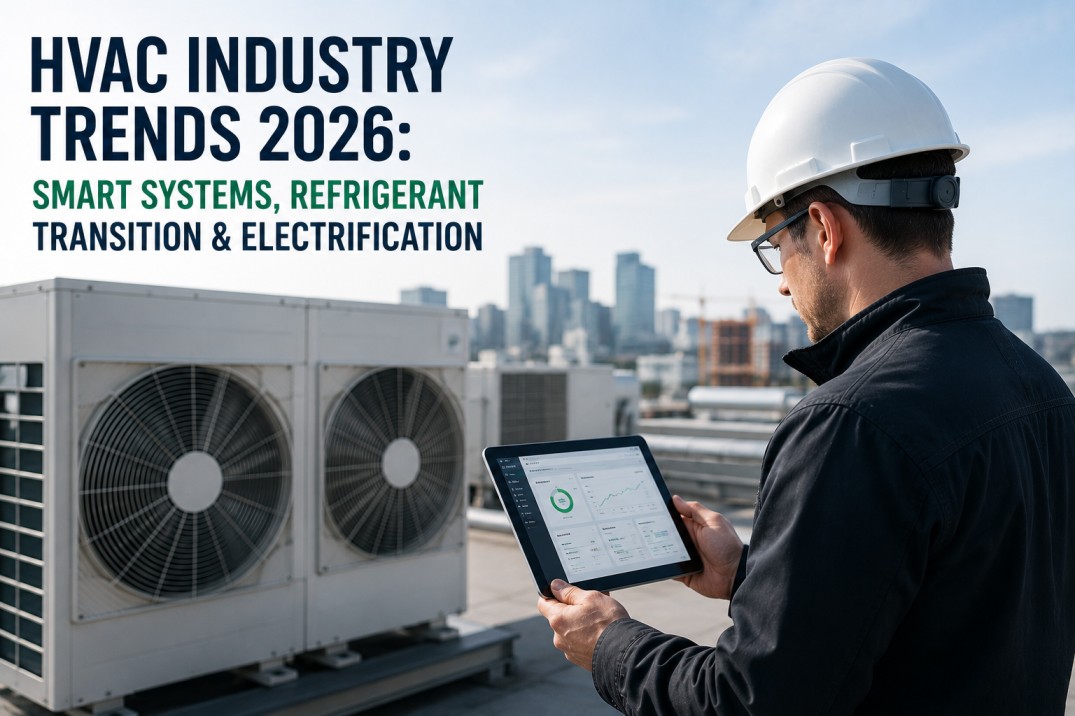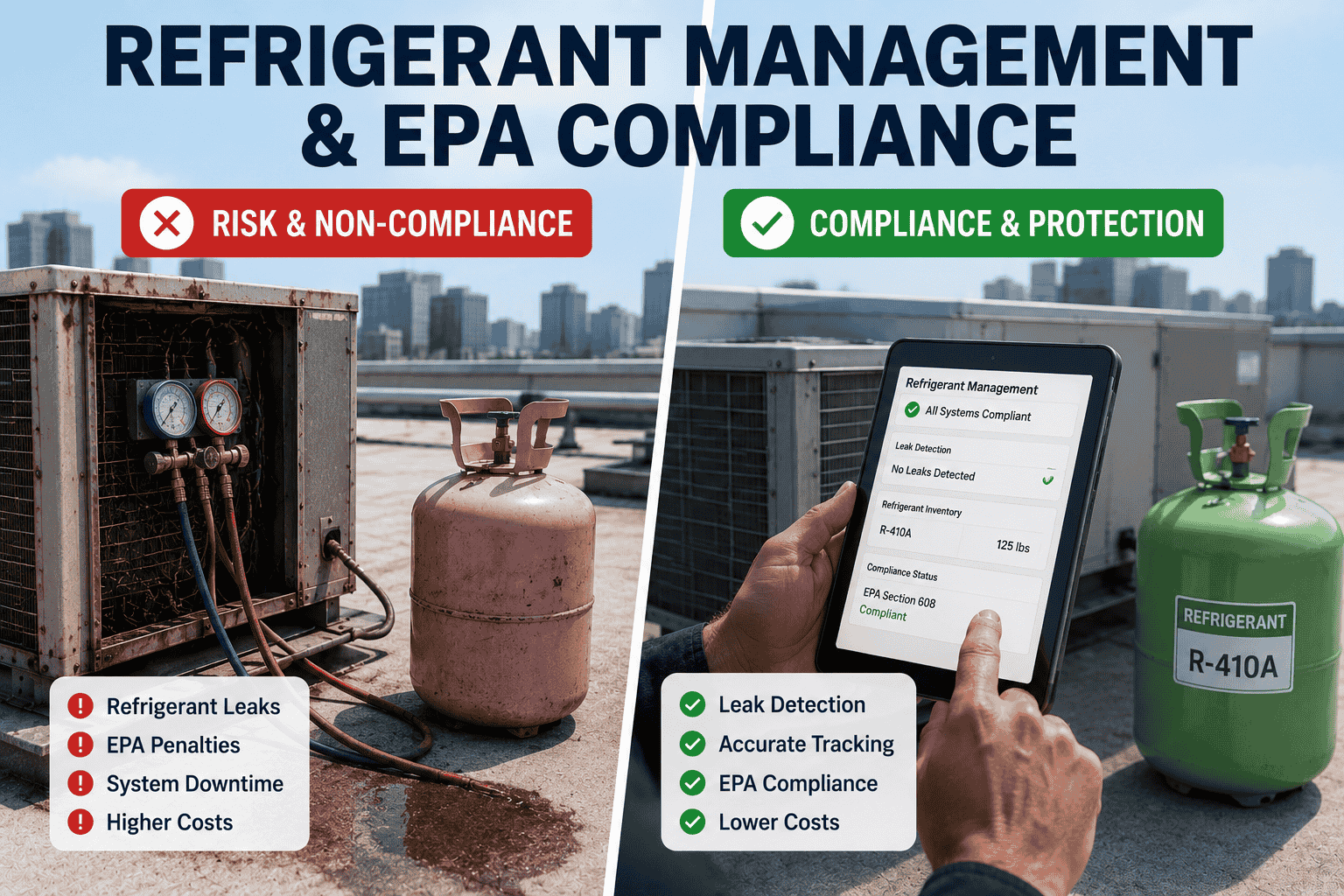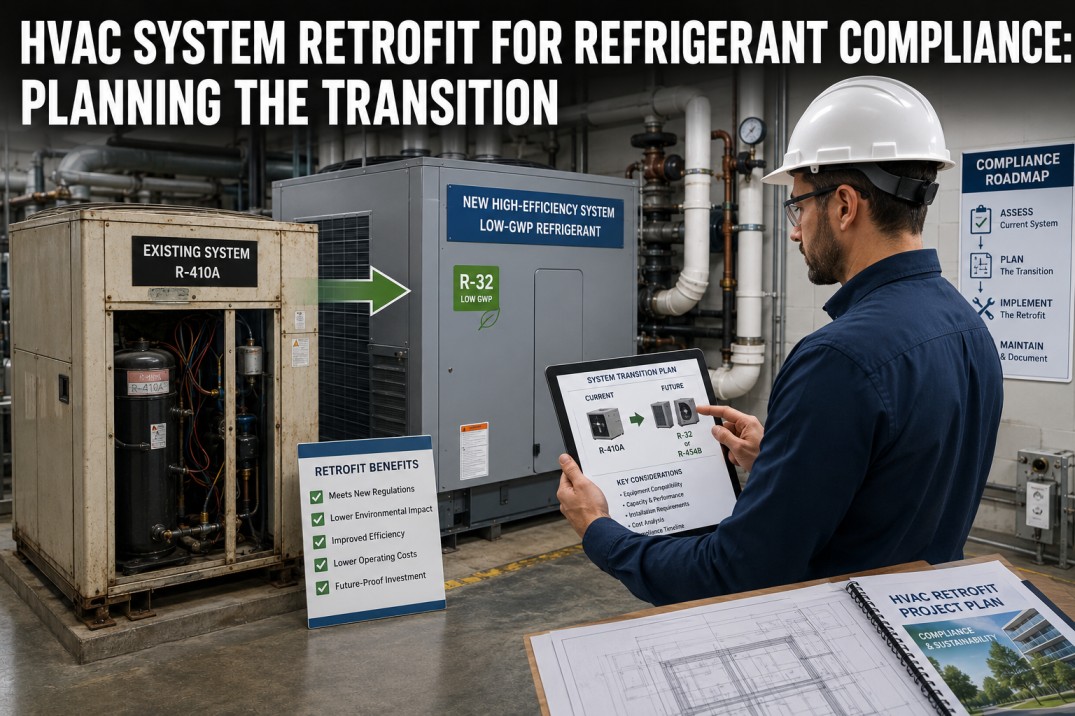
As the AIM Act phasedown progresses and R-410A becomes increasingly scarce and expensive, facility managers face a critical decision for every piece of HVAC equipment: retrofit the existing system to use a low-GWP alternative refrigerant or replace the entire system with new equipment designed for R-32 or R-454B. Making the right choice requires a thorough assessment of equipment age, condition, efficiency, refrigerant type, and lifecycle economics. A well-planned transition strategy minimizes disruption, controls costs, and ensures compliance with evolving refrigerant regulations while optimizing the long-term performance and reliability of your HVAC infrastructure.
Plan Your Refrigerant Retrofit Strategy With Asset Insights
iFactory's Asset Management module provides equipment age, condition, and lifecycle cost data to drive retrofit vs replace decisions. Book a demo to see how data-driven asset analytics optimizes your refrigerant transition.
Equipment Assessment: Evaluating Retrofit Feasibility
Not every system is a good retrofit candidate. A structured assessment determines which path is right for each asset.
Age Assessment
Under 5 years: strong retrofit candidate. 5-10 years: evaluate condition carefully. 10-15 years: likely better to replace. Over 15 years: replace immediately. Equipment age is the single strongest predictor of retrofit vs replace economics.
Condition Assessment
Evaluate: compressor condition (amp draw, vibration, oil analysis), heat exchanger condition (tubewall thickness, coil condition, approach temperatures), controls capability (can it support new refrigerant charge optimization), and piping condition (corrosion, leak history, insulation).
Efficiency Assessment
Compare current equipment efficiency to new minimum standards. Pre-2010 equipment: 30-50% less efficient than current minimum. Pre-2015: 15-30% less. Post-2020: 0-10% less. The energy savings from replacement alone can justify the investment independent of refrigerant transition.
Refrigerant Compatibility
Retrofit must use a refrigerant compatible with existing compressor oil and materials. R-410A systems: cannot be retrofitted to R-32 or R-454B. R-22 systems: some can be retrofitted to R-427A, R-438A, or R-407C but with 10-20% capacity loss. Full replacement is typically preferred.
Retrofit Refrigerant Options: What Can Replace Existing Refrigerants
Different existing refrigerant types have different retrofit pathways with varying complexity and cost.
| Existing Refrigerant | Retrofit Options | Capacity Change | Oil Change Required | Complexity |
|---|---|---|---|---|
| R-22 | R-427A, R-438A, R-407C | -10 to -20% | Yes (POE) | Moderate: oil flush, filter changes |
| R-22 | R-454B (new equipment only) | N/A (replace) | N/A | Full replacement required |
| R-410A | R-32 (new equipment only) | N/A (replace) | N/A | Full replacement required |
| R-410A | R-454B (new equipment only) | N/A (replace) | N/A | Full replacement required |
| R-404A | R-448A, R-449A, R-454A | -5 to +5% | No (POE) | Low: expansion valve adjustment |
| R-134a | R-513A, R-450A, R-1234yf | -5 to +5% | No (POE) | Low: minor charge adjustment |
Compare Retrofit vs Replace Economics Across Your Portfolio
iFactory's platform delivers lifecycle cost analysis, energy savings projections, and portfolio-wide transition planning. Book a demo to see how structured financial analysis guides equipment decisions.
Replace vs Retrofit Decision Framework: Financial Analysis
A systematic financial comparison ensures the decision is based on total lifecycle cost, not just upfront expense.
Simple Payback Calculation
Retrofit cost: refrigerant conversion + oil flush + filter driers + labor = $2K-8K per system. Replacement cost: new equipment + installation + disposal = $10K-50K per system. Payback = (replacement cost - retrofit cost) / annual energy savings from replacement. If payback is under 4 years, replace. If over 6 years, retrofit. Between 4-6, evaluate further.
Total Lifecycle Cost Comparison
Retrofit: lower upfront cost, existing efficiency, shorter remaining life 5-10 years, continuing refrigerant cost exposure. Replacement: higher upfront, higher efficiency 15-30% savings, longer life 15-20 years, no refrigerant transition exposure. 10-year lifecycle cost including energy, maintenance, and refrigerant typically favors replacement for equipment over 10 years old.
Non-Financial Factors
Consider: refrigerant availability risk (R-410A availability declining rapidly), technician familiarity (A2L requires new certification and tools), manufacturer support (OEM support for R-410A equipment declining), sustainability goals (scope 1 emissions reduction), and tenant/market expectations for modern efficient buildings.
Refrigerant Transition Plan: Phased Implementation Over 3-5 Years
A phased transition spreads capital expenditure across budget cycles while prioritizing highest-risk equipment.
Year 1: Immediate Action
Replace all R-22 equipment as highest priority due to $50-100/lb refrigerant cost. Audit and inventory all refrigerant-containing equipment across the portfolio. Begin conversion of large centrifugal chillers from R-123 to low-GWP alternatives where feasible. This year addresses the most urgent compliance and cost risks.
Years 2-3: Core Transition
Replace R-410A RTUs over 12 years old with R-454B models. Replace R-410A chillers over 15 years old with R-454B or R-513A. Replace remaining pre-2020 R-410A equipment. Stockpile R-410A at current prices for post-2025 service needs of remaining newer equipment.
Years 4-5: Completion & Optimization
Complete transition of all equipment under 10 years old at end of service life. Transition technicians to A2L handling as new equipment is commissioned. Update refrigerant management plan and compliance documentation. Monitor refrigerant market for supply and pricing trends to optimize remaining equipment service strategy.
Transition Cost Analysis: Budgeting 2026-2030
Understanding and budgeting for the transition costs across the full portfolio enables smooth financial planning.
Equipment Premium
R-32 and R-454B equipment costs 5-15% more than equivalent R-410A models initially. Premium is expected to decrease as production volumes increase 2026-2028. For a 100K sq ft building replacing 10 RTUs: $5K-15K premium.
Refrigerant Cost Change
R-32 and R-454B cost 40-60% less per pound than R-410A. Typical RTU charge: 10-20 lbs. Savings per RTU: $50-200 per recharge. Over system life: $500-2,000 in refrigerant savings partially offsetting equipment premium.
Retrofit Conversion Cost
R-22 to alternative retrofit: $2K-5K for small systems, $5K-8K for large. Includes refrigerant, oil flush, filter driers, expansion valve adjustment, labor, and verification testing. Not recommended for R-410A to R-32/R-454B (not feasible).
Training & Tools
A2L certification course: $200-400 per technician. Leak detector: $500-1,500. Recovery machine: $500-1,500. Cylinder adapters: $100-300. Total: $1,300-3,700 initial investment per technician. Ongoing annual recertification: $100-200.
Frequently Asked Questions
Can I retrofit my existing R-410A system to use R-32 or R-454B?
No. R-410A systems cannot be retrofitted to R-32 or R-454B. The compressor, expansion valve, heat exchangers, and safety controls are specifically designed for each refrigerant. Attempting retrofit risks compressor failure, efficiency loss, and voided warranty. New equipment designed for the specific low-GWP refrigerant is required. However, R-22 systems can be retrofitted to interim refrigerants like R-427A or R-438A with 10-20% capacity loss and oil flush requirements.
What is the cost difference between retrofit and replacement?
Retrofit: $2K-8K per system (R-22 to alternative) for materials and labor. Replacement: $10K-50K per system depending on size and complexity. However, replacement includes: 15-30% higher efficiency (energy savings offsetting capital cost), 15-20 year remaining life vs 5-10 for retrofitted equipment, zero refrigerant transition risk, and manufacturer warranty. Ten-year lifecycle cost typically favors replacement for equipment over 10 years old.
How long does a refrigerant retrofit take?
R-22 to alternative retrofit: 4-8 hours per system for a skilled technician including refrigerant recovery, oil flush, filter drier replacement, expansion valve adjustment, evacuation, recharge, and verification testing. System downtime: 1-2 days accounting for scheduling and access. Full replacement: 2-5 days per system including removal, installation, commissioning, and testing.
What equipment should I prioritize for replacement?
Tier 1 replace immediately: All R-22 equipment regardless of age. R-22 at $50-100/lb makes any service event economically unviable. Tier 2 replace by 2028: R-410A equipment over 12 years old where refrigerant cost exposure is highest and efficiency improvement most significant. Tier 3 replace by 2030: R-410A equipment 8-12 years old. Tier 4 monitor: Equipment under 8 years old stockpile R-410A for service needs.
How do I budget for the refrigerant transition?
For a 100K sq ft building with typical equipment mix: 2026-2027: $20K-50K for R-22 replacement and first phase of R-410A replacement. 2028-2029: $40K-80K for remaining R-410A equipment over 12 years. 2030-2032: $30K-60K for remaining equipment reaching end of life. Total 2026-2032: $90K-190K. Spread over 7 years: $13K-27K per year. Compare to unplanned spending: $50K-150K in emergency replacement if deferred.
Complete Refrigerant Transition Planning With iFactory
iFactory's Asset Management delivers end-to-end transition support from equipment assessment through retrofit vs replace analysis, budget planning, and compliance tracking. Book a demo to see how data-driven transition planning minimizes cost and risk.