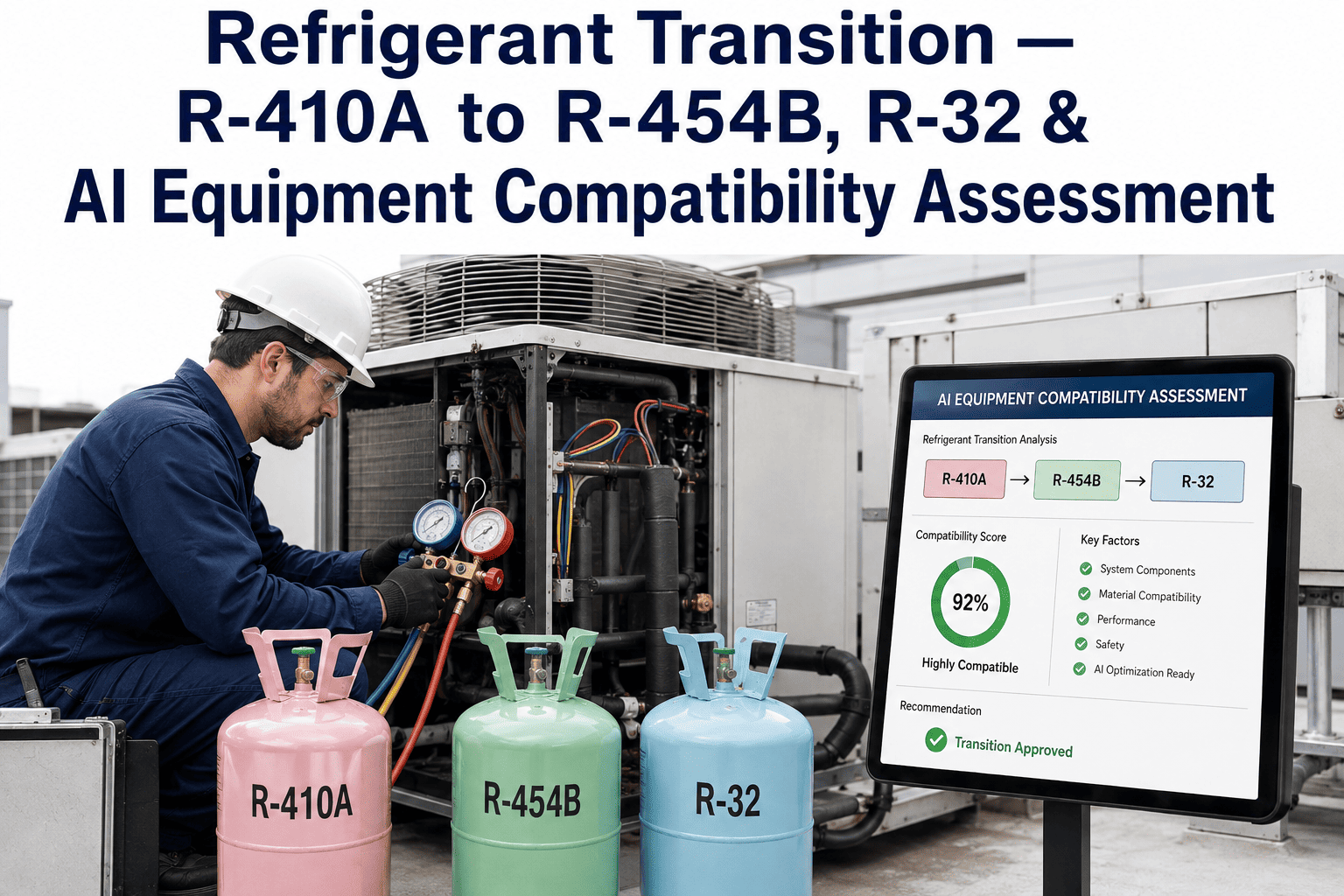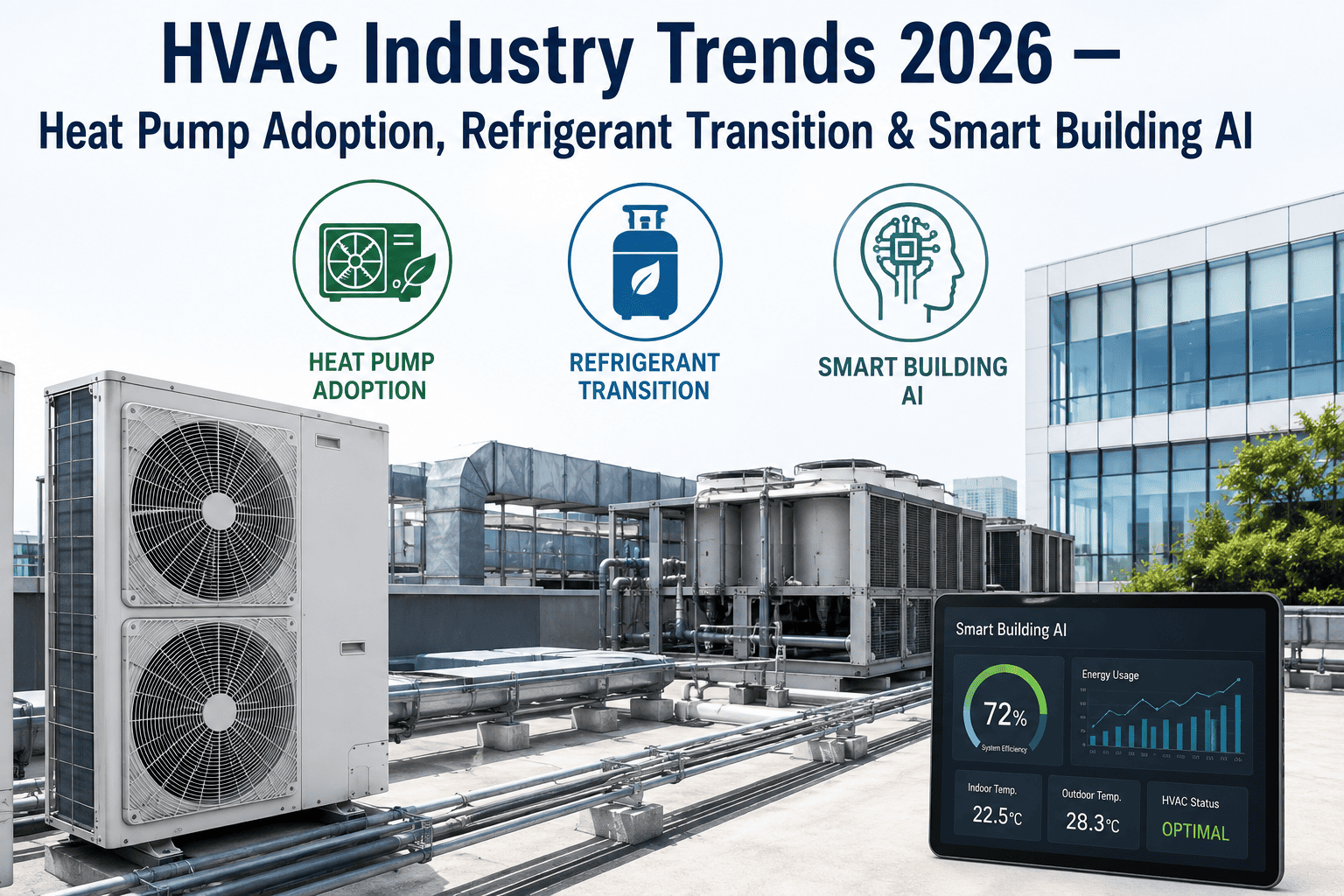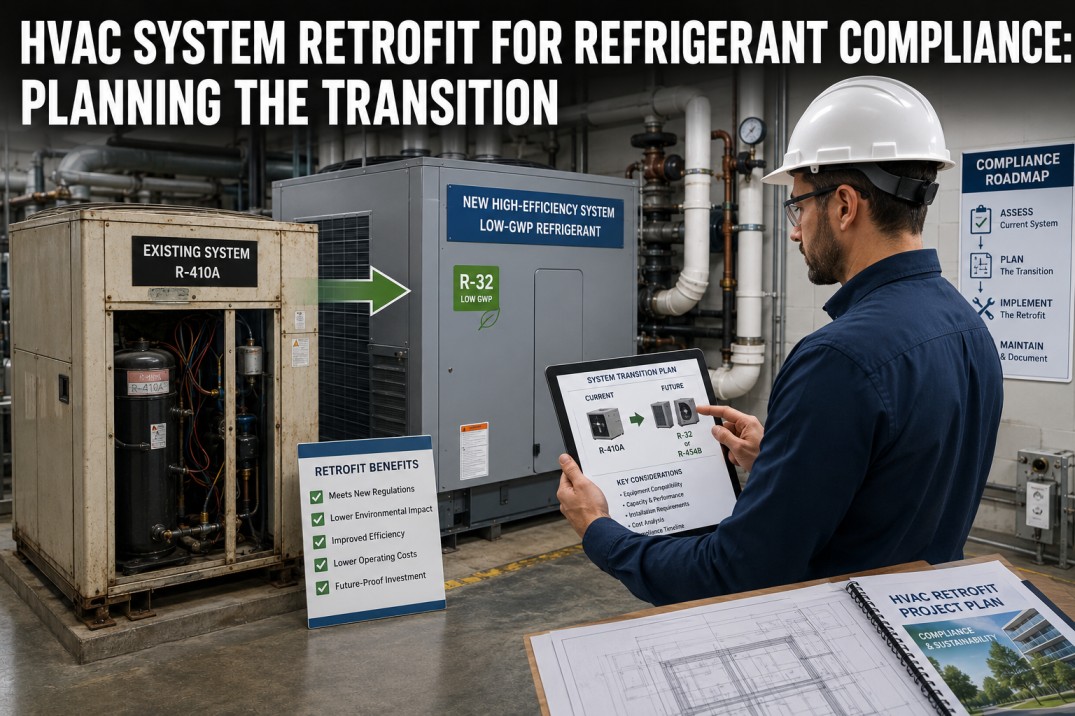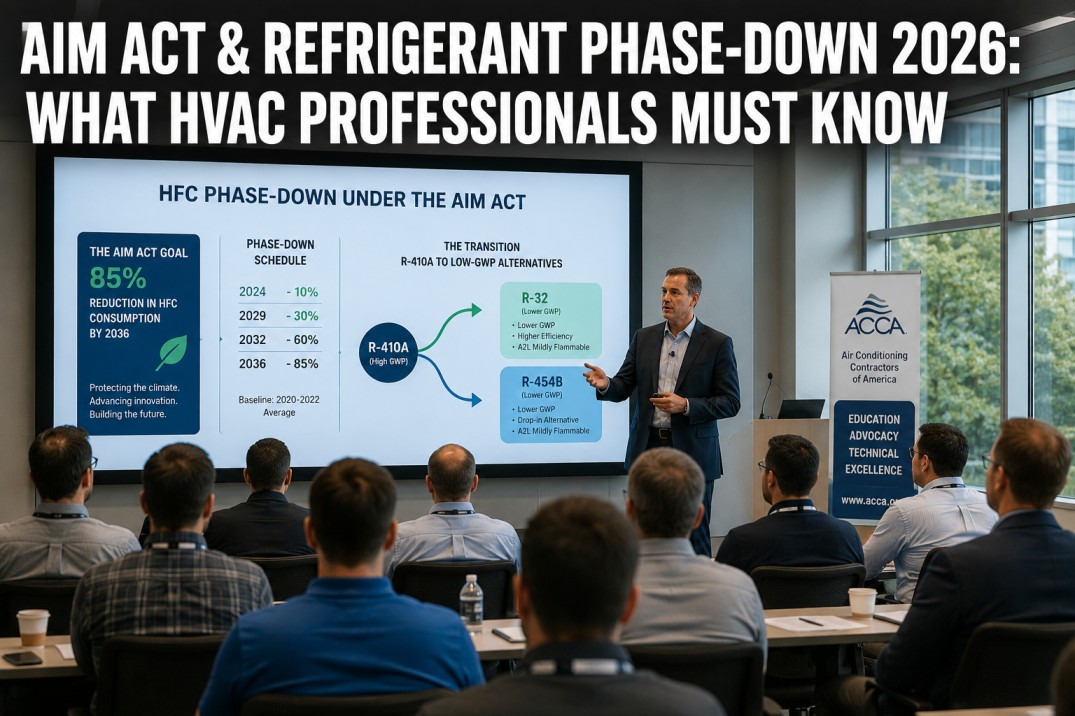
The AIM Act American Innovation and Manufacturing Act of 2020 is transforming the HVAC industry by mandating an 85% reduction in HFC production and consumption by 2036 from a baseline of 2020 to 2023 levels. With Step 2 of the phasedown taking effect in 2027 reducing HFC allowances by 70%, 2026 is the critical year for HVAC professionals to transition equipment specifications, train technicians, and plan refrigerant procurement strategies. Understanding the regulatory milestones, allowable refrigerants, and equipment transition pathways is essential for compliance and cost management.
Navigate the AIM Act Phase-Down With Compliance Management
iFactory's Compliance Management module tracks regulatory deadlines, refrigerant inventory, and equipment transition status. Book a demo to see how automated compliance tracking simplifies the refrigerant transition.
HFC Phase-Down Timeline: Key Milestones From 2024 to 2036
The phasedown follows a stepped schedule with increasing impact on refrigerant availability and pricing each year.
| Step | Year | HFC Allowance | Cumulative Reduction | Practical Impact |
|---|---|---|---|---|
| Step 1 | 2024-2026 | 128.1 MMTCO2e | 40% | R-410A prices rise 50-100%, supply tightening, early adopters transition |
| Step 2 | 2027-2028 | 76.8 MMTCO2e | 70% | R-410A effectively unavailable for new equipment, A2L required for all new installations |
| Step 3 | 2029-2033 | 56.4 MMTCO2e | 80% | Only reclaimed/recycled R-410A available for service, significant cost escalation |
| Step 4 | 2034-2035 | 38.4 MMTCO2e | 82% | HFC prices at 5-10x 2024 levels, most remaining R-410A equipment scheduled for retirement |
| Final | 2036+ | 28.8 MMTCO2e | 85% | HFCs restricted to critical uses only, all mainstream HVAC uses low-GWP |
How the Phase-Down Impacts Existing HVAC Equipment
Different equipment vintages face different compliance timelines and cost implications.
New Equipment (2025+)
All new equipment must use low-GWP refrigerants (GWP under 750). R-32 and R-454B are the primary replacements for R-410A in commercial AC. Equipment designed for these refrigerants has been available from all major manufacturers since 2024. 5-15% cost premium vs R-410A equipment but 40-60% lower refrigerant cost per pound.
Existing R-410A (Under 10 years)
Can continue operation with R-410A for remaining service life. Impact: refrigerant cost increases make leak repair more economically critical. Extended warranties on existing equipment become more valuable. Plan for eventual replacement 2030-2035 when R-410A service becomes cost-prohibitive.
Existing R-22 (Over 20 years)
R-22 has been phased out since 2020. Only reclaimed/recycled R-22 available at $50-100/lb. Any R-22 equipment still in service should be replaced immediately. The cost of a single R-22 compressor failure and refrigerant recharge can exceed the cost of full replacement with modern low-GWP equipment.
Plan Your Refrigerant Transition With Data-Driven Tools
iFactory's platform provides equipment inventory, refrigerant tracking, compliance deadline alerts, and cost forecasting. Book a demo to see how structured transition planning minimizes regulatory risk.
Low-GWP Refrigerant Options: What Replaces R-410A
Two primary alternatives emerge as the industry standard replacements, with different characteristics for different applications.
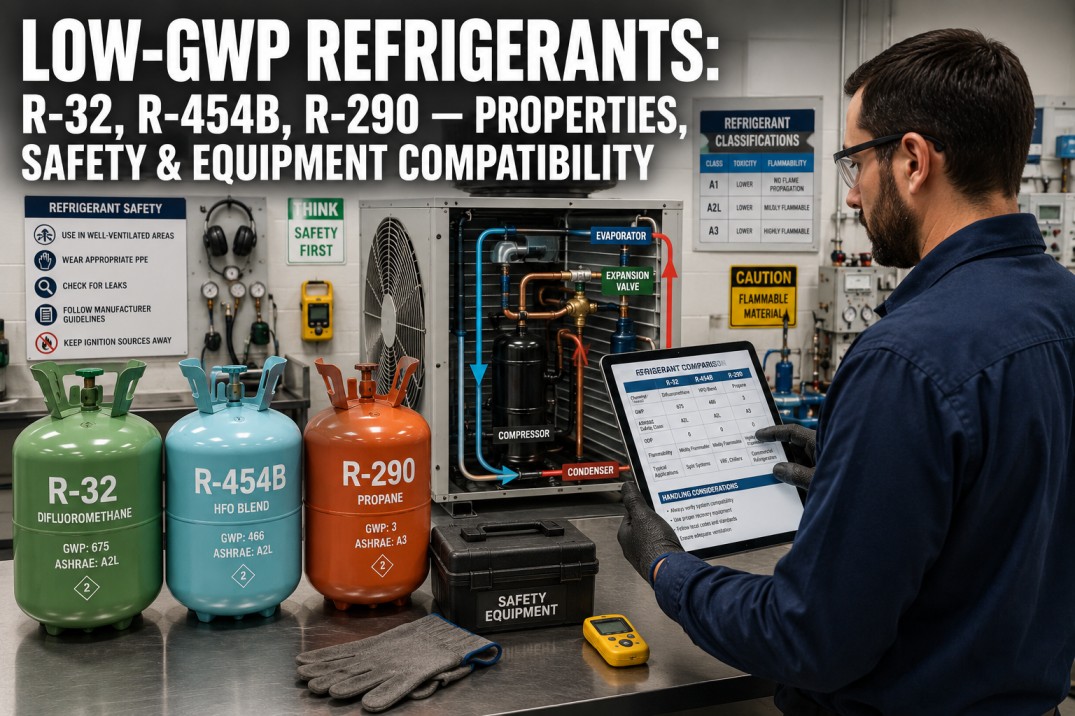
R-32 (GWP 675)
A2L mildly flammable. Capacity: 105-108% of R-410A. COP: 100-103%. Equipment cost premium: 5-15%. Available from: Daikin, Mitsubishi, Fujitsu, Goodman. Most widely adopted globally with over 100 million units installed in Japan and Europe.
R-454B (GWP 466)
A2L mildly flammable. Capacity: 98-102% of R-410A. COP: 100-102%. Equipment cost premium: 5-10%. Available from: Carrier, Trane, York, Lennox. Lower GWP than R-32 with very similar performance to R-410A.
R-290 Propane (GWP 3)
A3 highly flammable. Charge limits restrict to small systems. GWP effectively zero. No future regulatory risk. Available for reach-in coolers, ice machines, small splits. Not suitable for large commercial AC or chillers.
R-1234yf (GWP 4)
A2L mildly flammable. Capacity: 85-90% of R-410A. Generally not used for stationary HVAC. Primary application remains automotive AC where it has been standard since 2017.
Compliance Planning: Building Your 2026-2030 Transition Strategy
A structured transition plan minimizes regulatory risk and optimizes capital expenditure timing.
Risk Assessment & Inventory
Audit every piece of equipment: refrigerant type, charge quantity, age, condition, and criticality. Identify high-risk assets: R-22 equipment (replace immediately), R-410A equipment over 12 years old (plan replacement by 2028), and equipment with high charge quantities (greatest refrigerant cost exposure).
Strategic Procurement
Lock in refrigerant supply contracts for 2026-2028 at fixed prices. For new equipment, specify R-454B for chillers and large air handlers, R-32 for RTUs and splits. Negotiate manufacturer warranties that cover refrigerant cost escalation. Stockpile R-410A for existing equipment at current prices through 2026.
Training & Certification
Ensure all technicians complete EPA Section 608 A2L certification before 2027. Equip trucks with A2L-rated leak detectors and recovery machines. Update service procedures. Budget $500-1,000 per technician for training, tools, and certification.
Cost Impact of the Refrigerant Transition: Budgeting for Compliance
The transition carries significant but manageable costs spread across equipment, refrigerant, and training categories.
| Cost Category | 2026-2027 | 2028-2030 | 2031-2035 | Total (per 100K sq ft) |
|---|---|---|---|---|
| Refrigerant (R-410A premium) | +50-100% | +100-200% | +200-500% | $5K-25K incremental |
| New equipment premium | +5-15% | +5-10% | Standard | $10K-40K incremental |
| Training & certification | $500-1K per tech | $200-500 per tech | Minimal | $2K-5K |
| Tools & equipment | $1K-3K per truck | $500-1K per truck | Minimal | $3K-8K |
| Unplanned replacement | Varies | Varies | Varies | $15K-50K if deferred |
Frequently Asked Questions
What is the AIM Act and how does it affect HVAC?
The AIM Act directs the EPA to phasedown HFC production and consumption by 85% by 2036 through an allowance allocation system. For HVAC professionals, this means: R-410A GWP 2,088 is being restricted to achieve the phasedown targets. Step 1 2024-2026 reduced allowances 40% causing R-410A price increases. Step 2 2027-2029 reduces allowances 70% making R-410A effectively unavailable for new equipment. New equipment must use low-GWP alternatives R-32 or R-454B. Existing equipment can continue operation but with increasingly expensive refrigerant for service.
When will R-410A be banned?
R-410A is not banned but restricted. New equipment using R-410A is effectively prohibited starting 2025 because manufacturers have transitioned production lines to R-32 and R-454B. After 2025, only reclaimed or recycled R-410A will be available for servicing existing equipment. By 2027, EPA allowance cuts make virgin R-410A production uneconomical. Practical availability: new R-410A available through 2026 at elevated prices, recycled R-410A available through 2030s at escalating prices.
What refrigerants replace R-410A?
Two primary replacements: R-32 GWP 675 and R-454B GWP 466. R-32 offers higher capacity 105-108% of R-410A and is preferred for residential and light commercial AC. R-454B offers performance nearly identical to R-410A at 98-102% capacity and is preferred for commercial chillers and large air handlers. Both are A2L mildly flammable requiring updated handling procedures and certification. R-290 propane GWP 3 is used for small commercial refrigeration but charge limits restrict broader AC use.
What does the AIM Act phasedown cost building owners?
Total transition cost for a typical 100K sq ft building: $20K-80K over 2025-2030. Major categories: new equipment premium 5-15% above R-410A baseline, refrigerant cost increases 50-200% depending on timing, technician training $500-1,000 per person, and A2L-rated tools $1K-3K per truck. These costs are offset by 40-60% lower refrigerant cost per pound for R-32/R-454B vs R-410A and 5-15% energy efficiency improvements in modern equipment.
How do I start preparing for the refrigerant transition?
Start now: inventory all equipment with refrigerant types and quantities. Replace any remaining R-22 equipment immediately. For R-410A equipment under 10 years old, stockpile refrigerant at current prices. Specify low-GWP refrigerants on all new equipment orders starting immediately. Complete A2L certification for technicians by 2026. Budget for the transition across 2026-2028 to spread costs.
Complete AIM Act Compliance With iFactory
iFactory's Compliance Management delivers end-to-end refrigerant transition support from equipment audit through procurement strategy, training tracking, and regulatory reporting. Book a demo to see how compliance management protects your operation.