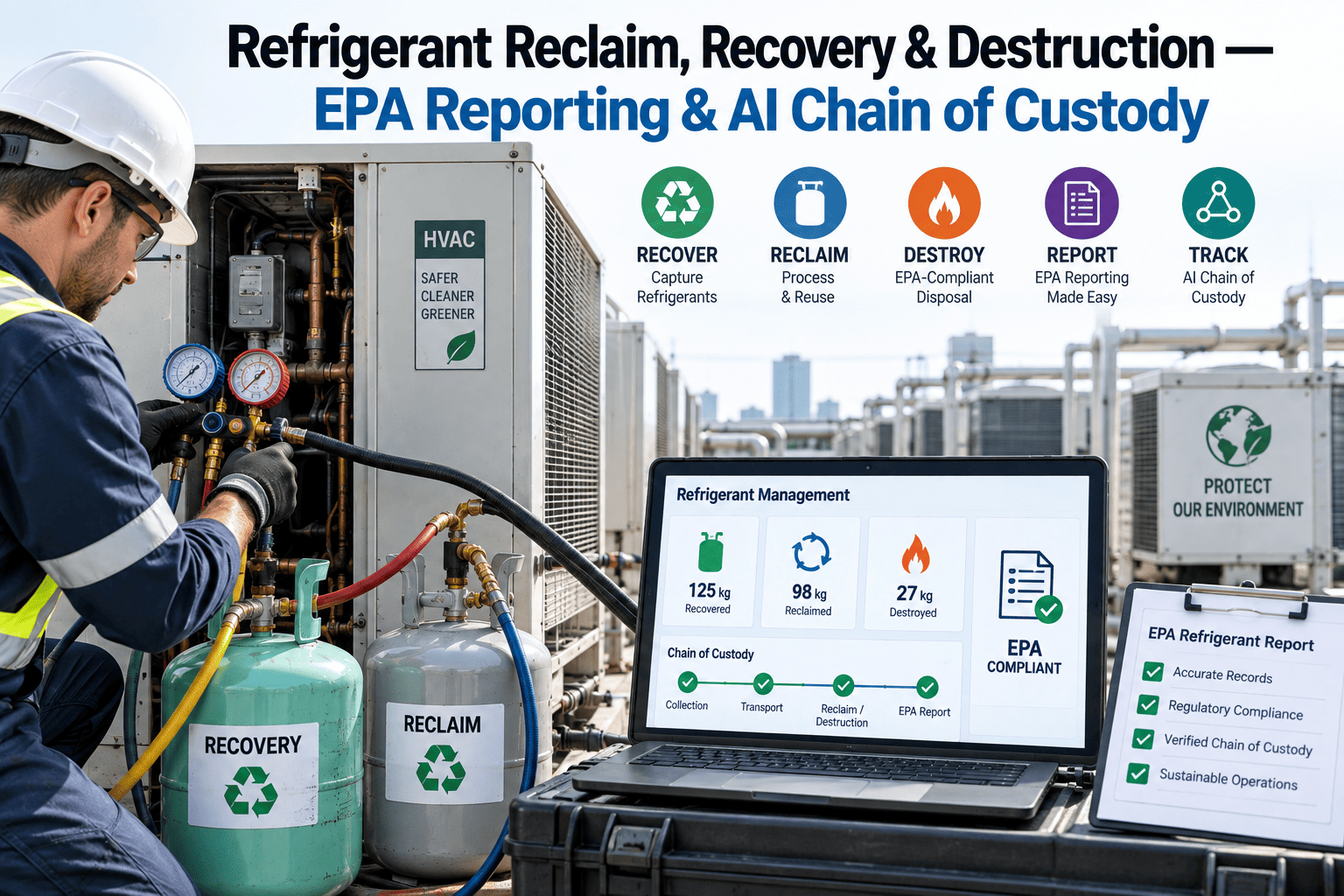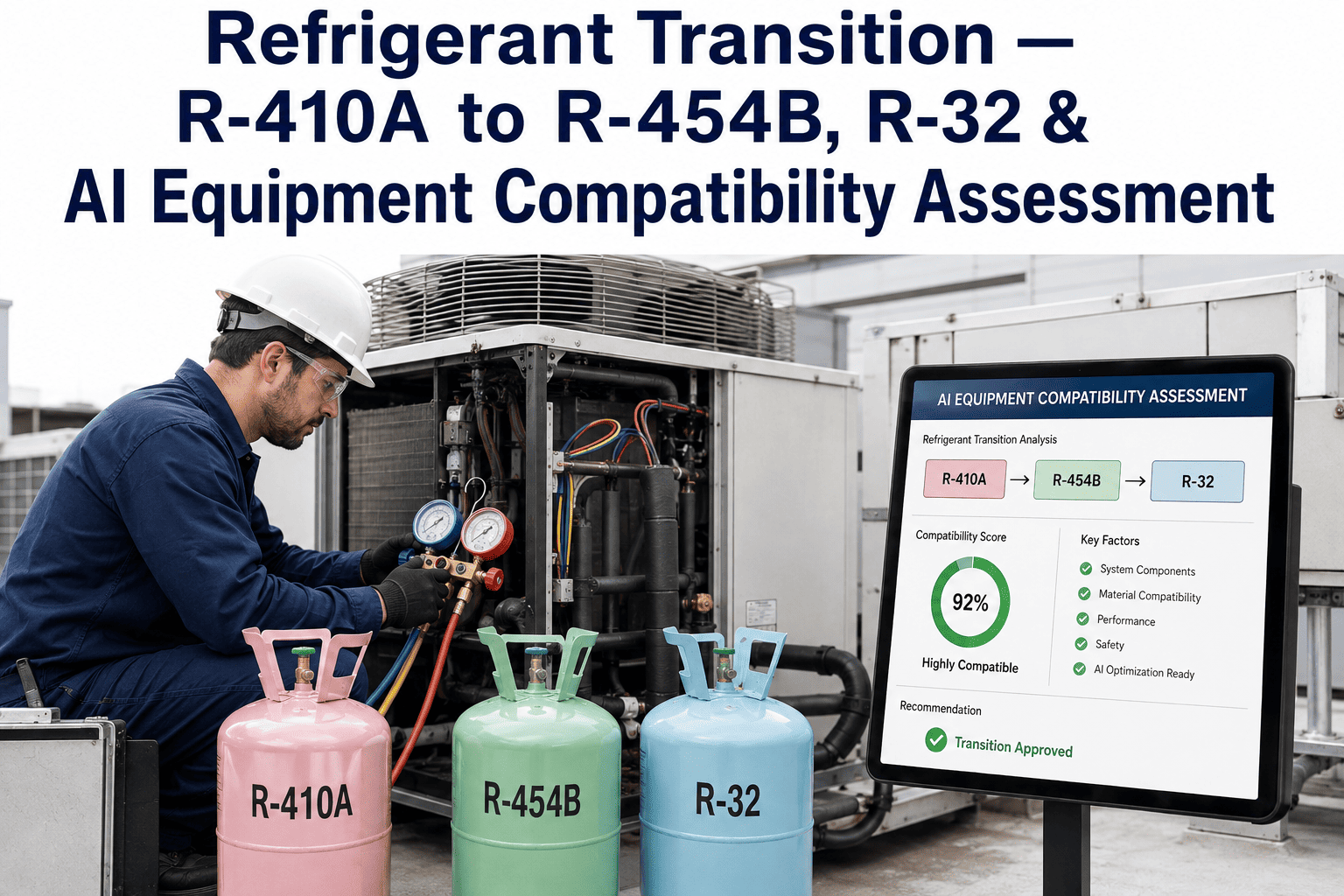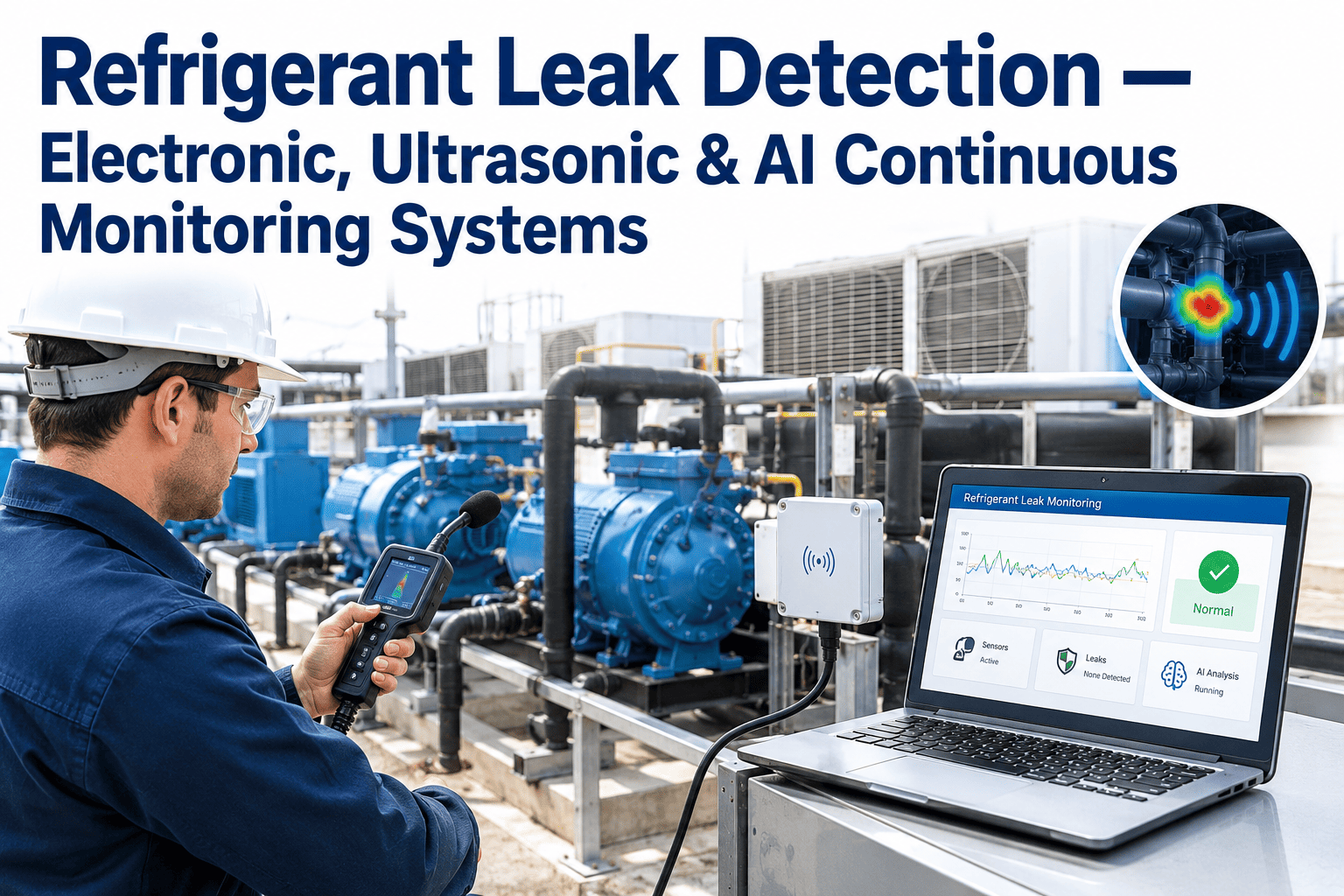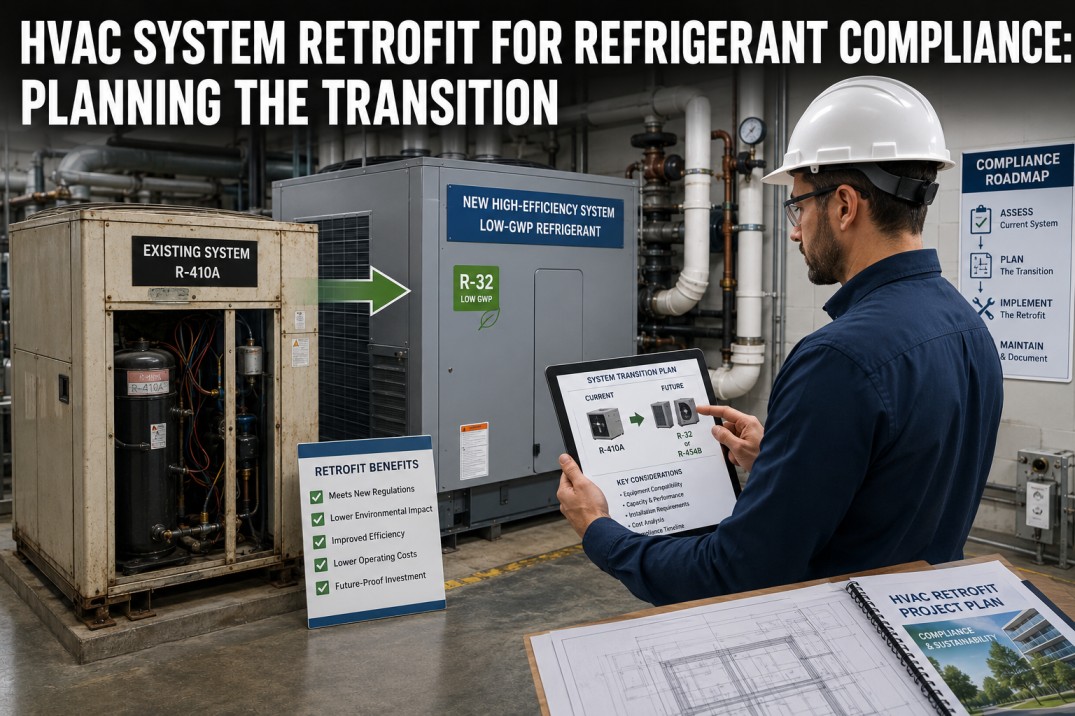
Low-global-warming-potential (low-GWP) refrigerants represent the most significant shift in HVAC refrigeration chemistry since the phase-out of CFCs and HCFCs. Driven by the Kigali Amendment to the Montreal Protocol, the AIM Act in the United States, and the European F-Gas Regulation, the industry is transitioning from HFC refrigerants with GWP values of 1,400 to 4,000 to next-generation alternatives with GWP values under 750, with many under 150. This guide provides a comprehensive comparison of the leading low-GWP refrigerants R-32, R-454B, R-290 (propane), and R-1234yf covering their thermodynamic properties, safety classifications, equipment compatibility, efficiency characteristics, regulatory timelines, and practical implications for facility managers and contractors planning the transition.
Plan Your Refrigerant Transition With Compliance Management
iFactory's Compliance Management module tracks refrigerant types, GWP values, charge quantities, and regulatory deadlines across your entire equipment inventory. Book a demo to see how automated refrigerant management simplifies compliance.
Low-GWP Refrigerant Comparison: Properties, Safety & Performance
Each alternative offers a different balance of GWP, efficiency, safety, and equipment requirements.
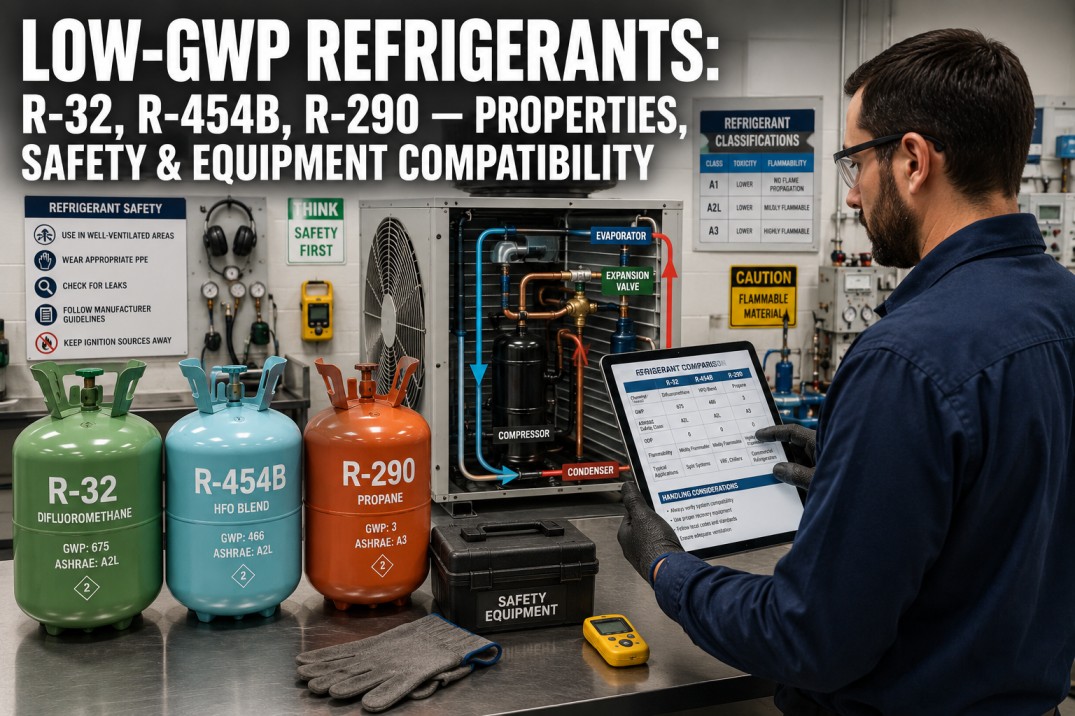
| Property | R-32 | R-454B | R-290 (Propane) | R-1234yf |
|---|---|---|---|---|
| GWP Value | 675 | 466 | 3 | 4 |
| ASHRAE Safety Class | A2L (mildly flammable) | A2L (mildly flammable) | A3 (highly flammable) | A2L (mildly flammable) |
| Ozone Depletion Potential | 0 | 0 | 0 | 0 |
| Cooling Capacity vs R-410A | 105-108% | 98-102% | 90-95% | 85-90% |
| Efficiency (COP) vs R-410A | 100-103% | 100-102% | 95-100% | 95-100% |
| Discharge Temperature | Higher (+10-15F) | Similar to R-410A | Similar to R-410A | Lower |
| Equipment Cost Premium | +5-15% | +5-10% | +15-30% (safety) | +10-20% |
| Best Application | Residential & light commercial AC | Commercial AC & heat pumps | Industrial & commercial (restricted) | Automotive & mobile AC |
A2L Refrigerant Safety: Handling Mildly Flammable Refrigerants
A2L refrigerants are mildly flammable. Understanding their safety properties and handling requirements is essential for every technician and facility manager.
Flammability Characteristics
A2L refrigerants have lower flammability limits (LFL) above 3.5% volume in air, low heat of combustion, and burning velocity under 10 cm/s. For context: A2L refrigerants require 10-15x more concentration to ignite than A3 (propane) and burn 50x slower than A3. No A2L-related fire incidents have been reported in over 10 years of field use in Japan and Europe.
Handling Requirements
A2L certification required for all technicians handling these refrigerants (EPA Section 608 updated 2023). Standard refrigeration practices apply with additional precautions: verify area ventilation before brazing, use leak detectors rated for A2L, recover refrigerant before opening system, label equipment clearly. No special ventilation or fire suppression required for equipment rooms under ASHRAE 15-2022.
Installation & Service
Equipment designed for A2L includes: sealed electrical components (no arcing sources), enhanced leak detection that triggers at 25% of LFL, automatic shutdown if leak detected, and reinforced cabinet construction. Retrofitting existing R-410A equipment to A2L is not permitted. New equipment only. All major manufacturers have A2L product lines available.
Track Refrigerant Inventory, Leaks & Compliance Deadlines
iFactory's platform provides comprehensive refrigerant tracking with automated leak detection integration, regulatory deadline alerts, and replacement cost forecasting. Book a demo to see how data-driven refrigerant management reduces compliance risk.
R-290 (Propane): Natural Refrigerant for Commercial Applications
R-290 offers the lowest GWP of any practical refrigerant but carries A3 flammability classification requiring strict charge limits.
GWP & Environmental
R-290 (propane) is a natural refrigerant with negligible environmental impact. GWP 3 means 3 tons of CO2 equivalent per ton of refrigerant vs 2,088 for R-410A. No phase-out date. No future regulatory risk. The most environmentally sustainable option available.
Charge Limit Restrictions
Charge limits restrict R-290 to smaller systems. Residential: up to 3 tons possible with 150g limit. Commercial reach-in coolers, ice machines, small split systems: suitable. Large commercial chillers and RTUs: not feasible. Regulatory changes may increase limits in future code cycles.
Efficiency & Performance
R-290 has lower volumetric capacity requiring larger compressors or higher displacement. Efficiency is competitive with R-410A in optimized systems. Discharge temperature similar to R-410A. Requires hydrocarbon-specific expansion valves and components.
Equipment Availability
R-290 available in: reach-in coolers and freezers (widespread), ice machines (common), small split systems (1-3 tons, expanding), heat pump water heaters (available), dehumidifiers, and portable AC units. Not available for: chillers over 20 tons, RTUs over 5 tons, VRF systems.
Regulatory Timeline: Phase-Down Schedule & Compliance Deadlines
Understanding the regulatory timeline is critical for planning equipment purchases, refrigerant inventory, and compliance strategy.
| Regulation | Effective | Requirement | Impact on Building Owners | Action Needed |
|---|---|---|---|---|
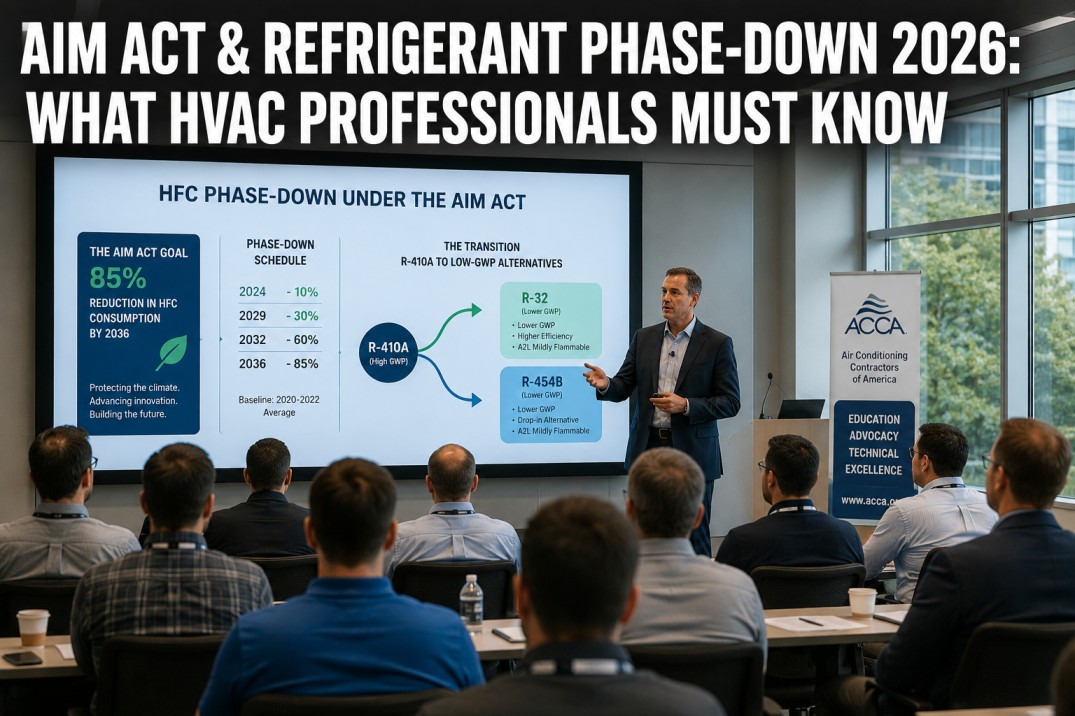
| AIM Act (US) Step 1 | 2024 | Reduce HFC production/consumption 40% from baseline | R-410A prices increased 50-100% | Start planning transition |
| AIM Act Step 2 | 2027 | Reduce HFC 70% from baseline | R-410A supply constrained, significant price increases | Begin purchasing A2L equipment |
| AIM Act Step 3 | 2029 | Reduce HFC 80% from baseline | R-410A effectively unavailable for new equipment | New equipment must use low-GWP |
| AIM Act Final | 2036 | Reduce HFC 85% from baseline | Only reclaimed/recycled R-410A for service | Retrofit or replace remaining R-410A systems |
| European F-Gas 2027 | 2027 | Ban stationary AC with GWP > 750 | R-410A not permitted in new equipment in EU | A2L or R-290 only for new EU equipment |
| ASHRAE 34-2023 | 2023 | Updated safety classifications added A2L | Codes referencing ASHRAE 34 now permit A2L | Verify local code adoption status |
Refrigerant Transition Guide: Planning Your Low-GWP Migration
A structured transition plan minimizes risk and cost during the refrigerant changeover.
Inventory & Risk Assessment
Audit all equipment: refrigerant type, charge quantity, age, condition, and expected remaining life. Identify high-risk equipment: over 15 years old, high refrigerant cost exposure (large charges), and critical process cooling. Prioritize replacement based on asset condition and refrigerant exposure.
Procurement Strategy
For new equipment, specify R-454B for chillers and air handlers, R-32 for RTUs and splits, R-290 for small commercial refrigeration. Include refrigerant type in all equipment specifications. Negotiate 3-5 year fixed-price refrigerant service contracts to lock in supply. Stockpile R-410A for existing equipment service through 2030.
Service & Training
Ensure all technicians complete A2L certification by 2025. Equip service trucks with A2L-rated leak detectors, recovery machines, and cylinder adapters. Update service procedures for A2L handling. Train on retrofit vs replace decision criteria. Budget $500-1,000 per technician for training and equipment.
Frequently Asked Questions
What are low-GWP refrigerants and why do they matter?
Low-GWP refrigerants are alternatives to traditional HFC refrigerants that have significantly lower global warming potential. GWP measures how much heat a refrigerant traps in the atmosphere relative to CO2 over 100 years. R-410A has GWP of 2,088; low-GWP alternatives like R-454B (GWP 466) and R-32 (GWP 675) reduce emissions by 68-78%. Regulatory phase-downs under the AIM Act and F-Gas Regulation are making high-GWP refrigerants increasingly expensive and restricted.
Can I retrofit my existing R-410A equipment with low-GWP refrigerant?
No. Retrofitting R-410A equipment to R-32 or R-454B is not permitted by manufacturers or safety standards. The equipment compressor, expansion valve, heat exchangers, and safety controls are specifically designed for each refrigerant. Attempting retrofit risks equipment damage, voided warranty, and safety hazards. New equipment designed for the specific low-GWP refrigerant is required.
Are A2L refrigerants safe?
Yes, A2L refrigerants have an excellent safety record with no fire incidents reported in over 10 years of widespread use in Japan and Europe. A2L refrigerants are mildly flammable with: LFL above 3.5% (requires significant concentration to ignite), burning velocity under 10 cm/s (50x slower than propane), and low heat of combustion. ASHRAE 15-2022 permits A2L refrigerants in occupied spaces with ventilation and leak detection requirements appropriate for the application.
When should I start transitioning to low-GWP refrigerants?
Start now for all new equipment purchases. Specify R-454B or R-32 for new chiller, RTU, and split system purchases starting 2025. The AIM Act step-downs are accelerating: 2027 will see significant R-410A price increases and supply constraints. For existing equipment: plan replacement of R-410A equipment reaching end of life by 2028-2030 to avoid last-minute rush during the 2029 phase step-down.
What is the cost impact of transitioning to low-GWP refrigerants?
New equipment cost: 5-15% premium for R-32 systems, 5-10% for R-454B, 15-30% for R-290 due to safety components. Refrigerant cost: R-32 and R-454B are currently 40-60% lower cost per pound than R-410A but less available. Total transition cost for a 100K sq ft building replacing 10 RTUs: $5K-15K premium on equipment. Service cost increase: $500-2K/year for A2L training, tools, and certification. Energy impact: minimal (0-3% change).
Complete Refrigerant Compliance Management With iFactory
iFactory's Compliance Management delivers end-to-end refrigerant tracking from equipment inventory and GWP reporting through leak detection, regulatory compliance, and transition planning. Book a demo to see how structured refrigerant management protects your operation and the environment.