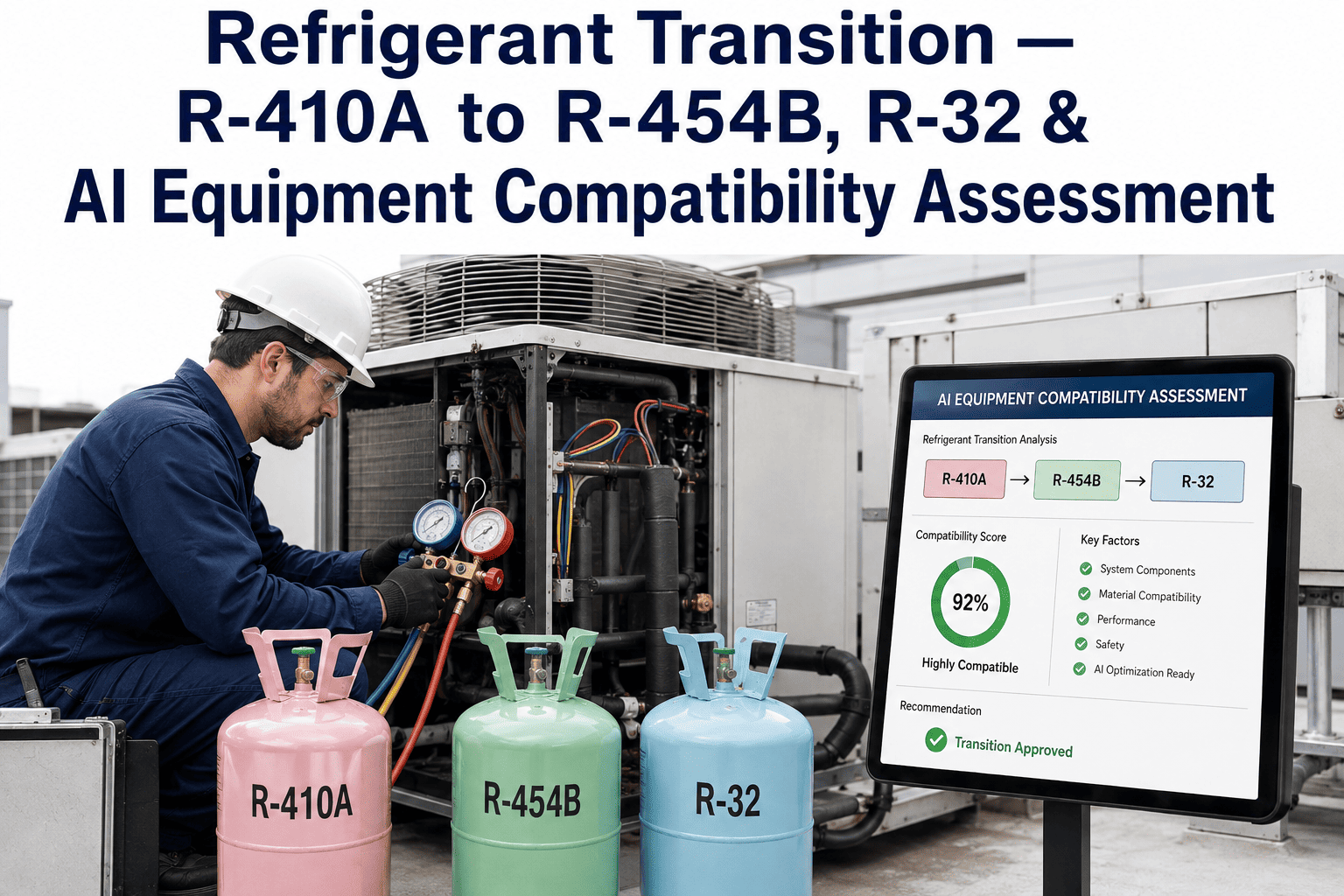
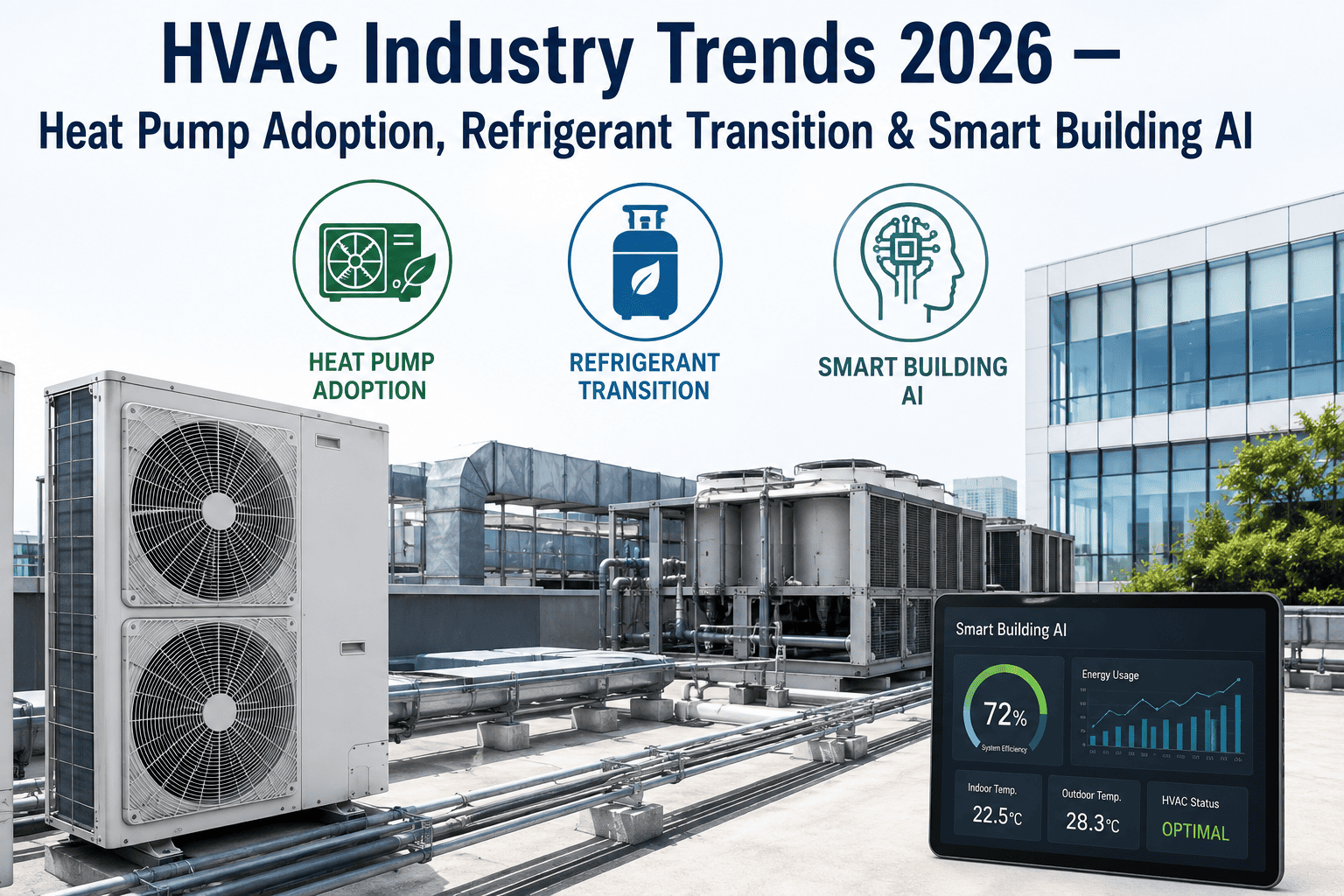
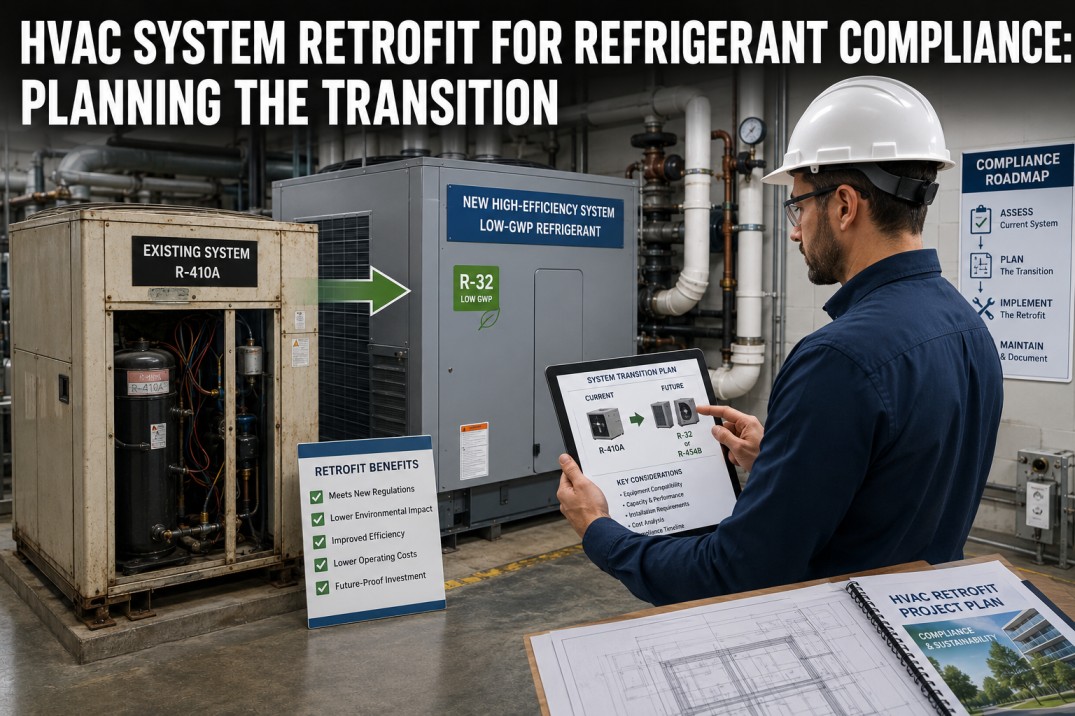
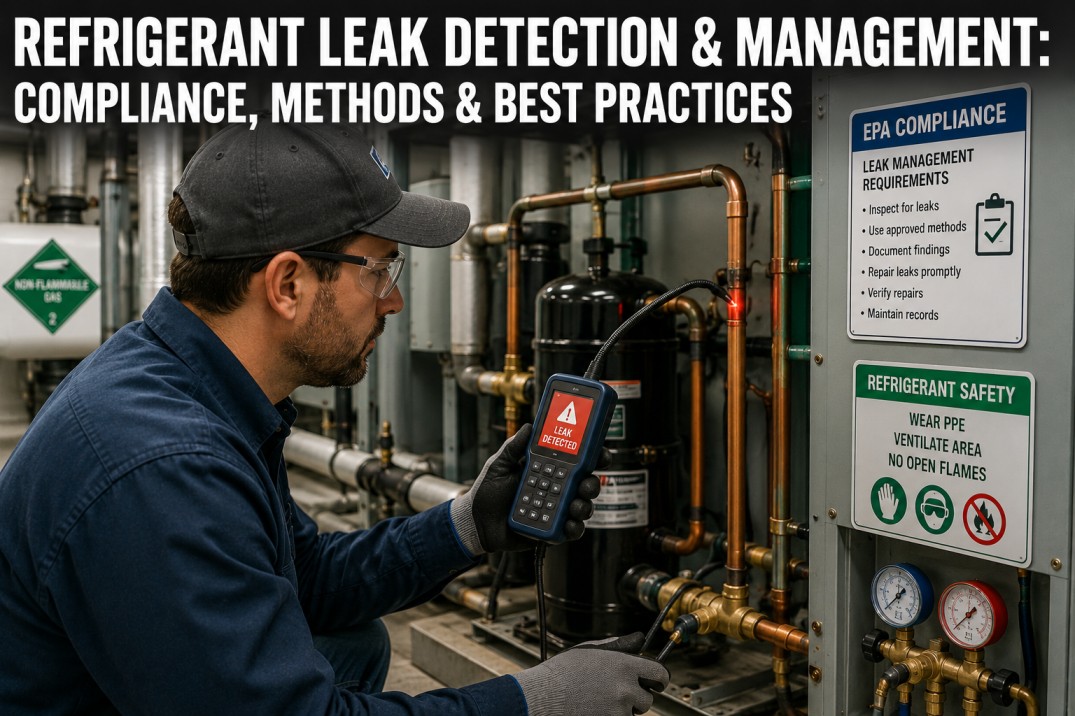
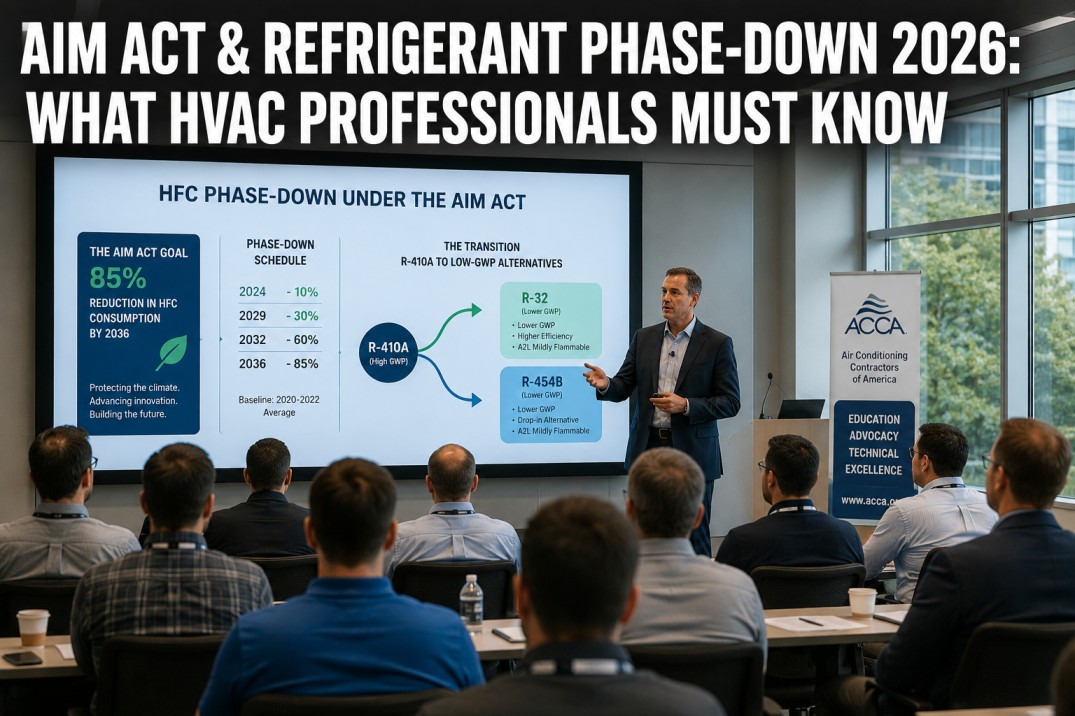
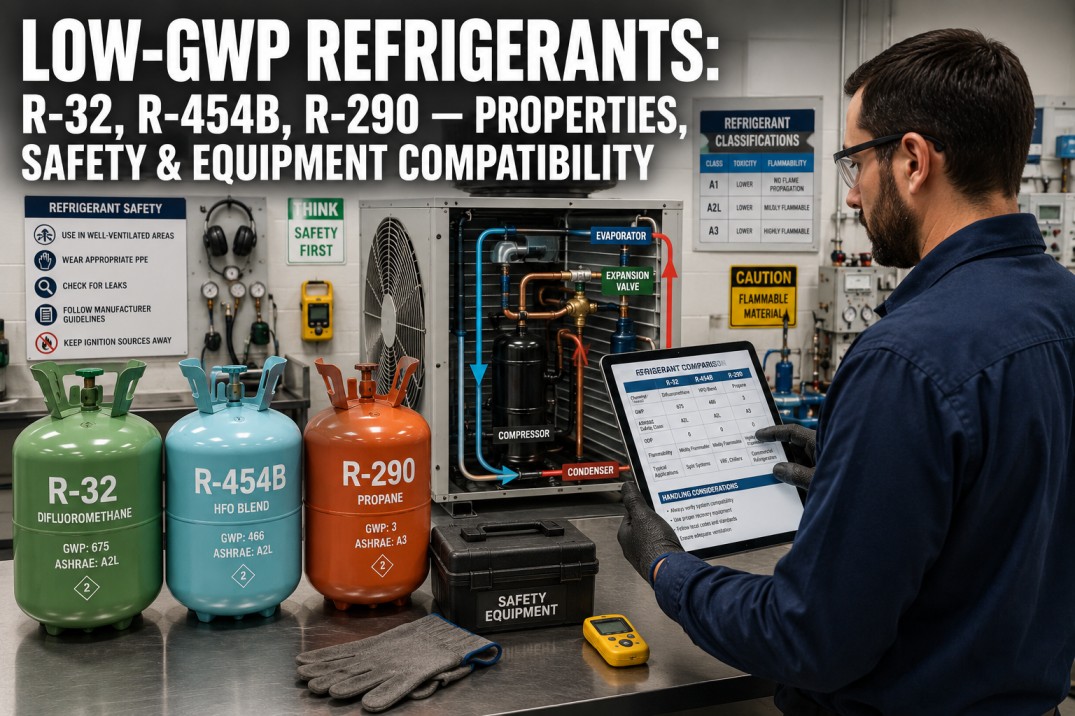
The HVAC industry is in the middle of its most significant refrigerant transition in decades. R-410A — the workhorse of commercial and residential cooling for 30 years — is being phased out under the AIM Act and EPA Section 608 regulations, with production and import caps already in effect. R-454B (sold as Puron Advance by Carrier and Opteon XL41 by Chemours) is emerging as the primary low-GWP replacement for high-capacity ducted systems. With a Global Warming Potential of 466 — 78% lower than R-410A's 2,088 — R-454B meets A2L mildly flammable classification requirements and is already being specified in new commercial equipment from all major manufacturers. For HVAC maintenance teams managing building portfolios, the transition means new refrigerant handling certifications, updated safety protocols, new recovery equipment, revised service procedures, and a complete audit of which systems can be retrofitted versus which must be replaced. iFactory's facility management platform helps maintenance teams track equipment refrigerant type, manage compliance deadlines, schedule transition work orders, and maintain complete service records across every HVAC asset in a portfolio. Book a free demo to see how iFactory manages your refrigerant transition.
R-454B Refrigerant Transition Guide:
What Every HVAC Maintenance Team Must Know
R-410A is being phased out. R-454B is replacing it in new equipment. Your maintenance team needs new certifications, new tools, and a new playbook — before the equipment on your watch list starts needing service.
Book a Free Transition Planning Demo →R-454B vs R-410A vs Other Alternatives
Understanding where R-454B sits in the refrigerant landscape — and why it became the leading replacement for large ducted commercial systems.
| Property | R-410A Being Phased Out |
R-454B Primary Replacement |
R-32 Residential Alternative |
R-290 (Propane) Small Equipment |
|---|---|---|---|---|
| Global Warming Potential | 2,088 | 466 | 675 | 3 |
| Safety Class (ASHRAE 34) | A1 (Non-flammable) | A2L (Mildly flammable) | A2L | A3 (Flammable) |
| Composition | Blend (R-32/R-125) | Blend (R-32/R-1234yf) | Pure fluid | Pure fluid |
| Operating Pressure | High | Similar to R-410A | Higher than R-410A | Lower |
| Drop-in Retrofit | — | No — equipment redesign required | No | No |
| EPA 608 Certification Needed | Yes | Yes + A2L safety training | Yes + A2L | Yes + A3 protocols |
| New Equipment Available | No (post Jan 2025) | Yes — all major manufacturers | Yes | Limited |
| Trade Names | Puron, Genetron AZ-20 | Puron Advance, Opteon XL41 | Difluoromethane | Propane |
Why A2L Classification Changes Everything for Your Team
R-454B carries an A2L mildly flammable classification — the most important operational difference for maintenance teams transitioning from R-410A. A2L refrigerants require specific equipment, modified work practices, and updated facility considerations.
Ignition Risk — Lower Than You Think
A2L refrigerants have a Lower Flammability Limit (LFL) of approximately 9.5% by volume — much higher than natural gas (5%) or propane (2.1%). They require a specific ignition energy significantly higher than common ignition sources. In practice, accidental ignition from normal service activities is extremely unlikely — but protocols exist for good reason and must be followed.
Approved Tools & Equipment
HVAC technicians working with A2L refrigerants must use A2L-rated or ATEX-rated service equipment. This includes A2L-compatible manifold gauges, refrigerant identifiers, recovery machines rated for A2L use, and vacuum pumps with A2L-rated motors. Standard R-410A tools are not all compatible — a full equipment audit is required before first service call.
Ventilation Requirements
ASHRAE 15 and IBC require that A2L refrigerant systems in occupied spaces include refrigerant leak detection with automatic mitigation — either equipment shutoff or enhanced ventilation. Existing R-410A equipment rooms may require ventilation upgrades before R-454B systems are installed. Mechanical rooms with inadequate ventilation need CFM recalculations for A2L occupancy limits.
Updated Service Procedures
A2L service work requires: no open flames within the work area during recovery/charging, elimination of spark-producing tools near open refrigerant circuits, enhanced leak checking before startup, and documentation of refrigerant handling under updated EPA 608 Section 608 recordkeeping rules. Your team's existing R-410A SOPs need a complete A2L revision before first service contact.
Labelling & Identification
R-454B systems must be labelled with the refrigerant type, A2L classification, and charge weight in accordance with updated ASHRAE 15 labelling standards. Field service technicians must verify refrigerant identity before connecting service equipment — never assume based on equipment age or appearance. R-454B and R-410A use different Schrader valve fittings to prevent cross-contamination.
Certification & Training Requirements
Technicians must hold current EPA Section 608 certification (Universal or applicable type) before servicing R-454B systems. HVAC manufacturers and ACCA/RSES offer A2L-specific safety training covering safe handling, leak response, and updated service procedures. Some jurisdictions require state-level certification updates. Schedule a compliance planning demo to track certification status across your team in iFactory.
The 12-Point R-454B Readiness Checklist
Use this checklist to assess your team's readiness before your first R-454B service call or new equipment installation. Every item is a potential gap — address them before they become a field problem.
iFactory tracks technician certifications, equipment compatibility, and compliance deadlines across your entire building portfolio — so nothing falls through the cracks during the transition.
Book a Demo to See How →Audit all HVAC assets for current refrigerant type
Create a complete inventory of every system — unit ID, refrigerant type, charge weight, year of manufacture, and service history. Systems using R-410A need transition planning; systems already using R-454B need A2L service protocols active.
Verify all technician EPA 608 certifications are current
EPA 608 certifications do not expire, but technicians servicing A2L systems need documented A2L safety training. Audit current certifications and identify training gaps before transition work begins.
Inventory service equipment for A2L compatibility
Check manifold gauges, recovery machines, vacuum pumps, and refrigerant identifiers against manufacturer A2L compatibility lists. Non-compatible equipment must be replaced before A2L service work begins.
Review mechanical room ventilation requirements
For each space containing or planned to contain R-454B equipment, verify ventilation meets ASHRAE 15 A2L occupancy limits. Calculate whether existing ventilation rates are sufficient or upgrades are required.
Update refrigerant SOPs for A2L work practices
Revise existing refrigerant handling procedures to cover A2L-specific requirements: no open flame proximity, spark elimination, enhanced leak testing, ventilation verification before charging, and emergency response.
Establish R-454B refrigerant supply chain
Identify approved R-454B suppliers and confirm pricing, availability, and delivery lead times. R-454B is priced higher than R-410A during the current transition period — budget accordingly for service calls and system startups.
Confirm R-454B recovery cylinder requirements
Used R-454B must be recovered into DOT-approved cylinders rated for A2L service. Existing R-410A recovery cylinders may not be suitable — verify with the manufacturer before use. Dedicated cylinders prevent cross-contamination.
Plan for no direct R-410A to R-454B retrofits
R-454B is not a drop-in replacement for R-410A. Existing R-410A systems cannot be converted to R-454B — they must be replaced with purpose-designed R-454B equipment. Develop a replacement capital plan for aging R-410A assets.
Review leak detection system requirements
ASHRAE 15 requires automatic refrigerant leak detection with alarm and mitigation for A2L systems in occupied spaces above certain charge thresholds. Assess whether existing leak detection systems are rated and configured for A2L refrigerants.
Update preventive maintenance schedules
R-454B systems from new-generation manufacturers may have updated PM intervals, filter specifications, and lubrication requirements compared to R-410A predecessors. Request updated PM schedules from equipment manufacturers for each new installation.
Confirm building permit and inspection requirements
Some jurisdictions require updated mechanical permits when replacing R-410A equipment with R-454B systems, particularly if charge quantities change or mechanical room modifications are required. Check local authority having jurisdiction (AHJ) requirements before each project.
Update refrigerant tracking and EPA reporting records
EPA Section 608 requires records of refrigerant purchases, recovery, and disposal. Update your tracking system to include R-454B alongside existing refrigerant records. Ensure your CMMS captures refrigerant type and charge weight for every system. See how iFactory automates refrigerant recordkeeping across your entire portfolio.
Repair, Replace, or Retain? Decision Framework for R-410A Equipment
Not all R-410A equipment needs immediate replacement. Use this framework to prioritize which systems need urgent action and which can continue operating during the transition window.
R-410A Systems — Low Priority
- Equipment installed within the last 5 years in good condition
- No recurring leaks — charge is stable and documented
- Remaining useful life estimate of 8+ years
- Replacement parts readily available from manufacturer
- Building refrigerant charge below ASHRAE 15 threshold requiring room upgrades
R-410A Systems — Medium Priority
- Equipment 10–15 years old, approaching end of design life
- Minor leaks requiring refrigerant top-ups annually
- One major component (compressor, coil) already replaced
- R-410A refrigerant cost increasing as supply tightens
- Efficiency below current minimum standards — replacement delivers energy savings
R-410A Systems — High Priority
- Equipment 15+ years old or past manufacturer design life
- Recurring significant refrigerant leaks — EPA reportable levels
- Major component failure requiring costly repairs
- Refrigerant charge exceeds updated A2L-driven occupancy limits requiring room modifications
- Manufacturer has discontinued parts support
Key Service Differences: R-454B vs R-410A
Technicians familiar with R-410A service will find R-454B systems broadly similar in procedure — with important differences that must become habit before the first service call.
Refrigerant Identification First — Always
Before connecting any service equipment, identify the refrigerant using an approved refrigerant identifier. R-454B and R-410A have different fitting configurations, but mislabelled or contaminated systems exist in the field. A2L refrigerant identifiers are required — standard R-410A identifiers may not reliably identify A2L blends.
Nitrogen Purge Before Brazing — No Exceptions
Brazing in the presence of residual A2L refrigerant vapour is prohibited. Fully recover the charge, verify zero refrigerant with a detector, purge with nitrogen, and maintain nitrogen flow during all brazing operations. This applies even for brief, small repairs — no shortcuts on A2L systems.
Electronic Leak Detection — Updated Sensors Required
Heated diode and infrared leak detectors must be verified for A2L refrigerant sensitivity. Some older R-410A detectors have different molecular weight calibrations and may not reliably detect R-454B at the same concentration. Replace or recalibrate detectors for A2L service as per manufacturer guidance.
Compressor Oil — Verify Compatibility
R-454B is compatible with POE (polyolester) lubricants used in R-410A systems, but verify the specific oil specification with the equipment manufacturer before service. Some R-454B compressor designs use updated viscosity grades. Never mix lubricants or top-up without verifying the correct specification from the service manual.
Charging by Weight — Fractionation Risk
R-454B is a zeotropic blend with slight fractionation potential. Always charge from the liquid phase (cylinder inverted or using a dip tube) to maintain correct blend composition. Charge by weight to the manufacturer's specified charge weight — do not adjust based on subcooling/superheat alone until you verify with the manufacturer's charging tables.
Ventilation Before and During Service
Verify adequate ventilation in the work area before opening any refrigerant circuit on an A2L system. In enclosed mechanical rooms, confirm air changes per hour are sufficient before beginning recovery or charging. Do not work in confined spaces with poor ventilation on A2L systems without portable ventilation equipment. Schedule a demo to see how iFactory manages A2L compliance documentation.
R-454B Quick Reference
Manage Your Transition with iFactory
Track refrigerant type for every HVAC asset, schedule compliance-driven work orders, log refrigerant handling records, and manage technician certifications — all in one platform.
Book a Free Demo →Questions before your demo? Contact our support team.
AIM Act, EPA 608 & ASHRAE 15 — What Your Team Must Comply With
Three overlapping regulatory frameworks govern R-454B transition compliance. Understanding which applies where is essential for your maintenance program.
AIM Act (American Innovation and Manufacturing Act)
Directs EPA to phase down HFC production and imports by 85% over 15 years. R-410A allowances are already being reduced. Key dates for maintenance teams: R-410A cannot be used as a refrigerant in new equipment manufactured after January 1, 2025 for residential and light commercial applications. R-410A servicing of existing equipment remains allowed — there is currently no end-of-service date for existing R-410A systems. However, refrigerant supply will tighten and costs will rise as production allowances decrease.
EPA Section 608 — Refrigerant Management
Section 608 of the Clean Air Act requires certified technicians for all refrigerant handling, prohibits venting, mandates recovery before equipment disposal, and requires purchase records for refrigerants with charges above de minimis levels. For R-454B: all existing Section 608 requirements apply. EPA is also considering new requirements for A2L refrigerant handling practices. Recordkeeping must cover R-454B purchases, recovery quantities, and refrigerant disposal. Technicians must hold current certification regardless of refrigerant type.
ASHRAE 15 — Safety Standard for Refrigeration Systems
ASHRAE 15 governs refrigerant quantities in occupied spaces, mechanical room design, ventilation requirements, and leak detection mandates. The 2019 edition fully addresses A2L refrigerants. Key impacts for maintenance teams: A2L refrigerants have specific maximum charge limits per occupancy classification; mechanical rooms housing A2L systems above threshold charge weights require automatic leak detection and mitigation; and installations must comply with the edition of ASHRAE 15 adopted by the local authority having jurisdiction — check your local AHJ for adopted edition.
IBC / IMC & Local Code Requirements
The International Building Code and International Mechanical Code incorporate ASHRAE 15 by reference and add additional requirements for refrigerant system installation, equipment rooms, and service access. Some states and municipalities have adopted stricter refrigerant regulations beyond federal requirements. California's CARB regulations, for example, have additional requirements for high-GWP refrigerants. Always verify local AHJ requirements before specifying or installing R-454B systems. Contact our support team to discuss compliance documentation in iFactory.
Frequently Asked Questions — R-454B Transition
Can I retrofit my R-410A system to use R-454B?
No. R-454B is not a drop-in replacement for R-410A and cannot be used to retrofit existing R-410A systems. The refrigerant properties differ enough that compressors, expansion valves, and system controls designed for R-410A are not suitable for R-454B operation. Existing R-410A systems must continue to use R-410A for their operational life. When those systems are replaced at end of life or after major failure, the replacement equipment will be specified with R-454B or another approved low-GWP refrigerant.
Is R-410A being banned for service use?
No — at this time, R-410A service refrigerant for maintaining existing equipment is not banned. What the AIM Act restricts is the manufacture of new equipment using R-410A (after January 1, 2025 for residential applications). Existing R-410A systems can continue to be serviced with R-410A for the remainder of their operational life. However, R-410A supply will become increasingly constrained and expensive as production allowances are reduced, making system replacement more economically attractive over time.
What new tools does my team need before servicing R-454B systems?
A2L-compatible recovery machines, manifold gauges rated for A2L refrigerants, an updated refrigerant identifier capable of identifying R-454B blends, A2L-rated leak detectors (verify existing units), and DOT-approved A2L recovery cylinders. Some existing R-410A tools are compatible — review the A2L compatibility list from each manufacturer before assuming your current toolkit is adequate. Budget for tool upgrades as part of your transition plan. See how iFactory tracks tool certification and calibration status.
How is R-454B different from R-32?
Both are A2L refrigerants with lower GWP than R-410A, but they differ in composition and application. R-32 is a pure fluid (single component) with a GWP of 675, used primarily in smaller residential and light commercial split systems. R-454B is a blend of R-32 and R-1234yf with a GWP of 466, designed as the replacement for R-410A in larger ducted commercial systems. R-454B operating pressures are closer to R-410A, which is why major commercial equipment manufacturers selected it as the R-410A replacement in their rooftop and large-split product lines.
Does our team need new EPA 608 certification for R-454B?
Existing EPA Section 608 certifications remain valid for R-454B service work. There is currently no separate A2L certification required by EPA for technicians. However, industry organizations including ACCA and AHRI strongly recommend — and some manufacturers and building owners require — documented A2L safety training before technicians work on A2L systems. This training covers safe handling practices, A2L-specific service procedures, leak response, and emergency protocols. It is separate from EPA 608 certification and typically takes 4–8 hours to complete.
Is R-454B dangerous? How do I manage the flammability risk?
R-454B's A2L classification reflects measurable flammability — but in context, the risk is manageable with proper procedures. The Lower Flammability Limit of ~9.5% by volume is very high compared to common fuels. Accidental ignition from typical HVAC service activities is highly unlikely if established A2L work practices are followed: no open flames near open circuits, elimination of ignition sources during refrigerant handling, adequate ventilation, and proper leak response procedures. The risk is real but controllable — it should be respected, not feared.
How do I track which buildings have R-454B systems vs R-410A?
Manual spreadsheet tracking of refrigerant types across a building portfolio becomes unmanageable as the equipment mix shifts. A CMMS with refrigerant field tracking allows you to record refrigerant type, charge weight, and last service date for each asset — and filter by refrigerant to generate compliance reports, plan A2L tool deployment, and schedule proactive leak checks. iFactory supports this use case directly. Book a demo to see the refrigerant tracking module.
What is the outlook for R-454B refrigerant pricing and availability?
R-454B pricing is currently higher than mature R-410A pricing, reflecting the cost of R-1234yf (the HFO component) and lower production volumes during the early transition period. As manufacturing scales with equipment deployment, pricing is expected to moderate. R-410A pricing will likely increase over the medium term as AIM Act production allowances are reduced. For budget planning, model R-410A service costs increasing 15–30% over the next 3–5 years while R-454B costs may stabilize. Contact iFactory support for help building refrigerant cost scenarios in your facility management plan.
Stay Ahead of the Refrigerant Transition
iFactory gives your HVAC maintenance team a single platform to track refrigerant types across every asset, manage compliance deadlines, log EPA 608 service records, schedule A2L-driven work orders, and maintain technician certification status — so the R-454B transition is managed, not scrambled.
Book Your Free Demo →Refrigerant Asset Tracking
Every HVAC unit logged with refrigerant type, charge weight, and service history
EPA 608 Record Keeping
Automated compliance logs for refrigerant purchases, recovery, and disposal
Transition Work Orders
Schedule and track R-410A to R-454B replacement projects across your portfolio
Certification Management
Track A2L training and EPA 608 certification status for every technician