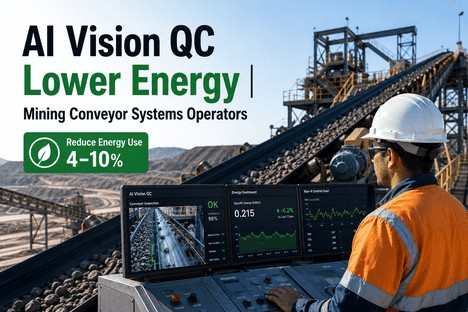
AI Vision QC Lower Energy | Mining Conveyor Systems Operators

By Grace on June 12, 2026

ai-vision-quality-mining-conveyor-systems-operators-energy-optimization

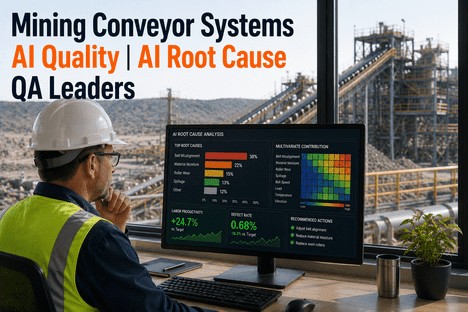
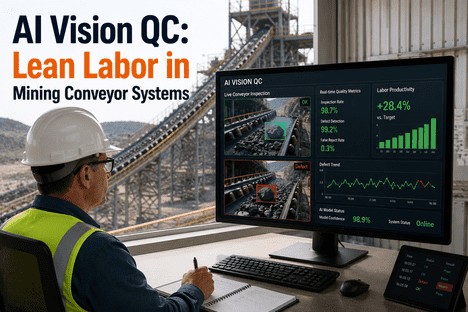
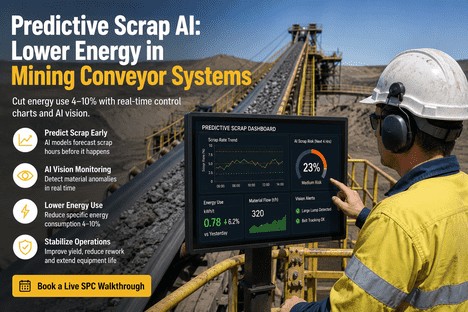
You walk the line three times a shift. You know which belt segment pulls harder, which transfer point spills, and which motor sounds different when the load is wrong. The plant energy meter on the wall tells you the operation consumed megawatts yesterday, but it does not tell you which fifty metres of belt wasted a third of it running near-empty while the drive pulled full-load current. That blind spot is costing 4 to 10% of every energy dollar, and it has nothing to do with motor efficiency or drive technology — it has to do with visibility. AI vision quality inspection gives operators a live energy heat map of the entire conveyor network: every belt segment, every transfer point, every motor — with deep-learning defect detection that flags the operating conditions that waste power before the cost registers on the monthly utility report. This is the operator's practical playbook for using AI vision QC to cut conveyor energy consumption without an engineering project or a capital request.

Live Energy Heat Map · Deep-Learning Load Detection · Real-Time SPC Control Charts · Shift Energy Targeting
Operators Using AI Vision QC Cut Conveyor Energy 4-10% by Seeing What the Panel Meter Misses: Which Belt Segment, Which Load Condition, Which Minute.
iFactory's AI vision quality platform gives conveyor operators a per-segment energy heat map, real-time load-vs-power correlation, and automated energy deviation alerts — turning the conveyor line from a fixed-cost black box into a variable-cost system the operator can optimise every shift.

"I have been telling management for two years that our conveyors use more power than they should because half the time the belt is running at 50% load with the motor at 95% amperage. The panel meter confirms the total. It does not tell me which belt, which shift, or which condition. AI vision QC gives me that breakdown by belt segment, by shift, and by load condition — and I reduced our specific energy 6.3% in the first twelve weeks without touching a single drive setting."

— Senior Operator, Iron Ore Concentrator Conveyor Network — 14 km of Belt, 22 Transfer Points

Three Energy Leaks Hiding on Every Conveyor Line

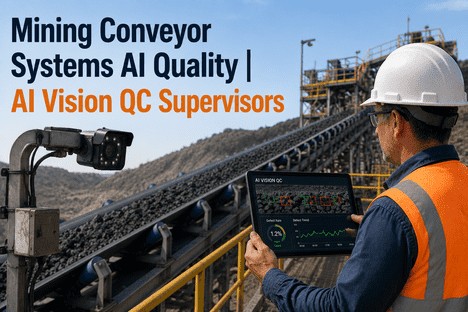
The energy meter measures total consumption. It does not tell you how the energy is distributed — which segments are efficient, which are wasting power, and which operating condition is responsible. AI vision quality inspection fills this gap by analysing the visual signature of every belt segment continuously: load depth, material distribution, belt tracking, spillage presence, and speed alignment. Three energy leak categories account for 70 to 90% of the avoidable waste on mining conveyor lines — and each one is detectable by AI vision before it adds a kilowatt-hour to the meter.

01
Leak Type
Underloaded Belt Running at Full Speed — Empty-Mile Energy Waste

A conveyor belt running at 80% of its rated speed with less than 50% of its rated load is consuming 85 to 95% of the power it would consume at full load. The difference between the motor input power and the material transport work is dissipated as heat, belt wear, and mechanical friction — and it accumulates on every metre of belt for every minute the underload condition persists. Operators know this happens between surges, during grade transitions, and when upstream feed is inconsistent. The panel meter confirms the total energy but does not flag the condition. AI vision detects the load-to-belt ratio in real time by analysing the cross-sectional profile of material on the belt. When the load depth falls below the configured threshold for more than a configurable timer, the system flags the segment for operator action — speed reduction, feed adjustment, or shift coordination.

Energy impact per hour: 50-120 kWh per km of underloaded belt at typical mining conveyor power density.
02
Leak Type
Belt Tracking Deviation and Structural Friction — Mechanical Drag Waste

A belt that drifts 3 to 5 degrees off its centreline creates lateral drag against the structure, skirt boards, and return rollers. The additional friction can add 8 to 15% to the motor load on the affected segment without moving one extra tonne of material. Operators detect tracking issues visually during line inspections — if they catch them early enough. AI vision tracks the belt edge position continuously across every return and carry-side segment, measuring deviation in millimetres relative to the centreline reference. When drift exceeds the configured threshold, the system logs the deviation, estimates the energy impact based on the motor amperage correlation during the drift period, and alerts the operator to initiate tracking correction. The same detection capability catches idler build-up, seized rollers, and material entrapment that create additional friction points — each one an energy leak that the panel meter sees only as a gradual upward creep in total power with no identifiable cause.

Energy impact per hour: 30-80 kWh per km for a belt running 3-5 degrees off-centre at standard mining belt speeds.
03
Leak Type
Transfer Point Spillage and Re circulating Load — Double-Handle Energy Waste

Material that spills at a transfer point does not stop consuming energy. It accumulates on the floor, requires clean-up equipment (front-end loader, conveyor, or manual labour), and the re handled material eventually returns to the conveyor system — meaning the energy used to transport it the first time was partially wasted and the clean-up transport adds new energy consumption on top. AI vision detects spillage events at transfer points, chutes, and loading zones by analysing the visual change in the area below and around the transfer point. When material accumulation exceeds the configured baseline, the system logs the event with a time-stamped image, estimates the spillage volume based on the visible area and typical depth, and calculates the energy cost of the re-handling cycle. The operator receives a notification with the location, estimated volume, and energy impact — and can prioritise the clean-up based on cost, not just visual appearance. Over a shift, the cumulative energy cost of spillage re-handle on a high-throughput conveyor line can exceed the energy consumption of a full belt segment.

Energy impact per spill event: 15-40 kWh per cubic metre of spillage requiring mechanised re-handle and re-feed.

What Changes When AI Vision Watches Your Belt: Operator Before and After

The difference between a conveyor line operated with panel-meter visibility alone and one operated with AI vision quality inspection is not theoretical. It is visible in the operator's daily routine, in the control chart trends, and in the specific energy consumption number at the end of every shift. The table below shows what shifts for the operator when AI vision closes the visibility gap.

Without AI Vision — Panel Meter Only
With AI Vision QC — Per-Segment Visibility
-
Energy data from panel meter — one number for the whole line
+
Energy heat map per belt segment — live, colour-coded, by shift
-
Energy leaks discovered when someone notices — reactive
+
Leaks flagged automatically — underload, drift, spillage in real time
-
Speed and load adjusted based on operator judgment and experience
+
Speed recommendations from AI based on load-vs-energy correlation data
-
Energy improvements depend on periodic audits and project-based initiatives
+
Continuous energy optimisation embedded in every shift — 4-10% sustained reduction
-
Operator contribution to energy cost reduction invisible in performance reviews
+
Every energy save action logged and attributed — operator contribution visible and recognised

The Operator's 4-Step Energy Save Workflow

AI vision quality inspection does not make decisions for the operator. It gives the operator the visibility to make better decisions faster. The workflow below is the sequence operators follow on every shift to convert AI vision data into measurable energy reduction — and it takes less than 10 minutes per cycle once the system is configured for the line.


1
Scan — Review the AI Vision Energy Heat Map at Shift Start

The operator opens the AI vision dashboard at shift start and reviews the energy heat map of the full conveyor network. Belt segments are colour-coded: green for energy-on-target, yellow for 5-15% above target, red for more than 15% above target. The heat map is layered with the current throughput rate so the operator can distinguish between segments that are high-energy because they are working hard and segments that are high-energy because they are wasting power. The scan takes 60 seconds and gives the operator the energy state of the entire line before the first walk-around begins.

2
Identify — Select a Flagged Zone and Review the Condition Details

Each yellow or red zone on the heat map is clickable. The operator selects a flagged segment and the system displays the specific condition detected — underloaded belt at X% of rated capacity, belt drift of Y mm from centreline, or spillage accumulation at transfer point Z. A time-series graph shows the energy consumption trend for the selected segment over the last hour, with the deviation from target baseline highlighted. The operator sees not just that energy is high, but why it is high, when it started, and what the energy impact has been since the condition began — enabling a targeted response rather than a general investigation.

3
Act — Execute the Corrective Action and Log It Automatically

The operator acts based on the detected condition: reduce VFD speed on an underloaded segment, initiate tracking correction on a drifting belt, or dispatch clean-up to a spillage location. Each action is logged automatically against the energy record — the operator does not need to fill out a separate log or remember to note the action after the fact. The system records the condition, the action taken, the time of action, and the operator ID. This creates an attributable energy-saving record that shift supervisors and plant management can review without chasing operators for shift reports.

4
Confirm — Verify the Energy Impact on the Control Chart

Within 15 minutes of the corrective action, the operator checks the energy control chart for the affected segment. The SPC-style chart shows the energy consumption trend before and after the action, with the target baseline and control limits clearly marked. A downward slope in the energy trend confirms the action was effective. A flat or rising slope indicates the condition was not fully addressed or a different root cause is present — the operator investigates further or escalates. The confirmation step closes the energy-save cycle and provides the data that makes the 4-10% total reduction achievable across shifts, not just during a single operator's watch.

Energy Heat Map · SPC Control Charts · Action Logging · Per-Shift Energy Targeting
The 4-Step Workflow Takes Under 10 Minutes Per Shift. The Energy Reduction Is Permanent.
iFactory's AI vision QC platform gives mining conveyor operators the live data, the detection capability, and the workflow to make energy a controllable variable — not a fixed cost. The energy heat map, load condition detection, and automated action logging are all part of a single system that works with existing conveyor infrastructure.

Five Energy Metrics on Your Shift Dashboard

The iFactory AI vision dashboard for conveyor operators is built around five metrics that together give a complete picture of energy performance across the shift. Each metric is displayed as a live card with the current value, the trend direction, and the deviation from the target baseline — so the operator knows at a glance where energy is on track and where it needs attention.

Metric 01
Specific Energy — kWh Per Tonne Per Belt Segment

The primary energy efficiency metric. Calculated as the motor input power divided by the material throughput for each belt segment, displayed as a live number and a 4-hour trend line. The target baseline is set per segment based on the design power rating and typical throughput for the current product grade. When the specific energy exceeds the target by 10% or more, the card turns yellow or red and the system suggests the probable cause based on the AI vision condition data.

Watch for: A rising specific energy trend on a segment with stable throughput indicates mechanical drag or belt degradation.
Metric 02
Load Factor — Belt Fill Level vs Rated Capacity

The ratio of actual material load on the belt to the rated load capacity for the current belt speed. AI vision estimates the load from the cross-sectional profile of material on the belt, updated every camera frame. A load factor below 60% at rated speed triggers the underload condition flag — the operator can reduce speed or coordinate with upstream feed control to bring the factor back into the 70-90% target range. The load factor trend across the shift shows whether feed consistency is improving or deteriorating.

Watch for: Load factor cycling between 40% and 100% — inconsistent feed is the most common cause of energy waste on long conveyors.
Metric 03
Tracking Deviation — Belt Edge Drift in Millimetres

Continuous measurement of belt edge position relative to the centreline reference, displayed as a running deviation value and a maximum-excursion trend for the shift. Drift values below 10 mm are normal. Drift between 10 and 30 mm is flagged as a watch condition — the operator schedules a tracking check before the next break. Drift above 30 mm triggers an immediate alert: the energy impact is active and the risk of belt damage is elevated. The deviation trend across multiple shifts shows whether tracking is stable or degrading over time.

Watch for: Drift increasing gradually over consecutive shifts — indicates a progressive tracking issue, not a single-event misalignment.
Metric 04
Spillage Event Count and Energy Cost — Per Transfer Point

The number of spillage events detected at each transfer point during the shift, displayed alongside the estimated total energy cost of the re-handle cycle. The energy cost is calculated from the spillage volume (estimated from the visible area and depth) multiplied by the specific energy of the clean-up and re-feed equipment. Operators use this metric to prioritise which transfer points need attention first — a transfer point with three small spillage events may be less urgent than one with a single large event that already cost 80 kWh in re-handle energy.

Watch for: Repeated spillage at the same transfer point — indicates a chute design or belt tracking issue that needs engineering review, not just clean-up.
Metric 05
Shift Energy vs Target Curve — Cumulative Performance Tracker

A running comparison of actual cumulative energy consumption against the target energy curve for the current shift, indexed to the material throughput so far. The target curve is calculated from the specific energy target per tonne multiplied by the running throughput total, creating a dynamic energy budget that adjusts for production volume. A green line below the target curve means the operator is on track to undershoot the energy budget. A red line above means corrective action is needed before the gap widens. This is the single metric that answers the operator's most important energy question: are we doing better or worse than we should be right now?

Watch for: The actual curve tracking above the target for more than 30 minutes — investigate the contributing segment on the heat map before the gap compounds over the rest of the shift.
"

The first shift I used the AI vision dashboard, I found a belt segment that had been running 15% above its energy target for three months. The panel meter never showed it because the total line number looked normal. The cause was a seized return roller that maintenance had missed on two consecutive inspections because it was in a hard-to-reach section. We replaced the roller. The energy on that segment dropped back to target within four hours. One seized roller, one flagged segment, one corrective action — and the energy cost of that roller for three months was more than the annual licence for the AI vision system on the entire line.

— Lead Operator, Copper Concentrator Conveyor System — 8 km Overland Belt, 6 Mtpa Throughput

Conclusion

Energy optimisation on conveyor systems is not a motor efficiency problem or a drive technology problem. It is a visibility problem. The panel meter tells the operator the total energy consumed. It does not tell the operator which belt segment is wasting power, why it is wasting power, or what to do about it. AI vision quality inspection closes that visibility gap by giving every operator a per-segment energy heat map, real-time detection of underload, drift, and spillage conditions, and a four-step workflow that converts detection into energy reduction in under ten minutes per shift.

The documented 4 to 10% energy reduction range is not theoretical. Operators using AI vision QC on mining conveyor systems achieve it by catching the conditions that waste energy before they compound across a shift — the underloaded belt running at full speed for two hours between surges, the tracking drift that adds lateral drag for a full shift before someone notices, the spillage that accumulates through the night and requires a full hour of clean-up energy at shift change. Each condition individually costs tens of kilowatt-hours. Together, across a conveyor network running 24 hours a day, 365 days a year, they add up to millions in avoidable energy cost — and the only way to catch them all is to see them all, continuously, in real time.

iFactory's AI vision quality platform is designed for conveyor operators who want to make energy a controllable variable — not a fixed cost that is someone else's problem. Book a Demo to see the AI vision energy heat map configured for your conveyor network, or talk to an expert about a free conveyor energy visibility assessment and specific energy baseline for your operation.
Frequently Asked Questions

iFactory integrates with the cameras and vision hardware already installed on your conveyor line or mounts new cameras on existing structures without requiring structural modification. The AI vision analysis runs on the existing camera feed — no additional sensors, no belt penetrations, no mechanical modifications. The energy data from the motor control centres and VFDs is integrated through the plant network connection. The only new infrastructure is the AI vision processing unit, which connects to the plant network and the camera system. Most conveyor lines can be fully configured for AI vision energy monitoring within two to three shifts of installation time per camera location, with zero impact on production operations. Talk to an expert to discuss the camera layout and integration requirements for your specific conveyor network.

AI vision models are trained on operational data that includes dust, variable lighting, rain, fog, and night operation — the system is designed for mining conveyor environments, not controlled laboratory conditions. The deep-learning models learn to distinguish between visual noise from dust particles and genuine material load patterns, and the system self-calibrates for lighting changes across day and night shifts. For high-dust environments, camera housings with integrated air purge and wiper systems are available as part of the iFactory camera specification. The system's detection accuracy in mining conveyor environments is maintained above 95% for load factor estimation, tracking deviation measurement, and spillage detection — validated across installations in iron ore, copper, coal, and bauxite operations. The key design principle is that the AI vision system must work reliably in the conditions the operator works in — not just in ideal conditions. Book a Demo to see the system operating in mining conveyor environments with real dust, lighting, and weather conditions.

Operators typically begin identifying and acting on energy-waste conditions within the first shift of using the AI vision dashboard — the energy heat map and flagged conditions require no special training to interpret. The system runs in shadow mode for the first 48 to 72 hours to establish the per-segment energy baseline and calibrate the detection thresholds for each belt condition. After the baseline is set, operators use the dashboard as their primary energy monitoring interface. The 4-step workflow (scan, identify, act, confirm) is trainable in a single 30-minute session and most operators are fully proficient after three shifts. Measurable energy reduction — typically 2 to 4% — is visible in the specific energy trend within the first two weeks as operators catch the highest-impact conditions. The full 4 to 10% reduction is achieved over 8 to 12 weeks as operators become progressively better at identifying and responding to energy-waste conditions across all shift patterns. Talk to an expert about the operator onboarding programme and expected energy reduction timeline for your conveyor network.

Yes, this is the core distinction that the AI vision system is designed to make. The system measures two independent variables simultaneously — material throughput (from the AI vision load analysis) and motor power input (from the VFD or motor control centre data) — and calculates the specific energy ratio (kWh per tonne) that normalises for throughput variation. When throughput drops and energy drops proportionally, the specific energy ratio stays constant and the system does not flag an energy condition. When throughput drops but energy stays high (underloaded belt at full speed), the specific energy ratio rises and the system flags the condition. This throughput-normalised approach ensures that operators are alerted to genuine energy waste, not to normal energy variation caused by production rate changes. The SPC control chart on the dashboard displays the specific energy trend with adaptive control limits that account for the normal operating range at current throughput, so the operator sees an alert only when the specific energy exceeds the statistically expected range for the current production conditions. Book a Demo to see the throughput-normalised control chart in operation on a live conveyor line.

Every Shift Is an Energy Optimisation Opportunity When You Can See Every Belt Segment. Get a Free Conveyor Energy Visibility Assessment.
iFactory's AI vision quality platform for mining conveyor operators — live energy heat map, per-segment specific energy tracking, real-time detection of underload, drift, and spillage conditions, and a 4-step operator workflow that converts visibility into 4-10% sustained energy reduction. Works with existing cameras and conveyor infrastructure.

Share This Story, Choose Your Platform!