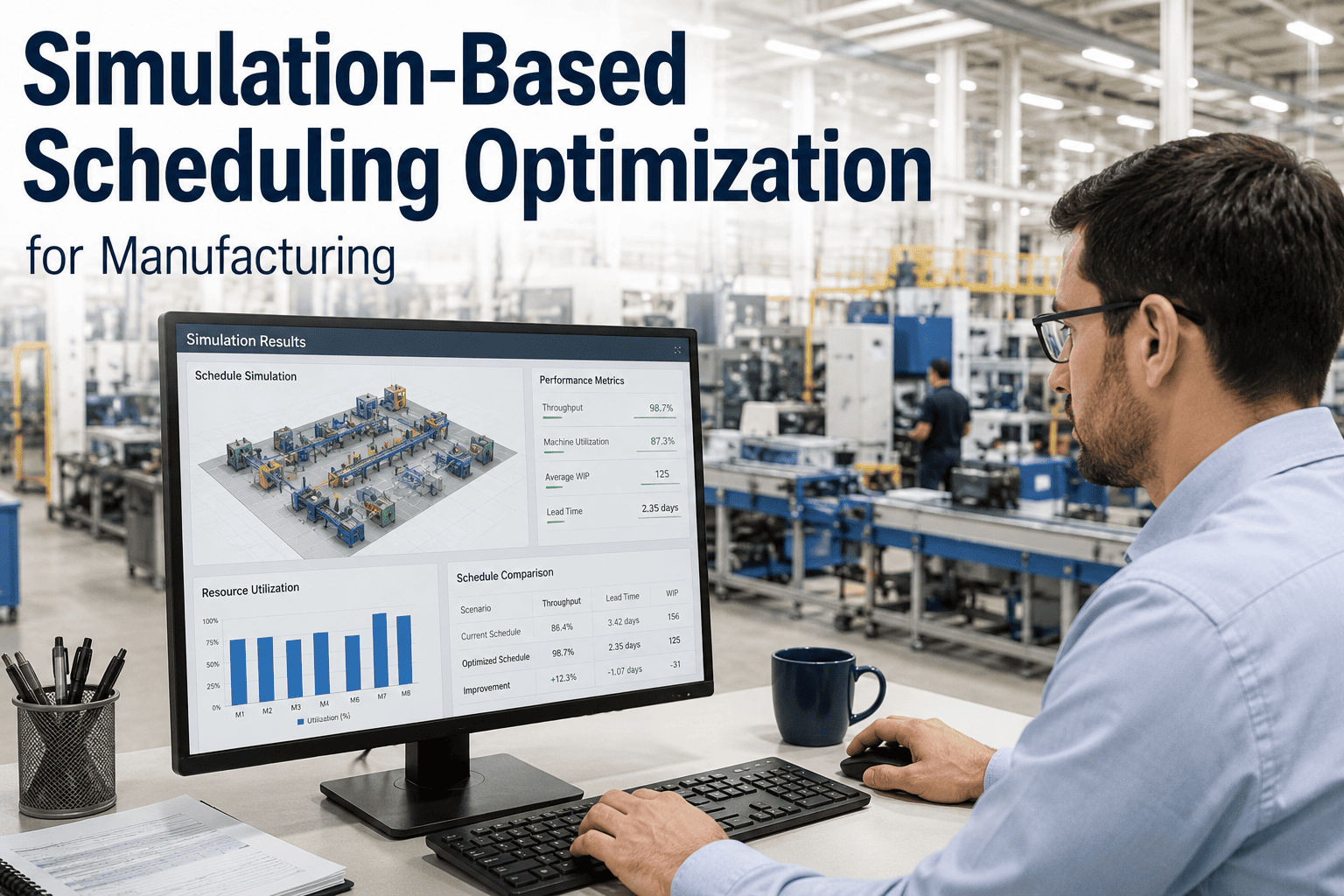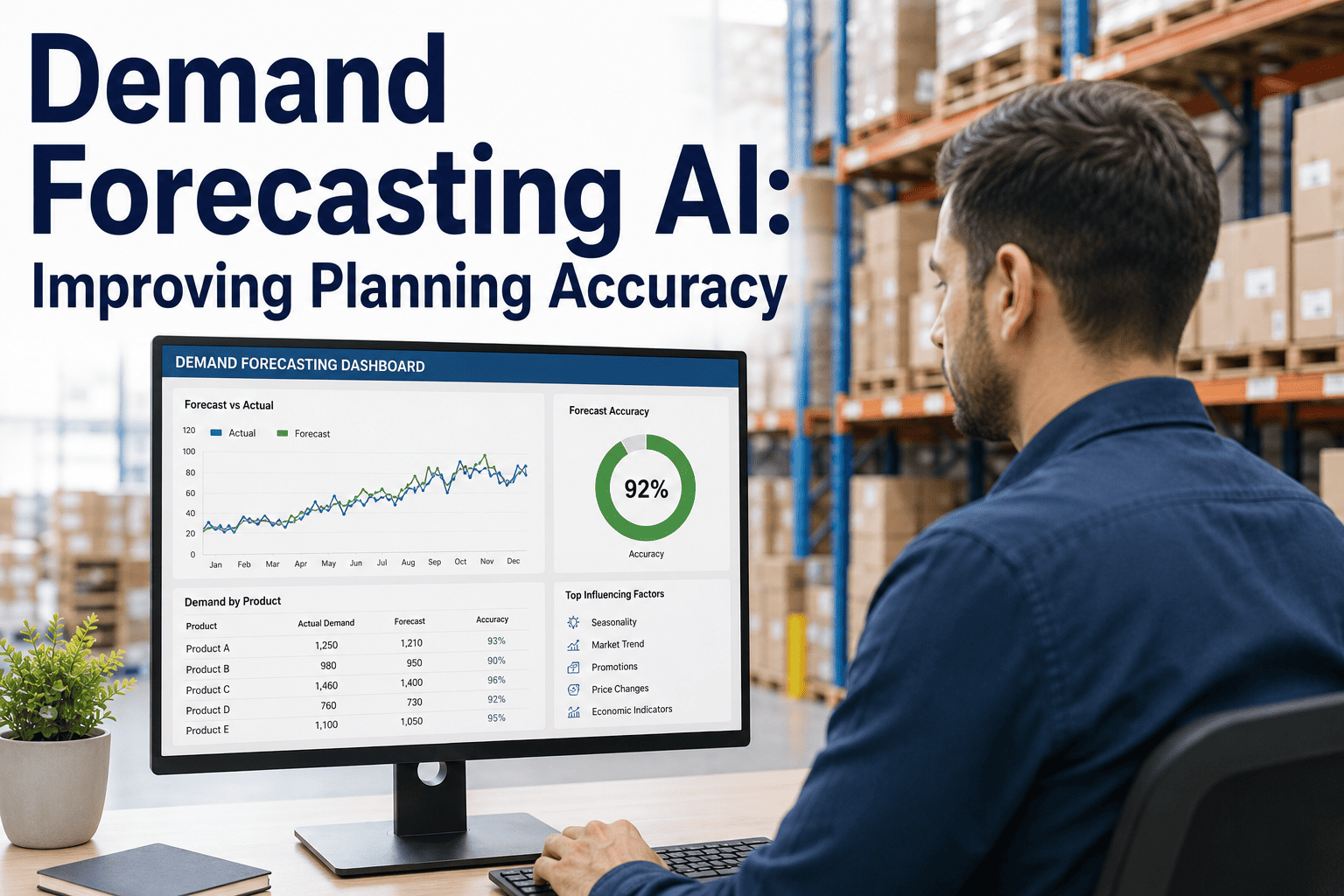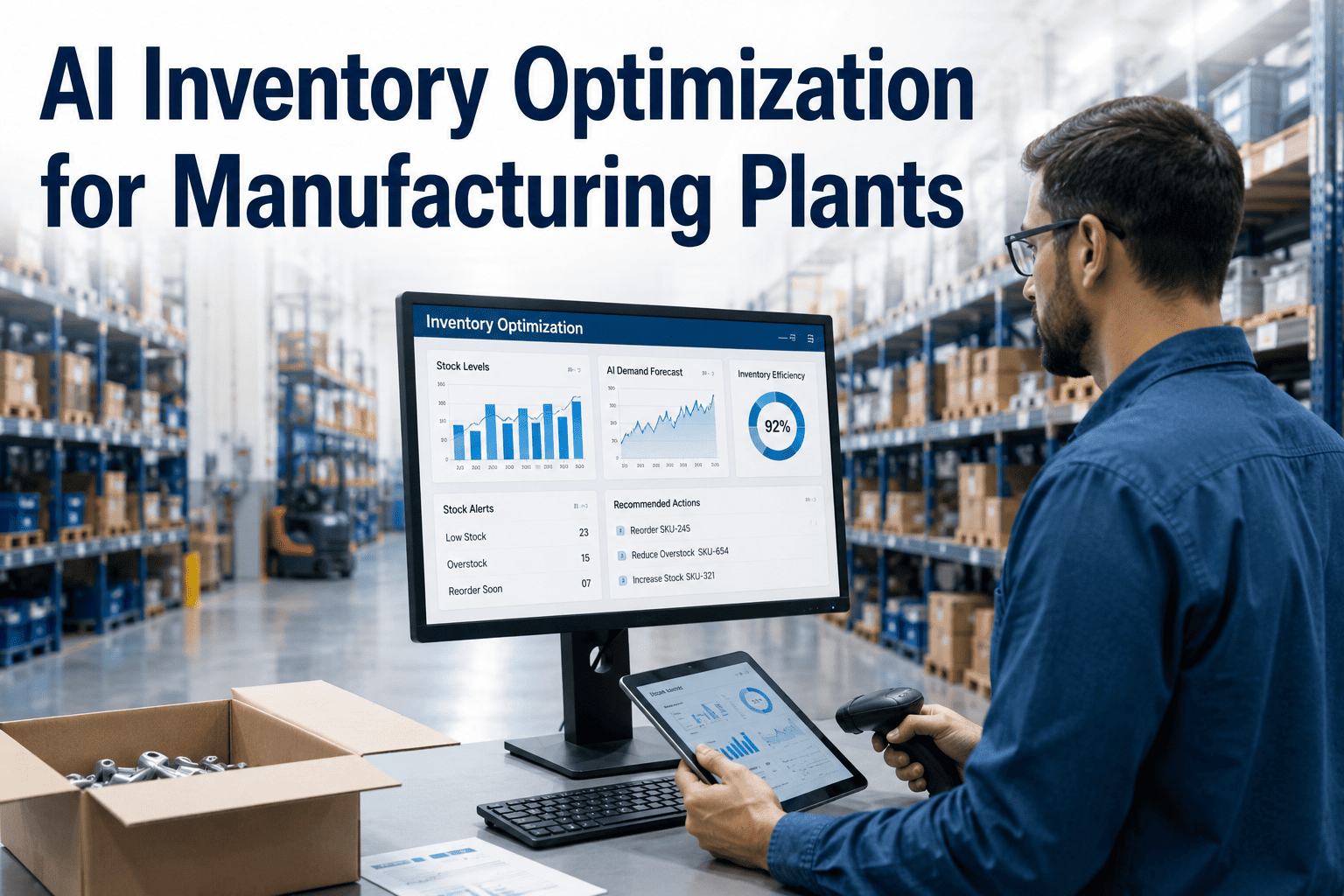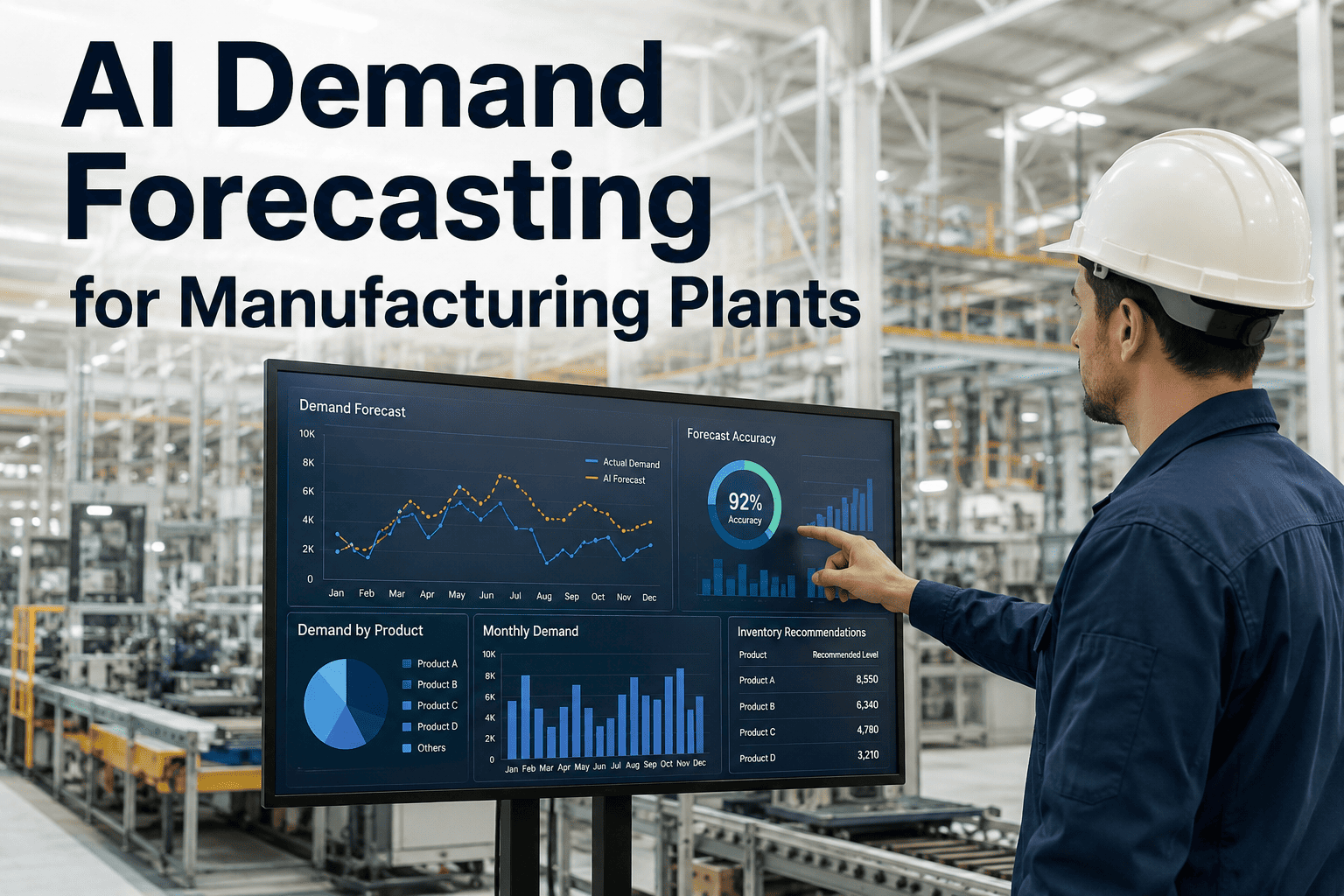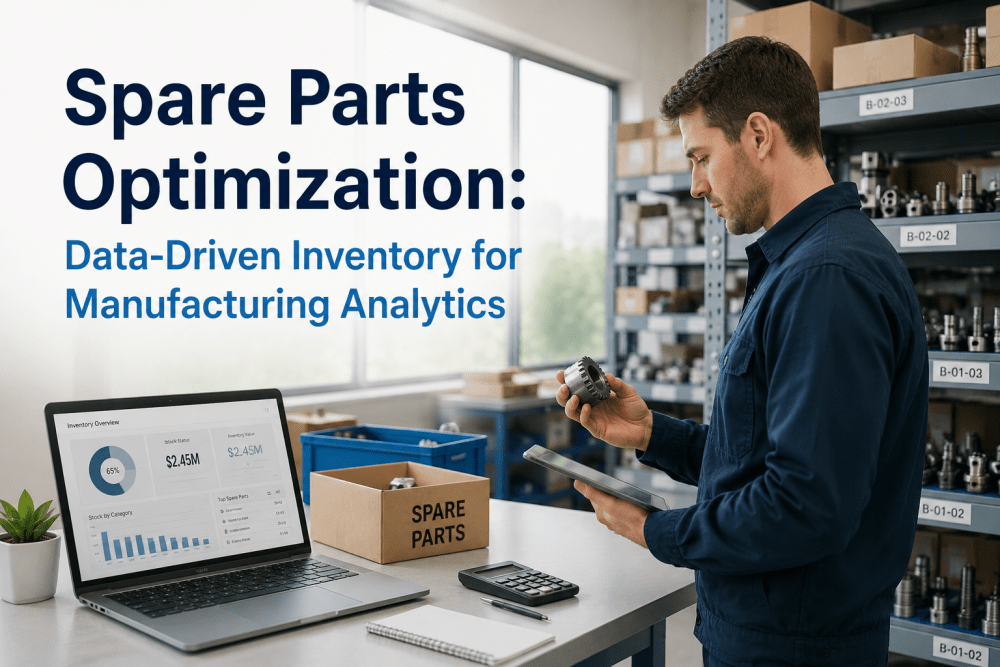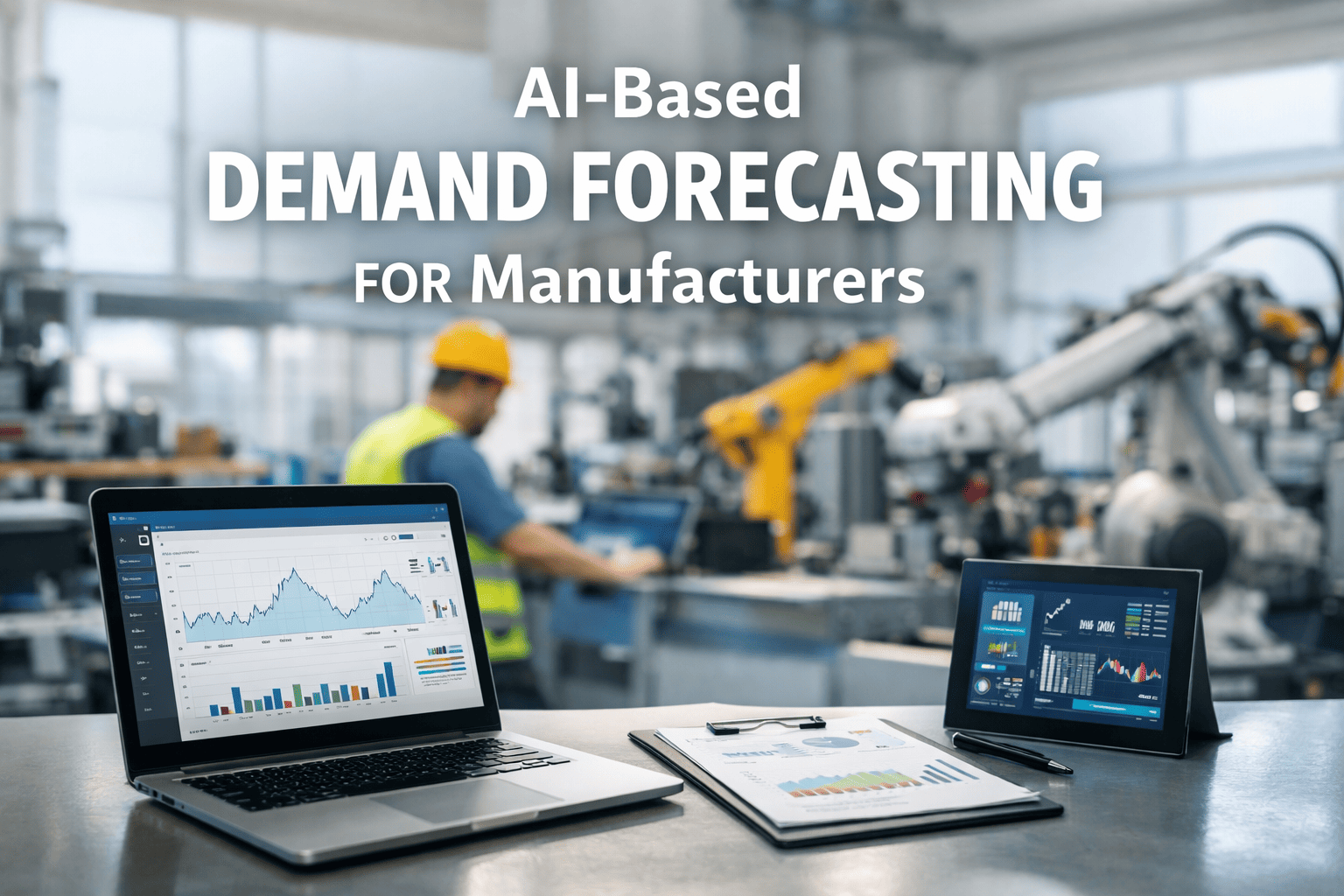
Every manufacturer knows the pain: you overproduce and warehouses overflow with dead stock. You underproduce and customers walk. Traditional demand forecasting — built on spreadsheets, gut instinct, and last quarter's numbers — was never designed for today's volatile, tariff-shifting, trend-flipping reality. AI-based demand forecasting changes the equation entirely. By combining historical sales data, real-time market signals, supplier conditions, and even weather patterns, AI reduces forecast errors by up to 50% — turning production planning from guesswork into precision.iFactory's integrated MES, CMMS, and EAM platform brings this intelligence directly to your production floor: connecting demand signals to production schedules, maintenance plans, and inventory levels in one unified system. The result? You make what the market needs, when it needs it — with zero wasted capacity and zero missed orders.
The AI in manufacturing market is projected to grow from $8.57 billion in 2025 to $287 billion by 2035 — a 42% annual growth rate. Production planning is already the leading application. Yet 56% of manufacturers are still running AI in small-scale pilots, and 72% of them still can't unify data across the manufacturing process chain. The gap between leaders and laggards is widening every quarter. iFactory bridges that gap: a single platform that connects demand intelligence to every machine, every work order, and every inventory decision on your floor.
Why Traditional Demand Forecasting Fails Manufacturers
Before exploring how iFactory solves demand forecasting, let's understand why the old methods are breaking down. The manufacturing landscape has changed — but most forecasting tools haven't kept up:
The root cause: Traditional forecasting treats demand, production, maintenance, and inventory as separate silos. A demand planner builds a forecast in a spreadsheet. A production manager builds a schedule on the floor. A maintenance team reacts to breakdowns. Nobody sees the full picture. iFactory's integrated MES + CMMS + EAM platform eliminates these silos — connecting demand signals directly to production capacity, equipment health, and spare parts availability in one unified view.
How AI-Based Demand Forecasting Actually Works
AI demand forecasting isn't magic — it's pattern recognition at a scale and speed humans can't match. Here's the three-layer intelligence model that iFactory brings to your manufacturing operation:
Why iFactory is different: Most AI forecasting tools predict demand in isolation — they don't know your Line 3 compressor is degrading, or that your best CNC operator is on leave next week, or that the bearings for your bottleneck machine are backordered. iFactory does. Because it unifies MES (production), CMMS (maintenance), and EAM (assets) into one platform, the demand forecast automatically accounts for real-world production constraints. Your plan isn't just accurate — it's executable.
5 Ways iFactory Turns Demand Forecasting Into Production Advantage
AI demand forecasting is powerful on its own. But when it's connected to your maintenance, production, and inventory systems through iFactory's integrated platform, it becomes transformative. Here's how each iFactory module contributes:
This is what "integrated" actually means. Demand forecasting without production reality is wishful thinking. Production planning without maintenance awareness is a breakdown waiting to happen. iFactory connects all three — so your forecast becomes an executable plan. See how iFactory unifies demand, production & maintenance →
iFactory's Integrated Platform vs. Siloed Forecasting Tools
The difference between AI demand forecasting in a standalone tool versus an integrated platform like iFactory isn't incremental — it's fundamental. Here's what changes when your forecast connects to your entire operation:
- Demand forecasts account for real equipment health & capacity
- Maintenance scheduled during demand valleys — never peak windows
- Inventory auto-adjusts to forecast changes in real time
- Quality feedback loop prevents defective demand fulfillment
- Single source of truth — MES + CMMS + EAM unified
- Forecast ignores maintenance schedules and equipment health
- PM happens during peak production — demand goes unfulfilled
- Inventory disconnected — stockouts during surges, excess during lulls
- Quality issues discovered after shipment — returns & warranty costs
- Data scattered across spreadsheets, ERPs, and email chains
The bottom line: IDC projects that 40%+ of manufacturers with production scheduling systems will upgrade to AI by 2026. But upgrading a silo just makes a smarter silo. The manufacturers capturing real competitive advantage are unifying demand, production, maintenance, and asset intelligence into integrated platforms like iFactory — where every system sees the same data and acts on the same plan.
Your 90-Day Demand Forecasting Transformation with iFactory
You don't need an 18-month implementation. iFactory deploys in 2–4 weeks with pre-built industry templates and starts connecting demand intelligence to production reality immediately. Here's the proven sequence:
Register every production asset into iFactory's hierarchy. Connect to your ERP via 50+ pre-built connectors (SAP, Oracle, Microsoft Dynamics). Import historical sales, production, and maintenance data. iFactory's shop floor connectivity (OPC-UA, Modbus, MQTT, PROFINET) links directly to your PLCs and SCADA systems. Guided onboarding with pre-built templates for automotive, food, pharmaceutical, chemical, and general manufacturing gets you live in days — not months.
iFactory's real-time MES dashboards immediately reveal where production doesn't match demand: overproduction on slow SKUs, missed targets on fast-movers, idle capacity during demand spikes, and unplanned downtime hitting exactly when you need machines most. Simultaneously, the CMMS establishes your maintenance baseline — MTTR, MTBF, PM compliance — so AI can start optimizing schedules around demand patterns.
iFactory's machine learning begins correlating demand patterns with production capacity, equipment health, and inventory levels. Predictive maintenance catches degrading assets before they fail during peak windows. AI-powered inventory reorder points auto-adjust to forecast changes. Production schedules start reflecting real demand signals — not just last month's numbers. This is where 22% idle time reduction and 50% faster work order cycles start compounding.
The complete iFactory intelligence loop is operational. Demand forecasts flow into production schedules (MES). Maintenance plans align to demand valleys (CMMS). Asset capacity projections inform capital decisions (EAM). Quality data feeds back into production plans. Executive dashboards show forecast accuracy, OEE, MTTR, and cost per unit side by side — giving leadership the full picture. This is where 200–400% ROI within 12–18 months begins.
Real results from iFactory deployments: 500+ facilities across 50+ countries. 40% less unplanned downtime. 70% fewer emergency repairs. 25–40% lower maintenance costs. $150K+ average annual savings per facility. Enterprise customers save $1.8M–$3.2M annually. When you add demand-driven production scheduling on top of these operational gains, the compounding effect is transformative — because every machine is running the right product, at the right time, in the right condition.
The Global AI Manufacturing Transformation — By the Numbers
AI-based demand forecasting isn't a niche experiment — it's the centerpiece of a global industrial transformation. The manufacturers investing now are building compounding advantages that late adopters may never close:
Frequently Asked Questions
Traditional forecasting relies on historical sales data and linear statistical models — it works when markets are stable and predictable. AI demand forecasting combines historical data with real-time market signals, external factors (weather, trade policy, social trends), and — through iFactory — real-time production capacity and equipment health data. AI models detect non-linear patterns and interactions between variables that spreadsheets simply cannot identify. The result is up to 50% reduction in forecast errors, especially in volatile, seasonal, or promotion-heavy environments.
Most AI forecasting tools predict demand in isolation — they don't know if your bottleneck machine needs maintenance next week or if critical spare parts are backordered. iFactory unifies MES (production monitoring), CMMS (maintenance management), and EAM (asset lifecycle) into one platform. This means demand forecasts automatically account for real-world production constraints: equipment health, maintenance schedules, spare parts availability, and workforce capacity. Your plan isn't just accurate — it's executable.
iFactory includes 50+ pre-built connectors for SAP, Oracle, and Microsoft Dynamics via REST APIs. Shop floor connectivity supports OPC-UA, Modbus, MQTT, Ethernet/IP, and PROFINET — connecting directly to your existing PLCs and SCADA systems. Most integrations complete in 2–4 weeks. iFactory also supports on-premise deployment for manufacturers who need data sovereignty, with edge AI inference running locally without cloud dependencies.
iFactory deploys in 2–4 weeks with pre-built industry templates. Immediate visibility gains — seeing where production doesn't match demand — happen in the first two weeks. AI predictive models reach full accuracy within 60–90 days as they learn your facility's patterns. Meanwhile, the CMMS delivers instant value: 40% less unplanned downtime and 70% fewer emergency repairs. Facilities typically achieve 200–400% ROI within 12–18 months, with $150K+ average annual savings per site.
Any manufacturer dealing with variable demand, seasonal patterns, or supply chain complexity benefits. iFactory supports automotive manufacturing, food & beverage processing, pharmaceutical production, chemical manufacturing, semiconductor & electronics, power generation, and general manufacturing with pre-built industry templates. The highest ROI typically comes from industries with high inventory carrying costs, seasonal demand swings, or complex multi-SKU production environments — where even small forecast accuracy improvements translate to significant cost savings.
Stop Guessing. Start Forecasting. Start Producing What the Market Needs.
Every day with disconnected demand forecasting is a day of overproduction, stockouts, and missed revenue. iFactory unifies demand intelligence with production capacity, maintenance health, and inventory levels — so your forecast becomes an executable plan. 500+ facilities. 50+ countries. 40% less downtime. See how iFactory transforms your demand planning in 30 minutes.