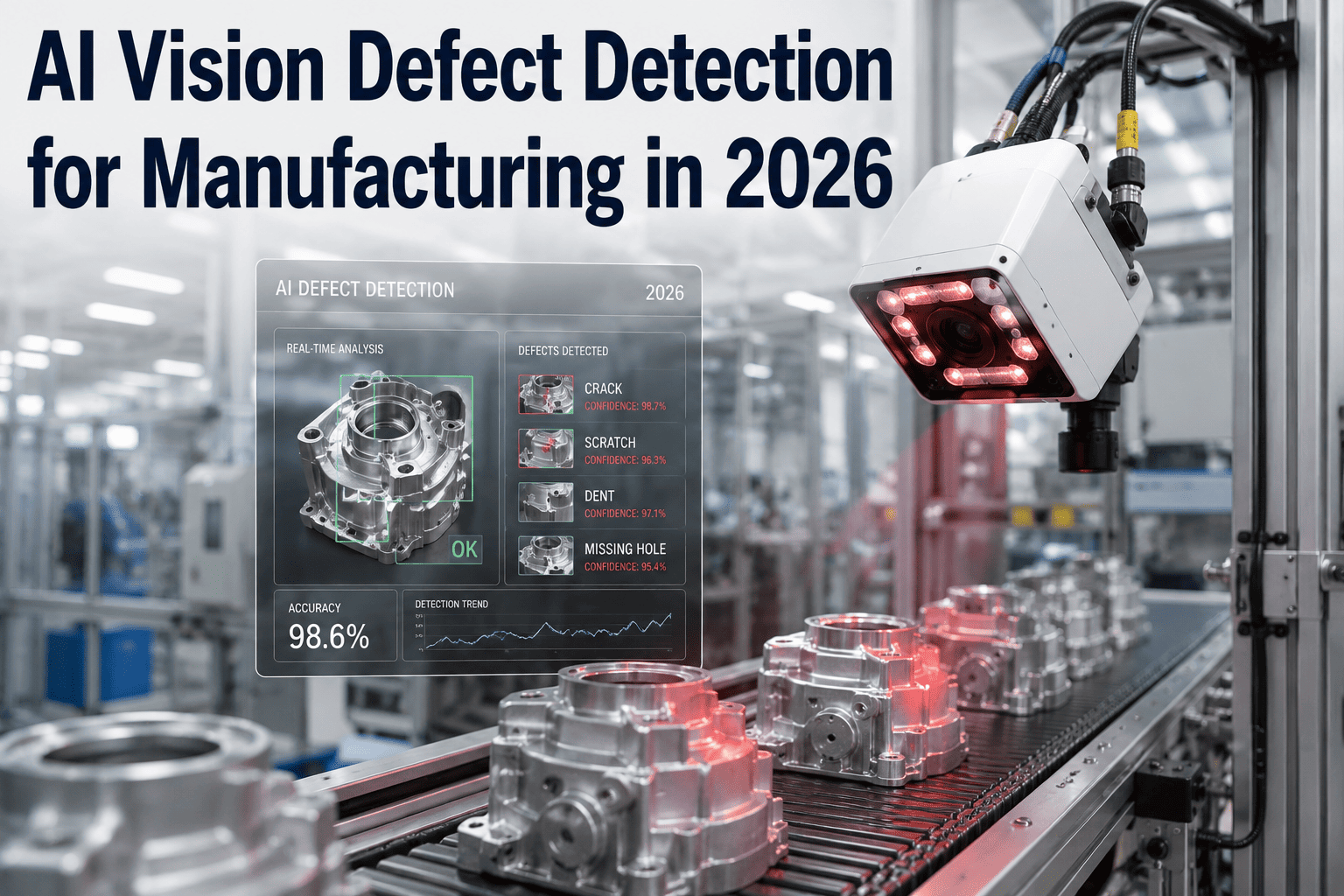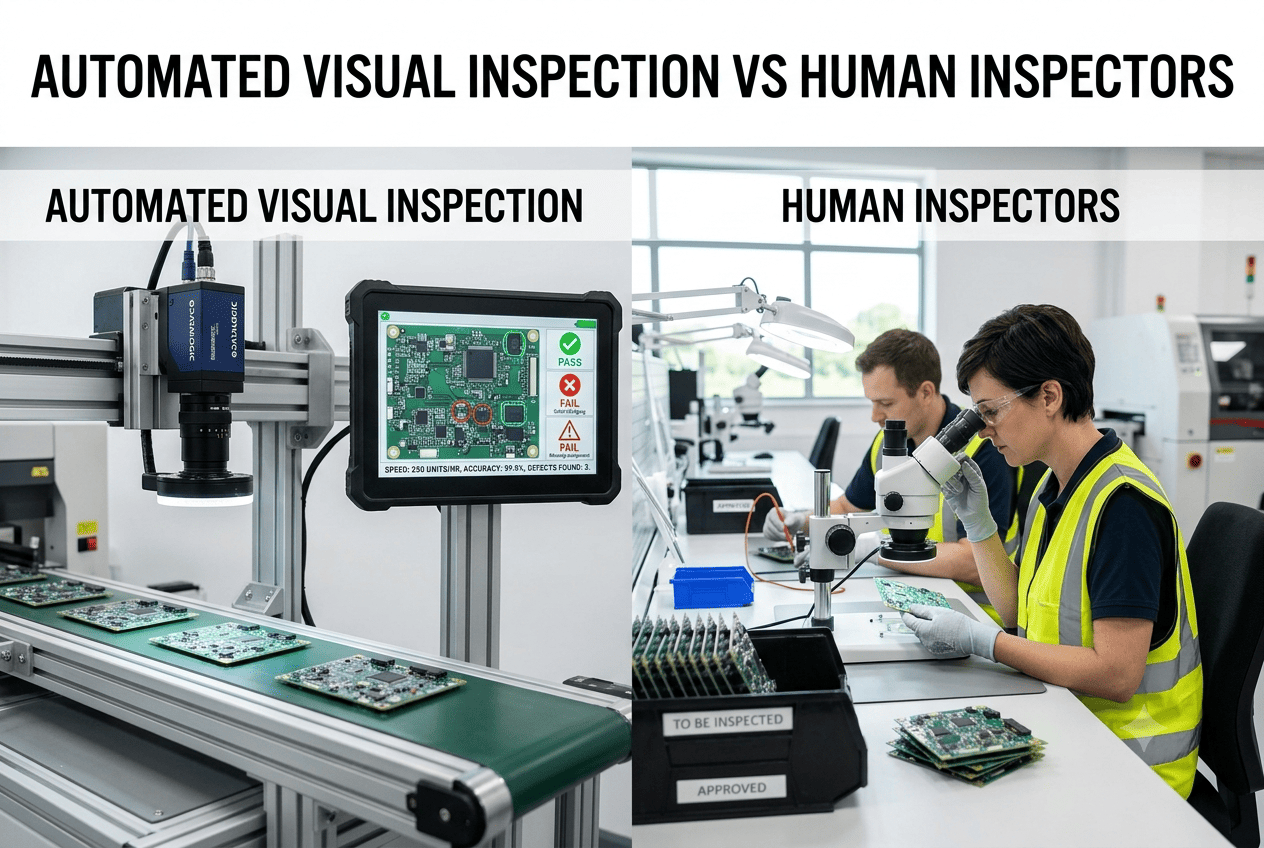
Your best inspector is not careless. They're biologically limited. The human visual system evolved to scan landscapes for predators, not to catch a 50-micron scratch on a metal surface moving at line speed for six straight hours. That's not a training gap or a motivation problem, it's just what happens to attention and accuracy over a shift. Quality leads who understand this stop asking inspectors to do the impossible and start asking where automated vision genuinely outperforms a human eye. See the honest comparison for your own line when you book a demo.
Human Inspectors Miss 20-30% of Defects. Here's the Honest Comparison With AI Vision.
This isn't a case against your inspection team — it's a clear-eyed look at where human judgment excels, where fatigue and speed work against it, and where AI vision closes the gap without replacing the people who understand your product best.
Where the Numbers Actually Land
These aren't marketing figures pulled from a vendor deck — they reflect what happens under real production conditions, shift after shift, on lines running at commercial speed.
Every Defect Your Inspectors Miss Is a Defect Your Customer Finds
A 20-30% miss rate on a busy line adds up fast. See what AI vision catches that your current inspection process doesn't.
Three Reasons Human Inspection Struggles at Line Speed
Sub-Second Decision Windows
An inspector has roughly 200 to 300 milliseconds to evaluate a part before the next one arrives, which leaves almost no margin for a careful second look.
Fatigue-Driven Drift
Accuracy degrades noticeably within just a couple of hours of continuous observation, with the steepest drop typically showing up in the final hours of a shift.
Inconsistent Judgment Between Inspectors
Agreement between different inspectors on the same defect's severity is often only 55-70%, meaning the same part can pass on one shift and fail on another.
This Isn't Actually a Contest — It's a Division of Labor
The honest answer isn't "replace all inspectors." It's recognizing which tasks play to a camera's strengths and which still benefit from a trained human's judgment.
| Task | Better Suited To | Why |
|---|---|---|
| High-speed surface defects | AI Vision | Sub-100ms inspection at full line speed with no fatigue |
| Sub-millimeter flaw detection | AI Vision | Resolves defects as small as 50 microns reliably |
| Root cause investigation | Human Inspector | Contextual judgment on why a defect pattern is emerging |
| Process improvement decisions | Human Inspector | Experience-driven insight AI data feeds but doesn't replace |
| 24/7 consistent pass/fail calls | AI Vision | Identical standard applied every part, every shift |
Three Phases From Pilot Camera to Full Line Coverage
Quality leads rarely need to choose between AI and their inspection team on day one. A phased rollout lets the model earn trust against real human judgment before it ever makes an independent call.
Shadow-Run Validation
The camera captures images alongside existing inspectors without making any pass/fail decision itself, building an initial training set from your real parts and real lighting.
Parallel Confirmation
AI flags run alongside human calls so the team can measure agreement rates and tune detection thresholds before the system takes on any independent authority.
Full Autonomous Inspection
The AI system makes the pass/fail call at full line speed, while inspectors shift their attention to exception review and root cause investigation.
What a 20-30% Miss Rate Actually Costs
One automotive parts manufacturer caught roughly 75% of surface defects with a 12-person inspection team working three shifts. After deploying AI vision on two critical lines, detection jumped to 95% and customer complaints dropped 85% within four months, with the system paying for itself in seven.
See the Comparison on Your Own Production Line
Bring your current defect rate and inspection setup, and we'll show you exactly where AI vision closes the gap without displacing your quality team.
Questions Quality Leads Ask Before Comparing Systems
Stop Asking Your Inspectors to Do the Biologically Impossible
iFactory's vision AI catches what human inspection structurally cannot at line speed. Book a demo and see the honest comparison on your own product.