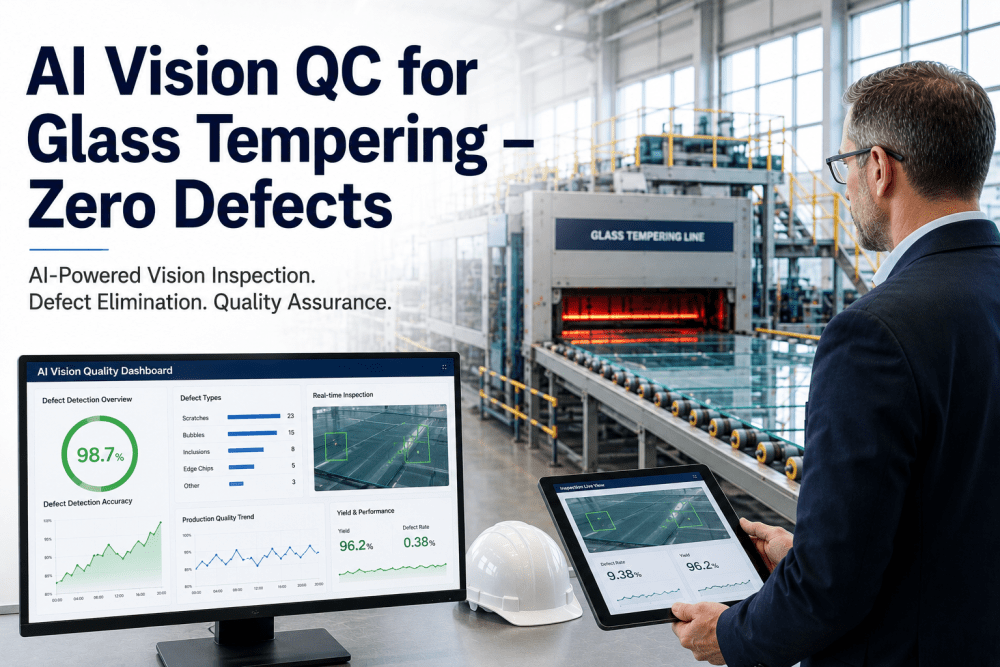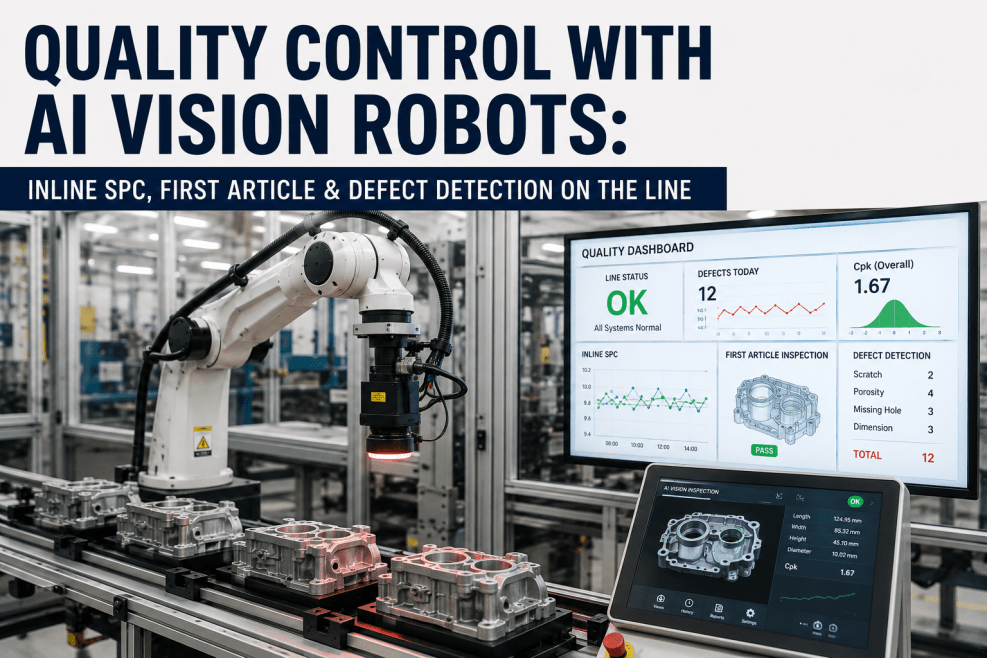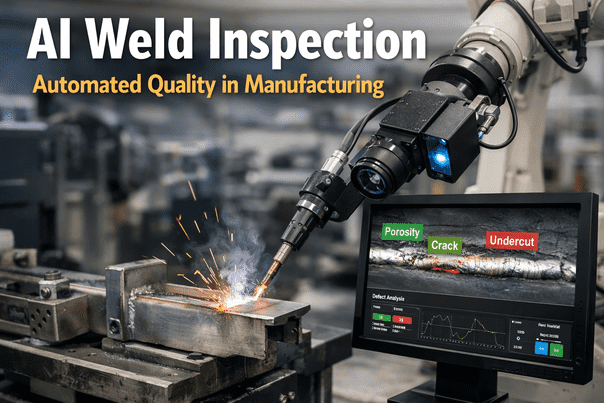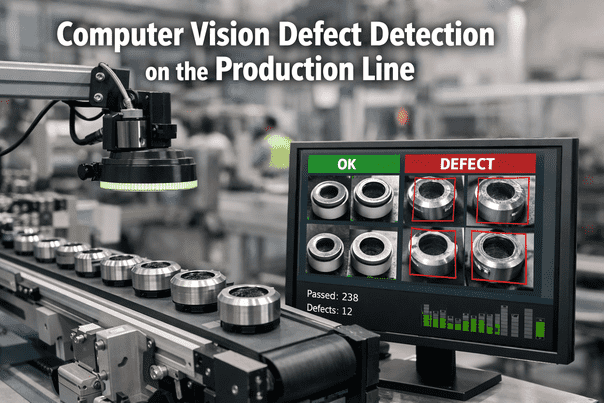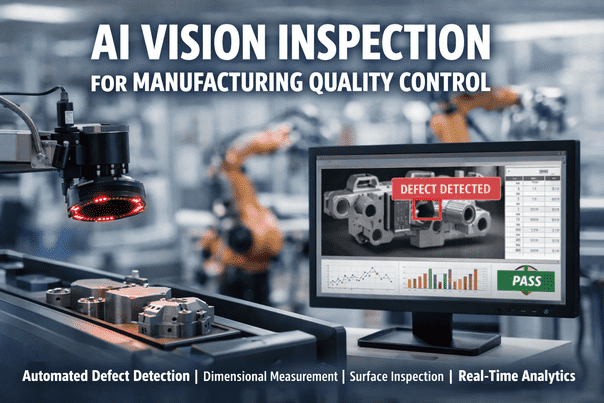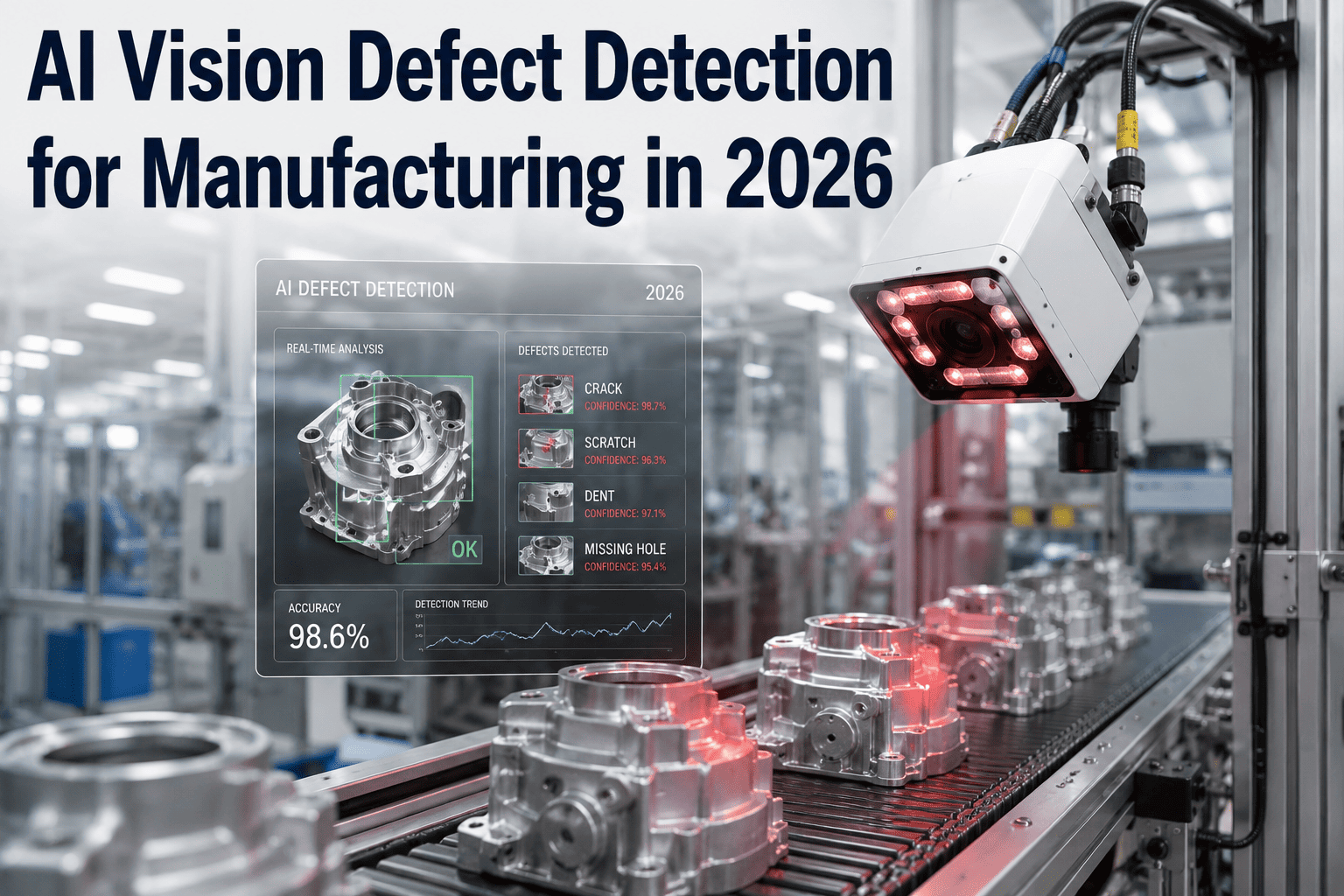
A human inspector on a fast line has to make a pass or fail decision in under a second, hundreds of times a shift, and fatigue sets in long before the shift ends. That is not a criticism of the people doing the job, it is a structural limit of human attention applied to a repetitive visual task. AI vision systems do not get tired, do not blink at the wrong moment, and can inspect every single part instead of a sampled few. What has changed by 2026 is not the core idea, it is that deploying vision AI no longer requires a machine learning team or a six figure integration project. If your quality process still relies on sampling or end of line spot checks, book a demo and we will show what full-line inspection would catch on your parts.
Vision AI in 2026
AI Vision Defect Detection for Manufacturing in 2026
Why plants are replacing sampled human inspection with 100% AI vision coverage, and what it actually costs to deploy
Human Inspection vs AI Vision, Side by Side
Human Inspection
Inspects a sampled percentage of parts, not every unit
Accuracy drifts with fatigue across a shift
Judgment varies between inspectors and shifts
Limited to the inspection speed of the human eye
AI Vision Inspection
Inspects every single part at full line speed
Accuracy stays constant regardless of shift length
Applies the same defined standard every time
Runs at camera frame rate, not human reaction time
What Plants See After Deployment
100%
Of parts inspected instead of a sampled percentage
2-5x
Typical increase in defects caught before shipment
Weeks
Not months, to go from pilot to production line deployment
How Vision AI Actually Deploys on a Line
01
Camera and Lighting Setup
Cameras are positioned and lighting is tuned to the specific part geometry and defect types being targeted.
02
Sample Collection
A few hundred images of good, marginal, and defective parts are captured directly from the line.
03
Model Training
The model learns your specific defect classes using transfer learning, not training from a blank slate.
04
Pilot Run Alongside Human Inspection
The model runs in parallel with the existing process to validate accuracy before it takes over the decision.
05
Full Line Cutover
Once accuracy is validated, the system takes over inspection at full line speed with ongoing monitoring.
See What Full-Line Inspection Would Catch
Send us sample images from your line and we will show what an AI vision model would flag that a sampled inspection process misses.
Where Vision AI Is Already Running in Production
Automotive Components
Surface scratches, weld quality, and dimensional checks on stamped and machined parts.
Electronics Assembly
Solder joint quality, component placement, and missing part detection on populated boards.
Food and Beverage
Fill level checks, label placement, and foreign object detection on packaging lines.
Pharmaceutical Packaging
Blister pack completeness, label accuracy, and seal integrity verification at line speed.
What Deployment Actually Costs
| Cost Component | What It Covers |
|---|---|
| Camera and lighting hardware | Fixed one-time cost per inspection station, varying with resolution and speed needs |
| Model training and setup | One-time cost to build the defect classes for your specific parts |
| Ongoing platform access | Typically a recurring cost covering monitoring, retraining, and support |
| Integration to line systems | Connecting pass or fail decisions to your existing reject mechanism or CMMS |
Mistakes That Slow Down a Vision AI Rollout
Skipping the parallel run phase
Cutting straight to full automation without validating against human inspection first removes the safety net that catches early model gaps.
Underestimating lighting consistency
Ambient light changes across shifts can shift image quality enough to affect accuracy if lighting is not properly controlled.
Not defining marginal cases up front
Waiting until deployment to decide what counts as a borderline defect leads to inconsistent accept and reject decisions.
Treating the model as a one-time build
New defect types and material changes require periodic retraining, not a single setup that runs untouched forever.
Frequently Asked Questions
How accurate is AI vision compared to a trained human inspector?
Well-trained vision models regularly match or exceed human accuracy on defined defect classes, particularly for subtle or repetitive patterns that cause human fatigue. The comparison depends heavily on how well the model was trained on your specific parts, which is why a validated parallel run against human inspection matters before full cutover.
Do we need a data science team on staff to run this?
No, the platform should handle training, monitoring, and retraining without requiring in-house machine learning expertise. Your team's role is providing sample images and defect knowledge, not writing model code. Book a demo to see what the day to day workflow looks like for a quality team.
How long does it take to go from pilot to full production?
Most single-station deployments move from initial image collection to a validated pilot within a few weeks, assuming defect classes are well defined from the start. Full production cutover typically follows once the parallel run demonstrates accuracy that matches or exceeds current inspection performance.
Can the same system handle multiple defect types at once?
Yes, a single vision model can be trained to recognize several defect classes simultaneously, such as scratches, missing components, and dimensional issues on the same part. Adding new defect classes later typically means adding labeled examples rather than rebuilding the entire system.
What happens when the model encounters a defect type it has never seen?
Well-configured systems flag low-confidence decisions for human review rather than silently guessing, which catches genuinely novel defect types as they appear. Those flagged cases then become training examples for the next model update. Reach out to support if you want to see how confidence thresholds are configured.
Stop Sampling When You Can Inspect Every Part
Bring a batch of parts and your current defect definitions, and we will show what full-line AI vision coverage would look like on your process.