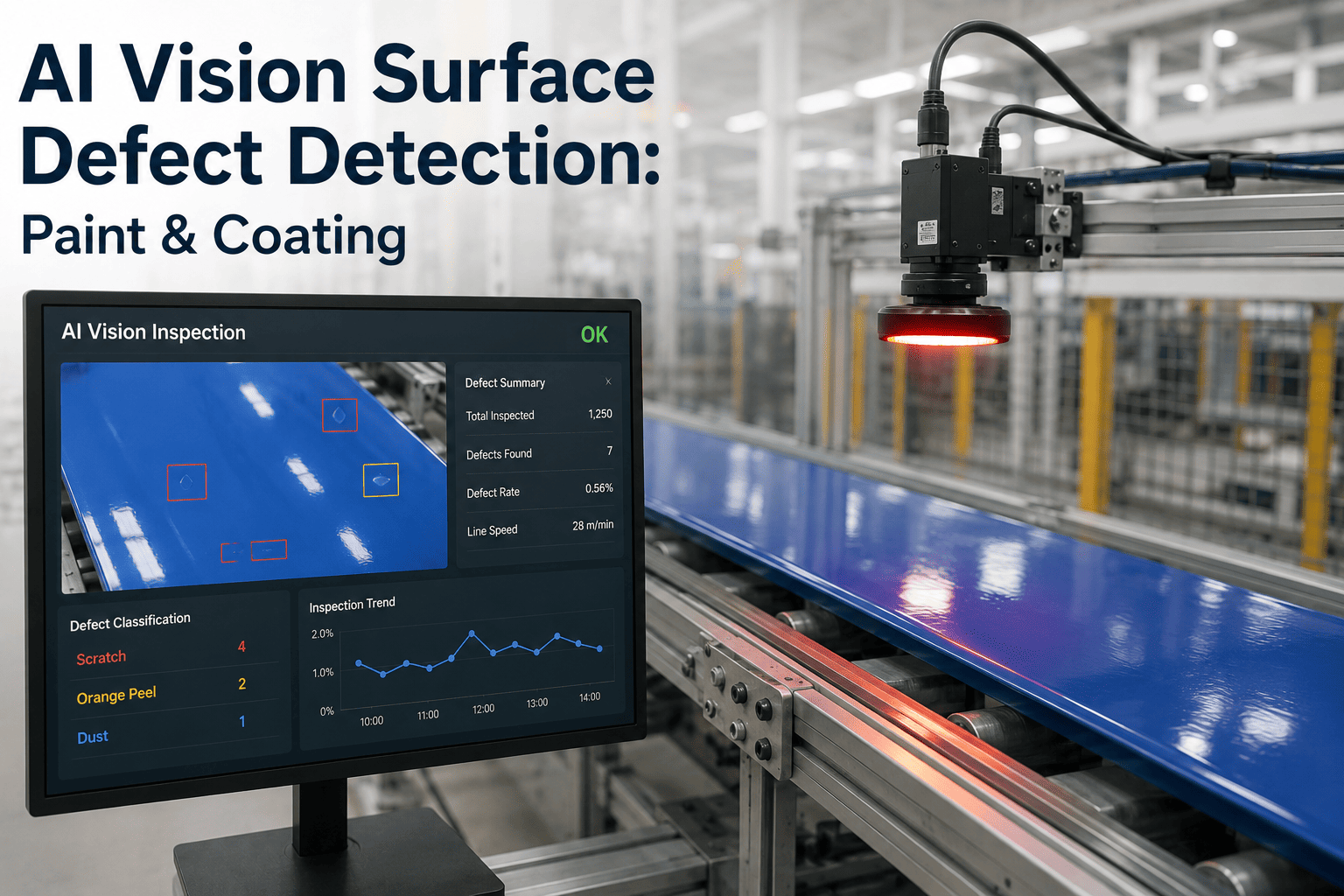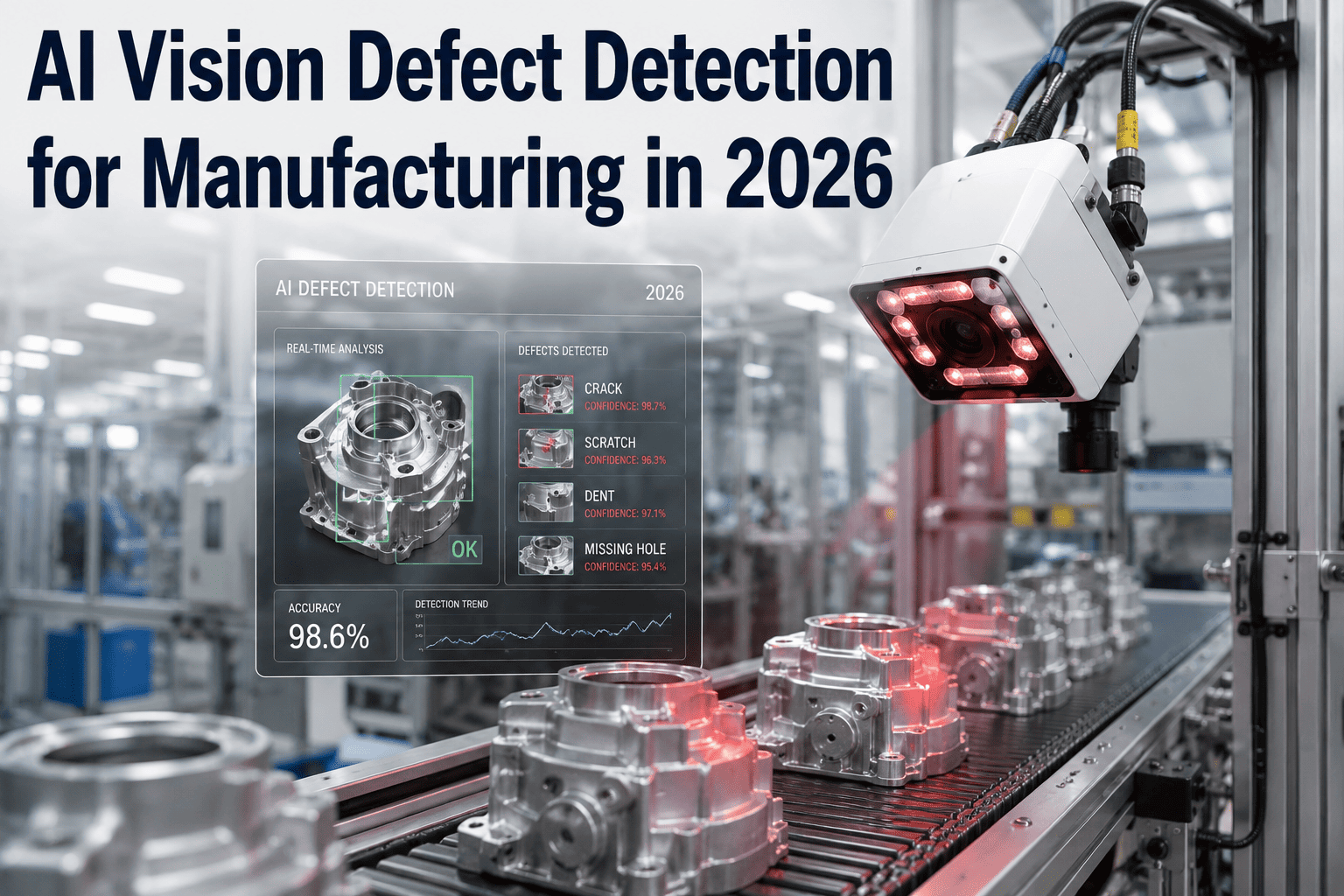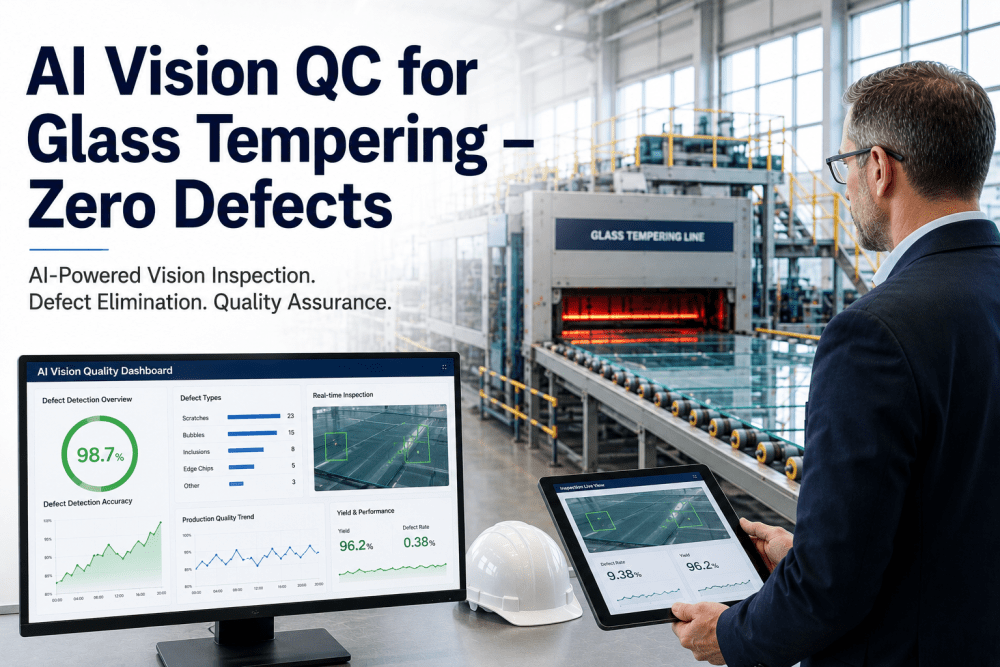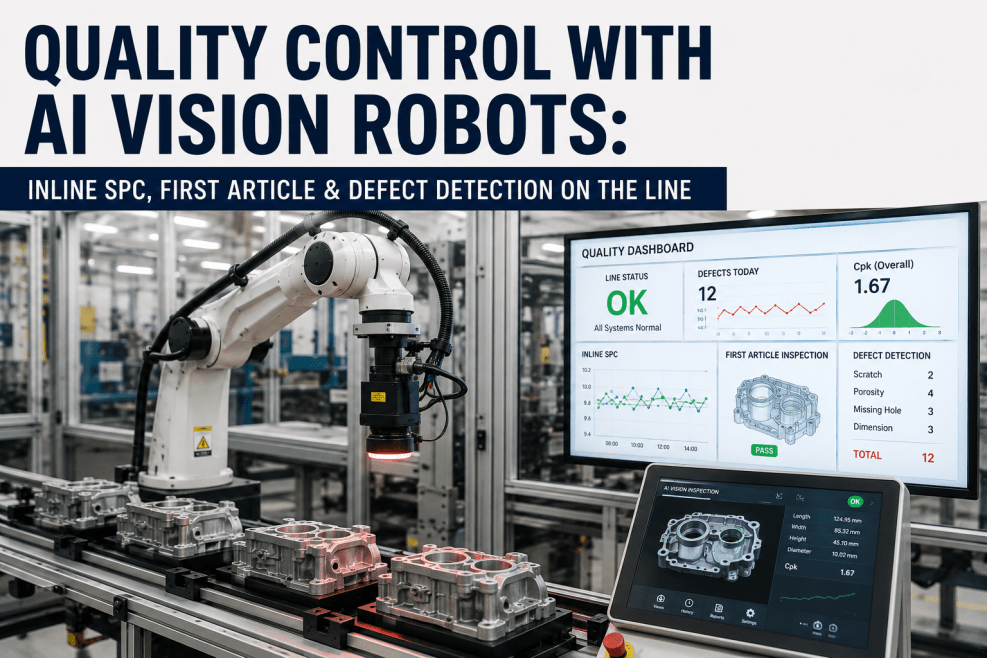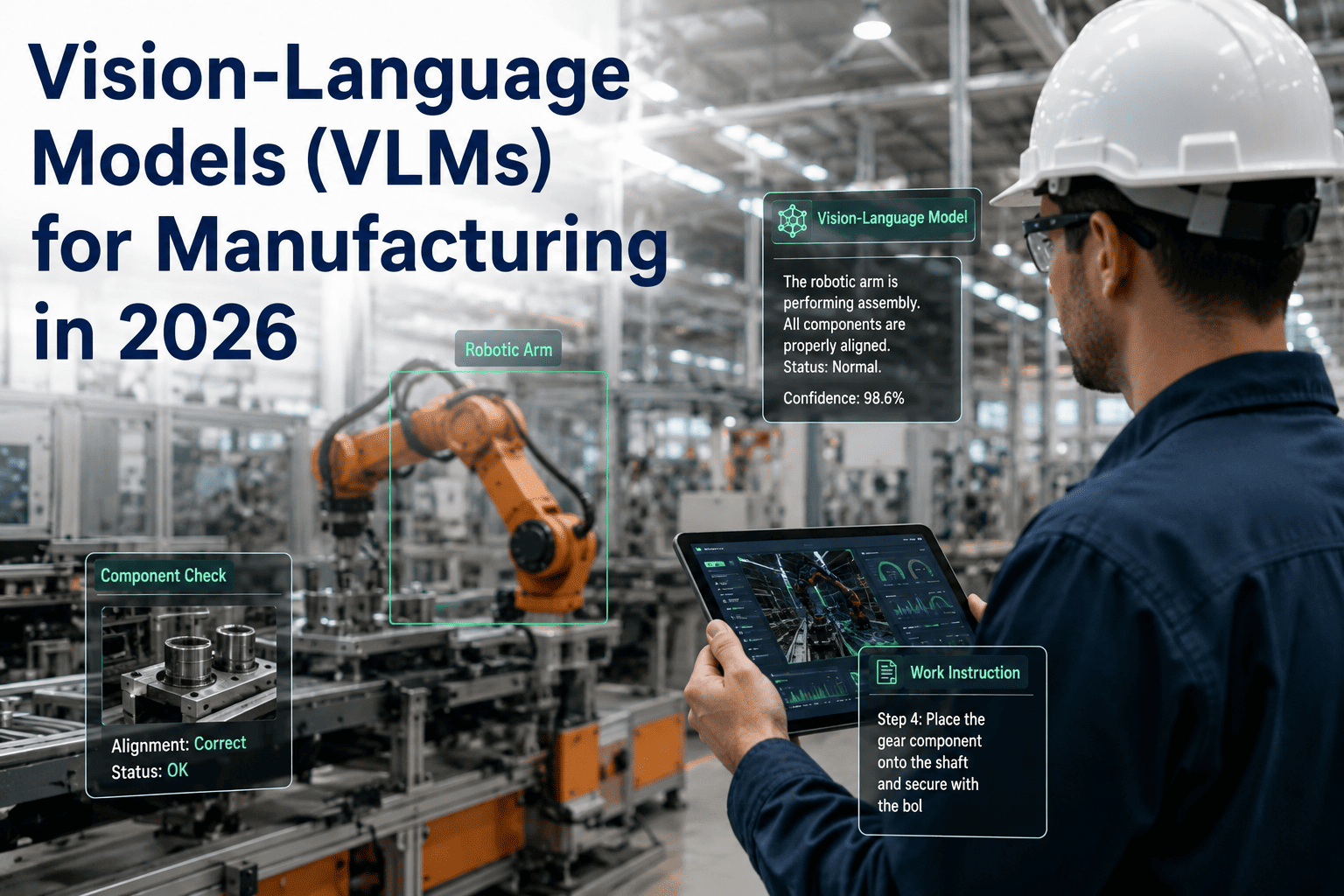
A traditional convolutional model can tell you a part failed inspection. It cannot tell you why, in words an operator can act on, or answer a follow-up question about whether the same flaw showed up on the previous shift. Vision-language models close that gap by pairing visual perception with language reasoning in a single system, which is why AI Engineers evaluating 2026 roadmaps are looking past pure classification accuracy toward models that can explain, generalize, and be queried like a colleague. The practical deployment patterns are still narrower than the research hype suggests, and worth understanding before you scope a pilot with iFactory Support.
Conventional deep learning inspection models are discriminative: trained on labeled images, they classify what they have already seen and struggle badly the moment a new defect type appears that was never in the training set. Every new product variant or defect class historically meant relabeling data and retraining, which is expensive engineering time that never fully catches up with a fast-changing product line. Vision-language models change that relationship because the language model component brings general world knowledge into the visual task, letting the system reason about a defect it has never explicitly been trained to name, in something closer to the way a human quality inspector would describe an unfamiliar flaw.
That reasoning ability also solves a second, quieter problem: black-box opacity. A CNN that flags a part as defective gives an engineer a confidence score and nothing else, so validating the call still requires a human to look at the image anyway. A VLM can generate a short natural-language justification alongside the classification, describing the defect's location, likely cause, and severity, which is what actually gets adopted by quality teams that were burned by unexplainable false positives from earlier generations of AI vision tools.
| Capability | CNN / Discriminative Model | Vision-Language Model |
|---|---|---|
| Output format | Class label and confidence score | Natural-language description and reasoning |
| New defect types | Requires relabeling and retraining | Few-shot or zero-shot generalization possible |
| Explainability | Opaque, score only | Written justification tied to the image |
| Query interaction | Fixed output, no follow-up | Supports natural-language follow-up questions |
| Compute footprint | Lightweight, edge-friendly | Heavier, often needs GPU inference |
Instead of a bare pass/fail flag, the model writes a short defect report describing location, likely cause, and severity, cutting the time a quality engineer spends manually documenting each escalation.
When a defect type the model has never explicitly seen appears, few-shot VLM approaches can still classify and describe it by reasoning from visually similar known categories, buying time before a full retrain.
Engineers can ask the system direct questions like whether a specific defect pattern appeared on a given shift, getting a conversational answer instead of writing a new query against a labeled dataset.
A single VLM pipeline can be adapted across multiple product lines with far less per-product labeled data than a dedicated CNN would need for each one, which matters most for high-mix, low-volume manufacturers.
VLMs are not a drop-in replacement for existing CNN-based inspection at full line speed, because the language reasoning step adds latency that a pure classifier does not have. The architecture pattern gaining traction in production is a two-stage hybrid: a fast, lightweight localizer flags candidate regions in real time, and the VLM is invoked selectively on those flagged regions to generate the classification and explanation. Engineers who try to run a VLM as the sole inspection model at full line speed usually hit a throughput wall before they hit an accuracy problem.
The lowest-risk path keeps existing CNN-based inspection running as the primary real-time gate and layers a VLM in as a secondary reasoning step on flagged parts only. This avoids touching a line-speed-critical system while still capturing the explainability and generalization benefits where they matter most: on the ambiguous cases a CNN already struggles with. Once the hybrid pipeline has run long enough to build a labeled history of VLM-generated explanations, that data becomes a strong foundation for fine-tuning a smaller, faster domain-specific model that can eventually take over more of the real-time load.
An AI Engineer scoping a VLM pilot faces a real choice between open-weight models that can be fine-tuned and hosted on private infrastructure, and proprietary API-based models that offer stronger out-of-the-box reasoning but come with data residency and per-call cost considerations. Open-weight options give manufacturers full control over where images are processed, which matters for plants handling proprietary product designs or operating under strict data governance policies, but they require in-house ML engineering capacity to fine-tune and maintain. Proprietary API models tend to reason better on novel or ambiguous defects out of the box, since they are trained on far larger and more general datasets, but every image sent to an external API needs a clear data handling agreement in place first.
Most manufacturing deployments in 2026 land on a hybrid approach: a proprietary model is used during the pilot phase to validate the use case quickly, and the resulting labeled interactions are then used to fine-tune a smaller open-weight model that can eventually run on private infrastructure at lower per-inference cost once the pipeline is proven.
VLMs are more forgiving of lighting variation than older CNN pipelines, but consistent camera positioning still meaningfully improves reasoning accuracy on subtle surface defects.
Budget for GPU-backed inference either on-premises or through a private cloud instance, since VLM reasoning is meaningfully heavier than a lightweight CNN classifier running at the edge.
Even few-shot approaches need a small, high-quality reference set of confirmed defects to validate the model's reasoning against before trusting it on ambiguous new cases.
Engineer-confirmed corrections should feed back into the system continuously, since this feedback loop is what improves accuracy on your specific product line over time.