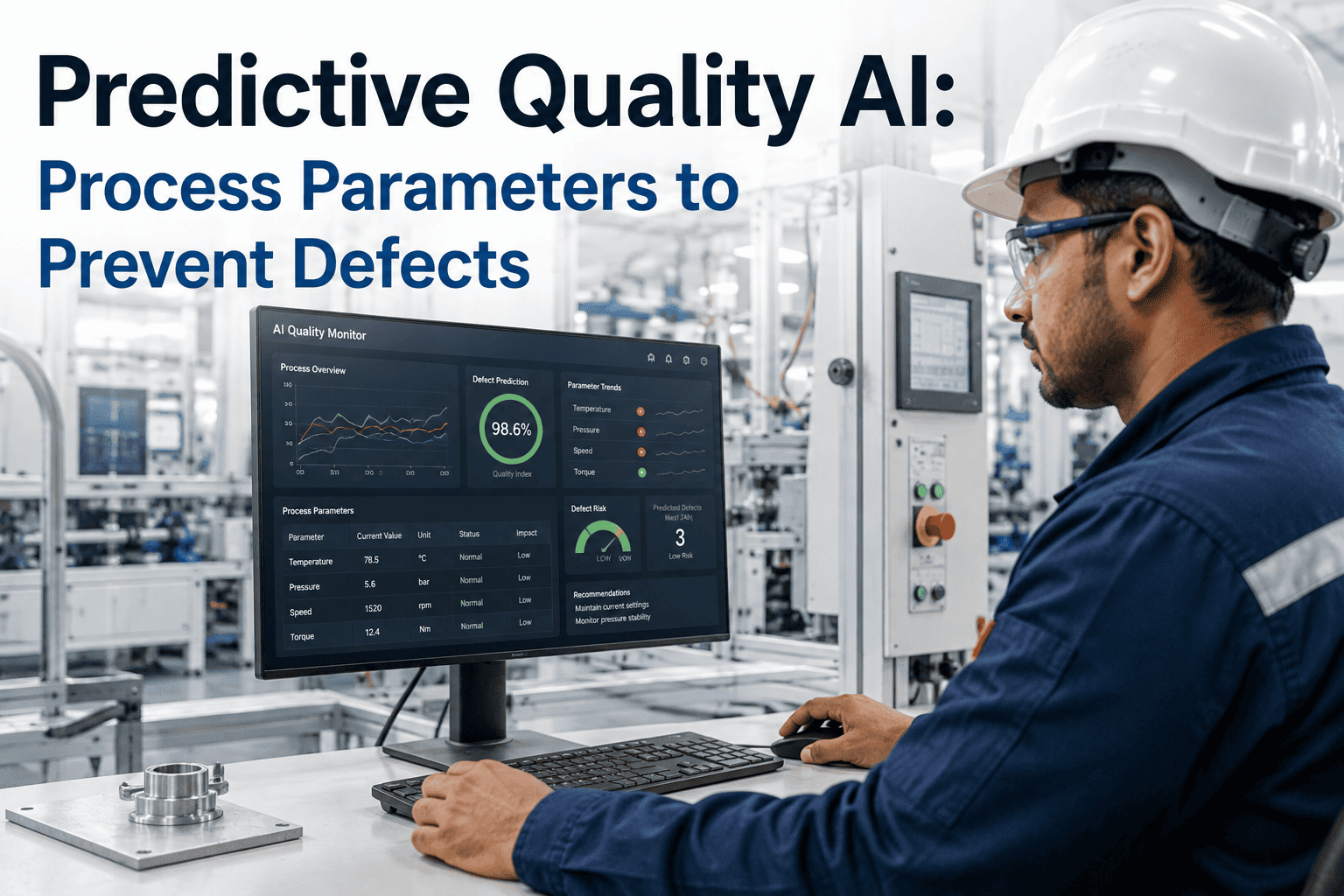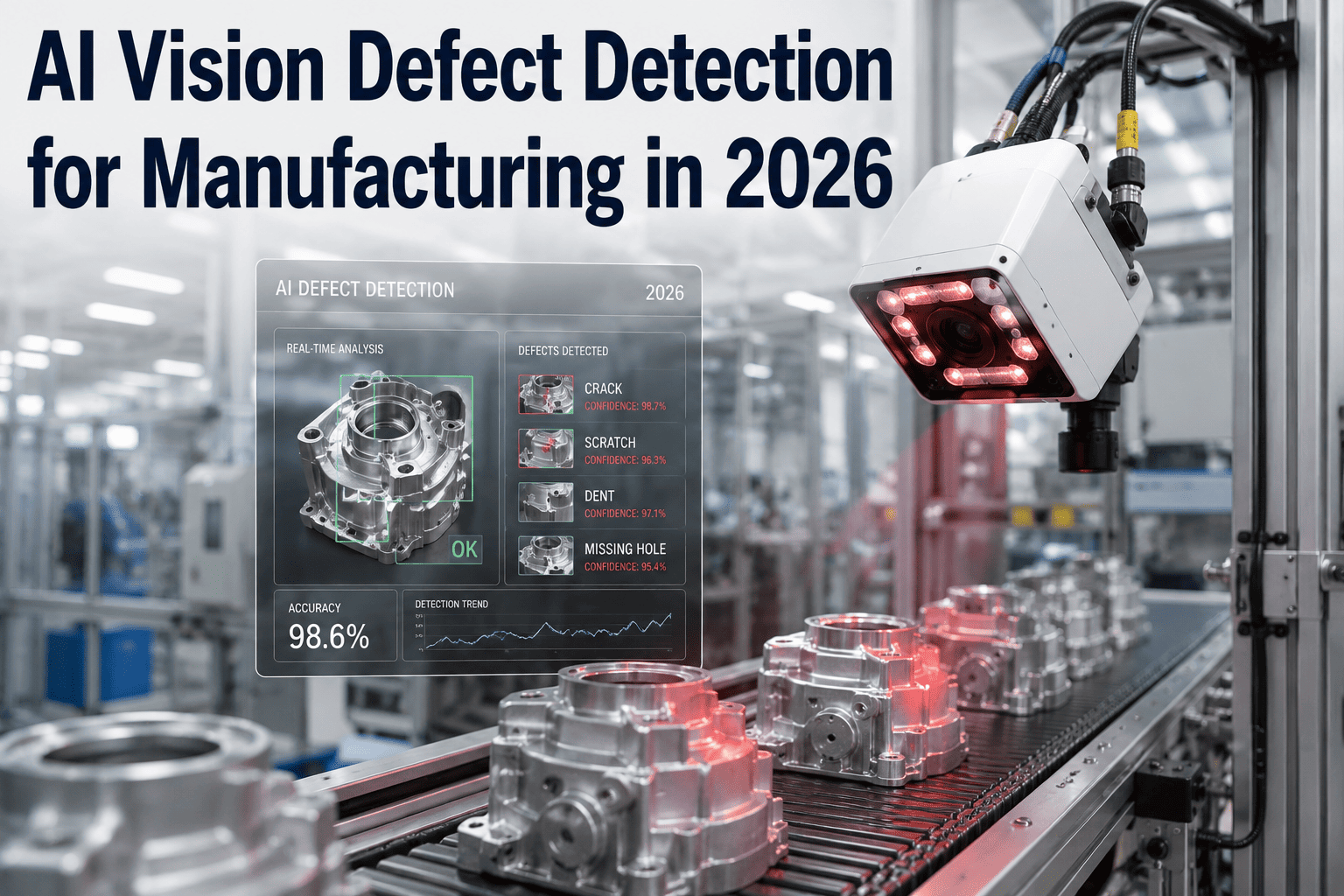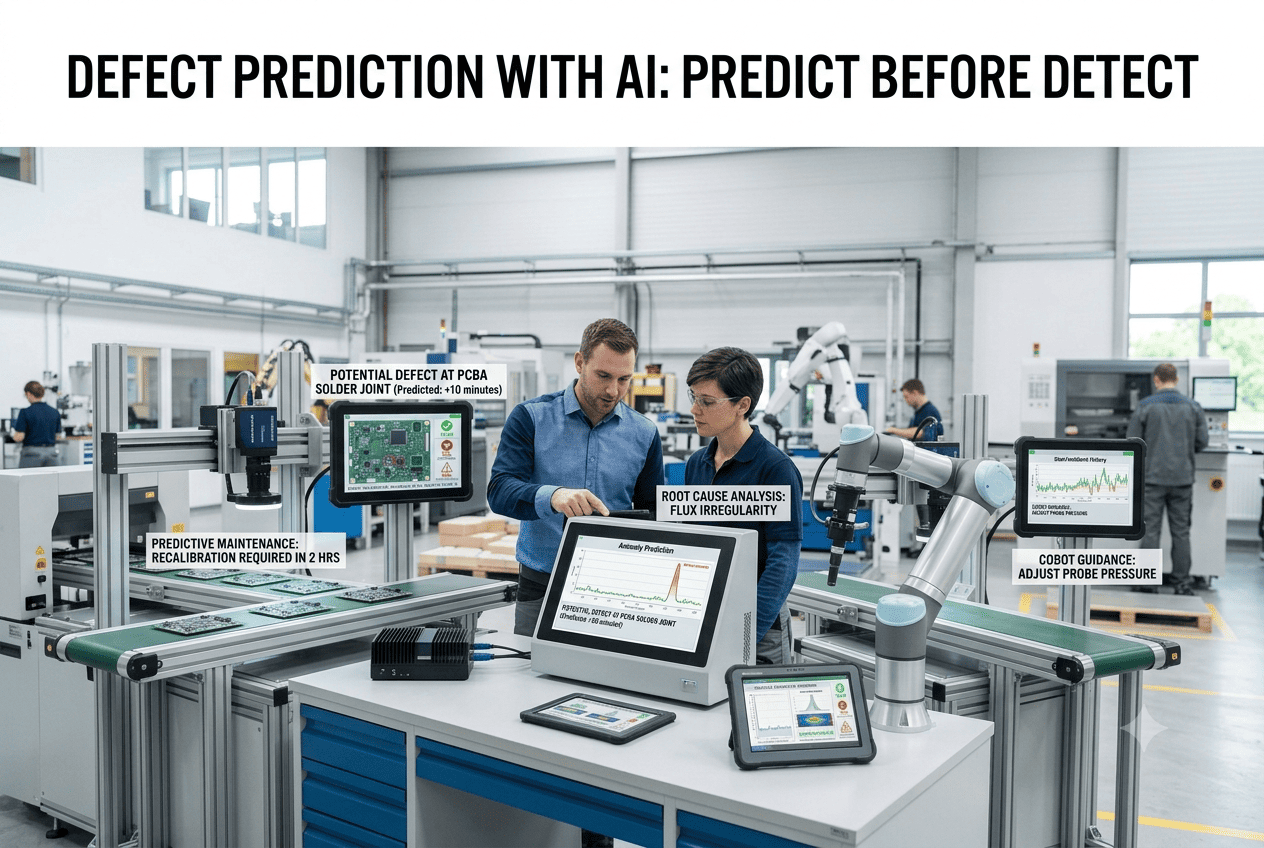
Every inspection station on your line, no matter how good it is, is checking work that's already been done. By the time a camera or an inspector catches a defect, the scrap has already been produced, the cycle time already spent, the material already wasted. Prediction moves the checkpoint upstream, watching the process parameters that cause defects rather than the parts that result from them. A spindle motor's bearing wear can show up as a dimensional drift on the finished part 48 hours later, and a predictive model catches that connection before a single bad part rolls off the line. See how that upstream connection maps to your own process when you book a demo.
Detection Finds the Defect After It Happens. Prediction Stops It Before the Part Is Made.
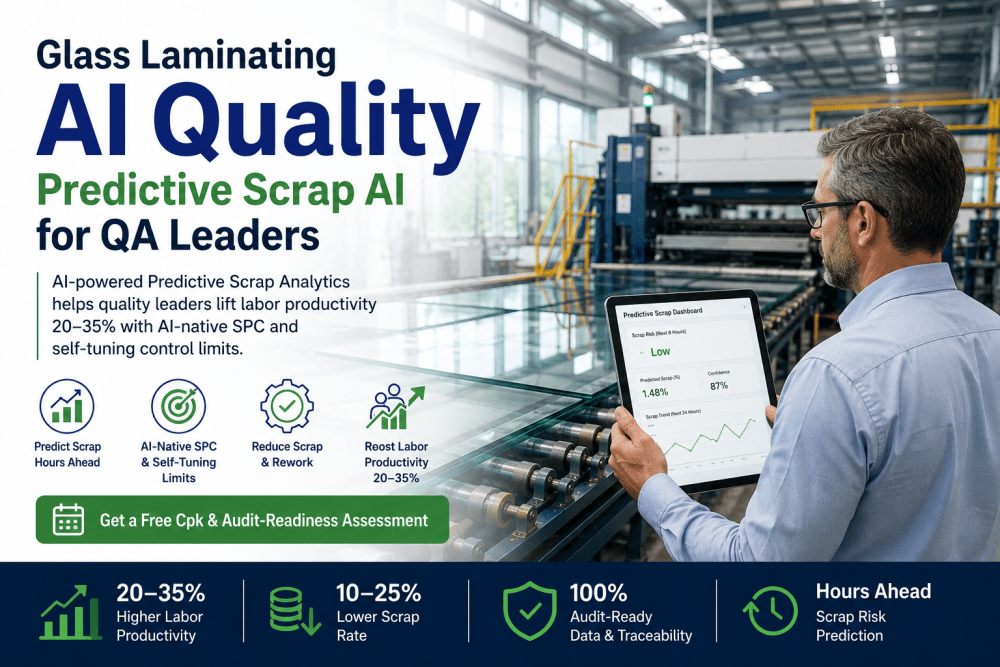
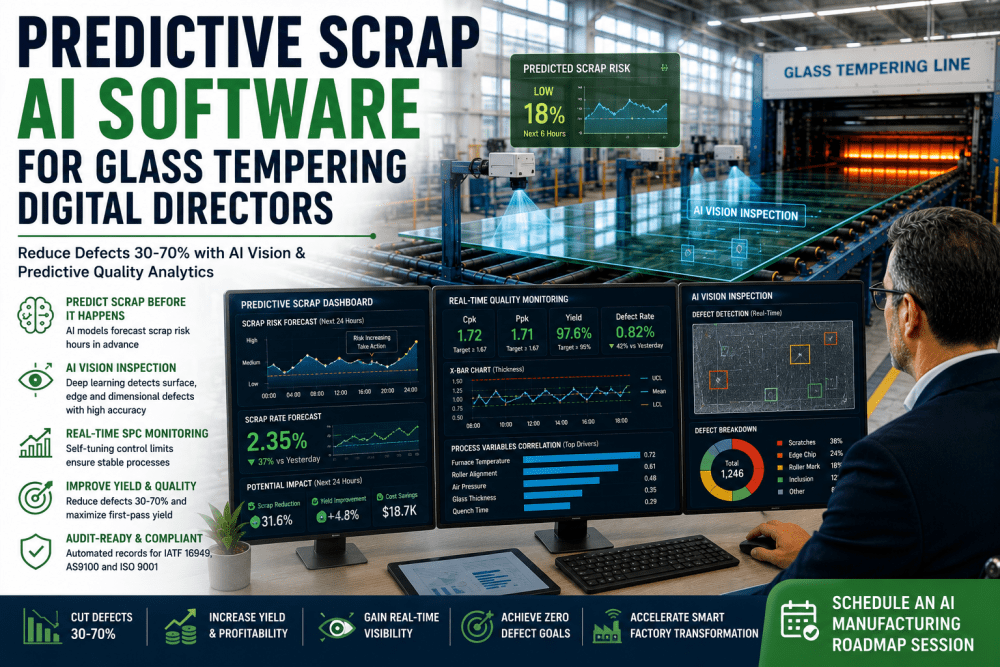
Manufacturing quality control is shifting from a downstream checkpoint to an embedded, predictive capability. iFactory connects equipment health and process parameters directly to quality outcomes, so drift gets corrected before it ever produces scrap.
Detection Sits at the End of the Line. Prediction Sits at the Start.
The two approaches aren't competing philosophies, they're two different points on the same production timeline, and the earlier point is worth far more than the later one.
Process Parameters
Temperature, vibration, pressure, and equipment health signals are monitored continuously as the part is being made.
Drift Forecast
A model forecasts that quality is trending below threshold and recommends a parameter adjustment before the defect occurs.
Finished Part Inspection
A camera or inspector checks the completed part. By this point the material, energy, and time are already spent.
The Corrective Window Closes Long Before Inspection Ever Sees the Part
See how far upstream your own process parameters can forecast a quality issue before it reaches your inspection station.
What Actually Changes When Quality Moves Upstream
| Dimension | Detection | Prediction |
|---|---|---|
| Timing | After the part is produced | Before the part is produced |
| What's monitored | The finished output | The process producing the output |
| Root-cause visibility | Flags that quality drifted, not why | Links drift to the specific upstream cause |
| Scrap and rework cost | Already incurred by the time of the check | Avoided by correcting before production |
| Action taken | Sort, scrap, or rework the part | Adjust the process parameter in real time |
The Signals That Reveal a Defect Before It Exists
Equipment Health
Bearing degradation on a spindle motor can be flagged up to 48 hours before it induces a dimensional drift downstream.
Thermal Profiles
Injection molding temperatures and oven zone profiles drift gradually as equipment wears, producing scrap for hours before a manual check notices.
Process Forces
Welding currents and press forces correlate directly with bond strength and dimensional tolerance on the finished part.
Material Batch Data
Variation between raw material lots is one of the most common hidden contributors to defect rate shifts across a shift.
Closing the Loop Instead of Just Flagging the Drift
Manufacturers running closed-loop quality prediction fuse sensor telemetry with process parameters to forecast quality metrics such as dimensional tolerance, surface finish, and bond strength before the part is ever produced. When predicted quality falls below threshold, the system recommends an optimal parameter adjustment that balances quality against cycle time and energy consumption, rather than leaving an operator to guess at the right correction.
Building a Predictive Quality Program in Phases
Predictive quality isn't a single switch to flip. It builds in stages, with each phase earning the trust needed to move to the next.
Baseline Correlation
Historical process data is correlated against past quality outcomes to confirm which parameters actually predict defects on your line.
Model Validation
The model's forecasts run alongside standard inspection results for 60-90 days to confirm accuracy before any process action is automated.
Closed-Loop Recommendation
The system starts recommending parameter adjustments to an operator, who confirms before anything is applied to the live process.
Autonomous Adjustment
Once accuracy is proven, low-risk parameter corrections apply automatically, with operators reviewing only flagged exceptions.
Stop Inspecting Defects You Could Have Prevented
iFactory connects your process parameters and equipment health signals directly to quality outcomes, so corrections happen before scrap does. Book a demo and see it mapped to your line.
Questions QA Leads Ask Before Moving to Predictive Quality
Move Your Quality Checkpoint Upstream
iFactory forecasts quality outcomes from your process data before the part is ever produced. Book a demo and see the upstream signals already sitting in your own line.