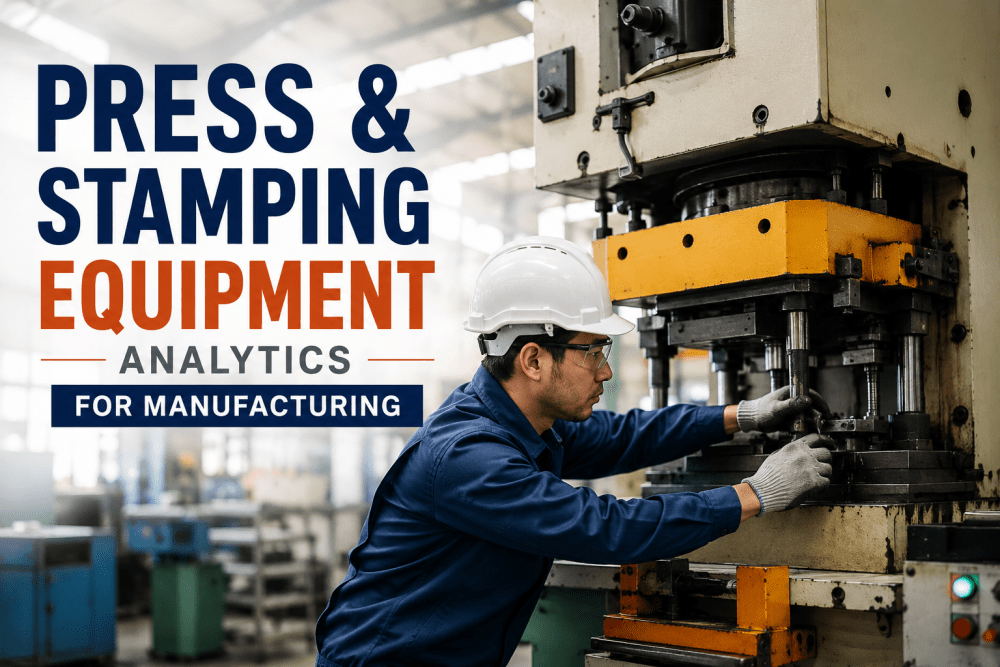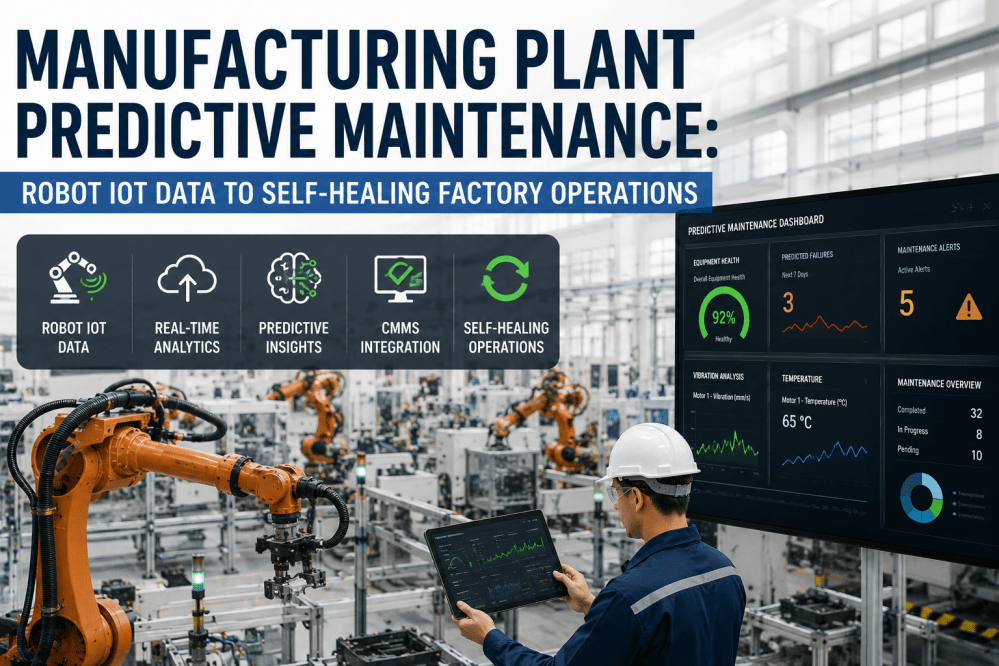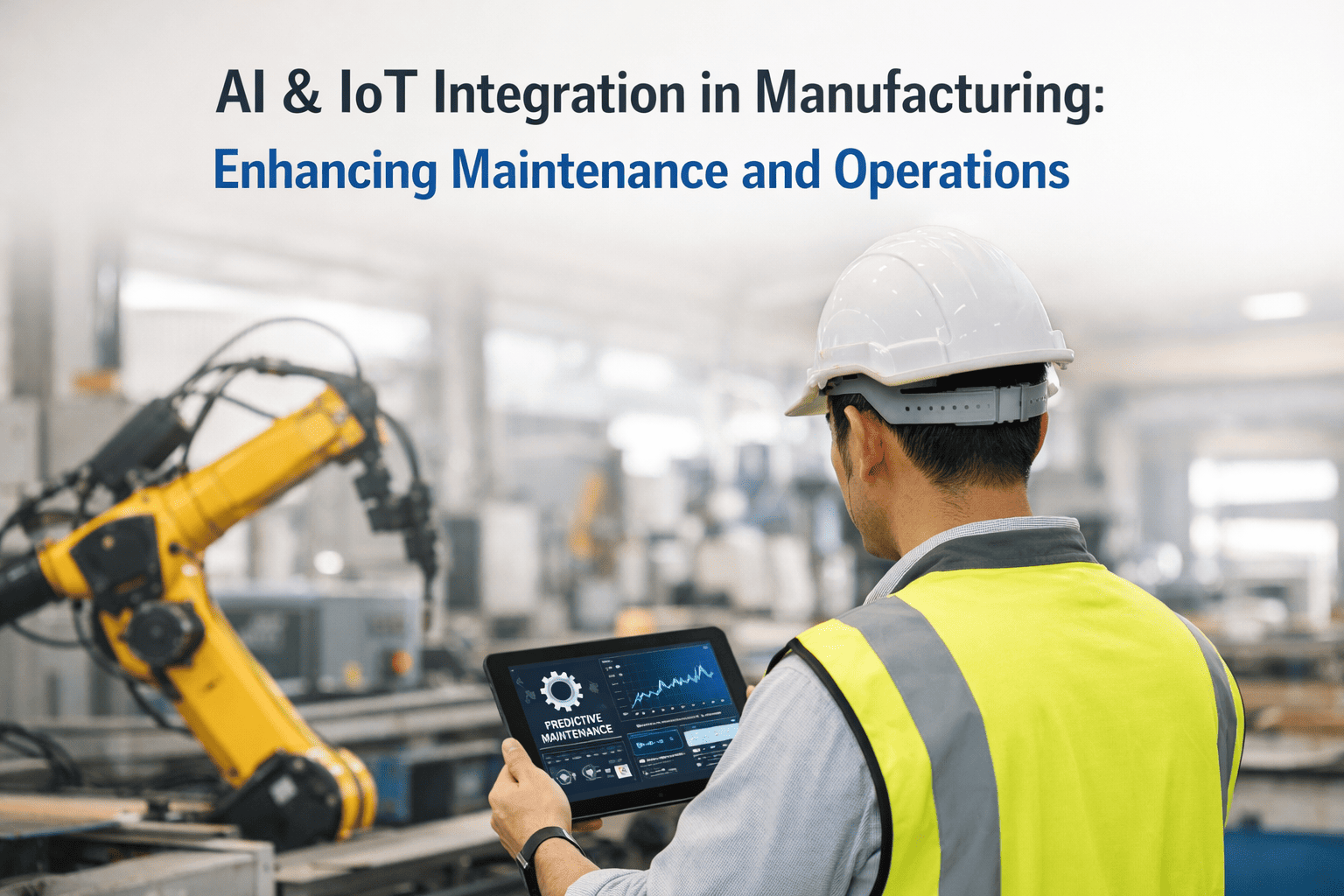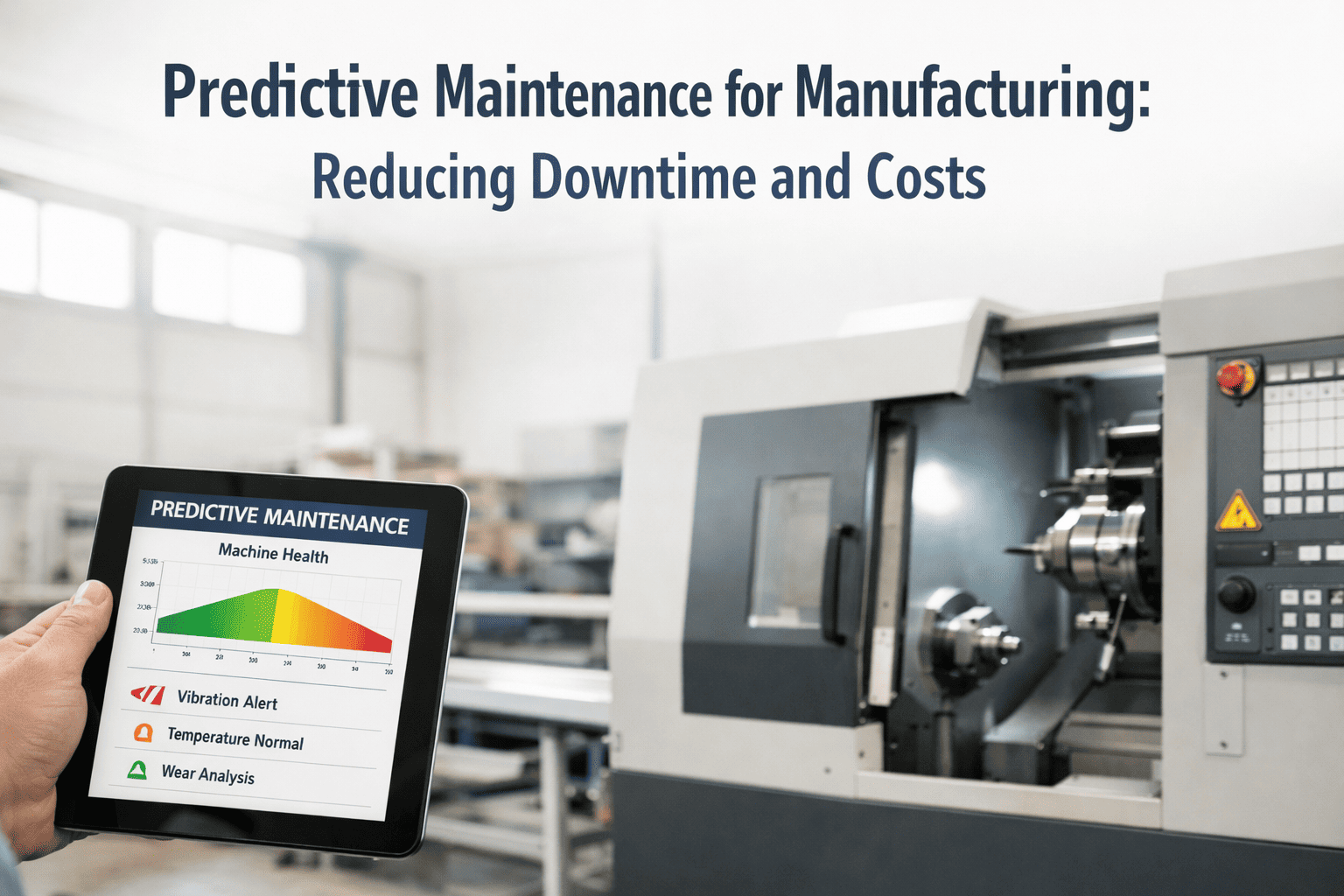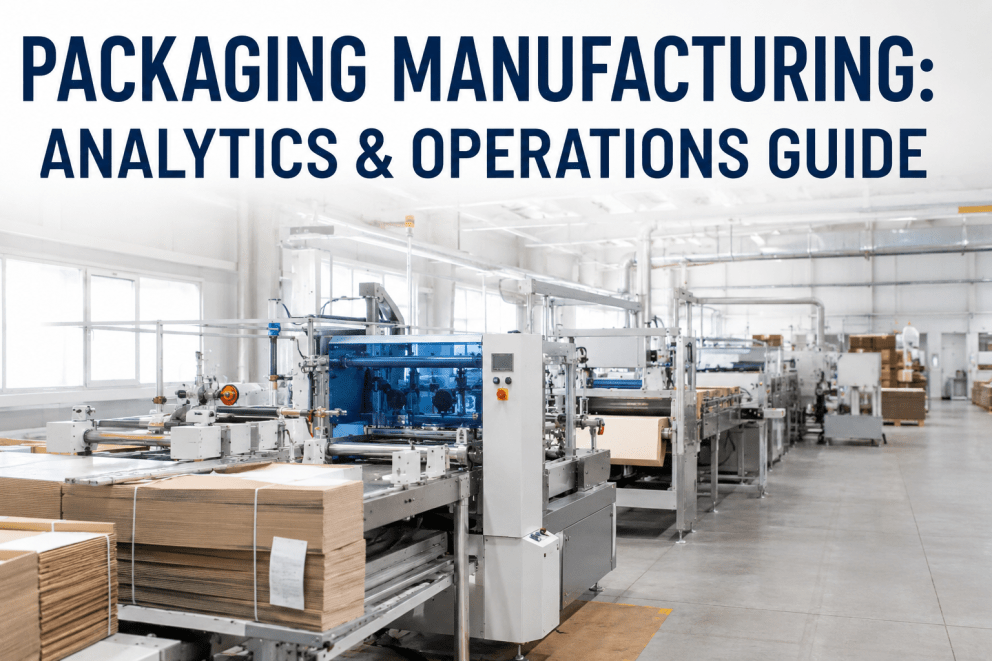
Corrugators, flexo presses, die cutters, and converting lines represent the mechanical backbone of packaging manufacturing — and they generate more operational data than most plants know how to use effectively. The gap between raw data and actionable intelligence is where packaging plant performance stalls: unplanned downtime on a single corrugator can cost $5,000–$12,000 per hour in lost throughput, while undetected quality drift on a flexo press can scrap an entire production shift's worth of printed board. iFactory AI's industrial analytics platform closes that gap by ingesting real-time equipment telemetry, CMMS work history, and production data into a unified operations intelligence layer purpose-built for packaging manufacturing. This guide covers the analytics architecture, equipment-specific monitoring strategies, and deployment roadmap that packaging plants are using to convert data into reliability, quality, and throughput improvements.
Ready to Transform Packaging Plant Data into Production Intelligence?
iFactory AI connects corrugators, flexo presses, die cutters, and converting equipment into a unified analytics platform — delivering real-time OEE monitoring, predictive maintenance, quality tracking, and production optimization purpose-built for packaging manufacturing operations.
Packaging Manufacturing at a Crossroads: Why Analytics Has Become a Competitive Necessity
The U.S. corrugated packaging market alone exceeds $40 billion annually, with converting operations — corrugating, printing, die cutting, folding, and gluing — accounting for the majority of value-add production. Yet packaging plants have historically operated with fragmented data systems: the corrugator runs on one SCADA, the flexo presses report to a separate production tracker, the die cutter's cycle counts live in a maintenance log, and finished-goods quality data sits in a spreadsheet. The result is a plant where operators, maintenance teams, and production managers each see a different version of reality.
iFactory AI's analytics architecture unifies these data streams into a single pane of glass — correlating equipment vibration signatures with maintenance history, production throughput with quality outcomes, and energy consumption with shift performance. For packaging manufacturers operating corrugators, flexo presses, die cutters, folder-gluers, and ancillary converting equipment, this unified visibility is the foundation for every downstream improvement: predictive maintenance, OEE optimization, quality root-cause analysis, and plant-wide production planning. Book a Demo to see how iFactory AI unifies packaging plant data into actionable operations intelligence.
Corrugator, Flexo Press, and Die Cutter Analytics: Equipment-Specific Monitoring Strategies
Each piece of packaging manufacturing equipment presents distinct monitoring requirements based on its mechanical design, operating speed, failure modes, and quality impact. A one-size-fits-all analytics approach leaves significant value on the table. iFactory AI's platform provides equipment-specific monitoring configurations for the three highest-impact asset classes in packaging manufacturing.
| Parameter | Corrugator | Flexo Press | Die Cutter |
|---|---|---|---|
| Primary Failure Modes | Roll bearing degradation, belt tracking drift, steam system pressure loss | Anilox roll wear, doctor blade fatigue, registration drift | Die alignment shift, cutting rule breakage, stripper wear |
| Key Monitoring Parameters | Vibration (bearing envelope), temperature (roll surface), steam pressure, line speed, board moisture | Speed differential, print registration error, ink viscosity, plate wear index | Cut force profile, die position accuracy, cycle time variance, stack quality score |
| Predictive Maintenance Strategy | Vibration trend analysis for roll replacement prediction; steam trap monitoring for energy efficiency | Anilox roll volume tracking; doctor blade wear rate from histograms | Cut force trend monitoring for rule life prediction; alignment drift detection from position sensors |
| Quality Impact Metrics | Board caliper variance, crush percentage, warp index | Color density delta, registration error, print defect rate (per million) | Blank dimension tolerance, nick break percentage, dust count |
| OEE Contribution | 35–45% of plant OEE — highest single-equipment impact | 20–30% of plant OEE — speed and quality-critical | 15–20% of plant OEE — downstream bottleneck exposure |
| iFactory AI Analytics Module | Corrugator Performance Analytics + Predictive Maintenance | Print Quality Analytics + Press OEE Monitoring | Die Cutting Analytics + Tool Life Management |
The equipment-specific analytics approach means packaging plants can deploy monitoring configurations that match their actual failure mode profile — rather than accepting generic vibration thresholds or universal OEE targets that miss the equipment-specific drivers of performance loss. iFactory AI's analytics modules are pre-configured for each equipment class and calibrated during the 6-week standard deployment. Book a Demo to review equipment-specific analytics configurations for your packaging plant.
Converting Equipment Operations: From Real-Time Monitoring to Production Optimization
Real-time monitoring without a closed-loop action workflow is just expensive data storage. iFactory AI's converting equipment operations module connects telemetry from folder-gluers, slitter-scorers, stackers, and palletizers into an escalation engine that routes alerts, work orders, and production recommendations to the right team member at the right time. The workflow below represents the standard operations cycle for converting equipment monitored on the iFactory AI platform.
Sensor Ingestion and Baseline Calibration
iFactory AI's IoT gateway connects to converting equipment PLCs, vibration sensors, temperature probes, and quality inspection cameras via OPC-UA, MQTT, or Modbus. A 14-day baseline calibration period establishes normal operating envelopes for each asset — speed ranges, vibration thresholds, temperature profiles, and quality metric baselines — against which all subsequent deviations are measured.
Real-Time Anomaly Detection and Alerting
The analytics engine continuously compares incoming telemetry against equipment-specific baselines using statistical process control (SPC) limits and machine learning anomaly detection models. When a parameter exceeds its control threshold — for example, corrugator bearing vibration rising above the 95th percentile of its baseline — the platform generates a graded alert with severity level, recommended action, and estimated time-to-failure if left unaddressed.
Automated Work Order Creation and Assignment
Alerts that cross the actionable threshold automatically generate CMMS work orders with pre-populated task descriptions, required spare parts from inventory, and priority-based assignment to the appropriate maintenance technician. The work order includes direct links to the equipment's historical data, recent maintenance records, and the specific sensor readings that triggered the alert — eliminating the information-gathering delay that typically precedes corrective maintenance.
Production Impact Analysis and OEE Update
Each maintenance event is automatically correlated with production data to calculate its OEE impact — downtime duration, speed loss during degraded operation, and quality defects produced during the failure period. This impact data feeds into equipment-specific reliability reports that identify the highest-cost failure modes, the most maintenance-intensive assets, and the preventive maintenance schedule adjustments needed to optimize overall equipment effectiveness.
Continuous Model Improvement and Prescriptive Recommendations
As maintenance outcomes and production results accumulate, iFactory AI's machine learning models refine their failure prediction accuracy and begin generating prescriptive recommendations — specific operational parameter adjustments (line speed, temperature setpoints, changeover sequences) that correlate with higher OEE outcomes under current conditions. This closed-loop optimization cycle is the mechanism that drives the 15–25% OEE improvement documented across iFactory AI packaging plant deployments.
Packaging Plant Performance Metrics: Quantifying the ROI of Integrated Analytics
The business case for packaging manufacturing analytics rests on four measurable value streams: unplanned downtime reduction, quality yield improvement, maintenance cost optimization, and production throughput gains. iFactory AI's platform delivers quantifiable improvements across all four categories, with the specific magnitude depending on equipment fleet size, current OEE baseline, and deployment scope. The table below summarizes the documented ROI ranges from iFactory AI deployments at mid-size to large packaging manufacturing facilities.
| Value Stream | Impact Mechanism | Documented Improvement Range | Typical Annual Value (100-Unit Fleet) |
|---|---|---|---|
| Unplanned Downtime Reduction | Predictive alerts enable scheduled intervention before failure; 72-hour advance warning for bearing, belt, and wear-component failures | 30–50% reduction in unplanned downtime events | $450K–$1.2M |
| Quality Yield Improvement | Real-time process parameter monitoring catches quality drift before defect boundaries are crossed; automated SPC for every production run | 15–30% reduction in scrap and rework | $200K–$600K |
| Maintenance Cost Optimization | Condition-based maintenance eliminates unnecessary preventive work; extended component life through optimized change intervals | 15–25% reduction in total maintenance spend | $150K–$400K |
| Production Throughput Gain | Reduced changeover times via data-driven setup optimization; speed loss recovery through OEE visibility | 5–12% increase in net throughput | $300K–$900K |
The combined value across all four streams typically reaches $1.1M–$3.1M annually for a packaging plant operating 80–120 equipment assets — delivering an ROI that substantially exceeds the platform investment within the first 12 months of deployment. The most significant gains are concentrated in the first 90 days following go-live, when predictive maintenance alerts begin preventing failures that were previously managed reactively.
Phased Analytics Deployment for Packaging Plants: From Pilot to Plant-Wide Intelligence
iFactory AI's deployment methodology for packaging manufacturing follows a four-phase progression designed to deliver measurable value at each stage while building the data infrastructure and organizational capability for plant-wide analytics adoption. This phased approach reduces deployment risk, accelerates time-to-value, and generates the validated ROI data needed to justify subsequent investment phases.
Phase 1: Corrugator Analytics Pilot
Deploy iFactory AI monitoring on the corrugator — the highest-impact single asset in any packaging plant. Connect vibration sensors, steam system telemetry, and line speed data to establish predictive maintenance baselines and real-time OEE tracking. Typical duration: 6–8 weeks to go-live, with measurable downtime reduction observed within the first 30 days of predictive alerting.
Phase 2: Converting Line Expansion
Extend monitoring to flexo presses, die cutters, and folder-gluers with equipment-specific analytics configurations. Deploy print quality monitoring on flexo presses and cut force analytics on die cutters. Integrate quality inspection data with production tracking for real-time yield visibility. Typical duration: 4–6 weeks per equipment class.
Phase 3: Plant-Wide Integration
Connect analytics across all converting lines with unified OEE dashboards, cross-equipment correlation reports, and centralized work order management through iFactory AI's CMMS module. Deploy plant-wide energy monitoring and shift performance analytics. Enable executive dashboards with roll-up KPIs for plant and enterprise visibility.
Phase 4: Advanced Optimization & Prescriptive Analytics
Activate machine learning models for production optimization recommendations — line speed adjustments, changeover sequence optimization, and maintenance schedule refinement based on accumulated performance data. Deploy digital twin capabilities for corrugator and converting line simulation. Typical duration: ongoing with quarterly model updates.
Start Your Packaging Plant Analytics Journey With a No-Obligation Pilot Assessment
iFactory AI's packaging manufacturing analytics platform is deployed at corrugator and converting facilities across the U.S. — delivering measurable OEE improvement, predictive maintenance ROI, and production intelligence that connects equipment performance to plant profitability. Schedule a pilot assessment to review your plant's analytics readiness and projected ROI.
Expert Review: What Industry Research Reveals About Packaging Manufacturing Analytics in 2026
The body of peer-reviewed and industry research on packaging manufacturing analytics has expanded significantly since 2022, driven by advances in IIoT sensor technology, edge computing, and machine learning algorithms optimized for high-speed converting processes. The research consensus identifies three critical findings that directly inform analytics deployment strategy for packaging plants.
A 2025 study published in the Journal of Manufacturing Processes analyzed 18 corrugated packaging plants over 24 months and found that predictive maintenance driven by vibration analysis and thermal imaging reduced unplanned downtime by 41% on corrugator lines and 33% on converting equipment. The study specifically identified bearing degradation on corrugator rolls and anilox roll wear on flexo presses as the highest-impact failure modes for predictive intervention — both directly addressable with iFactory AI's equipment-specific analytics configurations.
- 41% unplanned downtime reduction on corrugator lines with predictive maintenance
- Bearing degradation and anilox roll wear identified as highest-impact failure modes
- Condition-based maintenance reduced total maintenance spend by 22% across study plants
Research from the Technical Association of the Pulp and Paper Industry (TAPPI) documents that real-time statistical process control on flexo press registration and corrugator board moisture parameters reduces scrap rates by 20–35% compared to end-of-line inspection alone. The mechanism is early detection: SPC alerts operating teams to quality drift an average of 12–18 minutes before the drift would produce out-of-spec product — time that is sufficient for operator intervention in most converting processes.
- 20–35% scrap reduction with real-time SPC on converting equipment
- 12–18 minute advance warning of quality drift before out-of-spec production
- Integration of quality data with production tracking enables root-cause analysis
A 2024 industry survey by the Packaging Machinery Manufacturers Institute (PMMI) evaluated the total value delivered by analytics platforms across 45 packaging plants. Facilities using integrated platforms that combined predictive maintenance, quality monitoring, and production OEE tracking in a single system reported 3.1 times higher total annual value than facilities using standalone point solutions for each function. The primary driver was cross-functional correlation — the ability to identify that a specific vibration pattern on a die cutter preceded a quality defect on the downstream stacker, for example.
- 3.1x higher total value from integrated vs. standalone analytics platforms
- Cross-equipment correlation identified as primary value multiplier
- Unified data architecture reduces integration and training overhead
Packaging Manufacturing Analytics — Frequently Asked Questions
What equipment in a packaging plant benefits most from real-time analytics monitoring?
The corrugator delivers the highest single-asset ROI for analytics deployment in most packaging plants, based on its centrality to plant throughput and the high cost of unplanned downtime ($5,000–$12,000 per hour). Flexo presses and die cutters follow closely, with analytics value concentrated in quality yield improvement and tool life optimization. Folder-gluers and ancillary converting equipment benefit from analytics in proportion to their OEE contribution, which varies by plant layout and production mix. iFactory AI's pilot assessment includes a ranked ROI projection for each equipment class in your specific plant configuration. Book a Demo to schedule a packaging plant analytics assessment.
How long does it take to deploy iFactory AI analytics in a packaging manufacturing facility?
The standard iFactory AI platform deployment for a packaging plant follows a 6–8 week timeline for Phase 1 (corrugator analytics pilot), with the first predictive maintenance alerts typically generating value within 30 days of go-live. Subsequent phases for converting equipment expansion require 4–6 weeks per equipment class, and plant-wide integration across all converting lines is typically complete within 30 weeks of project initiation. The deployment timeline is structured to deliver measurable ROI at each phase, enabling data-driven go/no-go decisions before proceeding to subsequent phases.
Does iFactory AI integrate with existing PLCs, sensors, and control systems in packaging plants?
Yes. iFactory AI's IoT gateway supports OPC-UA, MQTT, Modbus TCP, and REST API interfaces — covering the communication protocols used by the majority of corrugator, flexo press, die cutter, and converting equipment control systems manufactured since 2010. For older equipment, the platform supports retrofit sensor integration via wireless vibration, temperature, and current sensors that communicate with the gateway without requiring control system modifications. The standard deployment scope includes compatibility verification during the pre-deployment site assessment phase.
What is the typical OEE improvement observed in packaging plants using iFactory AI analytics?
Packaging plants deploying iFactory AI across their corrugator and converting equipment fleet typically achieve 15–25% OEE improvement within 12 months of full deployment. The improvement is distributed across all three OEE components: availability gains from predictive maintenance reducing unplanned downtime, performance gains from speed loss recovery through real-time monitoring, and quality gains from inline SPC reducing scrap and rework. Individual plant results vary based on baseline OEE, equipment fleet age, and deployment scope — but the documented ROI across iFactory AI packaging plant deployments consistently exceeds the platform investment within the first year.
Can iFactory AI's analytics platform scale from a single corrugator line to a multi-plant enterprise deployment?
iFactory AI's platform architecture is designed for enterprise-scale deployment from the outset, with centralized data aggregation, multi-tenant dashboards, and role-based access controls that support single-plant pilots and multi-site enterprise rollouts under the same platform instance. The platform supports hierarchical KPIs — from individual equipment OEE to plant-level production summaries to enterprise-wide performance benchmarks — enabling packaging manufacturers to standardize analytics across facilities while respecting site-specific configuration requirements. Enterprise deployments typically follow a phased site-by-site rollout with centralized configuration management.
Packaging Manufacturing Analytics: The Foundation for Intelligent Plant Operations
The packaging manufacturing facilities that gain competitive advantage in 2026 and beyond are not those with the newest corrugators or the fastest flexo presses — they are the plants that extract the most actionable intelligence from the equipment they already operate. Analytics is not a technology initiative separate from production; it is the operational infrastructure that connects equipment performance data to maintenance decisions, production planning, and quality management in a continuous improvement cycle that compounds over time.
iFactory AI delivers that infrastructure for packaging manufacturers — purpose-built for corrugators, flexo presses, die cutters, and converting equipment, with equipment-specific analytics configurations, predictive maintenance models, and unified OEE tracking that connects individual asset performance to plant-wide production targets. The deployment is structured in phases with measurable ROI validation at each stage, reducing risk while building the data foundation for advanced optimization capabilities including digital twin simulation and prescriptive analytics.
The question for packaging plant operations leaders is not whether analytics will become the standard approach to equipment management — that transition is already underway across the industry. The question is whether your plant will be among the early adopters building the operational data infrastructure and performance benchmarks that define the competitive landscape, or whether you will be catching up to standards set by analytics-enabled competitors. Book a Demo to start your packaging manufacturing analytics deployment with iFactory AI.
Deploy iFactory AI Analytics at Your Packaging Plant — Live and Generating Value in 8 Weeks
Join corrugator and converting facilities across the U.S. using iFactory AI to monitor equipment health, predict failures before they cause downtime, track OEE in real time, and optimize production performance from a single unified platform built for packaging manufacturing.