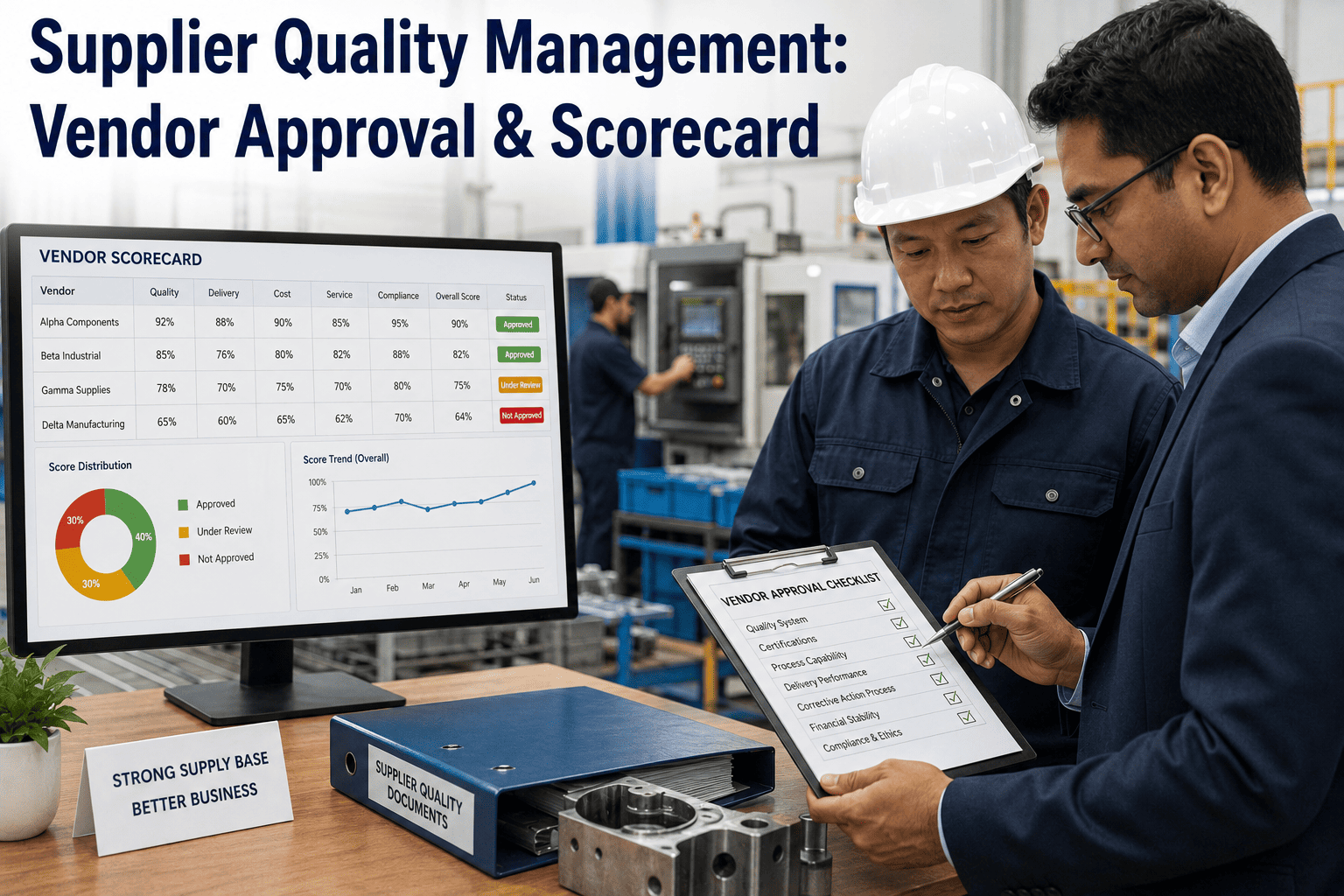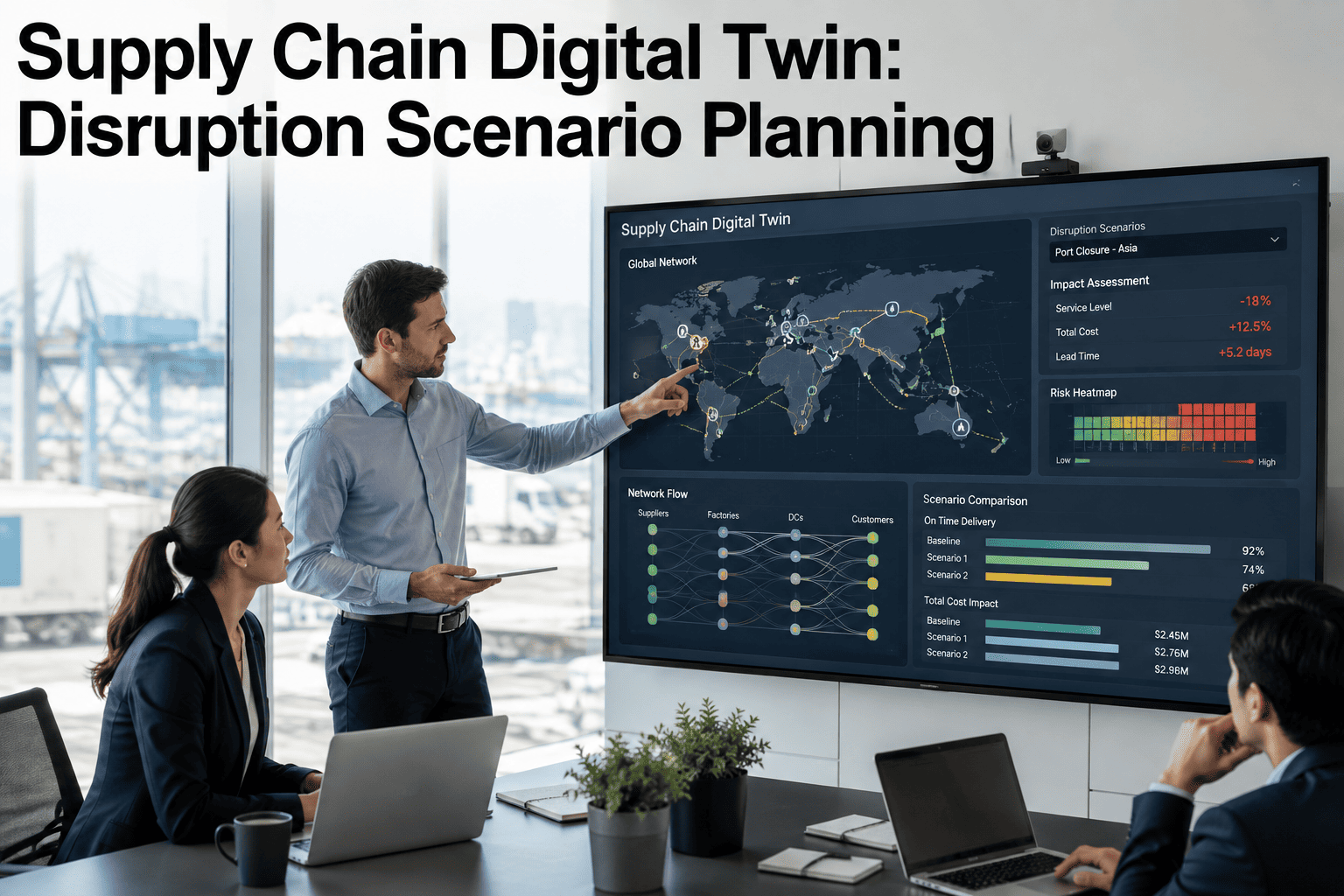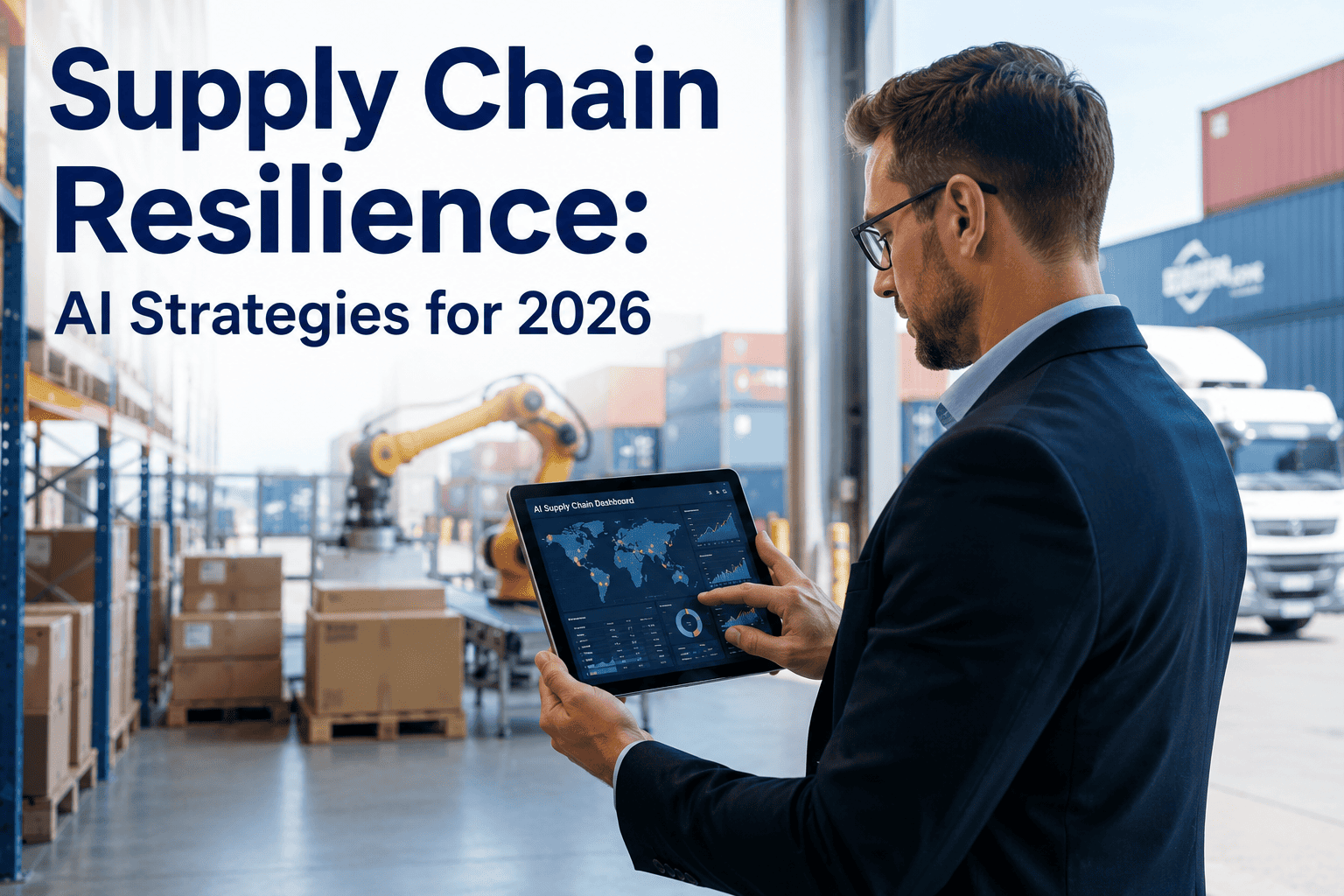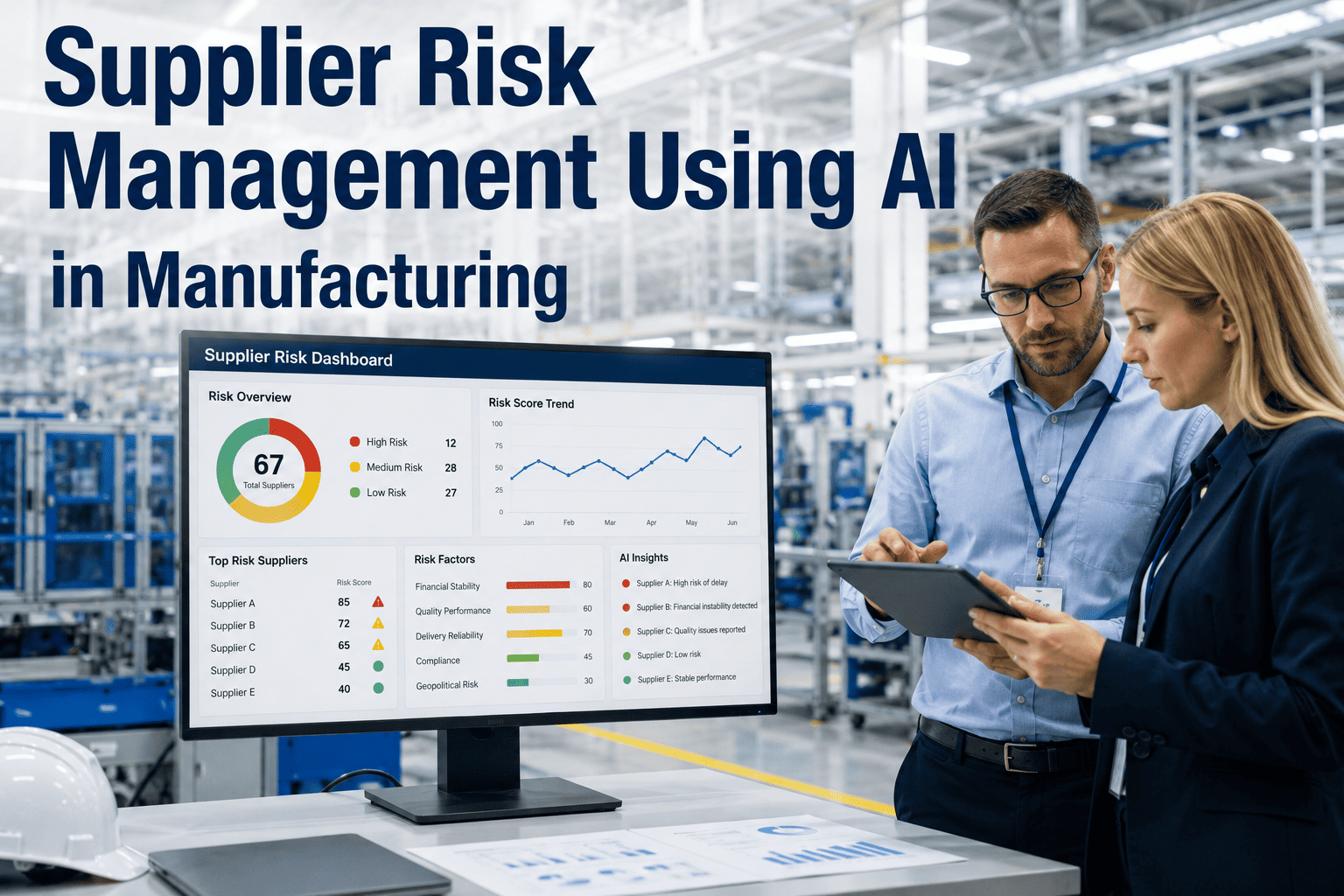
Procurement managers rarely get surprised by a Tier 1 supplier. They get surprised by the Tier 3 raw material processor feeding that Tier 1 supplier, the one nobody was watching because nobody could see that far upstream. Supply chain disruptions now cost businesses an estimated $184 billion annually, and roughly 94 percent of companies report their revenue was negatively affected by a disruption in the past year — yet most procurement teams are still running quarterly audits and static vendor scorecards built for a slower, more predictable trade environment. AI supplier risk management closes that visibility gap by scoring financial health, delivery performance, and geopolitical exposure continuously, and iFactory AI's supplier risk platform extends that scoring down through Tier 2 and Tier 3 of your network.
The Visibility Cliff: Why Risk Hides Below Tier 1
Procurement teams generally have solid visibility into their direct, Tier 1 suppliers — contracts are in place, performance is tracked, relationships are managed. That visibility falls off a cliff at Tier 2, and by Tier 3 and Tier 4 most organizations are operating almost completely blind. This matters because the most severe disruptions rarely originate with a direct vendor; they emerge from a sub-tier supplier whose failure nobody was positioned to see coming. A Tier 1 seat manufacturer with a single Tier 3 supplier for a specialty chemical can bring an entire assembly line down without a single warning appearing in a Tier 1-only risk dashboard.
Independent research backs up what most procurement managers already sense: 93 percent of organizations identify Tier 2 and Tier 3 suppliers as their most critical operational blind spot, even while reporting high confidence in their overall oversight. Closing that gap is not a matter of hiring more analysts to audit further upstream — it requires AI systems that can continuously map and monitor a multi-tier network at a scale manual review cannot match. See how deep your own supply chain mapping can go with an iFactory AI demo.
From Quarterly Audits to Continuous Risk Scoring
The single biggest shift AI brings to supplier risk management is frequency. A traditional audit cycle checks a supplier's health four times a year, at best — leaving gaps of up to three months where a deteriorating condition can develop, unnoticed, into a full disruption. Continuous AI monitoring closes those gaps entirely, scoring every supplier every day against live financial, operational, and geopolitical signals.
Each dot represents one audit touchpoint per year. The continuous line represents daily-or-better signal scoring — the gap between the two is exactly where undetected disruptions currently develop.
What AI Supplier Risk Scoring Actually Tracks
A supplier risk score is only as useful as the signals feeding it. AI-driven platforms combine several categories of continuously updated data into a single composite score per supplier, replacing the single-dimension "spend and delivery" view most legacy scorecards rely on.
Revenue trends, credit ratings, payment behavior, and insolvency indicators tracked continuously rather than reviewed once a year.
On-time delivery rates, quality rejection rates, and RFQ responsiveness monitored against each supplier's own historical baseline.
Tariff changes, export controls, sanctions, and regional instability mapped directly to each supplier's specific location and shipping routes.
Regulatory changes and single-source dependencies traced down through Tier 2 and Tier 3, not just the direct vendor relationship.
Example: Catching Lead Time Drift Before It Becomes a Stockout
A supplier whose lead time quietly stretches from 4 weeks to 5.8 weeks over several months is broadcasting a problem — capacity constraints, quality rework, or sub-tier supply issues forcing them to prioritize other customers. Manual tracking almost never catches this drift early enough, because a one-week slip looks like normal variance until the pattern is viewed in aggregate.
iFactory AI flagged this supplier at month 4, a full 38 percent lead time increase before it caused a stockout — recommending a safety stock adjustment and activating a pre-qualified alternative supplier automatically.
Risk Signal Detection: Traditional vs. AI-Driven Timing
| Risk Signal | What It Indicates | Traditional Detection Point | AI-Driven Detection Point |
|---|---|---|---|
| Lead Time Drift | Capacity strain or sub-tier supply issues | After a missed delivery or stockout | 2–4 weeks ahead, from PO history trend |
| Financial Deterioration | Insolvency or liquidity risk | When orders stop being fulfilled | Weeks ahead, from continuous credit signals |
| Geopolitical Event | Tariff, sanction, or regional disruption exposure | When shipment is delayed or blocked | Same day, mapped to affected suppliers |
| Single-Source Dependency | No backup if a critical supplier fails | Discovered only after a failure occurs | Identified proactively during network mapping |
Procurement Manager Perspective
I have led procurement risk for a Tier 1 automotive components supplier for just over sixteen years, and the moment that changed how I think about supplier management was not a disruption we caught early — it was one we almost missed entirely. We had a specialty coating supplier, three tiers upstream from a component we sourced directly, and by the time our direct supplier told us about a capacity problem, we had eleven days of buffer left on a part with a nine-week replacement lead time. We got lucky that time. After that, we brought in iFactory AI's supplier risk platform specifically to extend our visibility past Tier 1, and within the first quarter it flagged a lead time drift on a different sub-tier supplier that our own delivery reports had not yet shown as a problem — the pattern was there in the data three months before it would have shown up in a missed delivery. We now carry meaningfully less panic-driven safety stock because we are not bracing for surprises we cannot see coming; instead we are managing a small, prioritized list of suppliers the system flags as genuinely drifting. The financial exposure reduction has been real, but the bigger change for my team has been psychological — we spend our time on the suppliers that matter instead of running the same quarterly audit checklist across five hundred vendors regardless of actual risk. For any procurement manager whose risk program still stops at Tier 1: that is exactly where the next disruption is going to come from, because that is exactly where nobody is looking.
— Procurement Manager, Tier 1 Automotive Components Supplier — 16 Years Industry Experience — iFactory AI Reference Customer 2026Conclusion
Supplier risk has not become more dangerous because procurement teams got worse at managing it — it has become more dangerous because the pace of disruption now moves faster than a quarterly audit cycle can track, and because the risk that matters most is increasingly buried two or three tiers upstream of the direct vendor relationship. Closing that gap requires continuous, multi-tier monitoring at a scale no manual process can sustain.
iFactory AI scores supplier risk continuously across financial, operational, geopolitical, and compliance signals, extending visibility down through Tier 2 and Tier 3 suppliers rather than stopping at the direct vendor relationship. Book a Demo to see your own supplier network mapped and scored for the risks currently hiding below Tier 1.
Frequently Asked Questions
Traditional vendor scorecards are compiled manually and updated quarterly or annually, reflecting a snapshot that can be months out of date by the time a risk materializes. AI-driven supplier scoring is continuous, recalculating each supplier's risk profile daily from live financial, operational, and geopolitical signals, and automatically moving suppliers between risk tiers as conditions change. This means high-risk vendors are flagged for increased monitoring in near real time rather than at the next scheduled review. Book a Demo to see how continuous scoring applies to your current supplier base.
Yes, and this is where most of the value lies. Most procurement teams have reasonable visibility into Tier 1 suppliers but almost none into Tier 2, 3, or 4, even though the most severe disruptions frequently originate at those deeper tiers. iFactory AI's platform maps sub-tier dependencies and single-source risks that a Tier 1-only view cannot detect, surfacing exposure such as multiple Tier 1 suppliers sharing the same vulnerable Tier 3 raw material source. Contact support to discuss mapping your specific supply chain structure.
Key signals include declining on-time delivery rates, rising quality rejection rates, slower RFQ responsiveness, payment delays, deteriorating liquidity ratios, and lead time drift detected from purchase order history trends. Behavioral signals — such as unusual sub-contracting spikes or reduced order fulfillment consistency — often appear weeks before financial distress becomes visible in formally reported data. Ensemble machine learning models combining these signals have demonstrated up to 89 percent accuracy predicting disruptions 2 to 4 weeks in advance in documented research.
AI continuously monitors trade bulletins, customs updates, HTS classification changes, sanctions announcements, and regional instability, then maps each event directly to the specific suppliers, shipping routes, and material dependencies it affects. This gives procurement immediate visibility into which suppliers are exposed the moment a policy changes, rather than discovering the impact when a shipment is delayed or a cost increase appears on an invoice. Given how frequently trade policy has shifted in 2025 and 2026, this real-time mapping has become one of the most consulted features in iFactory AI's risk platform.
Organizations using AI-enabled risk monitoring report up to a 20 percent reduction in third-party financial exposure, with early detection often paying for the platform through a single avoided disruption event, since supply chain disruptions cost an estimated $184 billion annually across affected businesses. Most procurement teams see the first meaningful risk flags — supplier drift, financial deterioration, or sub-tier dependency discovery — within the first 60 to 90 days of connecting purchase order and supplier data. Book a Demo to discuss a realistic timeline for your supplier network.