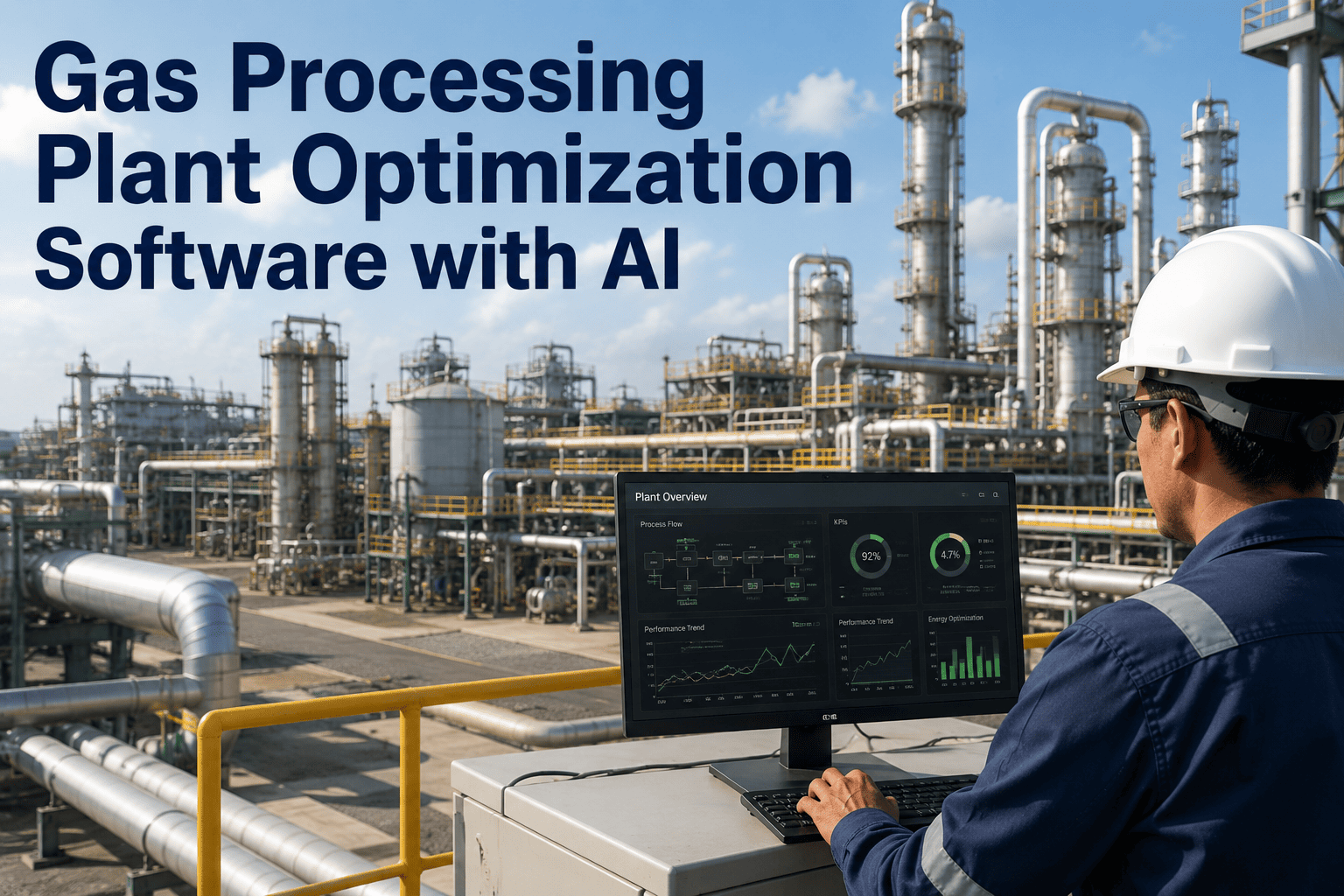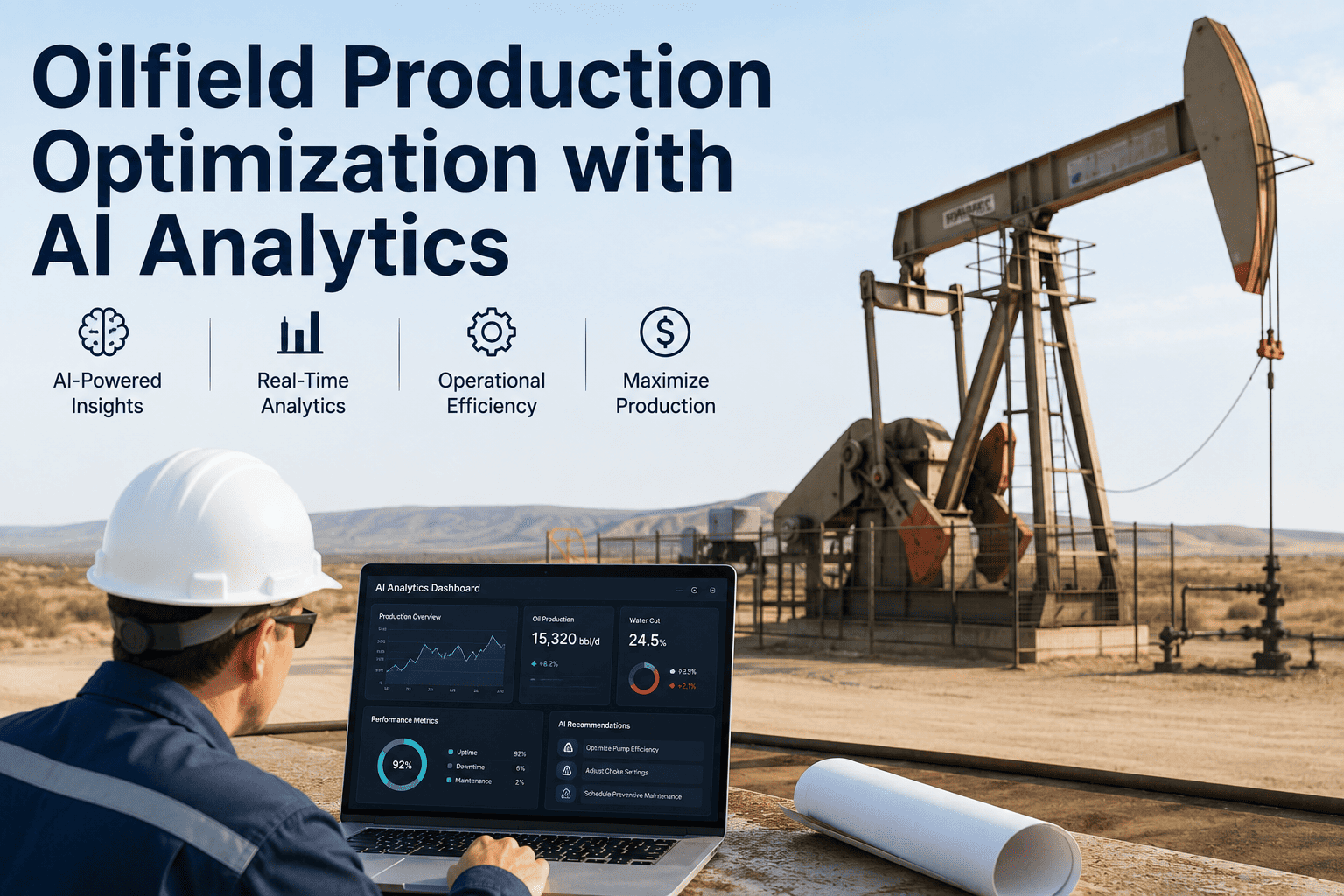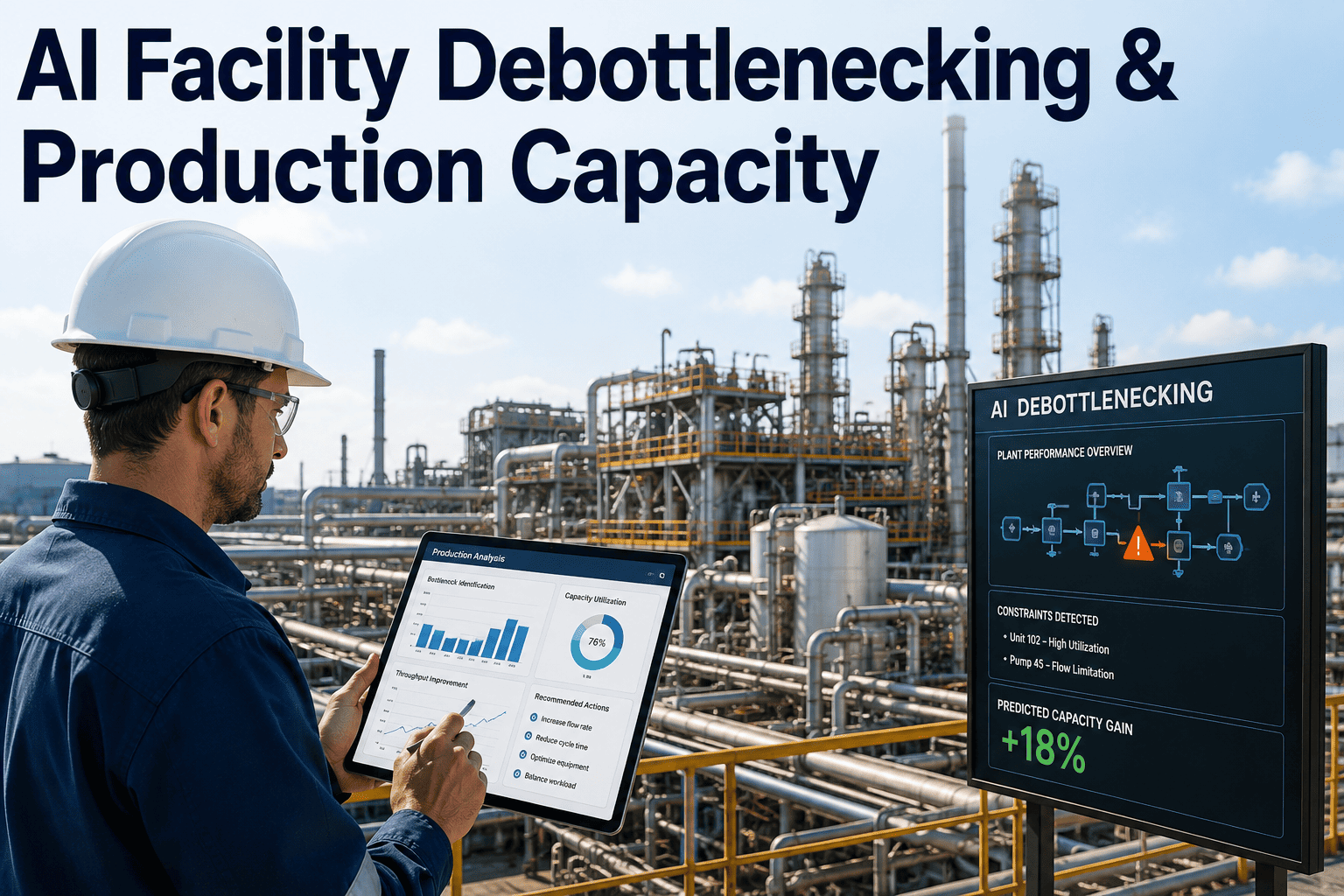
Most operators find out where their facility is actually constrained the hard way, when a well comes online and the separator can't take the extra liquid, or a compressor trips on high suction pressure during a routine rate increase. The nameplate capacity printed on an equipment data sheet rarely matches the real, current constraint, because fouling, changing gas-oil ratios, and years of incremental well additions have quietly moved the bottleneck somewhere nobody has re-modeled. Facilities teams often discover the true limit only after production is already choked back to protect the equipment, which means capacity that could have been produced months earlier stays in the ground instead. iFactory's AI continuously models where your actual constraint sits across separation, compression, and pipeline capacity, and you can book a demo to see it mapped against your own facility.
Your Nameplate Capacity and Your Real Capacity Stopped Matching Years Ago — AI Finds Where They Diverged
iFactory's AI continuously models separator, compression, and pipeline capacity against actual operating conditions, pinpointing the true production constraint before it forces an unplanned choke-back.
The System Everyone Assumes Isn't the Bottleneck Usually Is
Facility constraints move over time as wells are added, fluid composition shifts, and equipment fouls, but the mental model of where the bottleneck sits often stays frozen at whatever the original design report said years ago. That mismatch is rarely visible until production is already being choked back to protect equipment that was never actually the limiting factor.
Four Systems Where the Real Bottleneck Usually Isn't Where You Think
Facility capacity is a system of interacting constraints, and fixing the wrong one first is how debottlenecking budgets get spent without moving total throughput at all. Understanding which of the four systems below is genuinely binding is the difference between a capital project that unlocks production and one that simply adds unused capacity somewhere else in the chain.
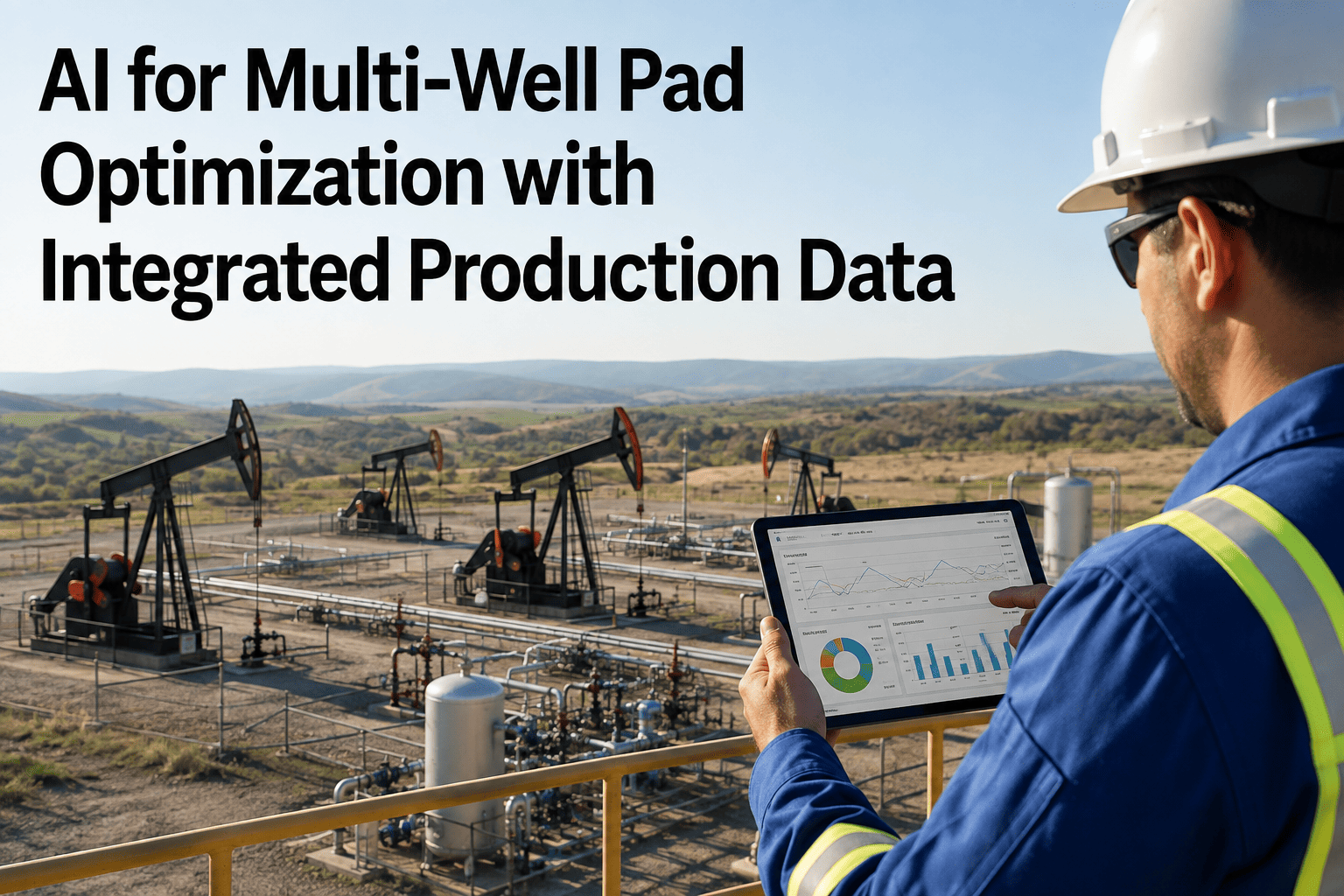
Retention time and interface control degrade gradually as produced water cut climbs, often long before a separator is running anywhere near its original liquid handling design point on paper.
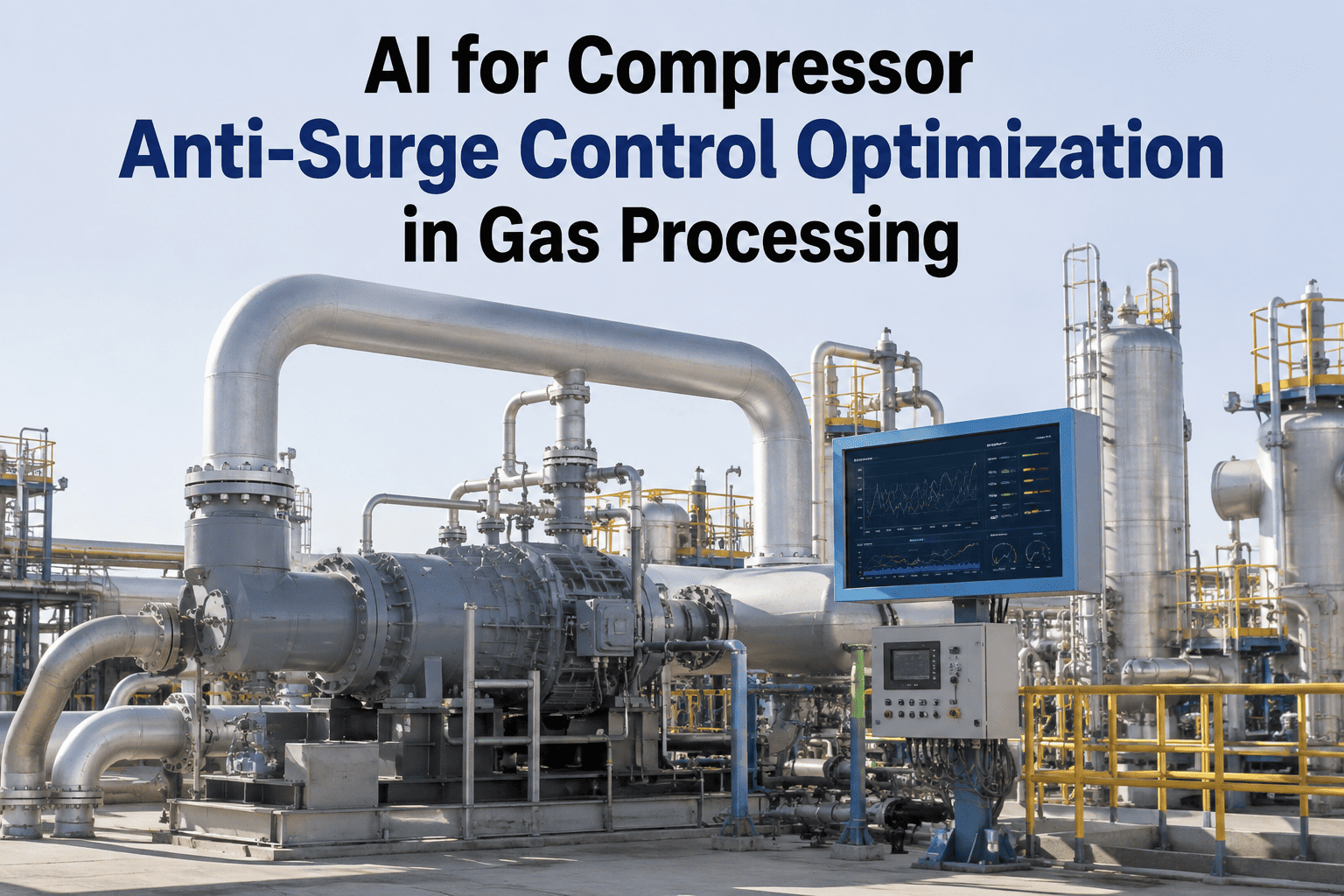
Compressor capacity is frequently limited by upstream suction pressure constraints rather than the compressor's own horsepower, meaning added compression alone can fail to fix the actual limiter.
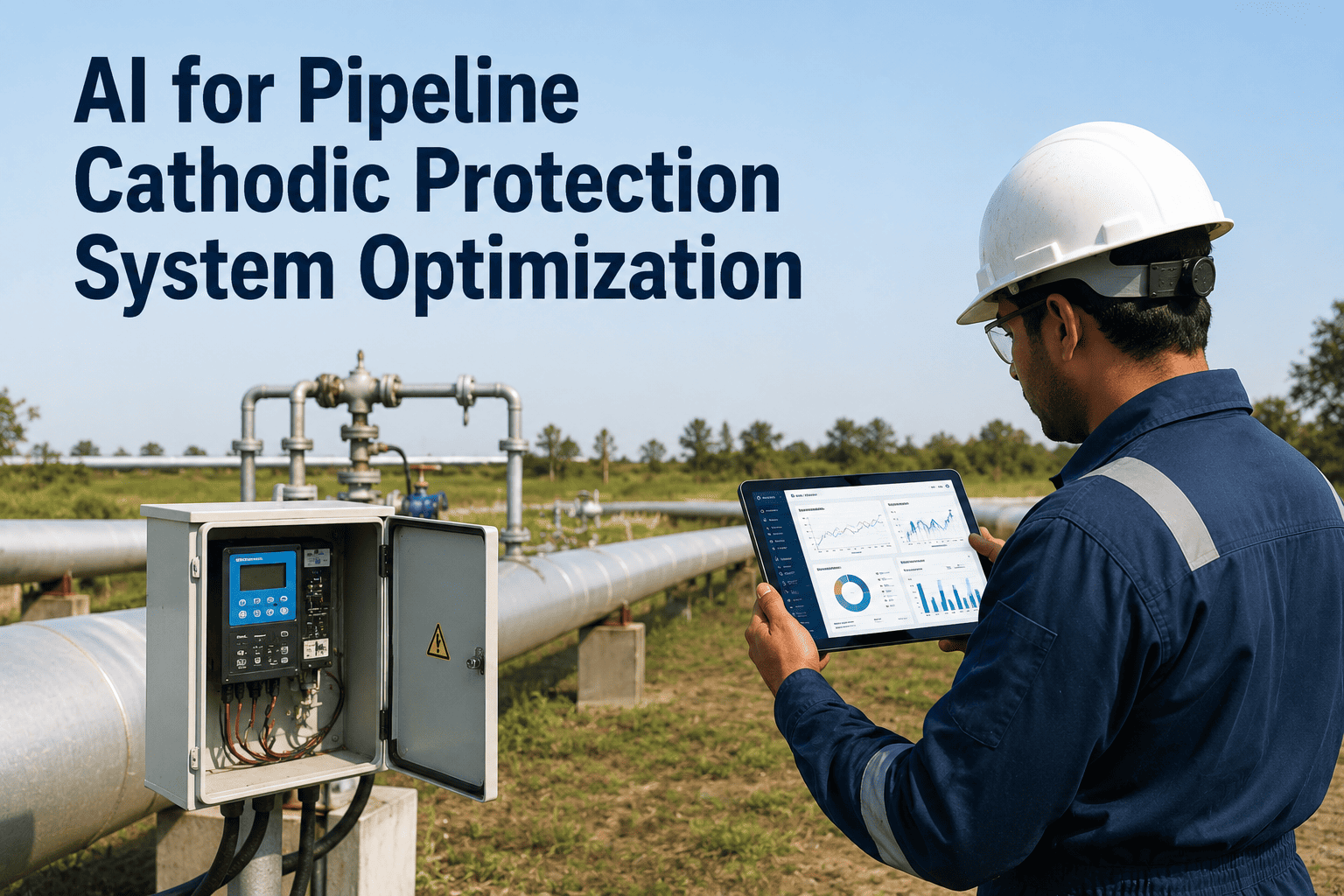
Line pressure and liquid loading in gathering pipelines shift with changing gas-to-liquid ratios across the field, creating a moving constraint that a static hydraulic model from startup no longer reflects.
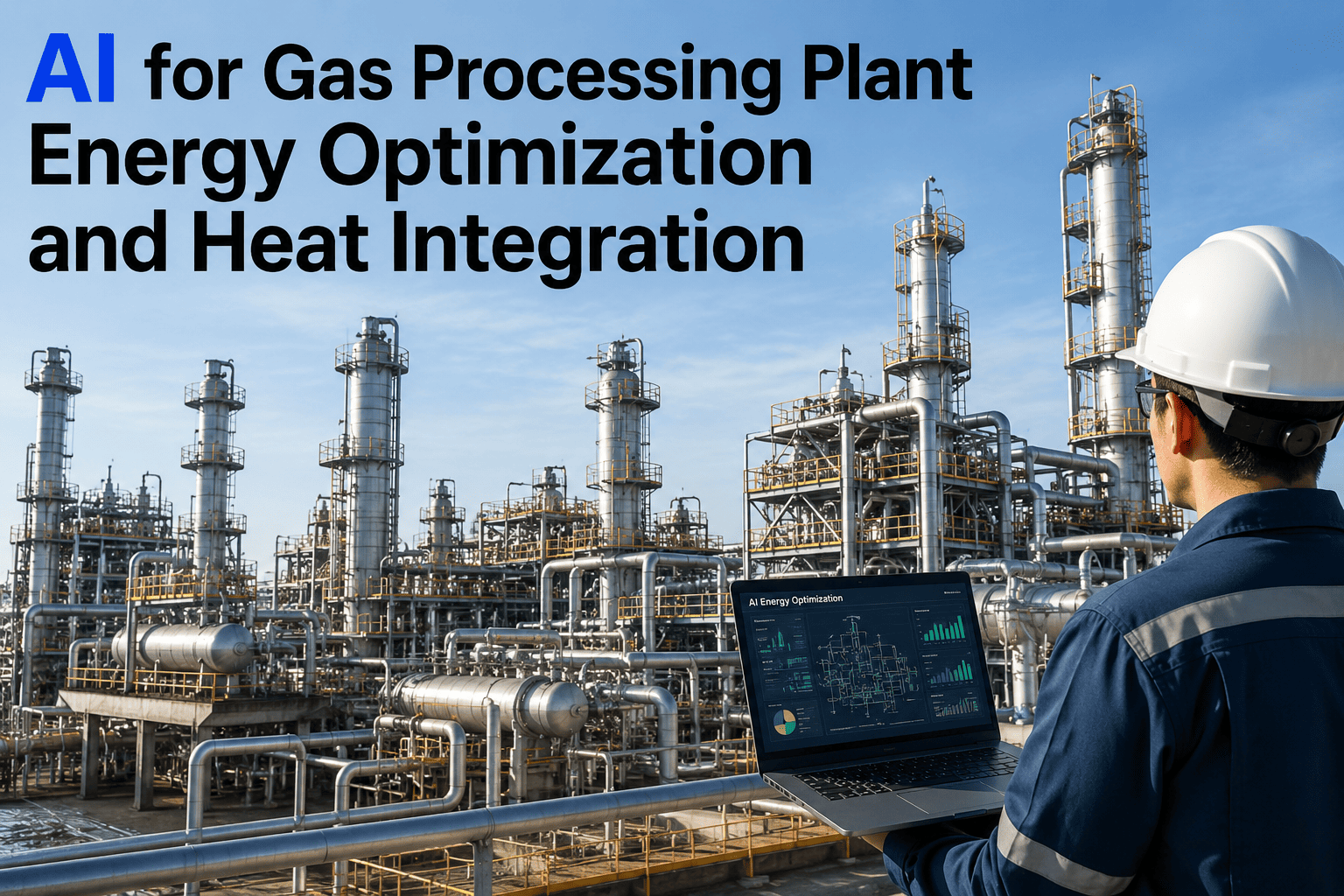
Heat duty and glycol circulation limits can quietly cap throughput long before separation or compression become the binding constraint, especially as inlet temperature or water content drifts from design basis.
From Live Facility Data to a Ranked Debottlenecking Plan
Rather than a one-time engineering exercise, the process below runs continuously, so the ranked list of constraints your team acts on always reflects current operating conditions.
Build the Live Facility Model
Current well count, fluid properties, and equipment condition are combined into a continuously updated hydraulic and process model rather than a one-time static simulation.
Identify the Binding Constraint
Every system, separation, compression, pipeline, and treating, is checked against the live model to isolate exactly which one is limiting total throughput right now.
Quantify the Uplift Available
The incremental production and revenue available from relieving the identified constraint is quantified, so any capital request is backed by a specific number.
Re-Rank as Conditions Change
As the current constraint is relieved, the model immediately identifies the next binding system, keeping the debottlenecking plan current instead of a one-time project.
Find Out What's Actually Limiting Your Throughput
Stop guessing which piece of equipment is the real constraint. Book a demo and see your facility modeled against current operating conditions.
Static Design-Basis Models vs a Continuously Updated Facility Model
The table below compares how facility constraints are typically identified using a static design model against a continuously updated AI facility model, across the decisions that matter most when justifying a capital request.
| Capability | Static Design-Basis Model | iFactory AI Facility Model |
|---|---|---|
| Model Refresh Frequency | Updated during periodic engineering studies, often years apart | Continuously updated from live operating data |
| Constraint Identification | Based on original design assumptions and nameplate ratings | Based on current fluid properties and equipment condition |
| Response to New Wells | Requires a new engineering study to reassess capacity | Automatically reflects the new well in the live constraint ranking |
| Capital Justification | Broad capacity estimate with wide uncertainty range | Specific, dollar-quantified uplift tied to the current binding constraint |
Outcomes Reported From AI-Driven Facility Debottlenecking Programs
The figures below reflect measured outcomes from facility debottlenecking programs guided by continuous AI modeling, tracked against each site's own prior static capacity assessment and validated over multiple production quarters.
Getting a Live Facility Model Running on Your Site
Connect Facility Data
Existing SCADA points, meter data, and equipment specifications are connected to build the initial live model.
Validate Against Current Operations
The model is calibrated against recent operating history to confirm it reflects real equipment performance, not just design assumptions.
Identify Priority Constraints
The current binding constraint and the next two behind it are ranked and quantified for the engineering and operations teams.
Track Uplift as Changes Are Made
As debottlenecking work is completed, the model confirms the realized uplift and moves to the next constraint automatically.
Questions Facilities Engineers Ask About AI-Driven Debottlenecking
The Bottleneck Moved. Has Your Model Kept Up?
Facility capacity is never static. Every new well, every shift in water cut, and every year of equipment fouling moves the true constraint somewhere the original design report never anticipated, which is exactly why so many debottlenecking dollars get spent on equipment that was never really the limiting factor in the first place. Left unchecked, that mismatch compounds quietly for years, showing up only as production that never quite reaches what the reservoir could actually deliver.
iFactory's AI keeps a live model of your facility's separation, compression, pipeline, and treating capacity running continuously, so the constraint ranking your team acts on reflects today's operating conditions rather than a study written years ago. That is how debottlenecking capital gets spent on the system that actually unlocks production, the first time.
See Which System Is Really Limiting Your Facility Today
iFactory's AI models your facility continuously and ranks constraints by dollar-quantified uplift potential. Book a demo and see it against your own operating data.