A gas processing plant is really four processes stacked in a row — sweetening, dehydration, NGL recovery, and compression — and a small inefficiency at the very first stage doesn't stay small. A slightly high water slip out of the dehydration unit can turn into a hydrate blockage in the cryogenic cold box downstream, and a minor compressor inefficiency compounds into throughput losses that show up on every barrel processed for months. Mid-size refineries and gas plants routinely leave tens of millions of dollars in annual profit on the table to reliability-related constraints. AI-driven optimization exists to find that margin before it disappears — schedule a gas plant AI demo to see it applied to your process data.
Gas Processing · Process Optimization AI
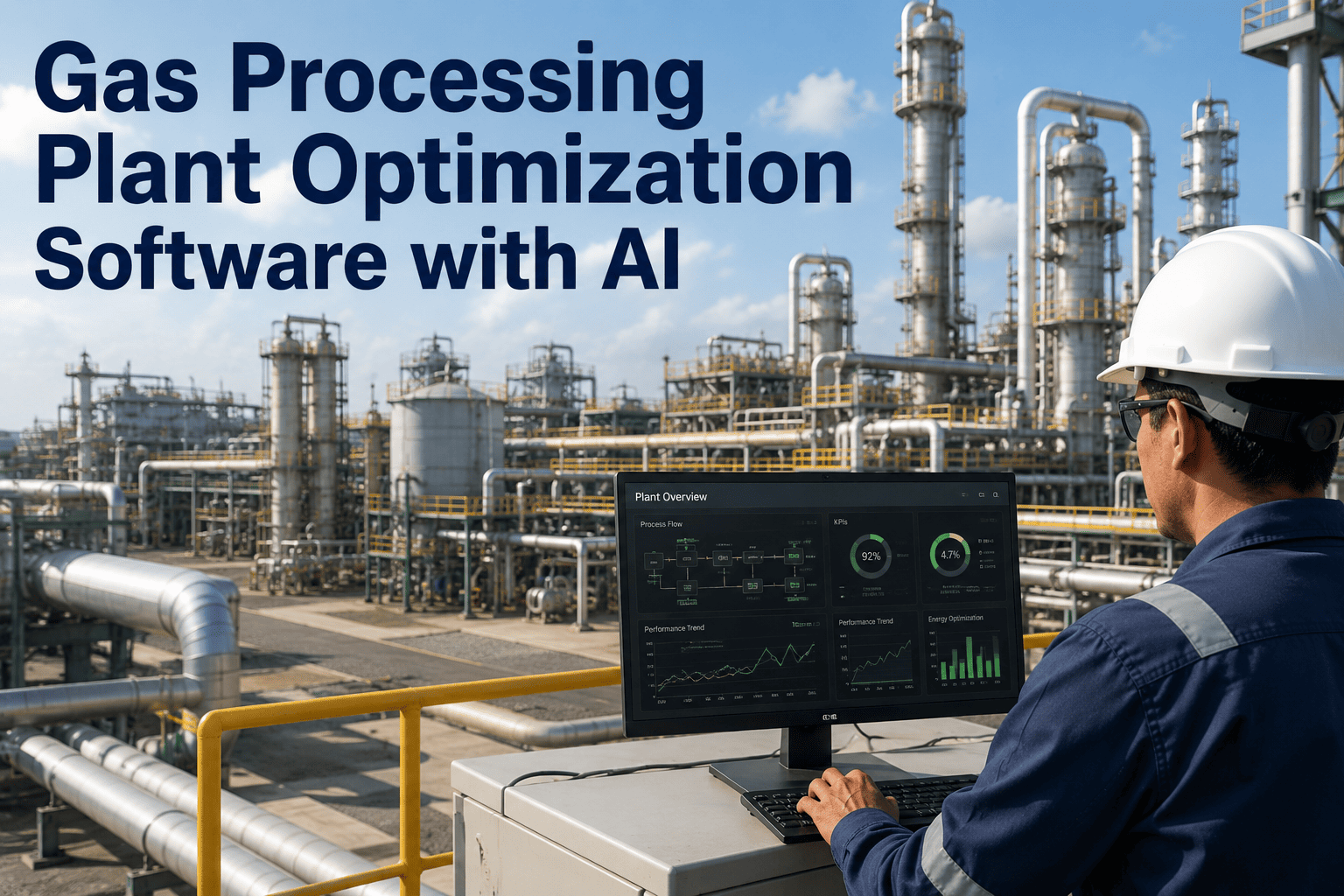
Gas Processing Plant Optimization Software with AI
Optimize reliability, throughput, dehydration, and compression across your gas processing plant with AI that watches every stage, not just the one having a bad day.
Four Stages, One Chain of Consequences
Natural gas moves through sweetening, dehydration, NGL recovery, and compression in sequence, and a problem introduced early in that chain rarely stays contained to the unit where it started.
1
Sweetening
Acid gas components are removed to protect downstream equipment from corrosion.
→
2
Dehydration
Water vapor is stripped out to prevent hydrate formation in downstream cryogenic units.
→
3
NGL Recovery
Cryogenic turboexpanders extract valuable ethane and propane from the gas stream.
→
4
Compression
Sale gas compression prepares the processed product for pipeline transport.
Field Warning
If a molecular sieve dehydration unit allows water slip above roughly 0.1 ppmv, ice and hydrates can begin forming in the cryogenic cold box at temperatures below -40°F, plugging the channels and creating a pressure drop that can force a shutdown. Continuous monitoring of the dry gas dew point is what catches this before it becomes a physical blockage instead of a number on a trend chart.
The Margin Hiding in Reliability Constraints
$50-100M
Annual profit opportunity mid-size refineries sacrifice to reliability-related constraints alone
4
Major treatment stages where AI can identify hidden optimization opportunity — sweetening, dehydration, NGL recovery, compression
Continuous
Learning from actual plant operations instead of periodic manual studies
With utilization already high across the industry, most plants can't build their way out of a bottleneck. The margin has to come from operating closer to the true constraint boundary of the equipment you already have.
What AI Optimization Actually Does at Each Stage
Dehydration Efficiency
Identifies excessive methanol or glycol injection rates and recommends lower rates that trim reagent spend without risking hydrate formation.
Compression Reliability
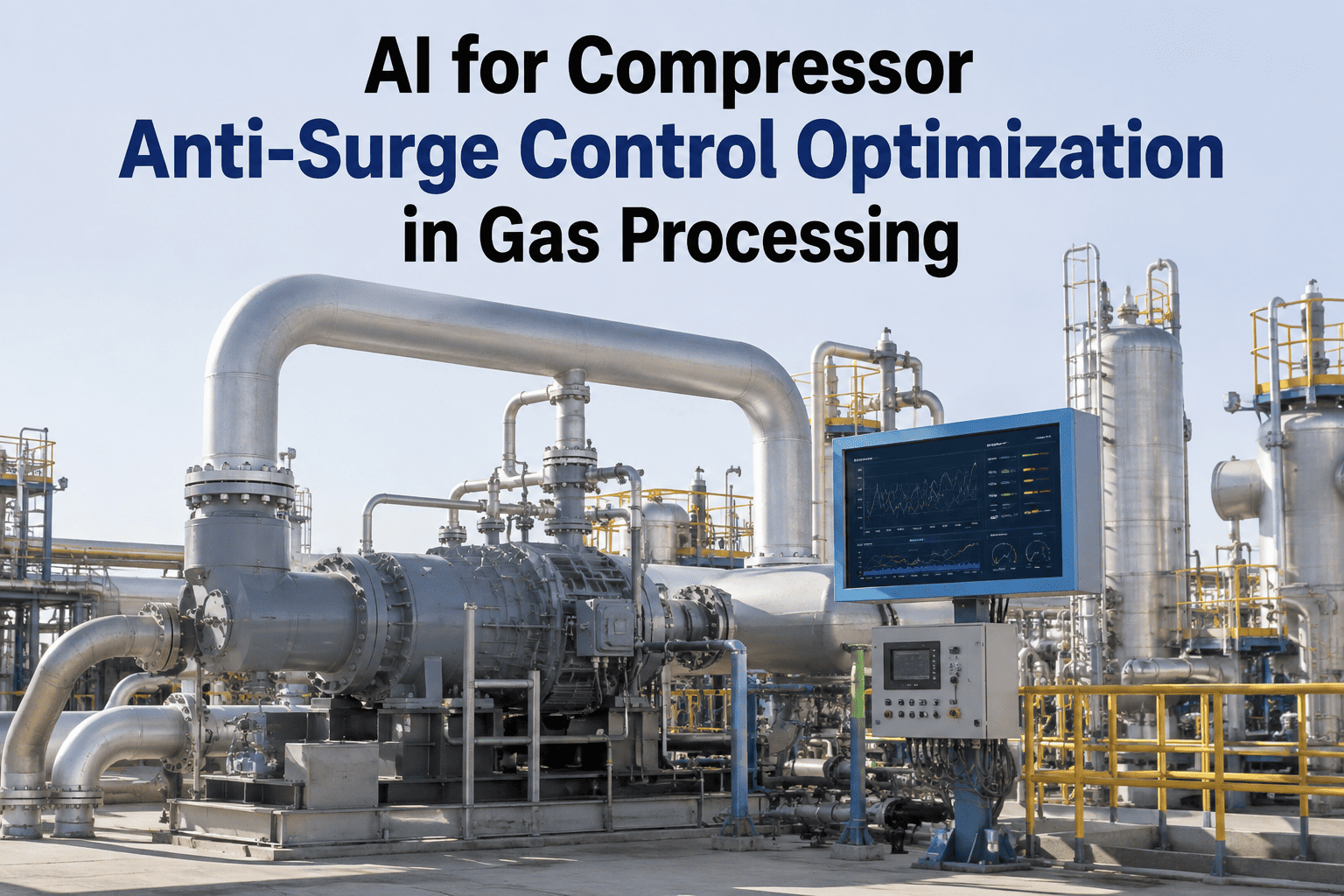
Unifies pressure, temperature, vibration, and lubrication telemetry to flag valve wear and cylinder issues before they force unplanned downtime.
Throughput Optimization
Continuously learns safe operating boundaries so the plant can run closer to its true constraint limits instead of a conservative buffer.
Column Stability
Applies multivariable predictive control patterns to keep distillation and separation columns inside optimal economic and safety limits.
Expert Insight
In twenty years of commissioning and troubleshooting gas processing facilities, I have watched millions of dollars slip through the cracks of inefficient operations that nobody was actively watching. Optimization is not a theoretical exercise you run once a year — it's a daily battle against thermodynamic inefficiencies, equipment degradation, and shifting feed gas composition. The plants getting real value from AI are the ones treating it as a continuous discipline, not a one-time study.
Hassan Al-Rashid — Process Optimization Engineer, 20+ years commissioning gas processing facilities across the Permian Basin and the Middle East
Manual Process Studies vs. Continuous AI Optimization
| Capability |
Manual Process Studies |
Continuous AI Optimization |
Why It Matters |
| Frequency |
Periodic studies, often annual |
Continuous learning from live plant data |
Feed composition shifts are caught as they happen |
| Hydrate risk monitoring |
Manual dew point checks at intervals |
Continuous dry gas dew point tracking |
Cold box blockages get prevented, not just documented |
| Compressor reliability |
Reactive repairs after valve or cylinder failure |
Telemetry-based early warning across trains |
Fewer unplanned shutdowns from midstream compression |
| Reagent usage |
Fixed injection rates set conservatively |
Dynamically tuned methanol and glycol rates |
Lower chemical spend without added hydrate risk |
| Throughput ceiling |
Conservative buffer below true constraint |
Operates closer to the actual safe boundary |
More barrels processed from the same equipment |
Frequently Asked Questions
Which stage of the plant benefits most from AI optimization first?
Most operators start wherever the reliability constraint is costing the most — often compression, since valve and cylinder wear are common causes of unplanned downtime in midstream operations. Dehydration monitoring is also a strong early candidate given the severity of a hydrate-related cold box blockage.
Schedule a gas plant AI demo to identify the highest-value starting point for your facility.
Does this replace our existing process simulation tools?
No, simulation tools remain valuable for design and scenario testing, while AI optimization works alongside them by continuously learning from real operating data rather than a static model, catching drift and degradation that a simulation run once a year would miss entirely.
Contact support to see how it complements your current toolset.
How does AI help specifically with hydrate formation risk?
By continuously tracking the dry gas dew point coming out of the dehydration unit, AI can flag water slip trending toward the threshold where hydrates begin forming in the cryogenic cold box, giving operators a chance to correct dehydration performance before ice starts plugging channels and forcing a shutdown.
Schedule a gas plant AI demo to see hydrate risk monitoring in action.
Can this run in closed-loop mode, adjusting setpoints automatically?
Most deployments start in an advisory mode, where AI recommendations are reviewed by control room staff before implementation, building operator trust and demonstrating value. Moving to closed-loop optimization, where the system writes setpoints directly, typically happens after that advisory phase proves reliable.
Contact support to discuss a phased rollout plan.
What kind of throughput gains are realistic?
Gains depend heavily on how far current operations sit below true constraint boundaries, but the underlying mechanism is consistent: throughput improves as the plant operates safely closer to its actual limits instead of a conservative buffer built around uncertainty that AI can now reduce.
Schedule a gas plant AI demo to model a realistic range for your specific train configuration.
Find the Margin Sitting Inside Your Own Process Data
Optimize sweetening, dehydration, NGL recovery, and compression together instead of as four separate problems.