Unplanned downtime on a single offshore production platform can exceed one million dollars per day, yet upstream and midstream operators still run maintenance programs built around spreadsheets, clipboard walk-throughs, and tribal knowledge held by technicians approaching retirement. A CMMS built for general manufacturing will not survive the compliance requirements, remote asset geography, and SCADA integration demands of oil and gas. The gap between a system that checks a compliance box and one that actually reduces mean time to repair is where most implementations fail, and it is exactly what separates programs that drain budget from programs that generate measurable return. Book a demo to see how a purpose-built CMMS handles the realities of upstream and midstream maintenance.
Oil & Gas · Predictive Maintenance ROI
CMMS Implementation for Oil & Gas: Upstream & Midstream Playbook
A field-validated guide to selecting, deploying, and integrating a computerized maintenance management system across rigs, pipelines, compressor stations, and terminal facilities.
$1.2M
Average daily cost of unplanned downtime on an offshore production platform
67%
Of oil and gas maintenance teams still rely on paper-based or spreadsheet work orders
14:1
Average ROI reported by energy companies after full CMMS deployment in year one
The Real Cost of Running Maintenance Without a CMMS
Most oil and gas operators can quote their lifting cost per barrel, but very few can quantify what maintenance failures actually cost them in a given quarter. The losses compound silently through reactive work orders, redundant site visits, delayed spare parts, and compliance gaps that only surface during an audit. The numbers below represent documented averages across upstream and midstream operations that evaluated their maintenance costs before implementing a CMMS.
38%
Of all maintenance hours spent on reactive repairs instead of planned prevention
22%
Spare parts inventory carrying cost inflated by unlinked procurement and storeroom data
4.7x
Higher cost per work order when maintenance is dispatched without failure history context
31%
Of PM schedules skipped or delayed due to lack of automated tracking and escalation
Upstream vs. Midstream: What Your CMMS Must Handle Differently
A CMMS that works well in a downstream refinery will fail in upstream and midstream environments unless it accounts for fundamentally different operational realities. Asset distribution, failure modes, regulatory frameworks, and workforce logistics diverge sharply between these two segments. Selecting a system without mapping these differences to feature requirements is the single most common implementation mistake in oil and gas.
Upstream Operations
Asset Distribution
Scattered across remote drilling sites, offshore platforms, and well pads with limited connectivity
Failure Impact
Single well downtime can idle an entire production cluster worth millions per day
Workforce Model
Rotational crews, contractor-heavy, frequent handoffs between shifts and service companies
Compliance Focus
BSEE, API standards, blowout preventer testing intervals, well integrity documentation
CMMS Requirement
Offline-capable mobile access, contractor portal, automated compliance scheduling
Midstream Operations
Asset Distribution
Linear pipeline corridors spanning hundreds of miles with compressor and pump stations
Failure Impact
Pipeline shutdown disrupts supply contracts and triggers force majeure clauses
Workforce Model
Small crews stationed at remote facilities, often solo operators at pump stations
Compliance Focus
DOT Pipeline Safety, PHMSA reporting, valve inspection cycles, cathodic protection records
CMMS Requirement
GIS-enabled asset mapping, linear asset PM scheduling, regulatory audit trail
5-Phase Implementation Roadmap That Works in the Field
Oil and gas CMMS implementations that follow a generic software rollout template consistently overrun budget and underdeliver. The phases below reflect the sequence that produces measurable results in energy operations, where field conditions, union rules, and regulatory deadlines do not wait for IT project schedules.
1
Asset Registry and Criticality Ranking
Build a hierarchical asset tree from production facility down to component level. Apply risk-based criticality scoring so PM frequency and spare parts stocking align with actual consequence of failure, not arbitrary schedules.
2
PM Program Migration and Optimization
Import existing preventive maintenance routines, then immediately rationalize them. Most oil and gas sites carry 30 to 40 percent over-maintenance on low-criticality assets while under-maintaining high-criticality equipment.
3
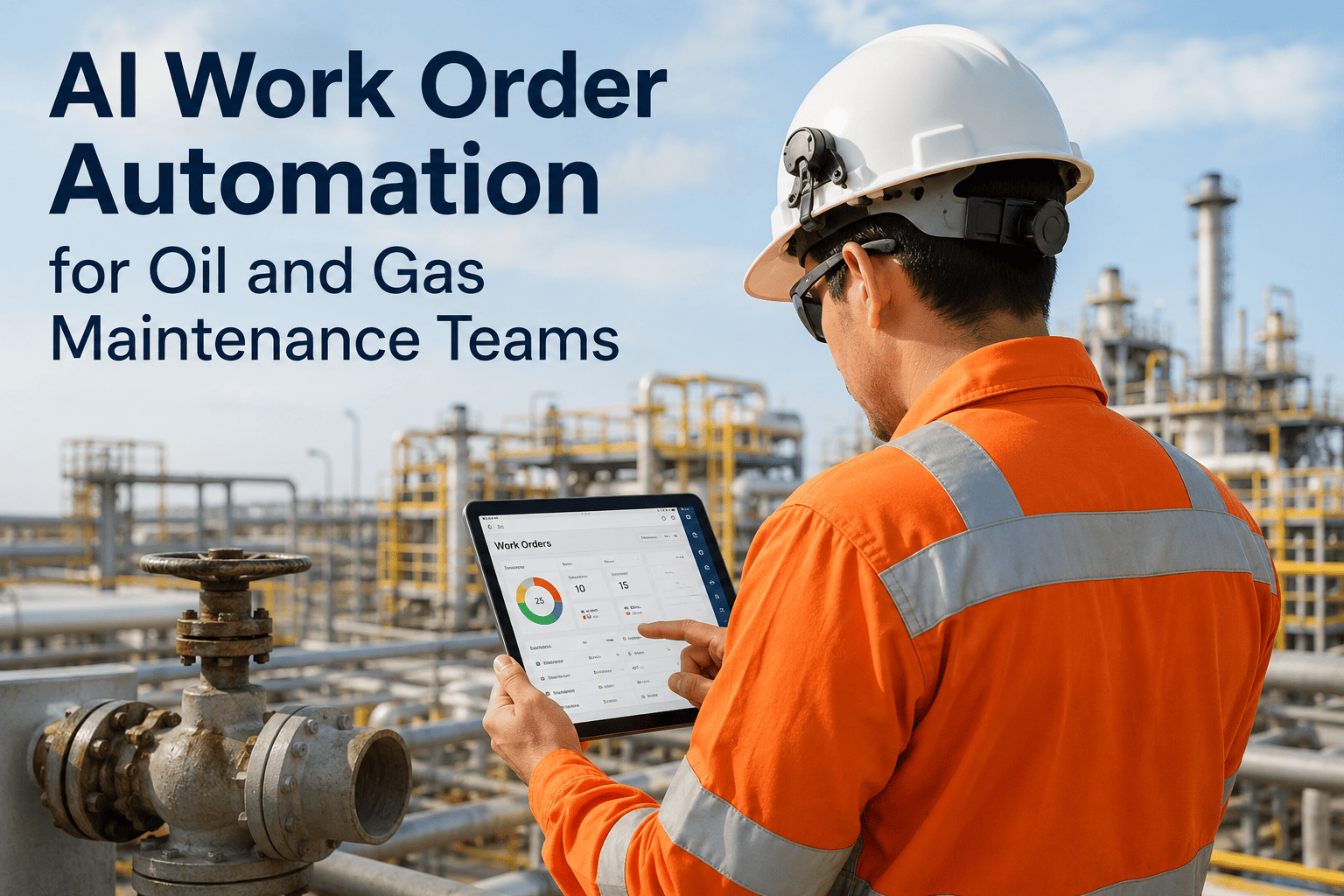
Work Order Workflow Deployment
Configure request, approval, assignment, completion, and feedback loops that match actual field authority levels. Offshore rigs and pipeline stations have different approval hierarchies that must be hardcoded, not improvised.
4
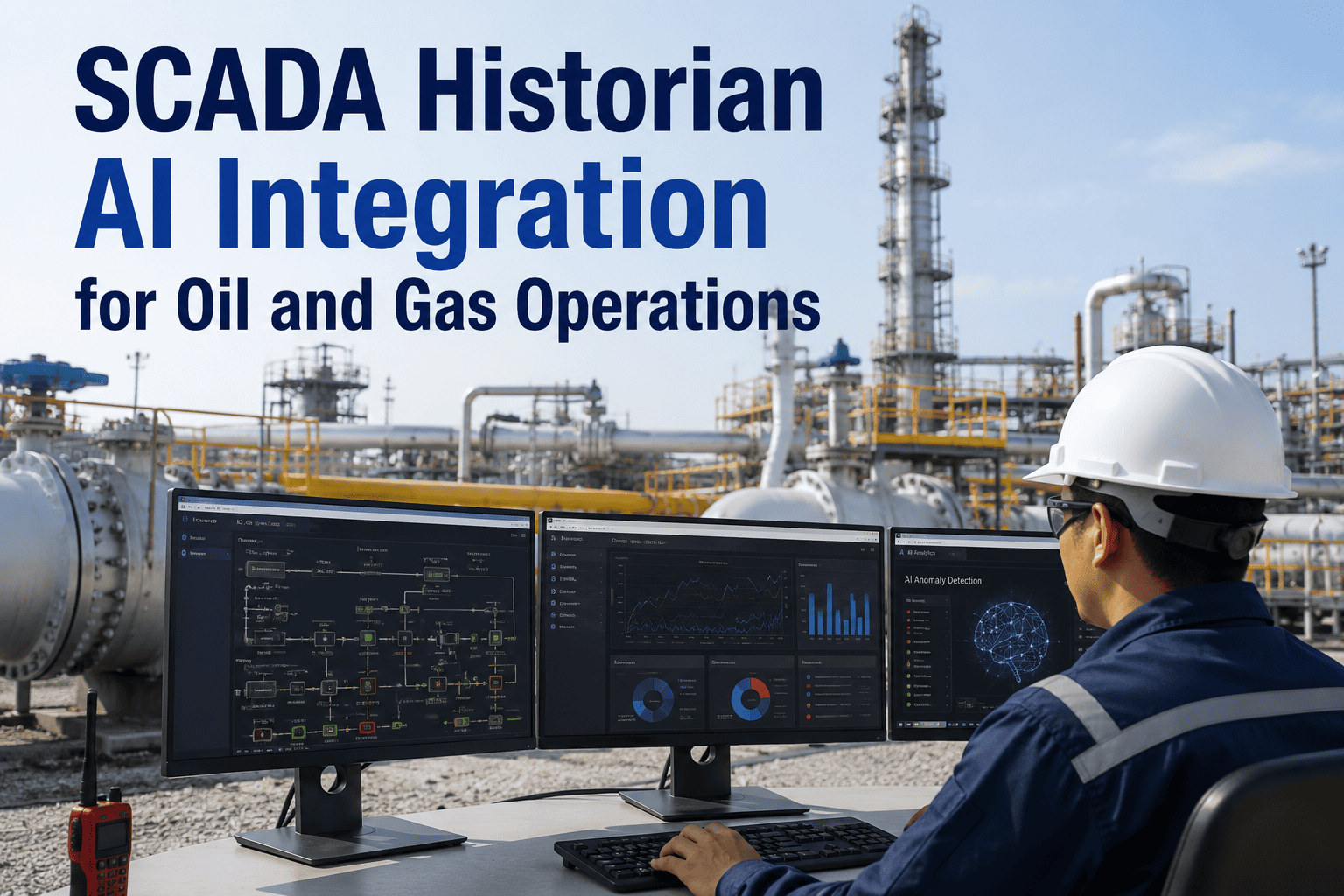
SCADA and Historian Integration
Connect the CMMS to existing control systems so equipment runtime hours, vibration thresholds, pressure deviations, and temperature excursions automatically trigger work orders or PM adjustments without manual data entry.
5
Spare Parts and Procurement Linkage
Tie bill of materials to each asset so work orders auto-generate material requisitions. Sync with procurement systems to maintain min-max stocking levels based on actual consumption patterns, not guesswork.
Work Order Management: Before and After CMMS
The transition from manual to digital work order management in oil and gas is not just an efficiency upgrade. It fundamentally changes what maintenance teams can see, track, and improve. The comparison below represents the documented shift across operators that completed full CMMS deployment on at least one production or pipeline asset.
Before CMMS
Work Order Creation
Verbal request or paper form, often delayed by hours or days
Failure Documentation
Free-text notes with no standardized codes or failure taxonomy
Parts Availability
Technician drives to storeroom to check, or waits for warehouse call-back
Completion Tracking
Signed paper filed in a cabinet, no searchable history
Compliance Evidence
Assembled manually during audit preparation, often incomplete
After CMMS
Work Order Creation
Mobile entry from field or auto-generated from SCADA alarm trigger
Failure Documentation
Structured reason codes, failure mode, and root cause captured at completion
Parts Availability
Real-time inventory check with auto-requisition from work order screen
Completion Tracking
Full digital history searchable by asset, failure code, technician, or date range
Compliance Evidence
Automated audit trail with timestamps, signatures, and attached documentation
Integration Architecture: Where CMMS Sits in Your Technology Stack
A CMMS that operates in isolation creates a new data silo instead of eliminating one. In oil and gas, the maintenance system must exchange data with SCADA, process historians, ERP, and document management platforms to deliver its full value. The stack below shows the data flow that separates a functional CMMS from a transformative one.
Decision Layer
Dashboards, KPI Reports, Maintenance Analytics
Application Layer
CMMS / EAM, ERP (SAP, Oracle), Procurement System
Data Layer
Process Historian (PI, OSISoft), Data Lake, Condition Monitoring Database
Control Layer
SCADA, DCS, PLC Networks, RTU Systems
Field Layer
Vibration Sensors, Pressure Transmitters, Flow Meters, Temperature Probes
Spare Parts: The ROI Drain Nobody Calculates
Oil and gas facilities typically stock 30 to 50 percent more spare parts inventory than they need, while simultaneously experiencing stockouts on critical components. This paradox exists because storeroom data is disconnected from asset failure data. When a CMMS links bill of materials to actual consumption patterns, two things happen simultaneously: carrying costs drop and critical spares availability increases.
$2.4M
Average annual excess inventory cost across a mid-size upstream operator with 12 production sites
18%
Reduction in spare parts spend achieved within 12 months of CMMS-driven min-max optimization
94%
Critical spare availability rate after linking BOM to automated reorder points in CMMS
Documented Results From Oil & Gas CMMS Deployments
These outcomes represent verified results from energy operators that moved from fragmented manual systems to integrated, automated CMMS platforms across upstream and midstream assets.
38% → 72%
Gulf of Mexico Shelf Operator
Increased planned maintenance percentage across 8 offshore platforms by integrating SCADA alarm data with CMMS work order generation and rationalizing PM frequencies by criticality.
$1.8M Saved
Midstream Pipeline Company
Reduced annual spare parts carrying cost across 340 miles of pipeline and 22 compressor stations by linking asset BOM to automated procurement triggers in their CMMS.
60% → 89%
Permian Basin Production Company
Improved PM schedule compliance across 145 well pads by deploying offline-capable mobile CMMS that synchronized when crews returned to base with cellular coverage.
Your maintenance data is only as valuable as the system that connects it to action. If your SCADA alerts still get read on a screen and then manually typed into a spreadsheet, your CMMS is not doing its job and your maintenance team is doing work the software should handle.
Expert Insight
The upstream and midstream operators that get the most from a CMMS are not the ones with the biggest IT budgets. They are the ones who refuse to deploy a maintenance system that does not connect to their SCADA and historian on day one. Every disconnected CMMS becomes a digital filing cabinet within six months. The ones that generate ROI are the ones where a pressure alarm on a compressor station automatically creates a work order, pulls the correct spare parts list, and assigns the technician based on location and certification. That integration is not a nice-to-have in oil and gas. It is the entire point of the investment.
David Chen — Senior Reliability Engineer, 22 years in upstream production and midstream pipeline maintenance systems, former Shell and BP maintenance operations lead
CMMS Selection Criteria for Oil & Gas Operations
Not every CMMS on the market can handle the specific demands of upstream and midstream environments. The evaluation matrix below highlights the capability gaps that separate field-ready systems from office-only platforms.
| Capability |
General-Purpose CMMS |
Oil & Gas-Ready CMMS |
Operational Impact |
| Offline mobile access |
Requires constant internet connection |
Full offline functionality with automatic sync when connectivity returns |
Field crews on remote well pads can complete work orders without satellite coverage |
| Linear asset support |
Designed for point assets only |
Native pipeline and corridor asset modeling with segment-based PM scheduling |
Midstream operators can schedule valve inspections by mile marker instead of individual asset lookup |
| SCADA integration |
Manual import or no integration path |
Direct API connection to SCADA and historian platforms with configurable alarm-to-work-order rules |
Equipment deviations trigger maintenance action in real time instead of waiting for operator reports |
| Contractor management |
Single-tenant internal user model |
Multi-company access with role-based permissions and service company portals |
Third-party service crews receive and complete work orders without separate email or phone coordination |
| Regulatory compliance |
Generic audit log |
Pre-built templates for BSEE, PHMSA, API, and DOT reporting with automated evidence collection |
Audit preparation drops from weeks of manual assembly to automated report generation |
Frequently Asked Questions
How long does a full CMMS implementation take for an upstream or midstream operation?
Implementation timelines vary significantly based on asset count, geographic spread, and integration complexity. A single production platform or compressor station can be operational in 6 to 8 weeks. A multi-site midstream operator with 20 or more stations and SCADA integration typically requires 4 to 6 months for phased deployment. The critical factor is not software configuration but asset data quality and the time required to build an accurate hierarchical asset register with correct bill of materials for every maintainable component.
Book a demo to get a scoped implementation estimate for your specific operation.
Can a CMMS work in areas with no cellular or internet connectivity?
Yes, but only if the system is specifically built for offline-first operation. Many general-purpose CMMS platforms require constant connectivity and will fail in remote upstream environments. A field-ready CMMS stores asset data, work orders, and PM checklists locally on the mobile device, allows full completion including photo documentation, and synchronizes all data automatically when the device returns to an area with connectivity. This is a non-negotiable requirement for any upstream deployment.
Contact support to understand offline capabilities in detail.
What is the realistic ROI timeline for a CMMS in oil and gas?
Most operators report measurable cost reduction within the first 3 to 6 months after go-live, typically through reduced emergency work orders, optimized spare parts procurement, and elimination of duplicate preventive maintenance tasks. Full ROI realization including predictive maintenance benefits, compliance cost reduction, and workforce productivity gains usually materializes between 12 and 18 months. The highest-impact ROI lever in oil and gas is almost always the reduction in unplanned production downtime, which dwarfs all other savings combined.
Book a demo to model ROI for your specific asset base.
How does CMMS integration with SCADA actually work in practice?
The integration uses a middleware layer or direct API connection between the SCADA platform and the CMMS. Configured rules map specific SCADA alarms or data points to maintenance actions. For example, a vibration reading exceeding a threshold on a compressor bearing can automatically generate a condition-based work order in the CMMS with the correct asset ID, failure code, priority level, and recommended parts list pre-populated. This eliminates the gap between detecting a condition and acting on it, which in manual environments can take hours or days.
Contact support to discuss integration architecture for your SCADA platform.
Do we need to replace our existing SCADA or historian system to implement a CMMS?
No. A properly designed CMMS integration layer connects to your existing control and data infrastructure without requiring replacement. The CMMS consumes data from SCADA and historians through standard industrial protocols and APIs. Your SCADA system continues to handle real-time process control and visualization while the CMMS uses the same data streams for maintenance decision-making. The goal is to extract more value from systems you already own, not to create a rip-and-replace project.
Book a demo to see integration options for your current technology stack.
Stop Managing Maintenance on Spreadsheets — Start Controlling It
CMMS built for the realities of upstream rigs, midstream pipelines, and remote energy infrastructure — with SCADA integration, offline mobility, and compliance automation included from day one.