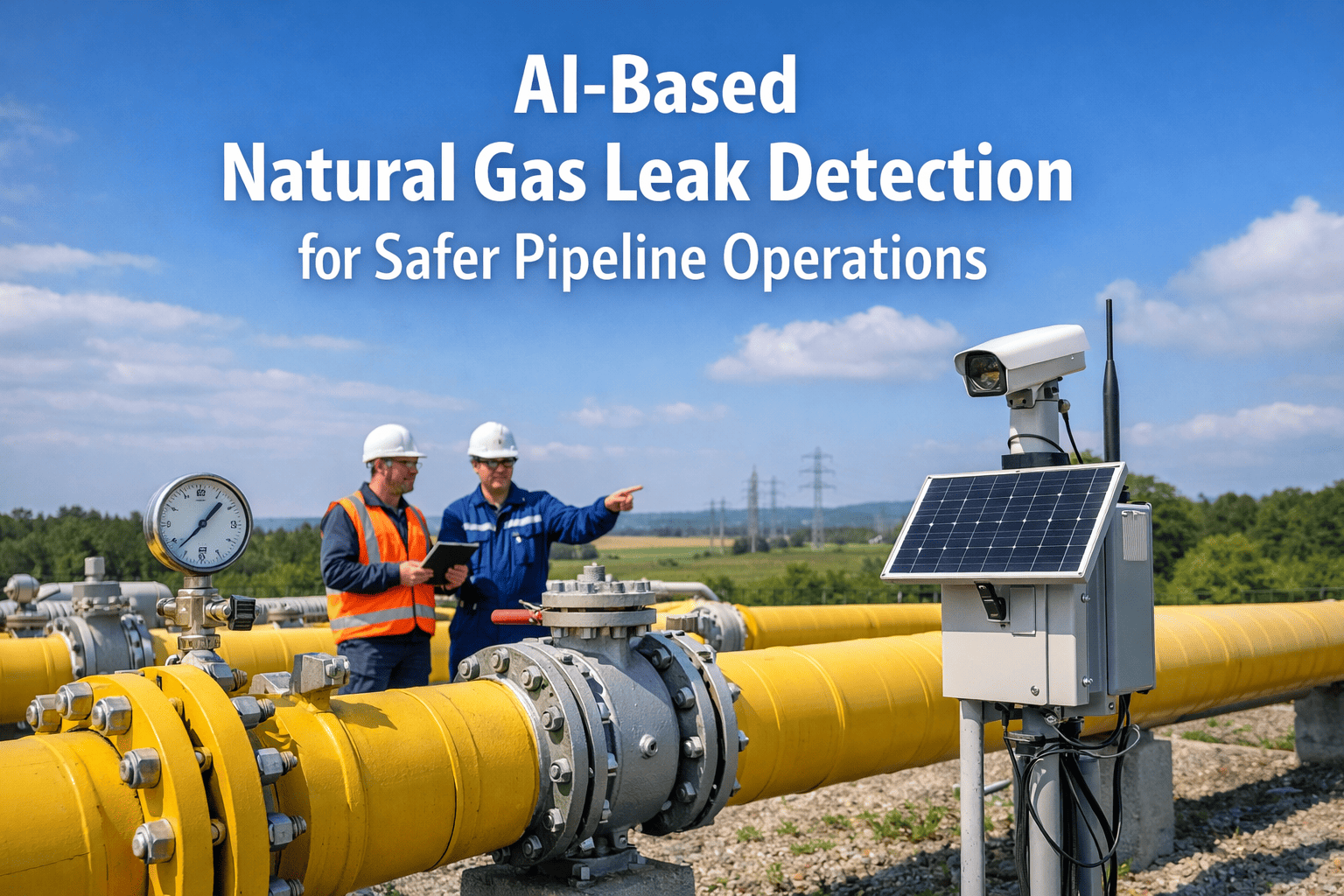
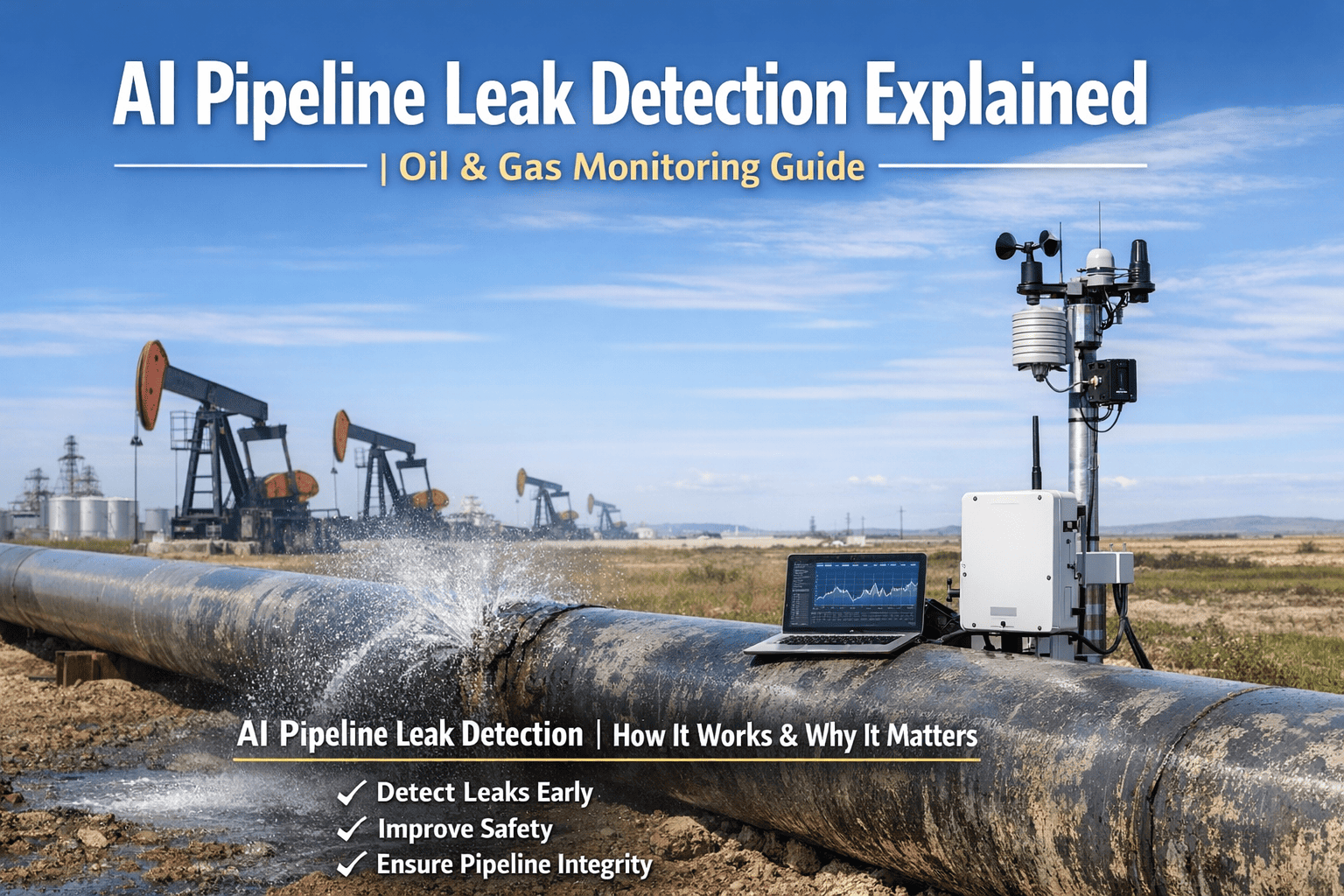
Midstream pipeline operators lose $840 million annually to undetected leaks, corrosion-driven failures, and reactive inspection programs that identify integrity threats only after pressure drops or product loss triggers alarms, by which time the damage has escalated from a repairable anomaly into a full containment breach requiring emergency shutdown, regulatory reporting, and remediation costs averaging $2.4 million per incident. Traditional pipeline monitoring relies on quarterly inline inspections, manual ultrasonic testing at predetermined intervals, and SCADA pressure monitoring that cannot distinguish between normal operational fluctuations and the subtle precursor signals that indicate wall thinning, coating failure, or micro-leakage in the 14-21 days before catastrophic failure occurs. iFactory's AI-powered pipeline integrity platform eliminates this blind spot by deploying computer vision, acoustic sensing, and predictive corrosion models that analyze real-time data from existing SCADA systems, detect anomalies invisible to threshold-based alarms, and classify integrity threats by severity before failures escalate. The pipeline leaks that used to cost millions now get caught at the precursor stage. Book a Demo to see how iFactory deploys AI pipeline monitoring across your midstream network within 8 weeks.
93%
Leak precursor detection before measurable product loss appears
$6.8M
Average annual savings per 500-mile pipeline network
76%
Reduction in false positive alarms vs threshold SCADA monitoring
8 wks
Full deployment timeline from integration to live AI monitoring
AI-Driven Integrity for Every Mile of Pipeline
iFactory's AI engine monitors pressure differentials, flow anomalies, acoustic signatures, and corrosion progression patterns across your entire pipeline network. 24/7 monitoring without operator fatigue or blind spots. Connects to Your Existing DCS/SCADA & Historians without hardware replacement.
How iFactory AI Solves Pipeline Integrity Monitoring
Traditional pipeline monitoring relies on quarterly inspections, threshold-based SCADA alarms, and reactive maintenance that identifies threats after they've escalated. iFactory replaces this with continuous AI models trained on midstream pipeline data that detect leak precursors, corrosion progression, and integrity threats 14-21 days before failures occur. See a live demo of iFactory detecting simulated pipeline anomalies.
01
AI Eyes That Detect Leaks Before They Escalate
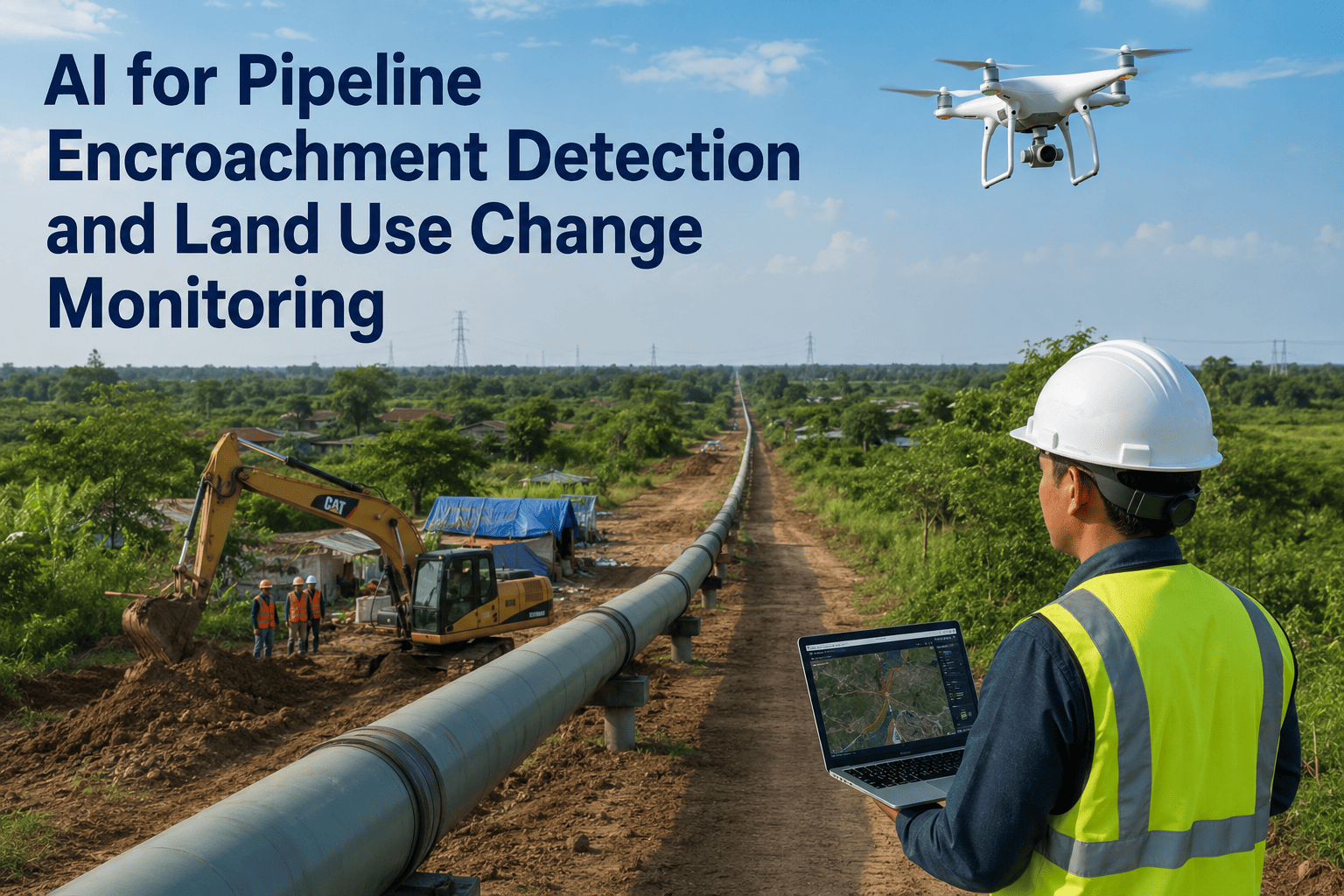
Computer vision analyzes pipeline ROW footage from drones and fixed cameras, detecting surface anomalies, vegetation stress patterns, and ground disturbances indicating subsurface leakage. AI identifies leak signatures 7-14 days before product loss triggers SCADA alarms.
02
Acoustic Leak Detection & Classification
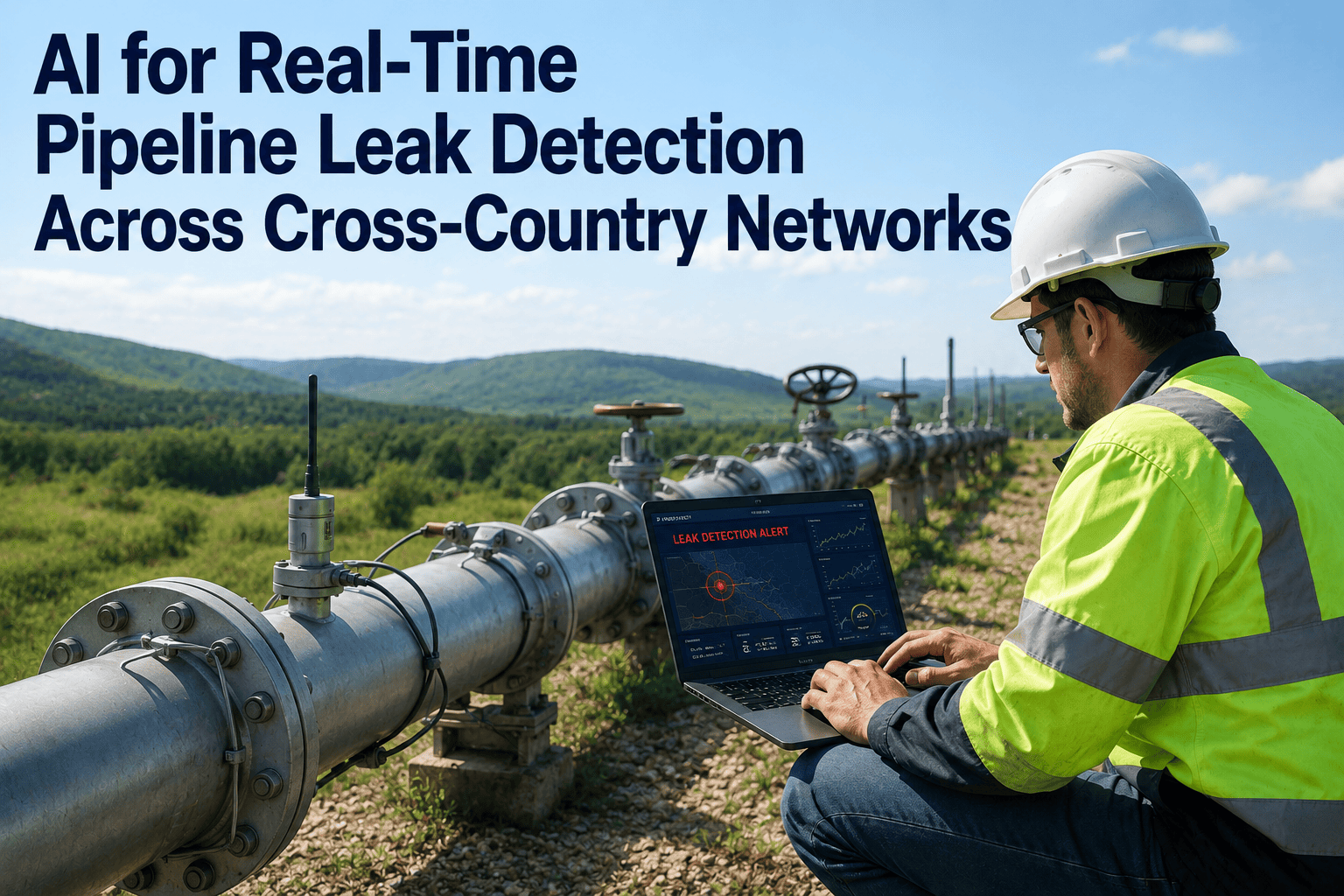
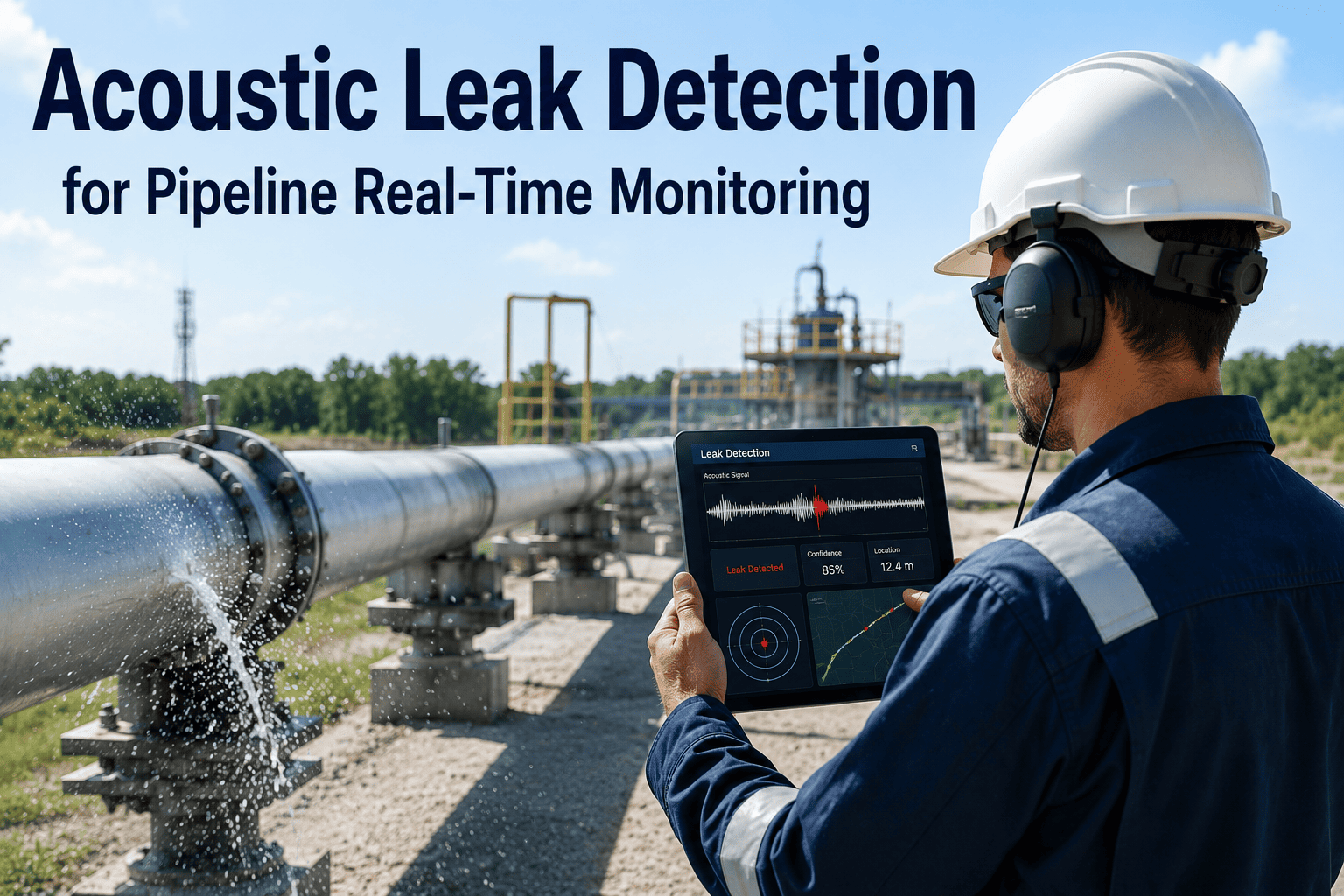
Machine learning models analyze acoustic sensor data, distinguishing between normal pipeline sounds, valve operations, and the unique frequency signatures of micro-leakage, pinhole failures, and crack propagation. False positive rate drops to under 8%.
03
Predictive Corrosion Modeling
AI forecasts corrosion progression using soil conductivity data, cathodic protection readings, coating condition assessments, and historical inspection results. System identifies pipeline segments trending toward critical wall loss 30-60 days before intervention thresholds.
04
SCADA/DCS Integration
iFactory connects to existing SCADA systems via OPC-UA, MQTT, and REST APIs. Ingests pressure, flow, temperature data in real time. No hardware replacement required. Integration completed in under 2 weeks for standard midstream environments.
05
Robots That Inspect Where Humans Cannot Safely Go
Autonomous inspection robots equipped with ultrasonic sensors, magnetic flux leakage detectors, and AI vision navigate pipeline corridors, offshore platforms, and hazardous zones. Continuous inspection without confined space entry or production shutdown.
06
Automated Integrity Reporting
Every integrity threat detected, classified, and mitigated generates structured reports with sensor evidence, threat severity, and recommended actions. Audit-ready for DOT PHMSA, API 1160, and regional pipeline safety regulations.
How iFactory Is Different from Other AI Pipeline Monitoring Vendors
Most pipeline AI vendors deliver generic anomaly detection trained on public datasets. iFactory is built specifically for midstream operations where product characteristics, pipeline materials, and integrity mechanisms determine what degradation actually means. Compare your current monitoring approach directly with iFactory specialists.
| Capability |
iFactory Platform |
IBM Maximo |
SAP EAM |
Generic AI Vendors |
| AI Leak Detection |
AI-powered acoustic, visual, and pressure correlation. 93% detection before product loss. |
Threshold alarms only. No AI detection. |
Threshold alarms only. No AI detection. |
Generic anomaly detection. High false positives. |
| SCADA Integration |
Native OPC-UA, MQTT connectors. 2-week integration. |
Custom middleware required. 6-12 month timeline. |
Custom middleware required. 6-12 month timeline. |
API development required. No fixed timeline. |
| Predictive Maintenance |
Corrosion forecasting 30-60 days ahead. ML-driven intervention scheduling. |
Calendar-based maintenance only. |
Calendar-based maintenance only. |
Generic predictions. No pipeline specificity. |
| Deployment Speed |
8-week fixed program. Pilot results week 4. |
6-18 months. No fixed go-live. |
6-18 months. No fixed go-live. |
6-12 months. High services cost. |
| Industry Fit |
Purpose-built for oil & gas midstream. API 1160 compliance. |
Generic industrial EAM. |
Generic industrial EAM. |
No midstream specialization. |
iFactory AI Implementation Roadmap
iFactory follows a fixed 6-stage deployment methodology designed specifically for midstream pipeline monitoring. Delivering pilot results in week 4 and full production monitoring by week 8. No open-ended implementations. No scope creep.
01
Pipeline Network Audit
→
→
→
→
→
8-Week Deployment and ROI Plan
Every iFactory engagement follows a structured 8-week program with defined deliverables per week and measurable ROI indicators beginning from week 4 of deployment. Request the full 8-week deployment scope document tailored to your pipeline network.
Weeks 1-2
Infrastructure Setup
Critical pipeline segment audit and sensor gap identification across monitored corridors
SCADA, DCS, and historian connection via OPC-UA, MQTT without hardware replacement
Historical pressure, flow, temperature data ingestion for baseline model training
Weeks 3-4
Model Training and Pilot
AI model trained on your network's specific product types, materials, and operating conditions
Pilot monitoring activated on 3-5 highest-risk pipeline segments
First integrity threats detected. ROI evidence begins here
Weeks 5-6
Calibration and Expansion
Alert thresholds refined based on pilot false positive and detection rate data
Coverage expanded to full pipeline network inventory
Operations team training completed. Alert response protocols activated
Weeks 7-8
Full Production Go-Live
Full network AI integrity monitoring live. All segments, all mechanisms, 24/7
Compliance reporting activated for DOT PHMSA, API 1160 frameworks
ROI baseline report delivered with leak detection, alert accuracy, and intervention optimization data
ROI IN 6 WEEKS: MEASURABLE RESULTS FROM WEEK 4
Operators completing the 8-week program report an average of $430,000 in avoided incident costs and inspection optimization within the first 6 weeks of full production monitoring with integrity threat detection improvements of 85-93% detected by week 4 pilot validation.
$430K
Avg. savings in first 6 weeks
85-93%
Threat detection by week 4
71%
Reduction in emergency shutdowns
Full AI Pipeline Integrity Monitoring. Live in 8 Weeks. ROI Evidence in Week 4.
iFactory's fixed-scope deployment program means no open timelines, no scope creep, and no months of professional services before you see a single result. One Platform, Every Segment 8 AI-Powered Modules for Complete Oil & Gas Operations.
Use Cases and KPI Results from Live Deployments
These outcomes are drawn from iFactory deployments at operating midstream pipeline networks across three integrity threat categories. Each use case reflects 6-month post-deployment performance data. Request the full case study report for the threat type most relevant to your network.
A midstream operator managing 480 miles of crude pipeline was experiencing 4-6 small leaks annually, each detected only after pressure drop triggered SCADA alarms, by which time 200-800 barrels had already been released. iFactory deployed AI acoustic sensing and pressure correlation models across the network. Within 5 weeks of go-live, the AI detected 3 micro-leak precursors at locations where wall thinning had progressed to within 12% of failure threshold, enabling targeted repair before breach occurred.
3
Pre-breach leak precursors detected in first 5 weeks
$4.7M
Estimated annual incident and remediation cost prevented
91%
Detection accuracy on early-stage integrity threats
A natural gas pipeline operator in Gulf Coast region was conducting quarterly inline inspections at $280K per run, identifying corrosion anomalies requiring excavation and repair. 68% of excavations found no actionable corrosion, driven by high false positive rates from traditional MFL inspection. iFactory replaced quarterly runs with continuous AI corrosion modeling using cathodic protection data, soil conditions, and historical inspection results. System reduced unnecessary excavations by 71% while increasing actual threat identification from 32% to 88%.
88%
Corrosion threat identification rate - up from 32%
71%
Reduction in unnecessary excavations
$1.9M
Annual inspection optimization savings
An NGL pipeline operator crossing 14 states was experiencing 8-12 third-party damage incidents annually from construction activity near pipeline ROW. Traditional aerial patrol identified encroachment only after excavation began. iFactory deployed computer vision analyzing satellite imagery and drone footage, detecting ground disturbances, equipment staging, and excavation patterns 5-9 days before pipeline contact risk. System enabled proactive engagement with contractors before damage occurred.
5-9 days
Early warning before third-party contact risk
86%
Reduction in third-party damage incidents
$3.4M
Annual incident prevention value
Results Like These Are Standard. Not Exceptional.
Every iFactory deployment is scoped to your specific pipeline configuration, product characteristics, and integrity risk profile so you get results calibrated to your network, not a generic benchmark. OT Data Stays Inside Your Security Perimeter with edge AI processing.
Regional Pipeline Compliance & Implementation
Pipeline integrity requirements vary by region. iFactory ensures AI monitoring meets local regulations while solving region-specific operational challenges.
| Region |
Key Challenges |
Compliance Requirements |
iFactory Solution |
| USA |
Aging infrastructure, third-party damage, methane emissions |
DOT PHMSA, API 1160, EPA Methane Rule |
AI leak detection, predictive corrosion, automated PHMSA reporting |
| UAE |
Extreme heat, sand ingress, offshore harsh environments |
ADNOC Standards, ISO 16708, Local safety codes |
Climate-adaptive models, bilingual AR/EN reporting, offshore monitoring |
| UK |
North Sea offshore integrity, ESG reporting pressure |
HSE Offshore, UK COMAH, PSSR regulations |
Offshore platform integration, ESG documentation, HSE audit support |
| Canada |
Remote northern pipelines, extreme cold, environmental sensitivity |
CER regulations, CSA Z662, Provincial requirements |
Remote monitoring, temperature-compensated models, bilingual EN/FR |
| Europe |
Cross-border operations, carbon reduction mandates, dense population |
SEVESO III, EU ETS, Trans-European Network regulations |
Multi-country compliance, carbon tracking, population density risk modeling |
What Midstream Operations Teams Say About iFactory
The following testimonials are from pipeline integrity managers and operations directors at facilities currently running iFactory's AI pipeline monitoring platform.
We prevented two major leak incidents in the first 90 days. iFactory detected micro-leakage signatures our SCADA alarms completely missed. The acoustic AI identified pinhole failures 11 days before pressure drop would have triggered our emergency response. That early warning saved us $2.8M in incident costs.
VP Pipeline Integrity
Crude Pipeline Operator, Texas USA
Integration with our existing SCADA took 9 days end-to-end. I was expecting months based on past vendor experience. The iFactory team understood both pipeline integrity science and the SCADA protocol layer. We had live AI monitoring across 480 miles within 7 weeks of contract signature.
Director of Operations
NGL Pipeline Network, Gulf Coast USA
The false positive problem was causing alert fatigue across our control room team. Within six weeks of iFactory going live, operators were responding to integrity alerts again because they trusted the AI classification. That behavioral shift alone prevented three delayed responses that could have escalated into incidents.
Pipeline Integrity Manager
Natural Gas Transmission, Canada
We reduced unnecessary excavations by 68% while actually finding more real corrosion threats. iFactory's predictive corrosion model uses our cathodic protection data and soil conditions to forecast where wall loss will progress. We now dig only where AI says dig and we find actionable corrosion 87% of the time versus 31% before.
Chief Engineer Pipeline Integrity
Multi-Product Pipeline System, Europe
Frequently Asked Questions
Does iFactory require new sensors or hardware to be installed across the pipeline network?
In most deployments, iFactory connects to existing SCADA infrastructure, pressure transmitters, flow meters, and cathodic protection monitoring via DCS integration without new hardware. Where sensor gaps are identified during Week 1-2 audit, iFactory recommends targeted additions only (typically 5-12 sensors per 100-mile segment), not full instrumentation replacement. Integration is complete within 2 weeks in standard environments.
Book Demo
Which SCADA and DCS systems does iFactory integrate with for pipeline monitoring?
iFactory integrates natively with Schneider Electric, ABB System 800xA, Siemens PCS 7, Honeywell Experion, Emerson DeltaV, and Yokogawa CENTUM via OPC-UA and MQTT. For pipeline-specific systems, iFactory connects to AVEVA PI, OSIsoft PI, GE Proficy, and Rockwell FactoryTalk via REST APIs. Custom integration support is available for legacy SCADA systems. Integration scope is confirmed during the Week 1 network audit.
Book Demo
How does iFactory handle different pipeline products (crude, natural gas, NGL, refined products)?
iFactory trains separate sub-models per product type accounting for viscosity, vapor pressure, flow behavior, and product-specific leak signatures. Multi-product pipelines are fully supported within a single deployment. Product-specific detection parameters are configured during the Week 3-4 model training phase based on your pipeline's actual operating conditions and product characteristics.
Book Demo
What pipeline integrity compliance frameworks does iFactory's reporting support?
iFactory auto-generates structured integrity reports formatted for DOT PHMSA regulations, API 1160 pipeline integrity management, CSA Z662 Canadian standards, and regional safety frameworks. Report templates are pre-configured for each framework and generated automatically at event close without manual documentation. Methane, VOC & Flaring From Sensor to ESG Report included.
Book Demo
How long before the AI model produces reliable leak and corrosion detections?
Baseline model training on historical SCADA, pressure, flow, and inspection data typically takes 5-7 days using 60-90 days of pipeline operating history. First live detections are validated during the Week 3-4 pilot phase. Full model calibration with false positive rate under 8% is achieved within 6 weeks of deployment for standard midstream pipeline environments.
Book Demo
Can iFactory detect integrity threats in both onshore and offshore pipeline segments?
Yes. iFactory uses multi-source signal fusion combining pressure differential trends, flow correlation, acoustic signatures, and environmental data to detect degradation across onshore, offshore, and subsea pipeline segments. All major pipeline configurations are fully supported. Coverage scope is confirmed during the Week 1 network audit. The Complete AI Platform for Oil & Gas Operations covers every segment.
Book Demo
Stop Reactive Pipeline Monitoring. Deploy AI Integrity Detection in 8 Weeks.
iFactory gives midstream pipeline operators real-time AI leak detection, multi-source sensor fusion, predictive corrosion modeling, automated integrity reporting, and compliance documentation fully integrated with your existing SCADA in 8 weeks, with ROI evidence starting in week 4.
93% detection accuracy before product loss
SCADA & DCS integration in under 2 weeks
Graded alerts with under 8% false positive rate
Auto-generated compliance reports for DOT PHMSA, API 1160

.png)