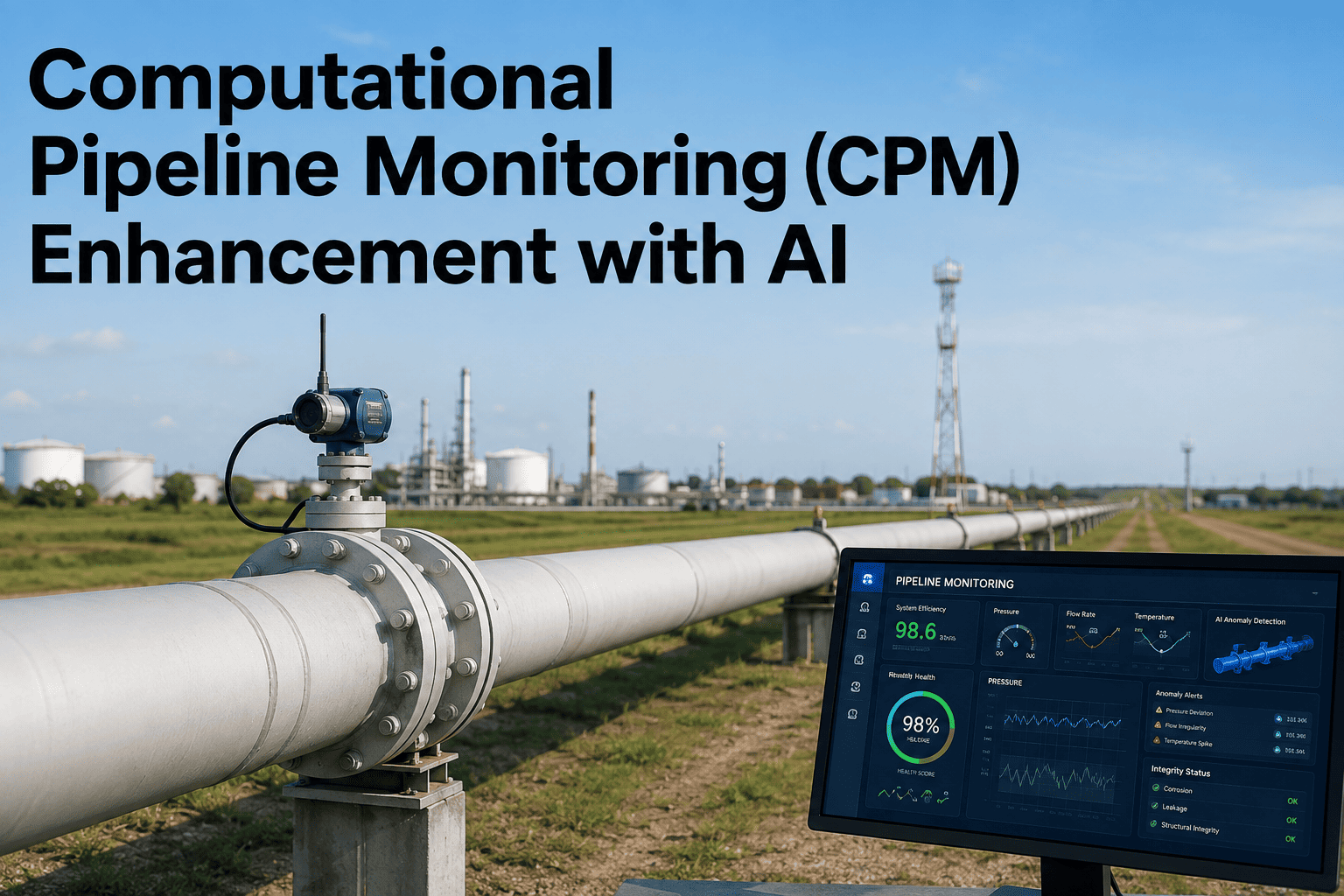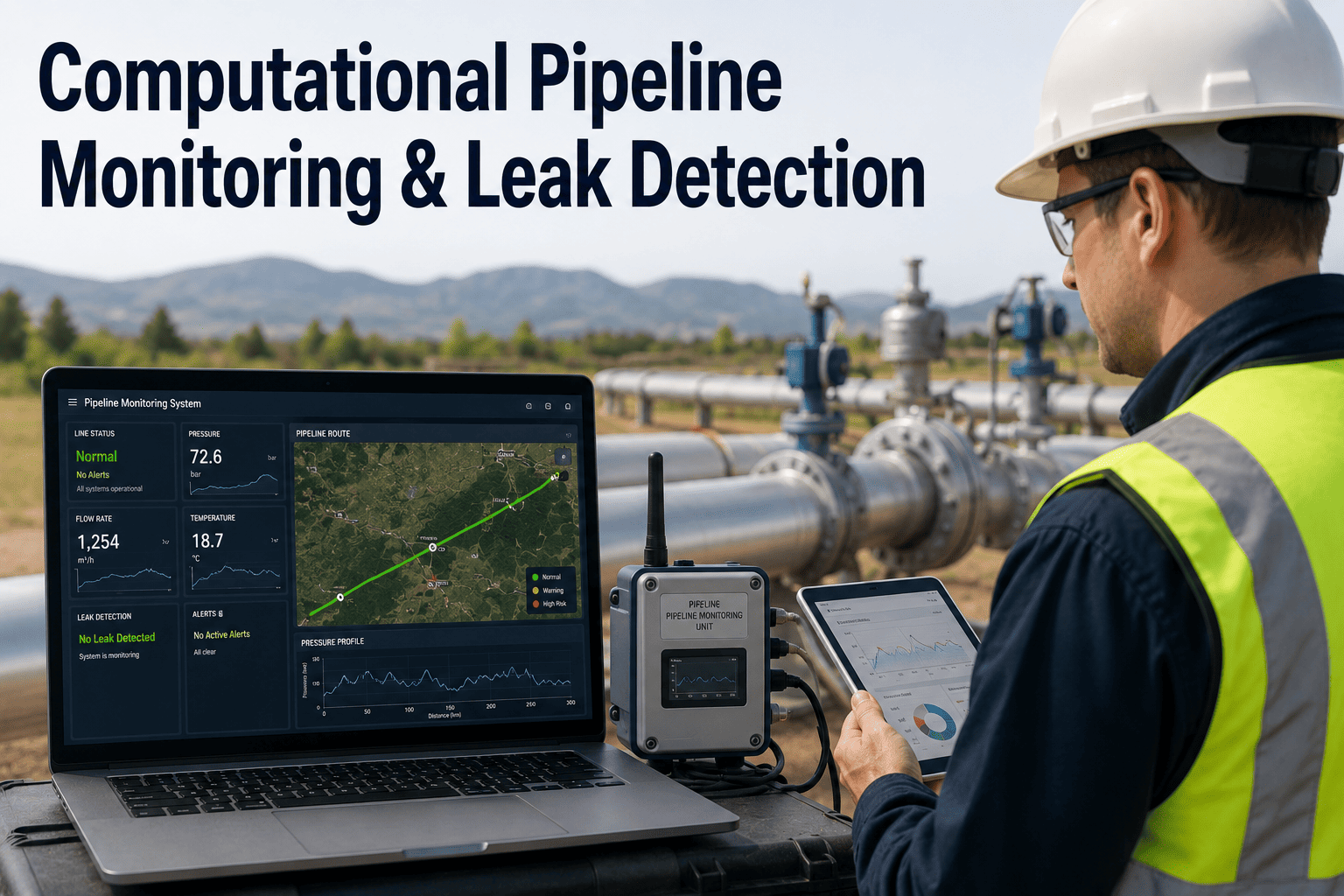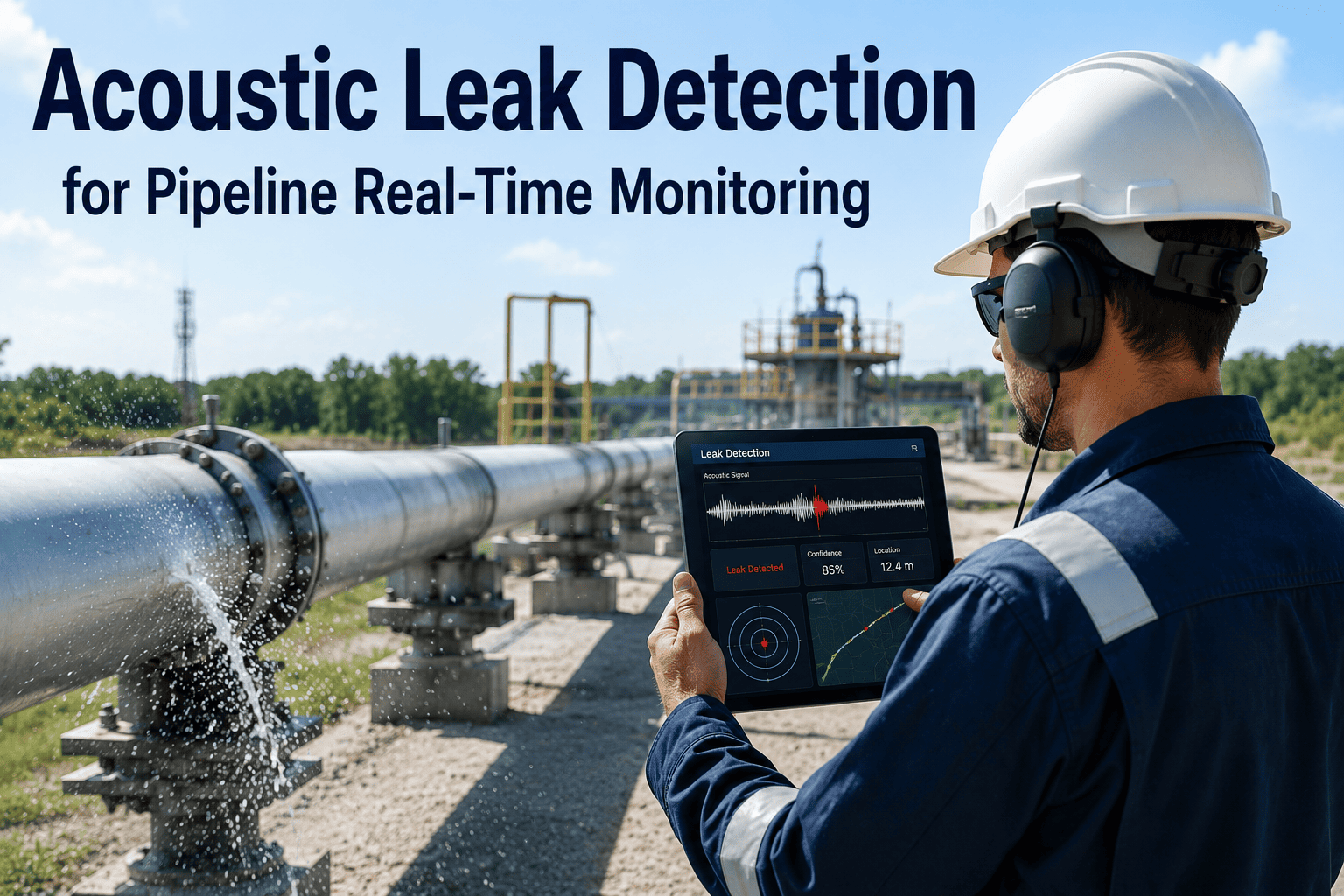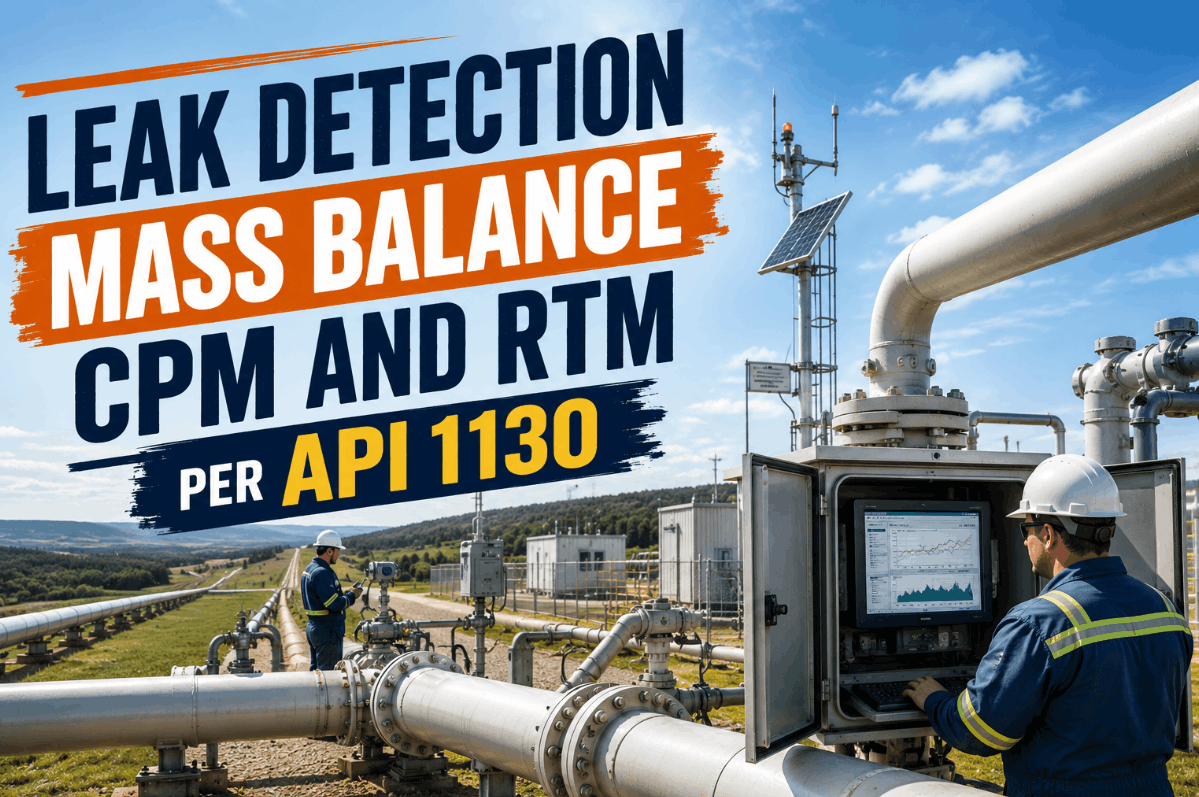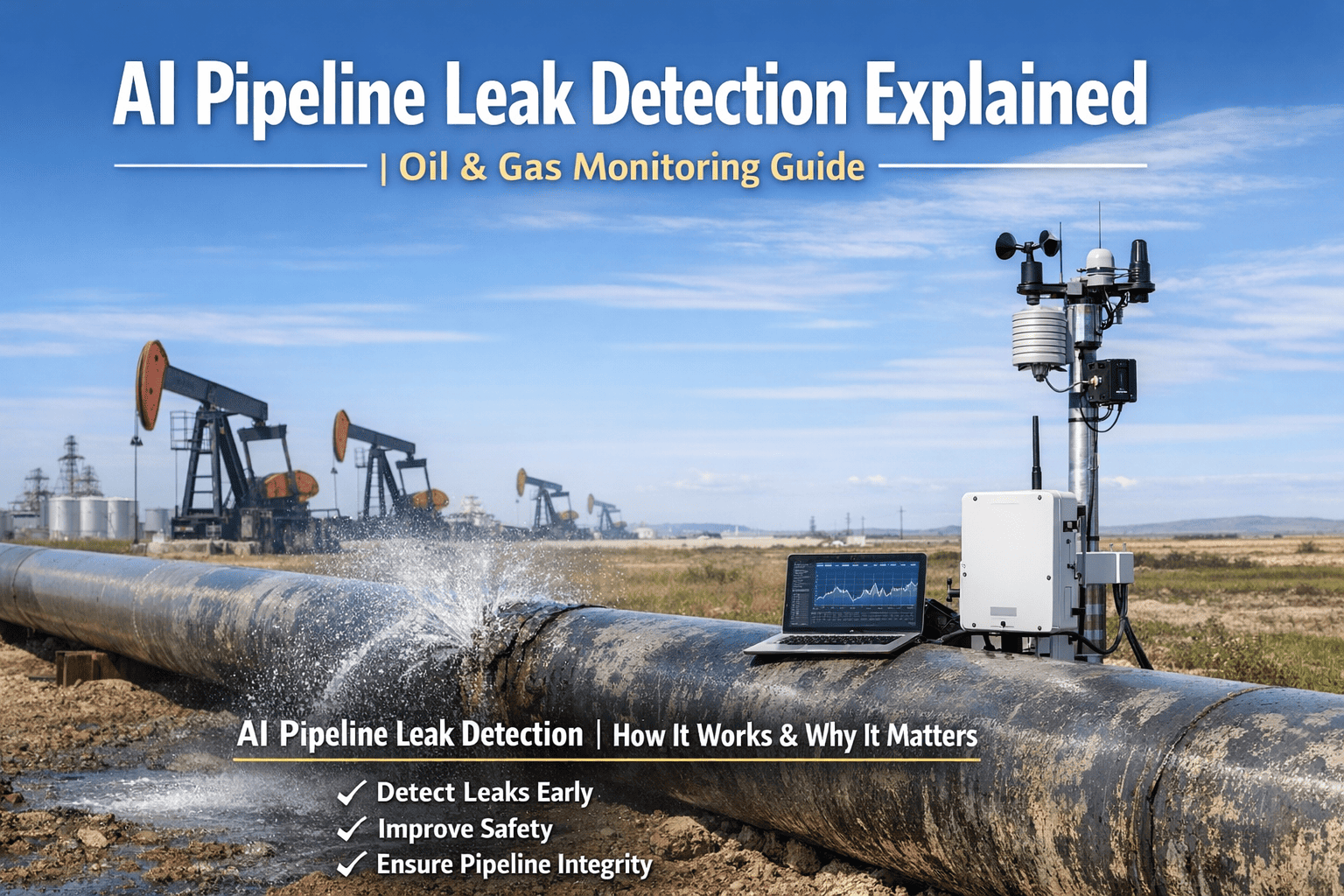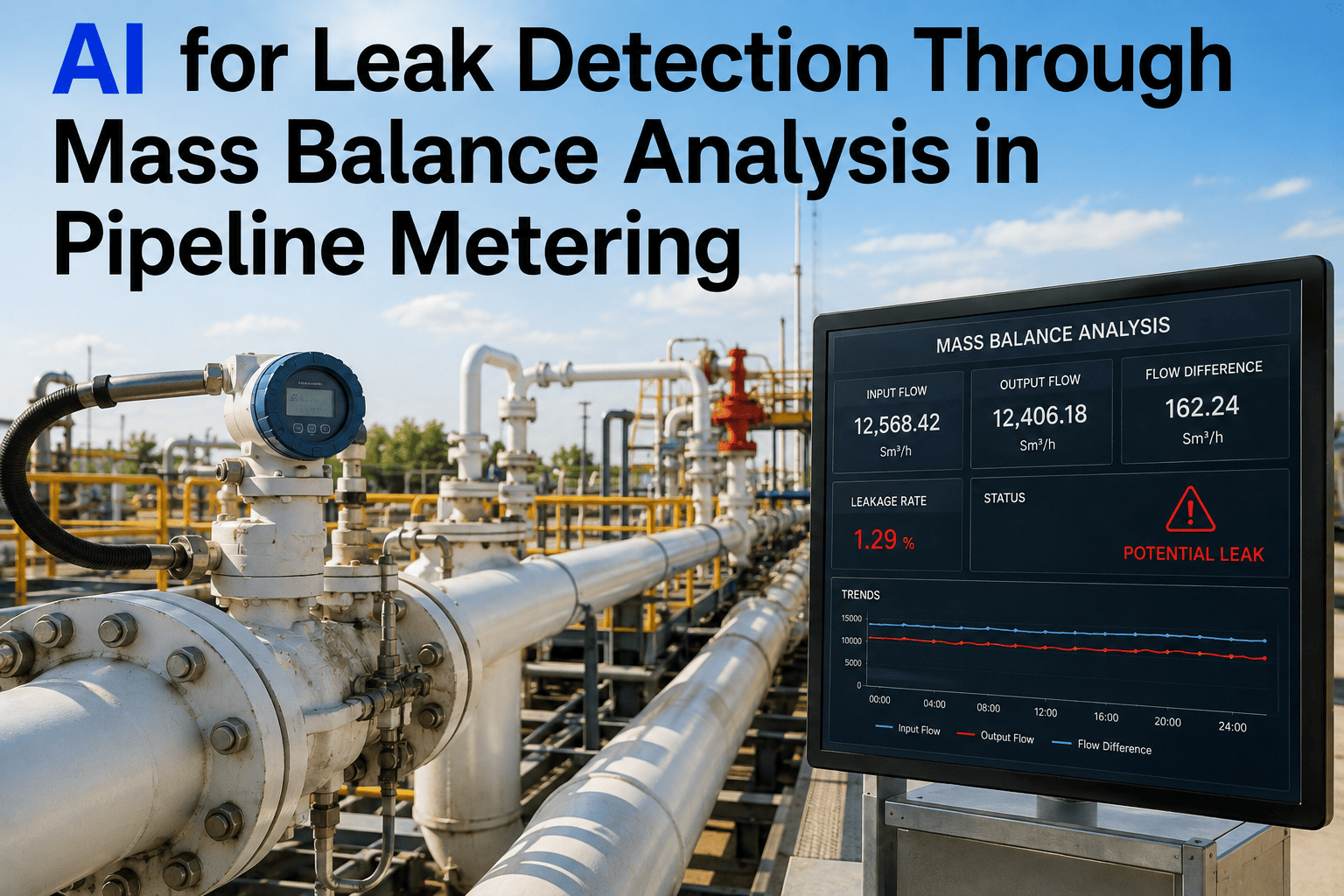
A pipeline can lose product for weeks before anyone notices, not because the leak is small in absolute terms, but because it's small relative to the noise in how inlet and outlet metering data gets reconciled. Temperature swings, pressure corrections, and line pack changes all move the numbers around every day — enough to bury a real discrepancy inside what looks like ordinary measurement variance. iFactory's mass balance leak detection separates the two automatically, flagging discrepancies as small as 0.5% of throughput.
The Leak Isn't Hiding. Your Reconciliation Math Just Isn't Precise Enough to See It.
AI-driven mass balance analysis applies temperature, pressure, and line pack corrections that a manual daily reconciliation can't sustain — surfacing discrepancies as small as 0.5% of throughput.
Why Mass Balance Is Harder Than "Inlet Minus Outlet"
On paper, mass balance leak detection is simple: measure what goes in, measure what comes out, and any unexplained gap is a leak. In practice, a pipeline's inlet and outlet volumes never match exactly, even on a perfectly healthy line, because temperature and pressure changes expand and contract the product inside the pipe, and the line itself holds a variable amount of product — line pack — that shifts with every operating change. A raw volume difference between two meters, uncorrected, is mostly measurement and thermodynamic noise with a leak signal buried somewhere inside it.
Getting from that noisy raw difference to a trustworthy leak signal requires correcting for all of it simultaneously — temperature-driven volume correction, pressure compensation, and a running estimate of line pack change — and doing it consistently enough, shift after shift, that a genuine 0.5% discrepancy doesn't get lost in the rounding of a spreadsheet reconciliation done once a day by whoever has time for it.
Ingest inlet and outlet metering data
Live flow, temperature, and pressure readings from every custody transfer and check meter along the line are pulled continuously, not batched at end of day.
Apply temperature and pressure correction
Volumes are corrected to a common reference condition using live temperature and pressure data, removing the largest source of apparent-but-false discrepancy before any comparison happens.
Estimate line pack continuously
The model tracks how much product the line itself is holding at any given moment, since a transient operating change can shift line pack enough to look like a discrepancy if it isn't accounted for separately.
Compute the corrected mass balance
With temperature, pressure, and line pack effects removed, what remains is compared against the expected zero-discrepancy baseline, and a statistically significant gap is flagged as a candidate leak signal rather than noise.
Localize and alert
Pressure wave timing and flow profile data across the line help narrow the likely leak location before a field crew is dispatched, cutting search time from a full line walk to a defined segment.
| Correction Factor | What It Accounts For | Impact if Skipped |
|---|---|---|
| Temperature correction | Thermal expansion/contraction of product volume | Largest single source of false discrepancy |
| Pressure correction | Compressibility effects on measured volume | Secondary but compounding error source |
| Line pack estimation | Product held within the pipe during transients | Masks real leaks during rate changes |
| Meter uncertainty band | Inherent accuracy tolerance of each meter | False positives on statistically insignificant gaps |
| Batch interface tracking | Product changeovers in multi-product lines | Reconciliation errors mistaken for loss |
A Composite Scenario: The Discrepancy That Was Real
Consider a midstream operator running a daily manual reconciliation on a crude pipeline — inlet and outlet volumes pulled from the SCADA historian each morning, corrected with a standard API gravity table, and compared against a 1.5% tolerance band that has been the plant's practice for years. For three consecutive days, the reconciliation shows a discrepancy hovering around 0.8% — inside the tolerance band, so it gets noted and set aside, the same way small daily discrepancies always have been.
Under continuous mass balance monitoring, the same discrepancy is evaluated differently. The model recognizes that a consistent 0.8% gap, persisting across multiple days after full temperature, pressure, and line pack correction, is statistically distinct from the random noise that normally produces day-to-day variance around zero — even though it sits comfortably inside a static 1.5% tolerance threshold built for a different purpose. The persistence itself is the signal. Flagged early and localized to a roughly six-kilometer segment using pressure wave timing, a field crew finds a small-bore corrosion leak that had been releasing product gradually for weeks before the manual process, built around a static tolerance rather than a statistical pattern, would have caught it.
A Tolerance Band Built for Noise Will Always Miss a Slow Leak Hiding Inside It
iFactory applies statistical significance to your mass balance, not a static threshold, so a persistent small discrepancy gets caught instead of filed away.
Manual Reconciliation vs Continuous Statistical Monitoring
What This Looks Like Alongside Existing Leak Detection Systems
Most pipelines already run some combination of SCADA-based rate-of-change alarms and, on larger systems, a dedicated computational pipeline monitoring package. Mass balance analysis doesn't replace either — it fills the gap between them. Rate-of-change alarms are tuned for sudden, large leaks and are effectively blind to a slow, small release that never produces a sharp pressure or flow deviation. Existing CPM systems vary widely in how rigorously they apply correction factors and how sensitive their thresholds are tuned, and many were configured years ago against operating conditions that have since shifted.
Layering AI-driven mass balance analysis on top of what's already in place adds the statistical rigor and continuous correction that a periodic or loosely-tuned system misses, without requiring a rip-and-replace of existing SCADA or CPM infrastructure. The goal is a second, independent line of evidence — one built on corrected mass balance rather than pressure transient signatures — so a genuine small leak has two different detection pathways instead of one.
Why Line Pack Modeling Is the Hardest Part to Get Right
Of the three correction factors — temperature, pressure, and line pack — line pack is consistently the one that trips up simpler mass balance approaches. Temperature and pressure corrections are relatively straightforward physics applied to a static snapshot. Line pack is dynamic: it changes continuously as flow rates shift, as batches move through a multi-product line, and as upstream or downstream operations adjust rates for reasons that have nothing to do with a leak. A rate change on a compressor station forty miles upstream can shift line pack enough to look, briefly, like a discrepancy — unless the model is tracking that transient explicitly rather than treating the line as if it holds a constant volume between measurement points.
This is also where longer pipelines and more complex networks — multiple injection and delivery points, looped segments, varying elevation profiles — make line pack modeling meaningfully harder than on a simple point-to-point line. A model that hasn't been built to handle that complexity will either miss real leaks during transient operations or generate enough false alerts during normal rate changes that operators start ignoring the system altogether, which defeats the purpose of having it in the first place.
Who Should Own Mass Balance Review
Pipeline control room staff and integrity engineering both need visibility — control room for the immediate operational response to a flagged discrepancy, integrity engineering for the longer-term pattern analysis and dig planning that follows a confirmed leak signal.
Realistic Alert Review Cadence
Statistically significant discrepancies should be reviewed within the shift they're flagged, not batched into a weekly integrity meeting — early localization narrows the eventual search area meaningfully compared to a delayed response.
Common Mistake: One Tolerance Band for the Whole System
Applying the same percentage tolerance across pipeline segments with very different lengths, flow rates, and instrumentation density produces both missed leaks on long, low-noise segments and false alerts on short, naturally noisier ones.
Common Mistake: Reviewing Reconciliation Only at Month-End
A monthly custody transfer reconciliation is a financial control, not a leak detection system — by the time a monthly imbalance shows up, a slow leak has often been running for weeks longer than a shift-level statistical review would have allowed.
The Compliance Case for Continuous Mass Balance
Regulatory frameworks around pipeline integrity, including computational pipeline monitoring guidance, increasingly expect operators to demonstrate that leak detection systems are tuned to actual line performance rather than left at generic default settings from commissioning. A continuously recalibrated statistical baseline, with a documented correction methodology for temperature, pressure, and line pack, produces a stronger evidentiary record during an audit or an incident investigation than a manual reconciliation process that relies on the same static tolerance band it started with years earlier.
This matters beyond the audit itself. When a discrepancy is eventually investigated — whether it turns out to be a genuine leak or a measurement artifact — having a documented, statistically grounded record of exactly when a pattern started, how it evolved, and what corrections were applied gives both the operator and any reviewing regulator a much clearer basis for understanding what happened than a reconstructed explanation built after the fact from incomplete daily notes.
Frequently Asked Questions
How does this differ from the computational pipeline monitoring system we already have?
Many existing CPM systems apply correction factors and tolerance thresholds that were configured at commissioning and rarely revisited as operating conditions changed. iFactory's approach continuously recalibrates the statistical baseline against current temperature, pressure, and line pack behavior, and applies significance testing rather than a fixed percentage threshold, which is what allows a persistent small discrepancy to be distinguished from normal day-to-day noise. It's designed to complement existing CPM infrastructure rather than replace it outright. Visit support for integration specifics.
What metering infrastructure do we need for this to work?
The platform works with standard custody transfer and check meter data already flowing into a SCADA historian, along with temperature and pressure instrumentation along the line. It doesn't require new meters in most cases, though sparse pressure instrumentation on longer segments can limit how precisely a leak can be localized once flagged, which is worth reviewing as part of an initial assessment.
How small a leak can this realistically detect?
Documented sensitivity reaches discrepancies as small as 0.5% of throughput, though the exact detectable size on a given line depends on meter accuracy, line length, and how much natural variance the specific system carries. Longer lines with more transient operating changes require more sophisticated line pack modeling to hit that sensitivity reliably, which is part of what the continuous correction layer is built to handle. Book a demo to review expected sensitivity for your specific line configuration.
Does this help narrow down leak location, or just confirm a leak exists?
Both — once a mass balance discrepancy is flagged, pressure wave timing and flow profile data across the line's instrumentation are used to narrow the likely leak segment, which meaningfully reduces field crew search time compared to walking the full line length. Localization precision improves with denser pressure instrumentation, so segments with sparse coverage will see a wider initial search area than well-instrumented ones.
How many false alerts should we expect during initial rollout?
The model needs a baseline learning period against your specific line's normal operating variance before its statistical thresholds are fully tuned, and false alert rates are typically higher during that initial window than they are once the baseline stabilizes. Most operators see the alert precision improve substantially within the first few weeks as the model accumulates enough operating history to separate genuine discrepancy patterns from line-specific noise.
A Real Leak Doesn't Announce Itself. It Just Sits Inside Your Tolerance Band, Quietly Persisting.
iFactory turns your existing metering data into a continuously corrected, statistically rigorous mass balance — so persistence gets caught, not filed away as noise.