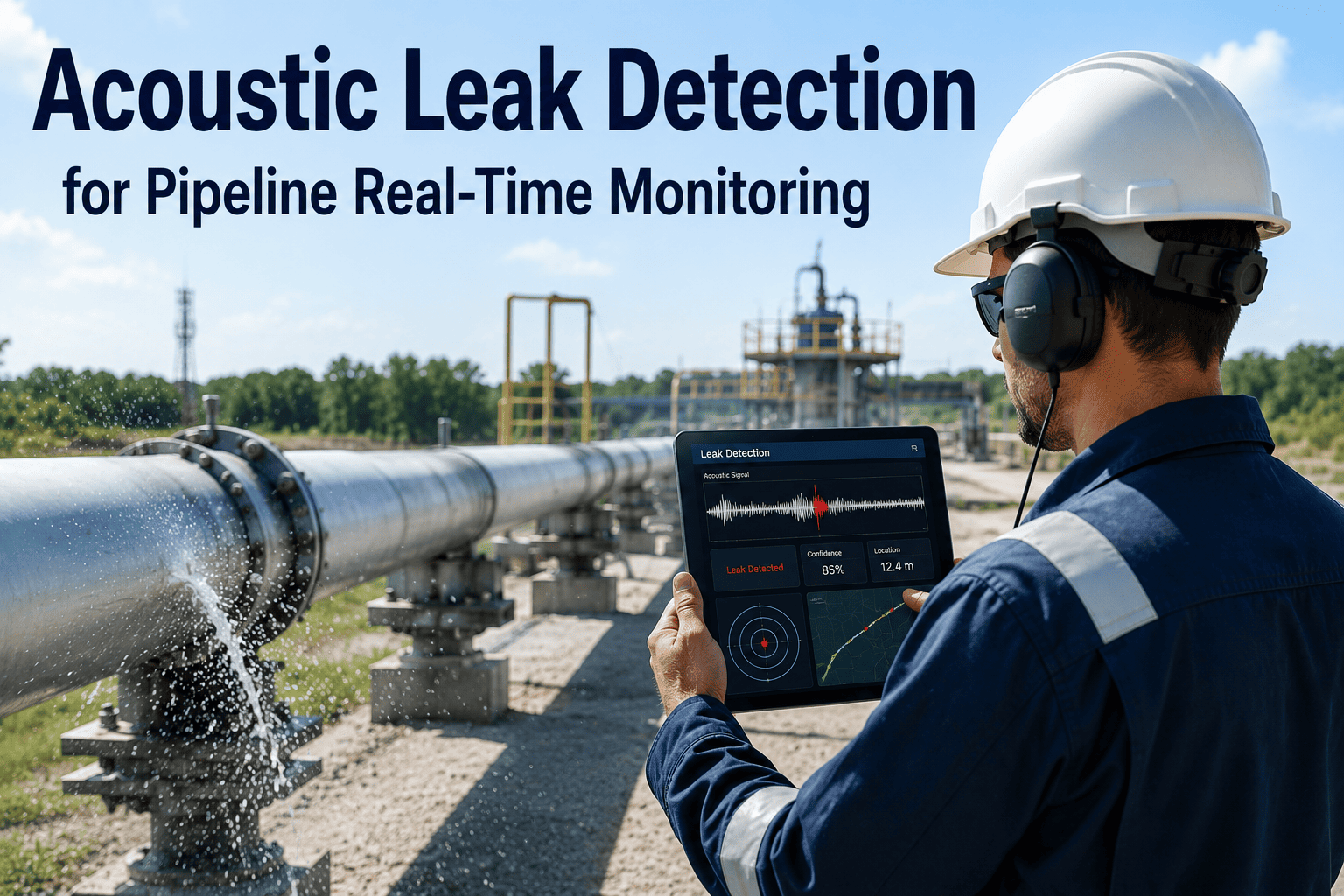
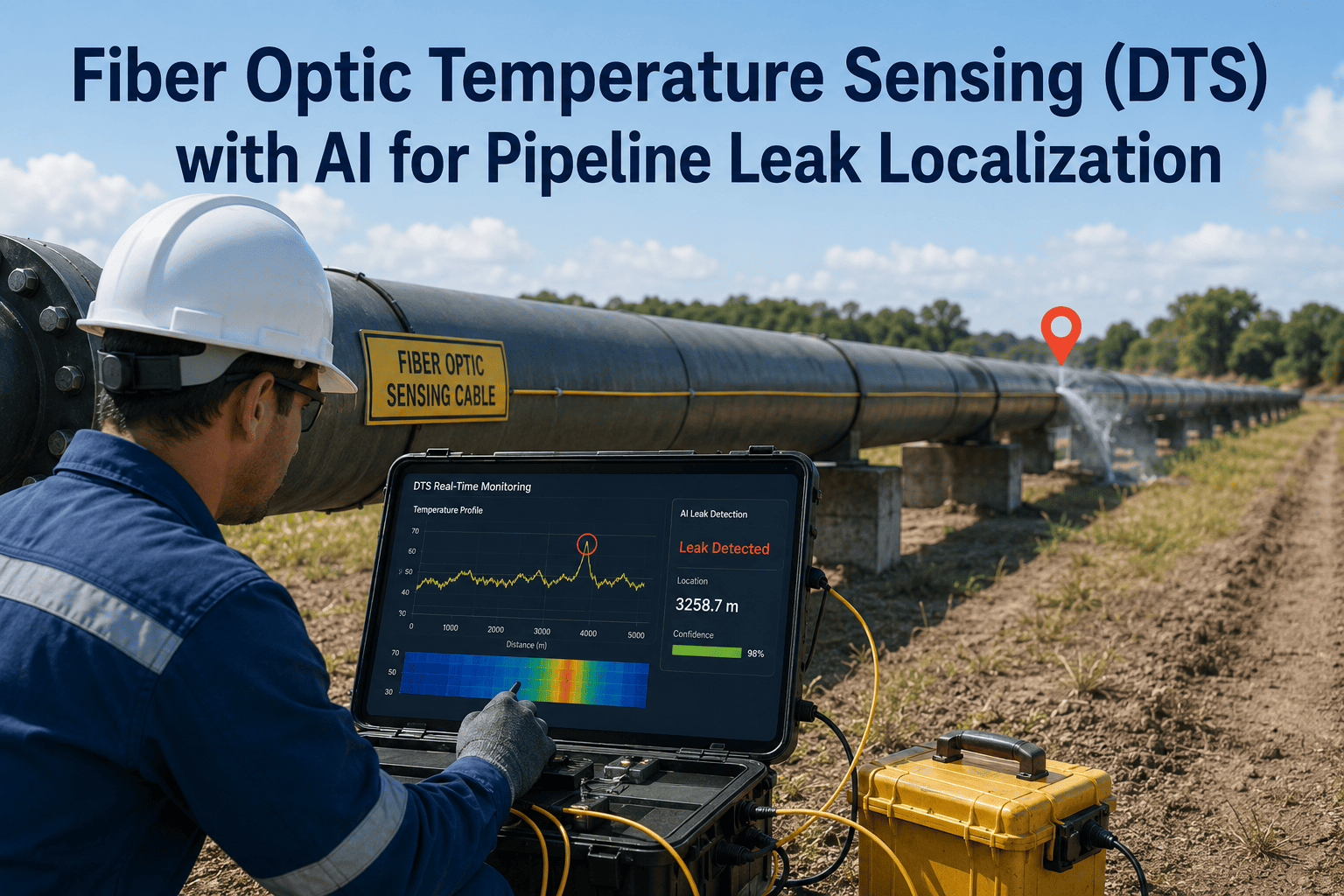
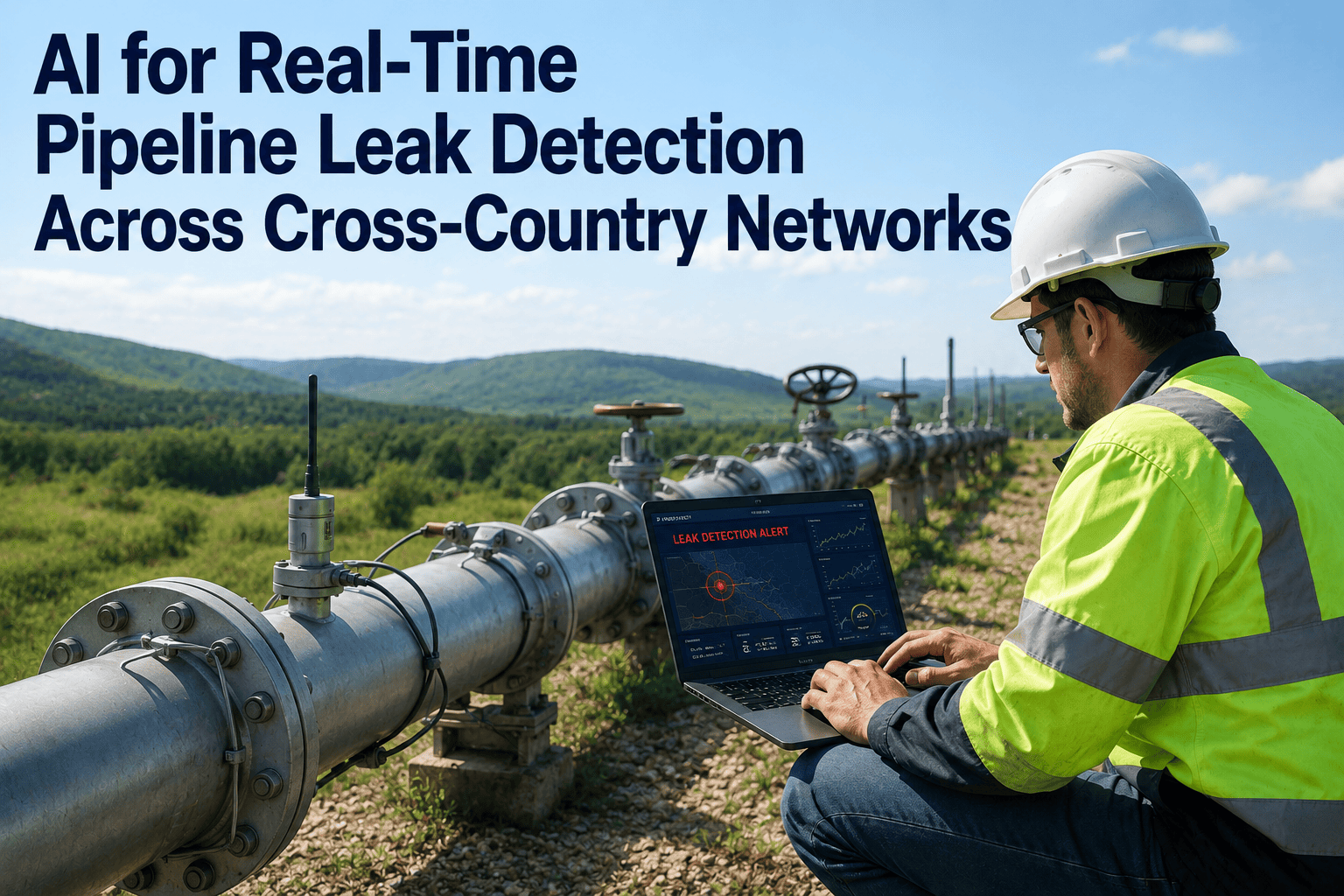
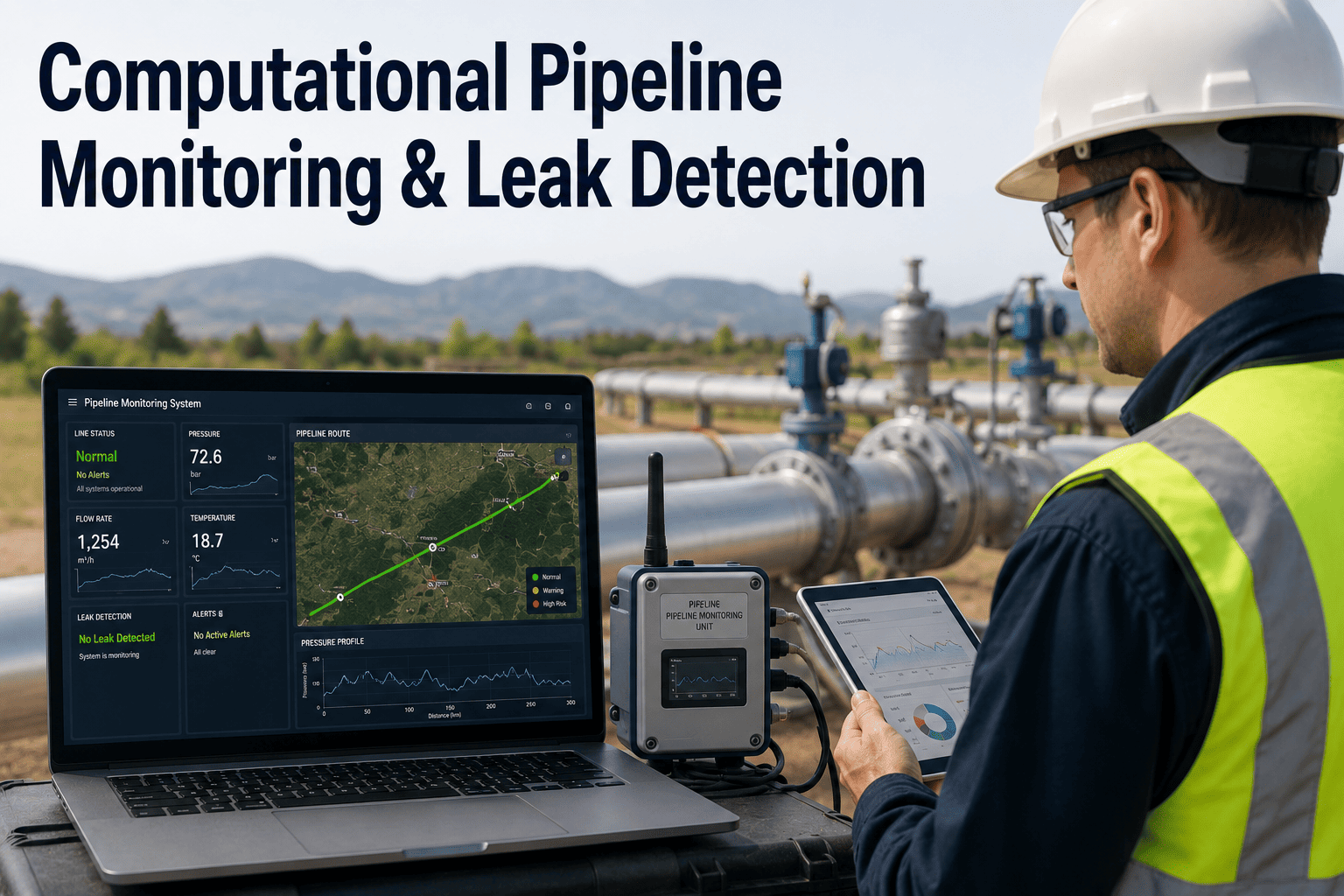
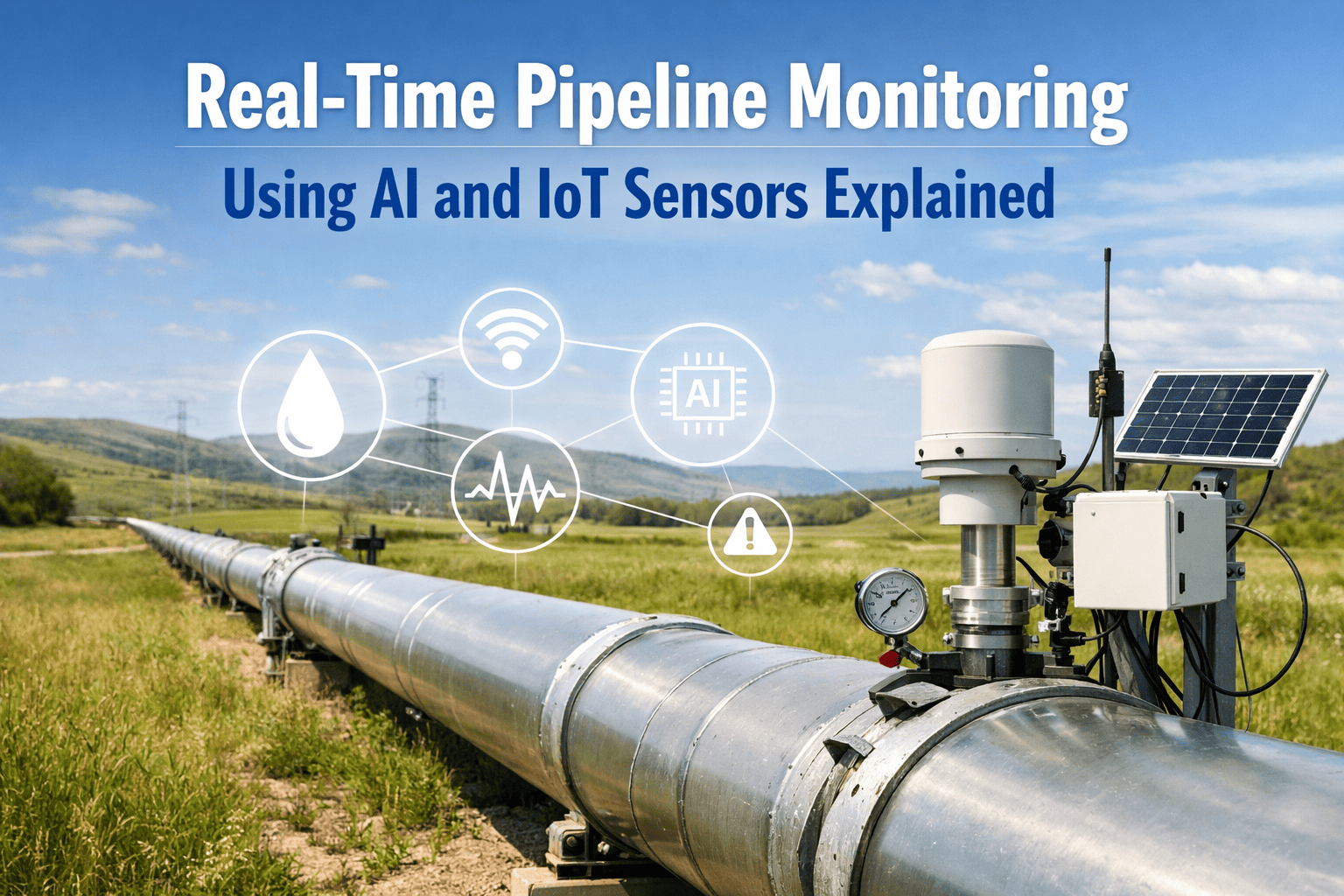
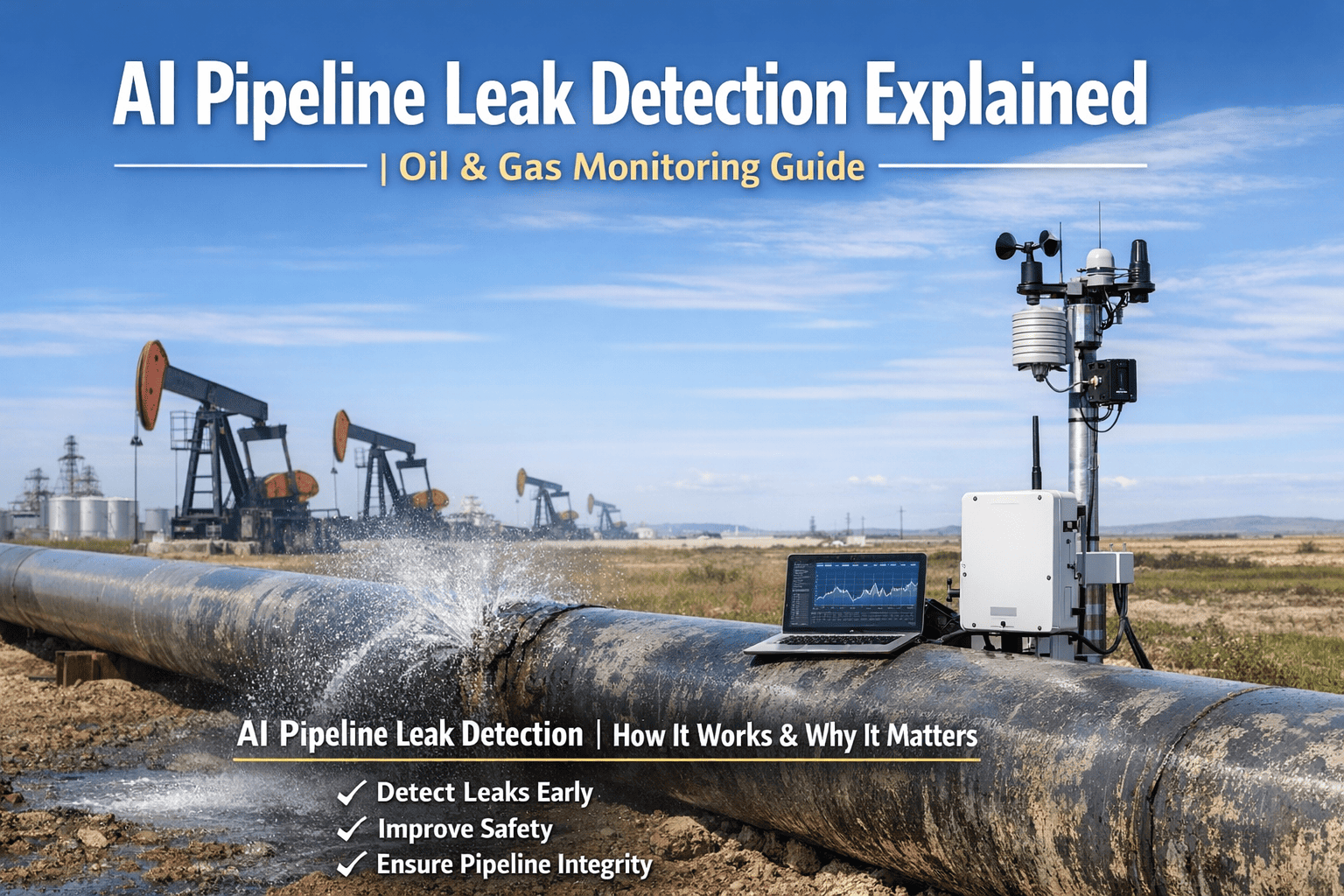
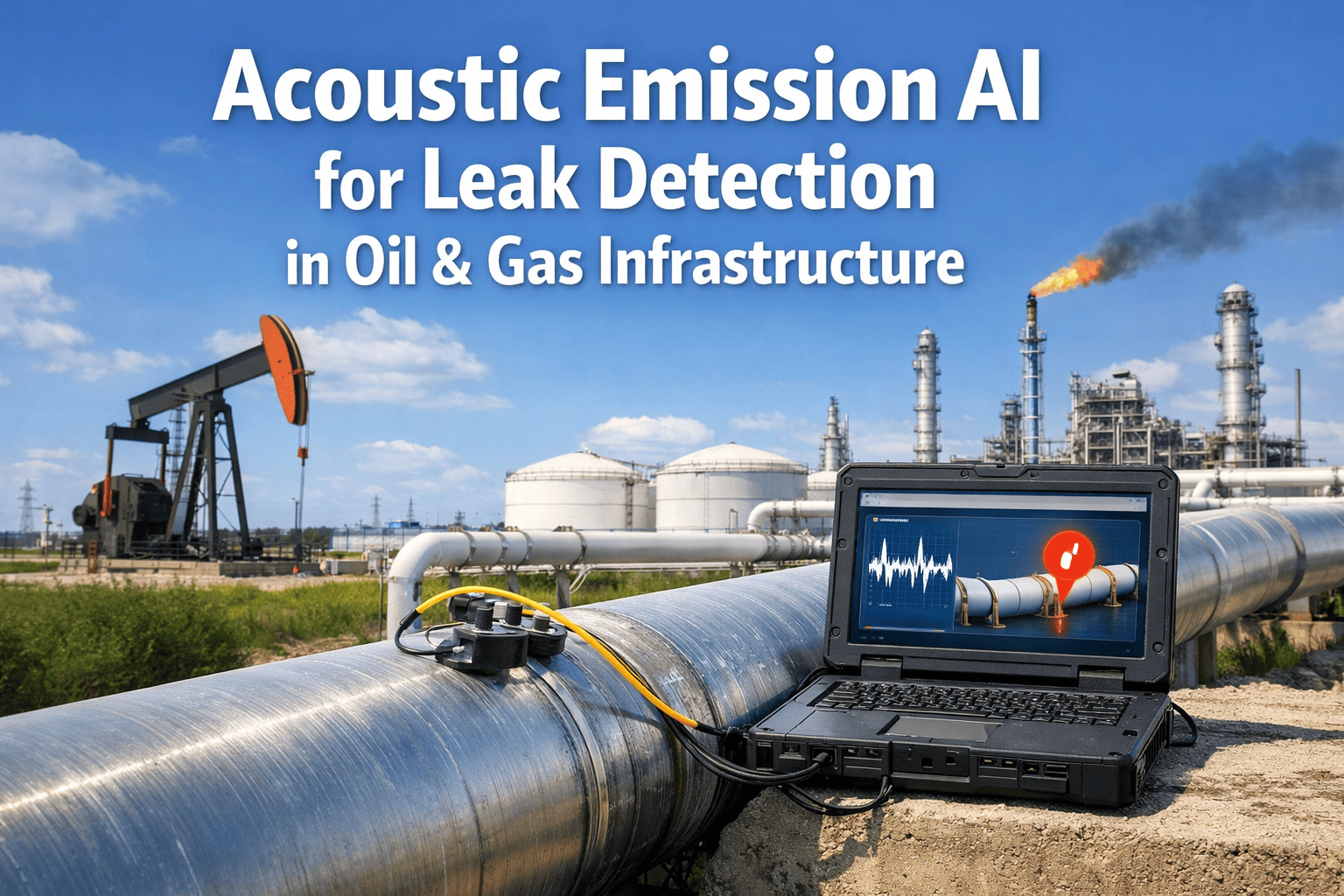
A pipeline leak rarely announces itself. By the time a pressure drop shows up on a control room trend or a drone survey catches a sheen on the ground, product has often been escaping for hours or days. The physics gives you an earlier signal than that: every leak generates a negative pressure wave and a distinct acoustic signature the instant it opens, both of which travel along the pipe far faster than the leak itself grows. Book a demo to see how iFactory turns that signal into a located, verified alert in seconds.
Remote Asset Monitoring
Acoustic Leak Detection: Hearing a Pipeline Leak Before It Becomes an Incident
Distributed acoustic sensing turns an ordinary fiber optic cable running alongside your pipeline into thousands of virtual microphones, listening continuously across every meter of the route — no batteries, no gaps, no monthly patrol.
What a Leak Actually Sounds Like to a Sensor
When a pipeline wall fails, whether from corrosion, a third-party strike, or a weld defect, the sudden pressure drop launches a negative pressure wave that races down the pipe in both directions at roughly the speed of sound in the fluid — often over 1,000 meters per second. At the same time, the escaping fluid itself generates broadband acoustic noise as it exits through the breach. Fiber optic distributed acoustic sensing, or DAS, listens for both signatures simultaneously along the entire pipeline length using nothing more than the fiber already run alongside it.
Negative Pressure Wave Propagation
Leak Origin
Sensor A
Sensor B
Arrival-time difference between Sensor A and Sensor B pinpoints the leak location along the route
Three Detection Methods, Compared Honestly
| Method | Detection Basis | Coverage | Best Fit |
|---|
| Negative Pressure Wave (NPW) | Sudden pressure drop at leak onset | Whole pipeline, point pressure sensors | Fast alarm on sudden ruptures |
| Distributed Acoustic Sensing (DAS) | Broadband acoustic and vibration signature | Continuous, meter-by-meter along fiber | Small leaks, third-party strikes, tampering |
| Distributed Temperature Sensing (DTS) | Thermal gradient from escaping fluid | Continuous along fiber route | Confirms leaks with a strong thermal signature |
From First Vibration to Verified Alert: The Detection Timeline
Speed matters because the cost of a leak compounds every minute it runs undetected — in lost product, environmental exposure, and regulatory consequence. See this exact timeline demonstrated on a recorded leak event in a live demo.
1
Signal Captured
The fiber interrogator detects an anomalous acoustic and vibration pattern at a specific point along the route.
2
Pattern Classified
AI pattern recognition distinguishes a genuine leak signature from third-party activity, weather, or traffic noise nearby.
3
Location Calculated
Arrival-time differences across the fiber pinpoint the leak to within meters of its actual position on the route.
4
Alert Dispatched
Control room operators receive a located, classified alert with confidence score, ready for immediate response dispatch.
Why False Alarms Are the Real Barrier to Adoption
The biggest reason operators hesitate to trust an acoustic system isn't sensitivity — it's noise. A fiber running near a road, a rail line, or active construction picks up an enormous amount of ambient vibration that has nothing to do with a leak, and a system that alarms on every truck passing overhead gets ignored within a week. The real value of AI pattern recognition isn't detecting a signal; it's telling the difference between a signal that matters and the thousands that don't.
Filtered Out
Road and rail traffic vibration
Filtered Out
Weather-driven fiber movement
Filtered Out
Nearby construction and digging
Flagged
Third-party excavation near the route
Flagged
Broadband leak-consistent acoustic pattern
Flagged
Negative pressure wave signature at onset
Continuous Pipeline Monitoring
Hear the Leak Before It Reaches the Surface
iFactory fuses acoustic, pressure wave, and thermal signals into one located, verified alert — filtering out the noise operators have learned to ignore.
What Gets Monitored Alongside Leak Detection
Third-Party Interference (TPI)
The same fiber that detects leaks also picks up digging, drilling, or heavy equipment approaching the right-of-way, often before a leak ever occurs.
Small Leak Sensitivity
Pinhole leaks that produce a weak signature are the hardest to catch — and where AI pattern recognition delivers the most value over pressure-only methods.
Route-Length Coverage
A single interrogation unit can monitor tens of kilometers of pipeline continuously, without gaps between point sensors.
Historical Signal Replay
Every recorded signal is stored, so an investigation after an incident can replay exactly what the fiber heard in the hours before it happened.
Frequently Asked Questions
How small a leak can acoustic sensing actually detect?
Detection sensitivity depends on pipe material, burial depth, pressure, and fiber placement, but well-configured DAS systems using direct fiber application to the pipe have demonstrated detection of pinhole-scale leaks that produce very weak natural vibration signatures. Larger ruptures generate a much stronger negative pressure wave and acoustic signal, making them detectable almost instantly.
Ask about expected sensitivity for your specific pipeline in a demo.
Do we need to install new fiber, or can we use existing cable?
Many pipelines already have fiber optic cable installed alongside the route for telecommunications or SCADA backhaul, and that existing fiber can often be used for DAS monitoring without new trenching. Where no fiber exists, a dedicated sensing cable is typically installed in the same right-of-way during routine maintenance or a scheduled excavation to minimize additional disruption.
How does the system avoid false alarms from unrelated activity?
AI pattern recognition is trained to distinguish the specific acoustic and thermal signature of a genuine leak from ambient noise sources like traffic, weather, and nearby construction, which make up the overwhelming majority of raw signal events on any given day. Flagged events also carry a confidence score and classification, so control room operators can prioritize response instead of chasing every vibration on the line.
Contact support for details on the classification model.
Can this replace our existing leak detection system entirely?
Most operators run acoustic and fiber optic sensing alongside existing mass-balance or SCADA-based methods rather than replacing them outright, since each method has different strengths depending on leak size and pipeline conditions. Combining methods, sometimes called a fused leak detection approach, generally produces both faster detection and fewer missed events than relying on any single method alone.
What does a typical deployment timeline look like?
For a pipeline with existing fiber already in place, initial monitoring can often begin within a few weeks of connecting the interrogation unit and calibrating the classification model against your specific pipeline's baseline noise profile. Where new fiber needs to be installed, the timeline depends primarily on right-of-way access and excavation scheduling rather than the sensing technology itself.
Book a demo to scope a deployment timeline for your route.