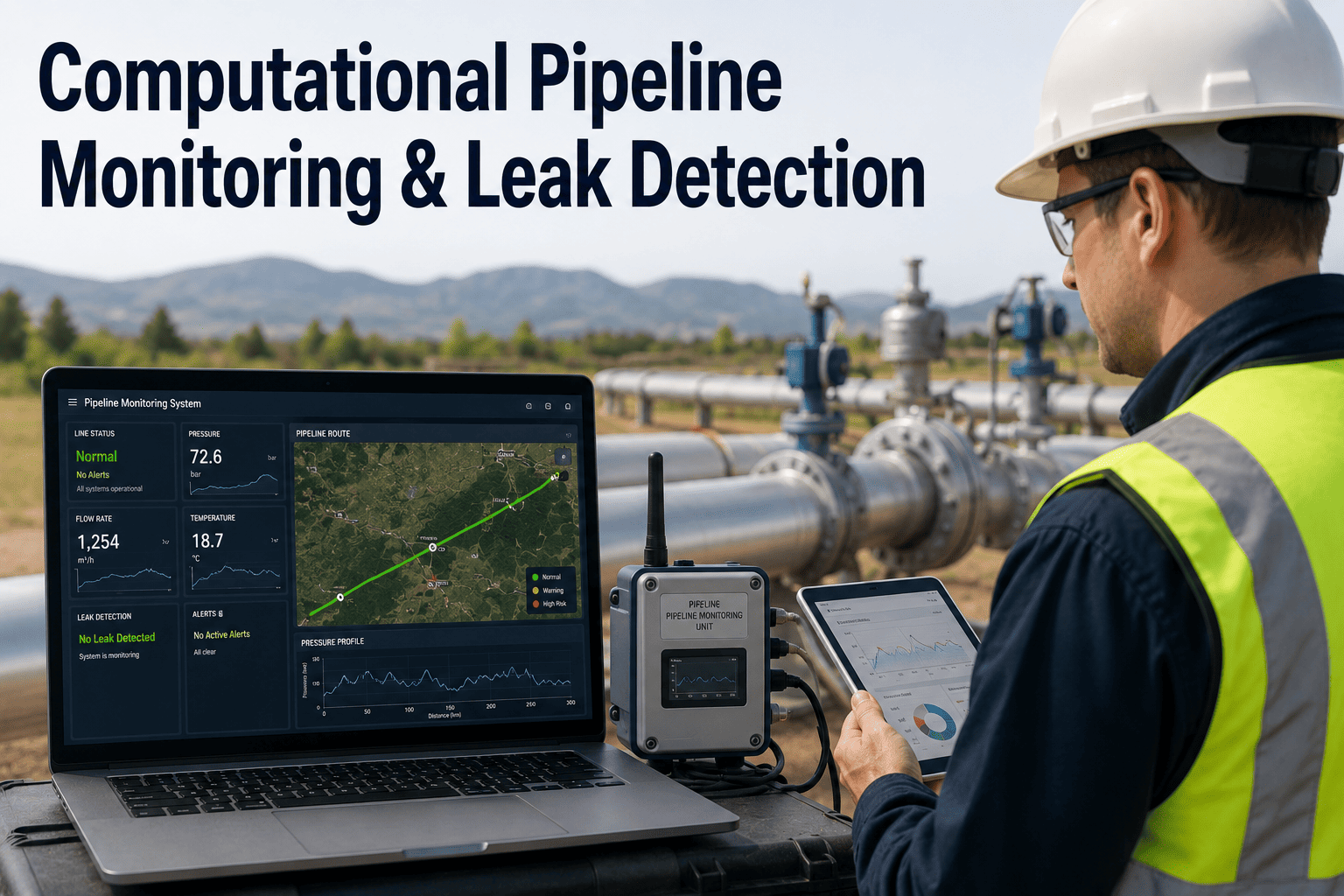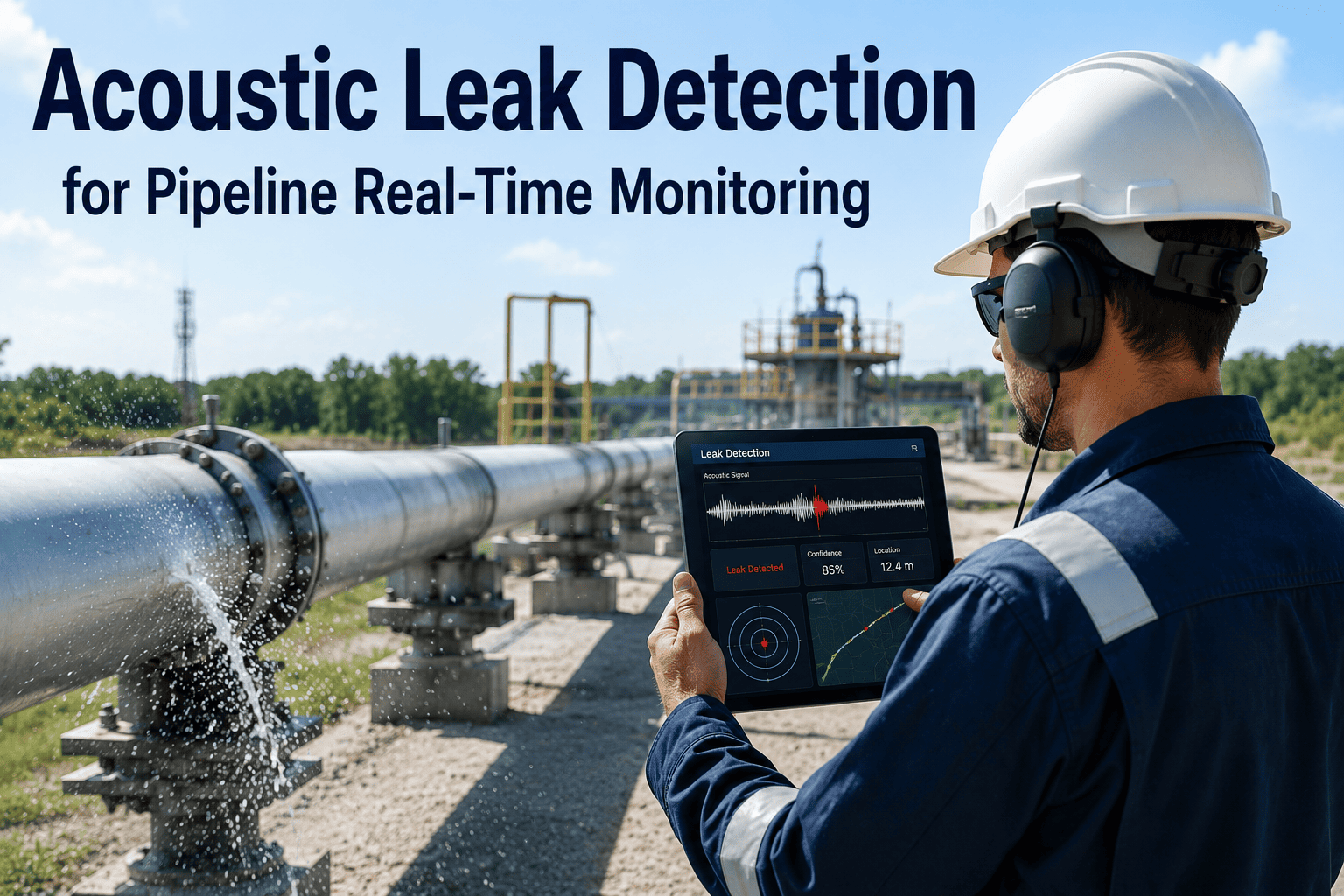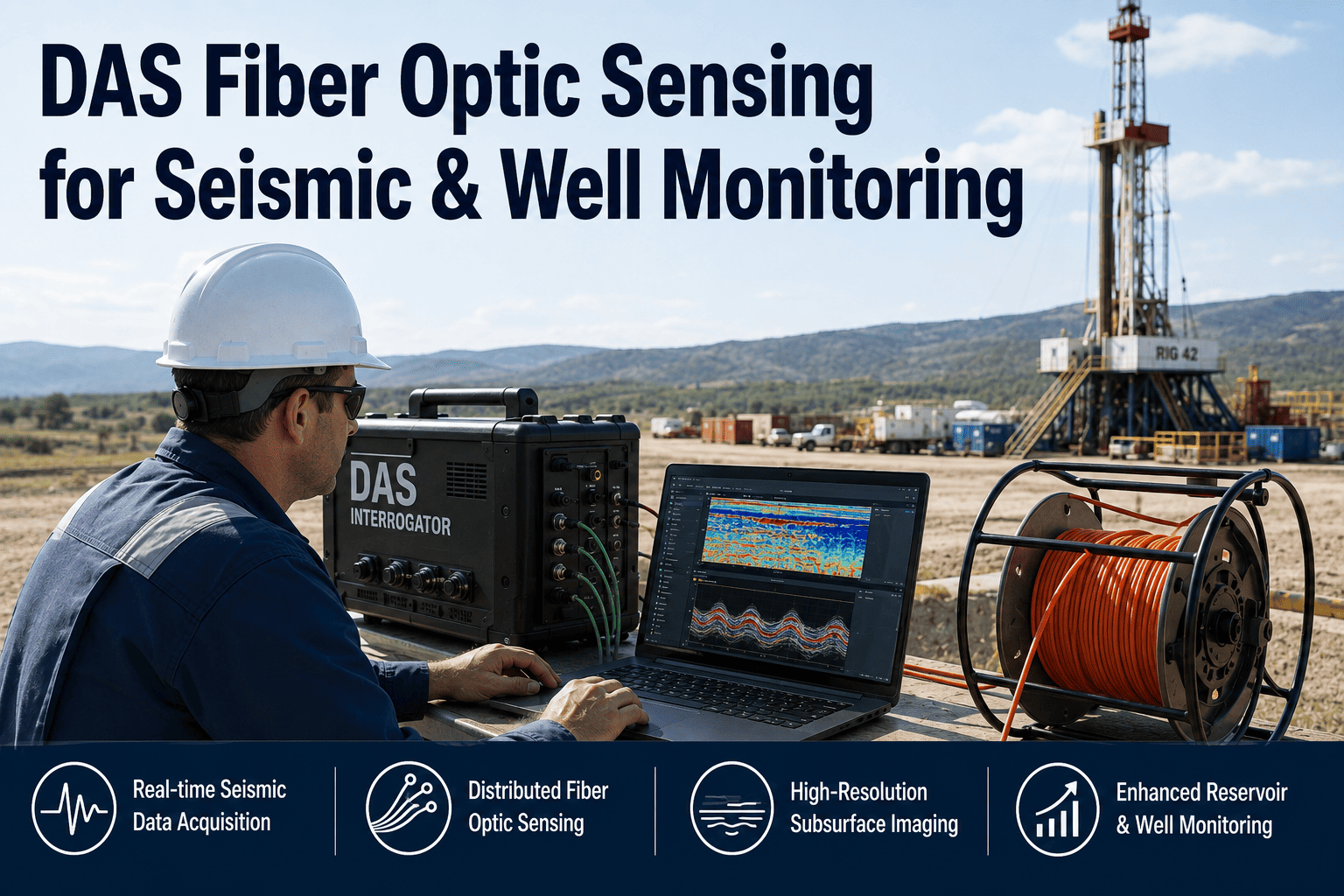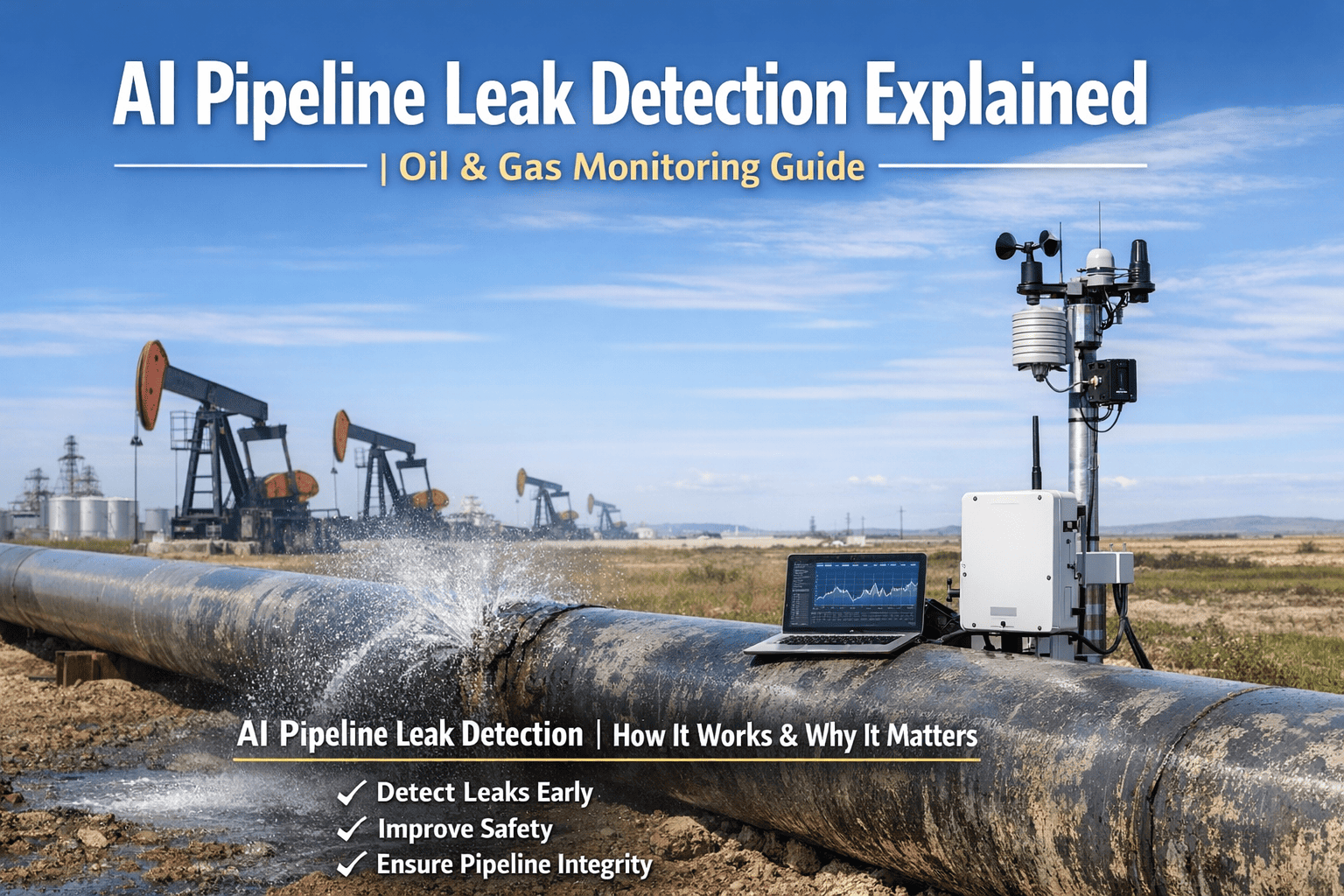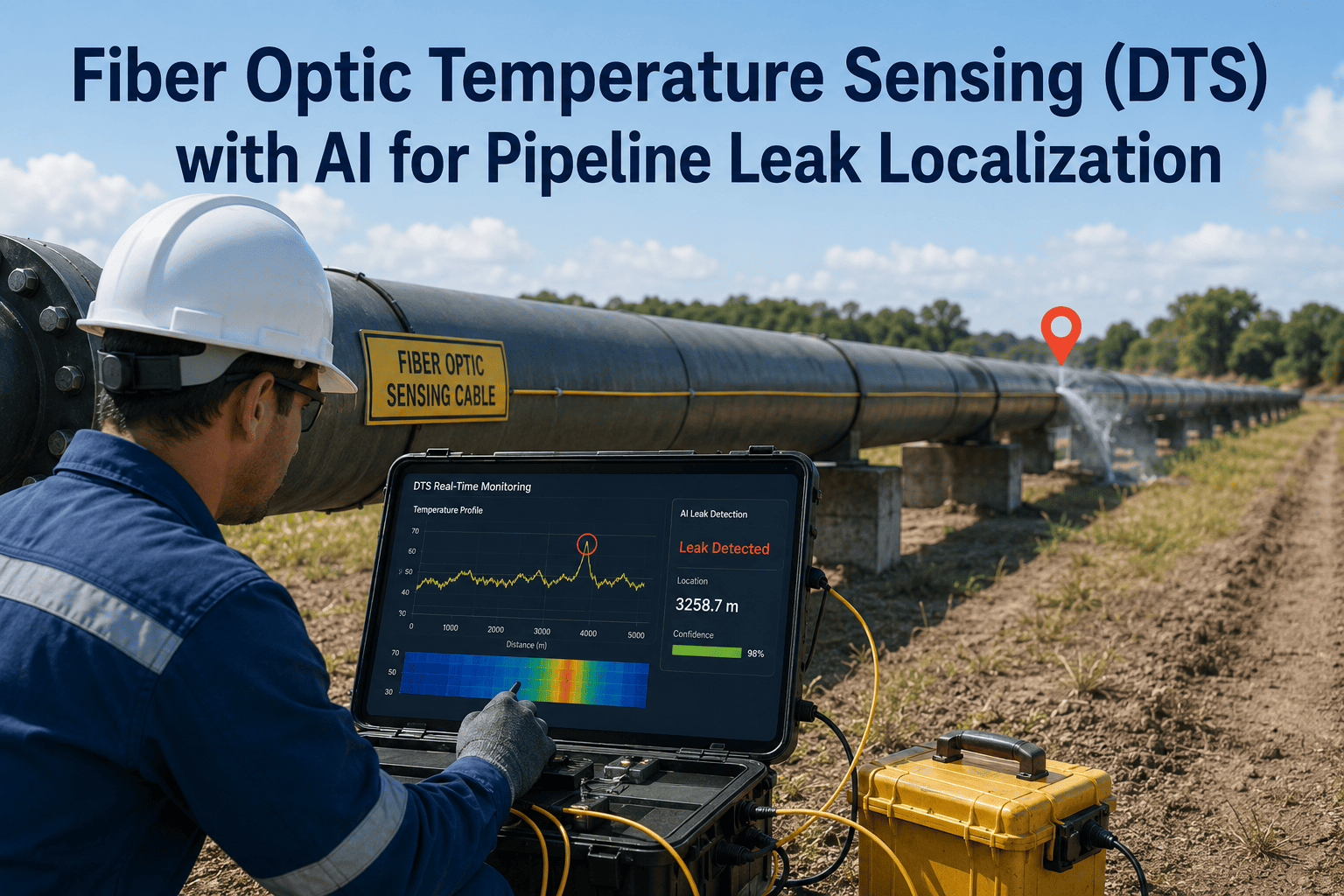
A single strand of fiber optic cable laid alongside a pipeline can act as tens of thousands of individual temperature sensors spread across its entire length, and it does this without a single electronic component buried anywhere along the route. Distributed temperature sensing works by firing laser pulses down the fiber and reading the faint light that scatters back at every point along its length, and because that backscattered light carries a temperature signature, the system can reconstruct a continuous temperature profile of the pipeline corridor from one end to the other. iFactory's DTS-based leak localization takes that raw temperature profile and applies pattern recognition to it in real time, turning a wall of scrolling numbers into a specific point on the map where a crew should start digging.
Every Meter of Pipe, Watched by Light Instead of Guesswork
A leak changes the temperature of the ground or product around it before it changes anything else. AI reads that temperature signature off the fiber continuously, narrowing a pipeline-length search down to a location a crew can walk straight to.
How a Fiber Strand Becomes a Temperature Sensor
DTS systems work by sending short pulses of laser light down a fiber optic cable run alongside or wrapped around a pipeline, then analyzing the light that scatters back toward the source at every point along the fiber's length. The ratio between two specific components of that backscattered light shifts predictably with temperature, which means the returning signal can be decoded into an actual temperature value at thousands of discrete points along the cable, refreshed continuously rather than sampled at intervals. Because the technique relies entirely on light traveling through glass rather than on electronic sensors spaced along the route, a single interrogator unit at one end of the line can cover many kilometers of pipeline with no powered equipment buried anywhere in between.
Optical Time Domain Reflectometry
The timing principle behind the whole system — since light travels at a known speed through the fiber, the time delay between sending a pulse and receiving its backscatter reveals exactly which point along the cable that signal came from.
Backscatter Ratio
The relative intensity of specific wavelength components in the returning light, which shifts in a known, calibrated way with temperature — this is the raw physical measurement the entire temperature profile is built from.
Spatial Resolution
How finely the system can distinguish one point along the fiber from its neighbor. Higher spatial resolution is what allows a temperature anomaly to be narrowed down to a specific meter rather than a general stretch of the line.
Hot Spot or Cold Spot: Reading What the Product Tells the Fiber
Not every leak produces the same thermal signature, and knowing which signature to expect for a given pipeline is part of what makes the temperature data interpretable rather than just noisy. The physics differs by product and phase, which is exactly why a generic threshold alarm on raw temperature readings tends to either miss real events or flood an operator with false ones.
Gas Pipelines — Cold Spot
Pressurized gas escaping through a leak point expands rapidly and cools sharply as it does, a Joule-Thomson effect that chills the surrounding pipe wall and soil enough to register as a localized temperature drop the fiber can detect well before the leak is visible or audible at the surface.
Heated Liquid Pipelines — Hot Spot
Crude and heavy product lines are frequently transported warm to keep viscosity manageable, so a leak from one of these lines raises the local ground or pipe temperature above the surrounding baseline, producing a warm anomaly rather than a cold one at the exact leak point.
From Light Pulse to Located Leak: The Signal Path
Turning a raw backscatter signal into an actionable leak location and dispatched crew is a multi-stage process, and AI's contribution sits specifically in the middle steps — separating a real thermal event from the routine noise every buried fiber picks up over tens of kilometers of varying soil, traffic, and weather conditions.
Pulse and Backscatter Capture
The interrogator fires a laser pulse down the fiber and records the returning backscattered light across the full monitored length.
Temperature Profile Reconstruction
The backscatter ratio at every distance point is converted into a temperature value, producing a continuous profile along the entire pipeline length.
Spatial Filtering
The profile is filtered to the specific spatial frequency range that matches an expected leak signature, separating a genuine localized anomaly from broad, slow-moving seasonal temperature drift.
Energy Threshold and Pattern Classification
The filtered signal is scored against a learned leak signature, distinguishing a real product release from a passing vehicle, nearby excavation, or a shift in ambient ground temperature.
Location and Alert
Once a signal is classified as a probable leak, its position along the fiber is converted to a GPS coordinate and routed to the response team with the located distance along the line.
Fixed Threshold Alarms vs. Continuous Pattern Recognition
Many DTS deployments still run on a simple fixed-threshold alarm — flag any point where temperature deviates from baseline by more than a set number of degrees. That approach catches obvious events but struggles with the in-between cases, and it has no way to tell a genuine leak apart from a legitimate but unrelated thermal disturbance near the line.
| Capability | Fixed Threshold Alarm | Continuous AI Pattern Recognition |
|---|---|---|
| Baseline Handling | Static baseline, manually reset periodically | Adaptive baseline that accounts for seasonal and diurnal drift |
| Signature Recognition | Any deviation above a set degree threshold | Matches the spatial and temporal shape of a true leak signature |
| False Alarm Rate | Higher — reacts to unrelated thermal noise | Lower — trained against known non-leak disturbance patterns |
| Small Leak Sensitivity | Often missed below the fixed threshold | Detects gradual or small persistent anomalies over time |
| Location Precision | General segment or zone | Narrowed to within roughly one to two meters |
What Actually Causes a False Alarm on a Buried Fiber
A fiber run alongside tens of kilometers of pipeline right-of-way picks up every thermal event happening near it, not just leaks, and telling those apart is the core engineering challenge of a usable DTS program. Understanding the common non-leak sources is what makes an AI model's spatial and temporal filtering actually effective rather than arbitrary.
Seasonal Ground Temperature Drift
Soil temperature shifts gradually across the year and across depth, producing a slow-moving baseline change that a well-tuned model treats as expected background rather than an anomaly.
Nearby Excavation or Construction
Third-party digging near the right-of-way can disturb soil thermal properties temporarily, producing a localized but non-leak signal that needs to be distinguished from a genuine product release.
Surface Water and Drainage
Rainfall, snowmelt, and drainage patterns near the cable route can create transient temperature shifts that mimic a leak's spatial footprint if the model isn't trained to recognize the difference.
Why Localization Precision Changes the Entire Response
The gap between knowing a leak exists somewhere in a ten-kilometer segment and knowing it sits within a meter or two of a specific GPS point is not a minor convenience — it changes what excavation, traffic control, and product loss actually cost. A crew dispatched to a narrow location can begin controlled excavation almost immediately, while a crew searching a broad segment has to walk the right-of-way, often across difficult terrain, before digging can even start.
Turn a Segment-Wide Search Into a Meter-Level Location
iFactory narrows a DTS anomaly down to a specific point along the line, so the response team starts digging in the right place the first time, not after a walk of the right-of-way.
A Composite Scenario: The Small Leak the Threshold Alarm Never Caught
A crude gathering line running through mixed farmland and light industrial terrain had DTS coverage in place for several years, running on a fixed-threshold alarm configuration set to catch anything resembling a major release. The system performed exactly as designed for large events, but a small persistent seep at a corroded fitting sat below the alarm threshold for months, slowly warming a patch of soil just enough to register on the raw data without ever crossing the fixed trigger point that would have generated an alert.
The leak was eventually found during a routine right-of-way walk, but by that point a meaningful volume of product had been lost and the surrounding soil required a larger remediation effort than an early catch would have needed. When the operator moved to continuous pattern-based analysis of the same fiber network, a retrospective run against the historical data showed the small anomaly had actually been visible in the temperature profile for weeks before the walk-down discovery — it simply never crossed a fixed degree threshold built for a much larger event. Going forward, the same gathering line caught two subsequent small anomalies within days of onset rather than months, both traced to minor fitting issues addressed before they grew into a larger release. The operator's surveillance lead described the shift plainly: the fiber had been recording the leak the entire time — the system just hadn't been asked the right question of the data.
Rolling Out AI-Enhanced DTS Monitoring
Baseline Signature Library
Build a model of the expected non-leak thermal patterns along the specific route — seasonal drift, known crossings, prior construction activity — before tuning leak-detection sensitivity.
Historical Data Validation
Run the model against archived DTS data from known past events to confirm it correctly classifies confirmed leaks and known non-leak disturbances before going live.
Live Shadow Monitoring
Run continuous classification alongside the existing threshold alarm without changing dispatch procedures, comparing flagged events against field verification.
Full Alert Integration
Route classified alerts directly into dispatch and control room workflows, with located coordinates attached so response can begin without a manual search step.
Frequently Asked Questions
How accurate is DTS-based leak localization compared to traditional detection methods?
AI-classified DTS analysis can typically narrow a leak location down to roughly one to two meters along the pipeline route, compared to traditional mass-balance or pressure-based detection methods that generally only indicate a leak exists somewhere within a broad segment, sometimes spanning kilometers. That precision comes directly from the fiber's continuous, distributed measurement along the entire route rather than from a small number of point sensors spaced far apart. Visit support to see localization accuracy for a specific pipeline configuration.
Does DTS detect gas leaks and liquid leaks the same way?
No — the underlying thermal signature differs by product. Gas leaks typically produce a localized cold spot from the pressure-release cooling effect as gas expands, while heated liquid lines, common for crude and heavy product transport, tend to produce a warm anomaly at the leak point instead. An effective classification model needs to know which signature to expect for a given line rather than applying one generic pattern across every pipeline type. Book a demo to see how signature type is configured for your product mix.
What causes false alarms in a DTS system and how does AI reduce them?
Seasonal ground temperature drift, nearby excavation, surface water movement, and other non-leak thermal disturbances near the right-of-way can all produce signals that resemble a leak on raw temperature data alone. Continuous pattern recognition reduces false alarms by learning the spatial and temporal shape of a genuine leak signature and filtering out disturbances that don't match that shape, rather than reacting to any deviation past a single fixed degree threshold.
How much pipeline length can a single DTS system actually monitor?
A single interrogator unit can typically monitor up to around thirty kilometers of fiber with high spatial and temporal resolution, though the practical range depends on the specific fiber configuration, cable quality, and desired update frequency. Longer pipeline corridors are covered by deploying multiple interrogator units along the route rather than trying to stretch a single unit beyond its effective range.
Can existing DTS hardware be upgraded with AI analysis, or does it require new fiber installation?
In most cases the existing fiber and interrogator hardware can stay in place — the improvement comes from applying continuous pattern-based analysis to the same raw backscatter data the hardware is already producing, rather than replacing the physical sensing infrastructure. This makes upgrading a legacy fixed-threshold deployment considerably less disruptive than a full re-instrumentation of the pipeline route. Contact support to review compatibility with your current DTS hardware.
Stop Waiting for a Leak to Cross a Fixed Threshold
iFactory reads your existing DTS signal continuously and locates a genuine leak to within a meter or two, so response starts at the right point on the map instead of a walk along the right-of-way.