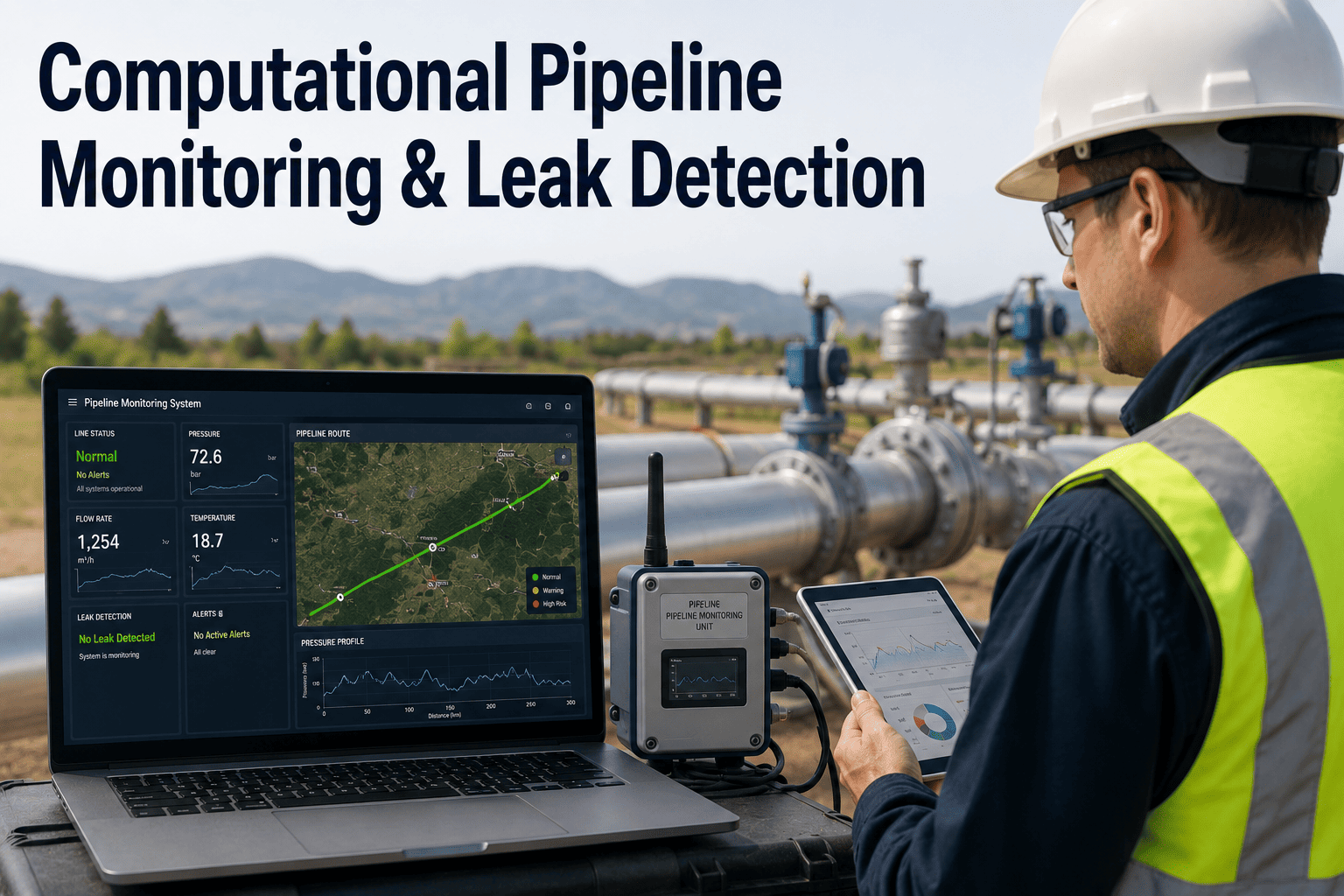
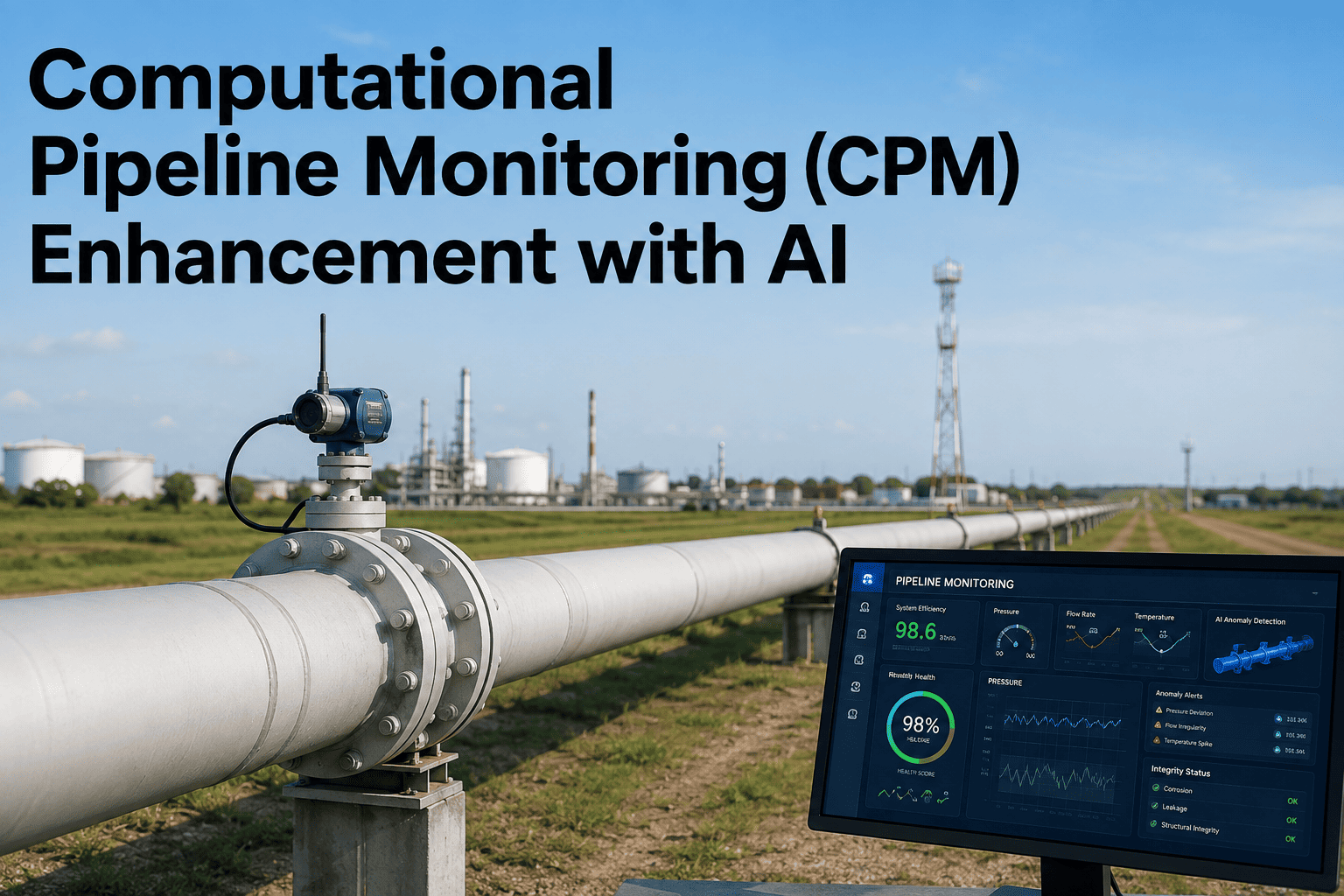
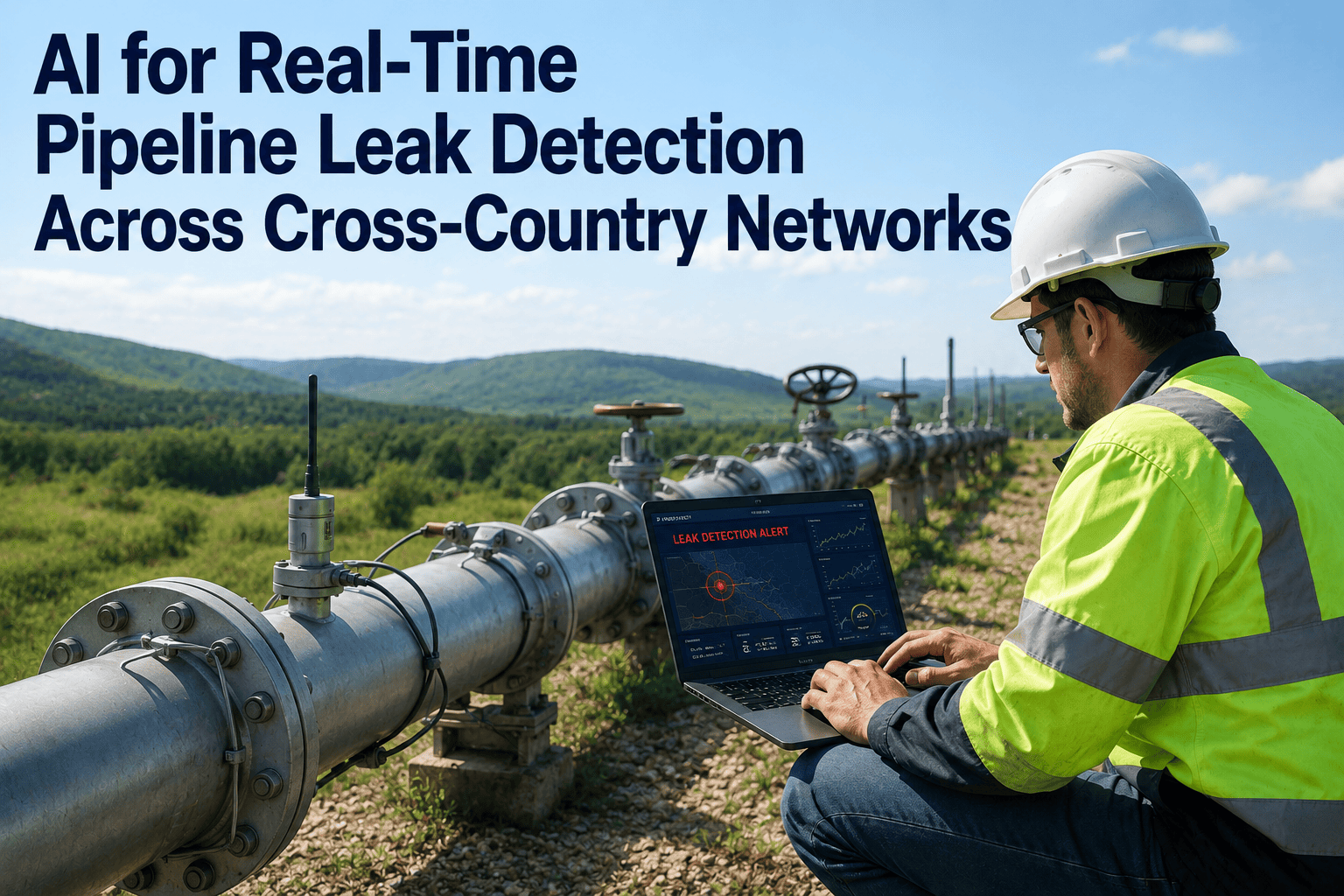
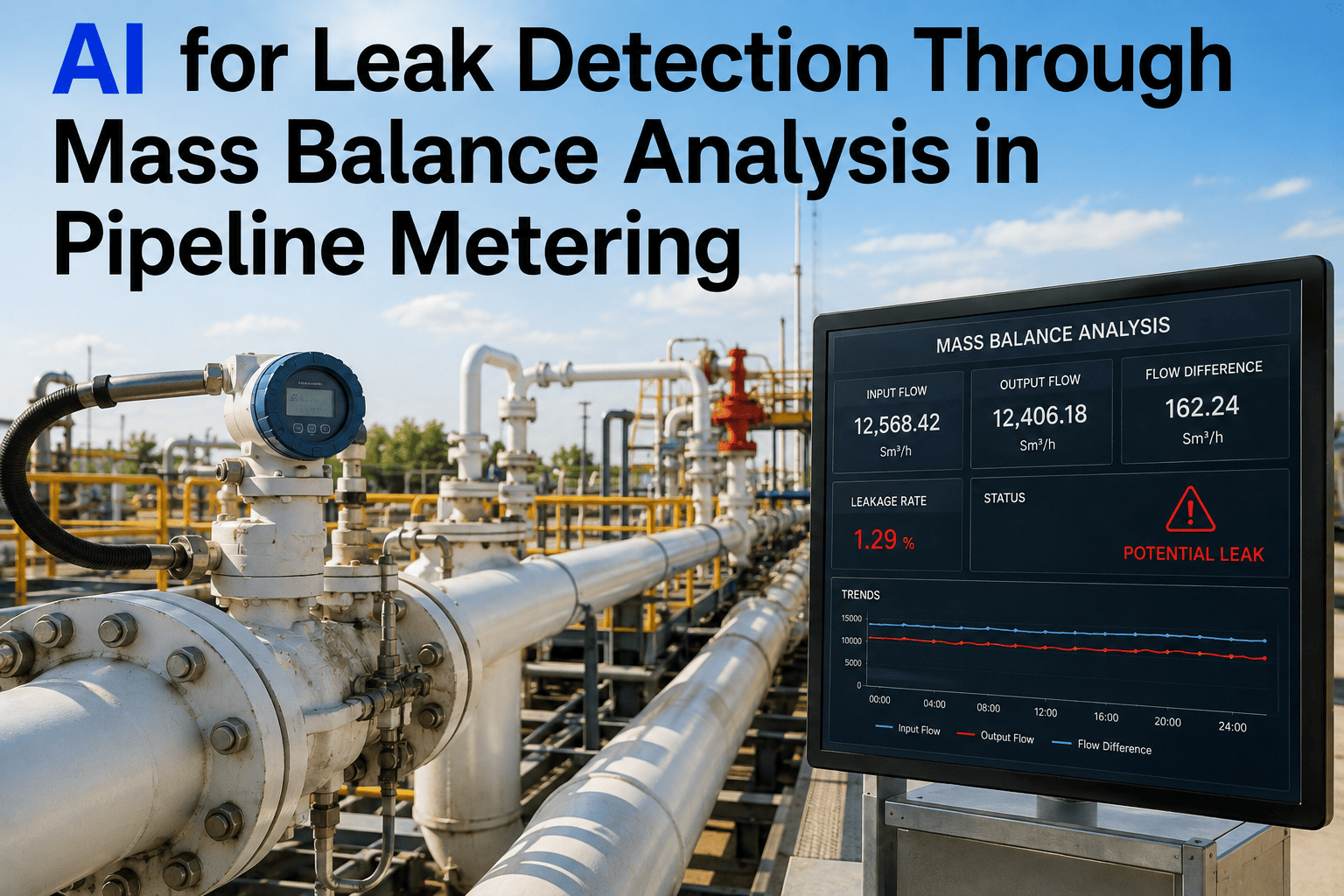
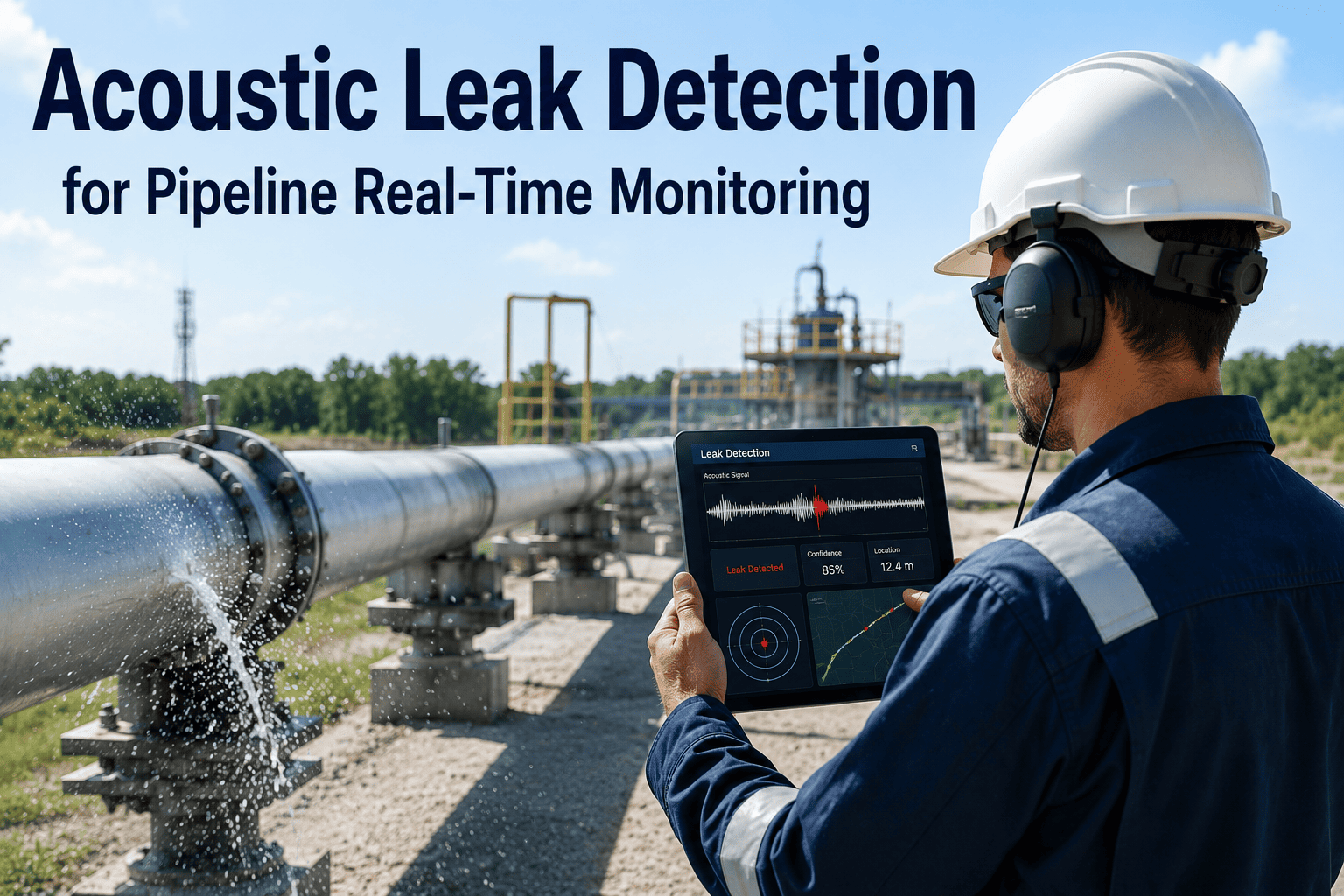
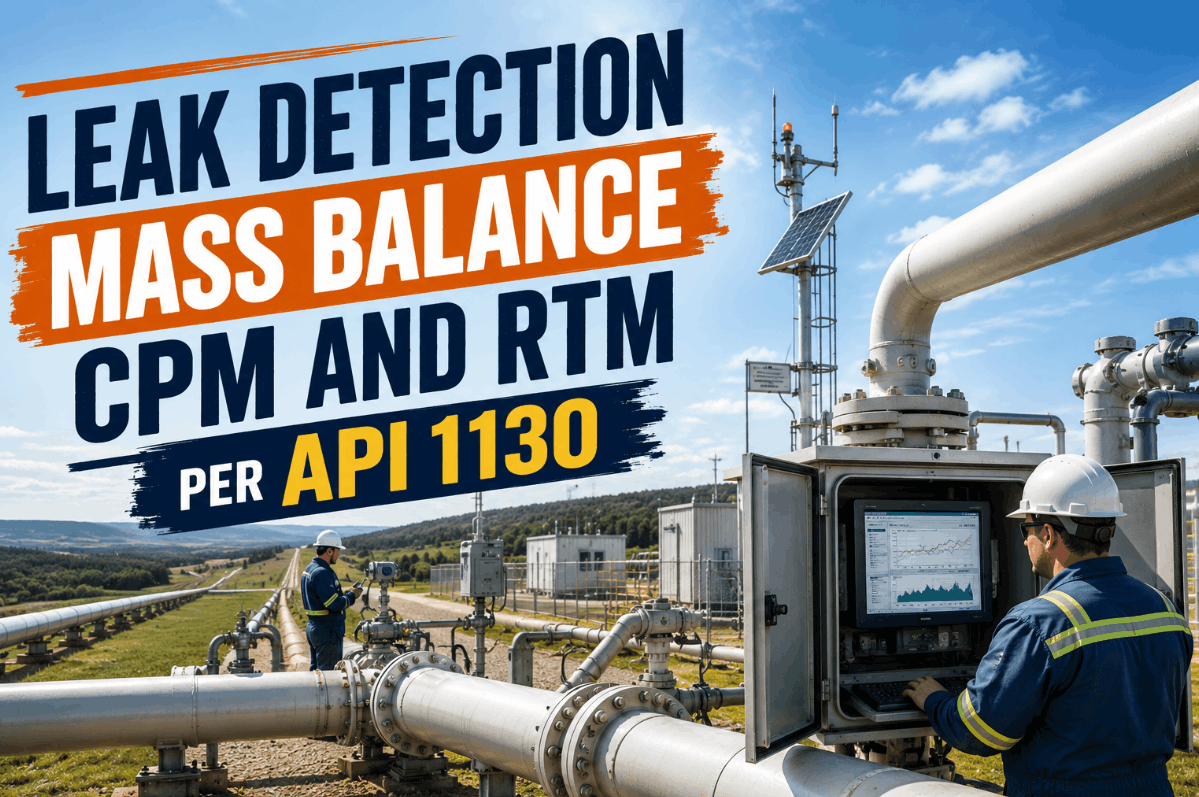
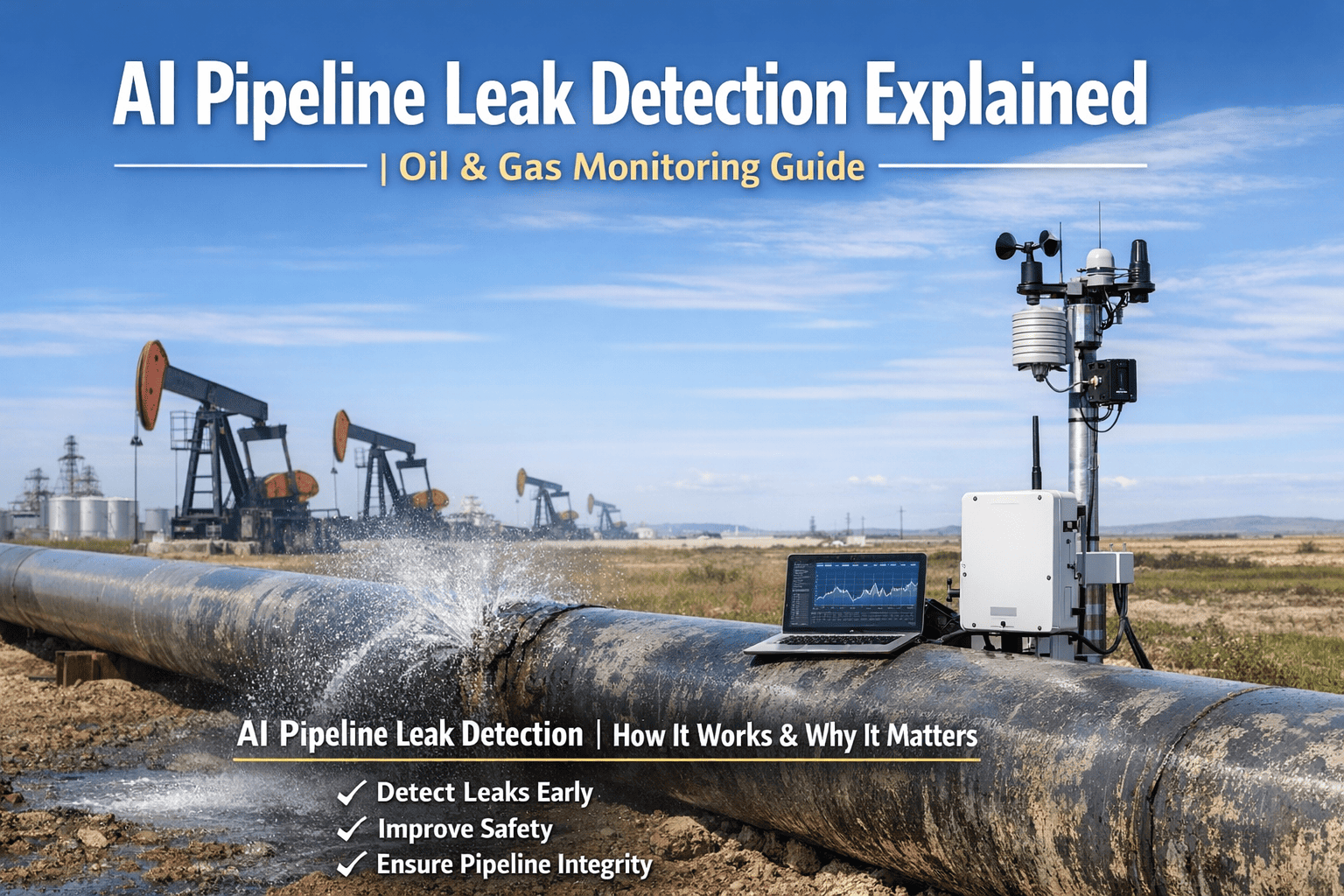
Computational pipeline monitoring exists because physical leak detection alone, whether by patrolling, aerial surveillance, or public reporting, cannot detect a small leak fast enough to prevent significant product loss or environmental damage on a long-distance transmission pipeline. CPM systems use the pressure, flow, and temperature measurements that SCADA systems already collect and apply mathematical models to those measurements in real time to identify imbalances that indicate a leak. The challenge is not in the concept but in the execution: distinguishing a genuine leak signal from the noise created by normal operational transients, instrument drift, and measurement uncertainty. Get this wrong, and the system either misses real leaks or floods the control room with false alarms that operators learn to ignore. Learn how iFactory's CPM leak detection support helps pipeline operators build systems that meet API 1130 requirements without sacrificing operational confidence.
Computational Pipeline Monitoring
Detect Leaks With Math, Not Just Manual Patrols
Mass balance, real-time transient models, and statistical methods applied to SCADA data for continuous leak detection, localization, and API 1130 compliance across liquid and gas pipelines.
Volume or mass in versus out over a pipeline segment
RTTM
Real-time transient model simulating expected pipeline hydraulics
Statistical
Pattern recognition across pressure and flow signal histories
Why Computational Monitoring Is Non-Negotiable for Transmission Pipelines
Regulatory requirements in the United States, Canada, and increasingly in other jurisdictions now mandate that liquid transmission pipelines operate with some form of continuous leak detection that goes beyond periodic physical inspection. The U.S. Pipeline and Hazardous Materials Safety Administration has reinforced expectations around leak detection capability, and API 1130 provides the industry standard for evaluating how well a CPM system performs. But compliance is only part of the motivation. A pipeline that can detect a one-percent leak within minutes rather than hours limits product loss, reduces environmental exposure, and provides operational intelligence that supports faster decision-making during upsets.
The practical difficulty is that a pipeline is a dynamic system. Pressure and flow change every time a pump starts or stops, a valve adjusts, or product composition shifts. These operational changes create the same kind of imbalances that a leak creates, and the CPM system must distinguish between them reliably. This requirement for reliability under dynamic conditions is what separates a functioning CPM system from one that generates more problems than it solves. A system that alarms frequently during normal operations will be disregarded by control room staff, which means that when a real leak occurs, the response may be delayed because the alarm is treated as just another false positive.
Where CPM Gets Its Data on a Pipeline Segment
Three CPM Families and What Each One Actually Does
Not all CPM systems work the same way, and the method chosen for a given pipeline determines what size leaks can be detected, how quickly they are identified, how accurately they are located, and how vulnerable the system is to false alarms during normal operations. Understanding the mechanics of each method is essential for selecting the right approach or combination of approaches for a specific pipeline configuration and operating profile.
Volume / Mass Balance
The simplest CPM approach compares the total mass or volume of product entering a pipeline segment against the total leaving it over a defined time window. If the difference between inlet and outlet exceeds a threshold that accounts for measurement uncertainty and line pack changes, the system generates a leak alarm. Mass balance is computationally lightweight and easy to implement on any pipeline that has flow meters at both ends, but its sensitivity is limited by the accuracy of the metering equipment and its ability to compensate for line pack changes during transient operations. On a perfectly steady-state pipeline with high-accuracy meters, mass balance can detect relatively small imbalances. On a pipeline that experiences frequent pressure and flow changes, the line pack compensation problem becomes significant and sensitivity degrades unless additional modeling is layered on top of the basic balance calculation.
Real-Time Transient Model
An RTTM solves the fluid dynamics equations governing flow in the pipeline at every time step, predicting what the pressure, flow, and temperature should be at every sensor location given the current boundary conditions and pipeline configuration. When the model predictions diverge from the actual measurements by more than an expected tolerance, the system flags a potential leak. RTTM provides the highest theoretical sensitivity and the best leak localization capability of any CPM method because it models the entire hydraulic state of the pipeline continuously. The trade-off is complexity: RTTM requires detailed pipeline parameters including wall roughness, thermal properties, elevation profile, and product composition, and it must be maintained as those parameters change over time. If the model drifts out of calibration with the actual pipeline behavior, it becomes a source of false alarms rather than a reliable detection tool.
Statistical and Signal-Based Methods
Statistical CPM methods do not attempt to model the physics of the pipeline. Instead, they analyze historical patterns in the pressure, flow, and temperature signals to establish a baseline of normal behavior and then monitor for statistical deviations from that baseline. Techniques include rate-of-change analysis, cross-correlation between inlet and outlet signals, and machine learning pattern recognition. These methods can be effective at detecting leaks that produce a subtle but persistent shift in the signal relationships, and they are less dependent on detailed pipeline parameters than RTTM. However, they require a period of normal operation to build the statistical baseline, and they can be vulnerable to concept drift if the pipeline operating conditions change significantly over time. Statistical methods are often deployed as a complementary layer alongside mass balance or RTTM rather than as the sole detection method.
API 1130 Performance Metrics That Define a CPM System
API 1130 is the recognized industry standard for evaluating computational pipeline monitoring systems, and it defines three core performance metrics that every CPM system must be characterized against: sensitivity, reliability, and robustness. These metrics are not abstract theoretical measures. They are defined in specific, testable terms that allow an operator to compare CPM systems objectively and to demonstrate to regulators that the installed system meets a defined performance standard. Understanding what each metric means in practical terms is essential for both selecting a CPM system and for ongoing performance validation after deployment.
API 1130 Metric
Definition
What It Means Operationally
Typical Industry Target
Sensitivity
The smallest leak rate the system can consistently detect under defined conditions
How small a leak can the CPM find before it grows large enough to be found by other means
0.5% to 1% of nominal flow rate for liquid pipelines
Reliability
The probability that the system will detect a leak of a given size within a defined time period
Confidence level that a real leak will actually trigger an alarm rather than being missed
90% to 95% probability of detection within specified time
Robustness
The ability of the system to avoid false alarms during normal operations including transients
Whether operators can trust the alarms or will start ignoring them due to false positives
No more than 1 false alarm per month under normal operations
The Sensitivity Versus False Alarm Trade-Off
Every CPM system operator faces the same fundamental tension: making the system more sensitive to small leaks also makes it more likely to generate false alarms during normal operational changes. Tightening the detection threshold catches smaller leaks but also catches more noise. Loosening the threshold reduces false alarms but allows small leaks to pass undetected. This is not a problem that can be engineered away entirely. It is an inherent characteristic of monitoring systems that operate on noisy real-world data, and the goal of CPM design and tuning is to find the operating point on this trade-off curve that matches the risk profile and operational tolerance of the specific pipeline.
The Detection Threshold Spectrum
Loose Threshold
High false alarm immunity
Poor small leak detection
Operational trust is high
Misses small releases
Balanced Threshold
Managed false alarm rate
Acceptable sensitivity
Operators respond to alarms
API 1130 compliant
Tight Threshold
Frequent false alarms
Detects very small leaks
Alarm fatigue develops
Operators ignore alerts
How CPM Data Flows From SCADA to Leak Alarm
Understanding the data processing chain from raw sensor measurements to a validated leak alarm helps operators identify where bottlenecks, failures, and tuning opportunities exist in their CPM implementation. Each stage in the chain has its own sources of error and its own contribution to overall system performance. A weakness at any stage degrades the final alarm quality, which is why CPM optimization requires looking at the entire chain rather than just adjusting the final alarm threshold.
CPM Processing Chain
1
SCADA Acquisition
Pressure, flow, and temperature measurements sampled at configured intervals from field instruments via SCADA
2
Data Validation
Sensor readings checked for range validity, rate-of-change reasonableness, and communication status flags
3
CPM Computation
Mass balance, RTTM, or statistical algorithms process validated data to compute leak indication signals
4
Alarm Logic
Leak indication signals compared against thresholds with persistence timers to filter transient spikes
5
Operator Alert
Validated alarm presented to control room with leak size estimate, location estimate, and confidence level
Need to evaluate your current CPM system against API 1130 performance criteria? Book a 30-minute CPM assessment with our pipeline monitoring team.
Leak Localization and Why It Matters Beyond Detection
Detecting that a leak exists is the primary function of a CPM system, but localizing where that leak is on the pipeline is almost as important for response planning. An alarm that says a leak exists somewhere on a two-hundred-mile pipeline segment provides limited operational value compared to an alarm that narrows the location to a specific five-mile zone. Localization accuracy directly affects how quickly field crews can be dispatched to the right area, how much pipeline needs to be shut down and isolated, and how quickly the leak can be confirmed and contained.
Mass balance methods alone provide limited localization because they only establish that an imbalance exists between inlet and outlet, not where along the segment the loss is occurring. RTTM methods provide better localization because the model predicts pressure and flow at multiple points along the pipeline, and the pattern of divergence between predicted and measured values can be used to triangulate the leak location. Statistical methods that analyze pressure wave propagation following a leak event can also provide localization, particularly for larger leaks that generate a detectable pressure transient. The localization accuracy of any CPM method depends on the number and placement of measurement points along the pipeline, the quality of the pipeline model or statistical baseline, and the size of the leak, since smaller leaks produce subtler signals that are harder to pinpoint.
Localization Accuracy by CPM Method
Mass Balance
Low accuracy
Identifies segment-level imbalance but cannot pinpoint location without additional sensors or methods
RTTM
High accuracy
Model predicts conditions at multiple points, enabling pattern-based localization to within a few miles
Statistical / Pressure Wave
Moderate accuracy
Effective for larger leaks that generate detectable transients, less reliable for small seeping leaks
What Causes CPM Systems to Degrade Over Time
A CPM system that performs well during commissioning does not stay that way indefinitely. Pipeline conditions change, instrumentation drifts, operating profiles shift, and the gap between the CPM model and the actual pipeline gradually widens. Recognizing the common degradation mechanisms is essential for maintaining API 1130-level performance over the life of the system rather than discovering during an audit or, worse, during an actual leak event that the system has silently lost its capability.
01
Instrument Drift
Flow meters and pressure transmitters drift out of calibration over time, introducing systematic bias into the mass balance or RTTM inputs. A flow meter that reads one percent high at the inlet and one percent low at the outlet creates a two-percent imbalance that looks exactly like a small leak to the CPM algorithm, forcing the operator to either widen the alarm threshold and lose sensitivity or accept increased false alarm rates.
02
Pipeline Parameter Changes
Wall roughness increases as internal corrosion progresses, thermal insulation properties change with coating degradation, and elevation data may be refined as better survey information becomes available. An RTTM that was calibrated to original pipeline parameters will increasingly diverge from actual behavior as these parameters shift, producing model residuals that trigger false alarms or mask real leak signals.
03
Operating Profile Shifts
Statistical CPM methods build their baseline from historical operating data. If the pipeline undergoes a significant change in operating pattern, such as a shift from batched products to a single product, a change in throughput range, or a reversal of flow direction, the existing statistical baseline may no longer represent normal operation and the system will generate anomalies until the baseline is rebuilt.
04
Configuration Drift
Pipeline modifications such as new valve installations, loop lines, lateral connections, or pump station changes alter the hydraulic characteristics of the system. If the CPM configuration is not updated to reflect these modifications, the system is modeling a pipeline that no longer exists, and its predictions will be systematically wrong at the points where the physical pipeline has changed.
What Operators Achieve After CPM System Optimization
The outcomes below reflect what pipeline operators typically observe after a structured review and optimization of their computational pipeline monitoring system, including algorithm tuning, instrument calibration verification, model revalidation, and alarm logic refinement.
Reduced
False alarm frequency
Tuned thresholds and validated inputs eliminate noise-driven alarms that erode operator confidence
Improved
Small leak sensitivity
Optimized algorithms and clean sensor data push detection below the one-percent threshold
Faster
Leak localization
RTTM recalibration and additional sensor inputs narrow the estimated leak location window
Documented
API 1130 compliance
Performance test results and validation records ready for regulatory review and audit
Frequently Asked Questions
Can a CPM system detect a leak that is smaller than one percent of flow rate?
Detecting leaks below one percent of nominal flow rate is technically possible under specific conditions but is exceptionally difficult to achieve reliably on an operating pipeline. The limiting factor is almost always measurement uncertainty rather than algorithm capability. If the combined uncertainty of the inlet and outlet flow meters is plus or minus 0.5 percent each, the net uncertainty in the balance calculation is approximately one percent, which means a leak smaller than that magnitude is indistinguishable from measurement noise. RTTM methods can sometimes push below this boundary because they use pressure measurements, which are typically more accurate than flow measurements, to infer flow imbalances indirectly. However, sub-one-percent detection requires excellent instrumentation, stable operating conditions, and a well-maintained model. Any operator considering this performance level should expect significant ongoing calibration and validation effort. Contact our CPM specialists to discuss what is realistic for your pipeline metering.
How long does it take for a CPM system to detect a leak after it starts?
Detection time depends on the leak size, the CPM method in use, the pipeline operating conditions at the time of the leak, and the alarm persistence settings configured in the system. For a large leak that produces an immediate and significant pressure and flow disturbance, detection can occur within seconds to a few minutes as the measured values diverge rapidly from the model predictions or balance expectations. For a small leak that develops gradually, the CPM system must accumulate enough signal deviation to exceed the alarm threshold and satisfy any persistence timer requirements, which can take tens of minutes to over an hour depending on the threshold settings and the rate of product loss. API 1130 performance testing typically specifies detection time as part of the reliability metric, so the system should be characterized for detection time at multiple leak sizes under representative operating conditions. Schedule a consultation to review detection time expectations for your pipeline.
Does CPM replace the need for physical leak detection methods?
No, CPM is designed to complement physical leak detection methods, not replace them. API 1130 itself states that computational monitoring should be part of a broader leak detection strategy that includes other methods such as patrolling, aerial surveillance, community awareness, and instrumentation-based monitoring. CPM provides continuous automated monitoring that can detect leaks between physical patrols and can identify leaks that are not visible from the surface, such as leaks into waterways or below ground where product loss may not be apparent to a patroller. However, CPM cannot detect leaks that occur outside its instrumented segment, and it is subject to the data quality and model limitations discussed throughout this article. Best practice is to treat CPM as the primary continuous detection layer with physical methods serving as backup and confirmation.
What happens to CPM performance during pipeline transients like pump changes or batch switching?
Pipeline transients are the most challenging operating condition for CPM systems because they create legitimate pressure and flow changes that look similar to leak signatures. Mass balance methods are particularly vulnerable because line pack changes during transients can create large apparent imbalances that are not actually leaks. RTTM methods handle transients better in theory because the model simulates the transient behavior and can predict what the measurements should look like during the transient, but this advantage depends entirely on the model being well-tuned to the actual pipeline transient response. Statistical methods may trigger alarms during unusual transients if the event falls outside the historical baseline. Most CPM systems implement transient handling logic that temporarily adjusts alarm thresholds or suppresses alarms during known transient events, but this approach creates a detection gap during exactly the periods when some leak types, such as those caused by pressure surges overloading a weak point, are most likely to initiate.
How often should a CPM system be revalidated against API 1130 criteria?
API 1130 does not prescribe a specific revalidation interval, but industry practice and regulatory expectations generally call for periodic performance validation that is commensurate with the rate of change in pipeline conditions and instrumentation. Many operators conduct a full CPM performance test annually, with more frequent checks of key performance indicators such as false alarm rates and residual statistics on a monthly or quarterly basis. A full revalidation should include controlled or simulated leak tests if feasible, or at minimum a rigorous review of the system response to known operational events that can serve as proxy leak scenarios. Any significant change to the pipeline, such as a modification to the routing, a change in pumping configuration, or replacement of a major meter, should trigger a targeted revalidation of the affected CPM segment. Reach out to our team if you need to plan or execute a CPM revalidation program.
Pipeline Leak Detection
Evaluate Your CPM System Against API 1130
Bring your CPM alarm logs, false alarm history, and pipeline configuration. We will walk through where your system stands on sensitivity, reliability, and robustness, and what it takes to close the gaps before your next audit or performance review.