Two different rulebooks govern leak detection on a mixed gas-and-liquid pipeline system, and most operators are managing both with the same overworked integrity team. 49 CFR Part 192 sets patrol and leak survey requirements for gas pipelines, while Part 195 requires hazardous liquid operators to run a computational pipeline monitoring system built to API RP 1130. Missing a patrol interval or failing to document a CPM alarm evaluation is not just a paperwork problem, it is the kind of gap that surfaces during a PHMSA audit at the worst possible moment, and Book a Demo to see how AI keeps both regulatory tracks documented automatically.
One Compliance Layer for Both 49 CFR 192 and 195
iFactory continuously monitors patrol schedules, leak survey intervals, and CPM alarm performance across your gas and liquid pipeline assets, building the audit-ready documentation PHMSA expects before an inspector ever asks for it.
Gas Pipelines
Governs patrol frequency, leak survey intervals, and class-location-based surveillance for transmission and distribution gas systems.
Hazardous Liquid Pipelines
Requires computational pipeline monitoring systems built to API RP 1130 for design, operation, testing, and dispatcher training.
Why Pipeline Leak Detection Compliance Gets Harder Every Year
PHMSA's leak detection requirements were never static, and the last several years have made that especially clear. The October 2024 deadline for existing liquid pipelines to have a functioning §195.444-compliant CPM system in place, combined with a 2025 rule formally allowing satellite and remote sensing to count toward right-of-way patrol requirements, means the bar for what counts as compliant surveillance keeps moving. Operators running both gas and liquid assets are left reconciling two rulebooks, two sets of intervals, and two documentation trails, usually with the same integrity team responsible for all of it.
None of this is a compliance program built from scratch on a blank page. Most operators already have patrol schedules, CPM alarm logs, and leak survey records — the challenge is that these records rarely live anywhere near each other, and pulling them into a single, defensible answer for an inspector is a manual reconciliation project every time it happens rather than a system that already knows the answer.
Two Regulations, One Team
Gas patrol intervals under Part 192 and CPM alarm evaluation under Part 195 follow completely different standards, yet the same integrity engineers are usually tasked with tracking compliance for both.
Documentation Lives in Silos
Patrol logs sit in one system, CPM alarm records in another, and leak survey results in a third. Reconstructing a complete compliance picture for an audit means chasing down records across all three.
Alarm Evaluation Requires Judgment, Not Just Logging
API 1130 requires documented dispatcher evaluation of every CPM alarm, not just a record that an alarm occurred. Manually capturing that evaluation consistently across every shift is difficult to sustain.
What API RP 1130 Actually Requires of a CPM System
49 CFR 195.134 and 195.444 do not spell out every technical detail of a compliant CPM system directly — they incorporate API RP 1130 by reference, which means the standard itself defines what "compliant" looks like across four distinct areas. Understanding these four areas matters because a PHMSA finding rarely says the CPM system failed to detect a leak; far more often it says one of these four supporting requirements was not adequately documented.
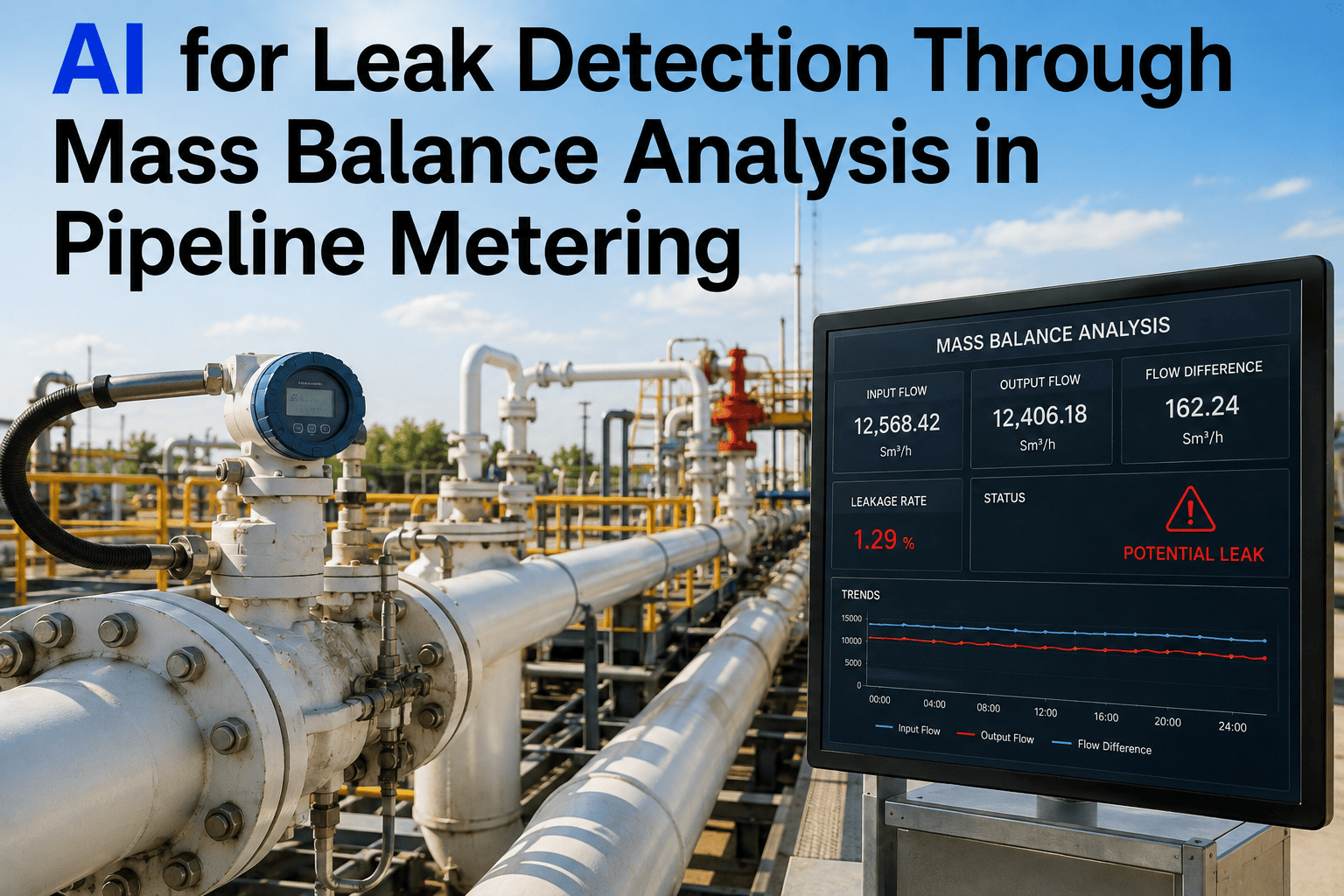
Notice the CPM alarm evaluation piece in particular. A volume-balance CPM system will trigger on almost anything that changes flow or pressure across the line — a pump start, a batch interface passing a meter, a valve lineup change, a temperature swing that expands the product in the pipe. None of those are leaks, but every one of them can produce a signal that looks like one for a few minutes. API 1130 does not ask operators to eliminate those alarms; it asks them to evaluate and document each one, which means the compliance burden scales directly with how much noise the system generates rather than with how many real leaks actually occur.
Design
Any new CPM system, or replaced component of an existing one, must be designed per API 1130 Section 4.2, covering detection method selection and threshold sensitivity appropriate to the line.
Operating and Maintaining
The system must be kept in working order with documented performance evaluation on an ongoing basis, not just at commissioning.
Testing
Periodic testing confirms the system can still detect a leak at its designed sensitivity as line conditions, product mix, and flow patterns change over time.
Dispatcher Training and Recordkeeping
Dispatchers must be trained on alarm response, and every alarm evaluation must be recorded — the record itself is what an inspector will ask to see first.
Who Owns Which Piece of the Compliance Picture
A mixed gas-and-liquid operator typically splits this work across three functions, and the friction usually shows up at the handoffs between them rather than within any one team's own records.
Gas Integrity Team
Owns patrol scheduling and leak survey intervals under Part 192, tracked by class location and segment, with business districts and higher class locations held to tighter timelines.
Liquid Pipeline Control Center
Owns CPM system operation and dispatcher alarm evaluation under Part 195, the record that shows every signal was assessed rather than simply logged and dismissed.
Regulatory Compliance Office
Owns the audit response itself, pulling records from both teams into a single package when PHMSA requests documentation for a specific segment or incident.
Data and Systems Team
Owns the platform that keeps all three record types in sync, which is the piece most often missing until an audit exposes how disconnected the other three actually are.
Patrol and Leak Survey Frequency at a Glance
| Asset Type | Location Class | Typical Requirement |
|---|---|---|
| Gas Transmission (192.705) | Class 1 & 2 | At least annually, interval not to exceed 15 months |
| Gas Transmission (192.705) | Class 3 & 4 | At least quarterly, interval not to exceed 4.5 months |
| Gas Distribution (192.723) | Business Districts | At least annually, interval not to exceed 15 months |
| Hazardous Liquid ROW (195.412) | All Classes | At intervals not exceeding 3 weeks, minimum 26 times per year |
| Hazardous Liquid CPM (195.444) | All HCA-Affecting Lines | Continuous, with documented alarm evaluation |
From Field Signal to Audit-Ready Record: The AI Compliance Workflow
The five stages below describe the same underlying pattern regardless of whether the segment in question falls under Part 192 or Part 195 — continuous data collection feeding structured evaluation, with every decision point captured in a form that answers a regulator's question before it is even asked.
Continuous Pressure and Flow Monitoring
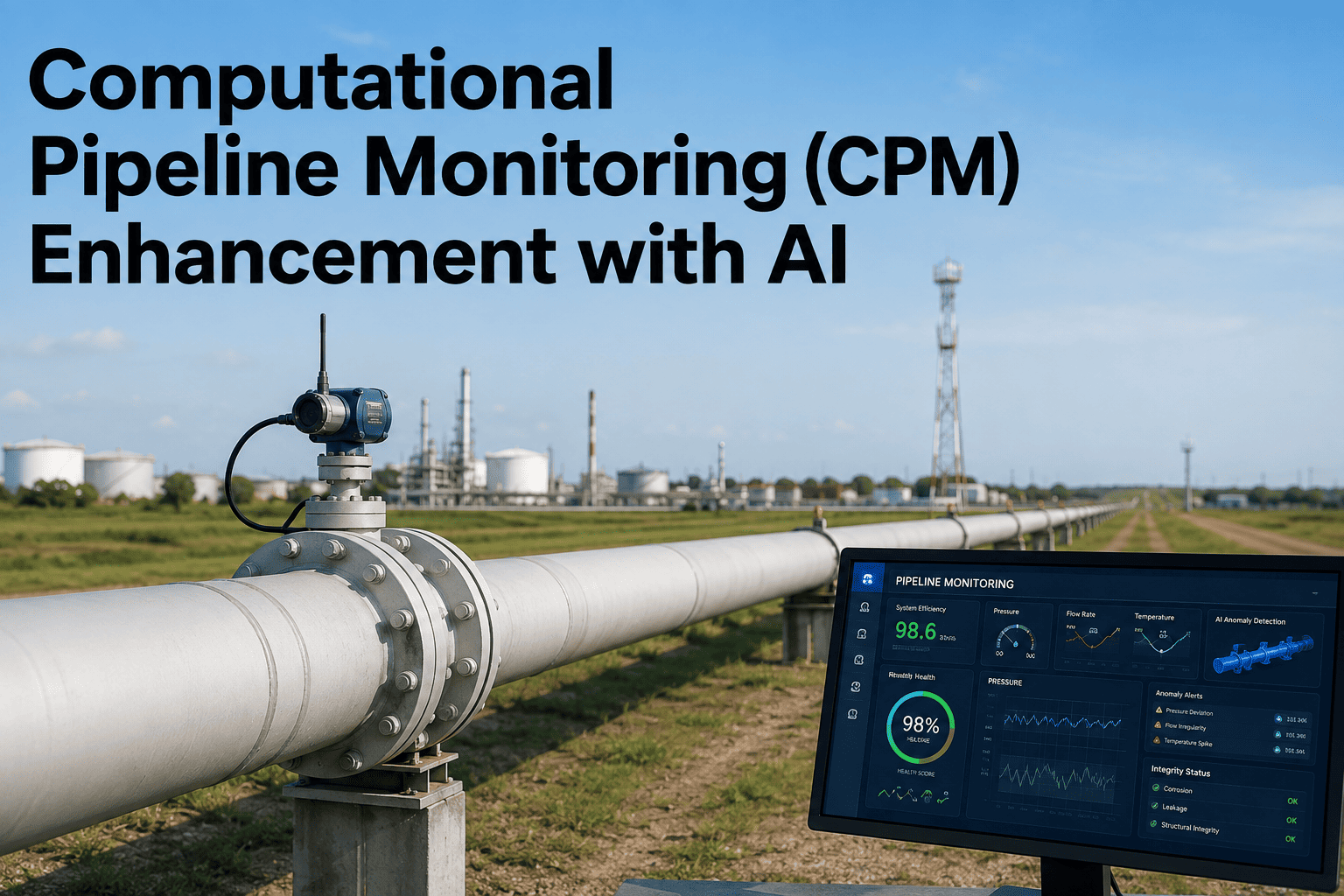
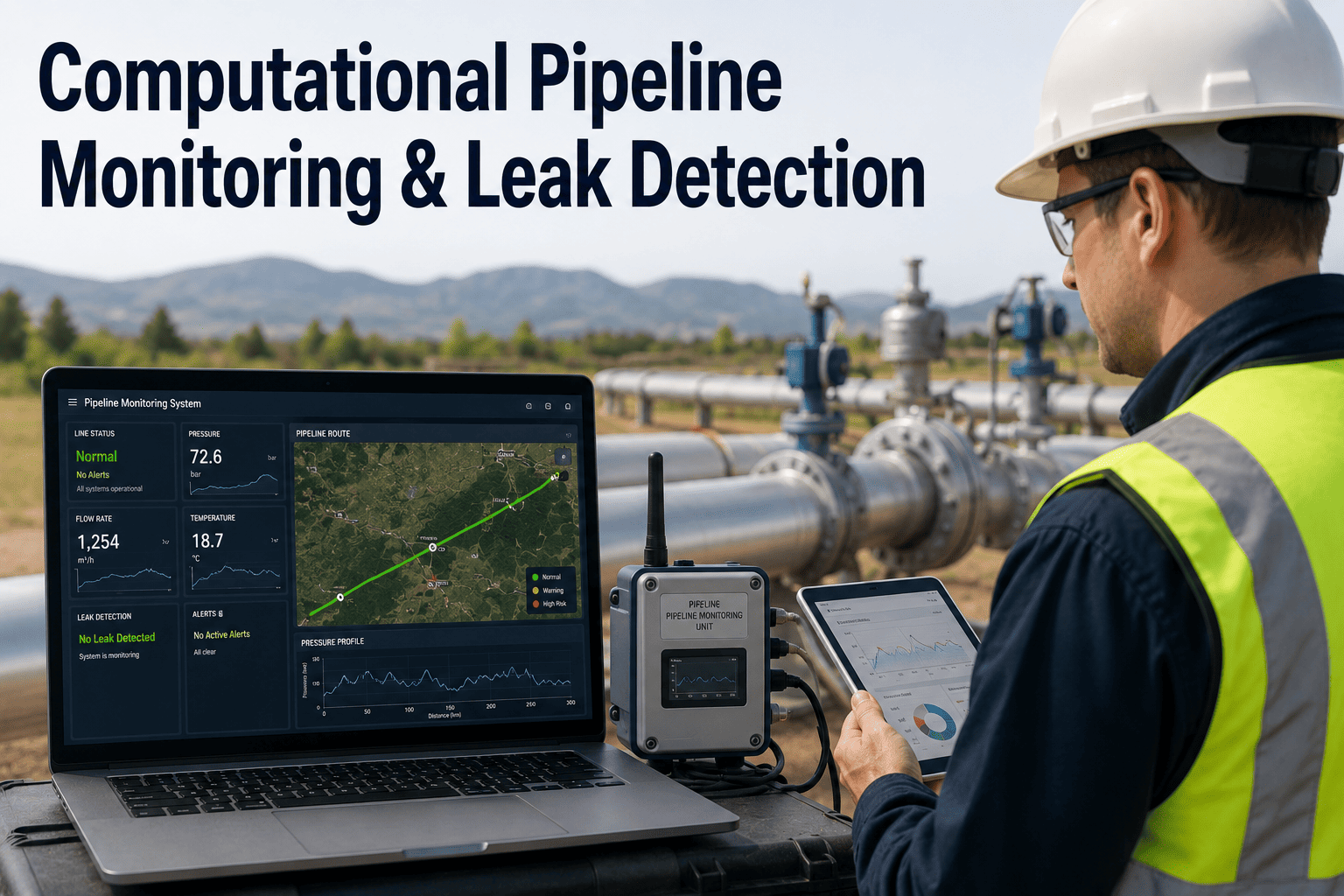
Live pressure, flow, and temperature data feeds the CPM volume-balance calculation continuously rather than at scheduled check-ins, matching the always-on standard API 1130 was built around.
AI-Assisted Alarm Evaluation
Every CPM alarm is automatically cross-referenced against operating conditions — pump starts, valve movements, batch changes — that could explain a transient signal, reducing false positives without eliminating dispatcher judgment.
ROW Patrol Log Consolidation
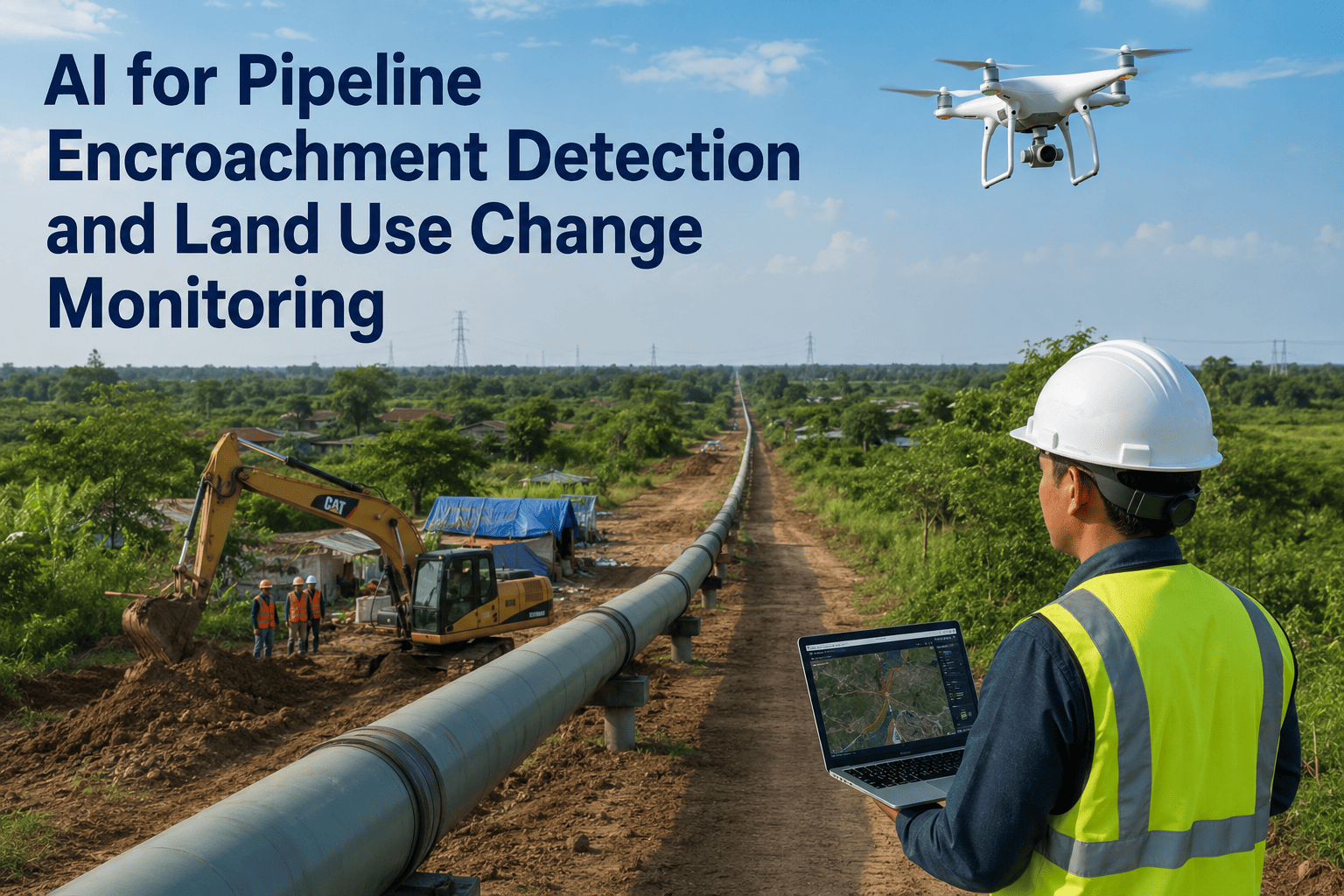
Aerial, ground, and satellite patrol records are pulled into one timeline per pipeline segment, automatically flagging any segment approaching its interval deadline before it lapses.
Leak Survey Interval Tracking
Gas distribution and transmission leak survey due dates are tracked by segment and class location, with automatic alerts as an interval approaches its regulatory ceiling.
Incident Reporting Package Assembly
When an event does occur, the relevant CPM data, patrol history, and alarm evaluation record are compiled automatically into the format PHMSA's incident reporting process expects.
Stop Reconstructing Compliance Records After the Fact
iFactory builds your PHMSA documentation continuously, so an audit request is a export, not a scramble.
Manual Compliance Tracking vs. Continuous AI Documentation
| Factor | Manual Tracking | Continuous AI Documentation |
|---|---|---|
| Patrol Interval Tracking | Spreadsheet, reviewed periodically | Continuous, auto-flagged before deadline |
| CPM Alarm Evaluation Record | Handwritten dispatcher notes | Structured, time-stamped, searchable |
| Cross-Regulation Visibility | Separate systems for 192 and 195 | Unified view across gas and liquid assets |
| Audit Preparation Time | Days to weeks of record assembly | Minutes to export existing records |
| Missed Interval Risk | Discovered during the audit itself | Flagged before the deadline passes |
A Common Scenario: When Two Systems of Record Collide
A multi-state operator running both gas transmission and hazardous liquid assets received a PHMSA data request covering a single corridor where the two systems ran in parallel for eleven miles. The request asked for patrol completion records under Part 192 and CPM alarm evaluation records under Part 195 for the same time window. The gas patrol log lived in a maintenance management system maintained by the integrity team. The CPM alarm history lived in the control center's SCADA historian, exported manually on request. Reconciling the two into a single timeline that satisfied the request took the compliance office the better part of a week, not because either record was incomplete, but because nothing connected them by segment, date, and event in a format the inspector could review directly.
That gap is what a unified compliance layer closes. It does not replace either system of record — it sits above both, pulling patrol completions, CPM alarm evaluations, and leak survey results into one segment-indexed timeline that answers a PHMSA data request in the same format regardless of which regulation, or which asset type, the request is about.
What PHMSA Inspectors Actually Ask to See
An audit rarely starts with a broad question. It starts with a request for a specific record on a specific segment, and how quickly that record can be produced says as much about a compliance program as the record itself.
Patrol Completion History by Segment
A dated, segment-by-segment record showing every patrol was completed within its required interval, with no gaps that exceed the regulatory ceiling.
CPM Alarm Evaluation Records
Documentation showing every alarm was evaluated by a trained dispatcher, with the rationale for classifying it as a leak, a transient, or a false positive.
Leak Survey Interval Compliance
Proof that every segment's leak survey occurred within its regulatory interval, especially in business districts and higher class locations with tighter timelines.
CPM System Testing and Training Logs
Records showing the CPM system itself was periodically tested for detection sensitivity and that dispatchers received the training API 1130 requires.
Recent Rule Changes Operators Should Have on Their Radar
Compliance is not a one-time certification that stays valid indefinitely. The timeline below covers the changes that have reshaped leak detection expectations most directly in the last two years, and it is a reasonable bet that it will keep growing as PHMSA continues incorporating new measurement and monitoring technology into its performance standards.
October 2024
Deadline for all existing single-phase liquid pipelines to have a §195.444-compliant CPM system operating in the field, not just designed on paper.
2025
PHMSA's Direct Final Rule formally recognized satellite and remote sensing technologies as qualifying methods for right-of-way patrols, expanding what counts as a compliant patrol under §195.412 and the parallel gas provisions.
Ongoing
Operators must continuously evaluate CPM system performance against product type, response time, and historical leak data — a standing obligation, not a one-time certification.
We were running our gas patrol tracking in one spreadsheet and our liquid CPM alarm log in a completely separate system. The first time PHMSA asked for both records on the same segment in the same audit, it took us three days to pull it together. That is the exact problem continuous documentation was built to solve.
Frequently Asked Questions
Do I need a CPM system if my pipeline does not carry hazardous liquid?
Computational pipeline monitoring requirements under 49 CFR 195.134 and 195.444 specifically apply to hazardous liquid pipelines transporting liquid in single phase. Gas pipelines fall under Part 192 instead, which governs leak detection through patrol frequency and leak survey intervals rather than a CPM system built to API RP 1130. If your system carries both gas and liquid assets, you are managing both sets of requirements simultaneously, which is exactly the scenario that benefits most from a unified compliance layer. Book a Demo to see how that looks across a mixed asset base.
What happens if a CPM alarm is not evaluated and documented?
API RP 1130, incorporated by reference into 49 CFR 195, requires that CPM alarms be evaluated and that evaluation be recorded as part of dispatcher training and operating procedures. An undocumented alarm evaluation is one of the most common findings in a PHMSA audit, because it suggests the system generated a signal that was never formally assessed as a possible leak, transient condition, or false positive. Consistent, structured alarm documentation is one of the fastest ways to close this gap.
Can satellite monitoring really replace a physical right-of-way patrol?
PHMSA's 2025 rule formally allows satellite and other remote sensing technologies to qualify as compliant right-of-way patrols under §195.412, provided the method meets the agency's performance standards for detecting changes along the corridor. This does not eliminate the need for physical patrols entirely in every case, but it does give operators a documented, technology-based option that can supplement or, where performance criteria are met, satisfy part of the patrol requirement. The parallel gas provisions under §192.705 use similarly flexible language around walking, driving, flying, or other appropriate means, which reinforces that PHMSA's broader intent is performance-based surveillance rather than a single prescribed method.
How often does gas transmission pipeline patrol frequency actually need to happen?
Under 49 CFR 192.705, patrol frequency depends on class location. Class 1 and Class 2 locations require patrols at least once per calendar year, at intervals not exceeding fifteen months, while Class 3 and Class 4 locations require patrols at least four times per calendar year, at intervals not exceeding four and a half months. Business districts and other higher-consequence areas are held to the tighter end of these intervals because of the greater potential impact of an undetected leak.
How quickly can we get audit-ready documentation in place?
Most operators can have continuous patrol and CPM alarm documentation running within four to eight weeks, depending on how many data sources need to be connected and how many pipeline segments are in scope. The bigger driver of timeline is usually how fragmented the existing records are across systems, not the technical complexity of the integration itself. Our support team can scope this against your specific asset mix.
Turn PHMSA Compliance Into a Continuous Process, Not a Fire Drill
iFactory unifies patrol tracking, CPM alarm evaluation, and leak survey documentation across your gas and liquid pipeline assets in one auditable layer.