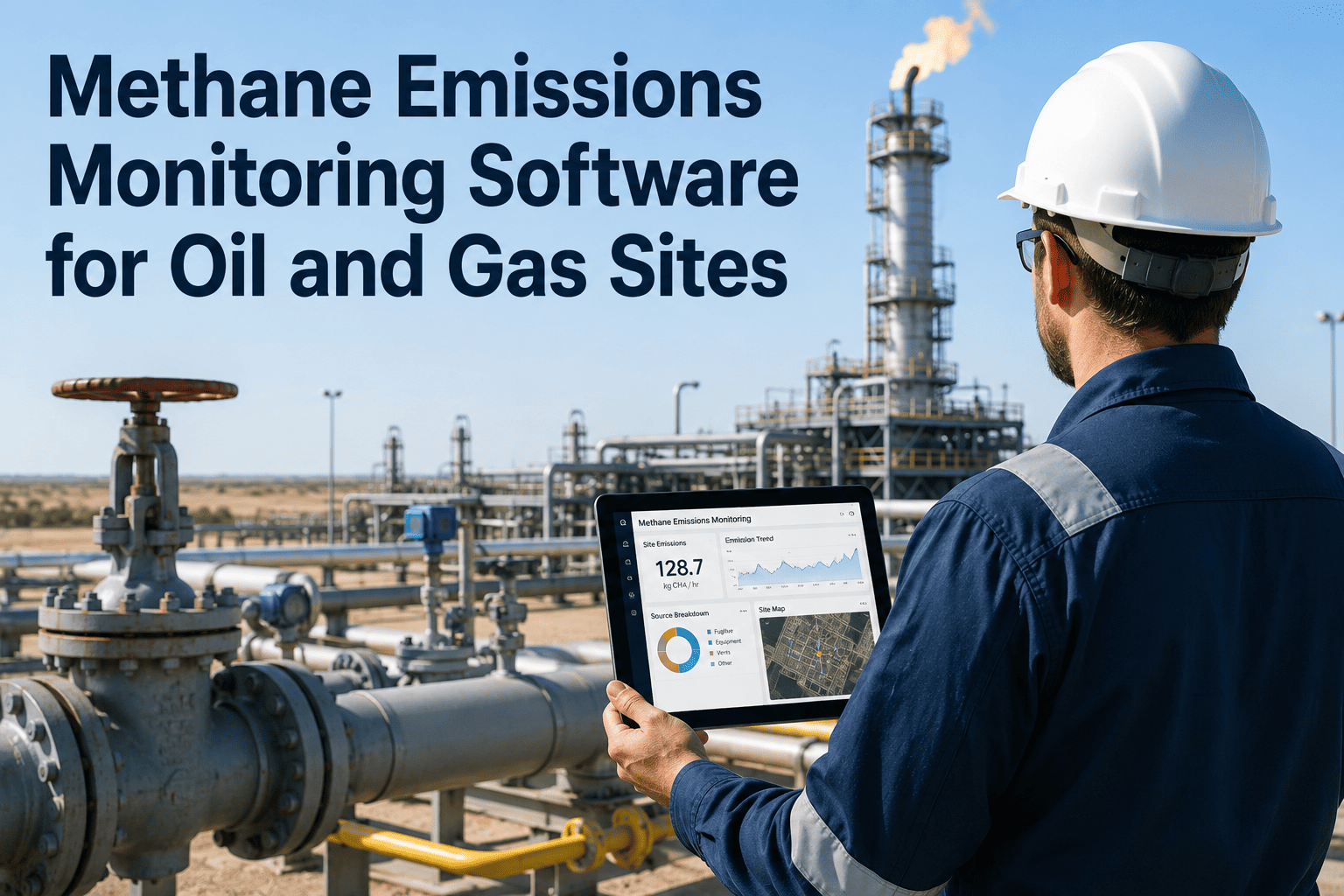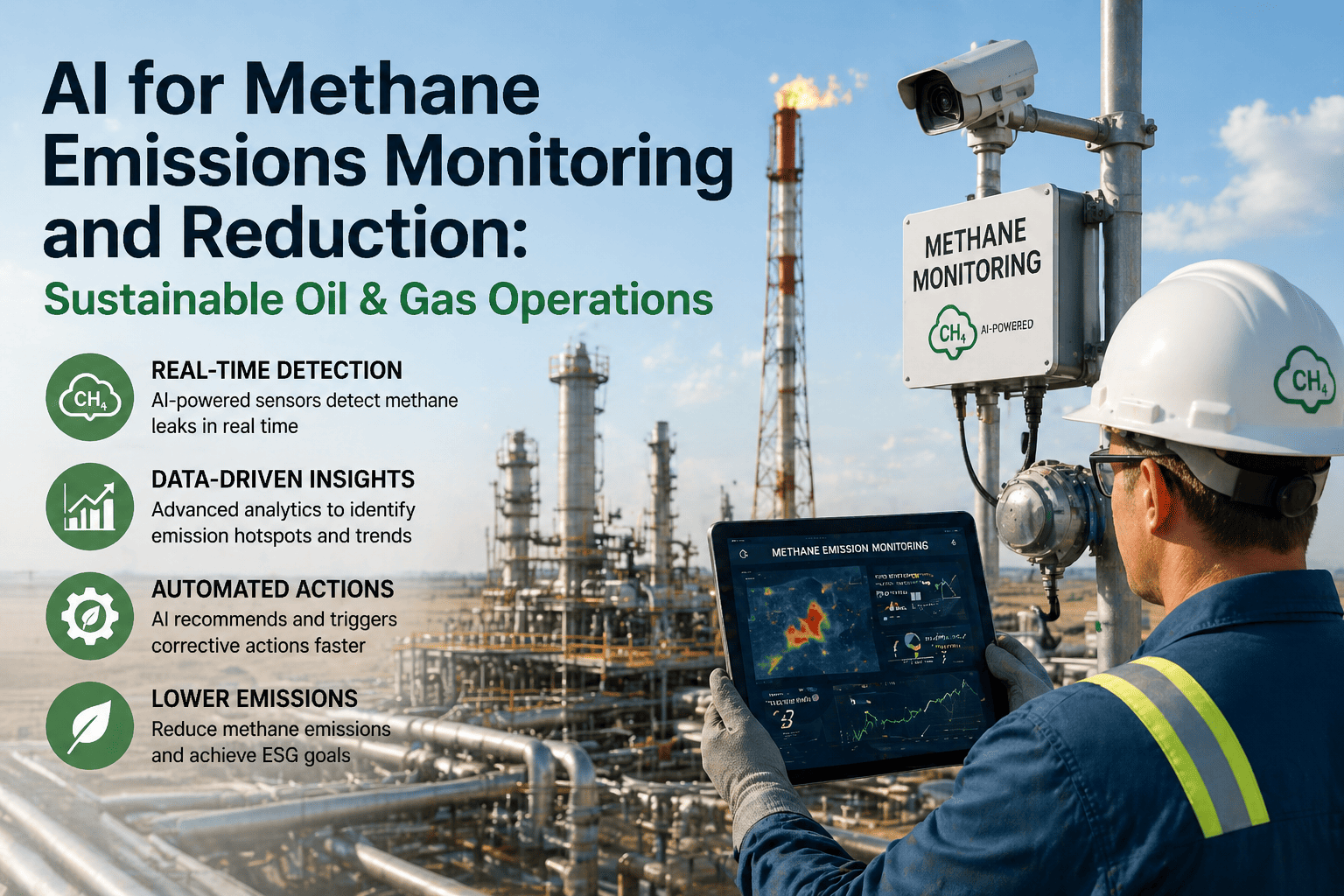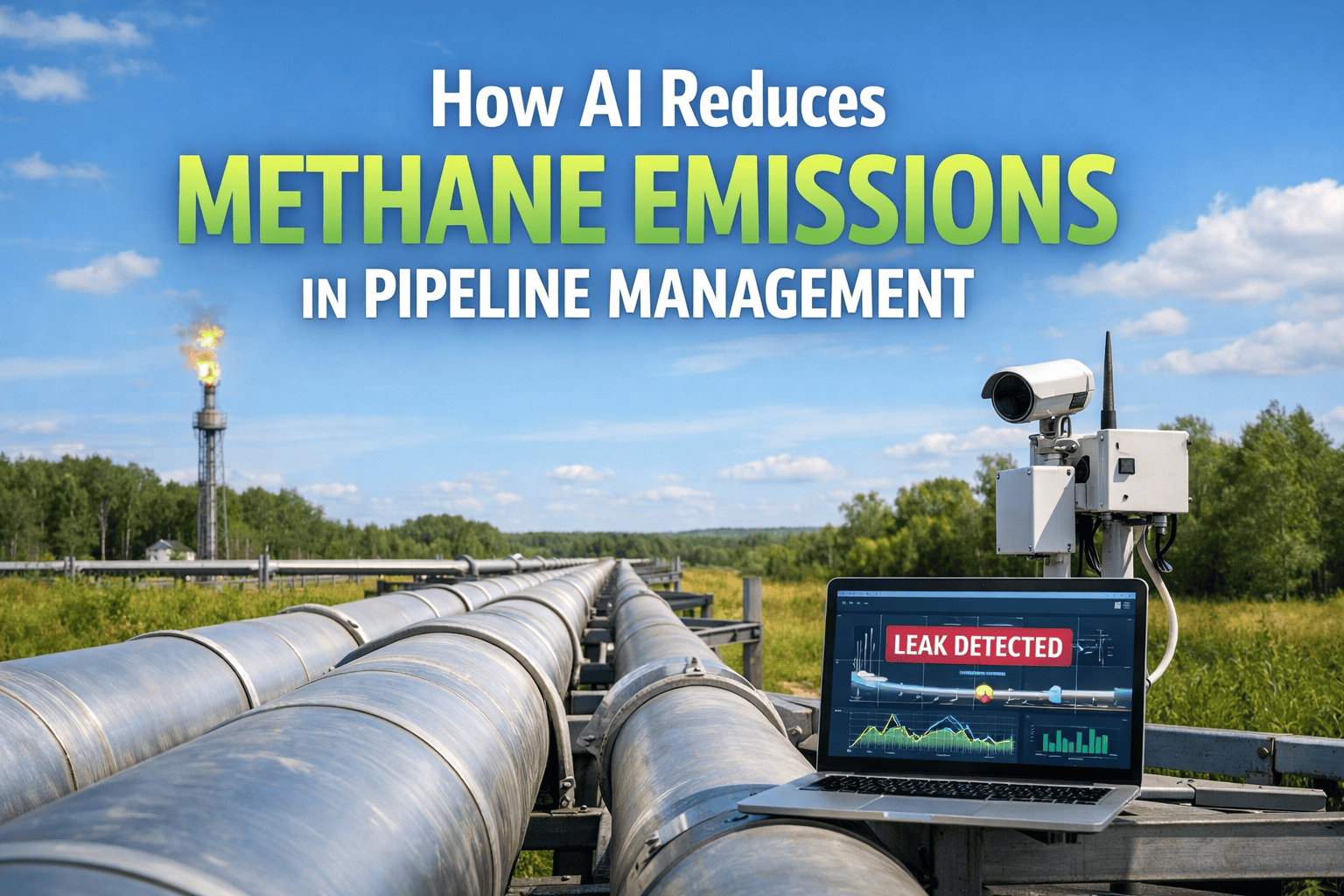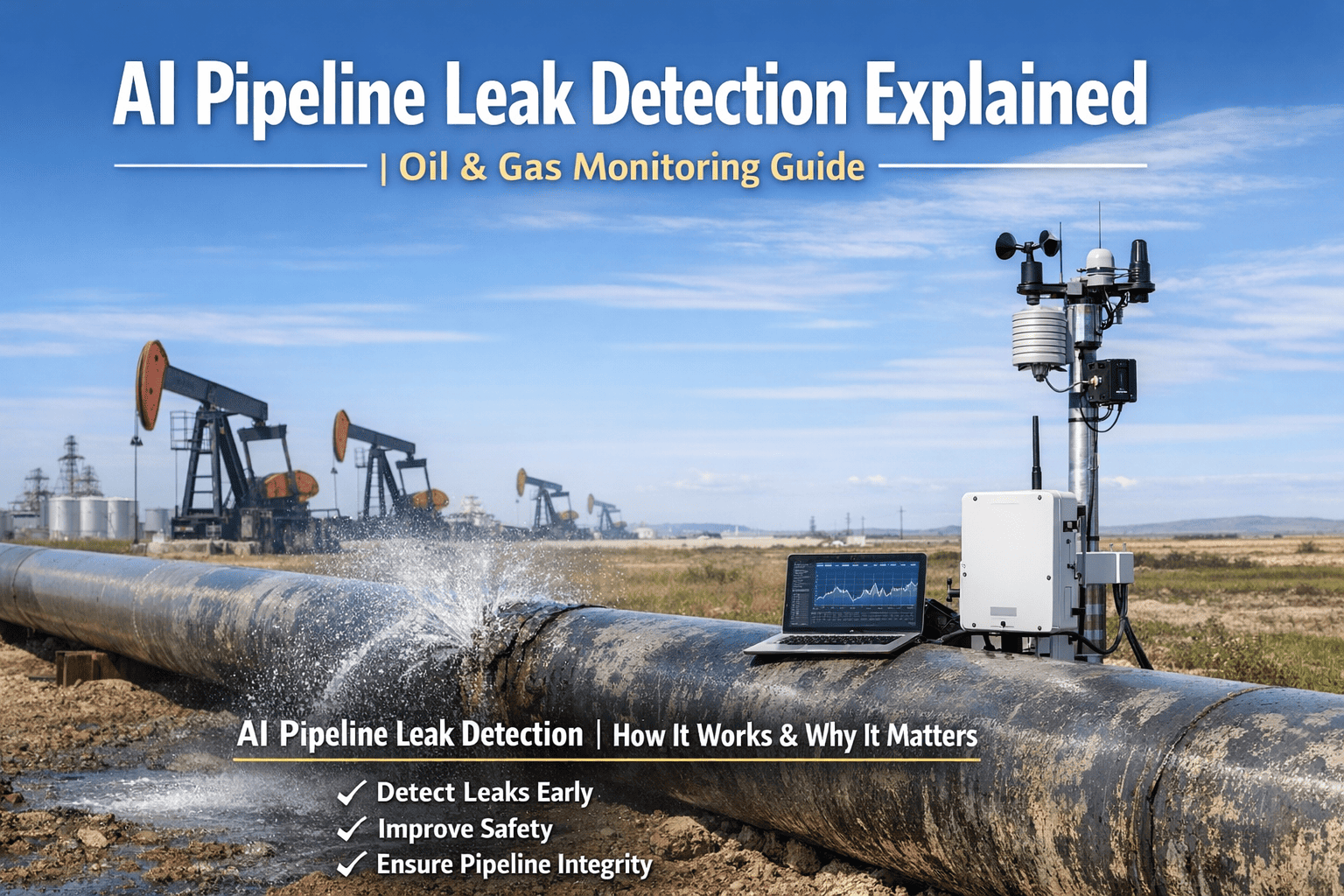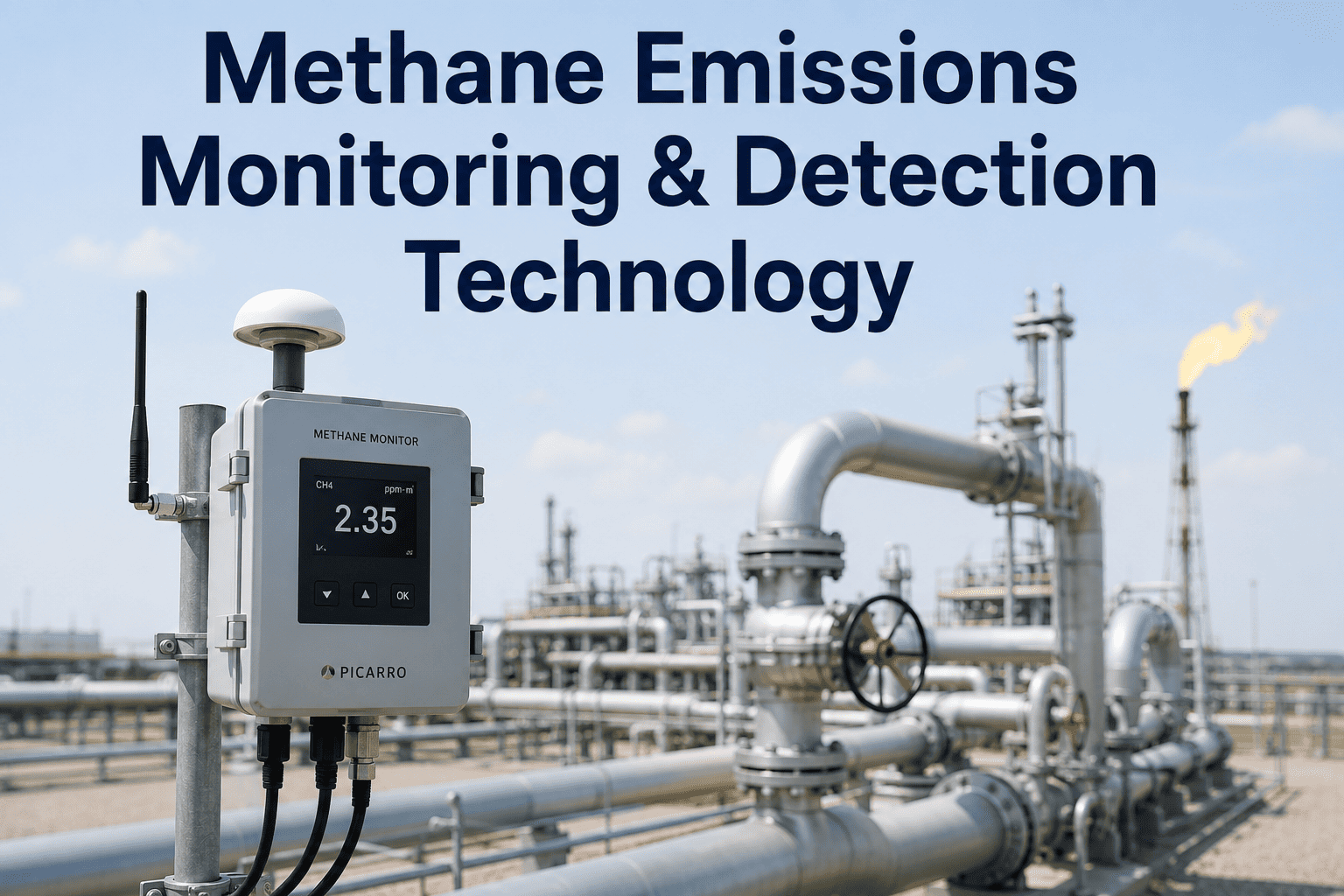
Methane is responsible for approximately 30% of global warming since the pre-industrial era, and the oil and gas sector is the largest industrial source of methane emissions worldwide. Regulatory bodies are moving rapidly from voluntary reporting frameworks to mandatory monitoring, quantification, and reduction requirements that carry significant financial penalties for non-compliance. The EPA final methane rule, the EU Methane Regulation, and global commitments under OGMP 2.0 are creating compliance deadlines that require operators to deploy detection and monitoring infrastructure now rather than in future planning cycles. iFactory's continuous methane monitoring platform integrates OGI camera surveys, fixed sensor networks, and drone-based detection into a unified emissions tracking dashboard. If your organization is building its methane compliance strategy, Book a Demo to see how iFactory accelerates detection, reporting, and regulatory readiness.
Continuous Methane Detection, Quantification, and Compliance Reporting in One Platform
iFactory unifies OGI cameras, fixed sensors, drone surveys, and satellite data into a real-time methane emissions dashboard with automated LDAR workflows and ESG-ready reporting.
The Regulatory Acceleration: Why Methane Monitoring Cannot Wait
Methane regulation has shifted from voluntary commitments to binding legal requirements across every major oil and gas producing region. The timeline below tracks the regulatory milestones that are reshaping emissions monitoring requirements — and the compliance deadlines that operators must meet with verified detection and reporting infrastructure in place.
Mandatory quarterly OGI monitoring at all well sites, phased elimination of routine flaring, super-emitter response programs requiring operator action within 15 days of detection.
Mandatory measurement-based reporting for all EU importers and domestic producers, source-level leak detection and repair with defined repair timelines, and satellite-based monitoring for large source verification.
Participating operators commit to measurement-based reporting at all tiers from source to site to country level, requiring site-level methane quantification with documented measurement methodology and uncertainty analysis.
Third-party certified entities deploy continuous monitoring and report large emission events directly to EPA. Operators receive notification and must investigate and remediate within 15 days or face enforcement action.
Signatory nations report progress toward 30% methane reduction by 2030. Oil and gas operators face increased scrutiny on measurement transparency, with regulatory frameworks expected to tighten further based on reported gaps.
Methane Emission Sources: Where Leaks Actually Occur
Effective methane monitoring requires understanding where emissions originate across the oil and gas value chain. The source hierarchy below maps the primary emission categories and specific equipment types that account for the majority of fugitive methane — providing the targeting framework that a detection program must cover to achieve comprehensive site-level monitoring.
Pneumatic controller vents, wellhead separator relief valves, and wellbore blowdown events during workovers or shut-ins that release methane directly to atmosphere.
Gas-oil-water separation processes vent methane through atmospheric relief devices, thief hatches, and pressure control valves during normal operations and upsets.
Pneumatically driven chemical injection pumps vent natural gas as the driving medium, with each pump releasing continuous low-volume methane throughout operation.
Rod-packed reciprocating compressors and dry gas seals on centrifugal compressors release methane through seal venting systems, representing one of the largest single-point sources in the gas chain.
Thousands of valves, flanges, and connections along pipeline networks develop fugitive leaks through seal degradation, thermal cycling, and vibration-induced loosening.
Pressure regulation stations and custody transfer meter sites contain multiple potential leak points including valve stems, regulator vents, and instrument connections.
Storage tank breathing losses and working losses release methane vapors as crude oil and condensate tanks experience temperature and level changes throughout the day.
Truck and rail loading operations displace vapors from storage tanks, releasing methane through loading arm seals and vapor recovery system inefficiencies.
Flares operating below designed combustion efficiency pass unburned methane. Flare pilot outages and poor mixing during low-flow conditions create intermittent but significant emission events.
Detection Technology Spectrum: Matching Method to Mission
No single detection technology can address all methane monitoring requirements. An effective program deploys multiple technologies in a layered approach, with each method covering a specific scale, frequency, and sensitivity requirement. The technology profiles below map each detection method against its operational capability — enabling operators to design a monitoring program that closes every detection gap.
Handheld or drone-mounted infrared cameras that visualize methane plumes in real time. Industry standard for LDAR surveys under EPA and EPA-approved alternative work practice. Provides visual confirmation of leak location and relative size for prioritized repair.
Permanently installed point sensors using tunable diode laser absorption spectroscopy or catalytic detection. Provide continuous methane concentration readings at high-risk locations such as compressor stations, well pads, and processing facilities with real-time alarm capability.
Unmanned aerial systems equipped with methane-sensitive LiDAR or TDLAS sensors that scan large facility areas from above. Effective for identifying emission sources across well pads, pipeline rights-of-way, and remote facilities where ground access is limited or hazardous.
Orbital platforms using short-wave infrared spectroscopy to detect large methane point sources across entire basins or regions. Primary value is identifying super-emitter events that exceed 100 kg/hr — serving as an independent verification layer under EPA super-emitter programs.
Periodic vs. Continuous: Why the Industry Is Shifting
The fundamental limitation of periodic monitoring is the time gap between surveys. A quarterly OGI survey captures conditions at a single point in time — missing intermittent leaks, equipment upsets, and the vast majority of super-emitter events that are by definition transient. Continuous monitoring eliminates this blind spot by maintaining persistent detection coverage that captures every emission event regardless of when it occurs.
Relies on scheduled surveys that capture emission conditions at a single point in time. Leaks that develop between surveys go undetected for weeks or months. Repair timelines begin only at the next survey, not at the moment of leak onset.
Persistent detection coverage captures every emission event the moment it occurs. Automated alerting initiates repair workflows immediately, and continuous data feeds power real-time dashboards and automated regulatory compliance reports without manual compilation.
See Unified Methane Monitoring for Your Entire Asset Portfolio
OGI survey integration, continuous sensor feeds, LDAR workflow automation, and ESG-ready emission reporting — configured for upstream, midstream, and downstream operations.
LDAR 2.0: The Continuous Detection and Repair Cycle
Modern leak detection and repair programs have evolved from paper-based survey checklists into digitally enforced workflows that connect detection, classification, repair, and verification into a closed loop. The four-stage cycle below represents the LDAR 2.0 workflow that iFactory automates — ensuring every detected leak moves through a tracked, timed, and documented process from identification through verified repair.
Methane emission identified through continuous sensor alert, OGI survey finding, drone scan result, or satellite super-emitter notification. Event automatically logged with location, estimated rate, detection method, and timestamp.
Leak classified by severity based on emission rate, component type, and regulatory deadline. EPA-defined repair timelines automatically assigned — 30 days for major leaks, 60 days for minor. Priority ranking generated for repair scheduling.
Post-repair verification survey confirms leak elimination using the same detection method. Verification result recorded with timestamp and technician ID. Work order closed only when verification passes — incomplete repairs cannot be closed in the system.
Work order generated and assigned to maintenance team with component details, safety requirements, and regulatory deadline. Repair actions documented with parts used, time spent, and method applied. If repair cannot be completed within deadline, extension request workflow triggered automatically.
Regulatory Compliance Requirements by Framework
Oil and gas operators with assets across multiple jurisdictions must satisfy overlapping methane regulatory requirements simultaneously. The table below consolidates the key monitoring, reporting, and response obligations across the primary regulatory frameworks — providing a single reference for compliance teams managing multi-region operations.
| Framework | Monitoring Requirement | Reporting Obligation | Repair Timeline | iFactory Capability |
|---|---|---|---|---|
| EPA 40 CFR 60 Subpart OOOOa | Quarterly OGI surveys at well sites; continuous monitoring at large facilities | Annual emissions reports; semi-annual flare compliance; super-emitter response records | 30 days for major leaks; 60 days for minor; 15 days for super-emitter response | Automated survey scheduling, OGI data import, repair tracking with deadline enforcement, and one-click EPA report generation |
| EU Methane Regulation 2024 | Measurement-based source-level LDAR at all facilities; satellite screening for large sources | Quarterly measurement reports to competent authority; annual inventory with uncertainty analysis | Defined repair timelines per source severity; mandatory re-survey after repair | Source-level emission quantification, satellite alert integration, and EU-formatted compliance reporting |
| OGMP 2.0 Level 5 | Site-level measurement using bottom-up source quantification reconciled with top-down atmospheric measurement | Annual public reporting at source, site, and asset level with documented methodology | Continuous improvement commitment; no fixed repair mandate but transparency required | Multi-tier reconciliation engine combining component-level data with site-level atmospheric measurements |
| EPA Super-Emitter Program | Third-party certified monitoring entities report large emission events to EPA and operators | Operators must investigate and respond within 15 days; report findings back to EPA | 15 days from notification to investigation and remediation plan submission | Super-emitter alert ingestion, automated investigation workflow, and EPA response documentation |
Impact Metrics After Continuous Methane Monitoring Deployment
Operators who have transitioned from periodic LDAR programs to continuous methane monitoring with iFactory report measurable improvements across emission reduction, compliance performance, and operational efficiency. The progress tracks below represent aggregated performance data from upstream and midstream deployments.
Average reduction in site-level methane emissions within 12 months of continuous monitoring deployment versus baseline periodic LDAR program.
Percentage of LDAR surveys, repair deadlines, and reporting obligations met on time with automated workflow enforcement versus 64% with manual programs.
Percentage of operating hours with active methane detection coverage versus 8% with quarterly survey-only programs that miss 92% of the time.
Reduction in time required to compile methane emissions data for ESG disclosures, from weeks of manual data gathering to automated report generation.
Frequently Asked Questions
Detect Every Leak. Report Every Emission. Meet Every Deadline.
Continuous monitoring, automated LDAR workflows, multi-technology data integration, and ESG-ready reporting — deployed in 10 to 14 weeks.