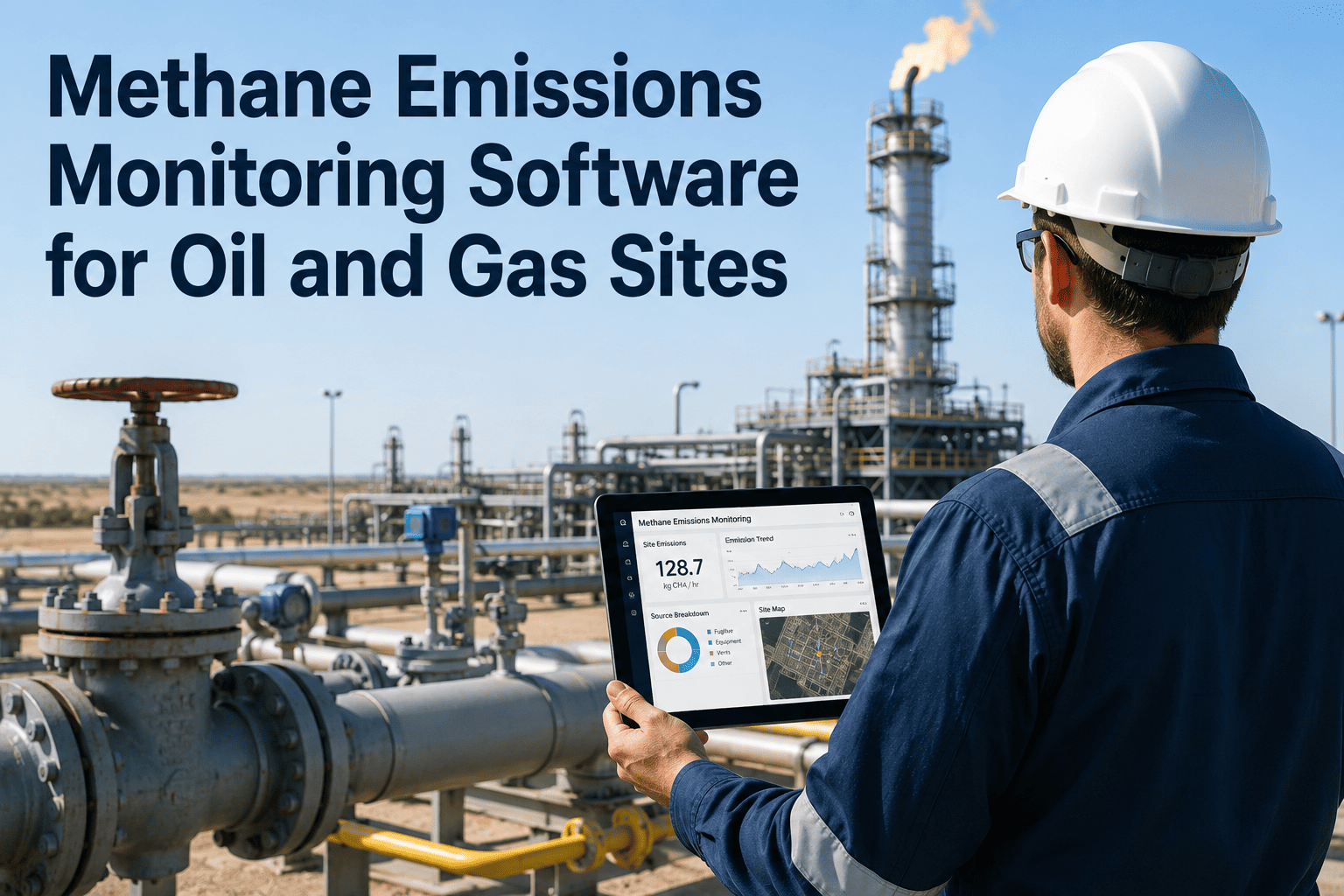
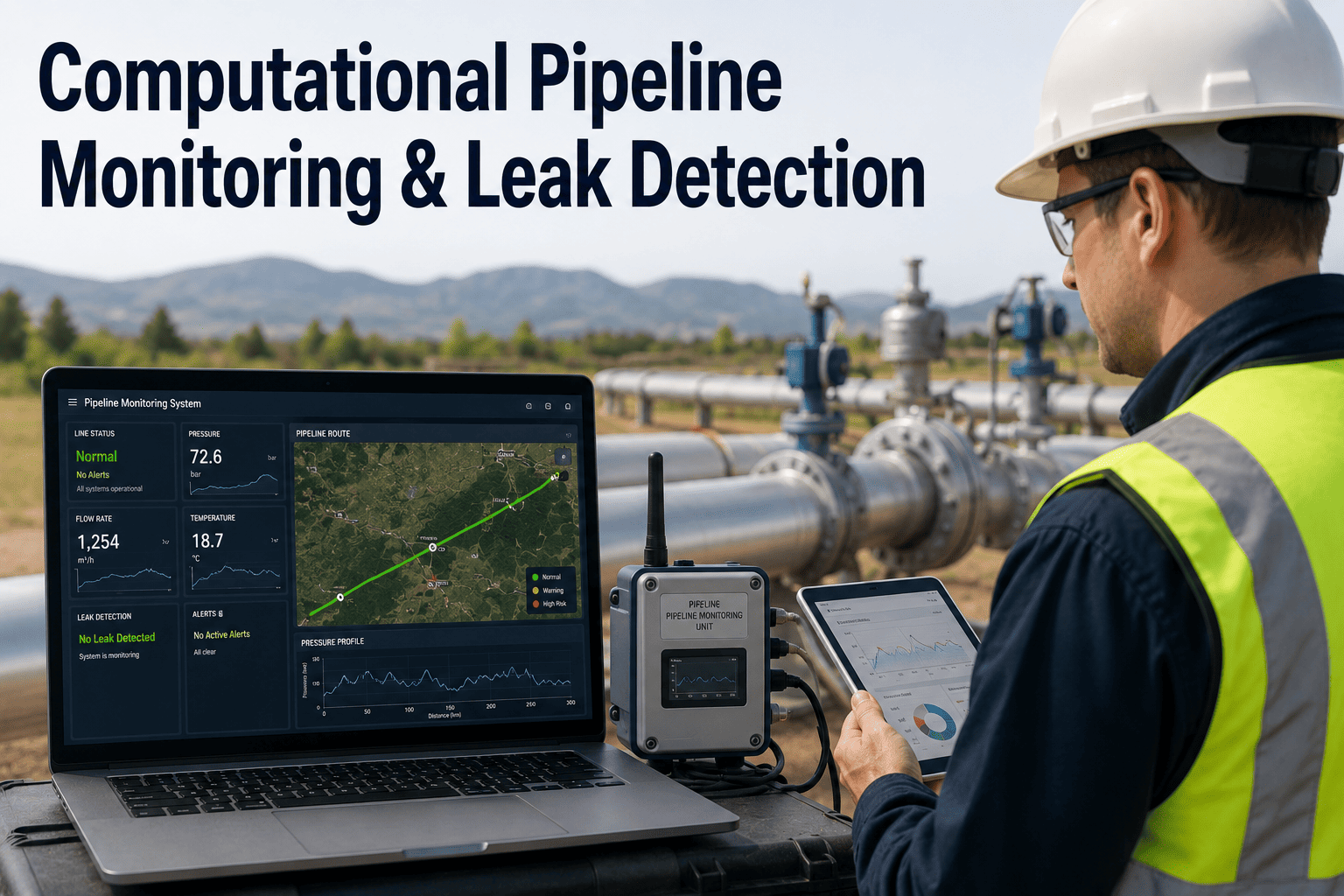
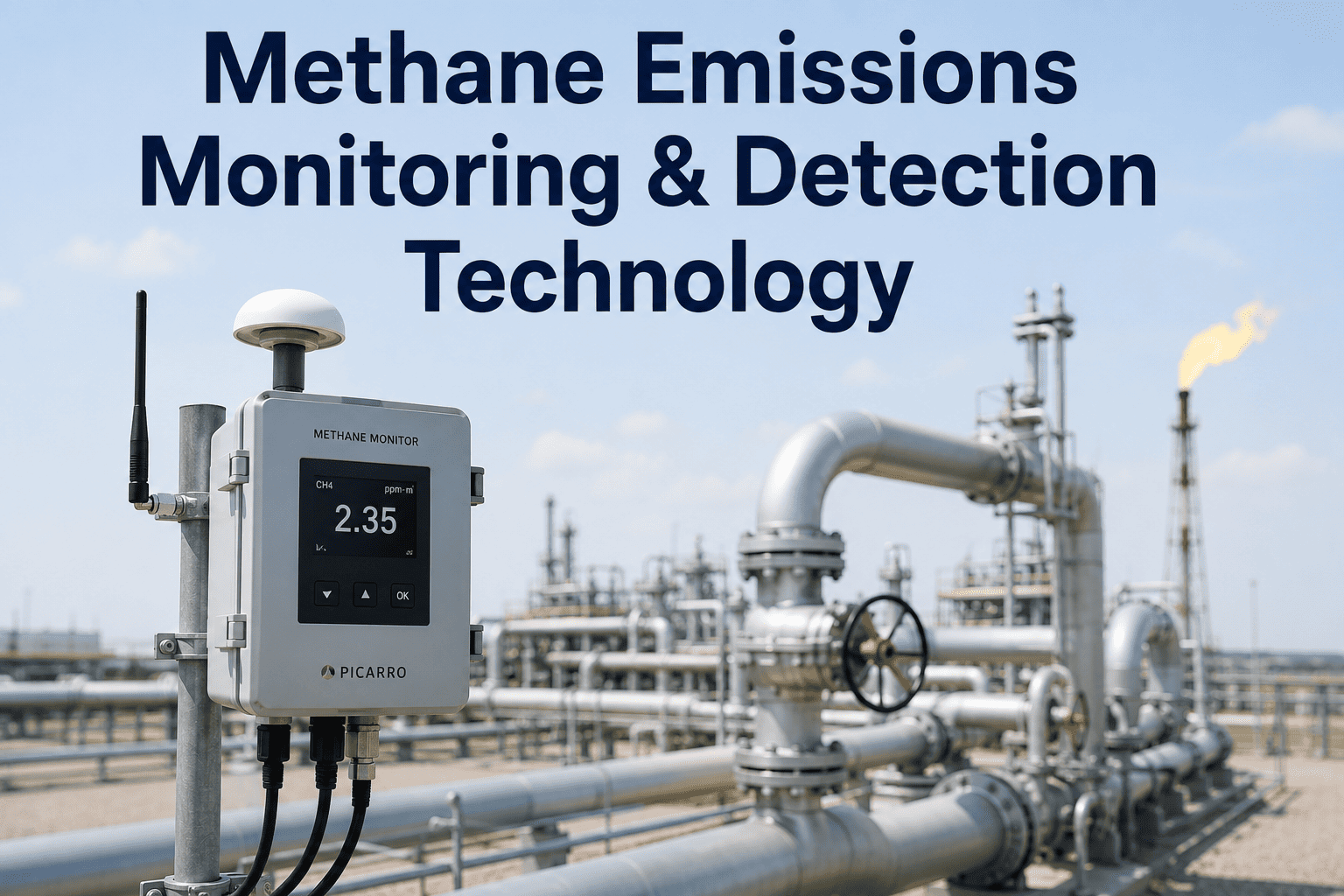
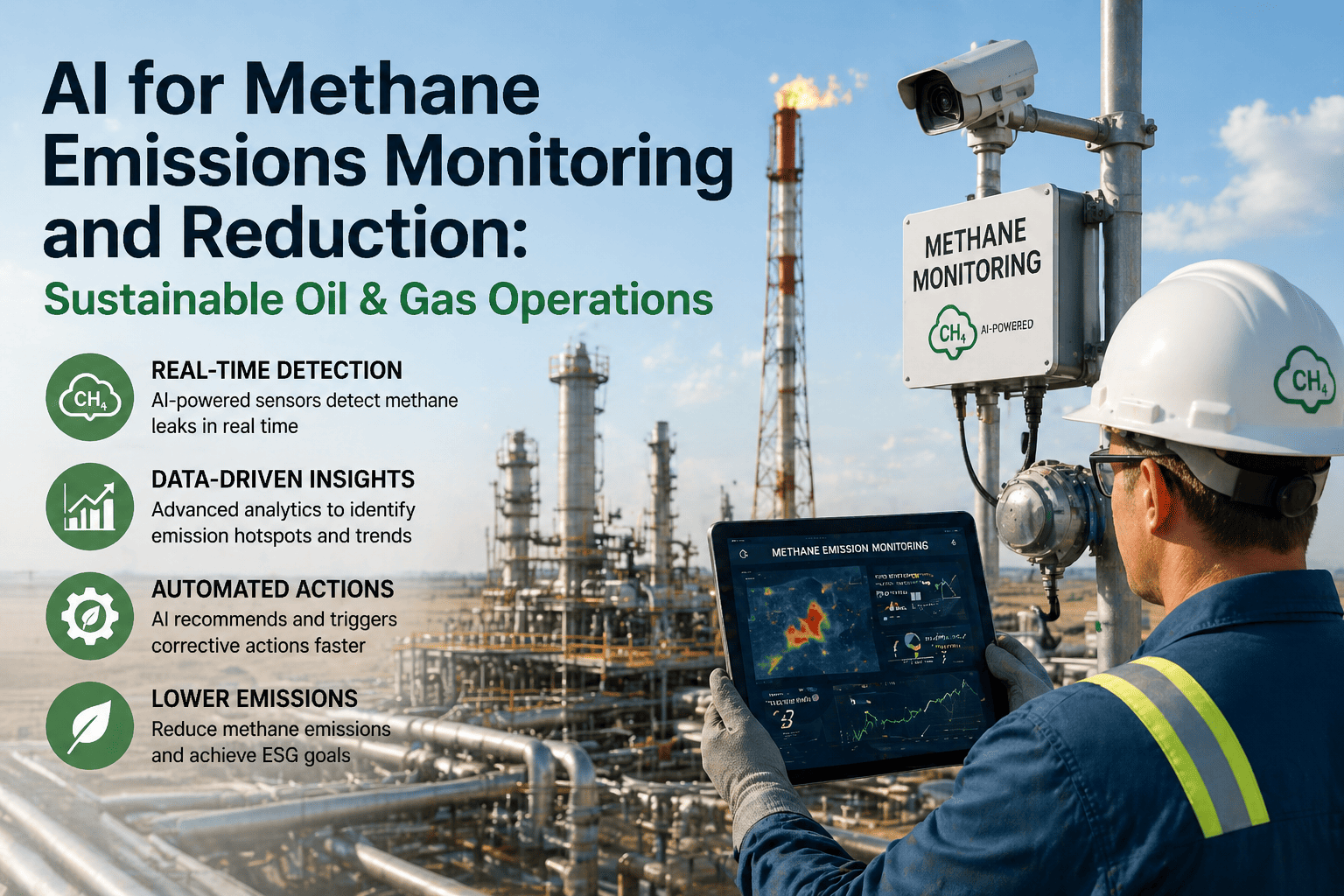
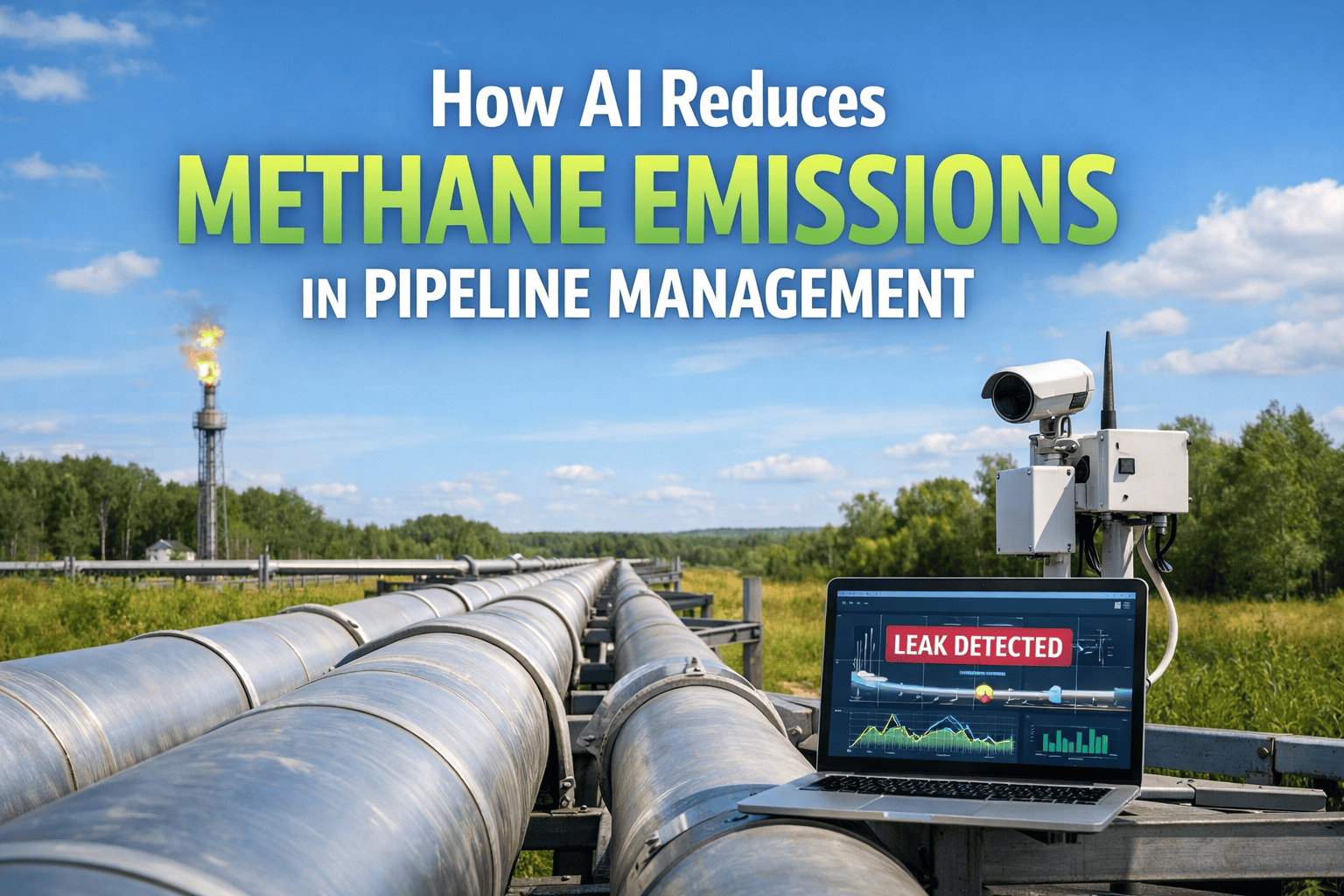
Methane is responsible for roughly 30% of the rise in global temperatures since the Industrial Revolution, and the oil and gas sector is the largest industrial source of methane pollution in the United States. The energy sector emitted nearly 150 million tonnes of methane globally in 2025 — with oil and natural gas operations accounting for approximately 78 million tonnes combined. Under the EPA's Waste Emissions Charge, operators face penalties of $1,500 per metric ton of methane for emissions years 2026 and beyond at facilities exceeding reporting thresholds, while traditional OGI-based LDAR surveys capture only a fraction of actual emissions in practice. iFactory's AI-driven methane emissions monitoring platform fuses ground-level sensor data, SCADA process variables, OGI survey results, and satellite detection feeds into a single continuous emissions intelligence system — quantifying methane at every source, detecting super-emitter events in real time, and generating PHMSA and EPA compliance documentation automatically. Book a Demo to see AI emissions monitoring running on oil and gas facility data.
150 Mt
Methane emitted by the global energy sector in 2025 — oil and gas operations alone account for 78 Mt
See Every Molecule. Quantify Every Source. Prove Every Reduction.
iFactory replaces periodic walk-around surveys with continuous, AI-driven methane intelligence — detecting leaks at the component level, quantifying emissions at the facility level, and generating audit-ready compliance reports at the enterprise level. One platform. Every emission source. Always on.
The Regulatory Pressure Is Accelerating — And Penalties Are Real
The EPA's Inflation Reduction Act Waste Emissions Charge imposes escalating per-ton methane penalties on facilities exceeding emission thresholds. NSPS OOOOb/OOOOc requires leak detection and repair programs with defined inspection frequencies, repair timelines, and documentation standards. The Super Emitter Program enables third-party satellite and aerial monitoring to notify EPA of events exceeding 100 kg/hr — triggering mandatory operator investigation and remediation. The cost of non-compliance is no longer theoretical.
2024
$900
per metric ton of methane
Waste Emissions Charge begins for facilities exceeding 25,000 t CO2e annually
2025
$1,200
per metric ton of methane
Expanded Subpart W reporting with new source categories and direct measurement requirements
2026+
$1,500
per metric ton of methane
Full penalty rate — ongoing. Super Emitter Program enables third-party satellite notifications to EPA
Where Methane Hides Across Oil and Gas Operations
Methane emissions originate from hundreds of distinct source types across upstream, midstream, and downstream operations. Traditional LDAR programs survey only a subset of these sources on periodic schedules — missing intermittent events, equipment malfunctions, and the super-emitting episodes that contribute a disproportionate share of total facility emissions. AI-driven continuous monitoring covers all source categories simultaneously.
Pneumatic device venting — the single largest source category at most production sites, driven by gas-actuated controllers and pumps
Tank battery and produced water emissions — flash gas from atmospheric storage tanks varies with oil gravity, temperature, and throughput
Equipment leaks from valves, connectors, flanges, and open-ended lines — hundreds of components per facility with intermittent leak patterns
Completion and workover venting, well blowdown events, and routine maintenance releases that occur outside scheduled LDAR survey windows
Compressor seal leaks and blowdown venting — centrifugal dry gas seals and reciprocating rod packing degrade continuously between inspections
Pipeline fugitive emissions from connectors, flanges, and valve packing across gathering networks spanning hundreds of miles
Dehydrator vents, acid gas removal unit emissions, and pig launcher/receiver operations during pipeline maintenance
Process unit fugitive emissions from thousands of components across crude distillation, FCC, reformer, and gas processing units
Flare efficiency losses — incomplete combustion at refinery and processing plant flares releases unburned methane at rates that vary with vent gas composition
Storage tank breathing and working losses, loading and unloading operations, and wastewater treatment system emissions
Know Your Emissions Before the Satellites Do
iFactory's AI platform detects methane at every source across your facility — continuously, not quarterly. When EPA-certified third parties report a super-emitter event, your investigation data is already documented. When Subpart W reporting deadlines arrive, your emissions inventory is already quantified.
Why Traditional OGI LDAR Surveys Miss Most of the Methane
Research analyzing three years of regulated LDAR surveys found that independent aerial measurements detected 12 times more methane emissions overall than OGI-based LDAR surveys at the same sites. Even after excluding combustion and intentional vent sources, aerial measurements found four times more emissions than OGI surveys captured. The reason is structural: OGI surveys are periodic snapshots that miss intermittent leaks, super-emitter events between survey cycles, and dispersed sources below camera detection thresholds.
OGI LDAR Surveys (3x/year)
~8%
iFactory AI Continuous Monitoring
95%+
Estimated share of total facility methane emissions captured by each monitoring approach. OGI estimate based on peer-reviewed comparison of regulated LDAR surveys versus independent aerial measurement at the same sites.
What iFactory's Emissions Intelligence Platform Does
iFactory is not an OGI camera or a single-point sensor — it is an AI analytics platform that fuses data from every methane detection technology your facility deploys into a unified, continuously updated emissions model. The platform computes facility-level and component-level emission rates, detects anomalies and super-emitter events in real time, and generates the compliance documentation that EPA and state regulators require.
Continuous Leak Detection
AI analyzes real-time data from fixed methane sensors, SCADA process variables, and equipment health indicators to detect leaks at the component level — identifying not just that a leak exists but which specific valve, connector, or seal is the source, with GPS coordinates and estimated emission rate.
Super Emitter Event Alerting
Events exceeding 100 kg/hr are flagged within minutes — not discovered days later by a satellite overflight. When an EPA-certified third party files a Super Emitter notification, your investigation data, root cause, and remediation timeline are already documented in the system.
Emissions Quantification by Source
AI models compute methane emission rates at each source category — pneumatic devices, tanks, compressor seals, equipment leaks, flare combustion efficiency — using direct measurement data correlated with process operating conditions. Source-level quantification replaces generic emission factors with facility-specific rates.
LDAR Program Automation
Survey scheduling, component tracking, leak/no-leak documentation, repair initiation timelines, and repair verification records are managed through a single digital workflow — eliminating the paper-based tracking and manual spreadsheet reconciliation that create compliance gaps during audits.
Subpart W and NSPS Reporting
EPA Greenhouse Gas Reporting Program Subpart W submissions, NSPS OOOOb/OOOOc compliance documentation, and state-level emissions reports are generated automatically from the platform's quantified emissions inventory — using your actual measured data rather than generic emission factors that underestimate real-world emissions.
Multi-Scale Data Fusion
Ground-level sensors provide component resolution. OGI surveys provide facility sweep confirmation. Aerial and satellite data provide basin-wide coverage and independent verification. iFactory fuses all three scales into a single emissions model that reconciles bottom-up source inventory with top-down atmospheric measurement.
Turnkey Deployment: AI Emissions Intelligence Live in 6 Weeks
iFactory ships a pre-configured NVIDIA AI server — hardware and software bundled as a single turnkey appliance. Rack it in your operations center, connect power and Ethernet, and the emissions monitoring platform is live on your network. No cloud dependency for real-time leak detection. The deployment scope covers sensor integration, SCADA connectivity, operator training, and 24/7 remote monitoring support.
Weeks 1–2
Sensor Integration and Baseline
NVIDIA AI server installed. Fixed methane sensors, OGI survey data, SCADA historian, and equipment component registry connected. Facility-level baseline emissions inventory established from historical data and initial AI calibration.
Weeks 3–4
Model Training and Validation
AI models trained on your facility's actual equipment, process conditions, and emission source profiles. Leak detection algorithms calibrated against known leak events. Reporting templates configured for EPA Subpart W, NSPS OOOOb/OOOOc, and state-specific requirements.
Weeks 5–6
Live Monitoring and Continuous Learning
AI-driven continuous emissions monitoring goes live. Real-time leak detection, super-emitter alerting, and LDAR workflow automation active in production. 24/7 remote monitoring by iFactory emissions engineers. Models retrain continuously as new data flows in.
AI Emissions Intelligence in Conversation
Environmental Compliance Manager
We have 14 compressor stations across our gathering system. Our quarterly OGI surveys are due next month but I need an emissions estimate for our Subpart W annual report now. What does the AI show across the network?
iFactory AI
Across your 14 compressor stations, continuous monitoring over the past 90 days shows total methane emissions of 847 metric tons — 23% higher than your last Subpart W submission calculated using generic emission factors. The discrepancy is concentrated in three sources: Station 7 reciprocating compressor rod packing contributes 31% above the emission factor estimate due to accelerated packing wear identified by the AI at week 6. Station 11 has a recurrent pneumatic controller vent that activates 340 times/day versus the 200 actuation rate your emission factor assumes. Station 3 dehydrator vent captures only 78% of flash gas versus the 95% assumed in Subpart W calculations. I generated the corrected Subpart W inventory with source-level documentation. At the $1,500/ton Waste Emissions Charge rate, the difference between factor-based and measured emissions represents $1.27M in potential fee exposure. Shall I flag the three stations for priority abatement before the reporting deadline?
Measured Impact: Emissions Monitoring ROI
Operators deploying AI-driven continuous methane monitoring are documenting measurable financial and compliance outcomes across their facility networks:
$1,500/t
Waste Emissions Charge avoided per metric ton of methane reduced below reporting thresholds through AI-identified abatement priorities
12x
More emissions detected by continuous AI monitoring versus periodic OGI surveys — closing the gap between reported and actual facility emissions
22%
Operational cost reduction documented at a global operator deploying AI-powered integrity and emissions management across pipeline networks
6 Wks
From hardware installation to live continuous emissions monitoring with automated compliance reporting and super-emitter alerting
Get a Turnkey Emissions AI Quote — 6-Week Delivery
Pre-configured NVIDIA AI server, sensor and SCADA integration, LDAR automation, Subpart W reporting, super-emitter alerting, and 24/7 remote monitoring — deployed on-premise in 6 weeks. 1,000+ industrial clients. 99.9% platform uptime.
Expert Perspective: Environmental Compliance Leaders on AI Emissions Monitoring
We operate 340 well sites and 18 compressor stations across the Permian and Delaware basins. Our quarterly OGI surveys were costing $1.8 million annually and catching roughly 60% of what the aerial overflight measurements showed as our actual emissions footprint. iFactory's continuous monitoring platform identified that 70% of our total methane was coming from just 12% of our facilities — stations with recurrent pneumatic venting, degraded compressor seals, and tank battery flash gas rates that our emission factors dramatically underestimated. In the first 8 months, we reduced reported methane intensity by 34% by targeting the AI-identified high-emission sources. More importantly, our Subpart W submission now uses measured emission rates instead of generic factors — and our Waste Emissions Charge exposure dropped by $2.1 million because the measured data showed we were actually below threshold at 60% of facilities that generic factors had flagged as above. The platform does not replace our environmental team. It gives them the data precision to focus abatement spend where it actually reduces emissions rather than where the emission factor tables suggest it might.
VP of Environmental Health and Safety
Independent E&P Operator, Permian Basin, 340 Well Sites
Frequently Asked Questions
What is continuous methane emissions monitoring and how does it differ from traditional LDAR surveys?
Traditional LDAR programs use quarterly or semi-annual OGI camera surveys to detect visible gas leaks at facility components — capturing a snapshot of leak status at the moment of inspection. Continuous monitoring uses fixed methane sensors, SCADA process data, and AI analytics to detect and quantify emissions 24/7/365. Research shows that periodic OGI surveys capture only a small fraction of actual facility emissions because they miss intermittent leaks, super-emitter events between survey cycles, and dispersed sources below camera detection thresholds. iFactory's platform provides both continuous detection and source-level quantification — turning emissions management from a periodic compliance exercise into a continuous operational intelligence function.
Book a Demo to compare continuous monitoring output against your current LDAR survey data.
How does AI emissions monitoring help with EPA Waste Emissions Charge compliance?
The Waste Emissions Charge penalizes methane emissions exceeding facility thresholds at rates up to $1,500 per metric ton from 2026 onward. Most operators calculate emissions using generic emission factors from Subpart W — which research shows underestimate actual emissions by a factor of two or more. iFactory replaces emission factor estimates with measured, facility-specific emission rates that accurately reflect your actual methane footprint. In many cases, measured data shows facilities are below the charge threshold that generic factors falsely trigger — eliminating unnecessary penalty exposure. For facilities that are genuinely above threshold, the AI identifies the specific sources driving excess emissions and prioritizes the lowest-cost abatement actions.
Contact our team to model your Waste Emissions Charge exposure using measured versus factor-based emissions.
Does the platform integrate satellite and aerial methane detection data?
Yes. iFactory fuses methane data across three measurement scales: ground-level fixed sensors for component-level detection, OGI surveys for facility sweep confirmation, and satellite/aerial feeds (MethaneSAT, Tanager-1, Carbon Mapper, aerial LiDAR) for basin-wide coverage and independent top-down verification. The AI reconciles bottom-up source-level inventory with top-down atmospheric measurements, identifying discrepancies that indicate unaccounted emission sources. This multi-scale fusion provides the strongest available documentation for demonstrating emissions performance to regulators, investors, and ESG reporting frameworks.
Book a Demo to see multi-scale data fusion in the platform.
Is the platform deployed on-premise and how does it handle cybersecurity requirements?
iFactory ships a pre-configured NVIDIA AI server that runs entirely on-premise — all emissions analytics, leak detection, and compliance reporting execute locally with zero cloud dependency. This meets the OT cybersecurity, data sovereignty, and air-gap requirements of oil and gas operators. The platform integrates with your existing SCADA infrastructure through secure OPC-UA connections and can operate within TSA Pipeline Security Directive network architectures. Remote monitoring by iFactory's environmental engineering team uses an encrypted VPN tunnel configurable to your security policies.
Contact our team to review the on-premise deployment architecture and cybersecurity documentation.
What is the typical deployment timeline and what existing infrastructure does the platform connect to?
Full deployment takes 6 weeks from hardware installation to live continuous monitoring. iFactory connects to your existing fixed methane sensors, OGI survey data, SCADA/historian systems, equipment component registries, and satellite/aerial detection feeds. No proprietary sensor hardware is required — the platform works with sensors from any manufacturer and integrates OGI data from any survey provider. For facilities without fixed methane sensors, iFactory's deployment team recommends targeted sensor placement at the highest-emission source categories identified during the Phase 1 baseline assessment.
Book a Demo to scope a deployment plan for your facility network.
Methane Is Invisible. Your Emissions Data Shouldn't Be.
iFactory's AI-driven emissions monitoring platform detects leaks continuously, quantifies methane at every source, alerts on super-emitter events in real time, and generates EPA-ready compliance reports automatically — deployed on-premise in 6 weeks.
Continuous Leak Detection
Super Emitter Alerting
Subpart W Reporting
On-Premise NVIDIA Server
6-Week Deployment