Most pipeline leaks are not found on a control room screen. They are found by a landowner who smells product in a ditch, a farmer who notices dead vegetation in a straight line across a field, or a drone flyover that spots a sheen weeks after the release actually began. Conventional mass balance leak detection only flags a leak once it reaches roughly one to two percent of flow rate, which on a large-diameter transmission line can mean thousands of barrels lost before an alarm ever fires — and across a network running a thousand miles or more, no single detection method covers every failure mode on its own. If you want to see how your own SCADA history would score against a fused detection model, book a session with the iFactory pipeline surveillance team.
Pipeline Surveillance · Leak Detection
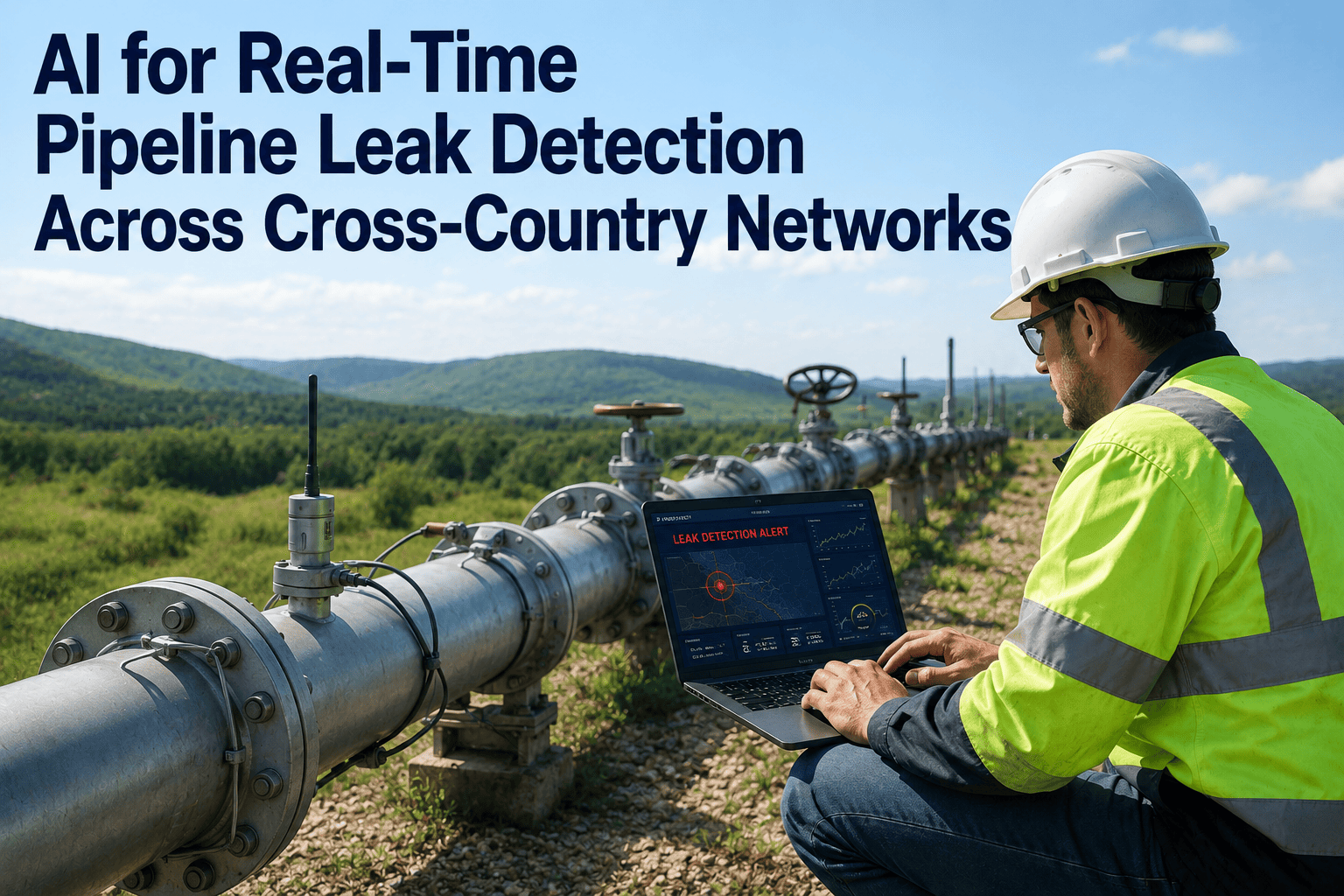
AI for Real-Time Pipeline Leak Detection Across Cross-Country Networks
Fuse SCADA flow balance, acoustic sensors, fiber optic distributed acoustic sensing, and satellite data into a single AI model built for sub-hour detection across networks spanning 1,000-plus miles.
A Billion-Dollar Detection Gap Across the US Pipeline Network
PHMSA data on pipeline incidents shows the annual cost of pipeline failures — property damage, product loss, environmental remediation, and regulatory penalties combined — running above seven billion dollars a year across the US network. A meaningful share of that cost traces back not to the failure itself, but to how long it took to detect and locate.
$7B+annual US pipeline failure cost tracked by PHMSA across property, product, and environmental impact
1-2%typical flow-rate threshold before a conventional mass balance system fires an alarm
Weeksthe reported gap between some releases beginning and third-party discovery on remote right-of-way segments
No Single Method Covers Everything
The Four Data Sources a Fused Detection Model Correlates
SCADA Flow and Pressure Balance
Continuous mass balance comparison catches larger leaks and ruptures reliably but is limited by instrument uncertainty on smaller or slow-developing leaks, and negative pressure wave analysis can flag ruptures almost immediately at intermediate points along the line.
Acoustic Sensing
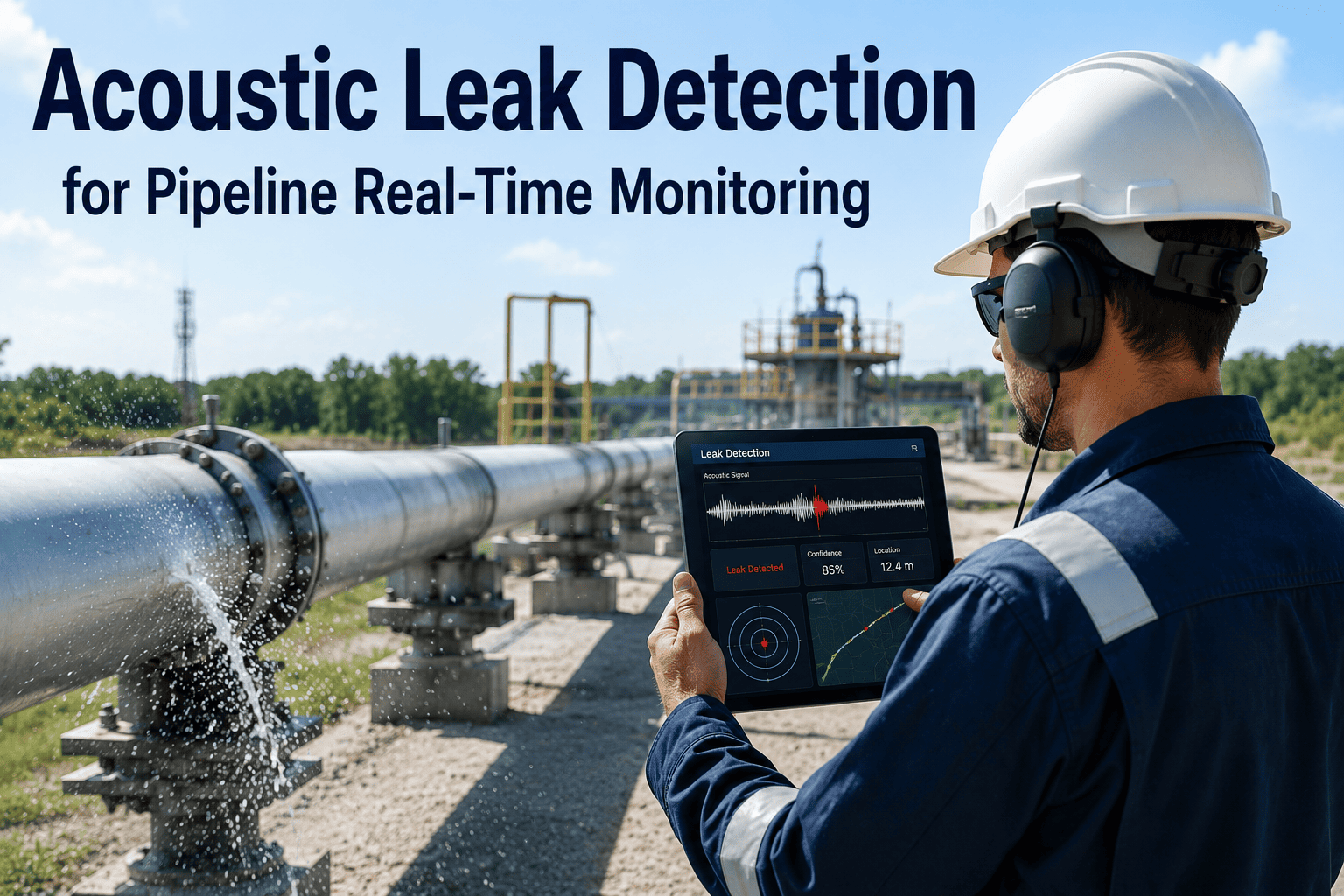
Escaping liquid or gas generates a specific high-frequency acoustic signature that trained algorithms can distinguish from ambient noise, offering strong sensitivity for smaller leaks that mass balance alone would miss.
Fiber Optic Distributed Acoustic Sensing
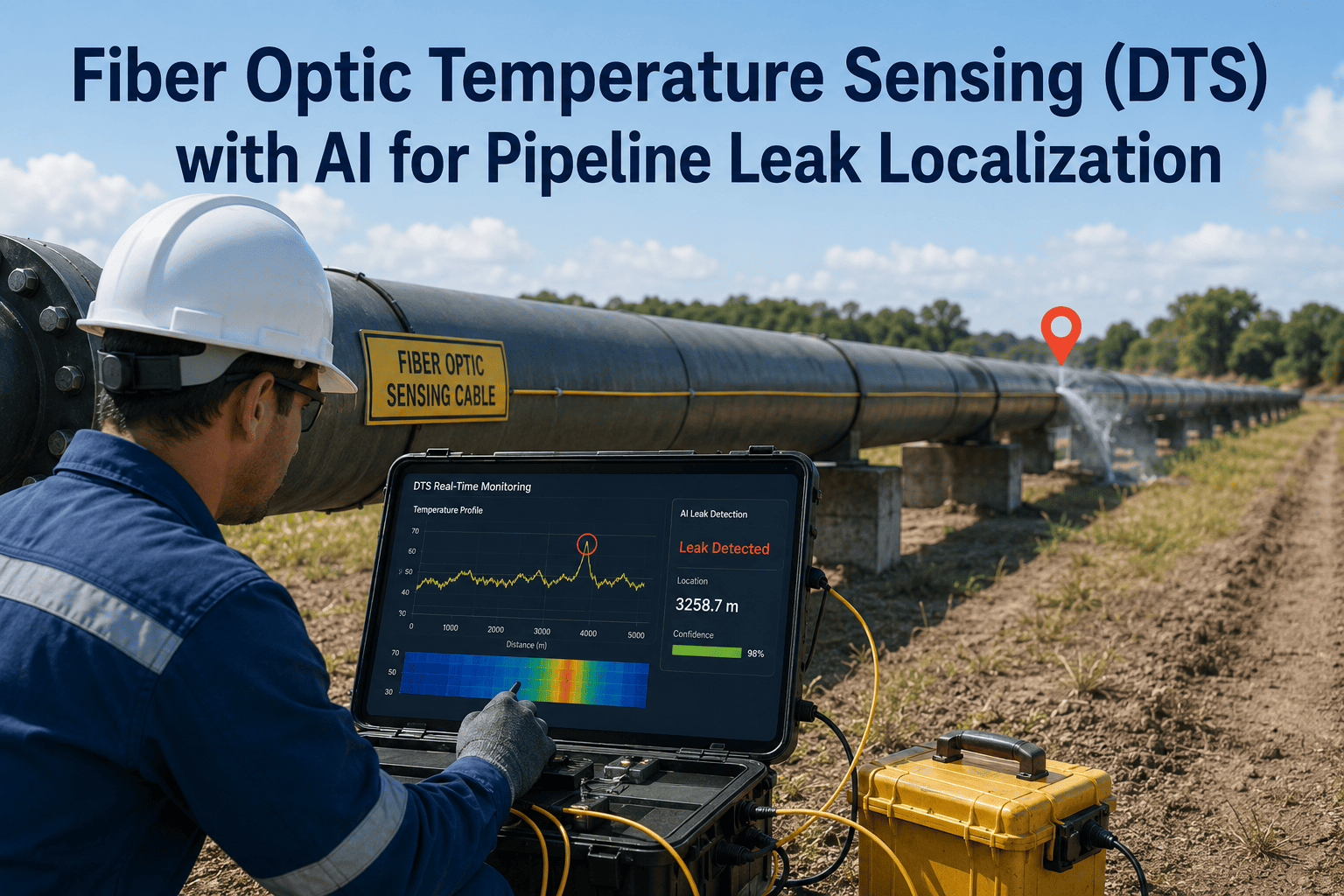
Where fiber already runs alongside the right-of-way for telecom or SCADA backhaul, distributed acoustic sensing provides continuous coverage along the entire route without discrete point sensors, also picking up third-party excavation activity before it becomes a strike.
Satellite and Aerial Imagery
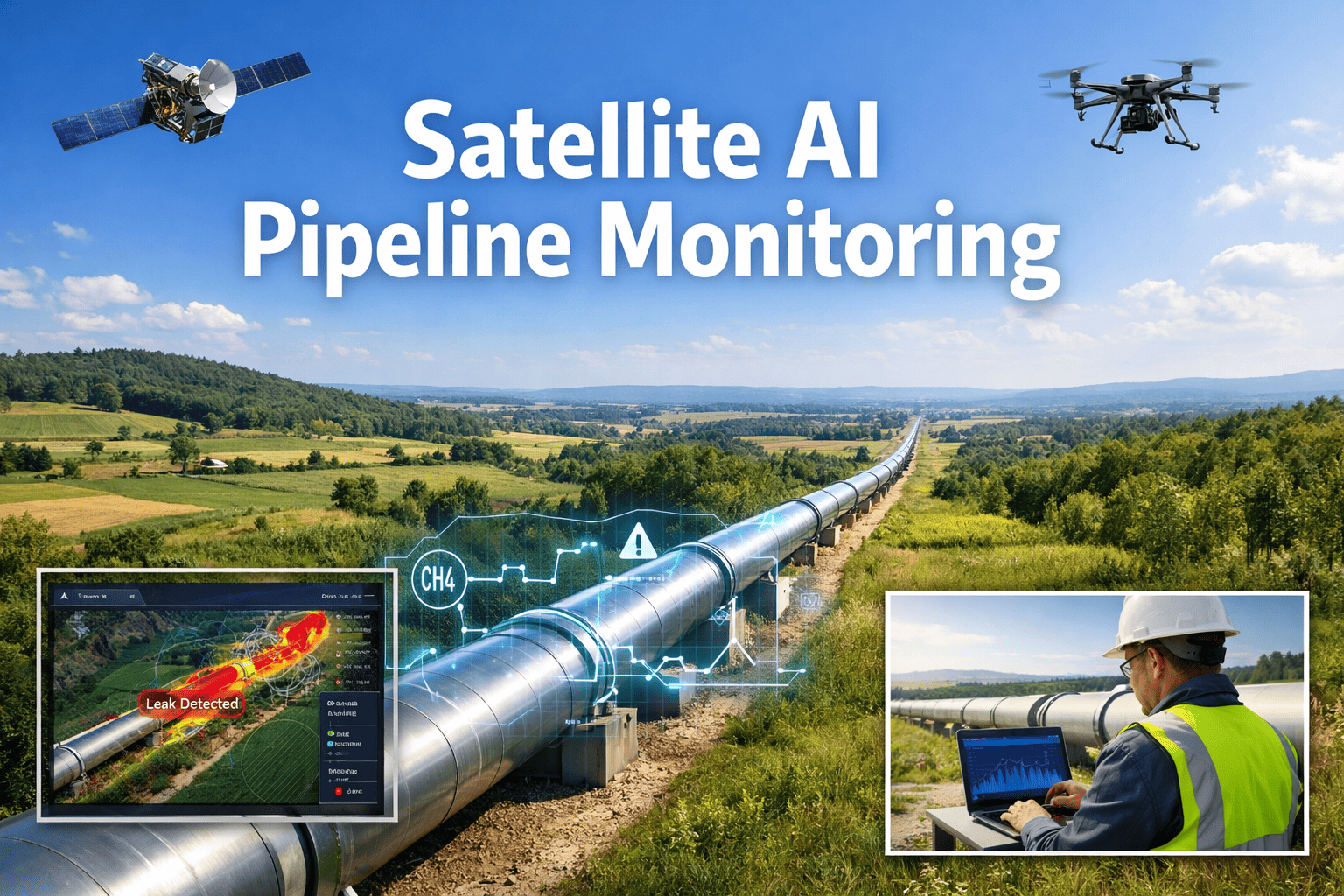
Hyperspectral and optical satellite passes cover vast, remote stretches of right-of-way that ground sensors cannot economically reach, catching larger spills, vegetation stress, or ground subsidence that may indicate a slow, underground release.
The Practical Difference
Single-Method Detection vs Fused AI Detection
| Leak Scenario | Single-Method (Mass Balance Only) | Fused AI Detection |
|---|
| Large-diameter rupture | Detected once flow imbalance crosses threshold | Cross-confirmed by pressure wave and acoustic signature within minutes |
| Small, slow leak below mass balance threshold | Frequently missed until visible surface impact appears | Flagged by acoustic or fiber signal well before flow imbalance is measurable |
| Remote right-of-way segment with no fiber | Relies on periodic aerial patrol only | Supplemented by satellite pass analysis between patrols |
| Third-party excavation near the line | Not detected until physical damage occurs | Flagged by DAS vibration signature before contact, where fiber coverage exists |
| False alarm rate | Higher when relying on a single noisy signal | Reduced by requiring cross-method correlation before escalation |
See Your Network Scored Against a Fused Model
iFactory Connects to Your Existing SCADA Historian First — No New Hardware Required to Start
A typical engagement begins by validating flow, pressure, and temperature data quality against your existing SCADA historian across priority segments, then layering in acoustic, fiber, and satellite sources where they already exist or where the risk profile justifies adding them.
Deployment Approach
How a Fused Detection Model Rolls Out Across a Long-Haul Network
Stage 1
SCADA Baseline and Segment Risk Ranking
Connect to the historian, validate data quality, and rank line segments by consequence area, age, and known integrity threats to prioritise where fusion adds the most value first.
Stage 2
Layer In Existing Acoustic and Fiber Sources
Wherever acoustic sensors or telecom fiber already run alongside the right-of-way, connect that data into the same alarm model rather than leaving it on a separate screen.
Stage 3
Add Satellite Coverage on Remote Segments
For right-of-way stretches without continuous ground sensing, incorporate periodic satellite pass analysis to close the gap between physical patrols.
Stage 4
Consolidate Into a Single Alarm Queue
All sources feed one prioritised alarm view for the control room, so operators respond to fewer, better-confirmed alerts instead of monitoring separate screens per detection method.
Measuring the Programme
KPIs That Show a Fused Detection Programme Is Working
Time to Detection
Target: under 60 minutes
Elapsed time between a simulated or real release beginning and a confirmed alarm reaching the control room.
False Alarm Rate
Target: reduced vs single-method baseline
Alarms requiring dispatch that turn out not to be a genuine leak, tracked against the rate before cross-method correlation was applied.
Location Accuracy
Target: within metres
Distance between the model's predicted leak location and the confirmed physical location, validated during test events and drills.
Right-of-Way Coverage
Target: 100% of priority segments
Percentage of consequence-ranked line segments with at least two independent detection methods feeding the fused model.
API 1130 and the PHMSA Valve and Rupture Rule have shifted the compliance question from whether a leak detection programme exists to whether it actually performs, and that distinction matters because a mass balance system that technically satisfies the letter of a regulation can still miss a slow leak for weeks on a remote segment. The value of fusing multiple detection methods together is not redundancy for its own sake — it is that each method's blind spot is a different method's strength. Mass balance is blind to small, slow leaks that acoustic sensing catches easily, while acoustic and fiber sensing are blind to the vast stretches of remote right-of-way that only a satellite pass will ever cover economically. Put them in one model instead of three separate screens, and the blind spots mostly close.
Adaeze Kowalski-Ibrahim
Pipeline Integrity Manager · 18 years in midstream liquids and gas transmission · API 1130 programme lead for a multi-state cross-country pipeline network
Operations Team Questions
AI Pipeline Leak Detection — Frequently Asked
Do we need to install new fiber optic cable to benefit from distributed acoustic sensing?
Not necessarily — many pipelines already have fiber optic cable running alongside the route for telecommunications or SCADA backhaul purposes, and that existing fiber can typically be used for distributed acoustic sensing without any new trenching or excavation. Where no fiber exists along a given segment, a dedicated sensing cable can be installed during a routine maintenance window or scheduled excavation to minimise additional disruption, and many operators phase this in on the highest-risk segments first rather than the full network at once.
Book a session with our team to review what already runs along your right-of-way.
Does AI detection improve performance on pipelines that only have SCADA data available?
Yes — even without acoustic, fiber, or satellite data layered in, AI improves on conventional mass balance detection through better wave analysis and statistical modelling of the existing flow and pressure signal, tightening the threshold at which a genuine leak can be distinguished from normal operating noise. This makes SCADA-only pipelines a reasonable starting point for a phased rollout rather than a reason to wait until additional sensing is in place.
How does this system relate to our existing computational pipeline monitoring (CPM) software?
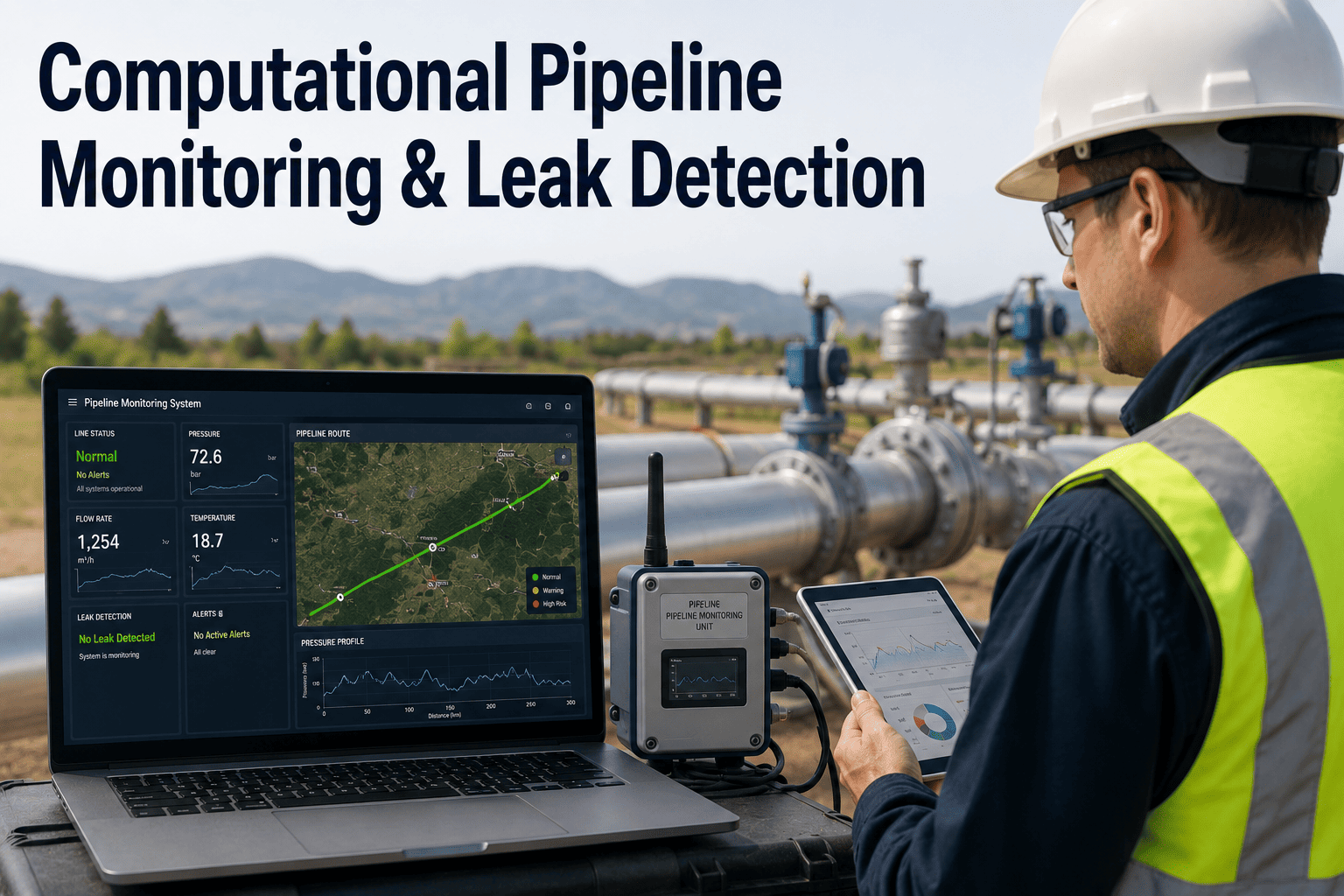
A fused AI detection model is designed to run alongside your CPM system rather than replace it — typically by subscribing to existing CPM and SCADA alarms, adding detection from DAS, acoustic, or satellite sources where available, and consolidating everything into a single alarm queue so operators see fewer, better-confirmed alerts. CPM continues to operate as the official compliance system of record, while the fused model adds an additional detection and correlation layer on top.
Contact our support team to review how this integrates with your current CPM vendor.
What does a typical deployment timeline look like for a network our size?
For a pipeline segment with existing fiber already in place, initial monitoring can often begin within a few weeks of connecting the interrogation unit and calibrating the classification model against that specific segment's baseline noise profile, with SCADA-based detection typically live even faster since it uses data already flowing into the historian. Where new fiber needs to be installed, the timeline depends primarily on right-of-way access and excavation scheduling rather than on the sensing technology itself, and network-wide rollouts are generally phased by segment risk ranking rather than deployed all at once.
How does the system avoid flooding the control room with false alarms from unrelated activity like traffic or weather?
AI pattern recognition is trained to distinguish the specific acoustic and thermal signature of a genuine leak from ambient noise sources such as traffic, weather, and nearby construction, which make up the overwhelming majority of raw signal events on any given day along a right-of-way. Flagged events also carry a confidence score and classification, so control room operators can prioritise response rather than chasing every vibration on the line, and cross-method correlation further reduces false positives by requiring more than one detection source to agree before an alarm escalates.
Book a demo to see false alarm reduction modelled against your own segment history.
Would You Have Caught Your Last Reportable Incident Earlier?
Score Your Own SCADA History Against a Fused Detection Model
iFactory connects to your existing SCADA historian, layers in acoustic, fiber, and satellite sources where available, and consolidates everything into one prioritised alarm queue for the control room.