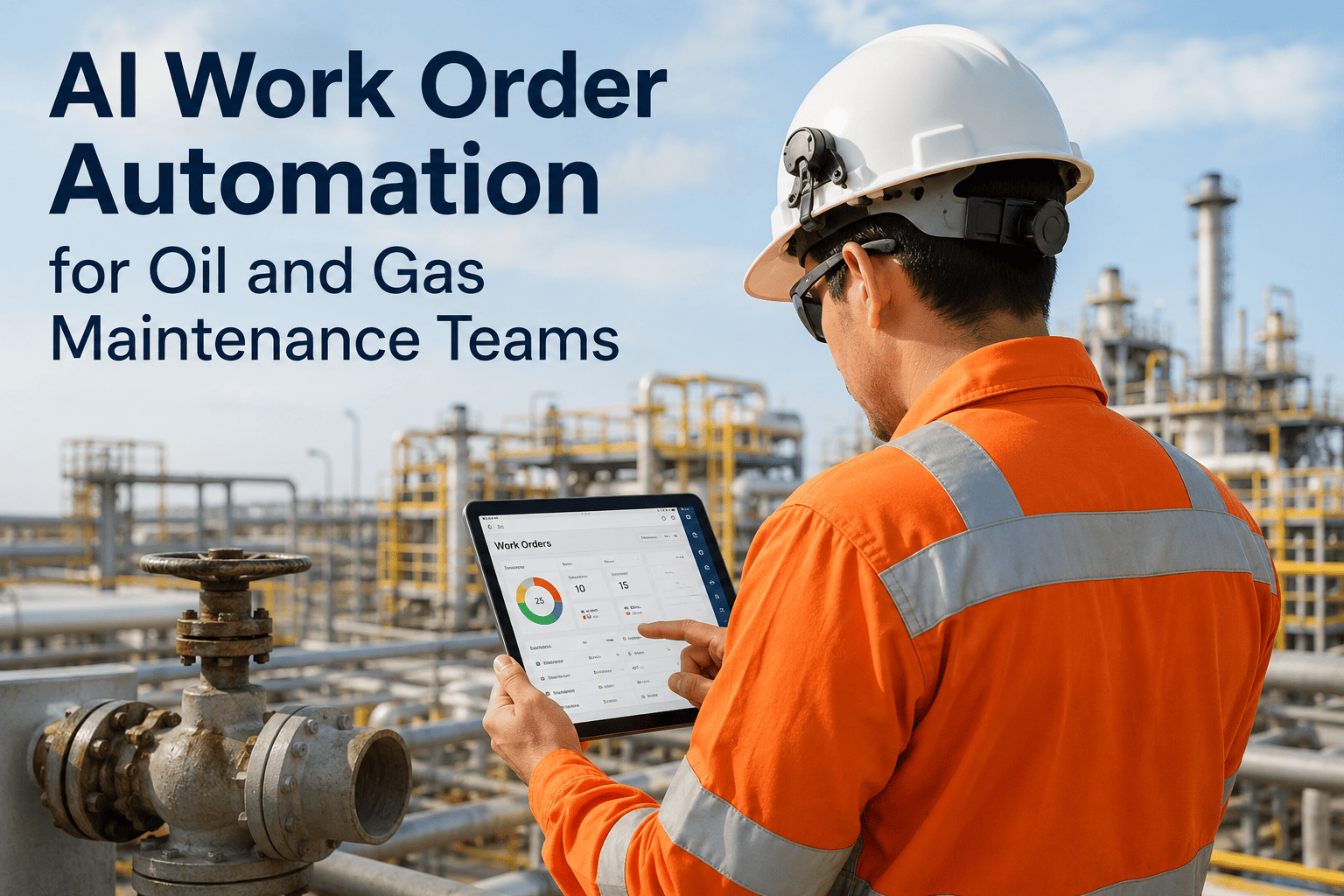
Oil and gas maintenance teams at refineries and oilfield operations generate thousands of work orders annually from equipment inspections, condition monitoring alerts, vibration analysis findings, and process anomaly detections. The challenge is not generating maintenance work — it is converting the flood of signals from distributed assets into correctly prioritized, properly scoped, and promptly assigned work orders that reach the right technician at the right time. Manual work order creation from inspection findings typically takes 15 to 45 minutes per order, introduces inconsistent prioritization across shifts and facilities, and creates backlogs that delay critical maintenance on high-risk equipment. AI work order automation eliminates these bottlenecks by ingesting asset alerts, inspection data, and risk scores from predictive models, then generating prioritized and pre-populated work orders directly into the plant CMMS or EAM system. Book a Demo to see how iFactory automates work order creation and prioritization for oil and gas maintenance teams.
From Raw Asset Signals to Prioritized Maintenance Work Orders Without Manual Intervention
iFactory's AI work order engine converts equipment alerts, inspection findings, and predictive risk scores into correctly classified, prioritized, and pre-scoped maintenance work orders for refinery and oilfield maintenance teams.
Manual Work Order Creation Is the Hidden Bottleneck in Oil and Gas Maintenance Operations
When a refinery inspector identifies a bearing defect during a weekly route or a vibration sensor on a compressor exceeds its alarm threshold, the finding must be translated into a maintenance work order. In most oil and gas facilities, this translation is manual — the inspector writes a finding in a form or mobile app, a maintenance planner reviews it, determines the priority and scope, enters the work order into the CMMS, and assigns it to a craft. Each step introduces delay, inconsistency, and the risk that a critical finding gets buried in a backlog of lower-priority orders.
Four-Stage AI Work Order Engine — From Signal Detection to CMMS Integration
iFactory's AI work order automation follows a four-stage pipeline that transforms raw maintenance signals from oil and gas assets into fully structured, prioritized, and integrated work orders. Each stage is automated, auditable, and configurable to the specific equipment types, risk frameworks, and CMMS requirements of each facility.
Signal Ingestion
The AI engine continuously receives data from vibration monitoring systems, SCADA platforms, inspection management applications, condition monitoring sensors, and process historians across the refinery or oilfield. Each incoming signal is parsed, validated, and associated with the specific asset tag, location, and monitoring point in the asset registry.
Risk Classification
Each validated signal is evaluated against the facility's risk framework — the AI considers equipment criticality ranking, failure mode probability from historical data, consequence severity for safety and production, and current operating context. The output is a quantitative risk score between 0 and 100 that determines the work order priority level.
Order Generation
The AI generates a complete work order with pre-populated fields including asset identification, failure description, recommended task scope based on the failure mode library, required parts from the bill of materials, estimated labor hours, required permits and safety procedures, and the priority classification from the risk scoring stage.
CMMS Integration
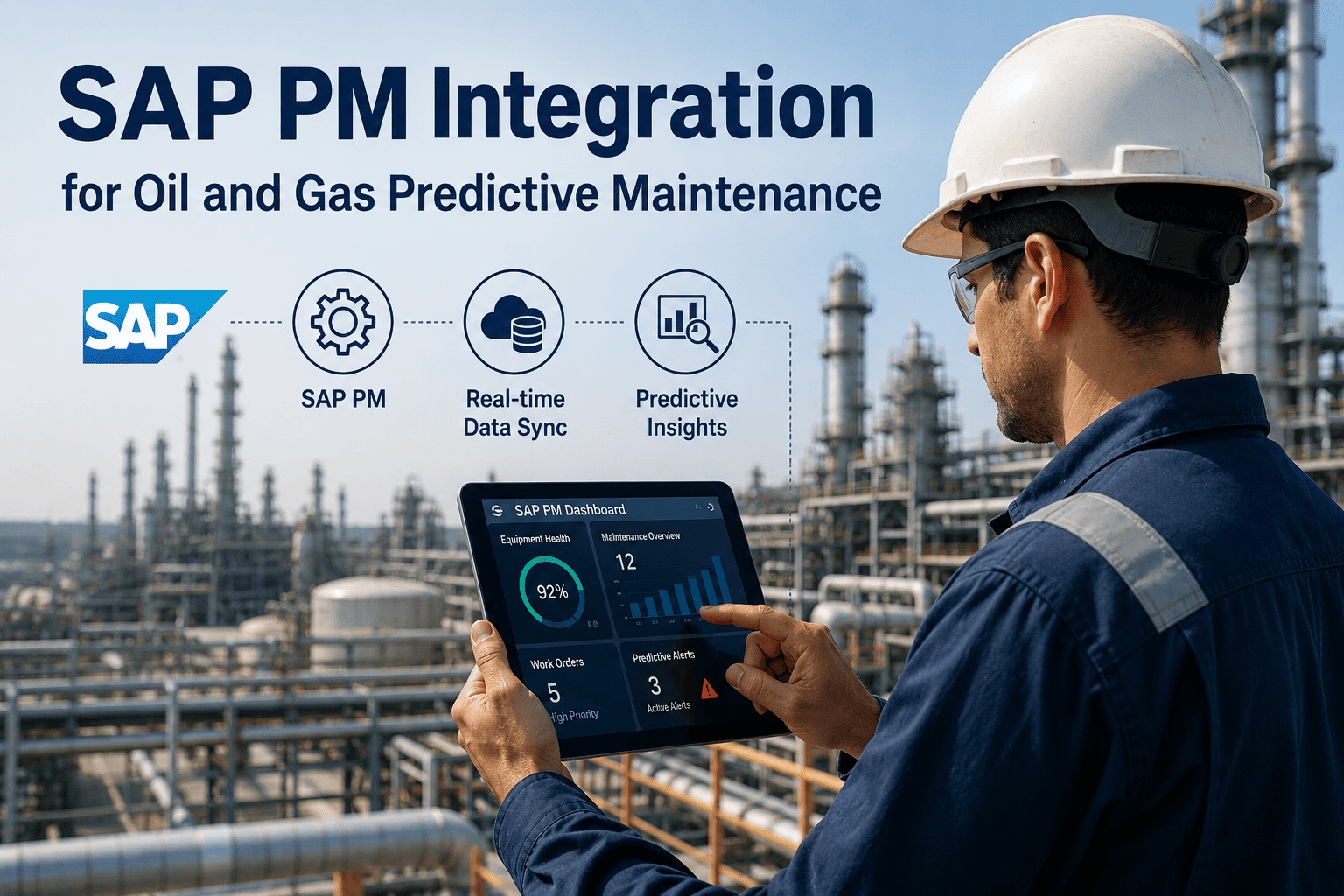
The completed work order is transmitted to the facility's CMMS or EAM system through a validated API integration — SAP PM, IBM Maximo, Infor EAM, or other platforms. The work order appears in the maintenance queue with all fields populated, assigned to the appropriate craft and supervisor based on workload balancing rules and technician qualifications.
AI Risk Scoring Translates Asset Data Into Work Order Priority Levels
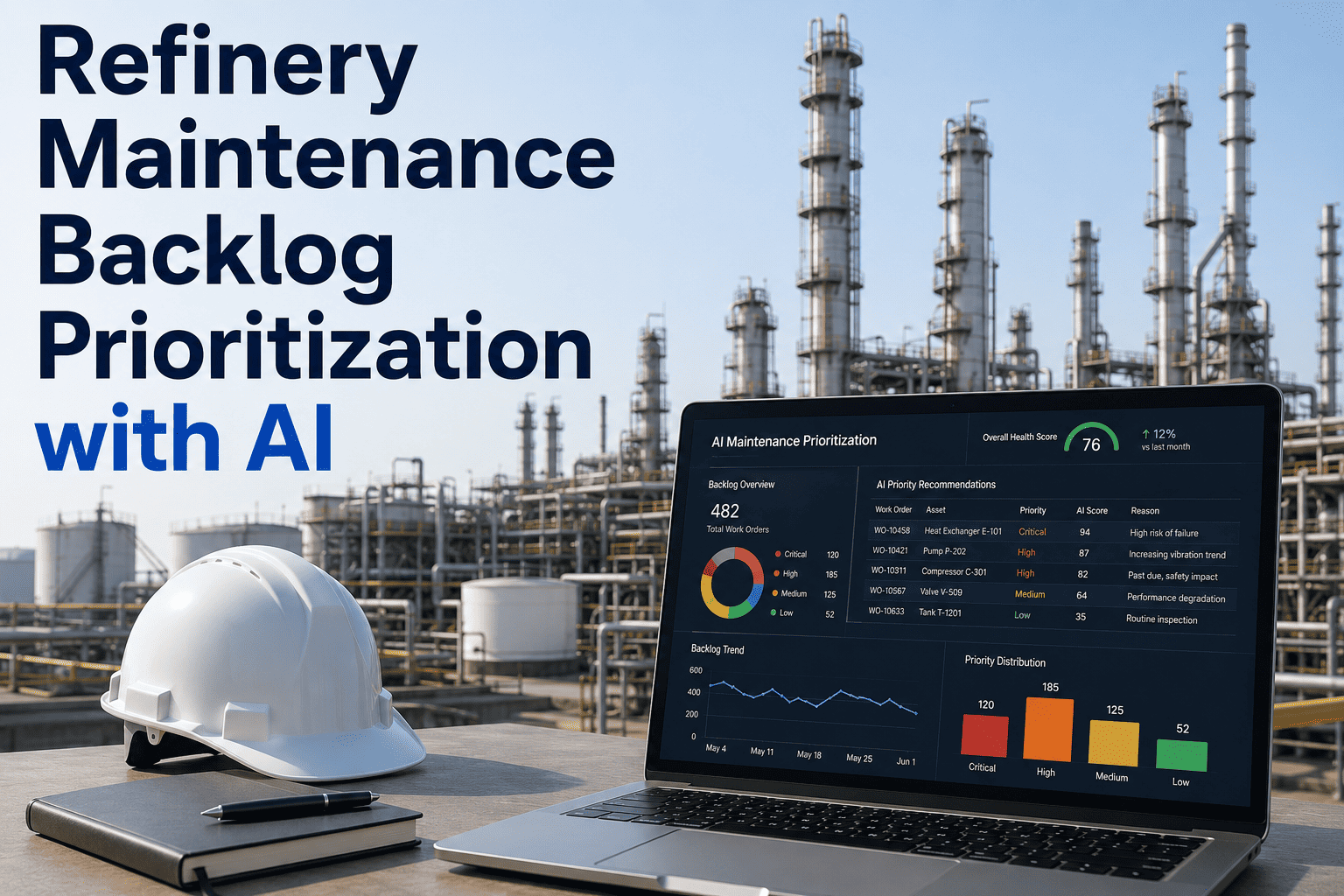
iFactory's risk scoring model evaluates each incoming maintenance signal against multiple dimensions to assign a priority level that reflects the actual operational risk — not just the inspector's subjective judgment. The four priority levels below represent the standard framework used in oil and gas AI work order deployments, though the thresholds and criteria are fully configurable for each facility.
Work Order Automation Requirements — Refinery Operations vs Upstream Oilfield Operations
While the AI work order engine operates on the same core pipeline for both refinery and oilfield deployments, the data sources, work order volumes, integration requirements, and compliance obligations differ significantly between downstream and upstream operations. The table below outlines the key differences that iFactory's deployment team configures for each operational context.
| Dimension | Refinery Maintenance | Oilfield Maintenance |
|---|---|---|
| Primary Work Order Sources | Fixed equipment inspections, CEMS compliance alerts, process unit turnaround findings, rotating equipment condition monitoring, reliability-centered maintenance schedules | Wellhead inspection rounds, pipeline pigging findings, SCADA alarm thresholds, artificial lift system monitoring, facility integrity management inspections |
| Typical Monthly Volume | 800-2,500 work orders per month at a mid-size refinery processing 100,000-300,000 barrels per day | 200-1,200 work orders per month across a production field with 50-200 producing wells and associated surface facilities |
| Priority Distribution | 5-8% emergency, 15-22% urgent, 45-55% standard, 20-30% deferred or scheduled | 3-6% emergency, 12-18% urgent, 40-50% standard, 28-40% deferred or scheduled |
| CMMS Integration Platform | SAP PM most common, IBM Maximo, Infor EAM — typically enterprise-level deployment with standardized work order types and approval workflows | IBM Maximo most common, SAP PM, or field-specific maintenance management systems — often requires mobile-first integration for remote locations |
| Key Compliance Driver | PSM and RMP compliance, OSHA PSM standard, API 580/581 risk-based inspection, EPA Title V permit conditions, process safety alarm management | PHMSA pipeline integrity, BSEE safety regulations, state oil and gas commission requirements, EPA NPDES permits for produced water discharge |
| AI Model Training Data | 5-10 years of CMMS work order history, equipment failure records, process data historians, inspection databases, MOC records | 3-8 years of work order history, well failure databases, production decline curves, SCADA alarm histories, pipeline inspection records |
Stop Converting Inspection Findings Into Work Orders Manually — Let AI Do It in Seconds
Every inspection finding, sensor alert, and predictive maintenance flag at your refinery or oilfield operation represents a potential work order that currently requires manual review, classification, and entry. iFactory's AI work order engine automates the entire pipeline from signal to scheduled maintenance task. Book a demo to see the AI work order engine processing live oil and gas maintenance data.
CMMS and EAM Integration — How AI Work Orders Flow Into Your Existing Maintenance Systems
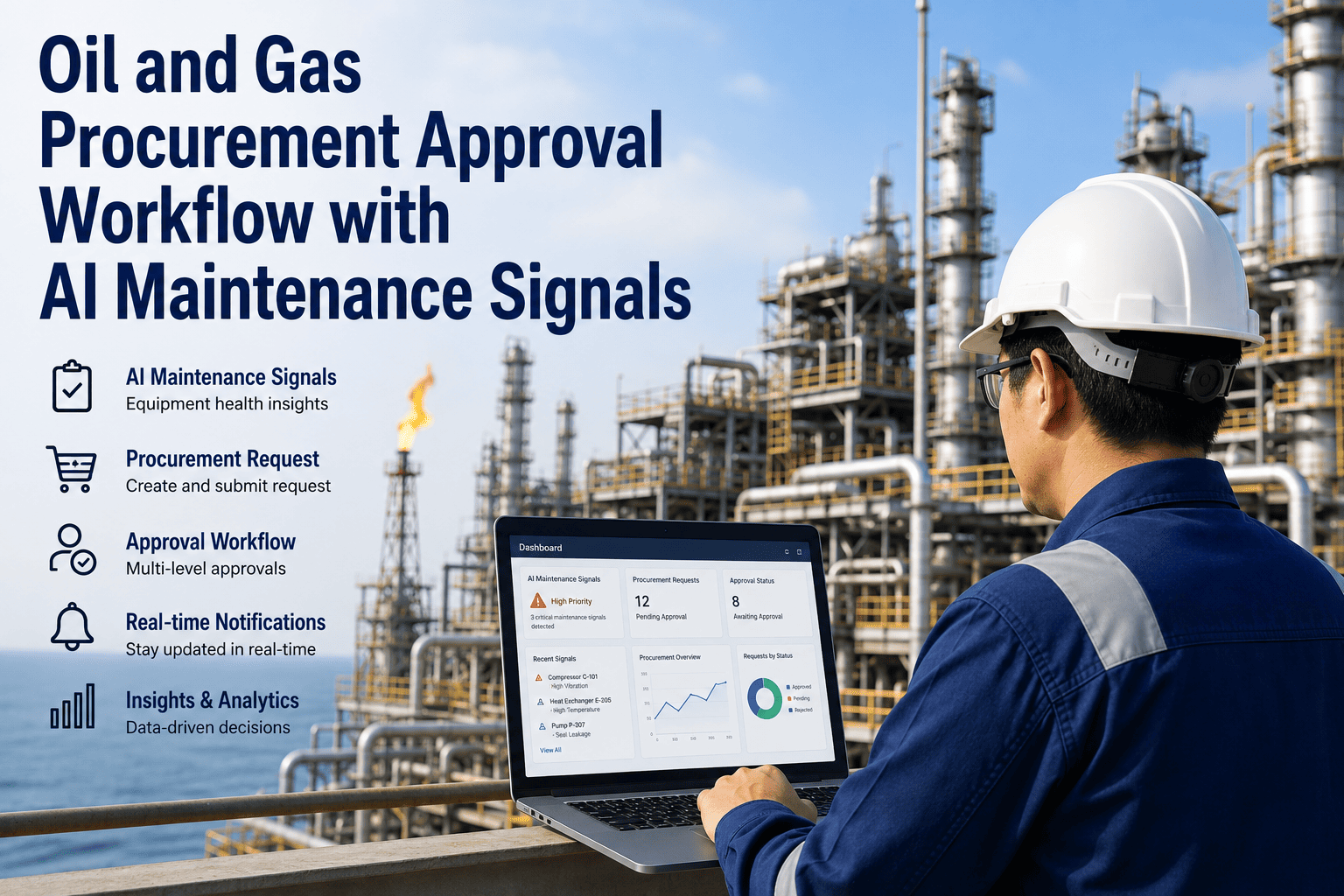
iFactory's AI work order engine does not replace your CMMS or EAM system — it extends it by adding an intelligent automation layer that sits between your asset monitoring systems and your maintenance execution platform. The integration architecture connects four system layers, each handling a distinct function in the work order automation pipeline.
Vibration analysis platforms, SCADA systems, distributed control systems, online condition monitoring sensors, infrared thermography databases, and lubrication analysis systems. iFactory connects to these data sources through standard industrial protocols and APIs, ingesting equipment health data at configured intervals or on alarm-triggered events.
Mobile inspection applications, rounds tracking systems, reliability-centered maintenance analysis outputs, API 580/581 risk-based inspection findings, turnaround inspection reports, and MOC documentation. This layer provides the structured and unstructured text data that the AI engine classifies and converts into work order scope descriptions.
The core AI engine performs signal validation, equipment identification, failure mode classification, risk scoring against the facility's criticality framework, work order template matching from the failure mode library, bill of materials retrieval, labor estimation, and safety procedure assignment. The engine produces a complete, pre-populated work order ready for CMMS submission.
The completed work order is transmitted to SAP PM, IBM Maximo, Infor EAM, or other CMMS platforms through validated API integrations. The work order appears in the maintenance queue with all fields populated, including asset, description, priority, task list, parts list, permits required, and craft assignment based on qualification matching and workload balancing.
Quantified Results From AI Work Order Automation Deployments in Oil and Gas
The following metrics represent aggregated outcomes from iFactory's AI work order automation deployments across refinery and oilfield maintenance operations over the past three years. Each metric reflects a before-and-after comparison measured at the individual facility level and validated by the plant's maintenance and reliability leadership.
Common Questions About AI Work Order Automation for Oil and Gas Maintenance Teams
Your Maintenance Team Should Be Executing Work Orders — Not Manually Creating Them From Inspection Reports
iFactory's AI work order automation converts the signals your oil and gas assets are already generating into correctly prioritized, fully scoped, and CMMS-integrated maintenance work orders without manual intervention. Book a demo and see the AI engine processing your facility's actual maintenance data in a live environment.