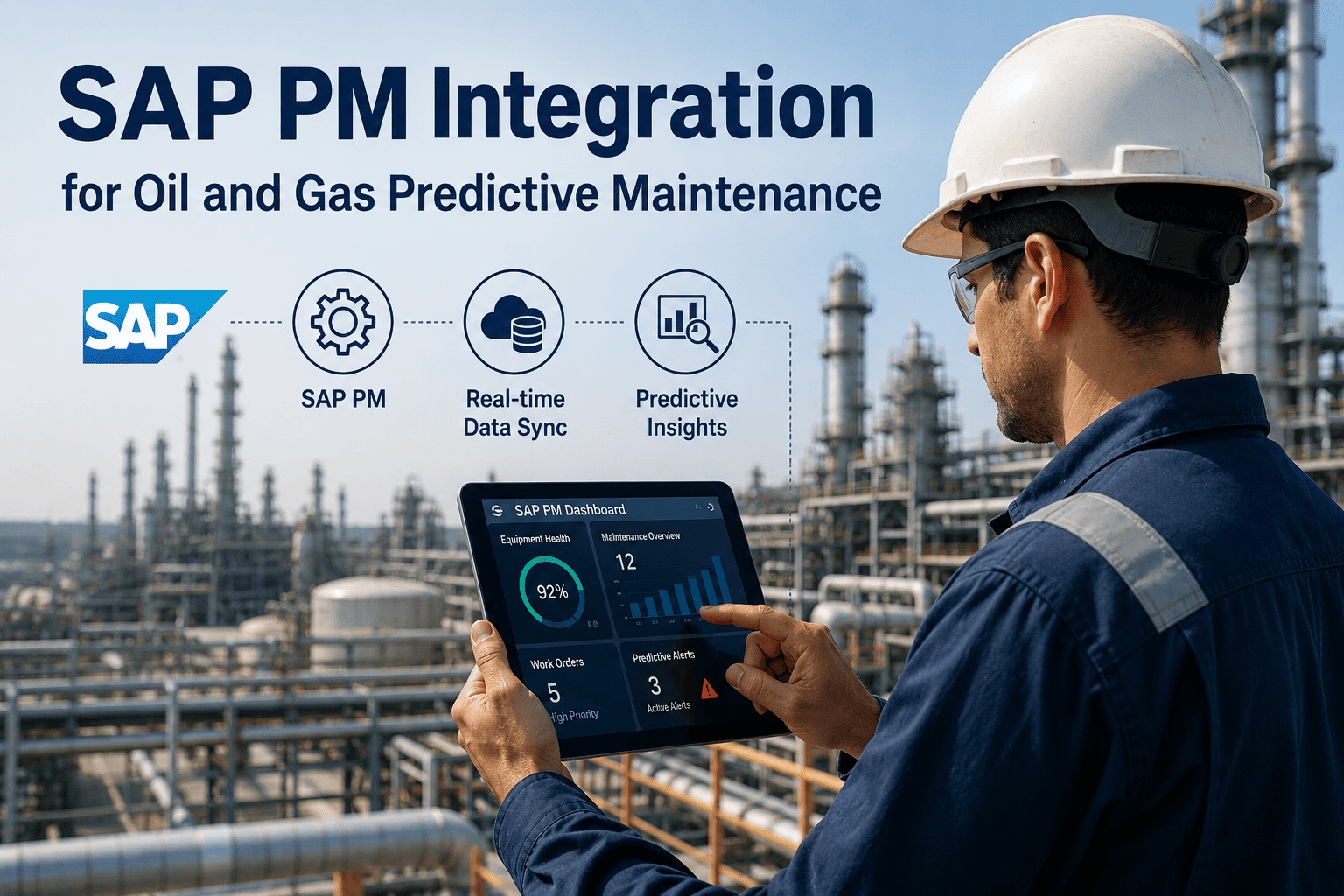
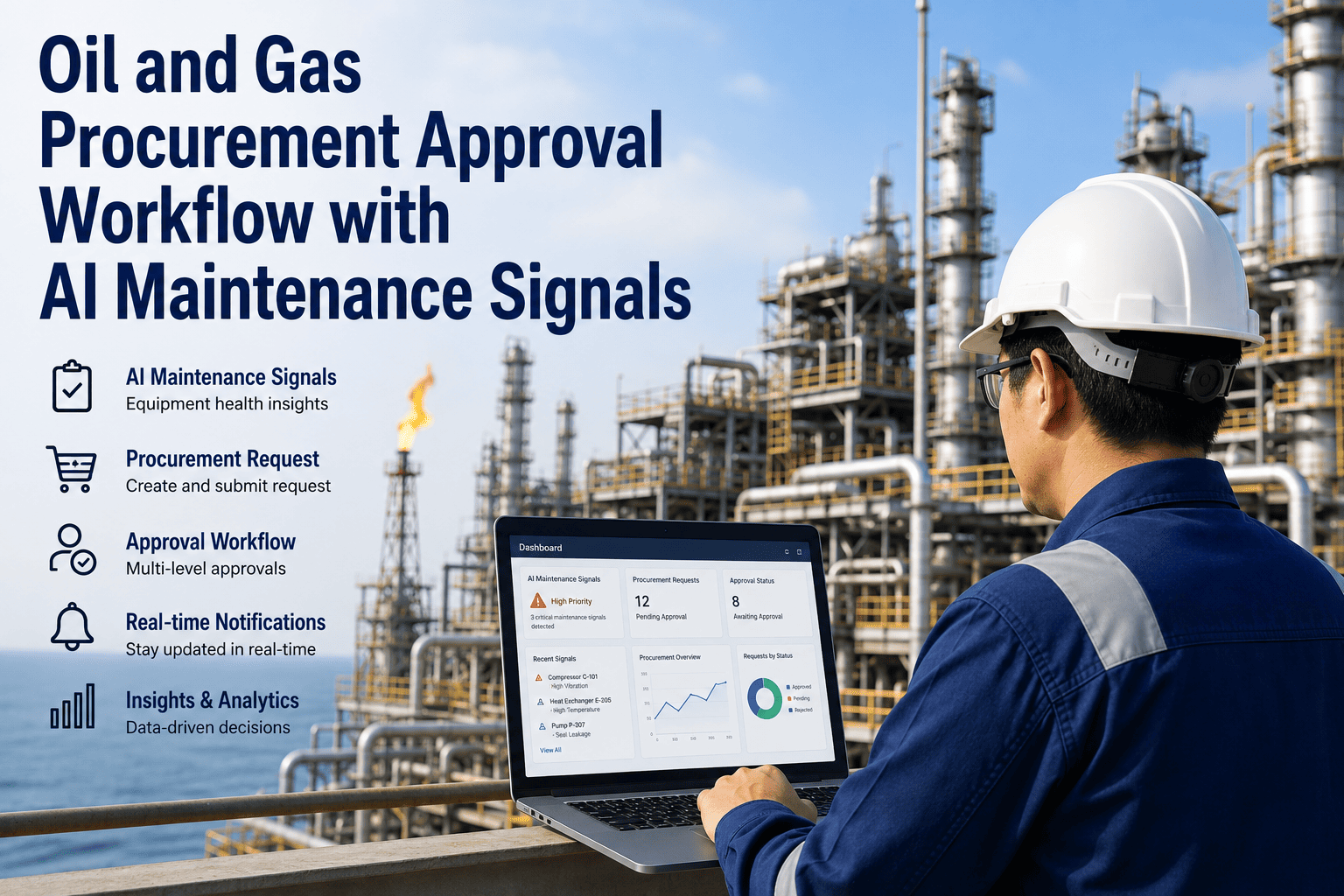
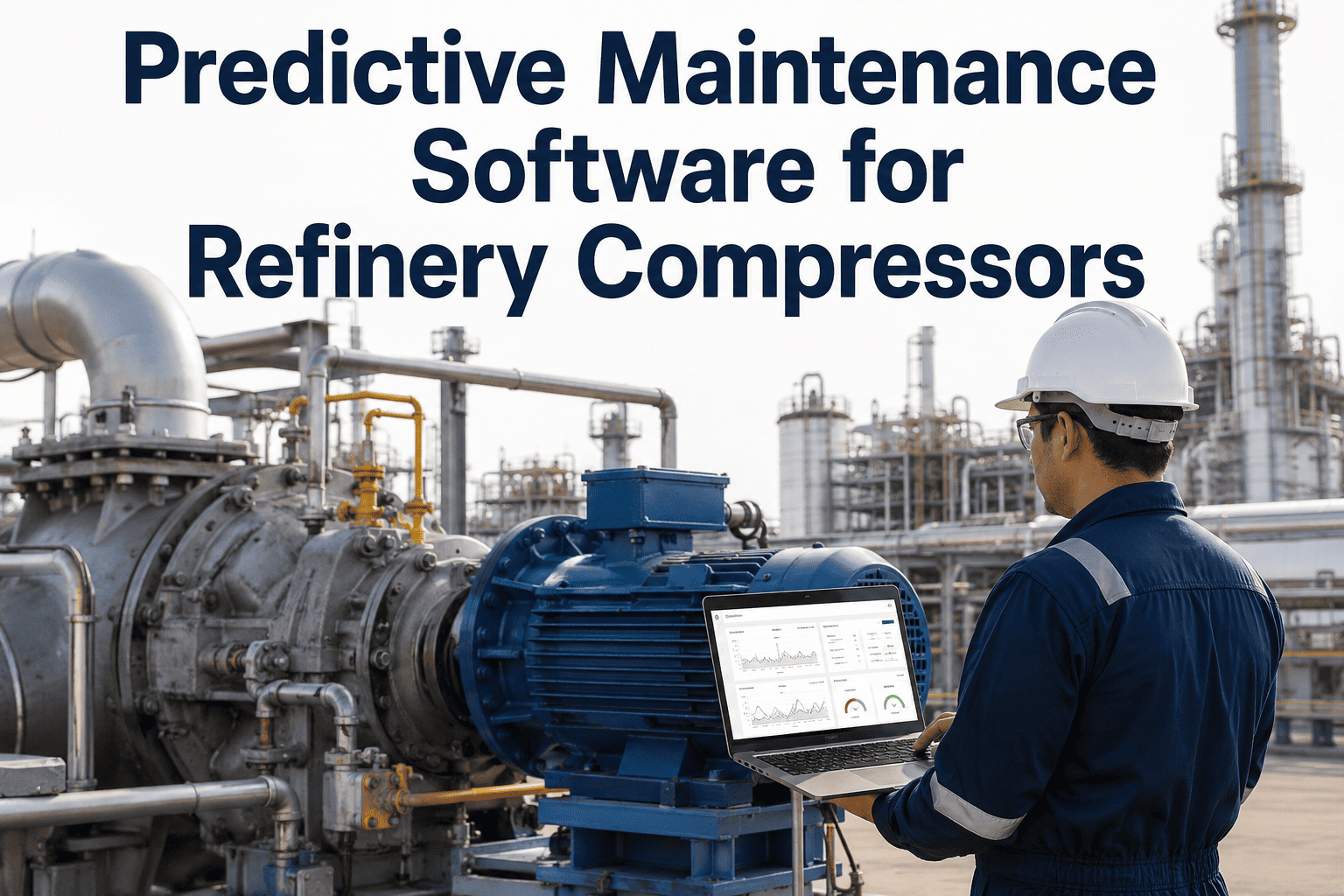
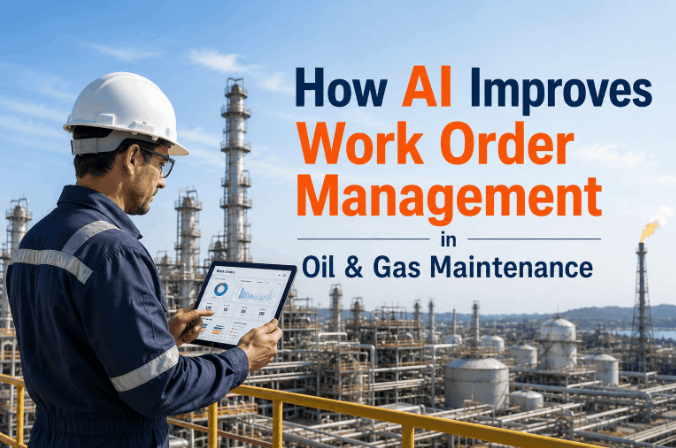
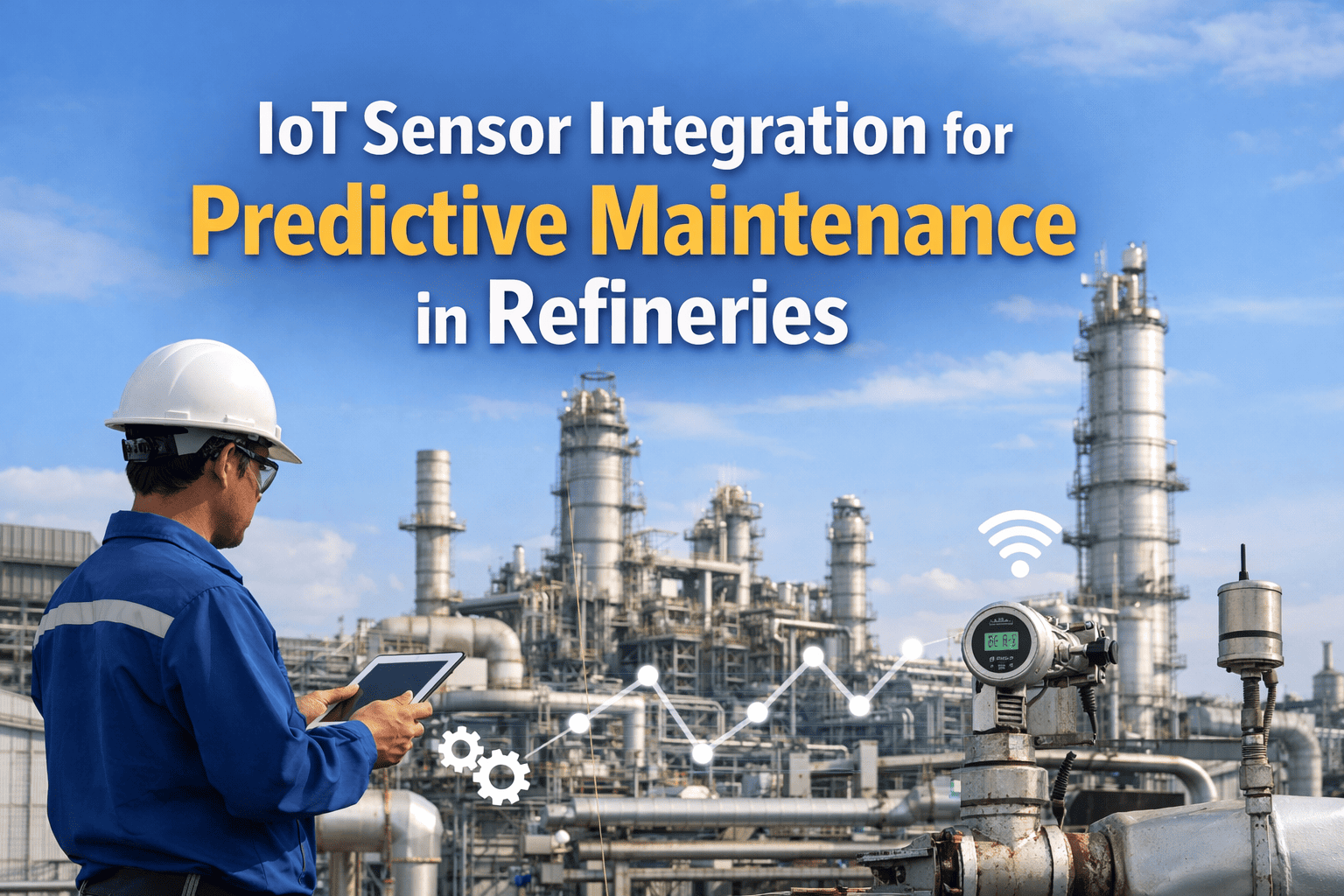
Refinery reliability teams have watched the same failure pattern repeat for years: a vibration sensor flags a bearing anomaly, an analyst writes a report, and a maintenance planner opens SAP PM three days later to finally create the work order. That gap between detection and action is where compressors seize, pumps cavitate, and routine wear turns into an unplanned shutdown. Operators who run SAP PM as their system of record are closing that gap by feeding condition monitoring data straight into the same work order engine planners already use every shift, and teams that want to see this connection working against their own asset list can book a demo before the next turnaround cycle.
SAP PM Integration · Oil & Gas Reliability
Turn SAP PM Into the Brain of Your Predictive Maintenance Program
Connect refinery sensor data, condition alerts, and inspection findings directly into SAP PM so work orders write themselves before equipment fails.
58%
Reduction in unplanned equipment failures after sensor-to-SAP PM integration
92%
Failure prediction accuracy achieved after a year of closed-loop learning
18%
Emergency work order ratio once teams shift from reactive to planned work
The Problem Isn't SAP PM. It's Everything Around It.
SAP PM is built to run a disciplined work order process, and most refineries trust it as the single source of maintenance truth. The trouble is that the sensor data proving an asset is degrading almost never lives inside SAP. Vibration readings sit in a condition monitoring database, process trends sit in a historian, and inspection notes sit on a clipboard or a spreadsheet until someone manually keys them in. Every handoff between those systems adds delay, and delay is exactly what predictive maintenance is supposed to eliminate.
Without Integration
Vibration analyst spots a bearing spike and writes a report
Report gets emailed to a planner, sometimes a day or two later
Planner manually opens SAP PM and drafts a work order from memory
Spectral data and failure context never make it into the work order
With Integration
Sensor crosses a degradation threshold set against ISO baselines
A work order is drafted automatically inside SAP PM within minutes
Vibration spectra, trend charts, and root cause attach automatically
Planner reviews and releases instead of building the order from scratch
How Sensor Data Becomes a SAP PM Work Order
The integration is a closed loop, not a one-way data dump. Each stage feeds the next so the system gets more accurate the longer it runs, and every automatically generated order still passes through a planner before it reaches the field.
1
Sensors Stream Continuous Condition Data
Vibration, temperature, ultrasonic, and corrosion sensors on pumps, compressors, and heat exchangers push readings to the cloud around the clock, covering both critical rotating equipment and the balance-of-plant assets that rarely get monitored.
2
AI Compares Readings Against Historical Baselines
Machine learning models trained on the asset's own failure history and ISO 14224 equipment classes flag deviations 15 to 45 days before a threshold would trigger a shutdown, instead of reacting after the fact.
3
SAP PM Receives an Auto-Drafted Work Order
A bidirectional API connection creates the notification and work order directly in SAP PM, checks MRO parts availability, and attaches the condition data the planner needs to make a release decision.
4
Technicians Work From Mobile With Full Context
Field crews open the order on a mobile device and see the failure trend, recommended repair, and safety notes instead of a blank text field, cutting diagnosis time on arrival.
5
Completion Data Feeds the Model Back
Actual repair outcomes flow back from SAP PM into the prediction engine, which is why accuracy climbs from the high seventies to the low nineties over roughly a year of operation.
What Changes Once the Loop Closes
These are the shifts plants report most consistently once condition data and SAP PM stop living in separate worlds, drawn from documented refinery and upstream deployments running the integration for a full maintenance cycle.
Prediction Accuracy After 12 Months
Unplanned Downtime Reduction
Unnecessary Preventive Tasks Eliminated
Extended Asset Life vs Age-Based Replacement
Emergency Work Orders Within First 90 Days
SAP PM Alone vs. SAP PM Connected to Predictive Data
The work order screen looks the same either way. What's different is everything that happens before a planner ever opens it.
| Workflow Step |
SAP PM Running Standalone |
SAP PM Connected to Sensor Data |
| Failure detection |
Depends on quarterly or annual manual inspection rounds |
Continuous monitoring flags degradation 15 to 45 days early |
| Work order creation |
Planner manually drafts scope from a report or memory |
Order auto-drafted with attached spectral and trend data |
| Parts availability |
Checked separately after the order is already open |
Verified automatically before the order reaches the planner |
| Balance-of-plant coverage |
Smaller pumps and compressors are usually skipped |
Tier 2 and Tier 3 assets get the same scrutiny as main units |
| Model accuracy over time |
Static, no feedback loop from completed work orders |
Improves continuously as completed orders retrain the model |
Keeping SAP Clean Core Compliant While Adding AI
The integration only works if it respects how SAP itself expects to be run. A stripped-down interface that field technicians won't use destroys data quality just as fast as a missing sensor does, so the rollout has to solve both problems at once instead of trading one for the other.
Time-to-SAP Matters as Much as Model Accuracy
A prediction is only useful if the underlying condition report reaches SAP PM in near real time. Teams should measure and actively reduce the lag between a field observation and its arrival in the system, since a model reacting to week-old data cannot prevent a failure that is already underway.
Field Data Has to Meet a Standard Before It's Saved
Structured data capture that enforces a standard like ISO 14224 before a reading is synced to SAP PM keeps the asset register consistent across every rig, refinery, and pipeline segment feeding the model.
Offline-Capable Mobile Tools Protect Data Continuity
Technicians working in areas with poor connectivity still need to log inspections and completions the moment work finishes, with that data queued for automatic sync rather than lost or re-keyed later.
Clean Core Principles Keep the S/4HANA Core Upgradeable
Layering AI intelligence on top of SAP rather than customizing the core keeps future upgrades straightforward and avoids the technical debt that turns a clean SAP environment into a fragile one.
Every day this data stays disconnected is a day your planners are drafting work orders blind. If your SAP PM system is still waiting on emailed reports and manual entries, the delay between detection and action is costing more than the integration would.
Field Perspective
Most refineries already own the pieces they need. They have SAP PM, they have SCADA and historian data, and often they already have vibration sensors on the assets that matter most. What's missing is the connective layer that turns a sensor reading into a work order without a person keying it in by hand. The moment that handoff becomes automatic, planners stop chasing paperwork and start reviewing recommendations, which is a completely different job. That shift is where the real reliability gain comes from, not from any single new sensor.
Senior Reliability Engineer — Downstream Refining, 16+ years in EAM and CMMS integration
What a Rollout Actually Looks Like
Most operators do not connect every asset on day one. A staged rollout lets the planning team trust the data before it scales across the site.
Weeks 1-2
Critical rotating equipment is mapped against ISO 14224 asset classes and 8 to 12 pilot assets are selected for the first connection.
Weeks 3-4
API connectors link the sensor platform to SAP PM, work order auto-generation rules are configured, and parts availability checks are wired in.
Days 30-60
First predictive interventions start appearing as auto-drafted work orders, giving the planning team a real comparison against past reactive work.
Days 60-90
Coverage expands to the wider critical asset list and the emergency work order ratio typically begins its steepest drop.
Months 6-12
The model retrains on a full cycle of completed work orders, pushing prediction accuracy from the high seventies toward the low nineties.
Frequently Asked Questions
Does this integration replace SAP PM or sit alongside it?
It sits alongside SAP PM rather than replacing it. SAP PM stays the system of record for work orders, asset history, and planner approvals, while the integration layer feeds it condition data through a bidirectional API connection. Planners keep working inside the same SAP screens they already know, except the notifications and work orders arrive pre-populated with sensor context instead of a blank scope field.
Book a demo to see the SAP PM screen with an auto-generated order side by side with a manual one.
What kind of equipment can actually be connected first?
Rotating equipment such as pumps, compressors, and electric drives is the strongest starting point because the failure signatures are well understood and the model libraries are already mature for these asset classes. Static equipment and pipeline integrity monitoring are harder problems and are usually added after the first rotating-equipment pilot has proven the workflow. Balance-of-plant assets like cooling towers and transfer pumps can be included early since they no longer require a large team to justify monitoring cost.
Contact support to map your own asset list against the right starting group.
How long before the integration actually pays for itself?
Refinery deployments commonly reach ROI within 14 to 18 months for mid-size capacity, driven mainly by avoided unplanned downtime that can otherwise cost hundreds of thousands of dollars per day in lost production. Smaller wins appear much earlier, since eliminating unnecessary time-based preventive tasks alone typically removes a meaningful share of scheduled labor within the first few months. The full payback timeline depends heavily on how many assets are connected and how quickly the planning team trusts the auto-generated orders.
Book a demo to get a payback estimate based on your production volume.
Does this work with older, brownfield equipment that has no built-in sensors?
Yes, this is one of the more common scenarios rather than an exception. Wireless, battery-powered sensors can be retrofitted onto 30-year-old pumps and compressors without requiring hot work permits or unit shutdowns for installation, and intrinsically safe designs are available for hazardous classified areas. The data from these retrofitted sensors flows into SAP PM exactly the same way as data from newer instrumented assets.
Contact support to check sensor compatibility with your existing equipment fleet.
Who approves the automatically generated work orders before they go to the field?
A planner always reviews and releases every automatically drafted work order before a technician sees it; the integration removes manual drafting, not human judgment. The planner's job shifts from writing the scope from scratch to reviewing a pre-populated order with attached vibration spectra, trend charts, and a recommended action, which is typically a faster and more accurate review than starting blank. This keeps the same approval discipline SAP PM was already built around.
Book a demo to walk through the planner approval screen directly.
Stop Waiting on Emailed Reports to Update SAP PM
Connect your sensor data directly into the work order engine your planners already trust, and see failures coming weeks before they cost you a shutdown.