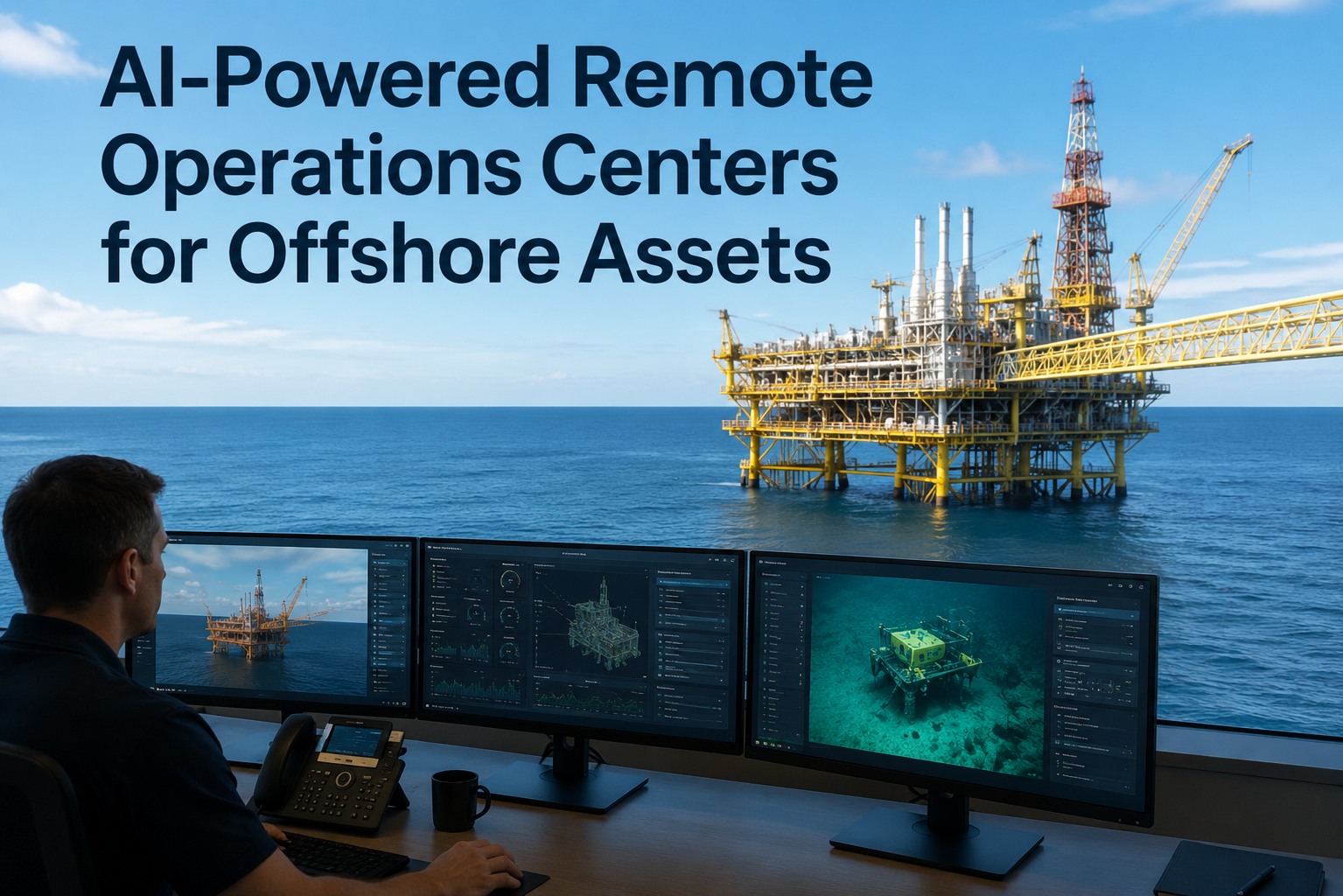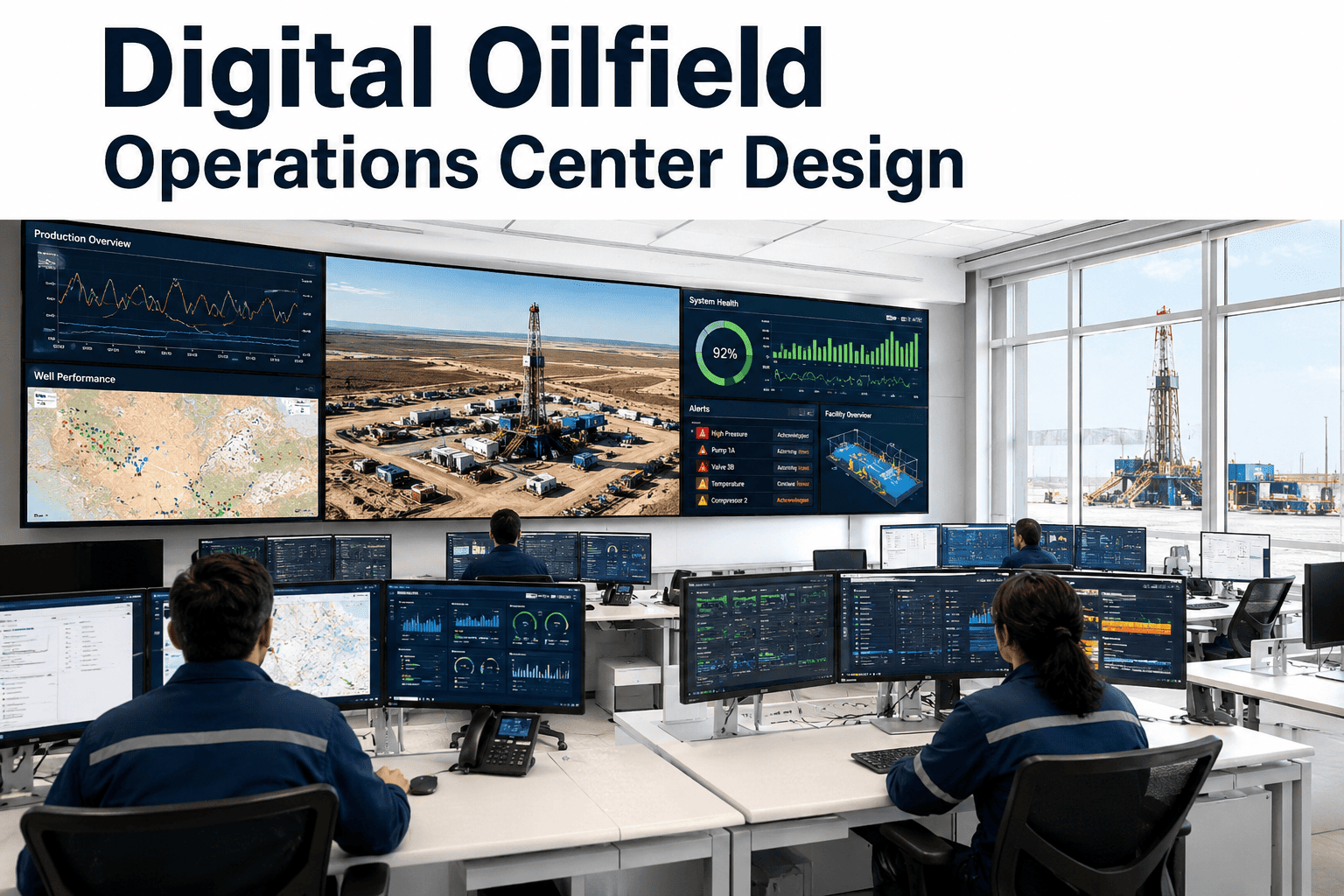
Digital oilfield operations centers are fundamentally reshaping how upstream and midstream companies monitor and control distributed assets across hundreds of miles of pipeline networks, well pads, and processing facilities. The shift from scattered control rooms to centralized digital operations hubs is no longer a future concept — it is the operational model that leading operators are deploying right now to reduce non-productive time, improve response to process upsets, and eliminate the safety risks of sending personnel to remote locations for routine interventions. A well-designed digital operations center integrates real-time SCADA data, alarm rationalization, video surveillance, and operator decision-support workflows into a single visual environment. If your organization is still operating with fragmented control systems and manual dispatch protocols, Book a Demo to see how iFactory structures a unified remote operations platform for oil and gas.
Centralize Remote Monitoring Across Every Well Pad, Pipeline, and Processing Facility
iFactory unifies SCADA feeds, alarm management, video surveillance, and operator workflows into a single digital operations center — designed for the scale and complexity of upstream and midstream asset portfolios.
Why Traditional Oilfield Control Rooms Cannot Scale
Most oil and gas operators still rely on a fragmented patchwork of standalone SCADA systems, separate alarm consoles, and manual radio dispatch to manage distributed assets. This model worked when operations were geographically concentrated and asset counts were manageable. But as operators expand into unconventional basins, subsea developments, and multi-basin portfolios, the traditional control room model breaks down under the weight of information overload, delayed response, and inconsistent decision-making across shifts. The result is measurable: higher non-productive time, more safety incidents related to delayed response, and operational costs that scale linearly with asset count instead of benefiting from centralized efficiency. The performance indicators below reflect industry-reported gaps that drive the business case for digital oilfield operations center transformation.
Five-Layer Architecture of a Digital Oilfield Operations Center
A digital oilfield operations center is not a single software application — it is an integrated technology stack that connects field-level instrumentation to human operators through multiple processing and visualization layers. Understanding this architecture is essential for operators evaluating platforms, because gaps in any single layer compromise the entire monitoring and control chain. The five-layer model below represents the reference architecture that iFactory implements for oil and gas operators, from sensor to screen, with each layer adding processing value before data reaches the operator interface.
Dashboard Design: Six Monitoring Capabilities That Define Operational Excellence
The visual design of a digital oilfield operations center dashboard determines whether operators can quickly identify developing issues or drown in irrelevant data. Best-practice dashboard design for oil and gas focuses on six core monitoring capabilities, each presented through dedicated visual panels that operators can configure based on their role and asset responsibility. The maturity bars below reflect what leading operators have achieved with properly designed digital operations center dashboards — and where most facilities still have room to improve.
Live flow rates, pressures, temperatures, and production totals across all connected wells and facilities with configurable threshold alerts.
Continuous vibration signatures, bearing temperature trends, and degradation indicators for compressors, pumps, and rotating equipment.
Mass balance monitoring, pressure wave analysis, and acoustic leak detection integrated into a single pipeline surveillance dashboard.
Emissions monitoring, flare gas tracking, and regulatory reporting dashboards that maintain continuous compliance visibility for operations leadership.
Live and recorded CCTV feeds linked to alarm events, perimeter intrusion detection, and remote visual verification of field conditions.
Prioritized alarm list with filtering, acknowledgment workflows, escalation tracking, and historical alarm trend analysis for rationalization.
Centralized Alarm Management: From Flood to Intelligence
Alarm management is the single highest-impact capability in a digital oilfield operations center. Most operators inherit alarm configurations that were never rationalized — resulting in thousands of alarms per shift, operator desensitization, and missed critical events. A properly designed alarm management framework classifies every alarm by priority, assigns response time targets, defines escalation paths, and automates low-priority notifications so operators focus on what genuinely matters. The table below defines the four-tier alarm response framework that iFactory implements in digital oilfield operations centers, replacing the undifferentiated alarm flood that overwhelms traditional control rooms.
| Priority | Response Target | Escalation Path | Operator Action | System Automation |
|---|---|---|---|---|
| Critical | Under 5 minutes | Immediate supervisor alert, automatic field crew dispatch | Verify condition, initiate emergency procedure, confirm safe state | Auto-escalate if unacknowledged in 3 minutes, trigger safety system interlock |
| High | Under 15 minutes | Shift supervisor notification at 10-minute mark | Assess root cause, adjust process parameters, schedule maintenance if needed | Log all contextual data, push to mobile if operator does not acknowledge |
| Medium | Under 60 minutes | Log for shift handover review | Monitor trend, evaluate during next scheduled check, document assessment | Auto-log to shift report, include in daily operations summary |
| Low | Next scheduled review | No active escalation required | Review during routine rounds or shift review, no immediate action | Batch into daily alarm analytics report for rationalization review |
Operator Workflow: From Detection to Resolution in Five Steps
A digital operations center is only as effective as the workflows that guide operator actions when issues are detected. Without structured workflows, operators respond inconsistently — some over-responding to minor alarms while others under-respond to developing critical conditions. The five-step workflow below represents the standardized response process that iFactory enforces in digital oilfield operations centers, ensuring every detected issue follows a consistent path from identification through resolution and compliance documentation.
System identifies anomaly through SCADA threshold breach, predictive model alert, video analytics trigger, or operator visual observation on the dashboard. All detection sources are logged with precise timestamps.
Operator evaluates alarm priority using the four-tier framework, reviews contextual data panels including historical trends and neighboring asset status, and determines the severity classification and required response level.
Operator initiates the prescribed response procedure — which may include remote process adjustment, field crew dispatch, engineering consultation, or emergency shutdown — guided by the workflow system at each decision point.
System and operator confirm that the response action resolved the underlying condition. Process parameters must return to normal operating range and remain stable for the defined verification period before the event is closed.
Incident record is auto-generated with complete timeline, actions taken, personnel involved, and preliminary root cause classification. Record is stored for regulatory compliance and fed into reliability analytics.
See a Centralized Operations Center Designed for Your Asset Portfolio
Unified SCADA dashboards, rationalized alarm management, structured operator workflows, and one-click compliance reporting — configured for upstream and midstream operations.
Traditional Dispatch vs. Digital Operations Center
The operational difference between traditional oilfield dispatch and a digital operations center is not incremental — it is structural. The comparison below highlights how each model handles the same operational scenarios, from initial alarm detection through final documentation and compliance reporting. Operators evaluating digital transformation should use this framework to identify exactly where their current model creates risk and where a centralized digital approach delivers measurable improvement.
Radio call to field technician, manual log entry in spreadsheet, no escalation tracking or accountability chain.
Separate SCADA screens per asset, no cross-asset correlation, historical data requires IT ticket to retrieve.
Entirely experience-based, no standardized procedures, inconsistent responses across shifts and operators.
Paper logs and spreadsheets, audit preparation takes days of manual compilation, records often incomplete.
Prioritized alarm console with automated escalation, response tracking, and mobile push for unacknowledged critical alarms.
Unified dashboard with cross-asset correlation, historical trend overlays, and contextual data panels at every alarm.
Workflow-driven procedures with contextual data presented at each decision point, consistent response across all shifts.
Auto-generated compliance records with full timelines, audit-ready in minutes, zero manual compilation required.
Measurable Impact After Digital Center Deployment
Operators who have transitioned from traditional control rooms to centralized digital operations centers report consistent, measurable improvements across safety, efficiency, and cost metrics. The figures below represent aggregated performance data from digital oilfield operations center deployments across upstream and midstream environments — providing a realistic benchmark for organizations building their internal business case.
Frequently Asked Questions
Build Your Centralized Operations Center with iFactory
Unified dashboards, rationalized alarms, structured workflows, and audit-ready compliance records — deployed in 10 to 14 weeks for upstream and midstream portfolios.