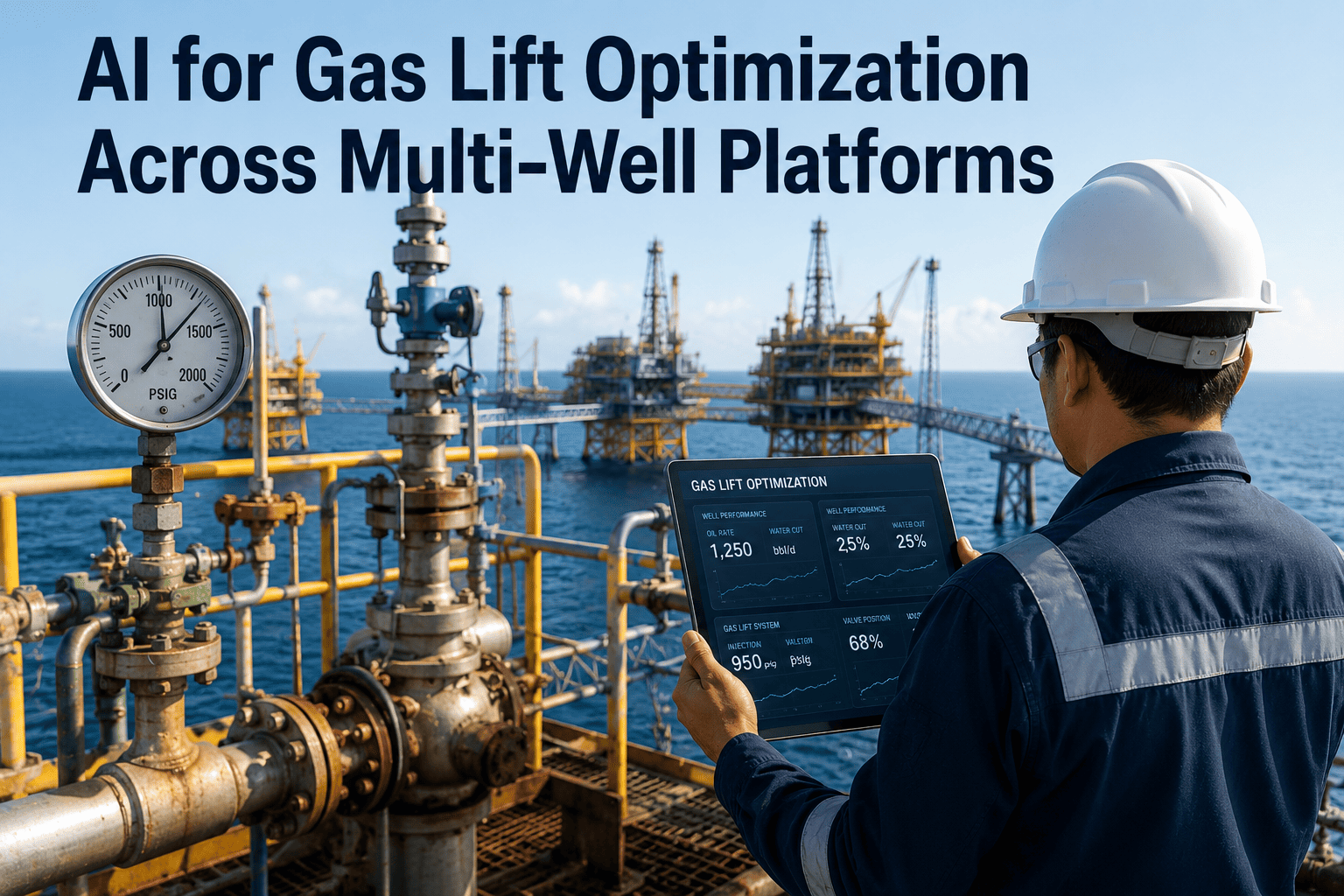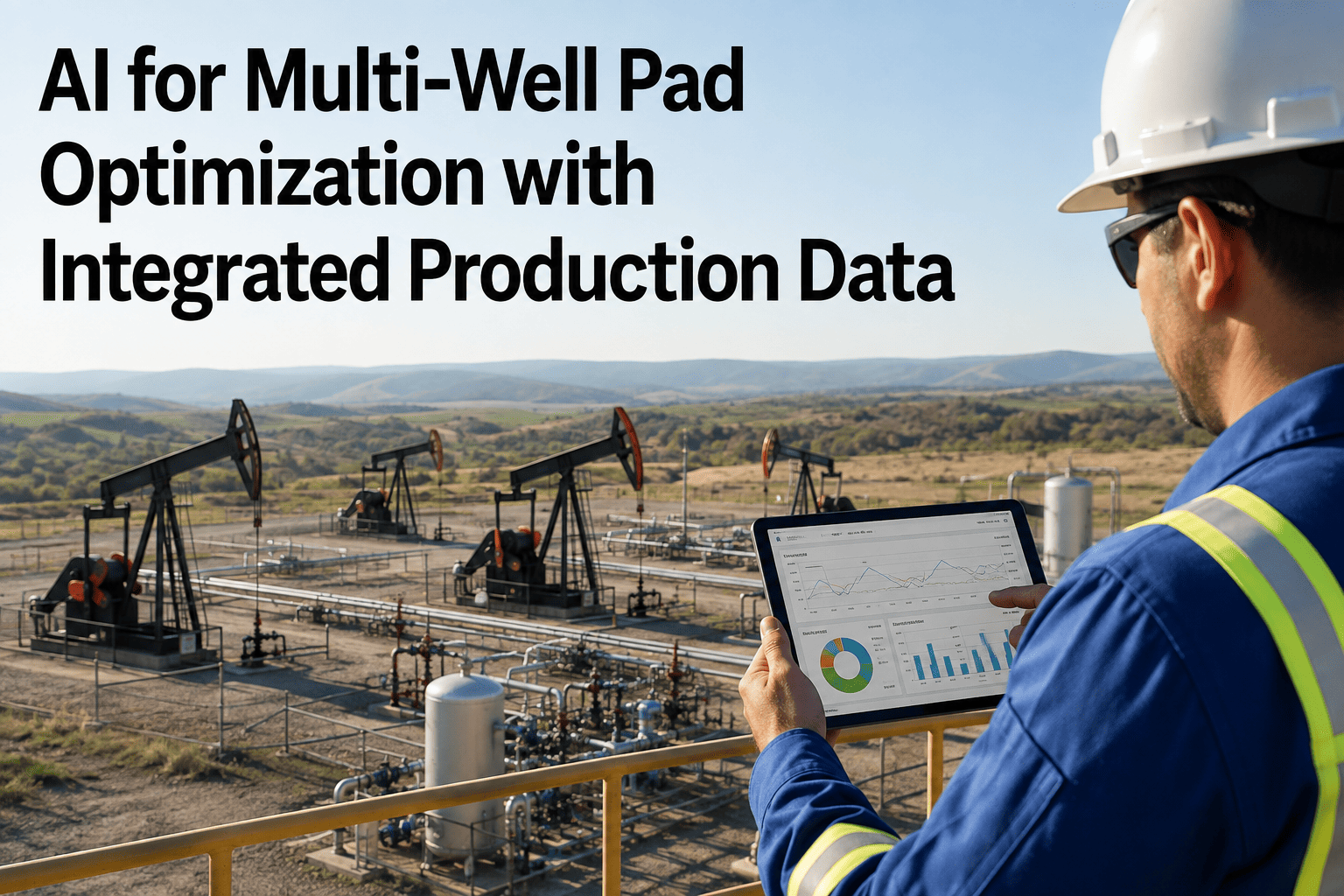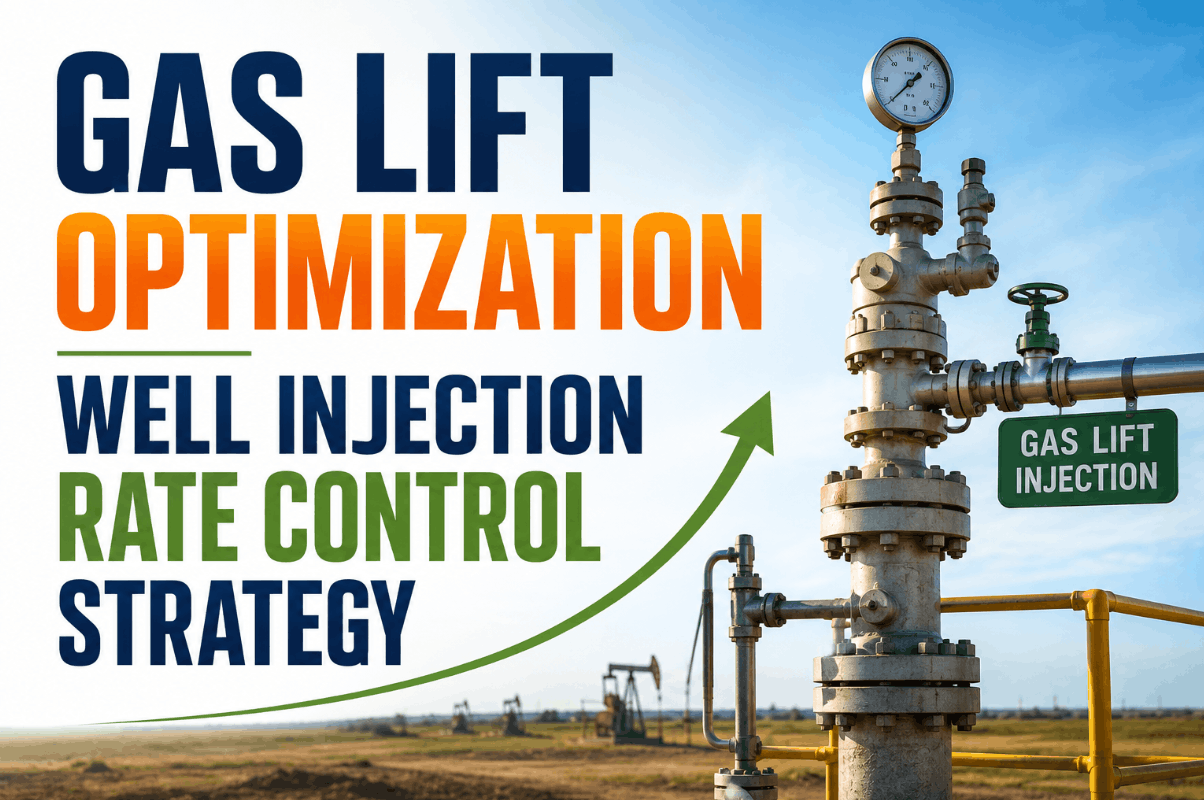
Gas lift is one of the most widely deployed artificial lift methods in U.S. oil and gas production — and one of the most chronically mismanaged. Across the Permian Basin, Gulf of Mexico shelf, and mid-continent fields, wells are over-injecting or under-injecting compressed gas around the clock, burning lift gas budget without a proportional gain in production. The problem is rarely the hardware. It is the absence of real-time well models, intelligent gas allocation logic, and continuous optimization feedback that keeps injection rates anchored to a commissioning-era design rather than the reservoir's present-day behavior. Modern gas lift optimization changes this entirely — building dynamic well performance models calibrated to live downhole data, deploying gas allocation algorithms that distribute available lift gas across a field to maximize total liquid production, and continuously adjusting injection rates in response to changing wellhead pressures, GLR shifts, and surface facility constraints. iFactory's AI platform brings this capability to your production operations without a custom reservoir engineering engagement. Book a Demo to see how continuous gas lift optimization deploys across your well inventory in weeks.
Why Gas Lift Wells Over-Inject and Under-Inject — and Why It Costs More Than You Think
Most gas lift systems are designed at commissioning and never systematically re-optimized as reservoir conditions evolve. Static injection rates set against a PI curve and GLR assumption from 18 months ago are running wells at the wrong operating point today — and the losses compound across every well in the field simultaneously. Book a Demo to map iFactory's optimization framework to your field's injection infrastructure.
The Gas Lift Optimization Stack: Well Models, Allocation Algorithms, and Continuous Control
Effective gas lift optimization is a three-layer architecture — well performance modeling, field-level gas allocation, and continuous closed-loop injection rate adjustment. iFactory deploys all three layers on your live production data.
Dynamic Well Performance Model Calibration
iFactory builds a nodal analysis well model for each gas lift well using your historical wellhead pressure, injection meter readings, downhole gauge data, and production rates. The model is calibrated continuously against live data — so as BHP declines, water cut increases, or GLR shifts, the well's optimal injection rate recalculates automatically without manual engineering input.
Critical Rate Identification and Operating Envelope Definition
The platform computes each well's critical injection rate — the inflection point beyond which additional gas injection produces diminishing returns — and defines a target operating envelope bounded by facility constraints, valve design limits, and current reservoir conditions. Injection recommendations keep every well inside its efficient operating window.
Field-Level Gas Allocation Algorithm
iFactory's allocation engine ranks the marginal production gain per Mcf of lift gas injected across every well in the field simultaneously. When compressor output is constrained, the algorithm redistributes available gas to wells with the highest incremental response — maximizing total field liquid production from available compression capacity rather than dividing gas proportionally or by historical assignment.
Continuous Closed-Loop Injection Rate Control
Optimized injection rate targets are pushed to wellsite choke controllers and injection flow control valves via OPC-UA or SCADA integration — enabling continuous autonomous adjustment rather than periodic manual intervention. Rate updates are governed by configurable step-change limits and operator approval workflows, maintaining production control team oversight of all rate changes.
Performance Monitoring and Model Feedback Loop
Every injection rate change, production response, and field allocation decision feeds back into iFactory's ML models — improving prediction accuracy over time and enabling the platform to detect anomalous well behavior (valve failures, tubing leaks, slug flow instability) against the expected performance envelope established by the well model.
Static Allocation vs. Algorithm-Driven Optimization: A Field-Level Comparison
The table below compares the outcomes of static injection management versus iFactory's continuous optimization platform across the metrics that matter most to production engineers and field operations teams.
| Metric | Static / Manual Injection Management | iFactory Continuous Optimization |
|---|---|---|
| Injection Rate Setting | Set at commissioning, updated manually during workovers or periodic reviews | Recalculated continuously from live wellhead, downhole, and production data |
| Gas Allocation Method | Proportional or historical assignment across wells regardless of current response | Marginal production gain per Mcf ranked in real time across full well inventory |
| Critical Rate Tracking | Estimated at design; not updated as BHP declines or water cut rises | Dynamically computed per well from calibrated nodal analysis models |
| Lift Gas Consumption | 18–35% excess consumption from over-injection and misallocation | Reduced to minimum required for maximum liquid production rate |
| Anomaly Detection | Valve failures and slug flow detected only after production decline is visible | Deviation from well model performance envelope triggers alert within hours |
| Production Uplift | Baseline — wells operating at or below optimal rates without recalibration | 15–30% total field production improvement from allocation and rate optimization |
| Engineering Overhead | Requires manual nodal analysis and field testing for each optimization cycle | Automated model recalibration with engineer-in-the-loop approval workflow |
Deployment Architecture: Four Phases from Data Integration to Autonomous Optimization
iFactory's gas lift optimization deployment follows a structured phased approach that delivers measurable production uplift at each stage before advancing to the next level of automation. Book a Demo to align the deployment roadmap with your compressor infrastructure and field architecture.
Data Integration and Well Model Build
Connect iFactory to SCADA, PI Historian, injection flow meters, and downhole pressure gauges. Build calibrated nodal analysis models for all gas lift wells using historical production and injection data.
Critical Rate Optimization and Recommendations
Deploy injection rate recommendations for each well based on calibrated models. Identify over-injecting and under-injecting wells across the field and quantify production and gas conservation opportunity.
Field-Level Allocation Algorithm Activation
Deploy the marginal gain allocation engine across the full well inventory. Integrate compressor output constraints, facility backpressure data, and production targets into the allocation logic.
Closed-Loop Continuous Rate Control
Activate direct integration with wellsite choke controllers and injection flow control valves for autonomous rate adjustments governed by configurable step limits and engineer approval workflows.
Production Impact by Well Type and Operating Condition
Gas lift optimization returns vary by well type, reservoir maturity, and current operating deviation from critical rate. The financial impact figures below reflect measured outcomes from iFactory deployments across active U.S. gas lift operations.
"We had 34 gas lift wells across two fields sharing a single compressor train, and our allocation method was essentially a spreadsheet that got updated quarterly. iFactory modeled every well's critical rate against live wellhead and downhole data, then ran the allocation algorithm to redistribute our available injection gas by marginal production gain. In the first 60 days we recovered 380 BOPD of production we didn't know we were leaving behind — just from the same compression capacity, allocated more intelligently. Our lift gas cost per barrel dropped 22%, and we've had zero over-injection incidents since the continuous rate control went live."
Conclusion: Gas Lift Efficiency Is a Data and Optimization Problem, Not a Hardware Problem
The lift efficiency gap that costs U.S. production operations hundreds of millions of dollars annually is not a result of inadequate compression or outdated valve technology. It is the result of running dynamic, continuously changing wells against static injection rates and manual allocation logic that cannot track reservoir evolution in real time. Gas lift optimization that builds live well performance models, computes critical rates from current downhole conditions, and allocates available lift gas by marginal production gain consistently delivers 25%+ efficiency improvement from the same surface infrastructure. iFactory's platform brings this optimization capability to your field without a custom reservoir engineering project or a months-long implementation timeline. Book a Demo to quantify how much production your current injection rates are leaving on the table.
Gas Lift Optimization: Frequently Asked Questions
Q: How does iFactory determine the critical injection rate for each gas lift well?
iFactory's nodal analysis engine computes each well's critical rate by calibrating a flowing pressure gradient model against live wellhead pressure, injection meter data, and downhole gauge readings — recalculating the critical rate continuously as BHP, water cut, and GLR evolve over the producing life of the well.
Q: Can iFactory optimize gas lift allocation across wells on different compressors or gathering systems?
Yes. iFactory's allocation algorithm operates at any defined system boundary — single compressor, multiple compressor trains, or separate gathering systems — with facility constraint inputs that prevent allocation recommendations from exceeding available compression throughput or line pressure limits.
Q: Does the platform support intermittent gas lift as well as continuous injection?
Yes. iFactory's well model framework includes cycle optimization for intermittent gas lift wells — computing optimal cycle frequency, injection volume per cycle, and afterflow duration based on live wellbore pressure buildup curves and current inflow performance.
Q: How long does it take to see measurable production uplift after deployment?
Initial injection rate recommendations are available within 72 hours of data integration; measurable production response from rate corrections typically appears within 5–10 days, with full field allocation optimization delivering quantified uplift within 30–45 days of live deployment.
Q: What SCADA and historian systems does iFactory connect to for gas lift data ingestion?
iFactory integrates natively with OSIsoft PI, Honeywell PHD, Aspentech IP21, and GE Proficy Historian, and connects to wellsite SCADA via OPC-UA and Modbus TCP — covering Emerson, Yokogawa, ABB, and Honeywell control platforms without custom middleware development.