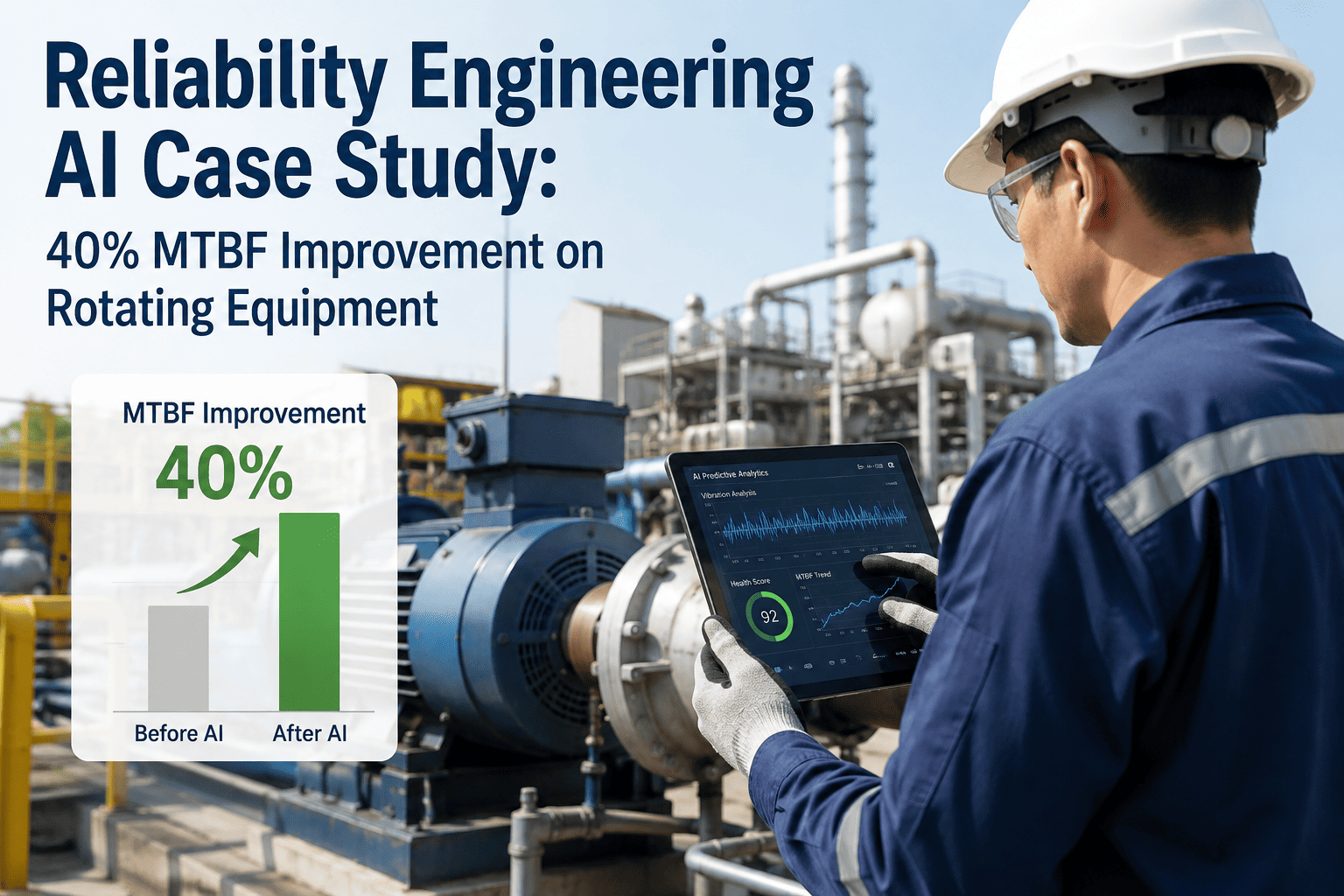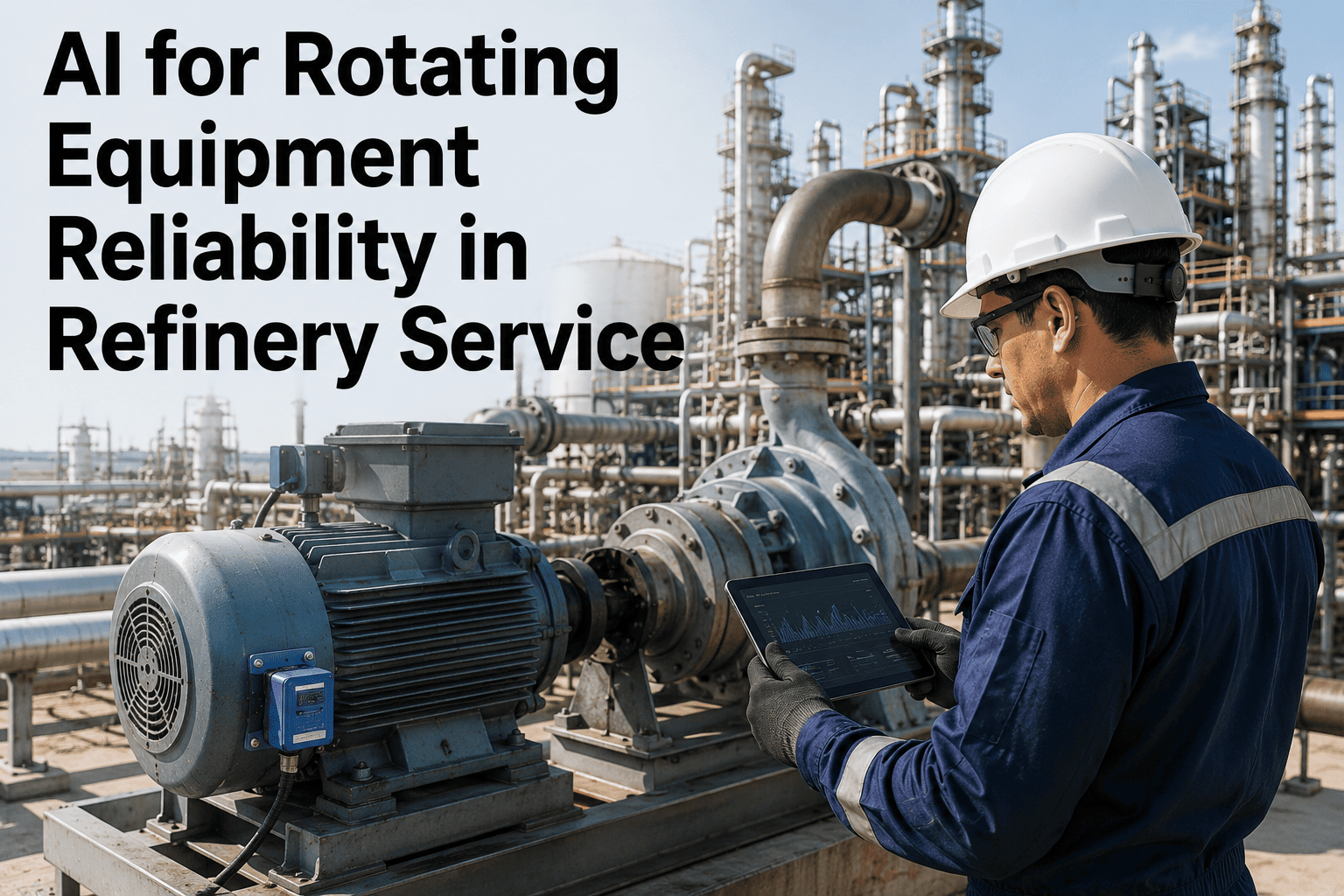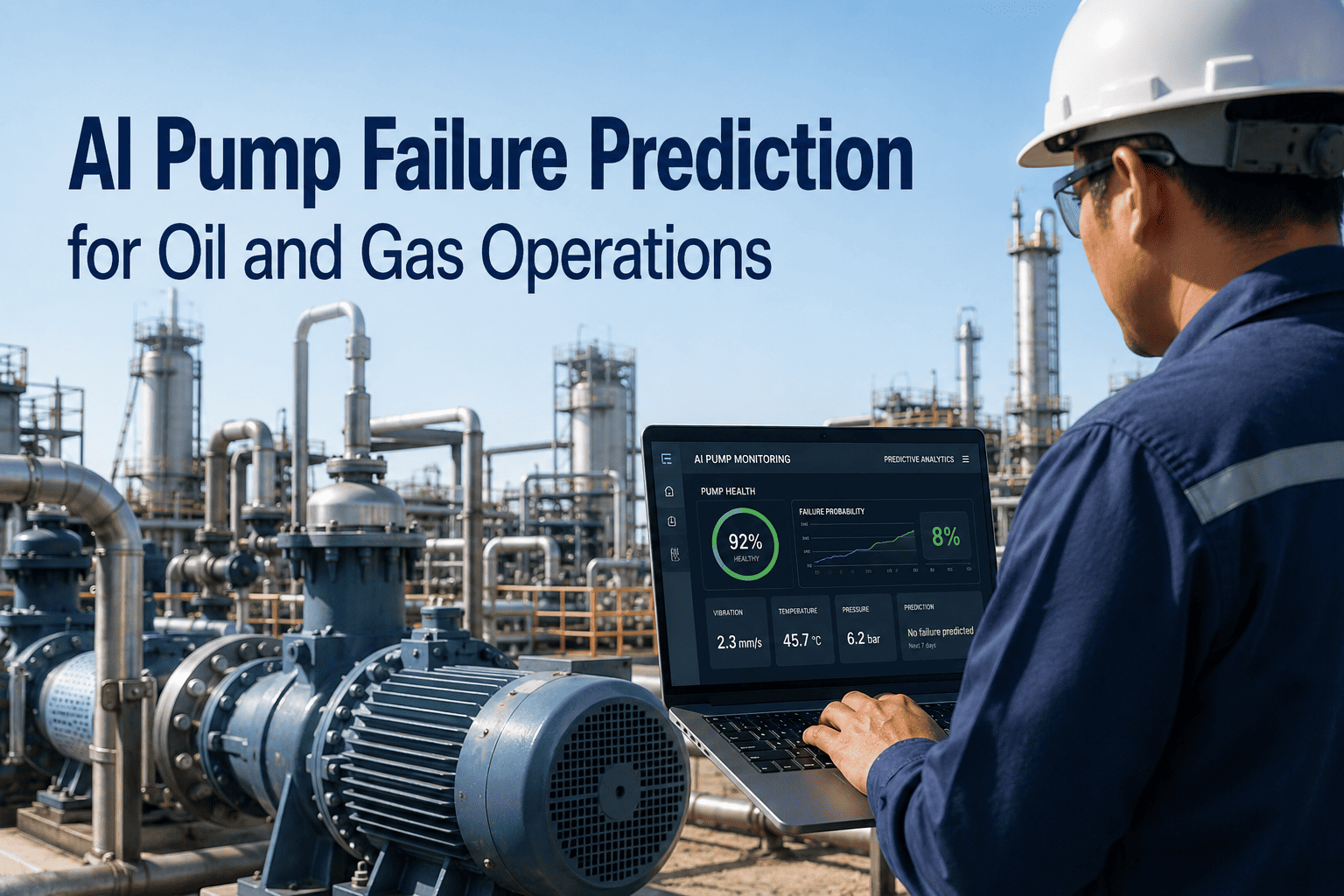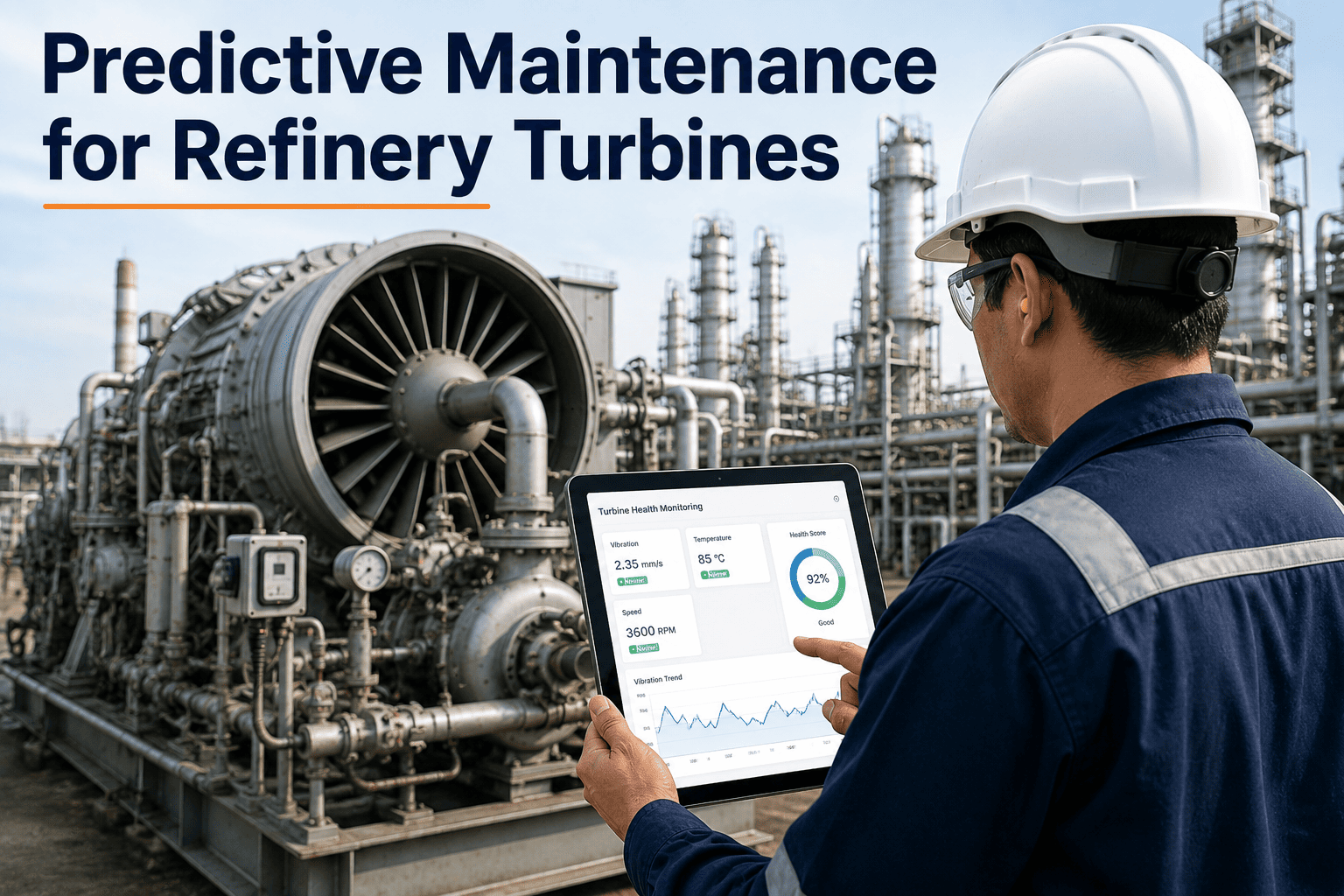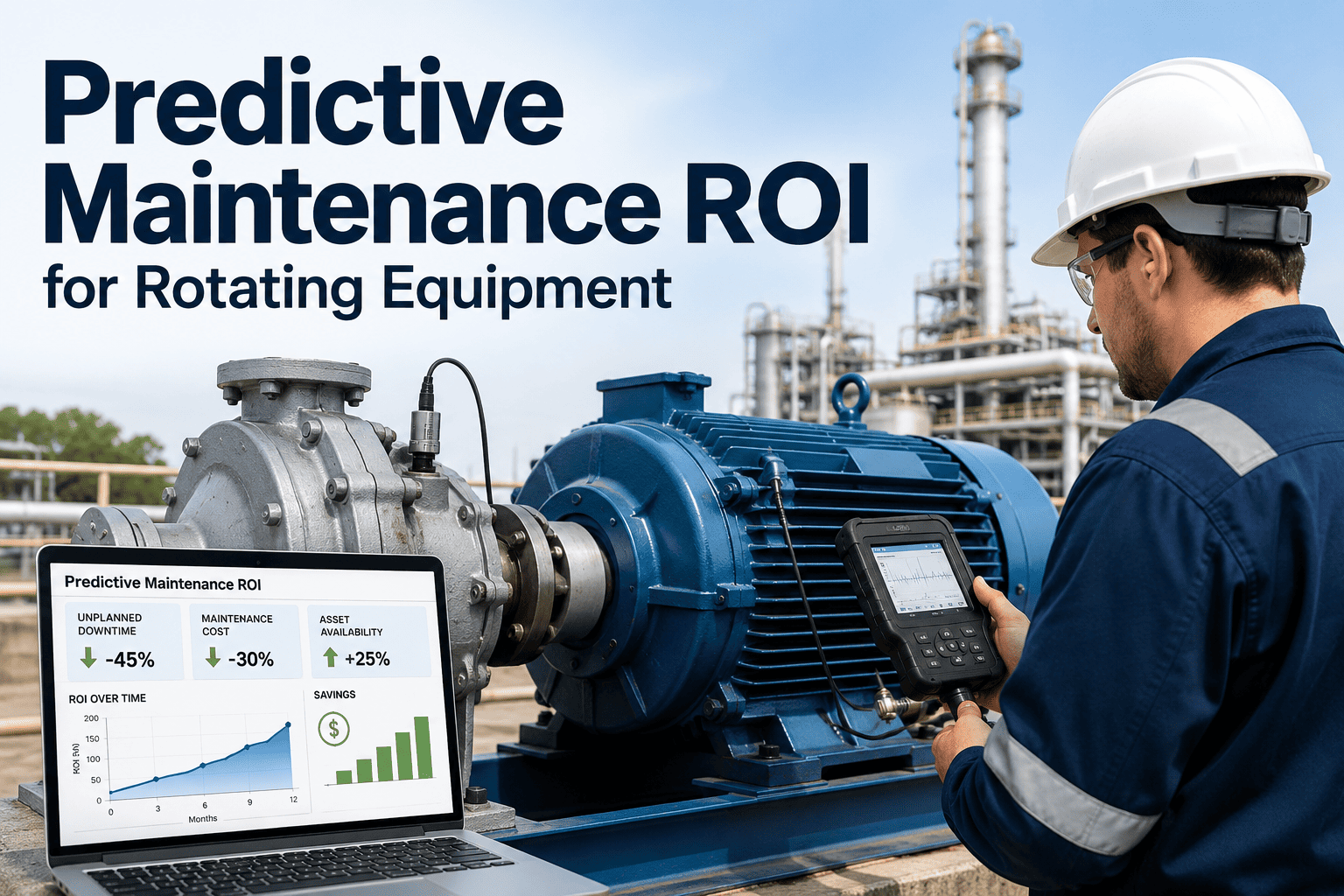
The oil and gas industry operates under extreme conditions where rotating equipment—compressors, pumps, turbines, and generators—represents the mechanical backbone of upstream, midstream, and downstream operations. Unplanned failures in these critical assets can trigger production losses exceeding $1 million per day, safety hazards, and environmental penalties. Predictive maintenance (PdM) powered by AI and IoT offers a transformative approach, shifting from reactive or time-based strategies to condition-based interventions that maximize uptime and minimize costs. This comprehensive guide presents deep-dive case studies, financial models, and technical frameworks to help plant managers, CTOs, and maintenance directors calculate and realize the full ROI of PdM for rotating equipment. We analyze real-world implementations where companies achieved 30–50% reduction in unplanned downtime and a 10:1 return on investment. Whether you are evaluating a pilot program or scaling across multiple sites, the evidence is clear: PdM is not just a maintenance upgrade—it is a strategic financial imperative. Book a Demo to see how iFactory can accelerate your reliability journey.
Transform Your Rotating Equipment Reliability
Achieve 50% less unplanned downtime and 10x ROI. Start your predictive maintenance journey today with iFactory's AI-driven platform.
$1.2M
Average annual savings per facility
42%
Reduction in unplanned downtime
10:1
ROI achieved in first 18 months
The Financial Case for Predictive Maintenance in Oil & Gas
Rotating equipment failures in oil and gas operations carry catastrophic costs. A single gas turbine outage at a LNG facility can cost $500,000 per day in lost production, while a mainline compressor failure at a pipeline station may incur $200,000 in repair costs plus $1 million in deferred revenue. Traditional preventive maintenance schedules often lead to unnecessary overhauls, wasting 30% of maintenance budgets on components that still have useful life. PdM flips this paradigm by using real-time vibration analysis, oil debris monitoring, and thermal imaging to predict failures weeks in advance. The business case is built on three pillars: reduced downtime, optimized spare parts inventory, and extended asset life. iFactory's platform aggregates data from multiple sensors and applies machine learning models trained on millions of operating hours to deliver actionable alerts. Early adopters in the Permian Basin and North Sea have documented payback periods of less than six months. The financial math is straightforward: if a single avoided failure saves $2 million and the PdM system costs $200,000 annually, the ROI is 10:1. This section explores the detailed cost-benefit analysis for compressors, pumps, turbines, and generators, including sensitivity analysis for different facility sizes and operating contexts.
Compressor PdM Savings
Centrifugal and reciprocating compressors are the heart of gas processing and transmission. Predictive algorithms detect valve wear, bearing degradation, and seal leaks up to 3 weeks before failure. One Gulf Coast plant reduced compressor downtime by 55% and saved $3.2 million annually.
Pump Failure Prediction
Multiphase pumps and ESPs in upstream operations fail due to erosion, cavitation, and motor issues. PdM models using flow, pressure, and vibration data achieved 90% accuracy in predicting failures, cutting emergency repairs by 60% and extending pump run life by 40%.
Turbine Reliability ROI
Gas turbines in power generation and mechanical drive applications benefit from combustion dynamics monitoring and blade path analysis. A North Sea platform avoided a catastrophic turbine failure, saving $4.5 million in replacement costs and 14 days of lost production.
Generator Performance
Emergency generators and prime power units in refineries require high reliability. PdM detected stator winding degradation and brush wear, preventing a $1.8 million unplanned outage at a Texas refinery. ROI was 8:1 in the first year.
Implementation Roadmap for PdM on Rotating Equipment
Asset Criticality Assessment
Identify top 20% of rotating assets that cause 80% of downtime. Use failure mode and effects analysis (FMEA) to prioritize compressors, pumps, turbines, and generators with highest risk. This step ensures investment is focused on maximum impact.
Sensor Deployment & Data Integration
Install vibration sensors, temperature probes, oil debris monitors, and current sensors on selected assets. Integrate with existing DCS, SCADA, and CMMS systems. iFactory's edge gateway handles data ingestion and preprocessing, sending only high-value features to the cloud.
Model Training & Calibration
Use historical failure data and run-to-failure records to train machine learning models. For assets with limited failure history, iFactory uses transfer learning from similar equipment fleets. Models are calibrated to achieve >95% precision to minimize false alarms.
Alert Workflow & Integration
Configure alert thresholds and integrate with maintenance workflows. Alerts are sent to technicians' mobile devices with recommended actions and estimated remaining useful life. Integration with CMMS automates work order creation and parts reservation.
Continuous Improvement & ROI Tracking
Monitor model performance and update retraining cycles based on new data. Track key metrics: mean time between failures (MTBF), maintenance cost per asset, and avoided downtime. Quarterly business reviews ensure ROI targets are met and exceeded.
Comparative ROI Analysis: PdM vs. Traditional Maintenance
| Metric | Reactive Maintenance | Preventive Maintenance | Predictive Maintenance (iFactory) |
|---|---|---|---|
| Unplanned downtime (hours/year) | 720 | 480 | 240 |
| Maintenance cost ($/asset/year) | $450,000 | $320,000 | $180,000 |
| Spare parts inventory cost | $2.1M | $1.5M | $0.9M |
| Asset lifespan (years) | 12 | 15 | 20 |
| ROI (3-year) | N/A | 1.5:1 | 10:1 |
Case Study: Permian Basin Gas Processing Plant
A midstream operator with 12 centrifugal compressors and 24 pumps faced frequent unplanned outages, losing 18 days of production annually. They deployed iFactory's PdM platform on all rotating equipment. Within six months, they achieved a 48% reduction in unplanned downtime, saving $4.2 million in lost revenue and repair costs. The platform detected a developing bearing fault on a mainline compressor 14 days before failure, allowing a planned shutdown during a scheduled turnaround. The total investment of $380,000 (sensors, software, integration) was recouped in 4.2 months. The operator has since expanded PdM to three additional plants, achieving an average ROI of 12:1 across the fleet.
Case Study: North Sea Offshore Platform
An offshore platform operating six gas turbines for power generation and compression faced severe logistics challenges for repairs. A single turbine failure could cost $5 million in lost production and $2 million in emergency helicopter transport for parts and technicians. iFactory's PdM system monitored combustion dynamics, blade path temperatures, and vibration signatures. After 9 months of operation, the system predicted a hot gas path failure 21 days in advance, allowing a planned maintenance during a weather window. The avoided failure saved $7 million and prevented 30 days of production loss. The platform now uses PdM for all 18 rotating assets and reports a 40% increase in overall equipment effectiveness (OEE).
Technical Deep Dive: AI Models for Rotating Equipment
iFactory's predictive models are built on a hybrid architecture combining convolutional neural networks (CNNs) for vibration spectrogram analysis and long short-term memory (LSTM) networks for time-series trend prediction. For compressors, the model analyzes 32 features including RMS velocity, crest factor, and sideband energy. Pumps are monitored using pressure pulsation and motor current signature analysis. Turbines require additional inputs like exhaust gas temperature spread and fuel flow rate. The models are trained on a dataset of over 10 million operating hours from diverse oil and gas environments. False alarm rates are kept below 2% through adaptive thresholding and ensemble voting. The system also provides remaining useful life (RUL) estimates with confidence intervals, enabling maintenance planners to optimize scheduling and parts procurement. Model retraining occurs automatically every 30 days using new edge data, ensuring accuracy degrades less than 1% per year.
Vibration Analysis
Accelerometers capture high-frequency data up to 20 kHz. FFT and envelope analysis detect bearing faults, imbalance, and misalignment. iFactory's models identify specific failure modes with 96% accuracy.
Oil Debris Monitoring
Inline sensors measure particle count, size distribution, and ferrous content. Wear rate trends predict gear and bearing degradation weeks before vibration signatures change.
Thermal Imaging
Fixed IR cameras monitor surface temperatures of motors, bearings, and casings. Abnormal thermal patterns indicate insulation breakdown, cooling failures, or friction hotspots.
Motor Current Analysis
Current sensors on motor drives detect rotor bar defects, eccentricity, and load anomalies. This non-intrusive method is especially effective for pumps and compressors with variable frequency drives.
Ready to Quantify Your PdM ROI?
Get a customized ROI analysis for your rotating equipment fleet. See exactly how much you can save with iFactory's AI-powered predictive maintenance.
Overcoming Common PdM Implementation Challenges
Despite compelling ROI, many oil and gas organizations hesitate to adopt PdM due to data quality issues, lack of in-house expertise, and cultural resistance. iFactory addresses these head-on with a turnkey solution. Data quality is ensured through edge-based preprocessing that cleans and normalizes sensor readings before cloud transmission. For organizations with sparse historical failure data, iFactory's transfer learning library uses models pre-trained on similar equipment from other customers, achieving >90% accuracy from day one. Cultural adoption is driven by intuitive dashboards that show maintenance teams exactly what to do, not just what is happening. Alerts include recommended spare parts and step-by-step repair procedures. iFactory also offers a managed service option where our reliability engineers monitor assets 24/7 and escalate only validated alerts. This reduces the burden on internal teams and accelerates time-to-value. The result is a seamless transition from reactive to predictive maintenance without overwhelming existing staff.
Data Quality Solutions
Edge-based data validation removes noise and fills gaps using interpolation. Automated anomaly detection flags sensor drift or failure, ensuring model inputs are always reliable.
Expertise Bridge
iFactory's reliability engineering team provides remote and on-site support for model tuning, alert review, and continuous improvement. Customers gain access to a pool of PdM experts without hiring full-time.
Change Management
We provide training for maintenance teams and plant managers, focusing on how PdM improves their daily work. Success stories and ROI dashboards build momentum and buy-in across the organization.
Frequently Asked Questions
What is the typical payback period for PdM on rotating equipment in oil and gas?
The payback period typically ranges from 4 to 8 months for most oil and gas facilities. This is driven by the high cost of unplanned downtime, which can exceed $1 million per day for large-scale operations. iFactory's platform often delivers a 10:1 ROI within the first 18 months. For a more precise estimate tailored to your asset portfolio, Book a Demo to receive a free ROI analysis.
How accurate are iFactory's predictive models for compressors and pumps?
iFactory's models achieve over 95% precision and 90% recall for critical failure modes in compressors and pumps. This means fewer than 2% false alarms and detection of 9 out of 10 impending failures. Accuracy is maintained through continuous retraining and ensemble methods. For more details on model performance metrics, Contact Support for a technical white paper.
Can PdM be integrated with existing SCADA and CMMS systems?
Yes, iFactory's platform offers native connectors for major SCADA (Siemens, Rockwell, Emerson) and CMMS (SAP, Maximo, Infor) systems. Integration is typically completed within 2–4 weeks and does not require custom development. Alerts automatically generate work orders and update asset histories. To schedule an integration consultation, Book a Demo.
What is the minimum number of assets needed to justify a PdM investment?
Most facilities with 10 or more critical rotating assets (compressors, pumps, turbines, generators) see a positive ROI within 12 months. Smaller sites can benefit from iFactory's managed service model, which shares infrastructure costs across multiple customers. For a personalized feasibility assessment, Book a Demo.
How does iFactory handle data security and IP protection?
iFactory employs end-to-end encryption, SOC 2 compliance, and role-based access controls. Customer data is isolated in dedicated cloud instances. Models trained on customer data remain proprietary to that customer. For a full security overview, Contact Support.
Start Your PdM Journey Today
Join industry leaders who have already transformed their rotating equipment reliability. Get a demo and discover your potential savings with iFactory.