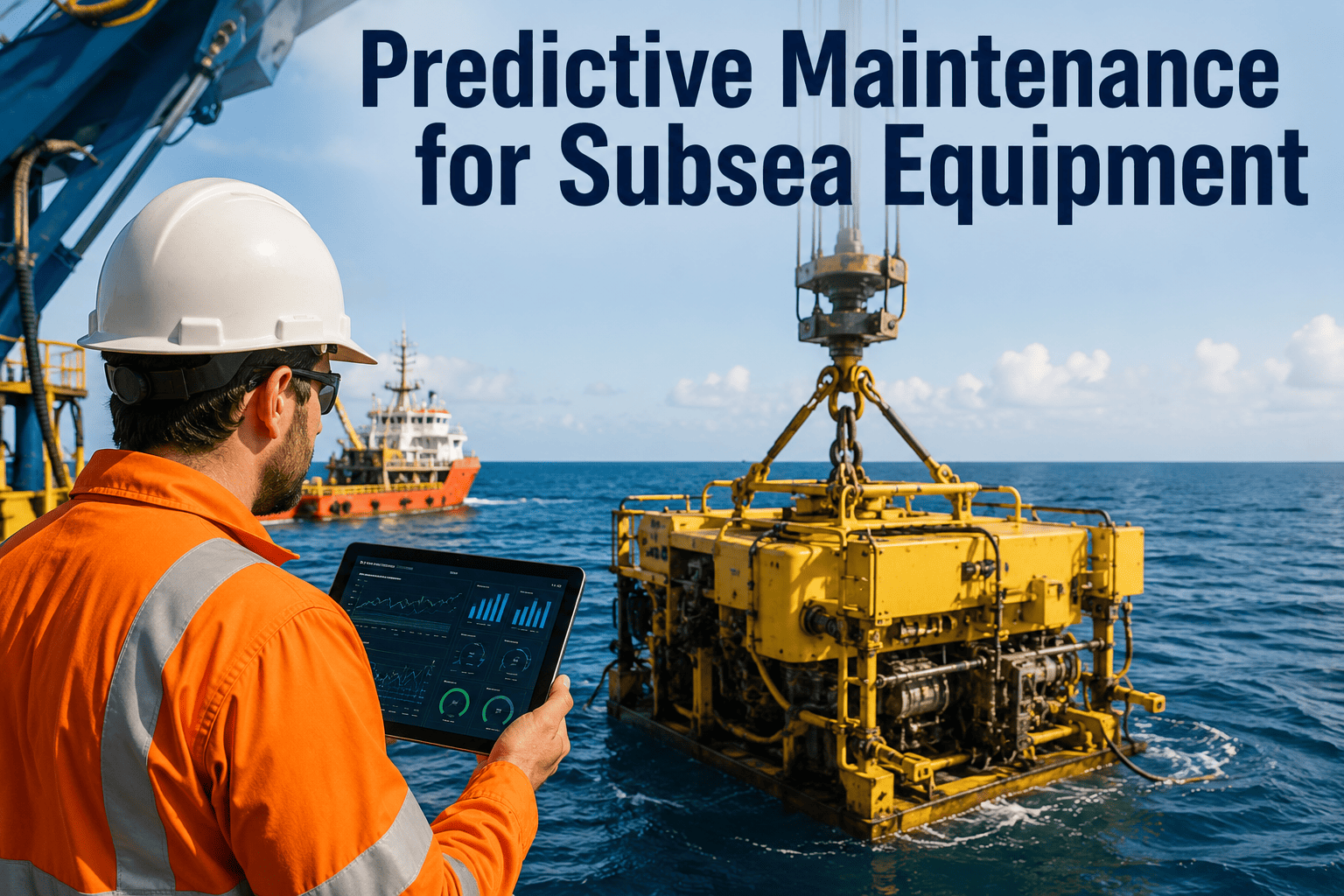
In the unforgiving depths of deepwater and ultra-deepwater environments, subsea production systems operate under immense pressure, extreme temperatures, and corrosive conditions. Equipment such as subsea trees, blowout preventers (BOPs), umbilicals, and flowlines are critical to hydrocarbon extraction, yet they remain largely inaccessible for routine inspection or repair. Traditional maintenance strategies—reactive or calendar-based—are not only costly but also risk catastrophic failures, environmental disasters, and prolonged production shutdowns. The industry urgently needs a paradigm shift toward predictive maintenance powered by artificial intelligence, leveraging limited sensor data to forecast failures before they occur. This comprehensive guide explores how AI-driven predictive models can transform subsea asset reliability, reduce intervention costs, and extend equipment life. Book a Demo to see iFactory’s solutions in action.
Transform Your Subsea Maintenance Strategy
Leverage AI to predict failures in subsea trees, BOPs, umbilicals, and flowlines. Reduce unplanned downtime by up to 60%.
The Subsea Maintenance Challenge: Why Traditional Approaches Fail
Subsea equipment operates in one of the most hostile environments on Earth. Depths exceeding 3,000 meters, pressures above 500 bar, and highly corrosive fluids create conditions that accelerate wear and degradation. Unlike topside equipment, subsea assets cannot be easily accessed for visual inspection or manual repairs. Even routine maintenance requires expensive vessel mobilization, ROV deployment, and often production shutdown. The cost of a single subsea intervention can range from $500,000 to over $5 million, depending on water depth and complexity. Traditional time-based maintenance schedules replace components at fixed intervals, regardless of actual condition, leading to unnecessary interventions or missed failures. Reactive maintenance, where repair occurs only after a failure, results in unplanned downtime that can cost millions per day in lost production. The industry desperately needs a more intelligent approach.
Critical Subsea Components at Risk
Subsea Trees
Subsea trees control the flow of hydrocarbons from the wellhead. They contain multiple valves, chokes, sensors, and actuators. Common failure modes include valve seat leakage, actuator hydraulic failure, and sensor drift. Predictive models analyze pressure, temperature, and flow rate trends to detect anomalies weeks before failure.
Blowout Preventers (BOPs)
BOPs are the last line of defense against well blowouts. They must function reliably under extreme conditions. Failures in annular preventers, pipe rams, or shear rams can have catastrophic consequences. AI models monitor hydraulic pressure, piston position, and seal integrity to predict impending failures.
Umbilicals
Umbilicals provide hydraulic, electrical, and fiber optic connections between topside and subsea equipment. They are susceptible to fatigue, corrosion, and mechanical damage. Predictive analytics track fluid chemistry, electrical continuity, and pressure drop to identify degradation before a leak or short circuit occurs.
Flowlines
Flowlines transport produced fluids from the wellhead to the manifold or platform. They are prone to erosion, corrosion, and hydrate formation. AI models combine flow data, temperature profiles, and chemical injection rates to predict wall thinning and blockages, enabling proactive intervention.
Leveraging Limited Sensor Data for Maximum Insight
One of the biggest challenges in subsea predictive maintenance is the scarcity of sensor data. Unlike smart factories with hundreds of IoT sensors, subsea systems often have only a handful of measurements—pressure, temperature, flow rate, and perhaps vibration. However, advanced AI techniques such as transfer learning, physics-informed neural networks, and anomaly detection can extract rich insights from this sparse data. For example, by analyzing the relationship between pressure fluctuations and temperature changes, models can infer valve seat wear or seal degradation. By combining historical failure data with real-time sensor readings, predictive algorithms can estimate remaining useful life (RUL) with high confidence. iFactory’s platform integrates with existing subsea control systems, SCADA, and DCS to ingest and process this data without requiring additional hardware.
AI Methodology for Subsea Failure Prediction
Data Aggregation and Cleaning
Collect historical and real-time data from subsea control modules, ROV logs, and maintenance records. Clean and normalize the data to remove noise and outliers.
Feature Engineering
Extract features such as pressure trends, temperature gradients, flow stability, and hydraulic response times. Use domain knowledge to create physics-based features like Reynolds number or erosion rate estimates.
Model Training and Validation
Train ensemble models (Random Forest, XGBoost) and deep learning models (LSTM, CNN) on labeled failure data. Validate using k-fold cross-validation and out-of-time testing to ensure robustness.
Deployment and Monitoring
Deploy models on edge devices or in the cloud with continuous monitoring. Set up alerting thresholds and retrain models periodically as new data arrives.
Comparative Analysis: Traditional vs. AI Predictive Maintenance
| Parameter | Traditional Maintenance | AI Predictive Maintenance |
|---|---|---|
| Intervention Frequency | Fixed schedule (e.g., every 6 months) | Condition-based, as needed |
| Failure Detection | After failure occurs | Weeks to months before failure |
| Data Requirements | Minimal (run-to-failure) | Leverages existing sensors |
| Cost per Intervention | $500k - $5M | Reduced by 40% (planned) |
| Uptime Impact | Significant unplanned downtime | Minimal, planned shutdowns |
| Environmental Risk | High (leaks, blowouts) | Low (early intervention) |
Real-World Impact: Case Study from the North Sea
A major operator in the North Sea implemented iFactory’s AI predictive maintenance platform on a cluster of eight subsea trees and four flowlines. The system analyzed pressure and temperature data from existing sensors, combined with historical failure records. Within six months, the platform predicted three valve seat failures and one umbilical hydraulic leak, all confirmed during subsequent ROV inspections. The operator was able to schedule interventions during planned shutdowns, avoiding over $12 million in emergency repair costs and preventing an estimated 15 days of unplanned production loss. The ROI on the project exceeded 400% in the first year. This case demonstrates that even with limited sensor data, AI can deliver substantial value.
Implementation Roadmap for Subsea Predictive Maintenance
-
Asset Inventory and Criticality Assessment
Identify all subsea assets and rank them by criticality based on production impact, safety risk, and intervention cost. Focus initial efforts on high-criticality equipment like BOPs and trees.
-
Data Audit and Integration
Evaluate existing sensor coverage, data quality, and accessibility. Integrate with subsea control systems, MCS, and SCADA to stream data into the AI platform. Fill data gaps with virtual sensors if necessary.
-
Model Development and Validation
Develop predictive models for each asset type using historical failure data and domain expertise. Validate models with blind tests and pilot deployments on a subset of assets.
-
Deployment and Training
Deploy models in production with real-time monitoring dashboards. Train maintenance teams to interpret alerts and plan interventions. Establish feedback loop for continuous model improvement.
Key Benefits of AI-Driven Subsea Maintenance
Extended Asset Life
By identifying degradation early, operators can take corrective action before damage becomes irreversible, extending equipment life by 20-30%.
Reduced Environmental Risk
Predicting leaks and blowout preventer failures minimizes the risk of oil spills and gas releases, protecting marine ecosystems and avoiding regulatory penalties.
Optimized Intervention Planning
With advance warning, operators can bundle repairs, optimize vessel schedules, and perform maintenance during planned shutdowns, reducing logistics costs.
Improved Safety
Fewer emergency interventions mean reduced personnel exposure to hazardous offshore conditions. AI also helps identify safety-critical failures before they escalate.
Ready to Predict Subsea Failures Before They Happen?
iFactory’s AI platform integrates with your existing subsea infrastructure. Book a demo to see how we can reduce your intervention costs by 40%.
Future Trends in Subsea Predictive Maintenance
The next frontier in subsea maintenance includes the use of digital twins, autonomous underwater vehicles (AUVs) for data collection, and edge AI for real-time processing. Digital twins create a virtual replica of the subsea system, enabling simulation of failure scenarios and optimization of maintenance strategies. AUVs equipped with advanced sensors can inspect assets without the need for expensive ROVs, feeding data directly into predictive models. Edge AI allows models to run locally on subsea control modules, reducing latency and bandwidth requirements. iFactory is at the forefront of these innovations, continuously evolving its platform to incorporate the latest advancements in machine learning and industrial IoT. As the industry moves toward fully autonomous subsea fields, predictive maintenance will be a cornerstone of operational excellence.
Frequently Asked Questions
How does AI predict failures in subsea equipment with limited sensor data?
AI models leverage advanced techniques such as transfer learning, where models pre-trained on similar equipment are fine-tuned on the specific subsea asset. Physics-informed neural networks incorporate fundamental physical laws (e.g., fluid dynamics, thermodynamics) to constrain predictions, making them robust even with sparse data. Additionally, feature engineering extracts subtle patterns from existing sensor readings—like pressure fluctuation rates or temperature response times—that correlate with degradation. By combining these methods with historical failure data, the models can achieve high prediction accuracy. For more details on our methodology, contact our support team or book a demo to see it in action.
What is the typical ROI for implementing AI predictive maintenance on subsea assets?
Based on industry case studies and iFactory’s deployments, the ROI typically ranges from 200% to 500% within the first 12-18 months. This is driven by reductions in unplanned downtime (up to 60%), lower intervention costs (30-40% savings), and extended asset life (20-30%). Additional savings come from optimized logistics, fewer emergency vessel mobilizations, and reduced environmental liability. The exact ROI depends on asset criticality, current maintenance practices, and data availability. To calculate a customized ROI for your operation, book a demo and we will provide a detailed analysis.
Can the AI platform integrate with existing subsea control systems like MCS or SCADA?
Yes, iFactory’s platform is designed for seamless integration with major subsea control systems, including MCS (Master Control Station), SCADA, DCS, and historian databases. We support standard protocols such as OPC-UA, Modbus, and MQTT, as well as custom APIs for legacy systems. Our data ingestion layer normalizes and aggregates data from multiple sources, ensuring a unified view. We also provide edge computing capabilities for sites with limited bandwidth. For integration specifics, contact support or book a demo to discuss your infrastructure.
How long does it take to deploy a predictive maintenance solution for subsea equipment?
Typical deployment timelines range from 3 to 6 months, depending on the number of assets, data quality, and integration complexity. The process includes a 2-4 week data audit, 4-8 weeks of model development and validation, and 4-6 weeks for deployment and training. For greenfield projects or those with existing digital infrastructure, timelines can be shorter. iFactory follows an agile methodology, delivering incremental value through pilot phases. To discuss a timeline for your specific assets, book a demo and we will create a tailored roadmap.
What types of failures can the AI predict for subsea trees and BOPs?
For subsea trees, the AI can predict valve seat leakage, actuator hydraulic failures, choke erosion, and sensor drift. For BOPs, it can predict annular preventer seal wear, pipe ram lock-up, shear ram degradation, and hydraulic system leaks. The models are trained on historical failure data and can be customized to include additional failure modes based on operator experience. Predictions are provided with a confidence score and estimated remaining useful life. For a comprehensive list of failure modes covered, contact support or book a demo to review our model library.
Start Your Subsea Predictive Maintenance Journey Today
Don’t wait for a catastrophic failure. iFactory’s AI platform empowers you to predict and prevent subsea equipment failures, saving millions in intervention costs and protecting your production uptime.