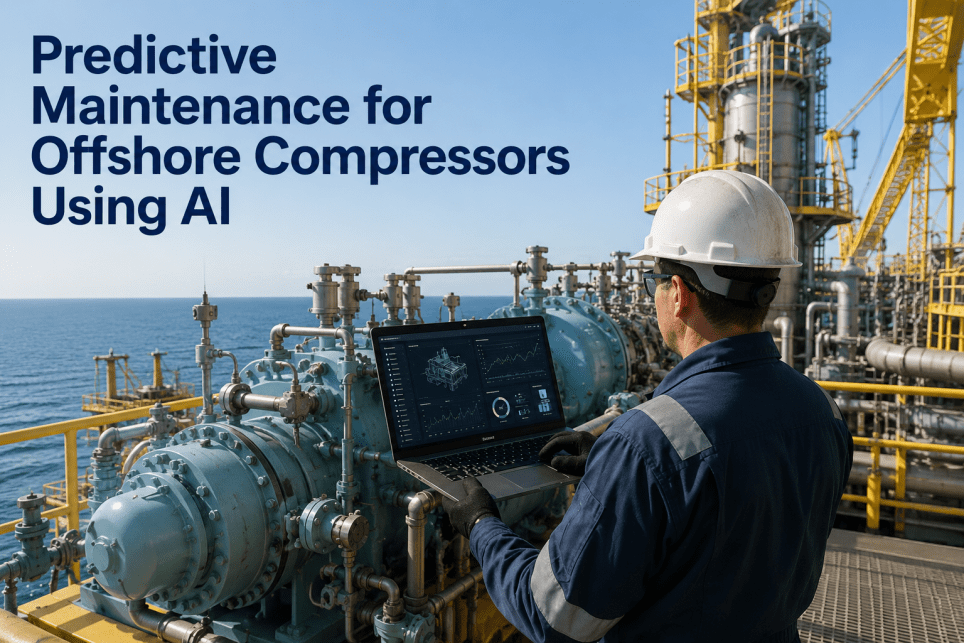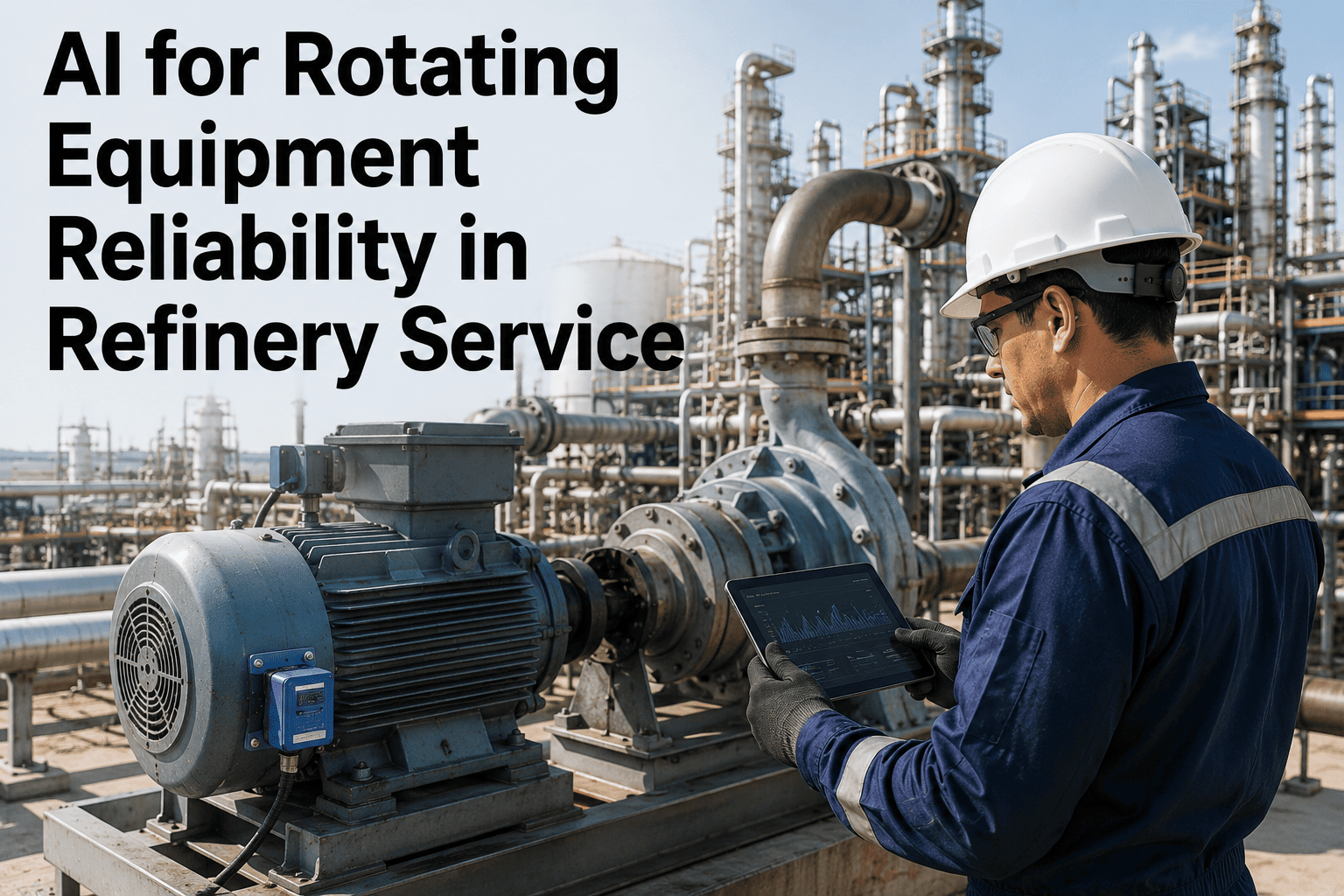
A centrifugal compressor bearing does not fail on the day it fails — it fails weeks earlier, the moment a subtle vibration pattern first departs from its baseline signature, and every day between that first deviation and the eventual trip is a day the equipment was still repairable on a planned schedule instead of an emergency one. Refineries run thousands of rotating assets — compressors, charge pumps, cooling water pumps, FCC air blowers — and a single one of them tripping unexpectedly can cascade into a full unit shutdown costing hundreds of thousands of dollars a day in lost throughput. Traditional vibration alarms are built to catch a threshold breach, not the slow degradation pattern building toward it, which is exactly the gap multi-sensor AI fusion is built to close. Reliability teams evaluating this against their current vibration program can Book a Demo to see a 72-hour failure prediction run against real compressor and pump data.
Why a Single Rotating Asset Can Take Down an Entire Unit
Refining concentrates more rotating equipment value per square foot than almost any other industrial setting, and the units are wired together tightly enough that one critical asset failing rarely stays contained to itself. A charge pump trip on a crude unit does not just idle a pump — it can starve the preheat train of feed, begin coking exchangers, and force a controlled shutdown that takes far longer to recover from than the pump repair itself. That dependency is what makes rotating equipment reliability a production and safety issue at once, not just a maintenance line item, and it is why reactive maintenance approaches are consistently linked to the majority of unplanned refinery shutdowns industry-wide.
Vibration Alarms Catch the Threshold, Not the Trend
A fixed vibration alarm only fires once a reading crosses a set limit, by which point bearing or seal degradation is often already well advanced. The slow drift leading up to that threshold — the actual early warning — goes unflagged by design.
A Single Sensor Rarely Tells the Whole Story
Vibration alone cannot distinguish a process upset from a mechanical fault, and temperature alone cannot distinguish bearing wear from a lubrication issue. Reading each sensor in isolation leaves technicians guessing at root cause even after an anomaly is flagged.
Emergency Trips Cost Far More Than Planned Repairs
The same bearing replacement that takes hours during a planned window can trigger a multi-day unit shutdown, cascading exchanger fouling, and off-spec product penalties when it happens as an emergency trip instead.
What Unplanned Rotating Equipment Failure Actually Costs
The numbers behind rotating equipment failure in refinery service explain why even a modest improvement in early warning time translates into a large financial impact across a facility running hundreds of critical assets. Each figure below reflects a different piece of the same underlying pattern: degradation happens slowly and predictably, but the tools most plants rely on today are only built to notice it at the very end.
Four Asset Classes, Four Different Failure Signatures
Rotating equipment reliability is not a one-size-fits-all model — a centrifugal compressor, an FCC air blower, a charge pump, and a cooling water pump each fail in different ways, at different speeds, with different sensor combinations giving the earliest warning. A useful AI model treats each asset class on its own terms rather than applying one generic vibration threshold across all of them. The four asset classes below account for a large share of the rotating equipment value on a typical refinery site, and each one carries its own combination of failure modes worth tracking separately.
Surge, Seal, and Bearing Degradation
Fuses vibration spectrum, dry gas seal leakage rate, and surge margin against process suction and discharge pressure, catching rotor imbalance and incipient seal failure before they force a trip that can damage the rotor assembly and casing.
Bearing Wear Under Continuous High-Load Operation
Tracks vibration and bearing temperature trends against the combustion air demand the FCC regenerator is actually placing on the blower, distinguishing normal load-driven readings from genuine mechanical degradation on an asset that essentially cannot be taken offline without idling the cat cracker.
Cavitation, Seal Leakage, and Bearing Health
Correlates suction pressure, flow rate, and vibration signature to catch early cavitation before it erodes the impeller, and flags seal leakage trends long before a failure interrupts crude feed to the unit's preheat train.
Fouling, Impeller Wear, and Motor Health
Watches flow-versus-power efficiency alongside vibration and motor current to separate impeller wear and cavitation from cooling tower fouling, since both look similar on a flow trend but call for very different maintenance responses.
How Multi-Sensor Fusion Builds a Single Degradation Score
A vibration reading, a temperature trend, and a process parameter shift each tell part of the story on their own, and each is individually easy to explain away as noise. Fusing them into one model built specifically for each asset is what turns three ambiguous signals into a confident, actionable prediction, and the five-stage process below describes how that fusion actually happens from raw sensor data to a scheduled work order.
Vibration Spectrum Analysis
Continuous frequency-domain analysis picks up bearing defect frequencies, imbalance, and misalignment patterns long before amplitude alone would cross a fixed alarm threshold.
Thermal and Acoustic Signatures
Bearing housing temperature trends and acoustic emission patterns add a second and third independent line of evidence, catching lubrication and friction-driven faults that vibration alone can miss in early stages.
Process Parameter Correlation
Suction pressure, discharge pressure, flow rate, and load data from the DCS historian are pulled in to separate genuine mechanical degradation from a normal reading driven by a process change or a load swing.
Asset-Specific Baseline Comparison
Every asset's own historical signature becomes its baseline, since a reading that is abnormal for one compressor can be entirely normal for another running a different service or a different operating point.
Confidence-Scored Prediction
The fused signal produces a failure probability and a time-to-failure estimate with a confidence score attached, so a planner can weigh a 72-hour, 89% probability alert differently than a lower-confidence early flag.
What a Confidence-Scored Prediction Changes for a Maintenance Planner
The gap between a raw sensor reading and a work order a planner can actually schedule against is where most predictive maintenance programs quietly lose their value. A fused prediction closes that gap by attaching context a planner can act on directly, rather than a data point that still needs interpretation before it becomes a decision.
A Named Failure Mode, Not Just an Alert
Instead of a generic vibration alarm, the planner sees "bearing degradation pattern" or "dry gas seal leakage trend," which determines what parts and labor to schedule before the asset is even opened up.
A Time-to-Failure Window, Not a Binary Flag
A prediction of failure within a defined window lets planning weigh the repair against the next available outage, a weekend maintenance window, or an emergency intervention, rather than treating every alert as equally urgent.
A Confidence Score to Weigh Against Other Priorities
A high-confidence prediction on a charge pump competes for scheduling priority differently than a lower-confidence early flag on a cooling water pump, letting a planner allocate limited maintenance labor where it matters most.
Threshold Vibration Alarms vs AI Multi-Sensor Fusion
Most refineries already have vibration monitoring in place. The question is not whether to monitor, but whether the monitoring system reads one signal in isolation or fuses several into a single, asset-specific degradation trend — and that distinction is exactly what separates an alarm log nobody trusts from a prediction planners actually schedule around.
| Capability | Threshold Vibration Alarm | AI Multi-Sensor Fusion |
|---|---|---|
| Warning window | None — fires only after the threshold is crossed | Typically 72 or more hours ahead of a forced trip |
| Signals used | Vibration amplitude only | Vibration spectrum, temperature, acoustic, and process data combined |
| Baseline | One fixed threshold for the asset class | Learned per individual asset from its own operating history |
| False alarms from process changes | Common, since load swings can trip a fixed threshold | Reduced by correlating against process parameters before flagging |
| Output to maintenance | A binary alarm with no root cause context | A failure probability, time estimate, and likely root cause together |
From First Deviation to Failure: What the Warning Window Looks Like
The value of multi-sensor fusion is easiest to see laid out against a timeline, since it shows exactly how much planning time exists between the earliest detectable signal and the point a traditional system would have caught the same failure. The stages below are drawn from how bearing and seal degradation typically progresses on critical rotating equipment, and the gap between the earliest stage and the last is the entire planning window a fused model recovers that a threshold alarm simply never provides.
Signature Drift Begins
Vibration spectrum shows an early bearing defect frequency, still well below any fixed alarm threshold and easy to dismiss as sensor noise without a fused, asset-specific baseline to compare against.
Secondary Signals Confirm
Bearing temperature and acoustic emission begin trending alongside the vibration pattern, and the fused model raises confidence that this is a genuine mechanical fault rather than a process artifact.
Prediction Crosses Actionable Confidence
The model issues a time-to-failure estimate with a high confidence score, giving maintenance planning a multi-week window to schedule the repair into an existing outage or turnaround slot.
Traditional Threshold Would Just Now Fire
This is the point a fixed vibration alarm typically first crosses its threshold — the same moment a fused model flagged weeks earlier, but now with almost no time left to plan anything but an emergency response.
Rolling Out Multi-Sensor Fusion Without Replacing Existing Monitoring
Refineries do not need to rip out existing vibration monitoring infrastructure to add this. A phased rollout layers the fused model on top of current instrumentation, keeping existing alarms in place as a backup throughout, which is what lets a reliability team build trust in the system's predictions before betting a full turnaround schedule on them.
Baseline the Highest-Criticality Assets
Start with the compressors, charge pumps, and blowers whose failure would cause the largest production or safety impact, building each one's individual operating signature from historical vibration, thermal, and process data.
Run Fused Predictions in Advisory Mode
Let the model generate failure predictions alongside existing alarms without changing maintenance planning yet, validating its accuracy against real degradation events and near-misses over several weeks.
Plan Maintenance From the Prediction
Once confidence is established, route high-confidence predictions directly into work order generation, scheduling repairs into planned windows instead of waiting for a threshold alarm or a scheduled turnaround.
Common Mistakes Refineries Make With Rotating Equipment Monitoring
Reliability teams that have tried predictive monitoring before tend to repeat a small set of avoidable mistakes that limit how much warning time the program actually delivers. Recognizing these early is usually the difference between a rollout that earns operator trust within the first quarter and one that quietly gets ignored after the first few false alarms.
Treating All Rotating Assets With the Same Threshold
A single fixed vibration threshold applied across compressors, blowers, and pumps ignores how differently each asset class fails, producing both missed early warnings and unnecessary false alarms.
Monitoring Vibration Without Process Context
Reading vibration in isolation from suction pressure, flow, and load data makes it impossible to tell a genuine mechanical fault apart from a normal reading driven by a process swing, inflating false alarm rates until operators stop trusting the alerts.
Waiting for the Next Turnaround to Act on a Prediction
A high-confidence 72-hour prediction loses most of its value if maintenance planning has no process for scheduling an interim repair window, defaulting instead to holding the finding until the next scheduled turnaround regardless of urgency.
Skipping the Advisory-Mode Validation Period
Moving straight from installation to acting on every prediction, without a validation window against known degradation events, leaves maintenance teams unable to judge how much to trust a given confidence score.
Frequently Asked Questions: AI for Rotating Equipment Reliability
Do we need new sensors, or can this run on our existing vibration monitoring?
Most refineries can start with existing vibration, temperature, and process instrumentation already feeding the DCS or a dedicated condition monitoring system, since the fusion model is built to layer on top of that data rather than require a full new sensor deployment. Where an asset has vibration but no acoustic or thermal coverage, that gap can be added selectively on the highest-criticality equipment first. Teams wanting to know what their current instrumentation already supports can contact iFactory Support for a sensor coverage review.
How accurate is a 72-hour failure prediction in practice?
Accuracy depends heavily on how much historical baseline data exists for a given asset and how many independent sensor signals are being fused, but well-trained models on critical rotating equipment commonly exceed 90% accuracy with false alarm rates kept low enough to maintain operator trust. Every prediction carries a confidence score specifically so maintenance planning can weigh a high-confidence alert differently than a lower-confidence early flag rather than treating every prediction the same.
What happens to our existing vibration alarms and process safety systems?
They stay exactly in place. The fused prediction model runs as an additional early-warning layer on top of existing alarms and safety instrumented systems, not a replacement for them, so if a prediction is ever missed, the underlying threshold alarms and safety systems continue functioning as the last line of defense they were always designed to be.
Which rotating assets should we start with if we cannot cover everything at once?
Start with the assets where a failure carries the largest cascading impact — typically charge pumps and FCC air blowers whose trip can force a broader unit shutdown, followed by critical centrifugal compressors in hydrogen or gas compression service. Cooling water pumps are usually added next, since fouling and impeller wear on them tend to develop more slowly and carry a lower immediate safety consequence.
How long does it take before the model produces reliable predictions on a new asset?
Building an accurate baseline typically takes several weeks to a few months of operating data per asset, depending on how much historical vibration and process history is already available versus needing to be collected fresh. Assets with years of historian data on file can be baselined faster than a newly installed pump with no operating history yet. Facilities ready to scope a pilot can Book a Demo to review what data is available for their highest-priority assets.