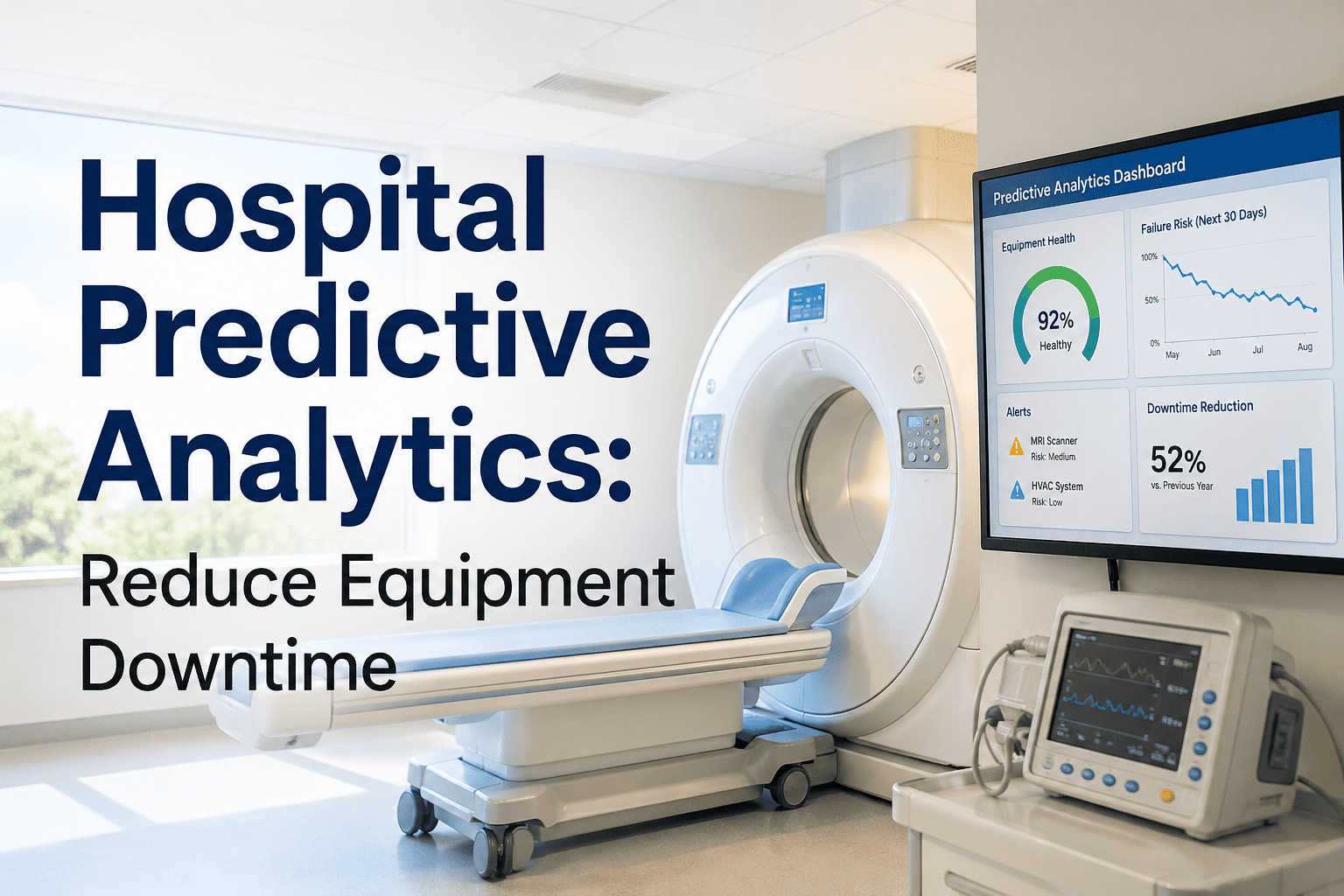
Every hour a critical imaging machine sits undetected in degraded condition, your hospital absorbs invisible losses — inflated repair costs, delayed diagnoses, regulatory exposure, and the silent erosion of patient trust that no budget line captures.
Is Your Equipment Health Data Working Against You?
Replace reactive maintenance guesswork with real-time AI health scores that prioritize risk, protect budgets, and prevent clinical disruption across your entire asset portfolio.
The Hidden Cost of Not Knowing Your Equipment's True Condition
For biomedical engineers managing hundreds of devices across a health system, the real risk is not the failure you see — it is the one you do not. Legacy CMMS platforms assign maintenance on schedules, not on condition. AI asset health scoring closes that gap by converting raw sensor data, usage logs, and service history into a single, real-time condition score for every device in your fleet.
Revenue Leakage
Unplanned downtime on high-revenue modalities like MRI and CT costs hospitals an average of $8,000–$12,000 per hour in deferred procedures and emergency rental fees.
Regulatory Exposure
TJC and CMS surveyors now flag equipment condition documentation gaps. A missing or inaccurate health record can trigger immediate corrective action plans and financial penalties.
Patient Safety
Devices operating in degraded condition without detection are a direct patient safety liability. AI scoring surfaces anomalies before they manifest as adverse events or recalls.
CapEx Waste
Without predictive condition data, replacement decisions are made on age alone. AI health scoring reveals which assets have remaining life and which are truly at end-of-service.
How AI Calculates Real-Time Asset Health Scores for Hospital Equipment
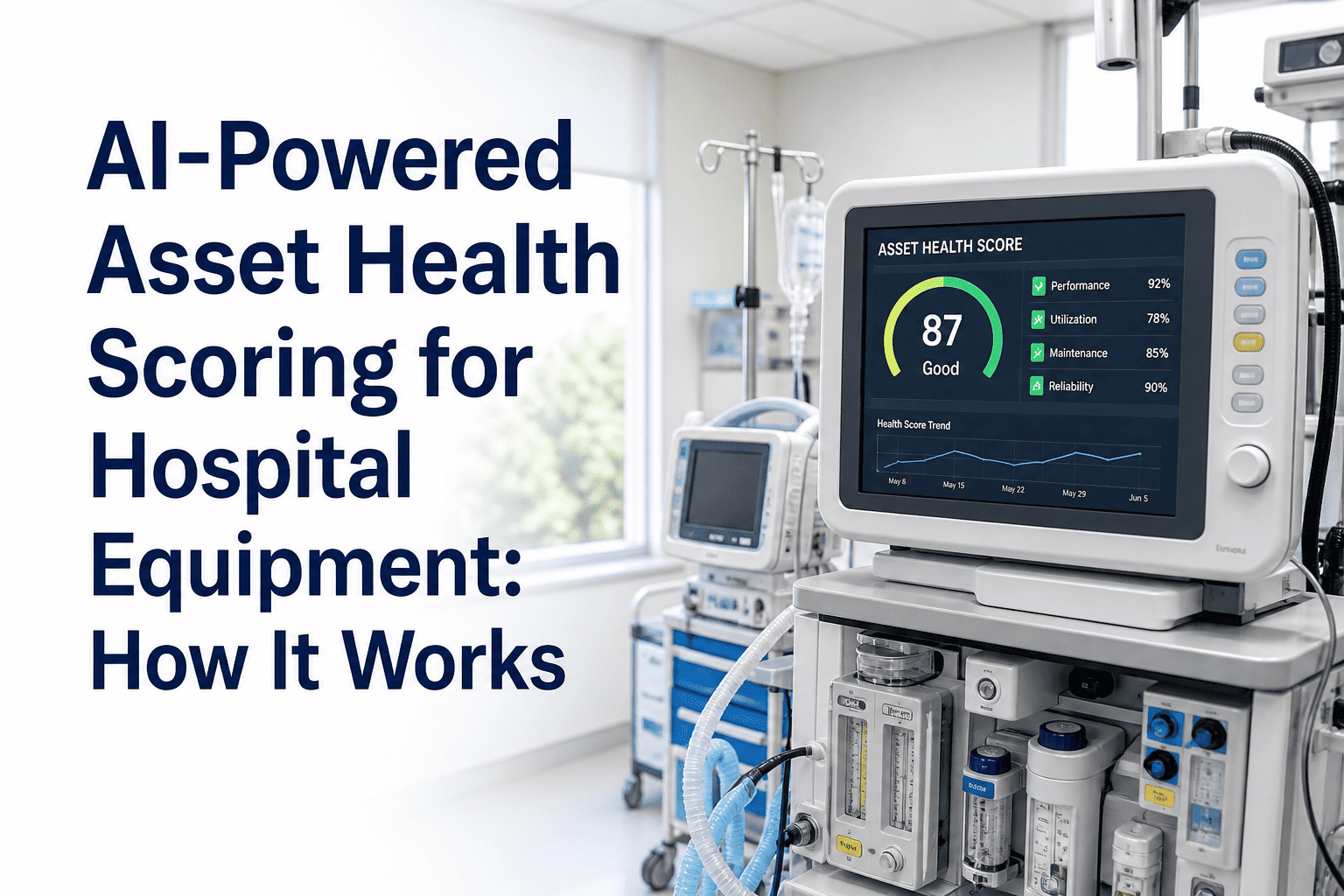
iFactory's condition intelligence engine aggregates multi-source signals into a normalized 0–100 health score updated continuously for every tracked device. The model is not a static formula — it learns from your fleet's unique usage patterns and refines its scoring weights over time.
Multi-Source Data Ingestion
Pulls from IoT sensors, OEM diagnostic feeds, CMMS work order history, PM compliance records, and clinical utilization logs — all normalized into a unified data schema.
Weighted Risk Modeling
Each data signal is weighted by device class, criticality tier, and historical failure correlation. A ventilator in an ICU carries a different risk profile than an infusion pump in a med-surg unit.
Anomaly Detection Layer
Computer vision and statistical outlier models flag deviations from the device's own baseline — not a generic threshold — enabling early detection of degradation unique to that asset.
Health Score Generation
Scores are recalculated continuously and surfaced in a color-coded dashboard. Devices in the 0–39 range trigger automated work order creation and supervisor alerts without manual input.
Replacement Prioritization Output
The platform generates a ranked CapEx recommendation list with total cost of ownership projections, giving finance and biomedical teams a single source of truth for budget cycles.
Legacy Friction vs. iFactory Optimized Excellence
The operational gap between schedule-based maintenance and AI-driven condition intelligence is not marginal — it is structural. The table below illustrates the compounding disadvantage of legacy programs across every clinical and financial dimension.
| Operational Dimension | Legacy Friction | iFactory AI Health Scoring | Clinical Impact | Financial Outcome |
|---|---|---|---|---|
| Condition Visibility | Manual rounds, point-in-time snapshots | Continuous real-time scoring per device | Earlier failure detection | Downtime reduced 60% |
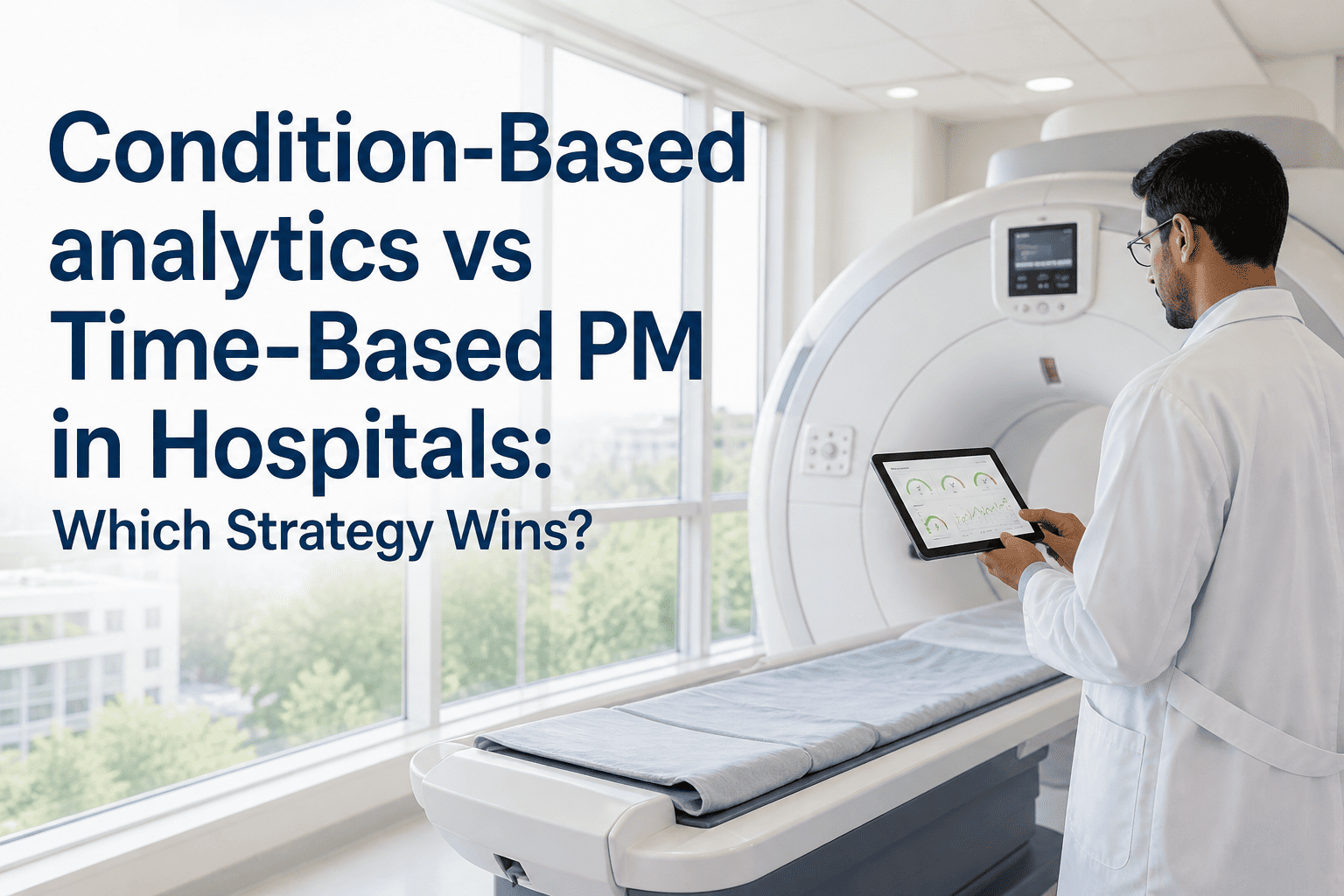
| Maintenance Triggers | Calendar intervals, regardless of use | Condition-based work order automation | Right-time interventions | PM cost cut 35% |
| CapEx Planning | Age-based replacement schedules | AI-ranked priority replacement queue | Safer fleet at all times | Budget accuracy +45% |
| Compliance Documentation | Manual logs, audit gaps, retrospective fixes | Immutable auto-generated audit trail | Survey readiness 24/7 | Penalty risk eliminated |
| Staff Workload | Reactive calls, emergency dispatches | Predictive alerts, prioritized queues | Reduced burnout | Labor efficiency +30% |
Three Clinical Outcomes That Justify Immediate Deployment
AI asset health scoring is not a back-office optimization. Its effects propagate directly into patient throughput, staff retention, and safety outcomes. Health systems that have deployed condition intelligence platforms consistently report improvements across these three dimensions within the first 90 days.
The Problem: Biomedical teams spend 40% of their time on reactive, unplanned repairs driven by surprise failures.
iFactory Solution: AI health scores shift the workload from reactive dispatch to proactive queue management.
Result: Teams report fewer emergency escalations, more predictable shifts, and measurably lower cognitive load per technician.
The Problem: A single unplanned imaging suite outage can delay 15–30 patient procedures per day and cascade into inpatient bottlenecks.
iFactory Solution: Devices scoring below threshold are flagged for preemptive service before failure occurs.
Result: Imaging availability rates increase, procedure backlogs shrink, and patient experience scores improve.
The Problem: Devices in undetected degraded states present direct patient safety risk — particularly in life-critical categories like ventilators, defibrillators, and infusion pumps.
iFactory Solution: Continuous anomaly detection surfaces risk before it becomes an adverse event or a reportable FDA MDR.
Result: Documented reduction in safety-related work orders and improved FMEA standing.
Your Fleet Is Generating Health Data Right Now. Are You Using It?
iFactory transforms raw equipment signals into a ranked, actionable health score for every asset in your portfolio — enabling smarter maintenance, safer care, and defensible CapEx decisions.
From Pilot to Portfolio-Wide Condition Intelligence in Four Phases
iFactory's deployment methodology is engineered for health systems operating under resource and compliance constraints. Each phase is scoped to deliver standalone value while building toward full portfolio-wide condition intelligence.
Scope: High-criticality device categories — imaging, life support, surgical.
Action: Integrate existing CMMS, OEM feeds, and IoT sensors into unified schema.
Output: Initial health score baseline for all enrolled assets.
Scope: AI model trained on your fleet's unique usage and failure history.
Action: Validate anomaly detection thresholds against known historical failures.
Output: Calibrated scoring engine with department-level risk stratification.
Scope: Connect health score triggers to CMMS work order automation.
Action: Configure alert routing by severity tier, device class, and responsible technician.
Output: Zero-touch maintenance dispatch for devices below threshold score.
Scope: Expand to full asset portfolio across all campuses and off-site locations.
Action: Activate predictive replacement ranking and annual CapEx planning module.
Output: Board-ready asset condition report with 5-year lifecycle projections.
AI Asset Health Scoring — Questions from Biomedical Engineering Leaders
Does the AI model require historical failure data to generate accurate health scores?
No. iFactory's engine uses a pre-trained foundational model calibrated on cross-industry equipment failure datasets, which generates baseline scores from day one. Your fleet's own history enriches and refines the model over time, improving accuracy with every completed work order and detected anomaly logged in the system.
How does the platform handle devices with no IoT connectivity?
Non-connected devices are scored using a hybrid model that combines CMMS service history, PM compliance records, age-adjusted utilization rates, and manual inspection inputs. The score is clearly labeled as "estimated" versus "live-monitored" so biomedical teams understand the data confidence level for each asset category.
Can health scores be used as supporting documentation during TJC surveys?
Yes. Every score calculation is backed by a timestamped, immutable audit log that records the contributing data signals, model weights, and resultant score at each interval. This log is exportable in TJC-aligned formats and can be presented as evidence of a condition-based maintenance program during Environment of Care reviews. Book a Demo to review compliance documentation architecture.
What is the typical ROI timeline for a health system deploying this platform?
Most health systems recover implementation costs within 9–14 months through reduced emergency repair spend, elimination of unnecessary PMs on healthy equipment, and avoided capital replacement of assets with remaining useful life. By year two, predictive avoidance of one major imaging failure typically exceeds the total platform cost for that year. Book a Demo to model your specific ROI scenario.
How does iFactory integrate with our existing CMMS and EHR infrastructure?
The platform supports bidirectional API integration with major CMMS platforms including TMS, Nuvolo, IBM Maximo, and ServiceNow. EHR utilization data from Epic and Cerner can be ingested to weight health scores by actual clinical usage patterns rather than estimated averages. Full integration mapping is provided during the onboarding assessment phase.
Start Scoring Every Asset in Your Fleet — Starting This Quarter
iFactory's AI health scoring platform deploys in weeks, not quarters. Get a live demonstration of real-time condition intelligence and a custom operational gap audit for your health system.

.png)
.png)