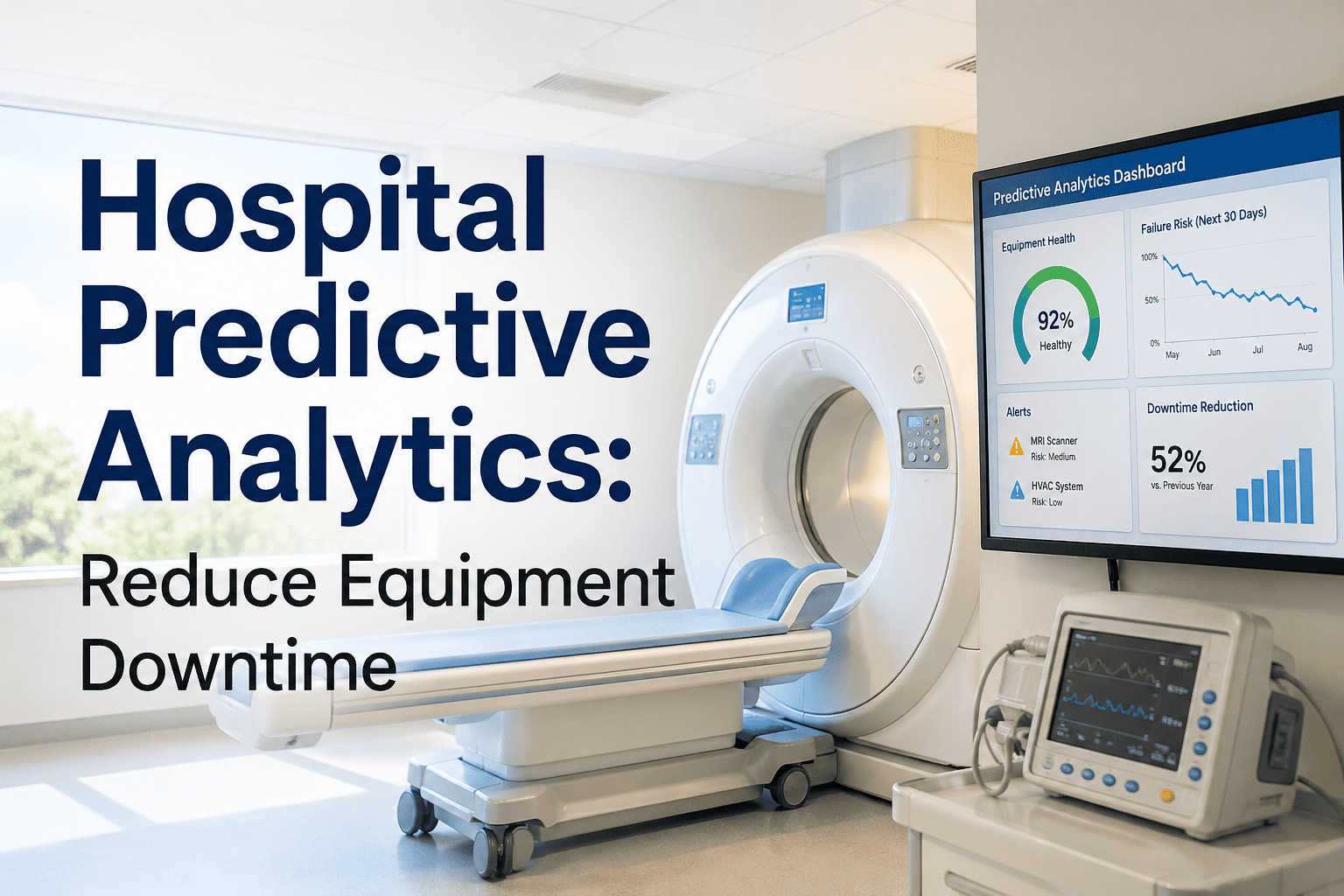
Every unplanned medical device failure costs your hospital between $12,000 and $45,000 in emergency repairs, clinical downtime, and patient diversion — and most clinical engineering teams are absorbing this loss silently, buried under reactive work orders and paper-based PM logs that were never designed for today's device volumes.
Is Equipment Failure Draining Your Operational Budget?
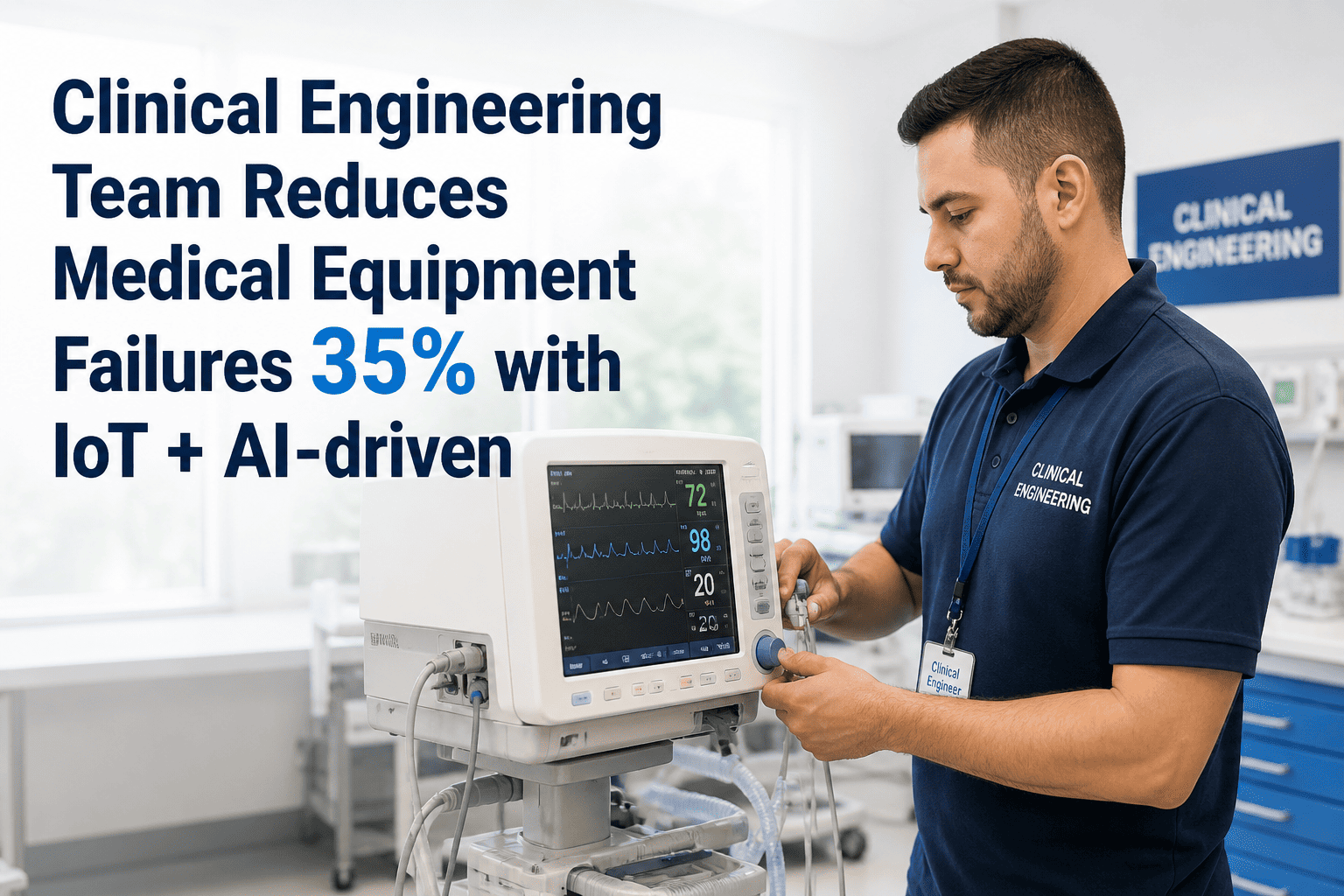
Discover how one clinical engineering team cut device failures by 35% using iFactory's IoT integration and AI-driven predictive maintenance — without adding headcount.
From Reactive Chaos to Predictive Precision: The Financial & Clinical Case
A regional health system's clinical engineering department — managing over 4,200 active devices across three campuses — deployed iFactory's IoT Integration platform and recorded measurable, auditable outcomes within 11 months.
The True Cost of Legacy Clinical Engineering Operations
Before iFactory, this clinical engineering team operated like most hospital biomed departments: reactive, paper-dependent, and perpetually understaffed relative to device volume. The pain points were systemic — not isolated incidents.
- Over 60% of work orders were unplanned emergency responses — consuming technician time budgeted for preventive maintenance
- No real-time device data — failures were discovered by clinical staff, not engineering, creating patient safety exposure windows
- Parts stockouts on high-failure components caused 3–7 day repair delays on critical infusion pumps and ventilators
- Regulatory PM compliance tracked manually in spreadsheets — audit failures were a recurring risk
- Technician burnout was measurable: avg. overtime hours exceeded 14 per week across the biomed team
- No cross-campus device visibility — each location operated as an independent silo with no shared data layer
How iFactory IoT Integration Was Deployed Across 4,200 Devices
iFactory's implementation team executed a structured, phased rollout — beginning with the highest-failure device classes and expanding systematically to the full fleet. No rip-and-replace. No EHR disruption. Full sensor-to-dashboard activation in 90 days.
IoT Sensor Deployment
- Retrofitted existing devices with iFactory-compatible IoT sensor nodes
- Captured usage cycles, temperature variance, power draw, and vibration signatures in real time
- No device downtime required during sensor installation
AI Model Calibration
- iFactory AI ingested 18 months of historical work order and failure data per device class
- Failure probability scores assigned to every device — updated dynamically as sensor data streams in
- Alert threshold tuning eliminated low-priority noise that caused technician fatigue
Automated PM Scheduling
- Static calendar-based PM replaced by condition-based, AI-triggered scheduling
- Work orders auto-generated with parts list, technician assignment, and regulatory documentation
- Compliance calendar synced with Joint Commission and DNV audit windows
Parts Inventory Optimization
- AI predicted parts demand based on device failure curves — not historical order averages
- Automated reorder triggers eliminated manual purchasing delays
- Parts holding costs reduced 22% while eliminating critical stockouts
Unified Multi-Campus Dashboard
- Single pane of glass for all 4,200 devices across three campuses
- Director-level reporting: failure rate trends, compliance posture, and technician utilization
- Exportable audit-ready documentation generated automatically for every PM event
Legacy Friction vs. iFactory Optimized Excellence
| Operational Area | Legacy State (Before iFactory) | iFactory Optimized (After) | Measured Impact |
|---|---|---|---|
| Failure Detection | Clinical staff reports device down | AI alert before clinical impact occurs | Patient Safety ↑ |
| PM Scheduling | Static calendar, manual assignment | Condition-based, auto-generated work orders | 68% Faster Cycles |
| Parts Availability | Reactive purchasing after stockout | Predictive reorder driven by failure curves | Zero Critical Stockouts |
| Compliance Tracking | Manual spreadsheets, audit risk | Auto-generated, timestamped audit trail | 100% Audit Ready |
| Device Visibility | Campus-level silos, no central view | Unified multi-campus real-time dashboard | 360° Fleet Control |
| Technician Workload | 14+ hrs overtime/week, burnout risk | AI-prioritized queue, balanced dispatch | Overtime Eliminated |
| Emergency Repair Spend | Unbudgeted, reactive capital drain | Forecasted, planned, and minimized | $1.4M Annual Savings |
How iFactory Solves the Three Biggest Clinical Engineering Pressures
Staff Burnout Reduction
- AI-ranked work queue eliminates reactive firefighting mode
- Technicians complete 40% more PMs per shift with guided workflows
- Overtime hours eliminated — team capacity reallocated to strategic projects
- Biomed satisfaction scores improved within 60 days of deployment
Patient Throughput Gains
- Unplanned equipment downtime reduced 35% — beds and procedure rooms stay operational
- OR equipment failures dropped 41% — fewer case delays and cancellations
- ICU device uptime improved — direct correlation to reduced patient transfer events
- Revenue-generating procedures protected from avoidable equipment failures
Regulatory & Risk Posture
- Joint Commission PM compliance reached 100% for the first time in five years
- Every device event auto-documented with technician signature and timestamp
- Risk stratification report exported quarterly for CFO and CNO review
- Cyber-secure IoT architecture — no PHI captured on device sensor network
Your Equipment Fleet Is Generating Failure Signals Right Now — Are You Listening?
Book a demo to see how iFactory transforms raw IoT sensor data into a ranked, actionable maintenance intelligence engine for your biomed team.
iFactory IoT Integration for Clinical Engineering — Key Questions Answered
Does iFactory integrate with our existing CMMS?
Yes. iFactory connects via open APIs to leading CMMS platforms including TMS, Nuvolo, ServiceNow, and custom-built systems. No replacement of existing infrastructure is required — iFactory adds an intelligence layer on top of your current workflow.
Which device classes are supported by IoT sensor monitoring?
iFactory supports infusion pumps, ventilators, imaging equipment, surgical robots, patient monitors, defibrillators, and sterilization units. Sensor compatibility spans over 200 OEM device models. Custom integration is available for proprietary hardware.
How does the AI model improve over time?
iFactory's AI continuously retrains on your facility's actual failure and repair data. Predictive accuracy improves each quarter as the model accumulates device-specific usage patterns — your outcomes compound over time rather than plateau.
Is patient data ever captured by the IoT sensor network?
No PHI is captured or transmitted on the iFactory IoT network. Sensors monitor device operational metrics only — usage cycles, power states, temperature, and performance signatures. The platform is fully HIPAA-architecture compliant. Book a Demo to review our security whitepaper.
What is the typical implementation timeline and resource requirement?
Full fleet sensor activation is completed in 90 days for health systems up to 5,000 devices. iFactory's implementation team manages all sensor deployment and configuration. Internal IT involvement is minimal — typically less than 12 hours of staff time for network access provisioning.
Join Clinical Engineering Leaders Already Operating at Predictive Precision
Stop absorbing the financial and clinical cost of reactive failures. iFactory deploys in 90 days, integrates with your existing CMMS, and delivers measurable ROI within the first fiscal year.


.png)