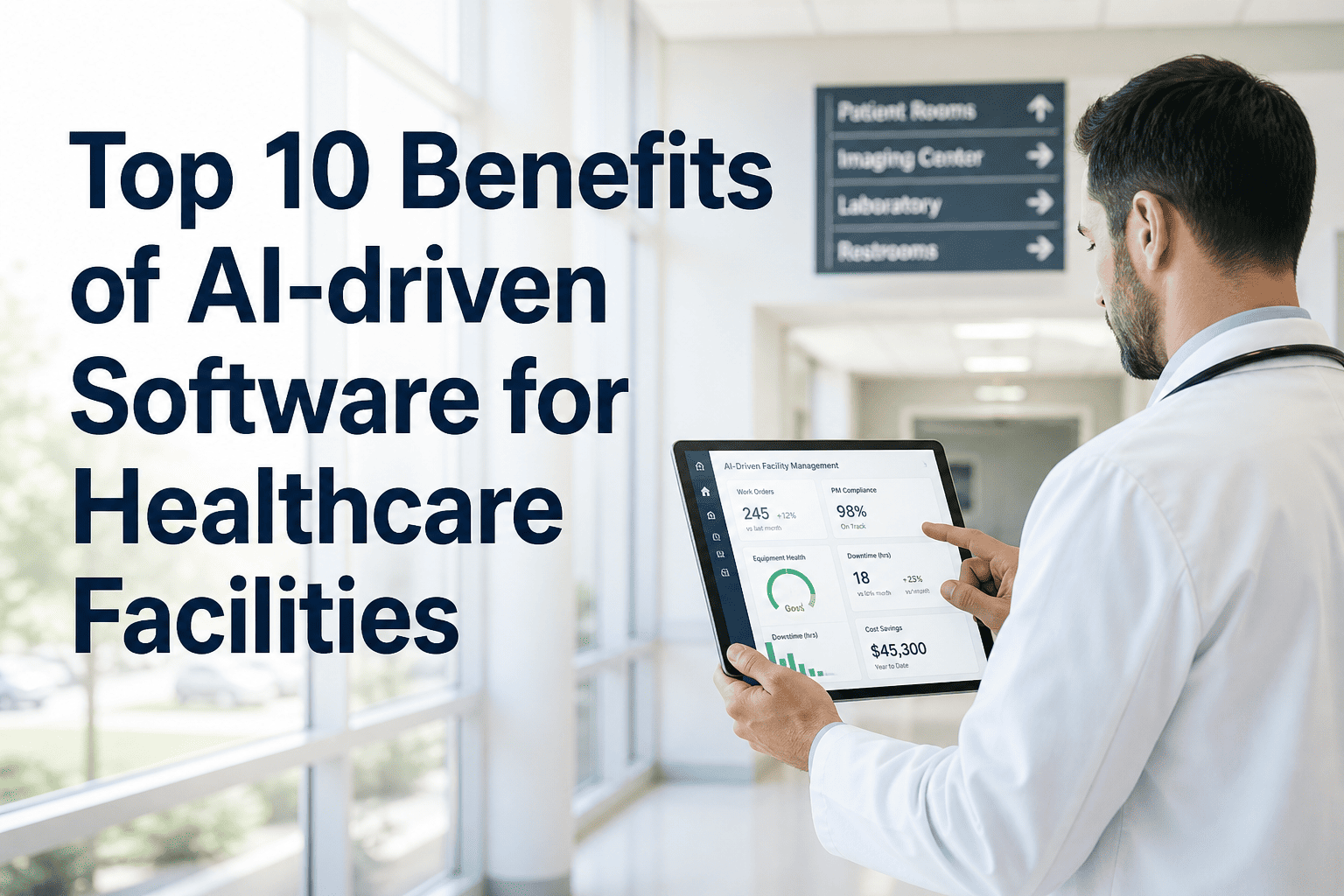
Healthcare facilities lose an estimated $8.3 billion annually to preventable equipment failures, compliance gaps, and reactive maintenance cycles — costs that never appear on a single line item but silently erode margins, staff morale, and ultimately, patient outcomes. Without an AI-driven operational layer, every unplanned downtime event, every missed inspection, and every paper-based audit is a compounding liability your facility can no longer afford to carry.
Is Your Facility Losing Revenue to Operational Blind Spots?
iFactory Healthcare delivers AI-driven visibility across every asset, workflow, and compliance obligation — purpose-built for Facility Directors managing complex clinical environments.
Why AI-Driven Software Is No Longer Optional for Healthcare Facilities
Facility Directors are being asked to do more with less — smaller budgets, tighter staffing, and growing regulatory scrutiny. AI-driven facility management software converts this pressure into measurable performance gains. Below are the 10 most impactful benefits your facility can realize within the first operational year.
Predictive Maintenance — Stop Reacting, Start Preventing
Automated Compliance Tracking — Zero Audit Anxiety
Asset Lifecycle Optimization — Maximize Every Capital Dollar
Intelligent Work Order Automation — Reclaim Your Team's Time
Real-Time Energy Analytics — Turn Utilities Into a Profit Center
Patient Safety Risk Reduction — Every System Failure Is a Patient Risk
Legacy Operations vs. iFactory AI-Optimized Excellence
| Operational Area | Legacy Friction | iFactory Optimized Excellence | Outcome Gain |
|---|---|---|---|
| Maintenance Scheduling | Calendar-based, manual entry | AI-triggered, condition-based | 35% Cost Reduction |
| Compliance Reporting | Paper logs, spreadsheet exports | Auto-generated, audit-ready records | 60% Labor Savings |
| Asset Tracking | Siloed per department | Unified lifecycle dashboard | +24 Mo. Asset Life |
| Work Order Dispatch | Phone/email, 47-min avg delay | AI-assigned, mobile-resolved | 90% Faster Closure |
| Energy Management | Reactive billing review | Predictive load optimization | 22% Cost Reduction |
| Safety Risk Management | Manual recall checking | Automated FDA alert quarantine | Real-Time Response |
Four More Strategic Advantages That Drive ROI
Vendor & Contract Intelligence
Staff Burnout Reduction
CapEx Budget Forecasting
Multi-Site Scalability
How AI-Driven Software Directly Improves Clinical Outcomes
Reduced Downtime Impact on Patient Throughput
Infection Control & Environmental Compliance
Staff Capacity Freed for Patient-Facing Work
Ready to Quantify What Operational Inefficiency Is Costing Your Facility?
Book a personalized demo or request a no-obligation Operational Gap Audit. Our healthcare operations specialists will map your current state against the iFactory optimized baseline — and show you exactly where revenue is leaking.
AI-Driven Healthcare Facility Software — Frequently Asked Questions
How long does implementation take for a mid-sized hospital?
Most facilities achieve full operational deployment within 6–8 weeks. iFactory's onboarding team handles data migration from legacy CMMS platforms, asset tagging configuration, and staff training — minimizing disruption to ongoing operations.
Does iFactory integrate with existing EHR and ERP systems?
Yes. iFactory supports bi-directional API integrations with Epic, Oracle Health, SAP, and major CMMS platforms. Your existing technology investments are preserved while gaining a unified AI intelligence layer on top.
How does the platform support Joint Commission readiness?
The platform auto-maps every maintenance action to the relevant EC, LS, and UT standards. Survey preparation time drops dramatically because every required document is already generated, timestamped, and accessible in a single compliance dashboard.
What is the typical ROI timeline for a health system?
Facilities typically see measurable ROI within 4–6 months through reduced emergency repair costs and compliance labor savings. Full capital payback, including predictive CapEx benefits, is typically realized within 18 months of go-live. Book a Demo to run our ROI model against your facility's data.
Join Healthcare Facilities Already Operating at AI-Driven Excellence
Every day without predictive intelligence is a day of avoidable cost, risk, and inefficiency. Take the first step toward a fully optimized facility operation.