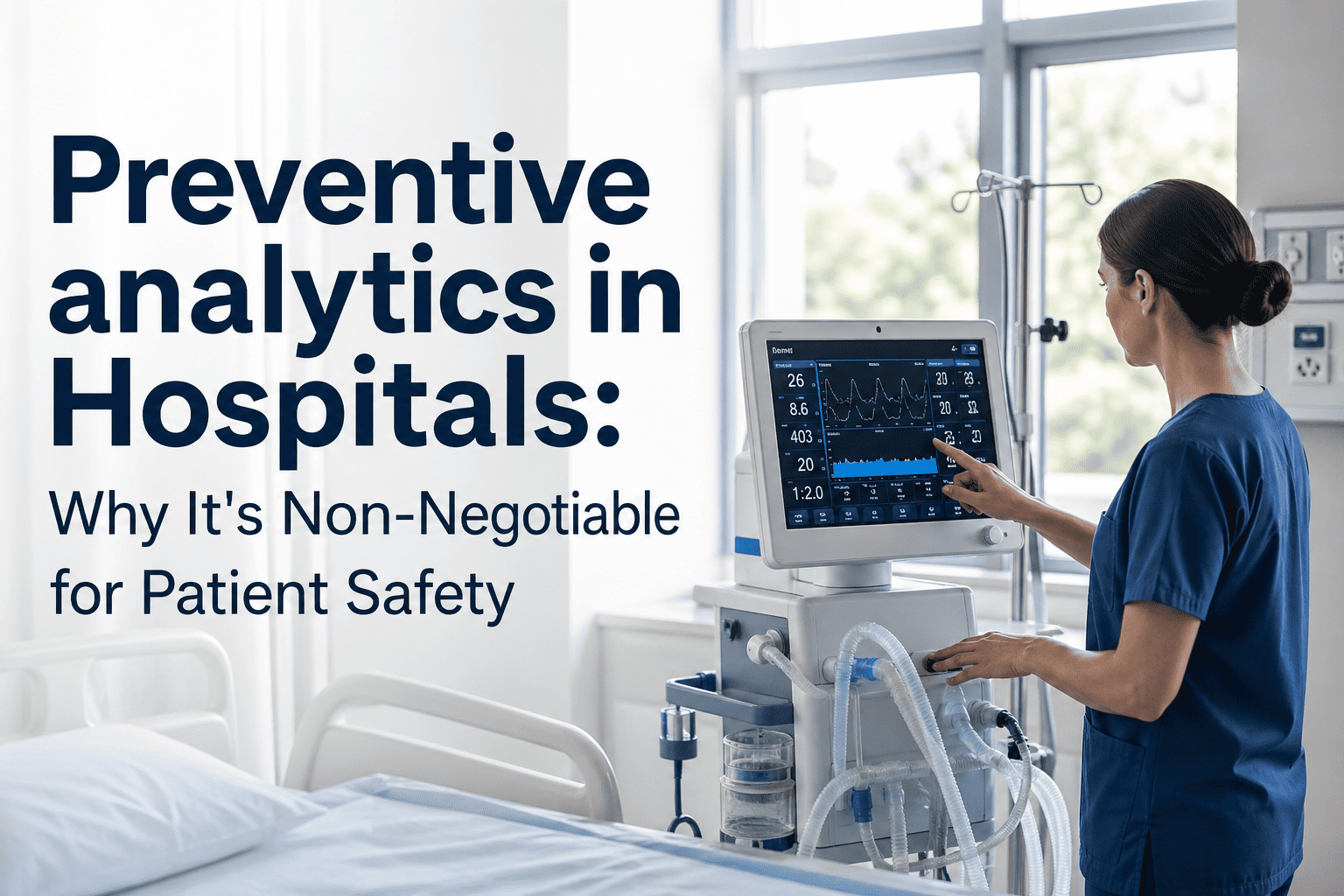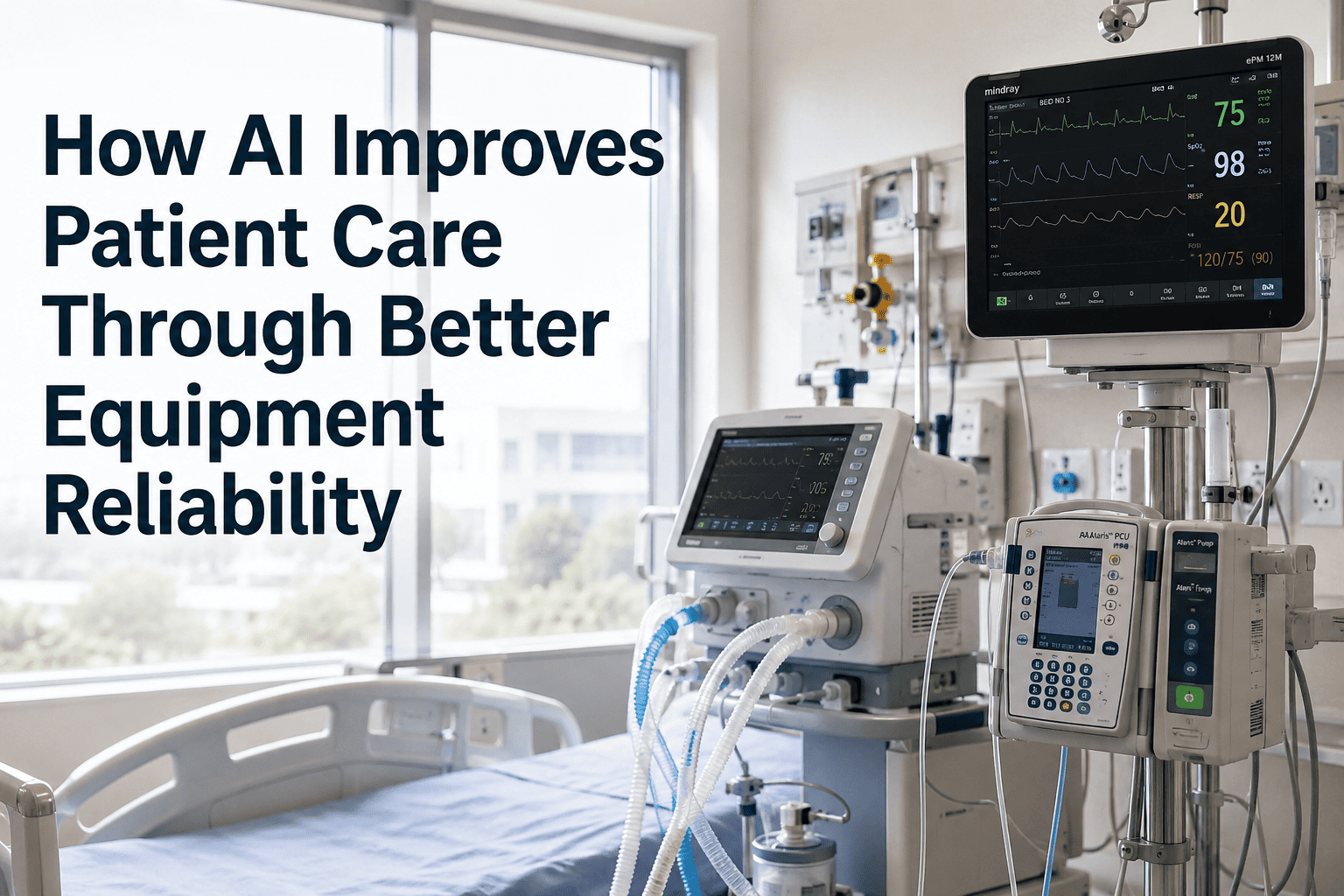
Every hour a ventilator fails unexpectedly, a nurse spends 23 minutes sourcing a replacement—time stolen directly from patients. For Chief Nursing Officers managing 400+ beds, fragmented equipment reliability is not a maintenance problem. It is a patient safety crisis, a staff burnout accelerant, and a direct threat to HCAHPS scores that determine reimbursement. The cost of inaction compounds silently: reactive repairs average 3–5× the cost of predictive interventions, yet most hospitals still operate on fixed-schedule maintenance that ignores real-world usage data entirely.
Is Equipment Failure Quietly Eroding Your Patient Outcomes?
iFactory's AI analytics platform predicts failures before they occur—protecting patients, reducing nurse burden, and improving HCAHPS scores at scale.
The Clinical & Financial Case for AI-Driven Equipment Reliability
AI-driven analytics transforms equipment reliability from a cost center into a patient safety and revenue protection strategy. For CNOs, the ROI is measurable across three dimensions: clinical outcomes, operational efficiency, and financial performance.
Revenue Protection
- Prevent reimbursement penalties tied to preventable adverse events
- Protect value-based care contract performance scores
- Reduce unplanned capital expenditure from catastrophic device failure
- Lower reactive repair costs by up to 60% year-over-year
Risk Mitigation
- Eliminate ventilator and infusion pump failure as a never-event risk
- Reduce Joint Commission citation exposure from equipment gaps
- Create immutable audit trails for every device lifecycle event
- Meet CMS Conditions of Participation for medical equipment standards
Scalable Outcomes
- Deploy analytics across 100 to 10,000+ devices from a single dashboard
- Integrate with existing CMMS and EHR platforms without rip-and-replace
- Scale predictive models as device fleet and patient census grow
- Achieve measurable HCAHPS improvement within 90-day deployment cycles
How AI Predicts Equipment Failure Before It Reaches the Bedside
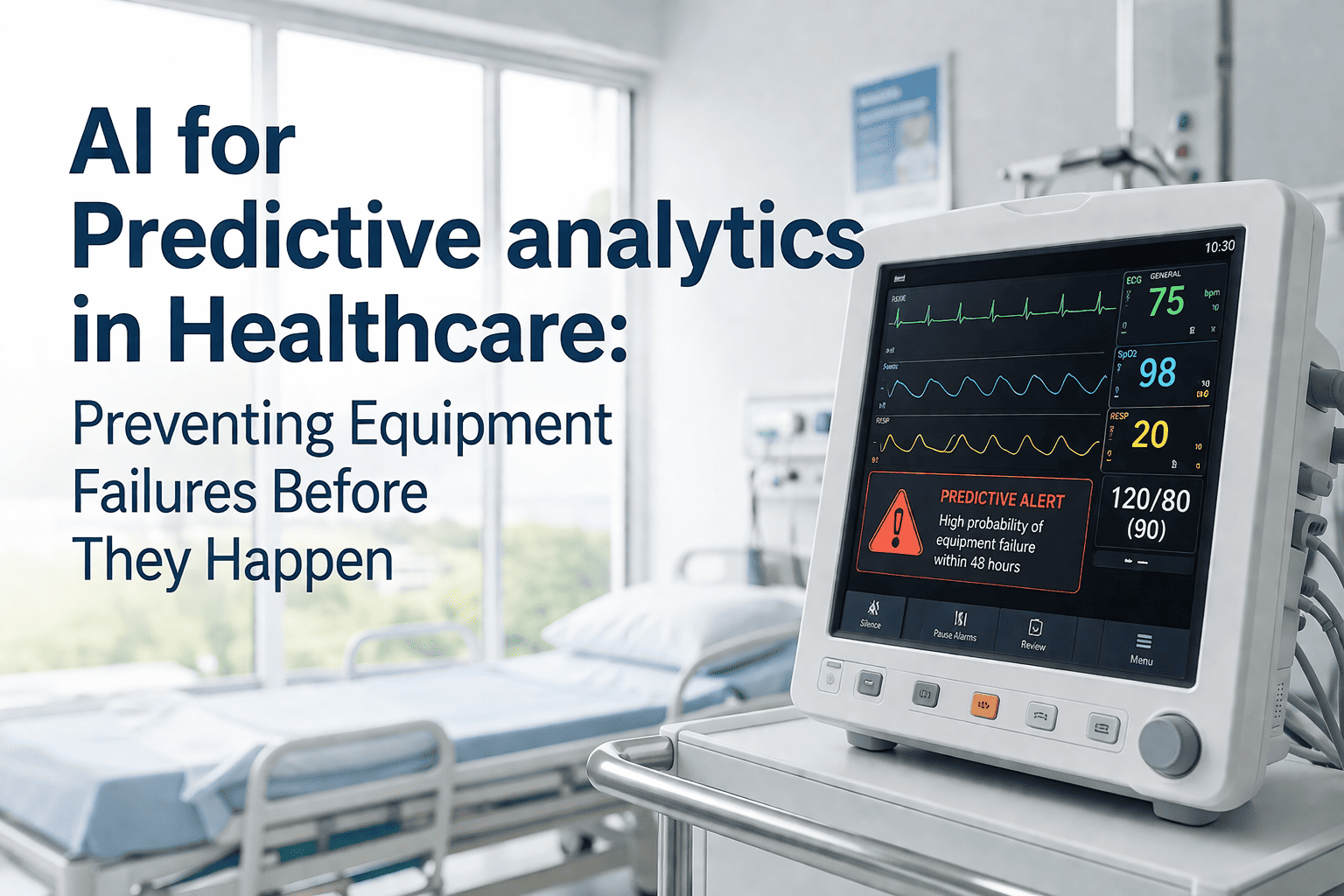
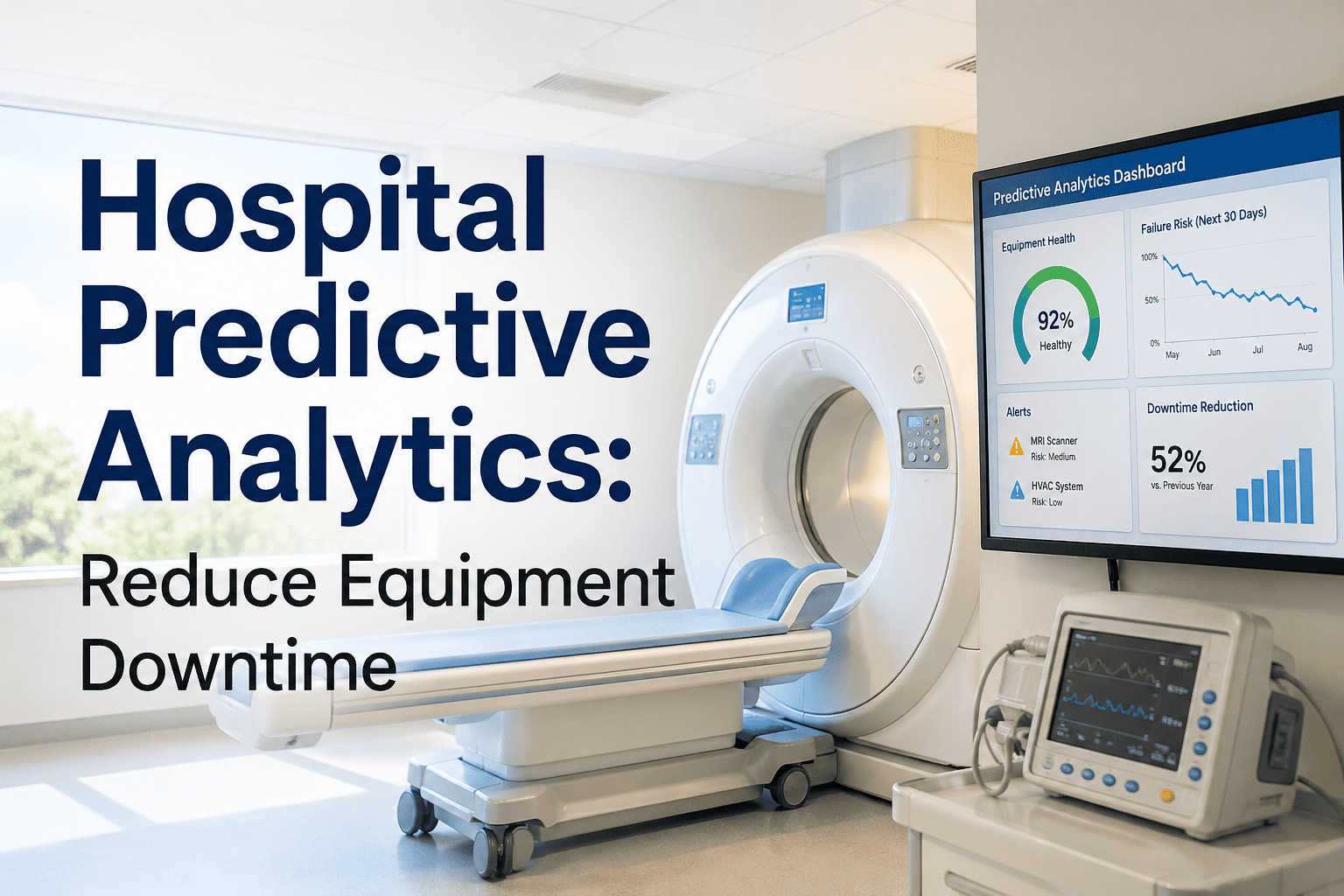
Predictive analytics ingests real-time usage telemetry, maintenance history, and environmental sensor data to generate failure probability scores for every device in your fleet. The result: clinical teams receive actionable alerts hours or days before a device fails—not after a patient is already at risk.
Continuous Sensor Ingestion
- Real-time data streams from ventilators, infusion pumps, and nurse call systems
- Environmental inputs including temperature, humidity, and power fluctuations
- Historical usage cycles cross-referenced against manufacturer lifecycle benchmarks
Failure Probability Modeling
- Machine learning models trained on hospital-specific device failure patterns
- Anomaly detection flags deviations from baseline performance in milliseconds
- Risk-tiered alerts prioritized by patient acuity and device criticality
Automated Work Order Generation
- High-risk devices trigger immediate biomedical engineering dispatch
- Maintenance records automatically logged to your existing CMMS platform
- Spare device reservations initiated before the at-risk unit is pulled from service
Outcome Measurement & Reporting
- Real-time dashboards track mean time between failures across device categories
- Executive reports correlate equipment uptime with patient satisfaction scores
- Quarterly ROI summaries translate reliability metrics into avoided cost calculations
Legacy Friction vs. iFactory Optimized Excellence
The operational gap between reactive maintenance and AI-driven reliability is not incremental—it is transformational. This matrix reflects the reality CNOs face daily across equipment-dependent care environments.
| Dimension | Legacy Friction | iFactory Optimized Excellence | Clinical Impact |
|---|---|---|---|
| Maintenance Trigger | Fixed calendar schedule | AI-predicted failure threshold | Patient Safety |
| Ventilator Downtime | Unplanned, reactive response | Proactive swap before failure | Zero-Event Risk |
| Infusion Pump Errors | Manual log review post-incident | Real-time anomaly detection | Medication Safety |
| Nurse Call Reliability | Complaints trigger investigation | Predictive component replacement | HCAHPS Lift |
| Biomed Dispatch | Manual ticket submission | Automated AI-generated work orders | Staff Efficiency |
| Audit Readiness | Paper logs, fragmented records | Immutable digital audit trail | Compliance Risk |
| Capital Planning | Reactive replacement budgets | AI-driven lifecycle forecasting | CapEx Optimization |
Three Outcomes That Define the CNO's Value Proposition
Staff Burnout Reduction
- Eliminate nurse time spent locating functional replacement devices
- Remove reactive escalation workflows that fragment care delivery
- Reduce after-hours biomedical calls that increase staff fatigue
- Restore nursing focus to patient-facing care, not equipment management
Patient Throughput Increase
- Eliminate equipment-related delays in admission and discharge workflows
- Ensure critical devices are available at peak census without rationing
- Reduce procedure cancellations caused by unavailable or failed equipment
- Increase OR and ICU utilization rates through guaranteed device readiness
HCAHPS Score Improvement
- Functional nurse call systems directly improve responsiveness domain scores
- Reduced equipment alarms lower noise complaints in patient satisfaction surveys
- Reliable IV and infusion delivery improves pain management perception scores
- Visible operational excellence builds patient and family trust in care quality
High-Risk Equipment Segments Where AI Delivers Immediate ROI
Not all devices carry equal risk. iFactory's AI prioritizes monitoring intensity based on patient acuity, device failure consequence, and regulatory exposure. These four categories represent the highest-impact starting point for any reliability transformation initiative.
Mechanical Ventilators
- Predict compressor degradation 48–72 hours before failure
- Monitor circuit integrity and alarm parameter drift in real time
- Automate spare unit reservation before patient risk window opens
Infusion Pump Systems
- Detect motor wear patterns linked to occlusion misread events
- Flag software anomalies before they surface as dosing errors
- Track battery degradation cycles to prevent mid-infusion shutdown
Nurse Call Infrastructure
- Monitor call button responsiveness and speaker clarity over time
- Predict panel failures before entire unit communication is disrupted
- Correlate system uptime data directly with HCAHPS responsiveness scores
Patient Monitoring Systems
- Detect sensor calibration drift before it generates false alarms
- Predict display and connectivity failures in telemetry units
- Reduce alarm fatigue by eliminating equipment-generated false positives
Transform Equipment Reliability Into a Patient Care Competitive Advantage
iFactory's AI-driven platform gives CNOs real-time visibility into every device in their fleet—turning reactive chaos into proactive patient safety leadership.
AI Equipment Reliability — Questions CNOs Ask First
Does implementation require replacing our existing CMMS or EHR systems?
No. iFactory integrates via vendor-neutral APIs with your existing CMMS, EHR, and biomedical engineering platforms. There is no rip-and-replace requirement—analytics layers on top of your current infrastructure within weeks, not months.
How quickly can we expect to see measurable improvements in equipment uptime?
Most health systems report statistically significant reductions in unplanned device failures within the first 60–90 days of deployment, as the AI baseline is established and high-risk devices are flagged for proactive intervention in the first operational cycle.
Is the platform compliant with HIPAA and CMS equipment standards?
Fully. All telemetry is processed within HIPAA-compliant, AES-256 encrypted environments. The platform generates immutable device audit logs that satisfy CMS Conditions of Participation for medical equipment and support Joint Commission survey readiness. Book a Demo to review our compliance architecture.
Can the platform scale as our system acquires additional hospitals or campuses?
Yes. The platform is architected for multi-facility, multi-campus deployment. Device fleets across acquired facilities can be onboarded to the same dashboard without architectural changes, allowing system-wide reliability benchmarking from a single executive view.
Start With a No-Cost Operational Gap Audit for Your Fleet
iFactory's clinical operations architects will analyze your current equipment reliability posture and identify your highest-risk failure points within 30 days.