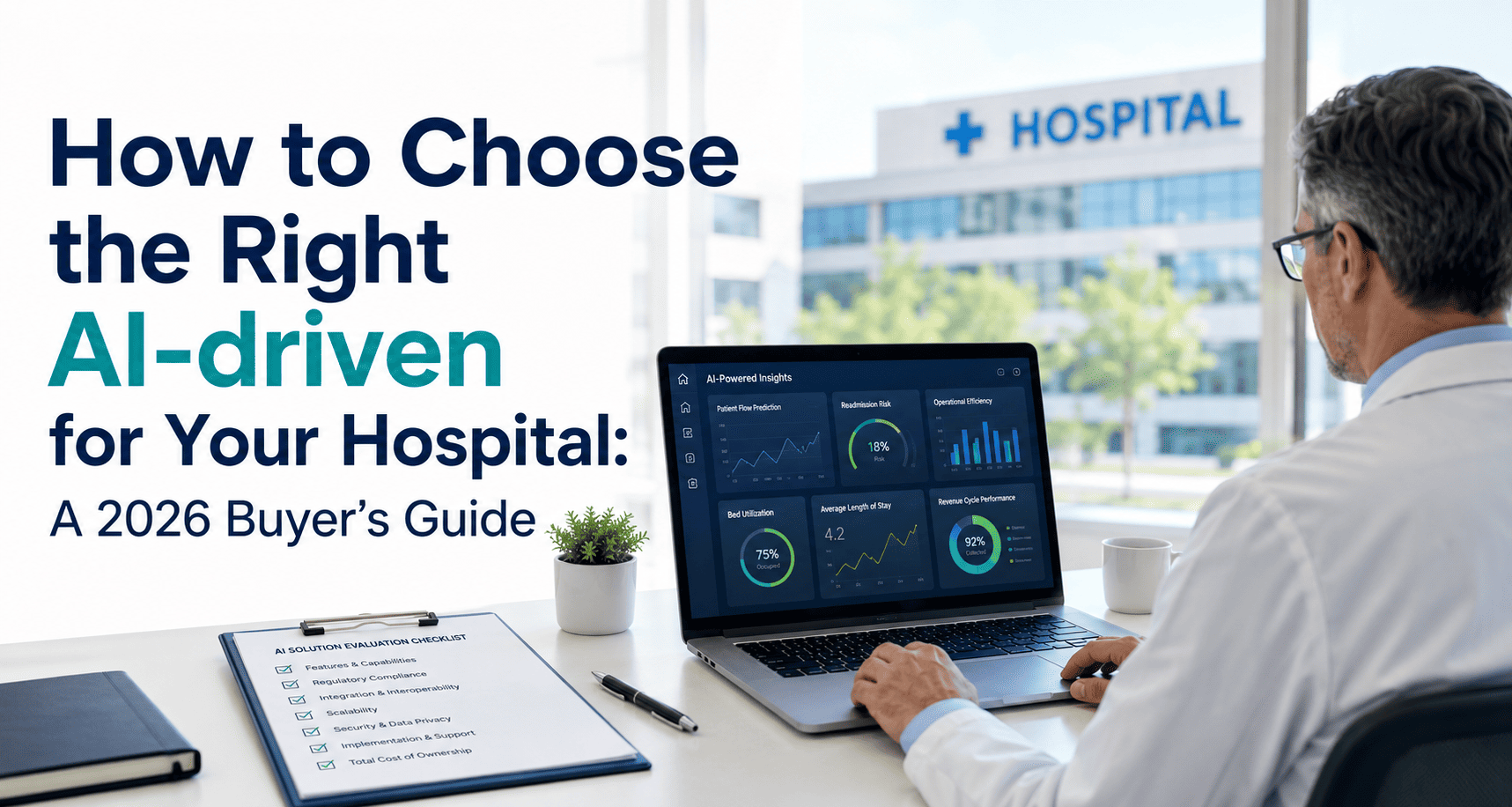
Every 11 minutes, a U.S. hospital loses an average of $4,700 to preventable inefficiencies — fragmented workflows, delayed decisions, and misaligned systems. By 2026, facility directors who haven't deployed AI-driven analytics are not just behind the curve — they are actively hemorrhaging revenue, accelerating staff burnout, and exposing their organization to preventable clinical risk. This guide exists to help you stop that bleeding.
Is Your Hospital Evaluating AI-Driven Analytics the Right Way?
Get the executive framework used by top facility directors to evaluate, compare, and deploy AI-driven hospital platforms that drive real clinical and financial outcomes.
Why the Wrong AI Platform Costs More Than No Platform at All
Selecting AI-driven healthcare analytics is not a technology decision — it is a financial and clinical governance decision. The wrong platform locks you into vendor dependency, erodes staff confidence, and delivers dashboards without decisions. The right platform compounds value across your entire asset lifecycle.
Revenue Leakage Prevention
AI-driven platforms identify billing gaps, undercoded procedures, and missed charge captures — recovering 3–7% of annual revenue that legacy systems leave on the table.
Clinical Risk Reduction
Predictive deterioration models and real-time alert systems reduce adverse events by flagging at-risk patients before a crisis develops — not after.
Staff Burnout Mitigation
Automated scheduling optimization and intelligent task routing reduce administrative burden by up to 40%, directly addressing the #1 driver of nursing turnover.
Scalability for Growth
Enterprise-grade architecture that scales from a single facility to a 50-hospital system without renegotiating contracts or rebuilding integrations from scratch.
The 7 Non-Negotiable Criteria for Hospital AI Platform Selection
Most vendor scorecards evaluate features. Leading facility directors evaluate outcomes and risk exposure. Use this framework before your next vendor call.
EHR Integration Depth
Demand native, bidirectional integration with Epic, Cerner, and Oracle Health — not middleware workarounds. Shallow integrations create data lag that nullifies real-time decision support.
HIPAA & HITRUST Compliance Architecture
Verify SOC 2 Type II certification, HITRUST CSF validation, and immutable audit logs. Non-compliant platforms expose your organization to OCR fines averaging $1.9M per incident.
Explainable AI (XAI) for Clinical Accountability
Black-box AI has no place in clinical environments. Require platforms that show clinicians exactly why a recommendation was generated — supporting defensible, auditable care decisions.
Real-Time Operational Dashboards
Batch-processed reporting is obsolete. Your platform must deliver sub-60-second latency on bed occupancy, OR utilization, and ED throughput data for meaningful operational response.
Predictive Maintenance for Medical Equipment
AI-driven asset management reduces unplanned equipment downtime by up to 55% — protecting both patient safety and capital replacement budgets across your facility portfolio.
Staff Workflow Automation
Evaluate intelligent routing for nursing assignments, supply chain requests, and discharge coordination. Manual handoffs between these functions cost 12–18 minutes per patient transition.
Vendor Scalability & Exit Clarity
Demand data portability guarantees, open API architecture, and a documented off-boarding protocol. Vendor lock-in is the single largest hidden cost in healthcare AI contracts.
Legacy Friction vs. iFactory Optimized Excellence
The operational gap between a fragmented legacy stack and a unified AI platform is not incremental — it is transformational. This matrix translates the difference into outcomes your CFO and CMO will recognize.
| Operational Domain | Legacy Friction State | iFactory Optimized State | Measurable Impact | Risk Level (Inaction) |
|---|---|---|---|---|
| Revenue Cycle | Manual charge capture, 5–9% leakage rate | AI-assisted coding with real-time gap alerts | +$2.4M avg. annual recovery | Critical |
| ED Throughput | Static bed boards, 4.2hr avg. wait time | Predictive bed management, dynamic rerouting | 31% wait time reduction | Critical |
| Staff Scheduling | Manual rosters, 22% overtime overspend | AI-demand forecasting, automated shift fill | 18% labor cost reduction | Critical |
| Equipment Uptime | Reactive maintenance, unplanned downtime | Predictive sensors, condition-based servicing | 55% fewer unplanned outages | High |
| Compliance Reporting | Manual audits, 3–5 day reporting lag | Automated audit trails, real-time dashboards | Zero OCR reporting gaps | High |
| Supply Chain | Par-level guessing, 14% overstock waste | Consumption-based AI reorder triggers | 11% supply cost reduction | Moderate |
How AI-Driven Platforms Solve the Three Crises Hitting Every Hospital in 2026
Three forces are colliding to create a perfect storm for facility directors: a nursing shortage projected to reach 450,000 vacancies, a CMS reimbursement tightening cycle, and accelerating patient acuity complexity. AI-driven platforms are the only scalable response.
AI automates 60% of non-clinical documentation burden. Intelligent task assignment eliminates the manual triaging that consumes 2.3 hours of every nurse's 12-hour shift.
- Automated shift optimization
- AI-assisted documentation
- Real-time workload balancing
- Predictive staffing demand models
Predictive discharge planning, bed orchestration, and OR scheduling AI increase patient throughput by 28% without adding a single bed or staff member to your facility.
- Dynamic bed management engine
- AI-predicted discharge timelines
- OR block time optimization
- ED diversion prevention alerts
NLP-driven charge capture and denial management AI close the billing gaps that manual review consistently misses — turning compliance overhead into a net revenue center.
- Automated charge reconciliation
- Denial pattern prediction
- Prior authorization AI workflows
- Value-based care performance tracking
Stop Evaluating. Start Transforming Your Hospital's AI Infrastructure Today.
iFactory's platform is purpose-built for healthcare facility directors who need measurable results — not another dashboard. Book your Strategic Workflow Audit and see exactly where your revenue and efficiency gaps are hiding.
Hospital AI Platform Selection — Questions Every Facility Director Should Ask
How long does a typical AI platform implementation take for a mid-size hospital?
A phased deployment with iFactory typically achieves core module go-live in 90 days. Full enterprise integration, including EHR bidirectional sync and staff training, completes within 6 months — with measurable ROI data available at the 120-day mark.
Can the platform integrate with our existing Epic or Cerner instance without a rip-and-replace?
Yes. iFactory uses HL7 FHIR R4 and proprietary API connectors to integrate natively with Epic, Cerner, Oracle Health, and 40+ ancillary systems. No legacy system replacement is required — the platform layers intelligence on top of your existing stack. Book a Demo to review the technical architecture.
How does the AI ensure clinical recommendations are explainable to physicians?
Every AI-generated recommendation includes a transparency panel showing the contributing data variables, confidence threshold, and comparable historical patient cohorts. This Explainable AI (XAI) design satisfies both clinical governance requirements and physician adoption standards.
What is the typical ROI timeline for hospital AI platform investment?
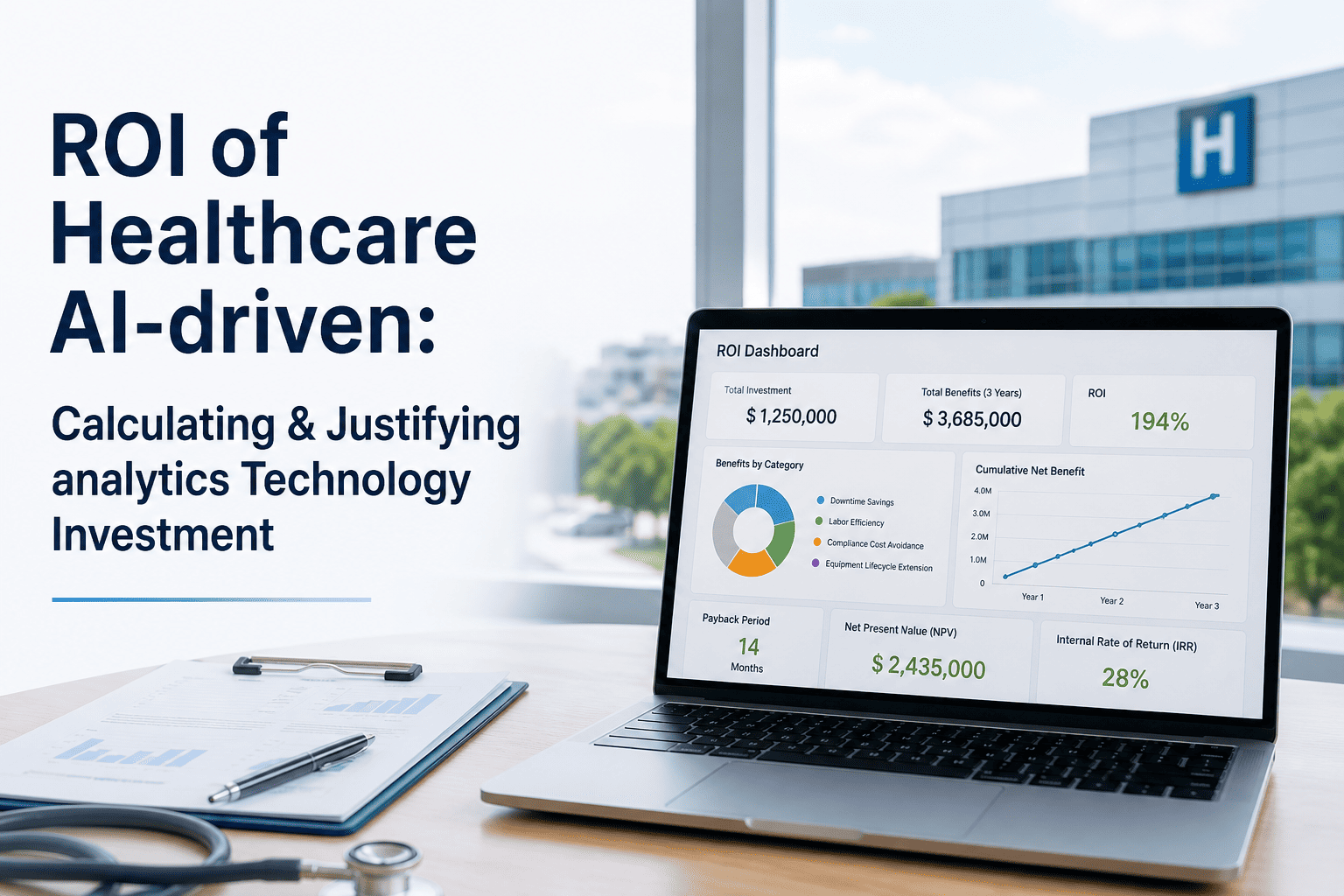
Most iFactory clients see measurable cost savings within the first 90 days through automated charge capture and overtime reduction. Full investment payback occurs at an average of 14 months, with year-three cumulative ROI exceeding 340% when predictive maintenance and denial management modules are active. Book a Demo to run your facility-specific ROI model.
How does iFactory handle data sovereignty and multi-facility security requirements?
The platform deploys on GovCloud-compliant and healthcare-dedicated private cloud environments. AES-256 encryption at rest and in transit, role-based access controls, and immutable audit logging are standard — not add-ons. HITRUST CSF and SOC 2 Type II certifications are maintained continuously.
Get Your Personalized Hospital Operational Gap Audit — At No Cost
In 30 minutes, our clinical operations architects will benchmark your current workflows against top-performing health systems and identify your highest-ROI AI deployment opportunities.