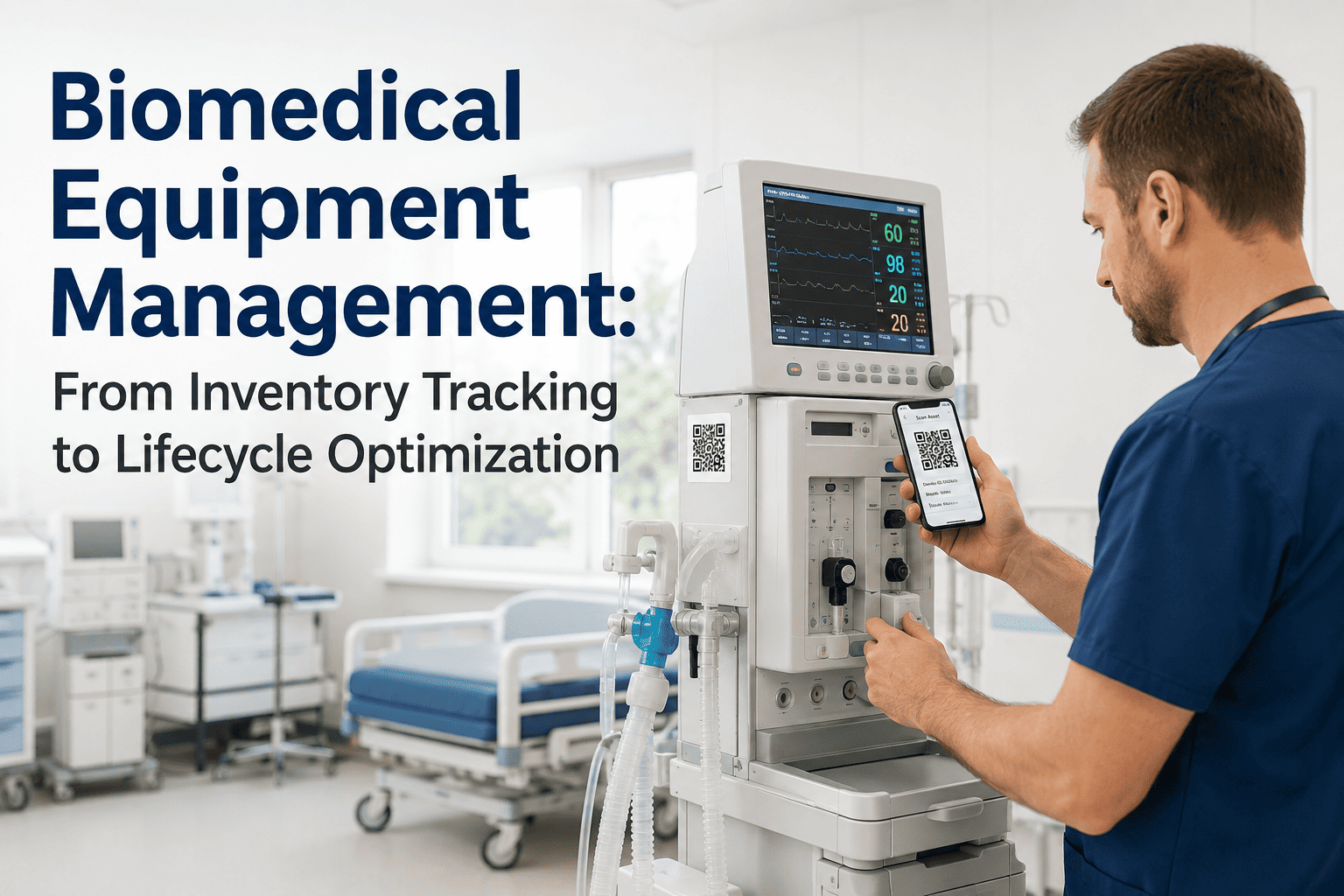
Every hour a critical imaging device sits unscheduled for preventive maintenance, your hospital bleeds revenue, exposes patients to undetected risk, and quietly hands your clinical engineering team an impossible workload. Biomedical equipment management is no longer a back-office function—it is a direct line to your organization's financial health, regulatory standing, and patient safety record. Yet most healthcare systems still rely on fragmented spreadsheets, paper logs, and reactive repair cycles that cost 3–5× more than proactive lifecycle planning. iFactory Healthcare closes that gap—transforming asset chaos into a single, intelligent command layer.
Is Your Equipment Lifecycle Costing You More Than It Should?
Book a Strategic Workflow Audit and discover hidden cost leakage across your biomedical asset portfolio—before it becomes a compliance event.
The Financial Case for Intelligent Biomedical Management
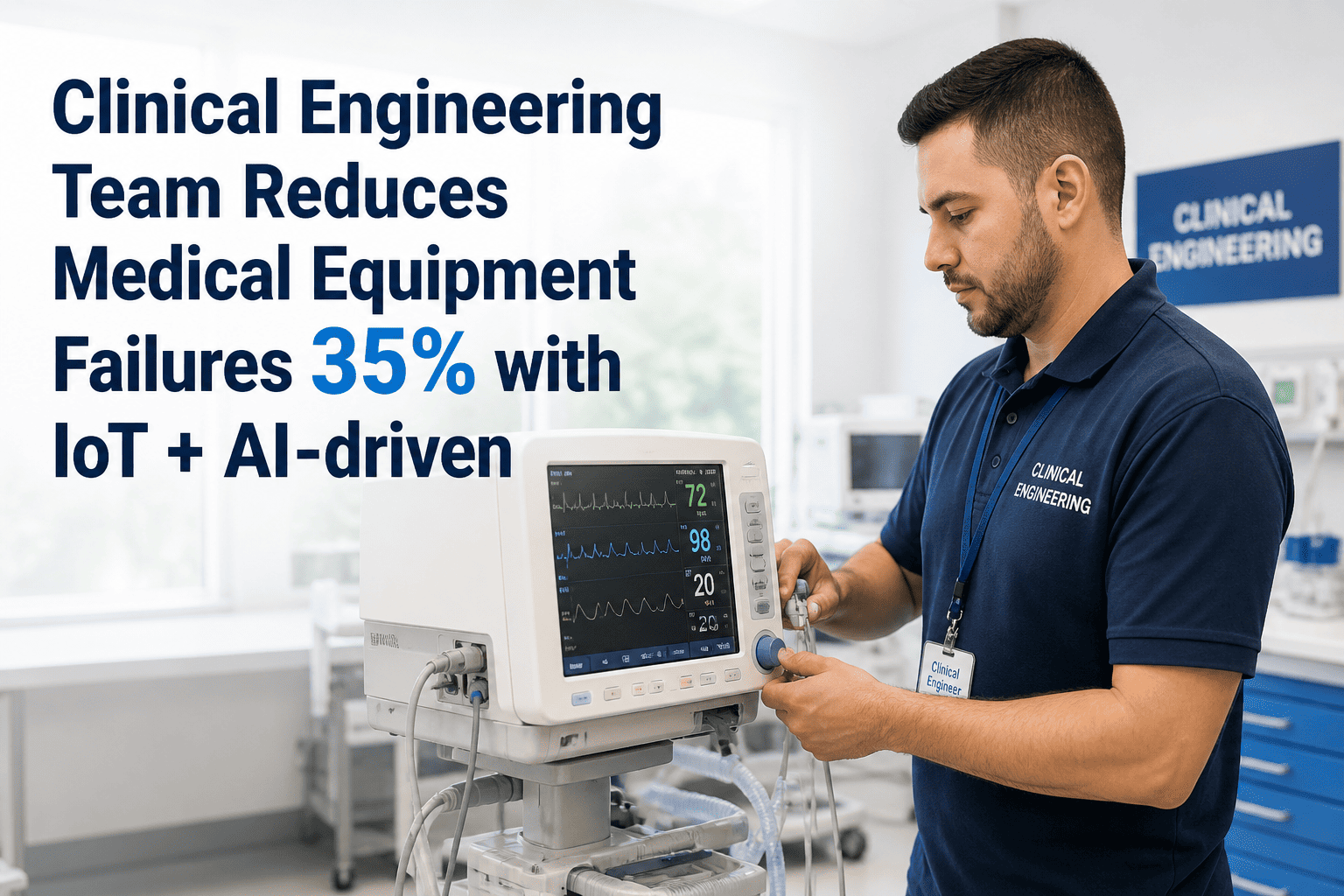
Clinical engineering leaders face a convergence of pressures: aging device fleets, shrinking capital budgets, escalating Joint Commission scrutiny, and BMET staff stretched across hundreds of assets simultaneously. The result is a silent operational hemorrhage. iFactory Healthcare translates technical asset data into measurable financial and clinical outcomes.
AI-driven PM scheduling eliminates reactive repair cycles and keeps critical devices at the bedside.
QR-based asset tracking generates real-time compliance records, eliminating pre-survey scrambles.
TCO modeling surfaces true device costs, enabling data-driven replacement over costly over-repair.
From Inventory Tracking to Full Lifecycle Intelligence
iFactory Healthcare delivers a unified platform purpose-built for biomedical teams managing complex, multi-site device fleets. Each capability is designed to reduce friction, increase BMET productivity, and protect capital investment.
QR-Based Asset Tracking
- Scan any device to instantly pull full service history
- Real-time location visibility across all departments
- Eliminates ghost assets and duplicate records
- Reduces inventory audit time by up to 60%
AI-Driven PM Scheduling
- Auto-generates PM work orders based on usage data
- Prioritizes high-risk, high-utilization equipment first
- Sends automated alerts before compliance windows close
- Syncs BMET calendars to eliminate scheduling conflicts
TCO & Lifecycle Analytics
- Calculates true cost per device including labor and parts
- Flags equipment entering the diminishing returns curve
- Generates capital replacement projections for CFO review
- Benchmarks device performance against peer institutions
Regulatory Compliance Engine
- Auto-logs every maintenance action with technician signature
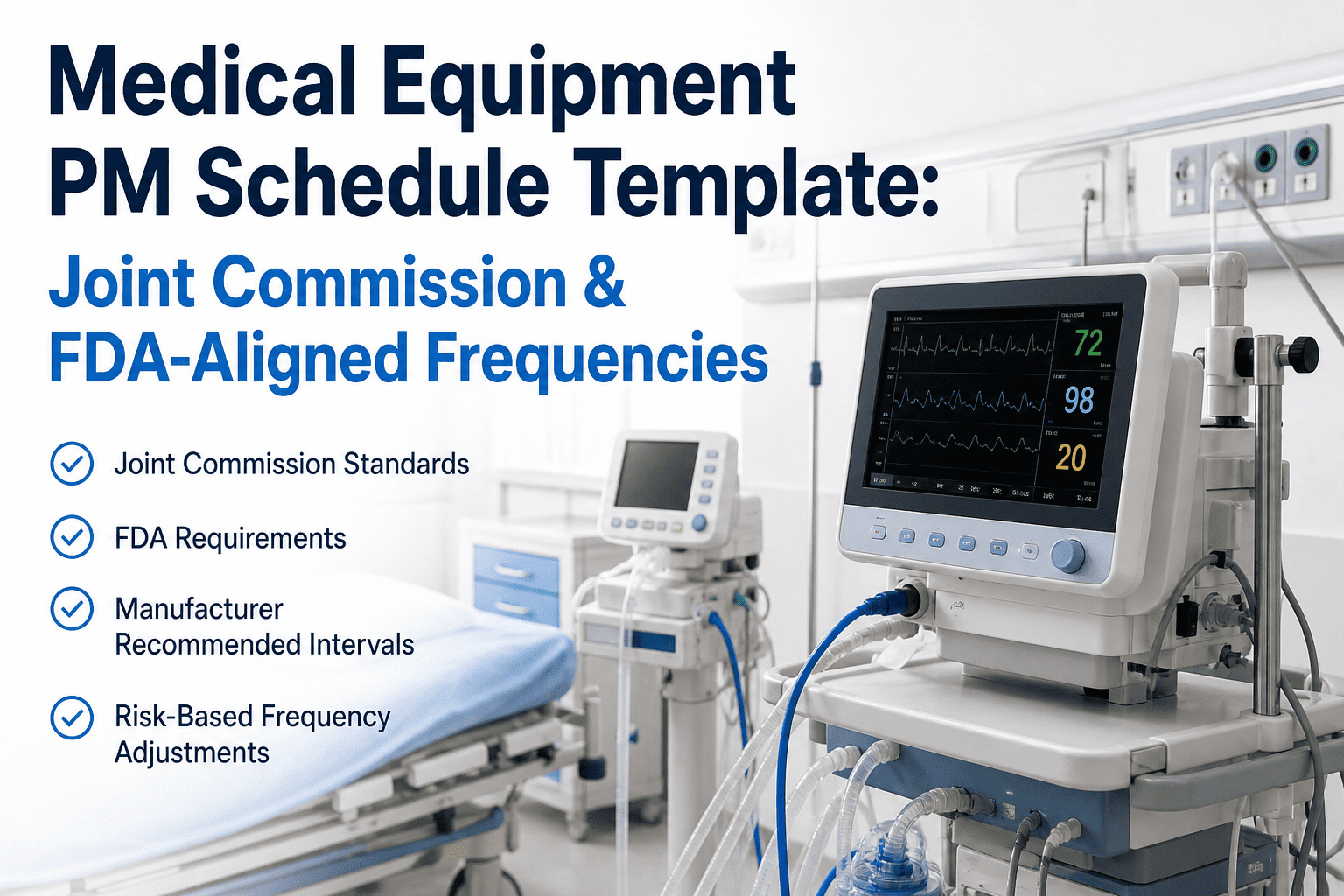
- Maps PM records to Joint Commission and DNV standards
- Generates ready-to-submit audit packages in one click
- Alerts on expired equipment certifications proactively
Legacy Friction vs. iFactory Optimized Excellence
The operational gap between spreadsheet-driven biomedical programs and AI-integrated platforms is not incremental—it is transformational. The table below exposes the true cost of legacy workflows against iFactory's enterprise architecture.
| Operational Area | Legacy Friction | iFactory Optimized Excellence | Clinical Impact |
|---|---|---|---|
| Asset Inventory | Manual spreadsheets, data decay, ghost assets | QR scan — live, accurate, department-mapped | 60% faster audits |
| PM Scheduling | Calendar reminders, missed windows, reactive repairs | AI-generated work orders triggered by usage data | 40% less downtime |
| Cost Visibility | No TCO model; over-repair of end-of-life devices | Per-device TCO dashboard with replacement triggers | 25% lower TCO |
| Compliance Records | Paper logs, pre-survey scrambles, citation risk | Immutable digital logs, one-click audit packages | Zero citation risk |
| BMET Productivity | Manual dispatch, phone calls, duplicate work orders | Mobile-first workflow with intelligent task routing | 35% more capacity |
| Capital Planning | Gut-feel decisions, budget surprises, deferred CapEx | Predictive replacement forecasts tied to device data | Proactive CapEx |
Solving the Three Core Pressures on Clinical Engineering Teams
Beyond ROI, iFactory Healthcare directly addresses the human cost of fragmented biomedical operations—staff burnout, patient throughput delays, and compliance anxiety that falls squarely on your clinical engineering leadership.
Eliminate BMET Burnout
- Intelligent dispatch removes manual coordination overhead
- Mobile work orders eliminate paper-based back-and-forth
- Automated PM reminders free technicians for complex repairs
- Clear priority queues reduce decision fatigue on shift
Increase Patient Throughput
- Fewer unplanned outages keep imaging and monitoring online
- Faster device retrieval through real-time location tracking
- Predictive PM prevents mid-shift equipment failures
- Higher device uptime directly supports care team efficiency
Reduce Regulatory Exposure
- Every maintenance action logged with technician accountability
- Automated alerts prevent compliance window expirations
- Survey-ready documentation generated in minutes, not days
- Full audit trail defensible to Joint Commission and DNV
From Legacy System to Optimized Platform in Four Phases
iFactory Healthcare deploys through a structured, low-disruption onboarding process designed for active clinical environments. Each phase delivers immediate value while building toward full lifecycle intelligence.
Asset Digitization & QR Tagging
- Full inventory census with QR code deployment across all devices
- Historical service records migrated into unified digital profiles
- Department mapping and location hierarchy configured
PM Workflow Automation
- AI calibrates PM intervals based on manufacturer specs and usage data
- Work order automation connected to BMET mobile app
- Compliance calendar aligned to accreditation standards
TCO Analytics Activation
- Cost modeling enabled per device, per department, per fleet
- Repair-vs-replace intelligence surfaced in real time
- Capital forecasting dashboard delivered to finance leadership
Lifecycle Optimization & Scale
- Longitudinal trend analysis predicts structural asset decline
- Platform scales to multi-site and system-level deployments
- Ongoing AI model refinement as device fleet data matures
Common Failures in Biomedical Equipment Management Programs
Device records split across CMMS, spreadsheets, and paper logs create data inconsistencies that invalidate compliance filings and inflate audit preparation time.
Without usage-based PM triggers, teams respond to failures rather than preventing them—driving repair costs 3–5× higher than proactive equivalents.
Over-investing in aging devices while under-allocating CapEx to high-utilization assets—a direct result of having no per-device cost intelligence.
Paper-based maintenance records are vulnerable to loss, error, and challenge during surveys—creating citation exposure and liability for the institution.
Without intelligent dispatch, high-skill technicians spend hours on low-complexity tasks while mission-critical repairs queue behind administrative bottlenecks.
Siloed tools that function for one facility collapse when extended to health system scale—requiring duplicate platforms, duplicate costs, and fragmented oversight.
Stop Managing Equipment. Start Optimizing It.
Book a Demo or request an Operational Gap Audit to see exactly where your biomedical program is leaking cost, compliance, and BMET capacity—and how iFactory closes every gap.
Biomedical Equipment Management — Frequently Asked Questions
Does iFactory integrate with existing CMMS platforms?
Yes. iFactory connects to leading CMMS platforms via standard APIs, enabling bi-directional data sync without requiring a full system replacement. Your existing work order history is preserved and enriched with AI-driven analytics.
How quickly can QR asset tracking be deployed across a large hospital?
Most facilities complete QR tagging and digital inventory setup within 2–4 weeks using iFactory's guided onboarding program. Our implementation team works alongside your BMET staff to minimize disruption to active clinical operations.
Is the platform compliant with Joint Commission and DNV audit requirements?
Absolutely. Every maintenance action creates an immutable, timestamped digital record tied to the responsible technician. Audit packages aligned to Joint Commission's EC.02.04.01 standard can be generated in minutes. Book a Demo to review our compliance documentation architecture.
How does the TCO model determine when a device should be replaced vs. repaired?
The platform tracks cumulative repair costs, downtime frequency, and manufacturer end-of-life timelines per device. When repair investment crosses a configurable TCO threshold relative to replacement cost, the system flags the device for capital review and generates a CFO-ready justification report.
Can the platform scale across a multi-hospital health system?
Yes. iFactory is architected for enterprise-scale deployment with role-based access controls, system-level dashboards, and consolidated reporting across all facilities. Health system clinical engineering leaders gain a single view of every asset across the entire portfolio. Book a Demo to see our multi-site architecture in action.
Launch Your Biomedical Lifecycle Intelligence Program Today
Join healthcare systems already reducing equipment costs and strengthening compliance with iFactory's AI-driven biomedical management platform.



.png)