Your autoclave validation failures do not begin on the shop floor — they begin the moment your maintenance team operates without predictive intelligence. Every failed sterilization cycle that escapes detection costs your facility an average of $180,000 in rework, regulatory exposure, and production halt. As the executive accountable for GMP compliance, batch release velocity, and FDA audit outcomes, you cannot afford a maintenance program built on static schedules and paper-based IQ/OQ/PQ logs. This guide presents the operational framework for transforming your autoclave and sterilizer fleet into a fully validated, analytics-driven asset — and eliminating the compliance risk that keeps quality directors awake at night.
Is Your Sterilization Infrastructure Audit-Ready?
Deploy predictive analytics across your autoclave and sterilizer fleet with full IQ/OQ/PQ documentation, steam quality telemetry, and GMP-compliant cycle validation — managed from a single operational dashboard.
The Strategic Case for Predictive Autoclave Analytics in Regulated Manufacturing
Pharmaceutical-grade sterilization is the single most audited process in any FDA-regulated facility. Yet the majority of lifecycle managers still rely on calendar-based preventive maintenance — a model that generates compliance documentation without generating compliance confidence. The convergence of IoT sensor telemetry, AI-driven cycle analytics, and digital validation protocols has fundamentally changed what "qualified" means for sterilization assets. A platform that integrates steam quality measurement, gasket wear prediction, calibration scheduling, and automated IQ/OQ/PQ record generation does not merely reduce downtime — it converts your sterilization infrastructure into a defensible, audit-ready quality system. You can schedule a strategic session to map your current qualification gaps against a fully integrated analytics architecture.
Steam Quality Analytics
Continuous monitoring of dryness fraction, superheat, and non-condensable gas levels. Automated alerts when steam quality deviates from validated parameters before cycle failure occurs.
Cycle Validation Engine
Real-time F₀ value computation, temperature mapping overlays, and biological indicator correlation — automatically packaged into 21 CFR Part 11-compliant validation records.
Gasket & Seal Intelligence
Predictive wear modeling for door gaskets, valve seats, and pressure-retaining components. Replace based on actual condition data, not arbitrary schedules that over-service or miss critical failures.
IQ/OQ/PQ Documentation Suite
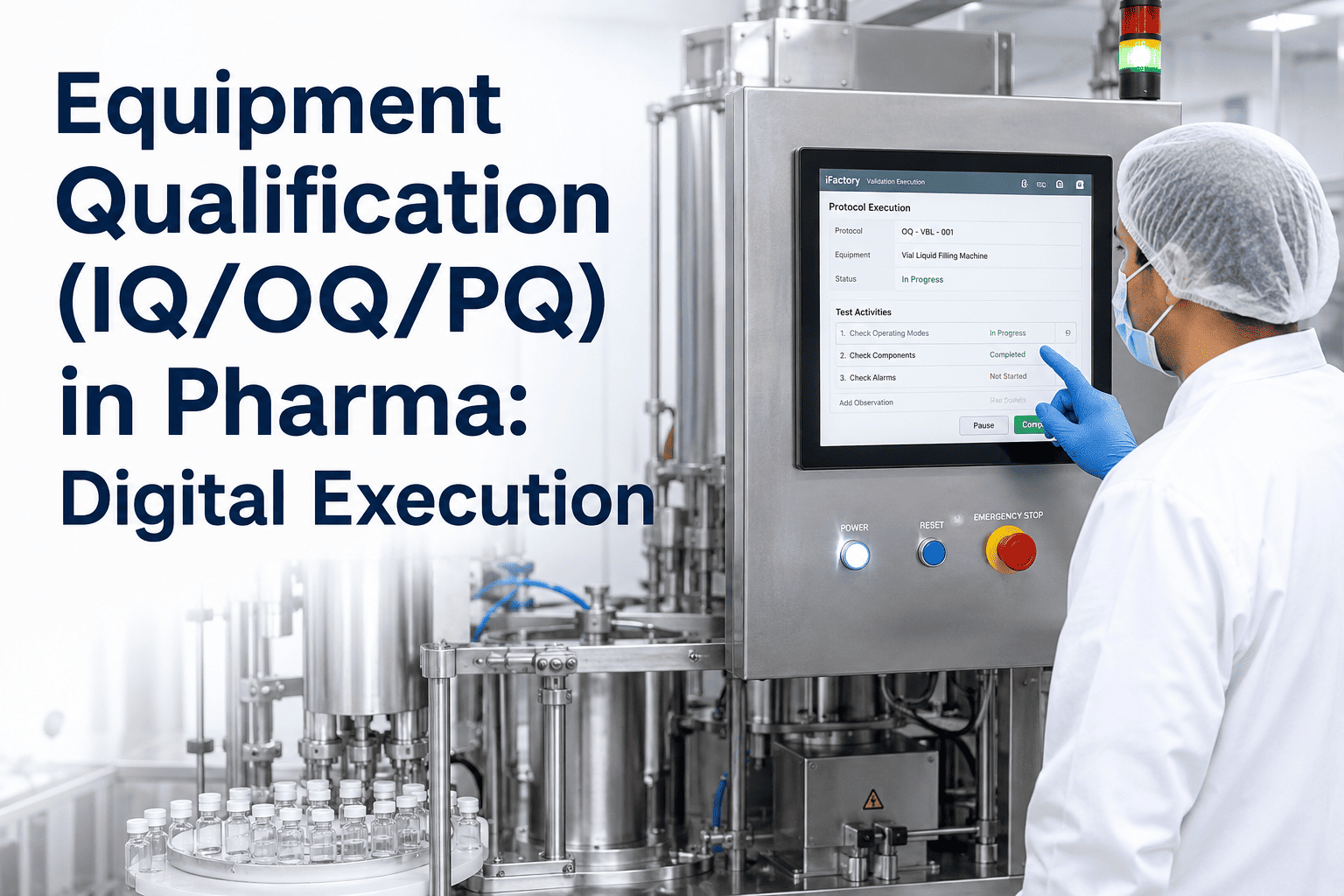
Automated generation of Installation, Operational, and Performance Qualification packages. Digitally signed, timestamped, and stored in a sovereign GMP-compliant data environment ready for inspector review.
Current State vs. Future State: The Cost of Inaction
The table below is not a theoretical exercise — it is the operational reality documented across pharmaceutical manufacturers that have undergone FDA Warning Letter remediation. Each row represents a measurable financial exposure that your current maintenance model is either generating or ignoring. Request an operational audit to quantify your facility's specific exposure across each dimension.
| Operational Dimension | Current State (Reactive) | Future State (Predictive Analytics) | Financial Impact | Compliance Risk |
|---|---|---|---|---|
| Cycle Validation Records | Manual paper logs, fragmented binders | Auto-generated 21 CFR Part 11 digital records | $40K–$120K/audit remediation savings | Critical |
| Steam Quality Monitoring | Periodic manual testing, quarterly reports | Continuous IoT telemetry with deviation alerts | Prevents $180K+ batch rejection events | Critical |
| Gasket Replacement Schedule | Fixed-interval calendar replacement | Condition-based predictive replacement triggers | 35–50% reduction in parts expenditure | Elevated |
| Calibration Management | Spreadsheet tracking, manual reminders | Automated scheduling with out-of-tolerance AI flags | Eliminates $25K–$60K re-qualification cycles | Elevated |
| IQ/OQ/PQ Package Generation | Weeks of manual compilation per qualification event | Platform-generated packages in under 4 hours | 80% reduction in qualification labor cost | Manageable |
| Unplanned Downtime Exposure | Reactive repair after cycle failure | AI-predicted failure window with pre-scheduled intervention | $8K–$22K per avoided production halt | Manageable |
Five-Phase Deployment Architecture for GMP-Compliant Analytics Integration
Deploying predictive analytics within a validated pharmaceutical environment requires a change-controlled implementation methodology. Every integration step must be documented, risk-assessed, and approved through your site's quality management system. The following architecture has been validated across FDA and EMA-regulated facilities and is designed to cause zero disruption to active production cycles during deployment. Schedule a strategic session to review how this phased model maps to your site's current validation status and upcoming FDA inspection timeline.
Asset Baseline & Risk Stratification
Conduct a comprehensive inventory of all autoclave and sterilizer assets. Assign criticality ratings based on production dependency, historical failure frequency, and regulatory exposure. This baseline becomes the foundation of your analytics deployment priority matrix.
IoT Sensor Integration & Telemetry Architecture
Install validated temperature, pressure, and steam quality sensors across the sterilizer fleet. All sensor configurations are documented in a User Requirements Specification (URS) and integrated into the platform via GMP-validated data pipelines with full audit trail capability.
AI Model Training & Cycle Validation Correlation
Train predictive models on historical cycle data, biological indicator results, and maintenance records. The AI establishes performance baselines for each unique sterilization cycle program and begins generating deviation probability scores for proactive intervention scheduling.
IQ/OQ/PQ Qualification of the Analytics Platform
Execute formal qualification of the analytics platform itself per your site's validation master plan. Pre-written validation protocols (IQ, OQ, PQ) are provided, reducing your quality team's authoring burden by over 70% while maintaining full regulatory defensibility under 21 CFR Part 11 and Annex 11.
Continuous Lifecycle Optimization & Regulatory Reporting
Activate automated regulatory reporting dashboards that compile cycle performance trends, calibration status, and qualification currency into inspection-ready packages. Lifecycle optimization recommendations are generated quarterly based on accumulated operational data across the entire fleet.
How Predictive Sterilizer Analytics Delivers Scalable Risk Mitigation
The following impact grid translates platform capabilities into the operational outcomes that matter to your Quality VP, Plant Manager, and CFO simultaneously. These are not projected averages — they represent validated outcomes from integrated analytics deployments across pharmaceutical and biotech manufacturing sites operating under FDA, EMA, and WHO GMP frameworks.
Continuous F₀ monitoring and real-time lethality verification ensures that every cycle meets the validated sterility assurance level (SAL) before product release — protecting patients and eliminating batch rejection risk at the source.
Every maintenance action, calibration event, and cycle deviation is captured in an immutable, timestamped audit trail. When an FDA investigator requests your sterilization maintenance history, the entire package is available in under 60 seconds.
Predictive component replacement reduces emergency parts procurement by an average of 62%. AI-driven lifecycle modeling enables accurate CapEx forecasting for autoclave replacement cycles, removing budget surprises from your annual planning process.
Automated IQ/OQ/PQ package generation and digital calibration scheduling eliminates an average of 14 hours of documentation labor per qualification event. Your validation engineers focus on scientific judgment, not administrative assembly.
AI-predicted maintenance windows are scheduled into production downtime periods, not triggered by failures during active campaigns. The platform integrates directly with your CMMS and MES to align sterilizer servicing with batch scheduling logic.
All sterilization telemetry, validation records, and maintenance logs are stored in a GxP-qualified, AES-256 encrypted cloud environment with role-based access controls, electronic signatures, and full Annex 11 / 21 CFR Part 11 technical compliance.
Convert Your Autoclave Fleet Into a Validated, Audit-Ready Quality Asset
Eliminate reactive sterilizer failures, automate IQ/OQ/PQ documentation, and give your quality team a defensible compliance architecture built for FDA and EMA scrutiny.
Autoclave Analytics & Pharma Validation — Executive Frequently Asked Questions
Does integrating an analytics platform require re-validation of our existing sterilization cycles?
In most deployments, no full re-validation is required. The analytics platform operates as a monitoring overlay, and its introduction is handled through a documented change control process. Where cycle parameters are not modified, an impact assessment and platform qualification (IQ/OQ/PQ) is sufficient to satisfy FDA and EMA expectations. Our team provides pre-written change control packages to expedite this process.
How does the platform handle steam quality data from legacy autoclaves without built-in sensor outputs?
Legacy equipment is addressed through retrofitted IoT sensor kits that attach to existing pressure ports and temperature probe housings without modifying the qualified autoclave configuration. All retrofit hardware is documented in the URS and included in the IQ protocol to maintain the integrity of your validation package.
Can the platform generate 21 CFR Part 11-compliant electronic records for our quality management system?
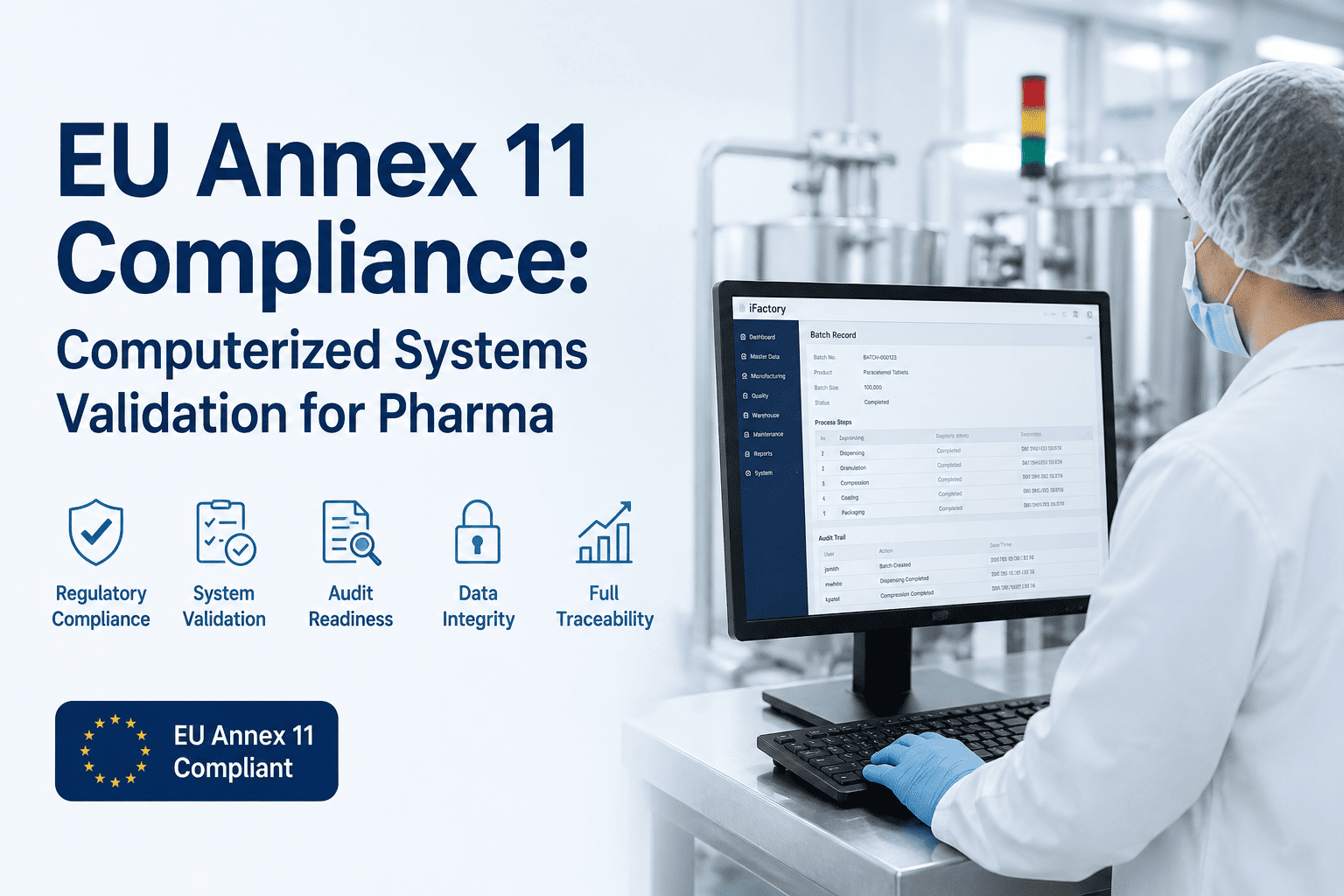
Yes. The platform's documentation engine produces electronically signed, timestamped records that satisfy both 21 CFR Part 11 and EU Annex 11 requirements. Records include complete audit trails for every data entry, modification, and approval action. Schedule a strategic session to review a sample validation package.
What is the expected timeline from contract execution to a fully validated analytics deployment?
For a single-site deployment covering up to 12 sterilizer assets, the standard timeline from URS approval to PQ completion is 10–14 weeks. Multi-site deployments follow a hub-and-spoke validation strategy where the primary site qualification package is leveraged across satellite facilities, reducing per-site timeline to 4–6 weeks after the initial deployment.
How does predictive gasket replacement integrate with our existing CMMS work order workflow?
The platform connects to leading CMMS platforms — including Maximo, SAP PM, and Infor EAM — via validated API integrations. When a predictive wear threshold is crossed, a CMMS work order is automatically generated with the pre-populated component specification, procurement lead time estimate, and linked maintenance procedure document. Request an operational audit to map this workflow to your current CMMS configuration.
How is the analytics platform itself maintained in a validated state over time?
The platform follows a Software Development Life Cycle (SDLC) aligned with GAMP 5 Category 4 and 5 guidelines. Every software update is accompanied by a pre-qualified change package, including impact assessment and regression testing documentation, ensuring your validated state is maintained without requiring your team to execute full re-qualification for minor platform updates.
Transform Reactive Sterilizer Maintenance Into a Defensible GMP Quality System
Join pharmaceutical manufacturers already protecting batch release velocity, staff productivity, and FDA audit outcomes with integrated autoclave analytics and automated IQ/OQ/PQ documentation.