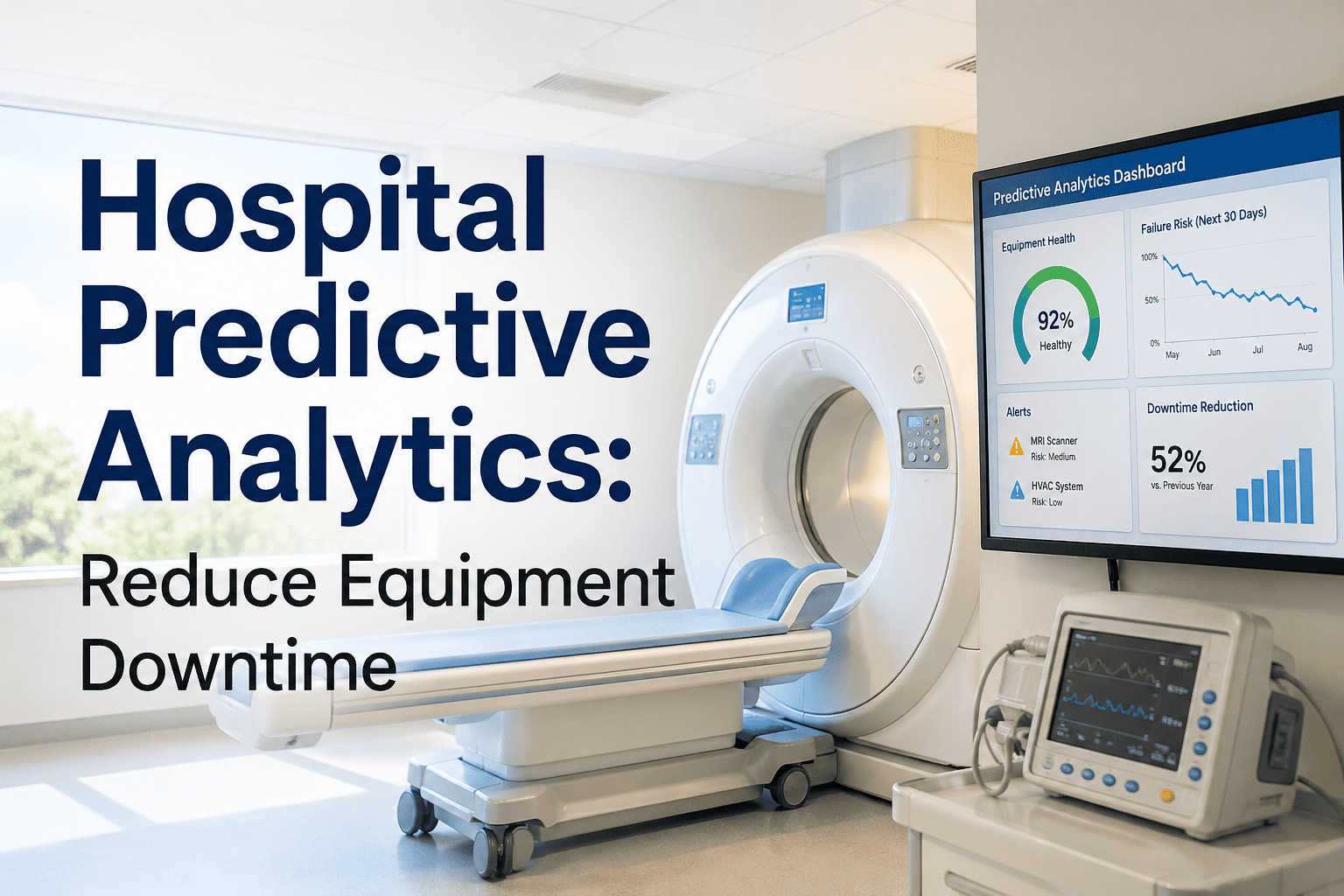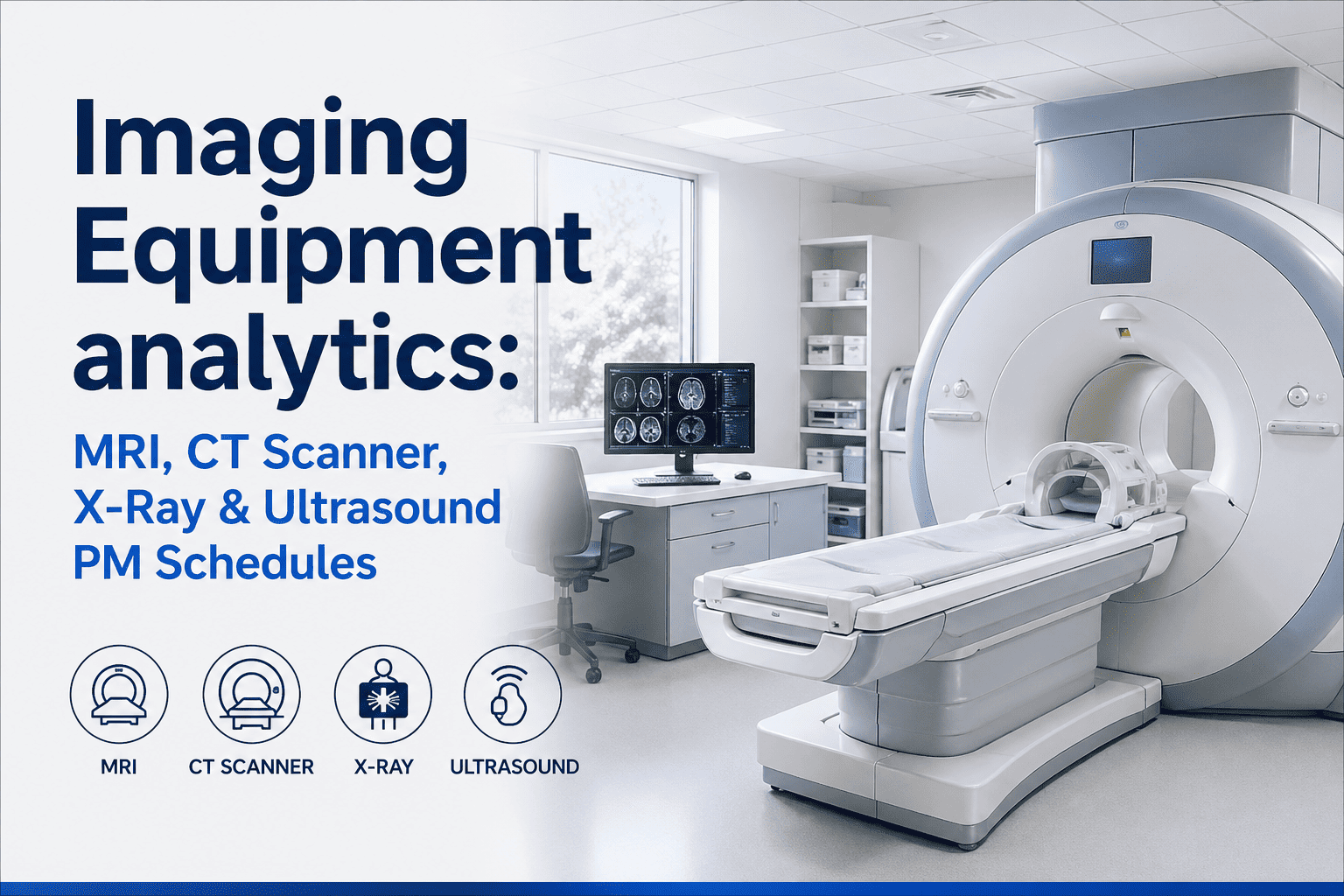
Every hour an MRI sits idle due to a missed helium fill, a CT tube failure, or an unscheduled X-ray calibration, your facility bleeds revenue — an average of $1,200 to $3,500 per scanner per hour. Reactive maintenance in radiology is no longer a scheduling inconvenience; it is a direct threat to patient throughput, accreditation standing, and operating margin.
Is Reactive Downtime Costing Your Radiology Department?
iFactory's Preventive Analytics platform delivers condition-based PM schedules for MRI, CT, X-Ray, and Ultrasound — before the failure occurs.
Why Imaging Equipment Analytics Is Now a Financial Imperative
Radiology is the revenue engine of the modern hospital. Yet most biomedical teams still manage MRI helium levels, CT tube wear, X-ray calibration drift, and ultrasound probe degradation on static, calendar-based schedules — a model designed for a simpler era.
Unplanned MRI downtime costs facilities up to $36,000 per day in lost scan revenue and patient diversions
CT tube replacements average $80,000–$200,000 — predictable with proper wear analytics, yet routinely treated as emergencies
X-ray calibration failures generate repeat exposures, raising patient safety flags and Joint Commission scrutiny
Ultrasound probe delamination goes undetected under visual inspection alone, degrading diagnostic accuracy before any alert fires
iFactory's Preventive Analytics engine converts real-time sensor telemetry into condition-based work orders — eliminating the gap between scheduled PM and actual equipment state
Legacy Friction vs. iFactory Optimized Excellence
The operational gap between reactive and predictive imaging maintenance is measurable in dollars, patient outcomes, and staff retention. The table below maps the clinical and financial delta your facility is currently absorbing.
| Imaging Domain | Legacy Friction | iFactory Optimized Excellence | Financial Impact |
|---|---|---|---|
| MRI Helium & Cooling | Manual monthly checks; quench events unforeseeable | Continuous cryogen telemetry with 30-day predictive alerts | Prevents $25K+ emergency refills & scanner requalification |
| CT Tube Monitoring | Replace on failure or arbitrary mAs thresholds | AI wear-curve modeling triggers planned replacements at optimal window | Reduces emergency tube spend by up to 40% |
| X-Ray Calibration | Quarterly physics QA only; drift undetected between cycles | Automated kVp/mAs drift monitoring with inline calibration triggers | Eliminates repeat exposures; protects ACR accreditation |
| Ultrasound Probe Analytics | Visual inspection; delamination found post-failure | Acoustic signature baselines detect early-stage probe degradation | Extends probe life 18–24 months; avoids $15K emergency replacements |
| PM Scheduling | Static calendar intervals regardless of utilization | Utilization-weighted dynamic schedules tied to scan volume & condition | Reduces over-maintenance labor cost by 30% |
| Work Order Generation | Manual technologist reporting; 12–72hr lag to dispatch | Auto-generated, priority-ranked work orders dispatched in real time | Cuts mean-time-to-repair by 60% |
Preventive Analytics by Imaging Modality
MRI Helium & Cooling Analytics
- Real-time cryogen level telemetry with predictive refill scheduling
- Chiller performance trending to catch compressor degradation early
- Gradient coil temperature monitoring for field homogeneity assurance
- Quench-prevention alerts integrated with facility facilities management
- RF cage integrity logs for shielding compliance documentation
CT Scanner Tube & Gantry Monitoring
- mAs accumulation curves modeled against OEM tube life specifications
- Anode heat unit trending to predict optimal replacement windows
- Detector calibration drift alerts with automated flat-field correction flags
- Rotation bearing vibration analysis for gantry mechanical health
- High-voltage generator performance logging for power stability assurance
X-Ray Calibration & Dose Analytics
- Continuous kVp and mAs output monitoring against baseline tolerances
- Collimator alignment drift detection between physics QA cycles
- AEC (auto-exposure control) performance trending by room and receptor
- Tube output consistency tracking for ACR accreditation compliance
- Repeat/reject rate correlation analytics to identify equipment vs. technique issues
Ultrasound Probe Health Analytics
- Acoustic uniformity baselines per probe to detect early delamination
- Probe drop/impact event logging integrated with clinical scheduling
- Frequency response trending to identify element failure patterns
- Scan volume tracking for utilization-based replacement forecasting
- Probe cleaning compliance monitoring tied to infection control protocols
Operational Outcomes Across the Radiology Department
Patient Throughput
- Eliminate unplanned scanner downtime that displaces scheduled patients
- Condition-based PM windows scheduled during low-utilization periods
- Automated coordination between biomedical, radiology, and scheduling teams
- Average 15–22% increase in daily scan capacity after iFactory deployment
Staff Burnout Reduction
- Eliminate after-hours emergency calls for predictable equipment failures
- Auto-generated work orders remove manual escalation burden from technologists
- Biomed teams shift from reactive firefighting to planned, strategic maintenance
- Documented PM history reduces audit stress and accreditation preparation time
Financial & Risk Outcomes
- ROI typically realized within 6–9 months of full platform deployment
- Predictable CapEx planning replaces emergency capital requisitions
- Reduced vendor service contract costs through internal condition-based PM
- Joint Commission and ACR audit readiness maintained continuously, not cyclically
Five Steps to Full Imaging Analytics Coverage
Imaging Asset Inventory & Baseline Audit
Map every MRI, CT, X-ray, and ultrasound unit with current utilization data, OEM service history, and existing PM schedules to establish the baseline for analytics-driven planning.
Sensor Integration & Telemetry Configuration
Connect iFactory's agentless data collectors to DICOM, HL7, and OEM APIs — no hardware modification required. Live telemetry begins within 48–72 hours of deployment.
AI Baseline Modeling & Threshold Calibration
The predictive analytics engine establishes equipment-specific health baselines, then calibrates alert thresholds to your facility's scan volumes, patient acuity, and risk tolerance.
Automated PM Schedule Deployment
Condition-based PM schedules replace static calendar intervals. Work orders are auto-generated, prioritized, and routed to the correct biomed technician with full parts and procedure documentation.
Continuous Optimization & Reporting
Monthly analytics reports surface uptime trends, cost avoidance totals, and CapEx forecasts — providing CFO-ready data to justify continued investment in imaging equipment longevity.
Stop Losing Revenue to Predictable Imaging Failures
iFactory's Preventive Analytics platform gives your biomedical and radiology teams the intelligence to act before equipment fails — protecting patient access, staff wellbeing, and operating margin.
Imaging Equipment Analytics — Frequently Asked Questions
Does iFactory integrate with our existing CMMS or EHR systems?
Yes. iFactory connects with leading CMMS platforms (TMS, Nuvolo, ServiceNow) and EHR systems via HL7 and REST APIs, ensuring work orders and asset records remain synchronized without duplicate data entry.
How does predictive analytics differ from standard preventive maintenance?
Standard PM uses fixed time intervals regardless of actual equipment condition. Predictive analytics uses real-time telemetry — cryogen levels, mAs accumulation, probe acoustic signatures — to trigger maintenance only when equipment data indicates it is needed, reducing both over-maintenance cost and unexpected failures.
What is the typical deployment timeline for a multi-modality radiology department?
Most facilities achieve full telemetry coverage across MRI, CT, X-ray, and ultrasound within 4–6 weeks. Baseline AI modeling is complete within 90 days, at which point condition-based PM schedules replace legacy calendar-based protocols. Book a Demo to review a site-specific deployment plan.
Can the platform support multi-site health system deployments?
Absolutely. iFactory is architected for enterprise-scale health systems with centralized analytics dashboards, site-level operational views, and system-wide CapEx forecasting that aggregates data across all imaging assets in your portfolio.
Launch Your Imaging Analytics Pilot Today
Join radiology departments already protecting uptime and patient throughput with iFactory's condition-based PM intelligence for MRI, CT, X-Ray, and Ultrasound.


.png)