
Every year, hospitals hemorrhage millions of dollars from untracked equipment failures, emergency replacements, and compliance breaches — not from clinical errors, but from the absence of a data-driven lifecycle management strategy. The moment a critical imaging device fails mid-scan or a ventilator reaches end-of-life without a successor in procurement, you are no longer managing assets — you are managing crises. The cost of reactive equipment management is not just financial; it is measured in delayed diagnoses, staff burnout, and regulatory exposure.
Is Your Equipment Data Driving Capital Decisions?
Build a proactive lifecycle engine that turns device age, condition scores, and TCO data into defensible CapEx strategy — before the next critical failure hits your OR.
Why Medical Equipment Lifecycle Management Is a Board-Level Issue
Hospital CFOs and clinical engineering directors face a structural paradox: equipment portfolios are growing in complexity while capital budgets are shrinking. Without a lifecycle intelligence platform, procurement decisions rely on intuition rather than evidence — creating compounding financial and clinical risk.
Revenue Leakage
- Unplanned downtime costs $1M–$3M per OR per year
- Emergency equipment rentals inflate OpEx by 18–25%
- Delayed procedures reduce throughput and revenue capture
Compliance Exposure
- EOL devices trigger Joint Commission citations
- Missing PM records increase CMS audit vulnerability
- Untracked calibrations create patient safety liability
Staff Burnout
- Biomedical engineers spend 60%+ time on reactive repairs
- Manual spreadsheet tracking creates reconciliation backlogs
- Nurses lose 45+ min/shift locating functional equipment
CapEx Blind Spots
- No visibility into multi-year replacement wave forecasting
- Budget submissions lack data-backed prioritization models
- Vendor negotiations weakened by missing utilization data
The Five Phases of Medical Equipment Lifecycle Management
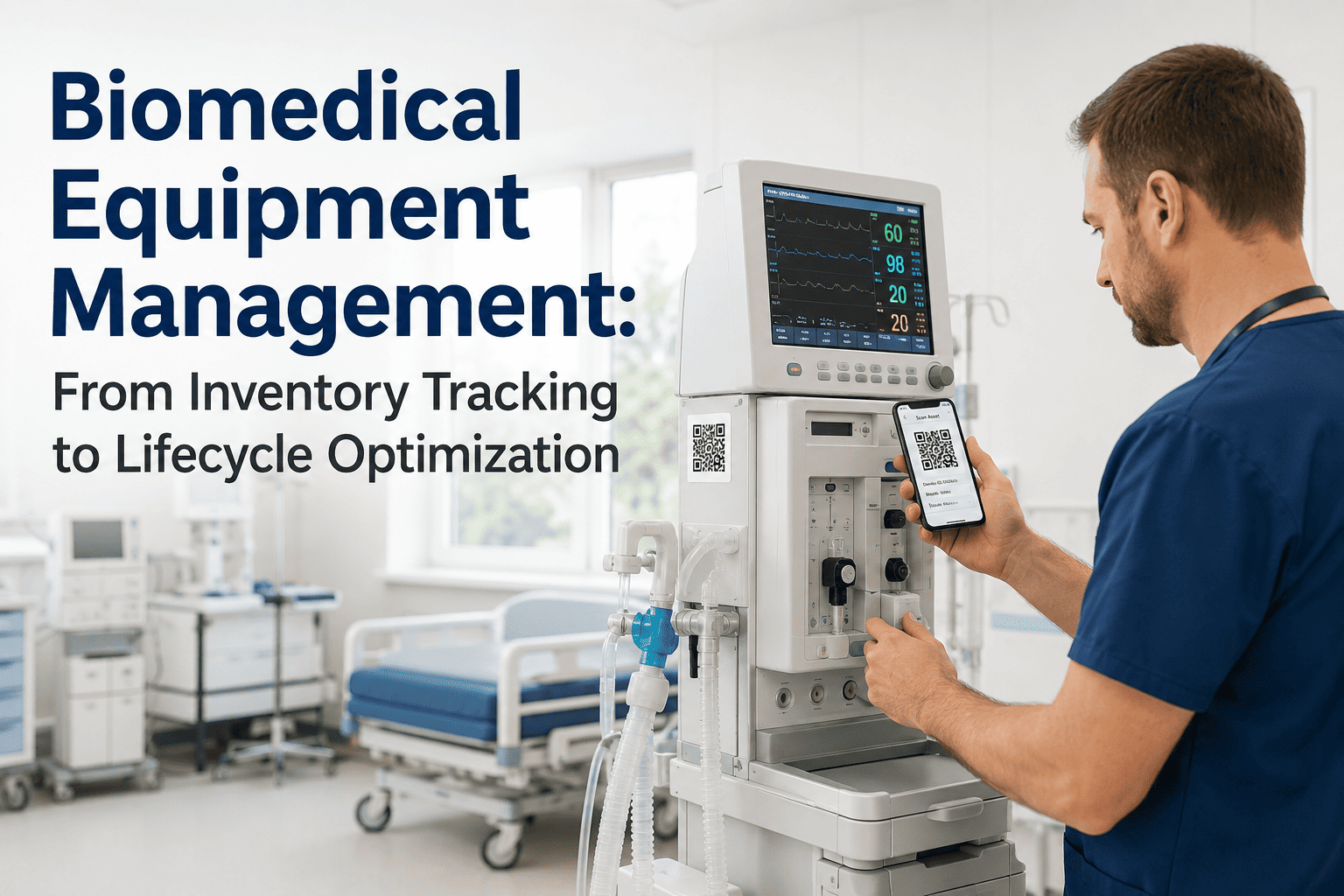
Effective lifecycle management is not a single event — it is a continuous intelligence loop that spans procurement to disposal. iFactory's Asset Management module tracks every phase with automated alerts, condition scoring, and financial modeling.
Procurement & Onboarding
- Digital intake captures device specifications, warranty terms, and vendor SLAs at point of receipt
- Auto-assigns PM schedules and calibration intervals based on device class and regulatory category
- Integrates purchase cost into multi-year TCO projection from day one
Deployment & Utilization Tracking
- Real-time location and utilization data eliminate ghost assets and dark inventory
- Usage intensity scores flag over-utilized devices before mechanical failure accelerates
- Department-level reporting identifies underdeployed assets available for reallocation
Preventive Maintenance & Compliance
- Automated PM work orders triggered by calendar intervals and usage thresholds
- Digital sign-off creates immutable audit trail for Joint Commission and CMS inspections
- Technician productivity dashboards reduce mean time to repair (MTTR) by up to 35%
Condition Scoring & Replacement Planning
- Composite scoring model weighs age, repair frequency, parts availability, and clinical criticality
- Replacement prioritization matrix surfaces highest-risk assets for the next budget cycle
- Predictive analytics forecast 3–5 year replacement waves with budget impact modeling
Disposal, Transfer & Remarketing
- Decommissioning workflows ensure HIPAA data wipe documentation for devices with memory
- Residual value tracking identifies remarketing or donation opportunities to offset CapEx
- Disposal records close the audit loop and update portfolio inventory automatically
Legacy Friction vs. iFactory Optimized Excellence
The gap between reactive and proactive lifecycle management is not operational — it is financial and strategic. The table below quantifies what clinical engineering leaders are leaving on the table by remaining on legacy or manual systems.
| Lifecycle Function | Legacy Friction | iFactory Optimized Excellence | Measured Impact |
|---|---|---|---|
| Asset Inventory | Manual spreadsheets with 15–30% data error rate | Real-time RFID/barcode-integrated digital registry | 99.2% Accuracy |
| PM Scheduling | Calendar reminders, frequent missed intervals | Automated triggers with technician mobile dispatch | 35% MTTR Reduction |
| Replacement Decisions | Subjective, relationship-driven budget requests | Data-scored prioritization with TCO modeling | 20% CapEx Savings |
| Compliance Audit Trail | Paper binders, missing sign-offs, citation risk | Immutable digital records, instant audit export | Zero Citation Risk |
| Downtime Forecasting | Reactive; failure discovered at point of use | Predictive condition scoring with 90-day alerts | 68% Downtime Cut |
| Vendor Management | Disconnected PO records, no SLA performance data | Integrated contract tracking with SLA scorecards | Stronger Negotiations |
How Lifecycle Intelligence Solves Your Most Costly Clinical Challenges
Equipment lifecycle failures manifest as clinical and operational pain points felt by nurses, biomedical engineers, and department directors daily. iFactory's Asset Management platform addresses each failure mode with targeted automation and data intelligence.
Patient Throughput
- Eliminate procedure delays caused by unavailable or failed equipment
- Predictive PM prevents day-of cancellations in imaging and surgical suites
- Real-time availability dashboards reduce equipment search time per shift
- Outcome: Up to 12% increase in schedulable procedure capacity
Biomedical Staff Efficiency
- Shift from reactive repair cycles to planned, preventive workflows
- Mobile work order management reduces dispatch lag and paperwork
- Parts inventory integration flags low-stock components before PM day
- Outcome: 40% reduction in after-hours emergency repair calls
Finance & CapEx Strategy
- Replace gut-feel budget requests with scored, evidence-based CapEx submissions
- Multi-year replacement wave modeling prevents budget shock scenarios
- Leasing vs. purchasing ROI analysis embedded in replacement workflow
- Outcome: 20–30% improvement in capital budget utilization efficiency
Building a Data-Driven Total Cost of Ownership Model
Purchase price is less than 40% of the true cost of owning a medical device over its operational life. iFactory's TCO engine aggregates every cost dimension into a single, defensible financial model for replacement and procurement decisions.
- Purchase price, installation, and commissioning fees
- Training and onboarding costs per department
- Integration and interface build costs with HIS/EHR
- Annual PM labor and parts spend per device class
- Service contract vs. in-house repair cost modeling
- Energy consumption tracking for high-draw imaging devices
- Regulatory citation penalties and remediation costs
- Downtime revenue loss per device per day calculation
- Emergency rental premiums and expedited parts sourcing
- Residual market value and remarketing channel options
- Decommissioning, data wipe, and disposal cost offsets
- Donation valuation for tax credit optimization
Stop Reacting to Equipment Failures. Start Preventing Them.
iFactory's Asset Management platform gives clinical engineering and finance teams the lifecycle intelligence they need to protect patient safety, defend CapEx budgets, and eliminate compliance risk — in one unified dashboard.
Medical Equipment Lifecycle Management — Frequently Asked Questions
How does iFactory integrate with existing CMMS or EHR systems?
iFactory uses HL7 FHIR-compliant APIs and standard CMMS data connectors to sync asset records bidirectionally with platforms including Epic, Meditech, IBM Maximo, and ServiceNow — preserving your existing workflows while centralizing lifecycle intelligence.
What data inputs are required to generate a condition score?
The composite condition score draws on device age, repair frequency, parts obsolescence index, utilization intensity, PM compliance rate, and clinical criticality tier. Most health systems can generate initial scores within 30 days of onboarding using existing biomedical records.
Can the platform support multi-site health system portfolios?
Yes. iFactory's architecture supports enterprise-wide deployment across unlimited facilities with role-based access, site-level reporting, and consolidated network dashboards for system-level CapEx planning. Book a Demo to see the enterprise configuration.
How does the platform handle FDA-regulated and ISO 13485 device classes?
Device classification is embedded at onboarding. The platform automatically applies the correct PM interval standards, calibration documentation requirements, and audit trail specifications for Class I, II, and III devices — ensuring regulatory alignment without manual configuration.
What is the typical implementation timeline for a mid-size hospital?
Most mid-size facilities (200–500 beds) complete core onboarding in 6–8 weeks. Full TCO modeling and predictive reporting are typically operational within 90 days. Request a Gap Audit to receive a tailored implementation roadmap for your asset portfolio.
Turn Equipment Data Into Your Strongest Strategic Asset
Join healthcare systems already protecting patient safety and defending capital budgets with iFactory's lifecycle intelligence platform.

.png)
.png)
.png)