
Every batch release delay, every regulatory warning letter, every undetected deviation in your pharmaceutical manufacturing process carries a price tag your CFO can see — and one your patients cannot afford. Without a structured ICH Q9 quality risk management framework embedded in your operations, you are not managing risk. You are absorbing it, silently, until it surfaces as a recall, an FDA 483, or worse.
Is Your QRM Framework Regulatory-Ready?
Deploy ICH Q9-aligned FMEA, HACCP, and risk-based decision tools purpose-built for pharmaceutical manufacturing at scale.
What ICH Q9 Demands — And What It Costs You to Fall Short
ICH Q9 is not a compliance checkbox. It is the international standard that mandates a systematic, science-based approach to identifying, evaluating, and controlling quality risks across the pharmaceutical product lifecycle. For manufacturers operating across GMP environments, the gap between intent and execution is where regulatory exposure lives.
Revenue at Risk
- Unplanned batch failures cost $500K–$2M per incident
- Regulatory holds freeze product release pipelines
- Manual risk logs create audit gaps that delay approvals
- Reactive QRM inflates CAPA cycles by 40–60%
Clinical Stakes
- Undetected deviations reach patient-facing product
- Siloed risk data prevents cross-process correlation
- Missing risk traceability blocks NDA/ANDA submissions
- Inadequate HACCP coverage in biologics manufacturing
Scalability Gaps
- Spreadsheet-based FMEA cannot scale across multi-site ops
- Risk re-assessments performed ad hoc, not on lifecycle triggers
- No real-time risk dashboards for QA leadership
- Risk decisions lack documented scientific rationale
The Four Pillars of ICH Q9 — Operationalized
iFactory's Risk Management Engine translates the ICH Q9 process model into executable digital workflows. Each pillar is embedded directly into your manufacturing quality system — not bolted on after the fact.
Risk Identification
- Structured FMEA templates mapped to process parameters
- Automated hazard identification triggers from deviation records
- Cross-functional risk register with role-based input capture
Risk Analysis & Evaluation
- Severity × Occurrence × Detectability scoring with audit trail
- HACCP critical control point mapping for biologics and sterile products
- Automated risk prioritization number (RPN) ranking and trending
Risk Control & Mitigation
- CAPA linkage from risk event to corrective action in one workflow
- Control measure effectiveness tracking against defined KPIs
- Risk acceptance documentation with electronic signature compliance
Risk Review & Communication
- Lifecycle-triggered reassessment schedules aligned to change control
- Executive risk dashboards with real-time KRI visualization
- Audit-ready risk communication reports for FDA, EMA, and TGA submissions
Legacy Friction vs. iFactory Optimized Excellence
The operational gap between fragmented risk management and an integrated ICH Q9 platform is measurable — in batch cycle time, audit readiness, and CAPA closure rates.
| Quality Process Area | Legacy Friction | iFactory Optimized Excellence | Operational Gain |
|---|---|---|---|
| FMEA Execution | Manual spreadsheets, version conflicts | Digital templates with real-time collaboration | 70% faster |
| Risk Prioritization | Subjective scoring, inconsistent RPN | Standardized scoring engine, auto-ranked RPN | Audit defensible |
| CAPA Linkage | Disconnected systems, manual handoffs | Single-workflow risk-to-CAPA traceability | 40% cycle reduction |
| Regulatory Reporting | Weeks of manual compilation | One-click ICH Q9-structured risk reports | Submission-ready |
| Risk Reassessment | Ad hoc, event-driven only | Lifecycle-scheduled, change-control triggered | Zero missed reviews |
| Multi-Site Visibility | No cross-site risk correlation | Unified risk register across all manufacturing sites | Enterprise scale |
How iFactory QRM Solves the Three-Front Crisis in Pharma Operations
Staff Burnout Reduction
- Eliminates manual risk documentation burden from QA teams
- Automated risk triggers replace reactive firefighting cycles
- Structured FMEA workflows reduce cognitive load per review
- Role-based task queues distribute risk workload equitably
Throughput Optimization
- Risk-based batch release decisions accelerate QP approval cycles
- Proactive CCP monitoring prevents production line stoppages
- Integrated deviation-to-risk linkage cuts investigation time by 35%
- Parallel risk review workflows eliminate sequential bottlenecks
Patient Safety Assurance
- Critical control point alerts prevent high-risk product release
- Full risk traceability from raw material to finished product lot
- Automated escalation paths for severity-level-1 risk events
- ICH Q9-compliant documentation supports post-market surveillance
iFactory Risk Management Engine — Feature Depth
- Pre-built pharma FMEA templates (process, design, system)
- Multi-user concurrent editing with version lock
- Configurable RPN thresholds per product family
- Decision tree-guided CCP identification workflow
- Critical limit monitoring with real-time sensor integration
- Corrective action auto-routing on CCP breach events
- Heat map visualization by process area and severity class
- Trend analysis across rolling 12-month risk event history
- Predictive risk scoring from historical deviation patterns
- 21 CFR Part 11-compliant electronic signatures on all risk records
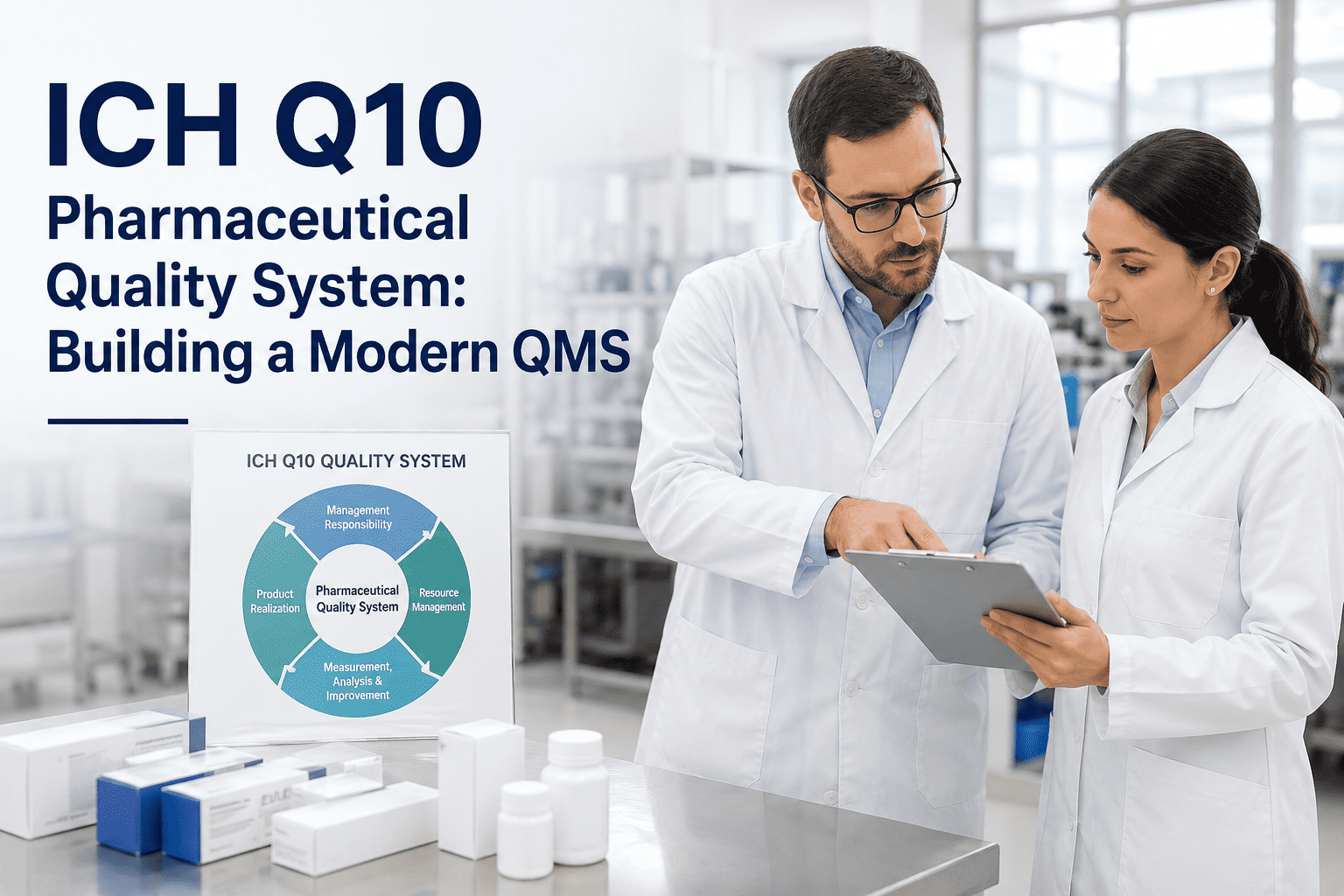
- ICH Q10 Pharmaceutical Quality System integration-ready
- EMA Annex 11 data integrity requirements fully supported
Transform Your QRM Program Into a Competitive Advantage
iFactory's Risk Management Engine gives pharmaceutical QA leaders a single, audit-ready platform to identify, evaluate, and control quality risks across every manufacturing site and product lifecycle stage.
ICH Q9 QRM Platform — Frequently Asked Questions
Does iFactory support both FMEA and HACCP methodologies within the same platform?
Yes. The Risk Management Engine provides dedicated modules for both process FMEA and HACCP workflows. Each methodology has its own structured template, scoring logic, and documentation output — all linked to the same centralized risk register for cross-method traceability.
How does the platform handle ICH Q9 risk reassessment requirements over a product's lifecycle?
Reassessment schedules are configured at the product or process level and automatically triggered by lifecycle events including change control approvals, annual product reviews, or significant deviation records. No manual scheduling is required.
Is the platform validated for 21 CFR Part 11 and Annex 11 compliance?
iFactory delivers a fully validated platform with IQ/OQ/PQ documentation packages. All risk records, electronic signatures, and audit trails meet 21 CFR Part 11 and EMA Annex 11 data integrity requirements. Book a Demo to review our validation master plan.
Can the risk management module integrate with existing MES and LIMS systems?
Yes. iFactory offers pre-built connectors for major MES and LIMS platforms. Real-time data feeds from production systems can automatically populate risk event triggers, reducing manual data entry and ensuring risk records reflect live manufacturing conditions.
Launch Your ICH Q9 Risk Management Program Today
Join pharmaceutical manufacturers who have replaced fragmented QRM processes with a unified, audit-ready risk intelligence platform built for regulatory scale.


.png)
.png)