![pharma-filling-line-predictive-analytics-[aseptic-&-non-aseptic]](./manage-post-2k26/uploads/pharma-filling-line-predictive-analytics-[aseptic-&-non-aseptic].png)
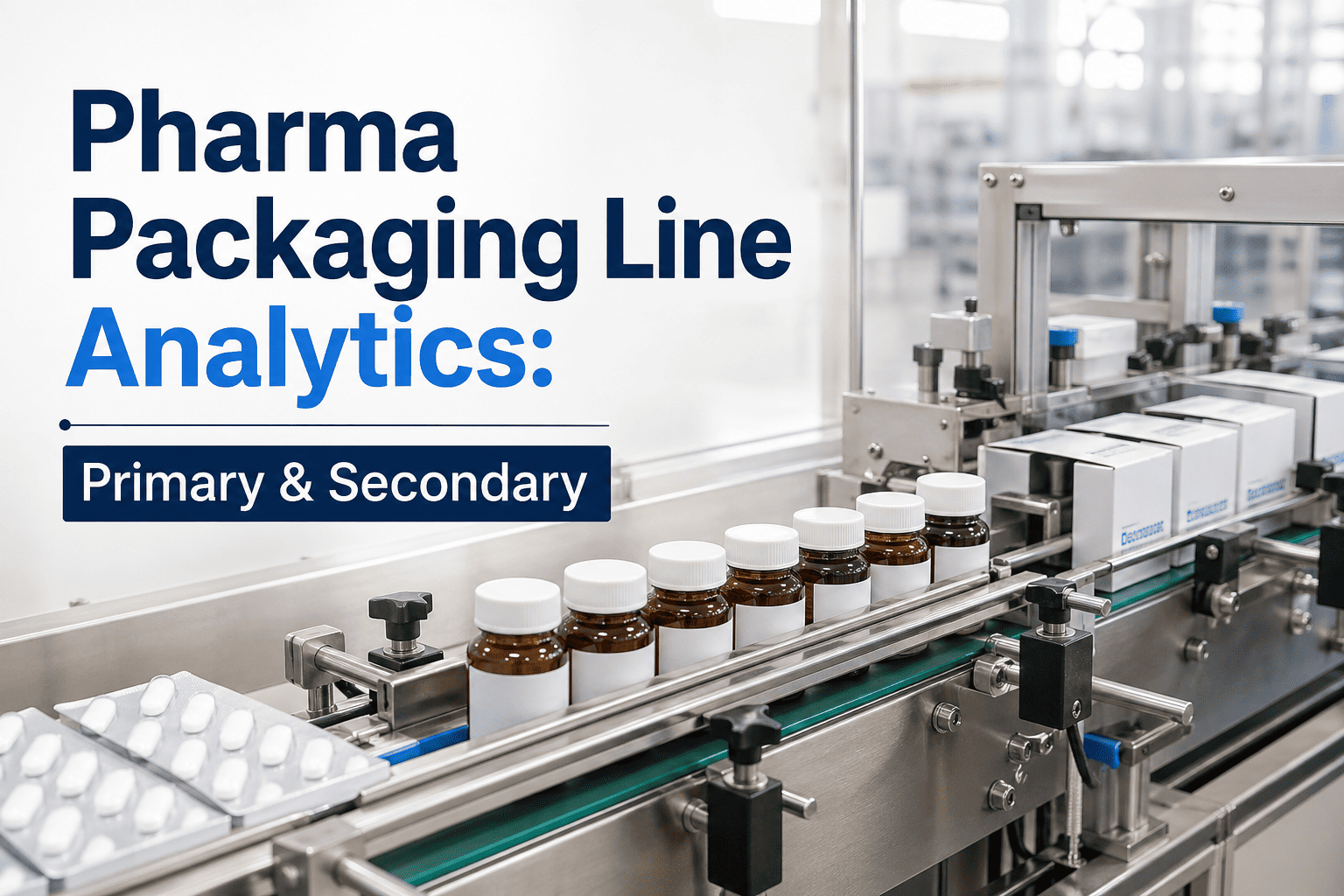
Your filling line is not just a machine — it is a regulated, revenue-critical system where a single unplanned stoppage can trigger a batch rejection, an FDA deviation report, and a cascading impact on supply commitments worth millions. As the executive accountable for fill-finish uptime, aseptic integrity, and GMP compliance, the question is no longer whether predictive analytics belongs in your facility — it is whether your facility can afford another quarter without it.
Is Your Filling Line Data Working as Hard as Your Team?
Deploy sensor-driven predictive intelligence across vial, syringe, and ampoule lines to eliminate unplanned downtime, protect batch integrity, and satisfy regulatory audit trails — before the next deviation occurs.
Translating Filling Line Sensor Data Into Clinical and Financial Outcomes
Pharmaceutical fill-finish operations sit at the highest-risk intersection of manufacturing science and patient safety. Piston pump wear, peristaltic tubing fatigue, needle alignment drift, and stopper placement inconsistency are not theoretical failure modes — they are recurring, measurable precursors to batch loss and regulatory action. The platform transforms raw telemetry from your aseptic and non-aseptic filling equipment into prioritized maintenance intelligence, giving your engineering, quality, and operations leaders a unified view of line health before failures manifest. The financial outcome is a direct reduction in cost-per-batch deviation, an extension of validated equipment lifecycle, and a defensible, audit-ready maintenance record that satisfies 21 CFR Part 11 and EU Annex 1 expectations.
Piston & Peristaltic Pump Analytics
Continuous torque, pressure, and flow-rate deviation monitoring to predict seal degradation and tubing fatigue ahead of fill-volume excursions that trigger IPC failures and batch rejection events.
Needle Alignment & Dive Monitoring
Vibration signature and positional drift analysis on filling needles to prevent container breakage, particulate contamination, and stopper coring in vial and syringe filling lines.
Stopper & Crimp Placement AI
Machine vision and torque analytics for rubber stopper seating and aluminum crimp application, identifying placement anomalies before they generate container closure integrity failures at QA release.
Unified Fill-Finish Dashboard
A single, role-based operational view consolidating sensor streams from all filling stations, formats, and vendors into a centralized analytics engine with GMP-compliant audit trail generation.
Current State vs. Future State: The Financial Case for Predictive Fill-Finish Intelligence
Every reactive maintenance event on a filling line carries a compounding cost structure that extends well beyond the mechanical repair itself. Schedule a Strategic Solution Session to benchmark your current cost-per-deviation against a predictive operations model designed specifically for pharmaceutical fill-finish environments.
| Operational Dimension | Current State (Reactive) | Future State (Predictive) | Financial & Compliance Impact |
|---|---|---|---|
| Pump Failure Detection | Post-failure discovery during IPC checks | 72-hour advance fault prediction via flow analytics | Batch Loss Prevention |
| Needle Alignment | Manual visual inspection between shifts | Continuous vibration-based drift monitoring | Particulate Risk Reduction |
| Maintenance Records | Paper-based, retrospective logging | Automated 21 CFR Part 11-compliant digital trail | Audit Readiness |
| Downtime Planning | Reactive, unscheduled line stoppages | Planned interventions during scheduled windows | OEE Improvement |
| Equipment Lifecycle | Time-based PM regardless of actual wear | Condition-based PM extending validated life | CapEx Deferral |
| Quality Deviations | Root cause analysis post-event | Predictive anomaly flagging pre-deviation | CAPA Reduction |
Five-Phase Deployment for Pharmaceutical Filling Line Predictive Analytics
Deploying predictive maintenance on a regulated filling line demands a structured, validation-aware approach. The platform is engineered for phased rollout across aseptic and non-aseptic filling formats, ensuring that no sensor integration disrupts an active validation status or requires a full requalification exercise. Schedule a Strategic Solution Session to receive a site-specific deployment plan aligned with your current IQ/OQ/PQ lifecycle.
Equipment Asset Mapping
Identify all filling stations, pump types, and format configurations across vial, syringe, and ampoule lines. Map existing sensor infrastructure and define integration points for non-invasive vibration, pressure, and vision monitoring hardware.
Baseline Data Acquisition
Establish normal operating signatures for piston pump torque, peristaltic tubing pressure decay, needle descent profiles, and stopper seating force. This baseline becomes the predictive reference model against which all future anomalies are scored.
AI Model Training & Validation
Train machine learning models on your specific filling line data — not generic pharmaceutical benchmarks. Validate model accuracy against known historical deviation events to establish a defensible performance baseline for regulatory review.
Live Predictive Alerting Deployment
Activate real-time fault scoring with tiered alert logic — engineering notifications for early-warning signatures, operations escalation for critical threshold breaches, and automated work order generation integrated with your CMMS platform.
Continuous Model Optimization
Leverage post-intervention feedback loops to refine predictive accuracy over time. Each maintenance event enriches the model, progressively extending alert lead time and reducing false positives that generate alert fatigue in operations teams.
Six Dimensions of Risk Mitigation Across Fill-Finish Operations
The operational risk surface of a pharmaceutical filling line spans patient safety, regulatory standing, and commercial supply reliability simultaneously. Predictive analytics addresses all six critical risk dimensions below — giving your quality, engineering, and supply chain leadership a unified instrument for proactive governance of fill-finish performance.
Needle alignment drift and stopper seating anomalies are the primary mechanical precursors to container closure integrity failures. Continuous monitoring eliminates the window between mechanical degradation and sterility compromise.
Piston pump seal wear and peristaltic tubing fatigue produce systematic fill volume drift that escapes periodic IPC sampling. Continuous flow analytics catches sub-tolerance excursions before they accumulate into OOS investigations.
An automated, immutable digital maintenance record satisfies FDA 21 CFR Part 11 and EU Annex 1 data integrity requirements, replacing paper-based systems that expose your facility to data integrity findings during inspections.
Reactive filling line stoppages average 4–8 hours of unplanned downtime per event once investigation, cleaning validation, and restart protocols are included. Predictive scheduling compresses this to planned 45-minute intervention windows.
Each filling-related batch rejection triggers a CAPA cycle that consumes an average of 120–200 QA hours. Predictive failure prevention at the equipment level is the most cost-effective CAPA reduction strategy available to fill-finish operations.
Commercial and clinical supply commitments are built on filling line throughput assumptions that reactive maintenance systematically undermines. Predictive operations data provides the scheduling confidence required for reliable supply chain commitments.
Secure Your Filling Line's Predictive Intelligence Infrastructure
Equip your quality, engineering, and operations leadership with a sensor-driven analytics platform that protects batch integrity, reduces deviation burden, and produces audit-ready maintenance records across every fill-finish format.
Pharma Filling Line Predictive Analytics — Executive Questions Answered
Will sensor integration require revalidation of our existing filling equipment?
Non-invasive sensor mounting protocols are specifically designed to avoid triggering requalification requirements. The platform integrates via existing data ports and external vibration/pressure sensors that operate outside the validated process boundary, preserving your current IQ/OQ/PQ status. Schedule a Strategic Solution Session to review the validation impact assessment specific to your equipment configuration.
How does the platform handle both aseptic and non-aseptic filling lines?
The analytics engine supports configurable monitoring profiles for both line types. Aseptic lines receive enhanced needle, stopper, and environmental monitoring overlays, while non-aseptic lines are optimized for high-speed volume accuracy and crimp integrity analytics. A single dashboard manages both environments through role-based access controls.
Can the platform integrate with our existing CMMS and ERP systems?
Yes. The platform provides pre-built connectors for major pharmaceutical CMMS platforms including SAP PM, Maximo, and Blue Mountain RAM. Predictive work orders are generated automatically and pushed directly into your maintenance workflow, eliminating manual transcription and accelerating response time from alert to intervention.
What is the typical ROI timeline for filling line predictive analytics?
Most fill-finish operations achieve positive ROI within the first two prevented batch rejections — typically within the first six months of deployment. A single avoided batch rejection on a biologic or sterile injectable product routinely exceeds the total annual platform cost. Request an Operational Audit to receive a site-specific financial model based on your batch value and historical deviation frequency.
How does the platform satisfy 21 CFR Part 11 data integrity requirements?
Every sensor event, alert, and maintenance action is recorded in an immutable, timestamped audit log with electronic signature capture. The system enforces role-based access controls, generates change control documentation automatically, and produces inspection-ready reports in formats accepted by FDA, EMA, and PMDA regulatory reviewers.
Is the analytics model pre-trained or does it learn from our specific line data?
The platform begins with pharmaceutical industry-specific baseline models covering common piston pump, peristaltic pump, and crimping failure signatures, then adapts dynamically to your specific equipment, product portfolio, and operating conditions. Accuracy improves continuously as the model accumulates site-specific operating history, typically reaching high-confidence predictive performance within 90 days of live deployment.
Deploy Predictive Intelligence Across Your Filling Line Portfolio
Join pharmaceutical manufacturers already protecting batch integrity and reducing deviation burden with sensor-driven predictive analytics built for GMP fill-finish environments.

.png)


