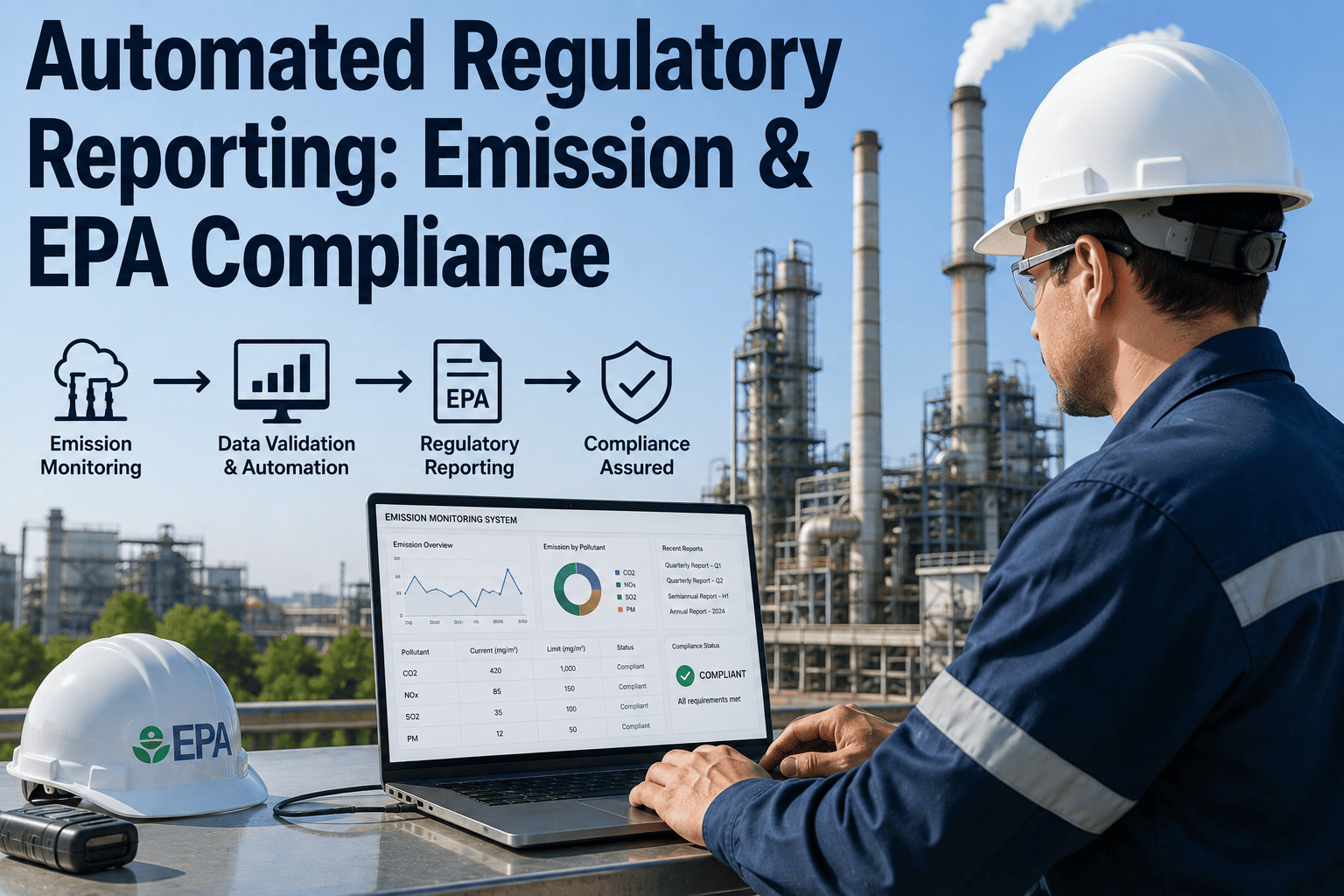
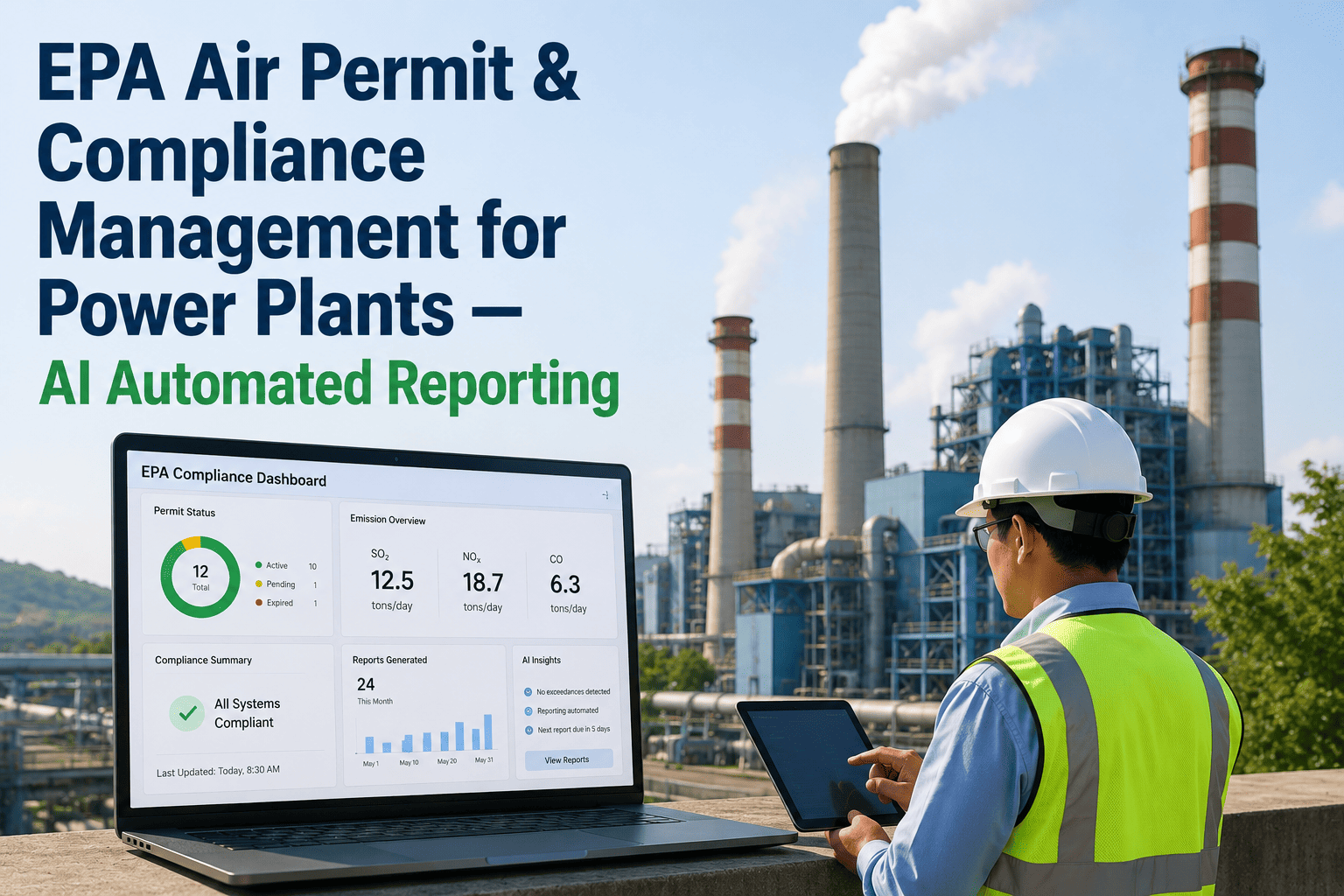
A single missed OSHA 1910.269 refresher, one late FERC Form 1 filing, or an EPA emissions report submitted outside its window can each trigger its own investigation, its own penalty schedule, and its own paperwork trail — and most compliance officers are tracking all three regimes with the same spreadsheet. Power generation sits under more overlapping federal, state, and regional authority than almost any other industry, and the agencies do not coordinate their calendars for you. iFactory's compliance automation layer reads every requirement once and keeps FERC, OSHA, and EPA obligations moving on their own separate clocks without anyone rebuilding a tracker every quarter. Book a compliance workflow review to see your current filing load mapped out in one place.
Three Agencies. Three Clocks. One Compliance Calendar.
AI-automated documentation and deadline tracking that keeps FERC, OSHA, and EPA obligations synchronized instead of siloed across separate binders and separate owners.
Why Multi-Regulatory Compliance Is Getting Harder, Not Easier
Plant compliance teams are not dealing with one rulebook. They are reconciling three separate agencies with three separate enforcement philosophies, three separate documentation formats, and three separate penalty structures — all pointed at the same physical plant.
average number of discrete compliance obligations tracked annually at a mid-size fossil or combined-cycle plant
of compliance findings across FERC, OSHA, and EPA audits trace to documentation gaps, not actual operating violations
typical per-day civil penalty exposure once a filing deadline is missed and left uncured
separate spreadsheets or logbooks a typical compliance officer maintains to cover all three regimes today
Three Regimes, Three Very Different Rulebooks
Treating FERC, OSHA, and EPA as one undifferentiated "compliance" bucket is where most tracking systems break down. Each agency regulates a different layer of plant operation, on a different cadence, with different evidentiary standards.
Market & Reliability
Form 1 annual reports, interconnection agreements, market-based rate compliance, and NERC reliability standards administered through FERC oversight. Filing errors surface in public dockets.
Worker Safety
1910.269 electrical safety, confined space entry, lockout-tagout, PPE certification, and incident recordkeeping under the 300 log. Enforcement is inspection-driven and can be unannounced.
Environmental Output
Title V air permits, continuous emissions monitoring reporting, wastewater discharge limits, and spill prevention plans. Deadlines are tied to calendar quarters and permit anniversary dates.
A Year of Overlapping Deadlines
Laid end to end, a single plant's compliance calendar has no quiet months. AI tracking watches every date simultaneously and surfaces what is actually due next, instead of relying on whoever remembered to check the wall calendar.
EPA CEMS quarterly report; OSHA 300A posting opens Feb 1; FERC interconnection status updates
FERC Form 1 due mid-April; EPA CEMS Q1 submission; NERC reliability self-certifications
OSHA 300A posting closes; EPA CEMS Q2 report; mid-year Title V permit compliance certification
EPA CEMS Q3 report; FERC rate schedule true-ups; annual OSHA electrical safety refresher cycle
What an Auditor Actually Asks For
When a FERC docket investigator, an OSHA compliance safety officer, or an EPA regional inspector requests records, they are not asking for a summary. They want the underlying source evidence, timestamped, and traceable to the person or sensor that generated it. This is where most manual tracking systems fall apart, because the summary spreadsheet and the source evidence live in different places, updated by different people, on different schedules.
FERC document requests
Rate schedule support, interconnection study correspondence, and the underlying meter or settlement data behind a Form 1 line item, often going back several years.
OSHA inspection requests
Training completion certificates tied to specific employees, lockout-tagout logs for specific equipment, and the 300 log cross-referenced against actual incident reports.
EPA enforcement requests
Raw CEMS data streams, calibration records for monitoring equipment, and exceedance reports with the corrective action taken, not just the summary that was filed.
Manually assembling this kind of request under time pressure is where compliance teams lose days, and where gaps that were invisible in a summary spreadsheet suddenly become visible to a regulator. Automated evidence capture closes that gap before the request ever arrives, because every record was already linked to its requirement the moment it was generated rather than reconstructed after the fact.
Stop Reconstructing Evidence After the Fact
See how iFactory ties every FERC, OSHA, and EPA obligation to its source evidence automatically, so an audit request is a query, not a fire drill.
How AI-Automated Documentation Actually Works
The system does not replace your compliance officer's judgment or decide what to file. It removes the manual assembly work that eats the hours judgment should be spent on, so the person who understands the plant is reviewing a finished package instead of building one from scratch every time a deadline approaches.
Requirement mapping
Every applicable FERC, OSHA, and EPA obligation for your plant configuration is loaded once, with owner, frequency, and evidence type assigned.
Continuous evidence capture
Sensor logs, training records, permit data, and inspection results are pulled automatically as they are generated rather than gathered manually before a deadline.
Gap detection
The system flags missing evidence, expiring certifications, or approaching filing windows weeks ahead, not the day before.
Filing-ready packages
Reports assemble into the format each agency expects, with a full audit trail back to the underlying source record.
From a Plant Compliance Officer
Before, I had a FERC calendar in one notebook, an OSHA log on a shared drive, and EPA CEMS data coming from a different vendor portal entirely. Cross-referencing them for an audit took two of us most of a week. Now it is one query and the evidence is already linked to the requirement it satisfies.
What Changes After Go-Live
Frequently Asked Questions
Does this replace our legal or compliance counsel?
No. The system is an evidence and deadline layer, not a legal opinion. It ensures the underlying data, certifications, and filings are complete and on time so your counsel and compliance officers can focus on interpretation and strategy rather than chasing missing records. Every output is reviewed and submitted by your team, with the system providing the assembled package and audit trail. Talk to a specialist about how it fits alongside your existing legal review process.
Can it handle plants with multiple FERC market participation agreements?
Yes. Multi-market participants with several interconnection agreements, rate schedules, and reliability coordinator relationships are common among iFactory customers. Each obligation is mapped individually with its own owner and cadence, so a plant selling into two ISOs does not have its filings merged or confused with one another.
How does the system stay current when regulations change?
Regulatory requirement libraries are updated on an ongoing basis as FERC orders, OSHA standards, and EPA rules are amended. When a requirement changes, the system flags any obligations affected so your compliance officer can review the update rather than discover it during an audit.
What does implementation actually involve?
Implementation starts with mapping your plant's specific obligations against its permits, interconnection agreements, and OSHA program scope, then connecting existing data sources such as CEMS, training records, and maintenance logs. Most plants are fully mapped and running parallel to their existing process within six to eight weeks. Book a scoping call to walk through your specific obligation set.
Is the evidence trail defensible in a formal enforcement proceeding?
Every record captured is timestamped and linked back to its original source system, whether that is a CEMS data feed, a training completion record, or an inspection log. This creates a chain of custody that compliance officers and counsel can present directly in enforcement proceedings, rather than reconstructing timelines from disconnected files after the fact.
Bring FERC, OSHA, and EPA Onto One Calendar
Book a 30-minute review. Bring your current filing calendar and iFactory will map it against your plant's full obligation set, flag any gaps, and outline what automated tracking would look like for your team.