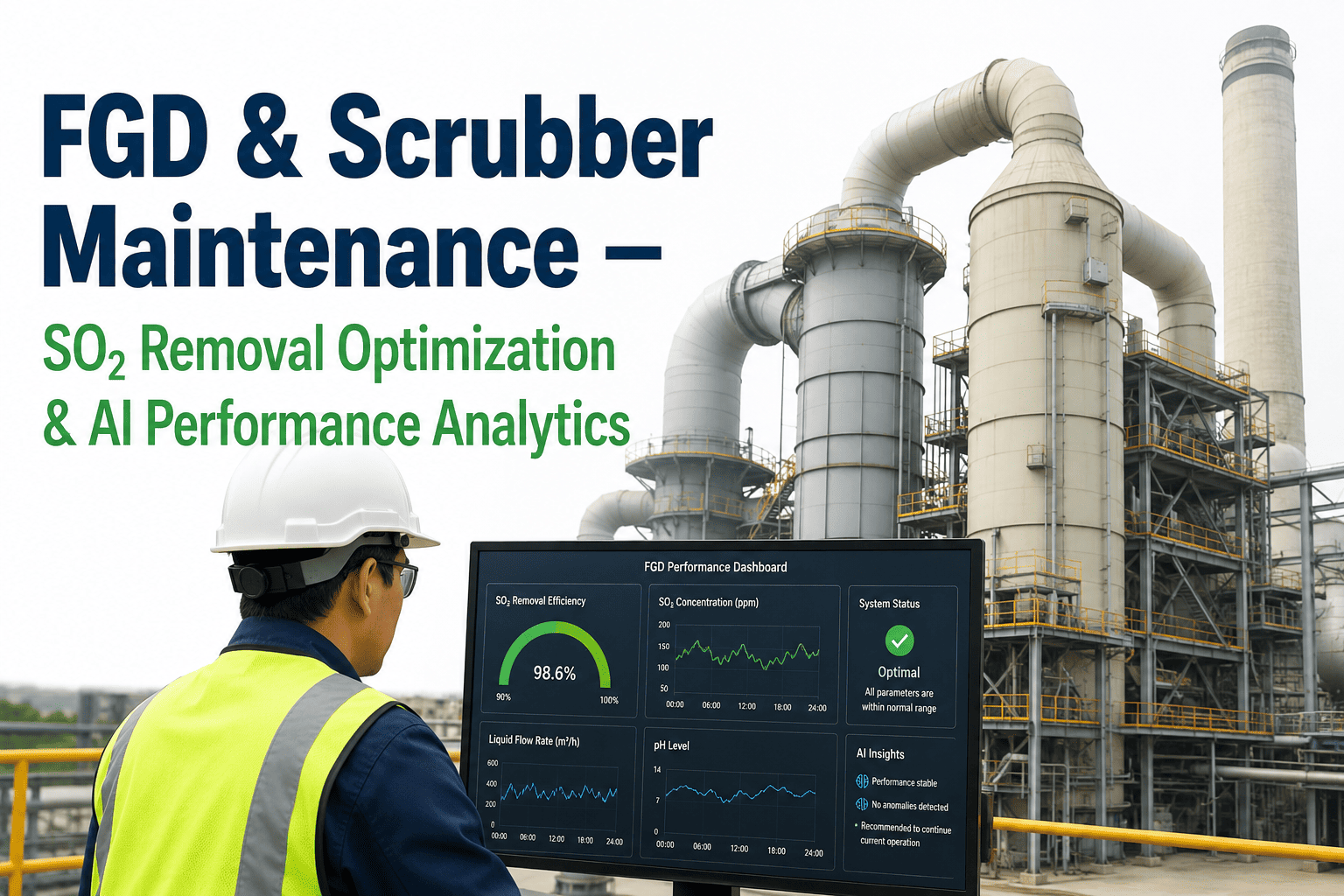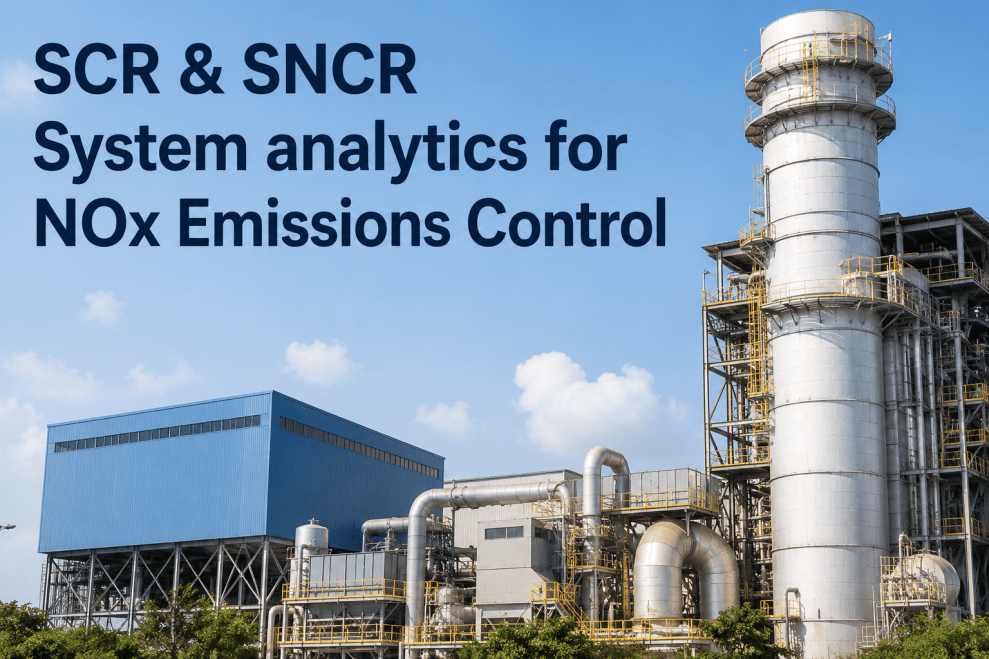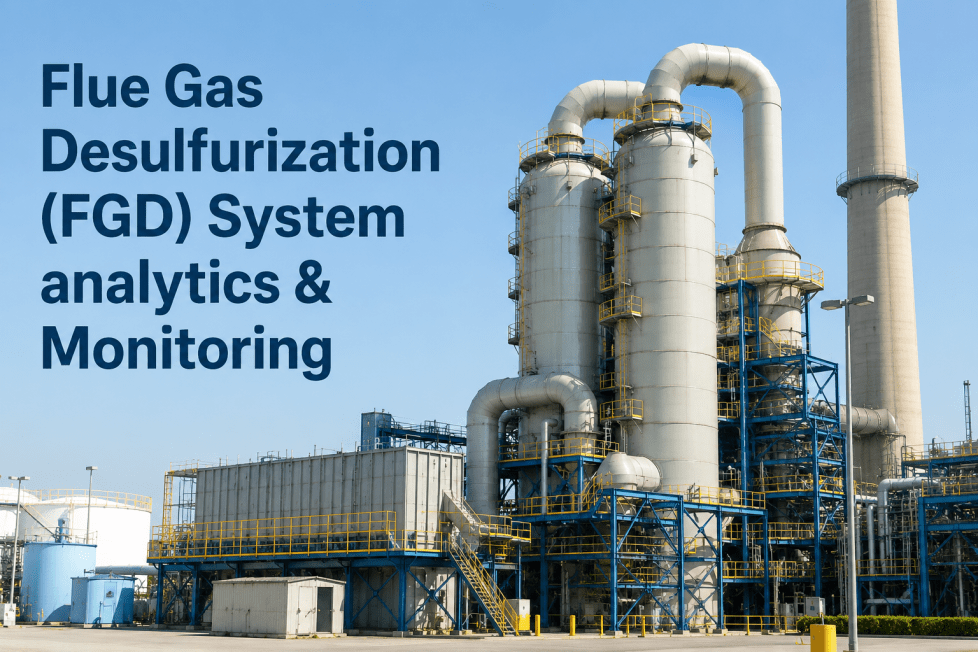
Flue gas desulfurization systems represent one of the most significant operating cost centers and compliance obligations in any coal-fired power plant or industrial combustion facility. The traditional approach to FGD management — manual pH adjustments, fixed reagent feed rates, and end-of-shift compliance verification — leaves substantial optimization potential unrealized during the dynamic operating conditions that characterize modern dispatch cycles. Forward-looking compliance and operations teams have already Book a demo of iFactory's FGD analytics platform to see how real-time scrubber intelligence transforms both compliance assurance and operating cost structure.
Why FGD Analytics Demands a Different Approach from Traditional Emissions Monitoring
Flue gas desulfurization is fundamentally a chemical process control problem embedded within a power generation or industrial production environment — and applying stack emission monitoring methodologies alone produces an incomplete, often misleading picture of FGD performance. A continuous emission monitoring system reports what left the stack, but it cannot tell you why the SO2 concentration changed, whether reagent utilization is optimal, or whether the absorber chemistry is drifting toward a condition that will produce a compliance exceedance in the next operating hour. The result is a unified intelligence layer that identifies optimization opportunities and compliance risks that are invisible when each segment of the FGD process is monitored in isolation.
- SO2 compliance checked at end of each rolling average period — any exceedance already recorded before corrective action can be initiated
- Reagent feed rate based on average load profile — systematic overfeed during low-load periods, underfeed during load ramps
- Absorber pH managed through manual operator adjustments — pH excursions common during transient load conditions
- Mist eliminator fouling detected by differential pressure increase after performance has already degraded by 15-20%
- Reagent consumption tracked monthly — daily consumption anomalies invisible until aggregated into monthly variance report
- Dewatering system performance assessed by gypsum moisture spot checks — deviations detected hours after they begin
- SO2 emission predicted 15 minutes ahead using live inlet SO2, load trajectory, and absorber chemistry data — corrective pH adjustment initiated before exceedance occurs
- Reagent feed optimized continuously against real-time load, inlet SO2 concentration, and lime reactivity index — no systematic overfeed or underfeed
- AI pH setpoint control maintains optimal absorber chemistry through transient load conditions — zero operator intervention required during normal operation
- Mist eliminator fouling predicted from pressure drop trend analysis 48-72 hours before cleaning is required — scheduled during optimal load window
- Reagent consumption tracked per MWh at 15-minute resolution — daily anomalies flagged and root-caused within the same shift
- Gypsum moisture predicted from hydrocyclone pressure and vacuum filter operating parameters — corrective adjustment automated before moisture exceeds specification
Scrubber Performance Analytics: Real-Time Absorber Monitoring and Chemistry Control
The absorber tower is the core chemical reactor of the FGD system — the stage where SO2 removal either succeeds or fails, where reagent is either utilized efficiently or wasted, and where the foundation for gypsum quality is established. Operating conditions inside the absorber change continuously with load, inlet SO2 concentration, reagent quality, and oxidation air delivery — and the analytical challenge is to maintain optimal chemistry across all of these variables simultaneously. iFactory's scrubber analytics operates at the individual process stage level within the absorber system, capturing the full set of chemistry and mechanical parameters that determine desulfurization performance and equipment health. Operations teams that deploy iFactory's scrubber module typically identify 8-12% reagent savings within the first 30 days of deployment.
Reagent Optimization: Reducing Operating Costs Through Predictive Feed Control
Reagent consumption is the single largest variable operating cost in a wet limestone FGD system — typically accounting for 40-55% of total FGD variable OpEx. The traditional approach to reagent feed control — setting a fixed stoichiometric ratio based on average inlet SO2 loading — inherently overfeeds during low-load periods and underfeeds during load ramps, wasting reagent in the first case and risking compliance in the second. iFactory's reagent optimization module replaces fixed-ratio control with a predictive model that continuously adjusts the feed rate based on real-time inlet SO2 concentration, load trajectory, limestone reactivity, and absorber chemistry state.
Compliance Analytics: Automated Reporting and Continuous Audit Readiness
The regulatory compliance burden for FGD operations has intensified substantially in recent years, with tighter SO2 emission limits, shorter averaging periods, and more stringent record-keeping requirements across federal and state programs. Meeting these requirements while maintaining efficient plant operations requires a compliance management approach that is embedded in the process control system — not a separate manual data collection effort that runs parallel to operations. iFactory's compliance analytics module automates the full compliance data lifecycle: collection, validation, calculation, and report generation.
Predictive Maintenance Integration: Protecting Critical FGD Assets
FGD equipment operates in one of the most corrosive and abrasive environments in any industrial facility. Slurry handling equipment — pumps, hydrocyclones, vacuum filters — experiences wear rates that can vary by 3-5x depending on slurry chemistry and operating conditions. Absorber internals — spray nozzles, mist eliminators, oxidation lances — are subject to scaling, fouling, and erosion that degrade performance progressively before reaching a failure state that forces an outage. iFactory's predictive maintenance module applies condition monitoring analytics to each of these asset classes, shifting the maintenance strategy from calendar-based or reactive to condition-based with AI-driven failure prediction. Facilities that deploy iFactory's FGD maintenance module typically identify 2-3 impending failure conditions during the initial data review that would not have been detected through existing monitoring.Book a Demo
| FGD Asset | iFactory Monitoring Parameters | Failure Mode Detected | Warning Lead Time | Estimated Avoided Cost / Event |
|---|---|---|---|---|
| Absorber Tower Spray Nozzles | Slurry flow distribution, pump discharge pressure, L:G ratio trend, sump level variation | Nozzle erosion, plugging, or breakage — uneven slurry coverage reducing contact efficiency | 14-30 days | $180,000-$420,000 |
| Mist Eliminator Blades | Differential pressure trend, outlet droplet loading, wash water cycle effectiveness | Fouling, scaling, or blade deformation — pressure build forcing load reduction | 7-21 days | $120,000-$290,000 |
| Limestone Ball Mill | Motor power draw, bearing vibration, mill shell temperature, classifier pressure differential | Liner wear, media depletion, bearing degradation, or trunnion seal failure | 10-25 days | $90,000-$210,000 |
| Slurry Recirculation Pumps | Discharge pressure, motor current, bearing temperature, packing leak-off rate, vibration | Impeller wear, casing erosion, bearing failure, or shaft seal leakage | 5-18 days | $70,000-$160,000 |
| Hydrocyclone Cluster | Feed pressure, underflow density, overflow clarity, individual cyclone pressure distribution | Apex wear, overflow pipe erosion, or feed distribution box plugging | 14-28 days | $40,000-$95,000 |
| Oxidation Air Blowers | Air flow, discharge pressure, motor current, bearing temperature, vibration spectrum | Impeller fouling, bearing degradation, or motor winding temperature rise | 7-21 days | $55,000-$130,000 |
Expert Perspective: What AI Analytics Changes in FGD Operations
We had been managing our limestone reagent feed on a fixed stoichiometric ratio for the entire nine years since the FGD system was commissioned. The ratio was set conservatively — 1.05 times the theoretical requirement — because we never wanted to risk a SO2 exceedance during a load ramp. When we deployed iFactory's reagent optimization module, the first finding was that our actual stoichiometric requirement varied between 0.92 and 1.18 depending on load, inlet SO2, and the specific limestone lot's reactivity. We had been systematically overfeeding during 60% of our operating hours and underfeeding during the other 40%. Correcting that imbalance saved us $470,000 in limestone costs in the first year"
Frequently Asked Questions: FGD System Analytics
At minimum, iFactory requires access to the plant's DCS historian and CEMS data system — which in most facilities contains absorber pH, inlet and outlet SO2 concentration, reagent feed rate, flue gas flow, and load data. This is sufficient to begin reagent optimization analysis, compliance margin trending, and absorber chemistry monitoring. For full asset coverage — including predictive maintenance on slurry pumps, ball mills, and vacuum filters — iFactory additionally connects to any available vibration monitoring systems, motor protection relays, and lubrication system sensors. Integration with OSIsoft PI, Emerson Ovation, Siemens PCS 7, and ABB historians is typically completed in 7 to 14 days without process disruption.
Yes. While the majority of iFactory's FGD deployments are on wet limestone systems — which represent the largest installed base globally and the most complex optimization challenge — the platform supports dry scrubber and seawater FGD systems with configuration-specific model adaptations. For dry FGD systems, iFactory monitors spray dryer absorber inlet temperature, lime slurry feed rate, and fabric filter pressure drop, optimizing lime consumption against SO2 removal requirements. For seawater FGD systems, the platform monitors seawater flow rate, pH at outfall, and metal ion concentration, optimizing seawater delivery pump operation and ensuring outfall compliance with local discharge permits. Each configuration uses the same core analytics engine with process-specific model parameterization.
iFactory's FGD analytics model incorporates coal quality data — sulfur content, heating value, ash content, and moisture — from the coal handling or fuel management system as a direct model input. When fuel quality varies, the model adjusts its predictions of inlet SO2 loading and the corresponding reagent requirement before the change reaches the absorber, rather than reacting to the change after it affects outlet emissions. For plants without real-time coal quality analytics, iFactory uses the inlet SO2 analyzer as the primary input and back-calculates the implied fuel sulfur content from the measured SO2 concentration and flue gas flow — providing a secondary coal quality verification stream that procurement teams use to validate delivered fuel specifications against contract terms.
iFactory's FGD analytics deployments typically reach full operational capability within 8 to 12 weeks from data connection to model validation. The ROI timeline is driven primarily by reagent savings — which typically begin appearing within the first 30 days of deployment and reach full optimization after one complete operating cycle of approximately 90 days. Combined reagent savings, compliance risk reduction, and maintenance cost avoidance typically produce a platform payback period of 6 to 12 months at coal-fired facilities with FGD systems operating above 40% capacity factor. For higher capacity factor baseload plants, accelerated payback in 4 to 8 months is common. A detailed ROI analysis using your facility's specific operating economics and fuel costs is provided at no cost during the platform evaluation process.
iFactory's gypsum quality module monitors the full dewatering process — hydrocyclone operation, vacuum filter performance, and belt filter press operation — tracking gypsum moisture content, chloride concentration, and particle size distribution against commercial specifications. When gypsum quality deviates from saleable specification thresholds, iFactory identifies the root cause — typically either absorber chemistry drift, hydrocyclone apex wear, or vacuum filter media degradation — and recommends the corrective action. For plants with gypsum sales agreements that include quality-dependent pricing, iFactory's analytics can prioritize operating conditions that maximize gypsum saleability within emission compliance constraints, optimizing the combined value of SO2 removal cost and gypsum revenue.
Conclusion: The Analytics Layer Your FGD System Is Missing
The gap between what an FGD system is capable of achieving and what it actually achieves on any given operating day is a data problem before it is a chemistry problem or an equipment problem. Absorbers that could achieve higher SO2 removal with less reagent are being constrained by fixed stoichiometric setpoints that no one has updated since the system was commissioned. Ball mills that are consuming excessive power per ton of product because of media depletion or liner wear are continuing to operate at degraded efficiency because the energy consumption signal is buried in monthly aggregated reports. Compliance data that requires hours of manual validation and report assembly each day is consuming engineering time that should be directed toward optimization.