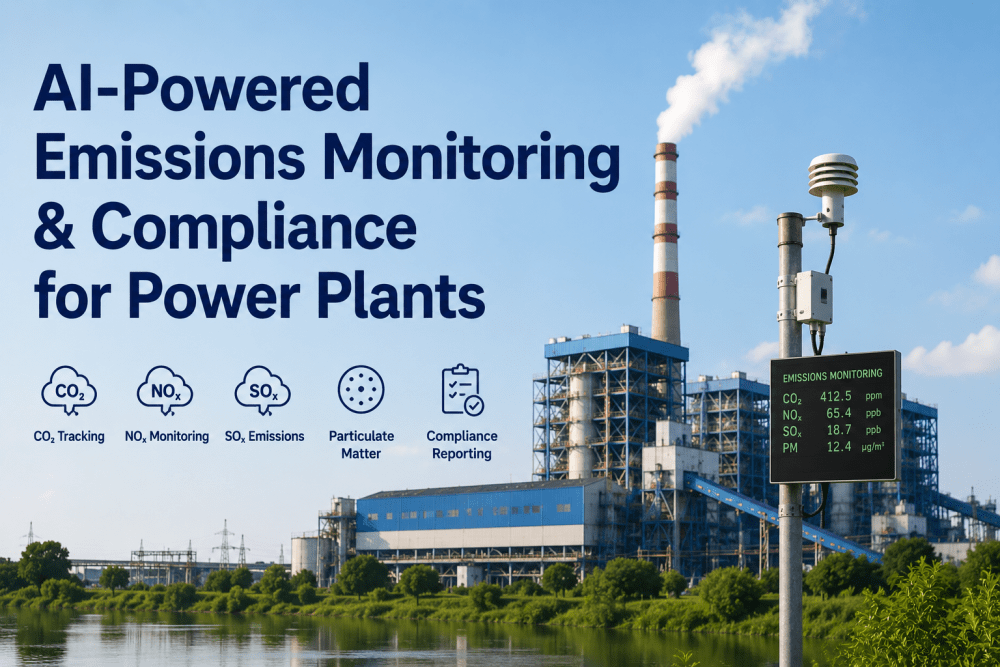
Continuous Emissions Monitoring Systems (CEMS) are the backbone of environmental compliance for every fossil fuel-fired power plant, industrial boiler, and combustion source regulated under 40 CFR Part 60 and Part 75. AI-driven CEMS integration transforms this paradigm by ingesting raw analyzer data in real time, automating quality assurance and calibration tracking, and generating EPA-compliant reports with zero manual data entry. This guide explains how AI-powered CEMS integration turns continuous emissions monitoring from a regulatory burden into an automated, audit-ready compliance operation. Book a demo
CEMS INTEGRATION · AI-DRIVEN COMPLIANCE · EPA REGULATIONS
AI-Driven CEMS Integration for Continuous Emissions Compliance
Automate data ingestion, quality assurance, calibration tracking, and EPA report generation from your CEMS analyzers — eliminating manual data handling and reducing compliance reporting time by up to 95%.
95%
Faster Report Generation Time
99.5%
CEMS Data Availability Target
Zero
Compliance Violation Risk
60
Days to Full Deployment
01 / The Challenge
Why CEMS Data Management Remains a Persistent Compliance Risk
For power plant environmental compliance managers and CEMS coordinators, the daily reality is managing a fragmented ecosystem of gas analyzers, data acquisition systems, and manual spreadsheets — each with its own failure modes. Understanding the structural weaknesses in conventional CEMS data management is the first step toward building an AI-driven compliance operation. Each challenge below represents a point of failure that automated integration eliminatesBook a Demo.
Aging DAHS InfrastructureMost installed data acquisition and handling systems were deployed 10-15 years ago and lack modern API connectivity. Manual data extraction, USB drive transfers, and COM port configurations create data latency, gaps during analyzer outages, and version control problems that propagate into quarterly emissions reports.
Manual Calibration ManagementEPA Part 60 and Part 75 require daily zero/span checks, quarterly cylinder gas audits, and annual relative accuracy test audits. These calibrations are tracked in paper logs or spreadsheets, making it difficult to prove compliance during audits or identify emerging calibration drift patterns before they produce invalid data.
Spreadsheet-Based ReportingQuarterly emissions reports are typically assembled in Excel by copying data from multiple CEMS workstations, applying emission formulas manually, and reformatting for EPA's Electronic Data Reporting Tool (CEDRI). A single formula error or data omission can misstate a facility's annual emissions by hundreds of tons.
Analyzer Drift and DowntimeGas analyzers experience zero drift, span drift, and sample line degradation between calibrations. Without AI-driven pattern detection, these drifts go unnoticed until the next daily QA check, potentially generating hours of invalid emissions data that must be substituted or flagged in regulatory reports.
RATA Preparation BurdenAnnual relative accuracy test audits require coordinating with third-party stack testing firms, scheduling process load holds, and preprocessing weeks of CEMS data for the test protocol. Manual data preparation adds days of engineering time and creates scheduling conflicts that push RATA windows close to regulatory deadlines.
Multi-Unit Data AggregationFacilities with multiple generating units, each with its own CEMS analyzer train and DAHS, must aggregate data across units for facility-level reports. Manual aggregation across different DAHS brands, data formats, and calibration schedules consumes hundreds of engineering hours per year.
02 / How It Works
AI-Driven CEMS Integration: From Raw Analyzer Data to Audit-Ready Reports
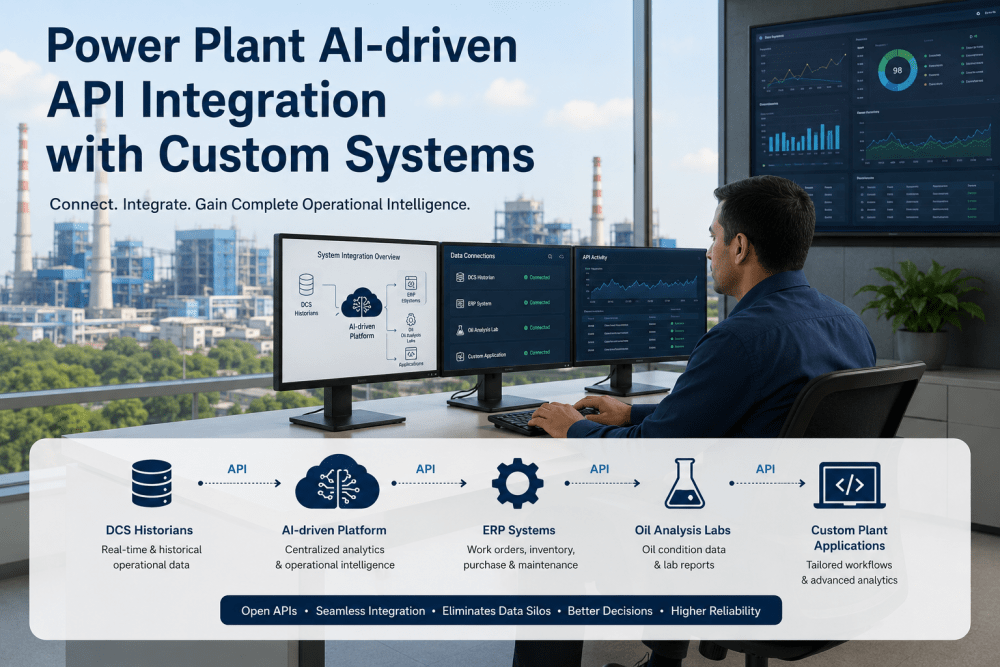
ifactory's AI-driven CEMS integration platform connects directly to gas analyzers, DAHS workstations, and plant process historians via OPC-UA, Modbus, and industry-standard communication protocols. The platform ingests raw emissions data in real time, validates every measurement against EPA quality assurance criteria, and automatically generates quarterly emissions reports in CEDRI-compliant formats — without manual data handling, file transfers, or spreadsheet manipulation.
INGEST
Real-time analyzer data ingestion connects to all major CEMS analyzer brands and DAHS platforms via OPC-UA, Modbus TCP/RTU, analog I/O, and direct database connectors. The platform normalizes data from every analyzer train — SO₂, NOx, CO₂, CO, O₂, and opacity — into a unified emissions data model with sub-second latency, eliminating the data fragmentation that plagues manual DAHS integration
Book a Demo.
VALIDATE
AI-powered quality assurance automatically applies EPA Part 60 and Part 75 data validation rules — including missing data substitution procedures, bias adjustment factors, and load-based data exclusion criteria. The AI engine detects zero drift, span drift, and anomalous measurement patterns in real time, triggering automated alerts and corrective action workflows before invalid data enters the compliance record.
CALIBRATE
Automated calibration management tracks every daily zero/span check, quarterly cylinder gas audit, and annual RATA against EPA-required schedules. The platform generates digital calibration records with time-stamped results, calculates drift and bias statistics automatically, and alerts the CEMS coordinator when schedules are approaching regulatory deadlines.
REPORT
Automated compliance report generation assembles quarterly emissions reports, annual compliance certifications, and RATA test protocols directly from validated CEMS data. Reports are formatted for EPA's CEDRI and CAMD Business System submission portals, eliminating manual data reformatting and formula verification that consumes weeks of engineering time per reporting cycle
Book a Demo.
"Before ifactory, our CEMS compliance team spent the first two weeks of every quarter manually extracting data from three different DAHS workstations, reconciling calibration logs, and rebuilding emissions spreadsheets that had accumulated formula errors over years of edits. The AI-driven integration eliminated that entirely — our quarterly report is now generated in under two hours with data we trust completely."
03 / Platform Capabilities
Comprehensive AI-Driven CEMS Integration and Compliance Automation
ifactory's platform delivers a complete set of capabilities for power plant and industrial facility CEMS management — from real-time analyzer connectivity through regulatory submission.
Real-Time Emissions Dashboard
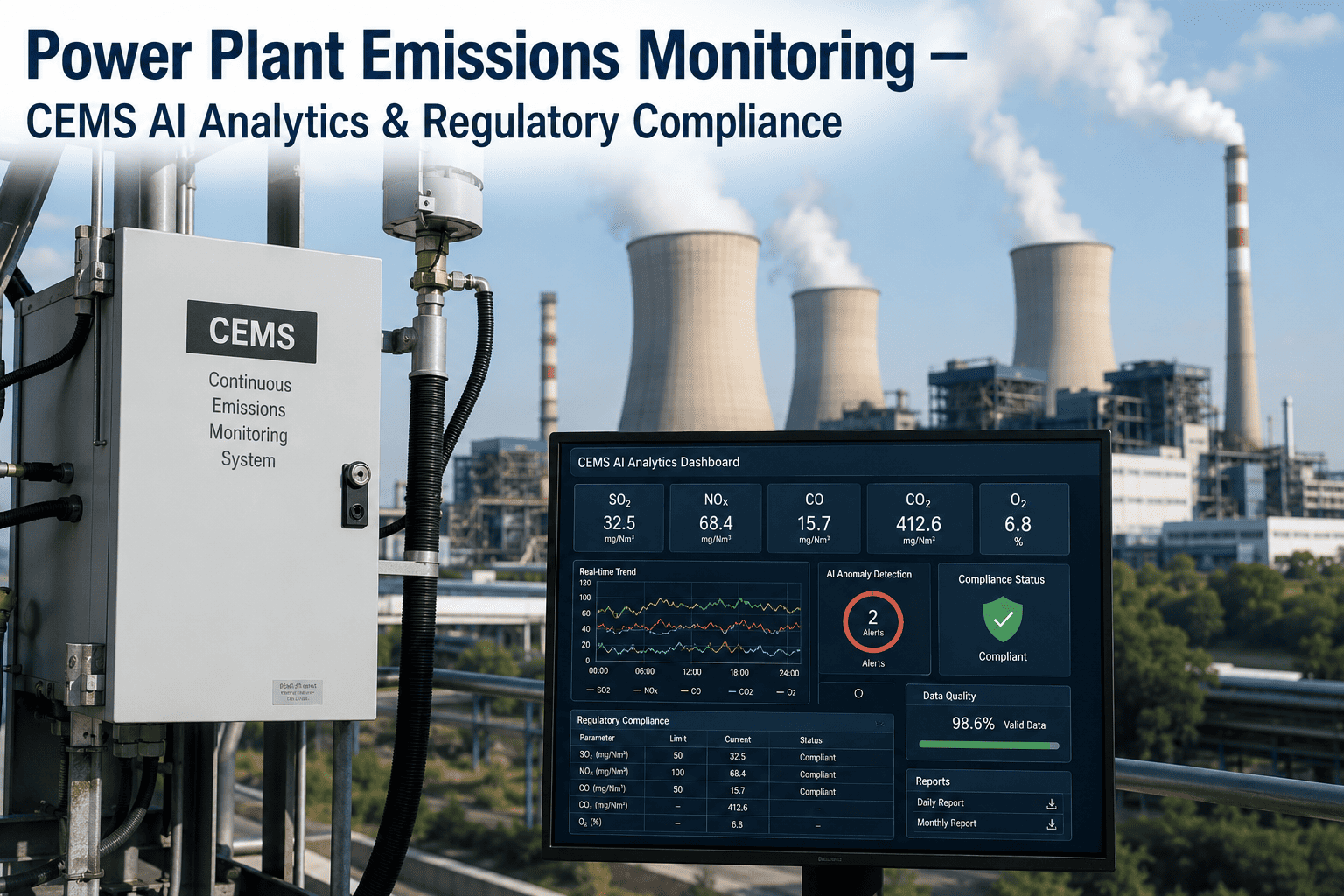
Unified real-time view of all CEMS analyzer readings across every monitored unit. SO₂, NOx, CO₂, CO, O₂, opacity, and flow data displayed on a single interface with EPA compliance limits overlaid. Automated exceedance alerts notify compliance staff via email, SMS, or mobile push within seconds of a limit exceedance or data quality anomaly.
Automated Calibration QA/QC
Digital tracking of all daily zero/span checks, quarterly cylinder gas audits, linearity checks, and annual RATA events. Automated drift calculation, bias adjustment factor computation, and schedule management. Calibration records include analyzer response data, gas cylinder certification documentation, and technician sign-offs.
Missing Data and Outlier Handling
AI-driven missing data substitution following EPA Part 75 Appendix The platform automatically tracks data availability percentages and flags any monitoring system approaching the 10% missing data threshold.
Book a Demo
CEDRI-Compliant Report Generation
Quarterly emissions reports, annual compliance certifications, and RATA test protocols generated in EPA-accepted XML and XLSX formats ready for direct submission to CEDRI and CAMD Business System.
Transform Your CEMS Compliance Operation with AI-Driven Integration
Get a live demonstration of automated CEMS data ingestion, EPA quality assurance validation, and CEDRI-compliant report generation — configured for your facility's analyzer network and regulatory requirements.
04 / Results
Measured Compliance Improvements from AI-Driven CEMS Integration
Facilities that deploy ifactory's AI-driven CEMS integration platform consistently report dramatic improvements in data availability, reporting cycle time, and regulatory confidence. The measured outcomes below represent the aggregate experience across multiple power generation and industrial combustion source deployments.
| Performance Metric |
Before ifactory |
After ifactory |
Net Change |
| Quarterly emissions report generation time |
10-14 business days |
< 2 business days |
−85% cycle time |
| CEMS data availability |
~93% avg |
99.5% avg |
+6.5 percentage points |
| Calibration record completeness |
~82% tracked |
100% tracked |
+18 percentage points |
| Manual data handling hours per quarter |
80-120 hrs |
4-6 hrs |
−95% reduction |
| Data validation error rate |
~5% of data points |
< 0.1% |
−98% error reduction |
| RATA preparation time |
5-7 days |
1-2 days |
−70% prep time |
| EPA audit response time |
3-5 days |
< 2 hours |
90% faster response |
| Annual compliance engineering cost |
$180K estimated |
$45K estimated |
−75% cost reduction |
95%
Less Manual Data Handling
05 / Key Analysis
Why AI-Driven CEMS Integration Delivers Transformative Compliance Results
01
Real-time data ingestion eliminates the fundamental latency problem in conventional CEMS compliance. Manual data extraction from DAHS workstations creates a gap of days to weeks between data collection and report generation. During that gap, analyzer drifts, calibration omissions, and data quality issues go undetected. By ingesting CEMS data in real time, ifactory's AI engine detects QA deviations immediately and prevents invalid data from entering the compliance record — shifting the model from retrospective correction to preventive quality assurance.Book a Demo
02
Automated calibration management converts regulatory tracking from a labor burden to a quality asset. Most CEMS coordinators spend 40-50% of their time managing calibration schedules, paper logs, and spreadsheet-based drift calculations. By automating calibration tracking and alerting — and by applying AI pattern detection to analyzer drift data — the platform reduces labor cost and improves measurement accuracy across every reporting period. The result is higher-quality data that withstands EPA scrutiny while consuming a fraction of the engineering resources.
03
CEDRI-compliant report automation eliminates the primary source of human error in regulatory submissions. Spreadsheet-based report generation introduces formula errors, unit conversion mistakes, and data transposition errors that are difficult to detect during internal review. By generating reports directly from validated CEMS data using EPA-approved calculation algorithms, ifactory eliminates the manual data handling chain where errors propagate. The result is a deterministic, audit-ready report that can be submitted with complete confidence in every data point.
04
Unified multi-unit aggregation resolves the integration complexity that plagues multi-source facilities. Facilities with multiple generating units, each with its own CEMS analyzer train and DAHS, face a compounding integration challenge. ifactory's platform normalizes data from all units into a single compliance data model, applying consistent QA criteria, substitution algorithms, and emission calculation methodologies across the entire facility — eliminating the unit-to-unit discrepancies that consume excessive engineering hours in manual multi-unit compliance programs.
"The first time ifactory flagged an analyzer drift pattern three days before our daily QA check would have caught it, I knew the platform had fundamentally changed our compliance posture. We corrected the calibration during a routine load change instead of discovering invalid data weeks later during report preparation. That shift from reactive to preventive QA is worth the platform investment alone."
06 / Conclusion
Automated CEMS Compliance: The New Standard for Emissions Monitoring and Reporting
The transition from manual CEMS data management to AI-driven integration is transforming how power plants and industrial facilities approach emissions compliance. ifactory's platform eliminates the data fragmentation, manual error risk, and reporting cycle bottlenecks that have defined CEMS compliance for decades — replacing them with real-time data ingestion, automated quality assurance, and CEDRI-compliant report generation that reduces reporting time by 85% and eliminates manual data handling entirely.
To see how ifactory's AI-driven CEMS integration would work for your facility's specific analyzer network and regulatory requirements, book a demo with ifactory's environmental compliance team.
95% Less Manual Data Handling. 100% Audit-Ready Compliance. Live in 60 Days.
See how ifactory's AI-driven CEMS integration platform delivers real-time analyzer data ingestion, automated quality assurance, and CEDRI-compliant report generation for power generation and industrial combustion facilities.
07 / FAQ
Frequently Asked Questions
What CEMS analyzer brands and DAHS platforms does ifactory integrate with?
ifactory's platform connects to all major CEMS analyzer brands including Thermo Fisher, Siemens, ABB, Emerson, Ametek, Horiba, and Teledyne via OPC-UA, Modbus TCP/RTU, and analog I/O interfaces. DAHS integration covers ESC (ESC-8820, ESC-8830), CemDAS, ProData, Envista, Trilithium, and custom DAHS platforms with ODBC or API connectivity. The platform also supports direct data ingestion from plant DCS historians including OSIsoft PI, AspenTech IP.21, and Wonderware.
How does the platform handle EPA Part 75 missing data substitution requirements?
The platform implements all EPA Part 75 Appendix A missing data substitution procedures — including reference method correlation, backup monitor substitution, and standard missing data algorithms. The AI engine automatically selects the appropriate substitution method based on data availability status and applies it in accordance with EPA regulatory requirements. Data availability is tracked continuously, and an alert is generated if any monitoring system approaches the regulatory 10% missing data threshold.
Does ifactory support automated calibration tracking and RATA coordination?
Yes. The platform tracks all daily zero/span checks, quarterly cylinder gas audits, linearity checks, and annual RATA events against EPA-required schedules. Calibration records are generated digitally with time-stamped analyzer response data, drift calculations, and bias adjustment factors. The platform also preprocesses the weeks of CEMS data required for RATA test protocols, reducing preparation time from 5-7 days to 1-2 days.
How long does ifactory's CEMS integration deployment typically take?
Full deployment across all CEMS analyzer trains, DAHS integration, and compliance report automation is typically achieved within 60 days. Critical emissions visibility and automated quality assurance alerts are usually live within the first 30 days. The timeline depends on the number of analyzer trains, DAHS platforms, and the availability of API or direct connectivity to existing systems.
Is ifactory compatible with existing CEMS analyzers and data systems, or does it require new hardware?
ifactory is OEM-agnostic and integrates with existing analyzer hardware and DAHS infrastructure. The platform connects via OPC-UA, Modbus, analog I/O, serial communication, or direct database integration — no sensor replacement or analyzer upgrade is required. For facilities with aging DAHS systems that lack modern connectivity, ifactory can deploy edge gateways to bridge the gap between legacy hardware and the cloud-based AI analytics platform.