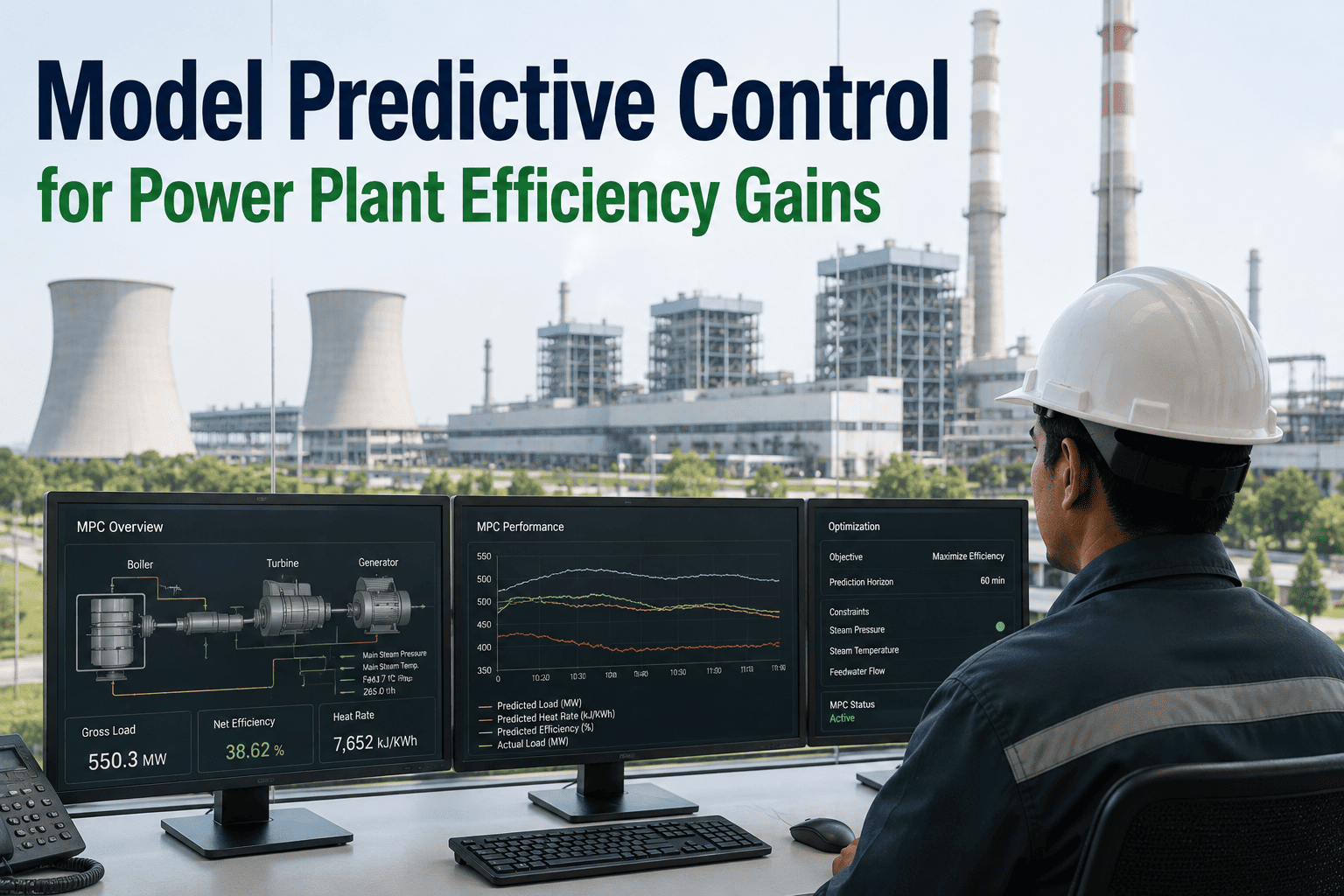
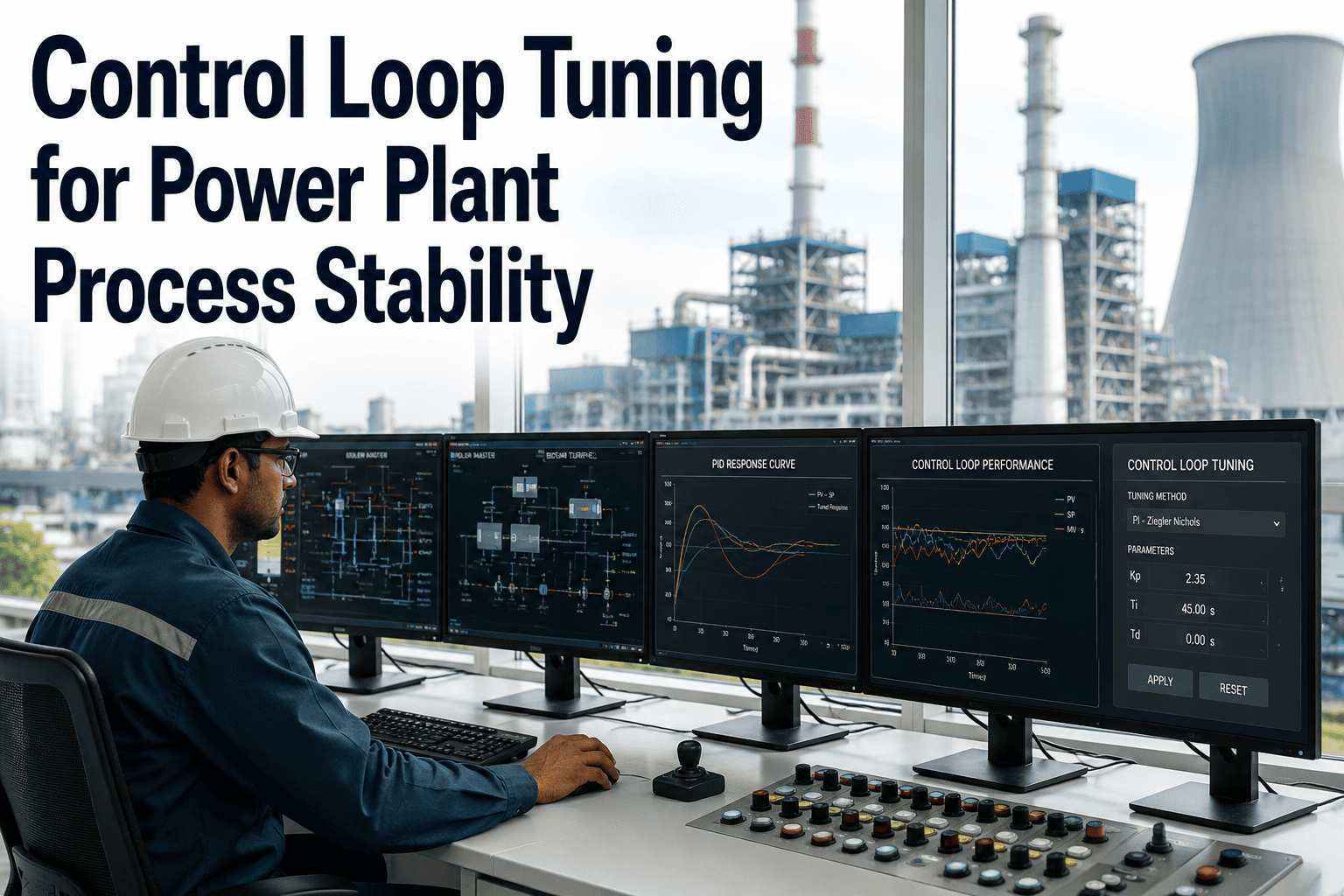
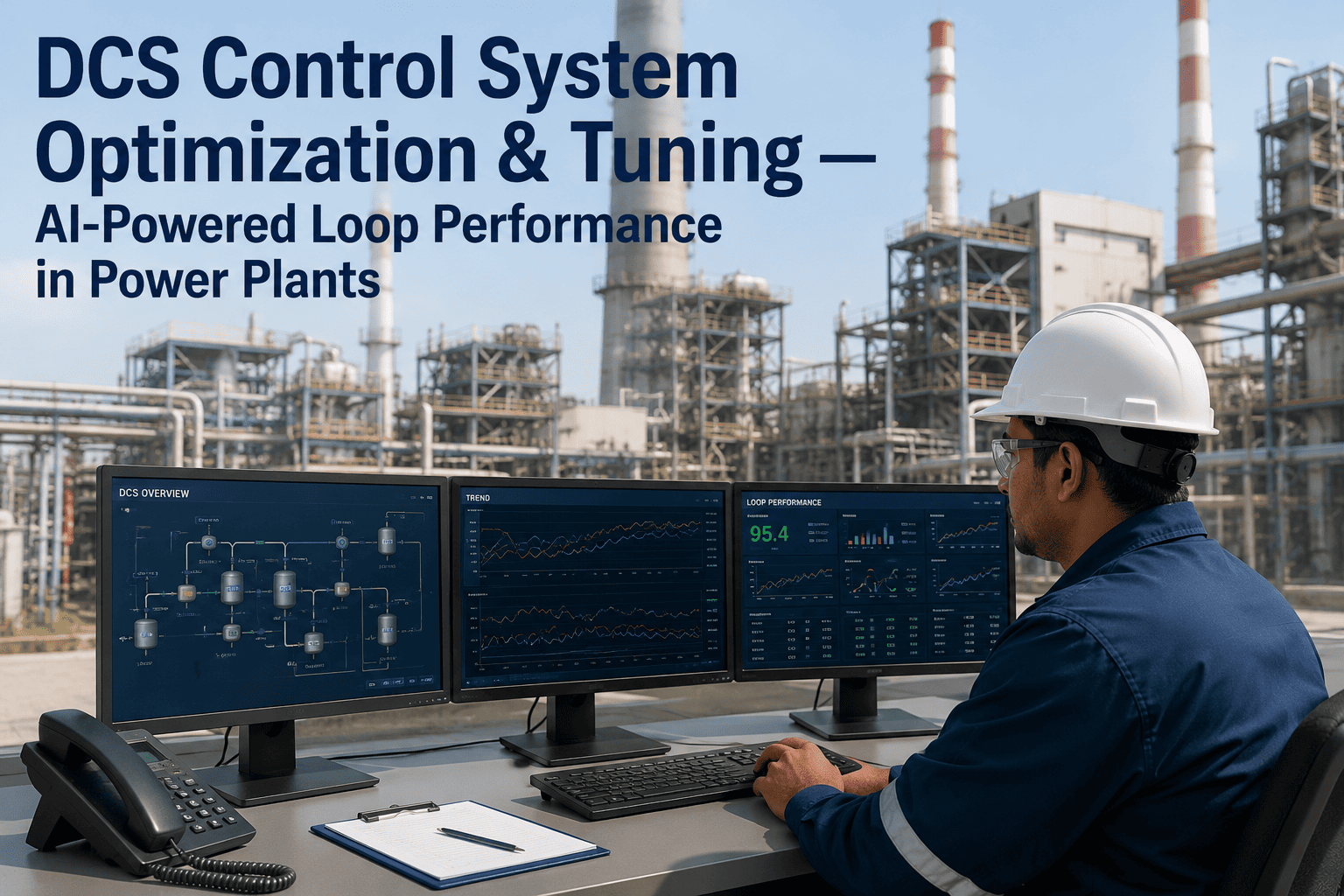
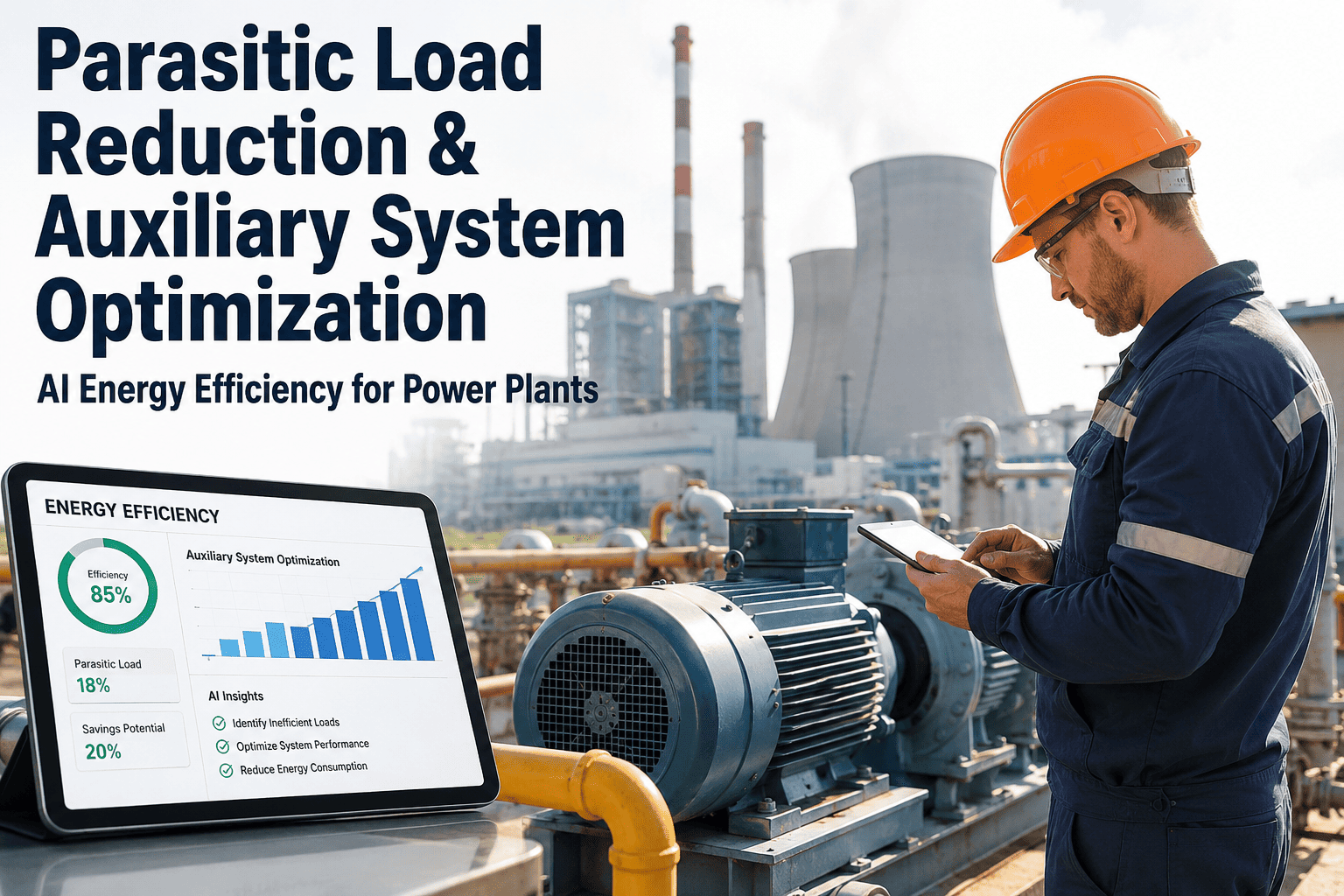
Every process engineer knows the feeling of watching a trend screen where the process variable never quite settles, drifting a few degrees above setpoint, then a few below, chasing a target that a PID loop was never built to anticipate. Traditional control reacts to error only after it has already happened, which is exactly why combustion tuning, steam temperature, and load following still consume so much operator attention on a modern power plant. Model predictive control changes the sequence entirely: instead of reacting to deviation, it forecasts where the process is headed over the next several minutes and adjusts the manipulated variables before the error ever shows up on the trend. That shift alone has moved plants from wide, manually-corrected variability bands to tight, model-held ones without a single piece of new hardware. iFactory's AI builds and maintains that predictive model directly from your DCS history — see what a closed-loop APC deployment looks like on your unit.
ADVANCED PROCESS CONTROL · MODEL PREDICTIVE CONTROL · AI OPTIMIZATION
Stop Correcting Deviation. Start Predicting It Before It Happens.
iFactory's AI builds a live predictive model of your combustion, steam, and load-following loops, recalculating the optimal control move every few seconds so the process holds close to target instead of drifting and being corrected after the fact.
Both loops track the same setpoint. The width of each band shows how far the process variable actually wanders around it.
WHAT TIGHTER CONTROL IS ACTUALLY WORTH
The Numbers Behind Every Percentage Point of Variability
Reducing process variability is not a cosmetic improvement on a trend chart. Every degree of steam temperature swing and every percent of excess air the operator has to correct manually carries a real cost in fuel, emissions, and equipment stress.
1.5-2.5%
Typical heat rate reduction reported when AI-driven control settings replace manually corrected setpoints.
Up to 30%
Reduction in NOx formation achieved in some installations through precise fuel-air ratio and burner control.
5-10%
Fuel savings reported in combined-cycle plants through optimized heat recovery and load balancing.
Up to 50%
Faster startup ramp rates achieved when predictive control anticipates thermal stress limits in advance.
WHERE APC PAYS OFF FIRST
Three Control Loops Where Prediction Beats Reaction
Not every loop on the unit needs a predictive model. These three consistently show the widest gap between what a PID loop can hold and what a model-based controller can achieve, which is why they are usually where a rollout starts.
Combustion Tuning
Fuel-air ratio and burner tilt are adjusted continuously against a live combustion model, holding excess oxygen and flame pattern in the narrow band that minimizes both fuel use and NOx formation at once.
Targets excess O2 and NOx together
Steam Temperature Control
Superheat and reheat temperatures are predicted several minutes ahead using spray attemperation and firing rate together, instead of reacting to a temperature swing after it has already stressed the tubes.
Protects tube and header life
Load Following
Ramp rate and generation targets are coordinated across boiler, turbine, and auxiliary systems simultaneously, so a grid dispatch instruction is met without swinging any single variable outside its safe range.
Faster, safer ramp response
HOW THE CONTROLLER ACTUALLY DECIDES
Inside a Single MPC Calculation Cycle
A model predictive controller is not a smarter PID loop, it is a small optimization problem solved fresh every cycle. Each run looks ahead over a prediction horizon, tests a sequence of possible control moves against the process model, and applies only the first move before recalculating again moments later.
+180s
Optimize against limits
The full cycle repeats every ten to thirty seconds, which is why the controller stays accurate even as load, ambient conditions, or fuel quality shift during the day.
Your DCS History Already Contains This Model
Months of high-frequency sensor data already describe how your boiler, turbine, and auxiliary systems actually respond to a control move. iFactory's AI builds the predictive model from that history instead of asking your team to run a separate identification test campaign.
PID VS MODEL PREDICTIVE CONTROL
What Changes When Control Stops Being Reactive
PID control is not being replaced everywhere, it still handles the fast inner loops well. What changes is the layer sitting above it, coordinating multiple interacting variables toward an actual economic target instead of a single fixed setpoint.
| Dimension |
Manual / PID Control |
iFactory MPC / APC |
| Response to Disturbances |
Corrects after deviation is already measured |
Predicts and adjusts before deviation grows |
| Combustion Tuning |
Operator adjusts air-fuel ratio manually |
Continuously optimized against O2 and NOx together |
| Steam Temperature Control |
Single-variable loops react independently |
Spray and firing rate coordinated as one system |
| Load Following |
Ramp handled loop by loop, prone to swings |
Multiple variables coordinated within safe limits |
| Operator Workload |
Frequent manual setpoint correction |
Supervisory monitoring, fewer manual interventions |
FREQUENTLY ASKED QUESTIONS
What Process Engineers Ask Before Deploying APC
What's the actual difference between conventional PID control and MPC?
A PID loop reacts to the error between a single measured variable and its setpoint after the deviation has already occurred, while a model predictive controller uses a process model to forecast where several interacting variables are headed and adjusts them together before the error grows. This is why MPC performs best on interactive, multivariable processes like combustion and steam temperature rather than a single fast inner loop, where PID still does the job well.
Book a demo to see the model built against your own combustion and steam data.
Does APC replace our DCS or sit on top of it?
APC sits on top of your existing distributed control system as a supervisory layer, sending optimized setpoints down to the same PID loops and actuators your DCS already controls rather than replacing any of that hardware. Your existing safety systems, interlocks, and operator displays stay exactly where they are, with the predictive layer adjusting targets rather than bypassing the control system underneath it.
Contact our support team to review integration requirements for your specific DCS platform.
How often does the controller recalculate its control moves?
A typical execution cycle solves the optimization problem fresh every ten to thirty seconds, reading current process state, predicting the trajectory over the coming minutes, and applying only the first calculated move before the whole cycle repeats. That short cycle time is what allows the controller to stay accurate even as load, ambient conditions, or fuel quality change throughout a shift.
Book a demo to see actual cycle timing on a live combustion or steam loop.
What happens if plant conditions drift from the original model?
Model mismatch, caused by things like heat exchanger fouling or catalyst deactivation, is a known risk with any model-based controller and is exactly why continuous model validation matters more than a one-time tuning exercise. iFactory's AI monitors prediction accuracy against actual plant response on an ongoing basis and flags drift early, rather than letting an outdated model quietly degrade control performance.
Contact our support team to discuss model validation and retraining cadence for your unit.
Will this reduce operator workload or just add another system to monitor?
The goal is fewer manual setpoint corrections, not another screen demanding attention, since the controller is designed to hold combustion, steam, and load targets automatically within the limits your team defines. Operators shift from constantly nudging individual loops to supervising a system that is already holding the target, stepping in only when a genuine abnormal condition requires their judgment.
Book a demo to see how operator interaction actually changes after deployment.
Move From Manually Corrected to Model-Held Control
iFactory's AI builds a predictive model of your combustion, steam temperature, and load-following loops directly from existing DCS data, tightening variability without new hardware or a lengthy identification campaign. Book a demo to see it modeled against your own unit.