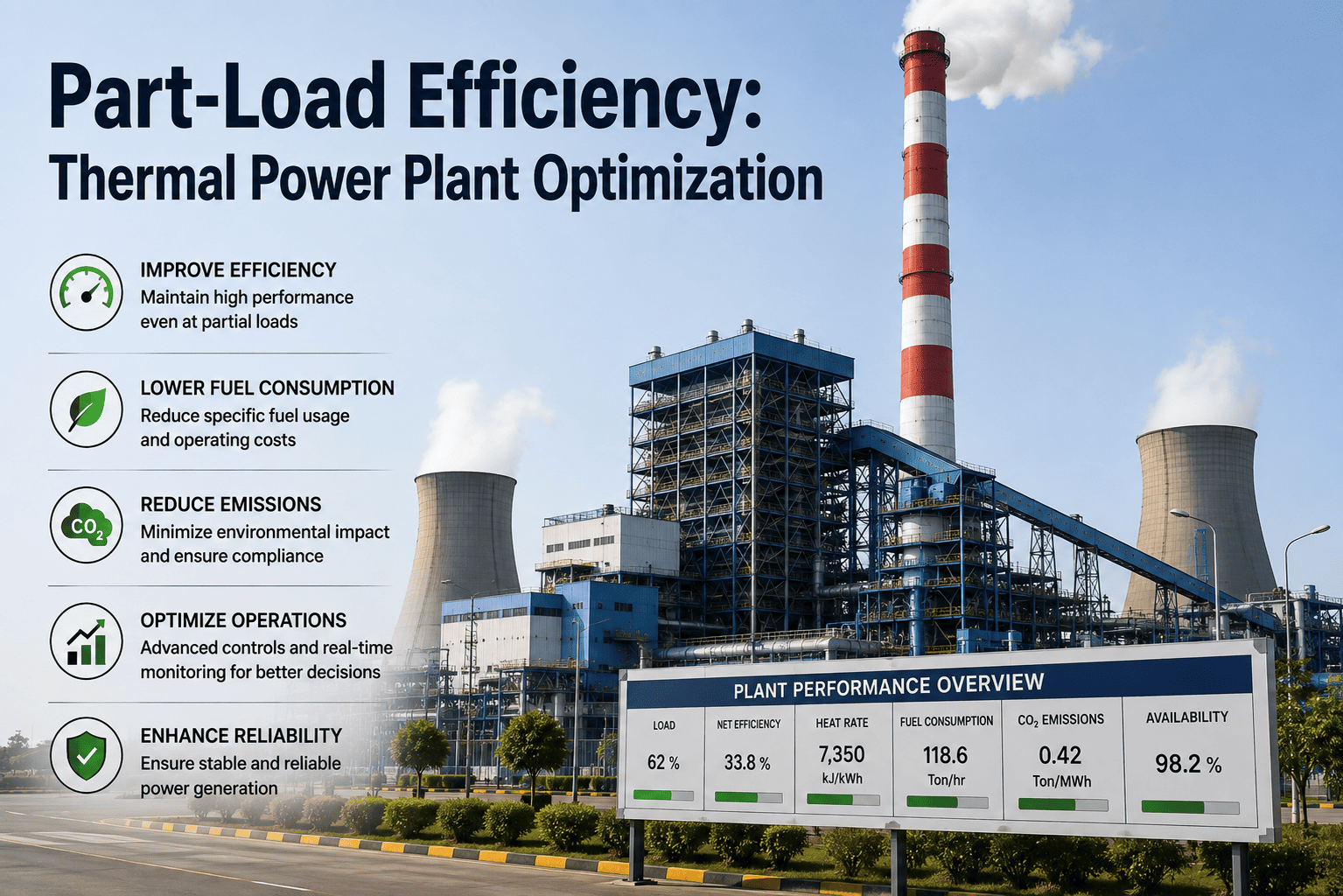
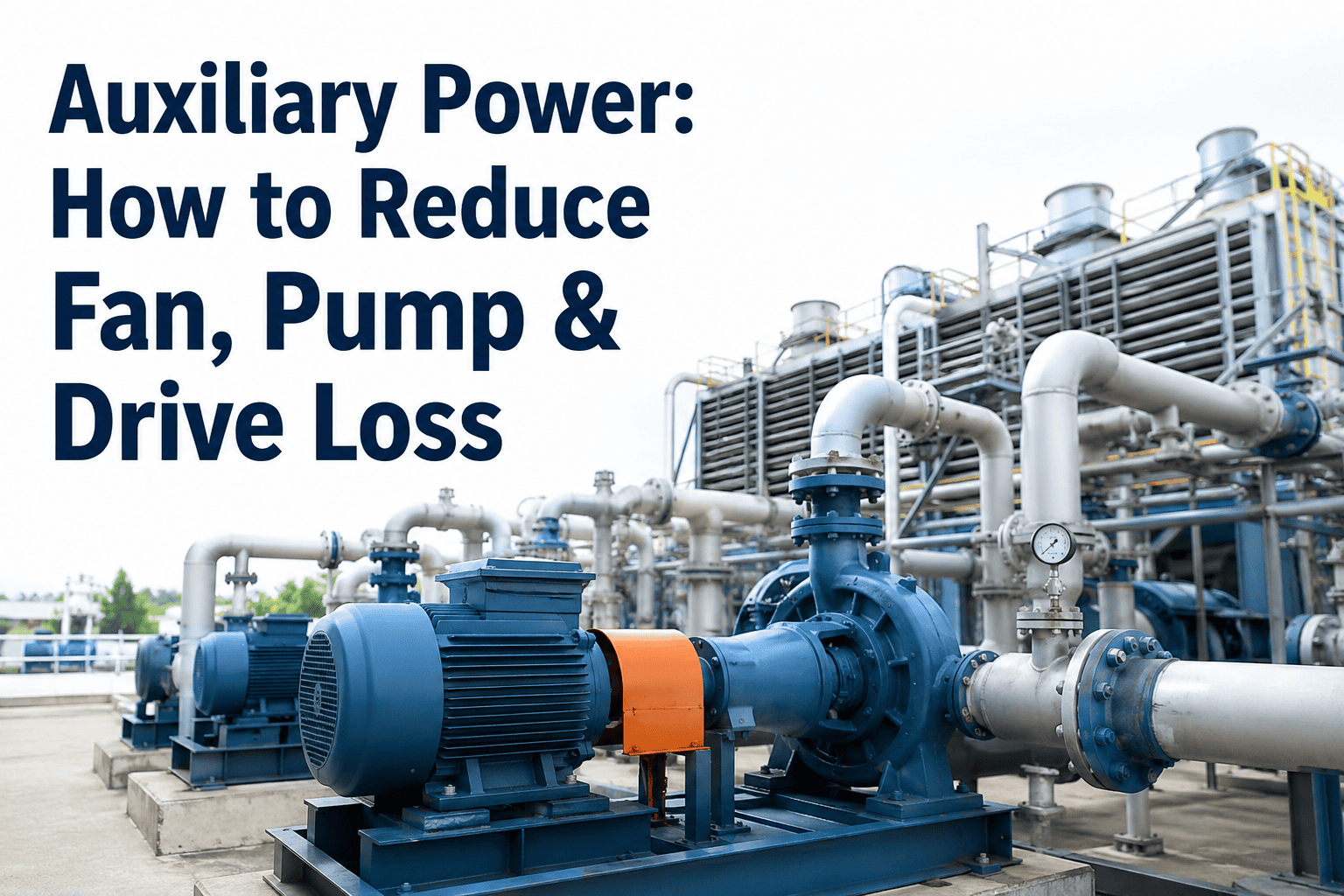
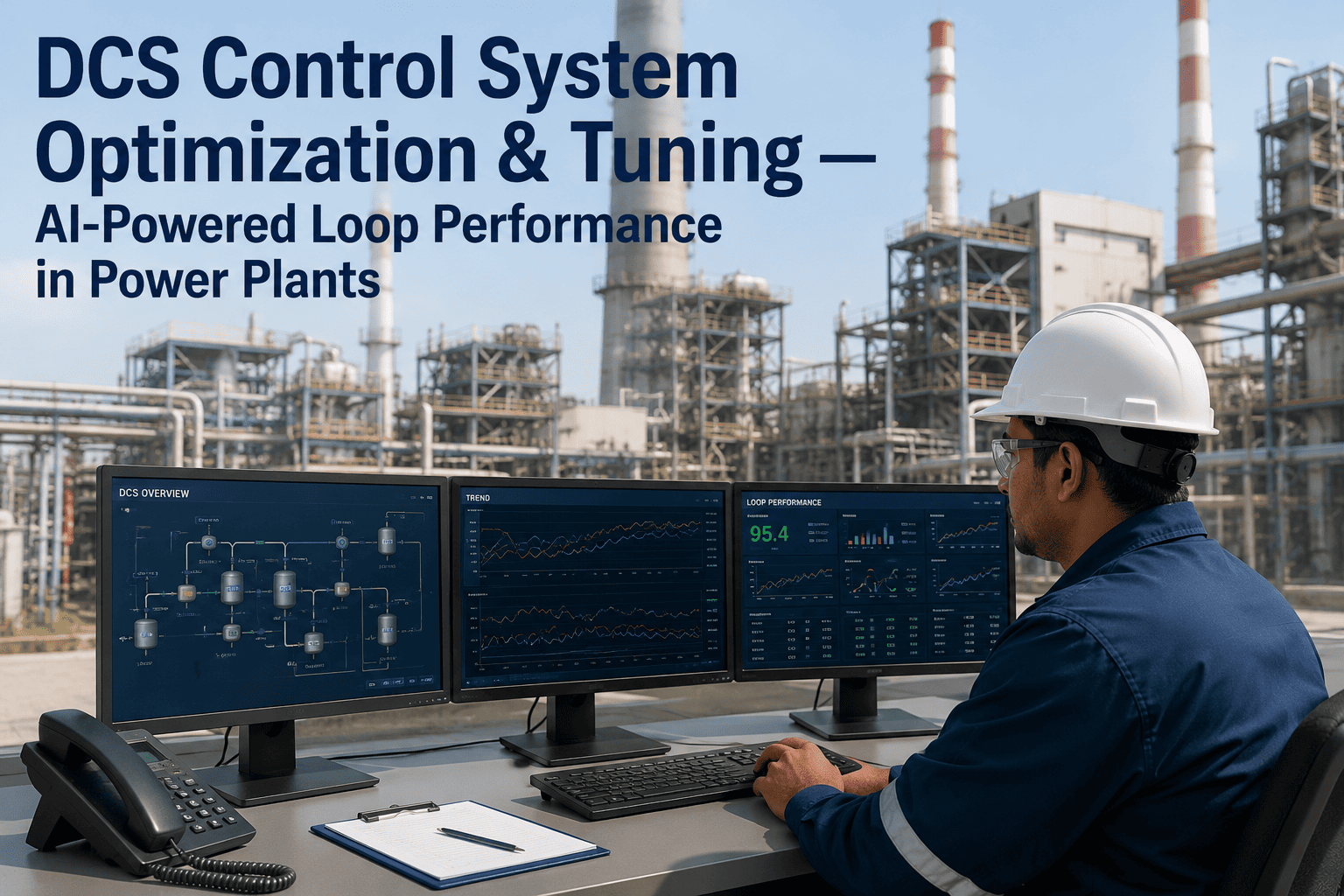
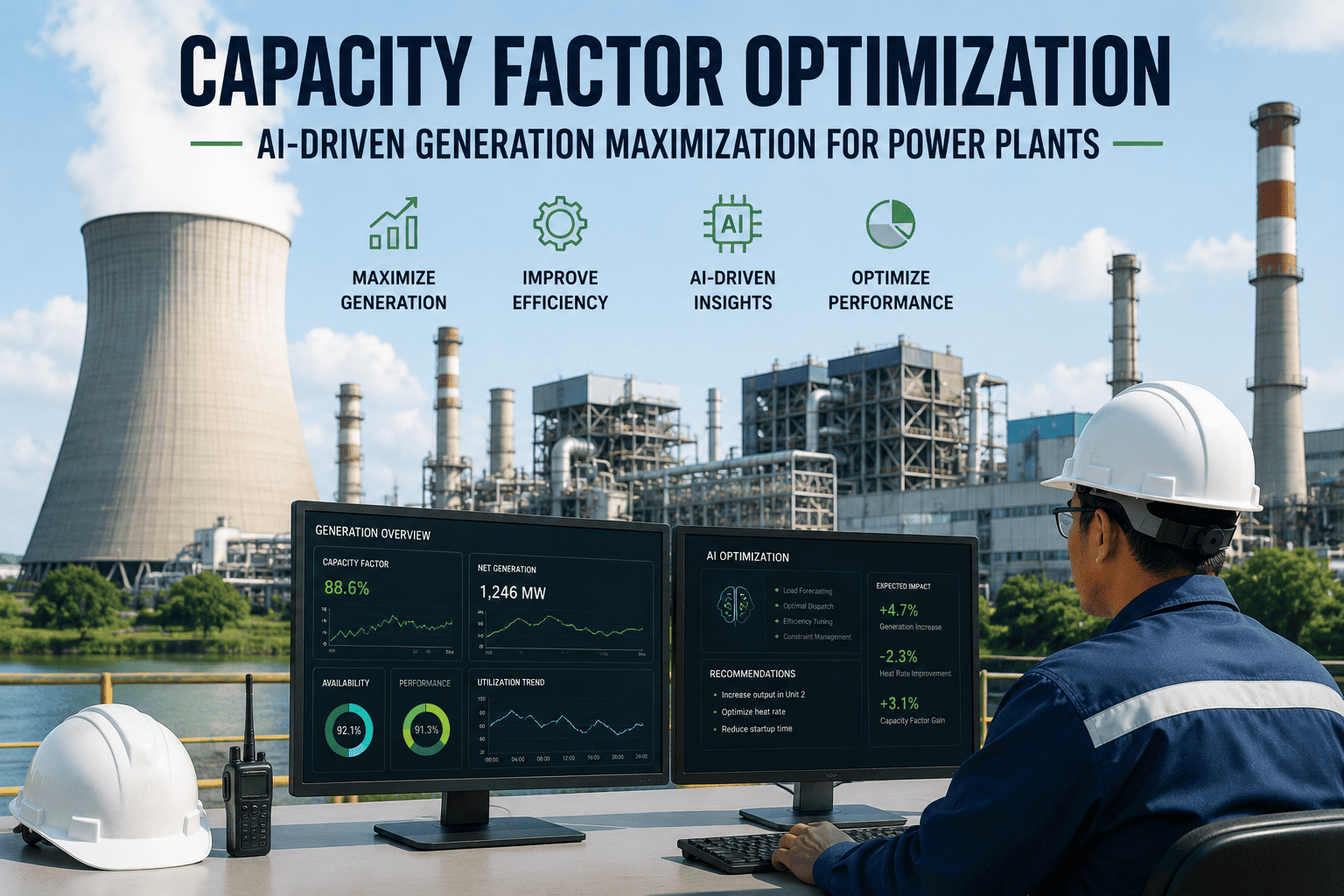
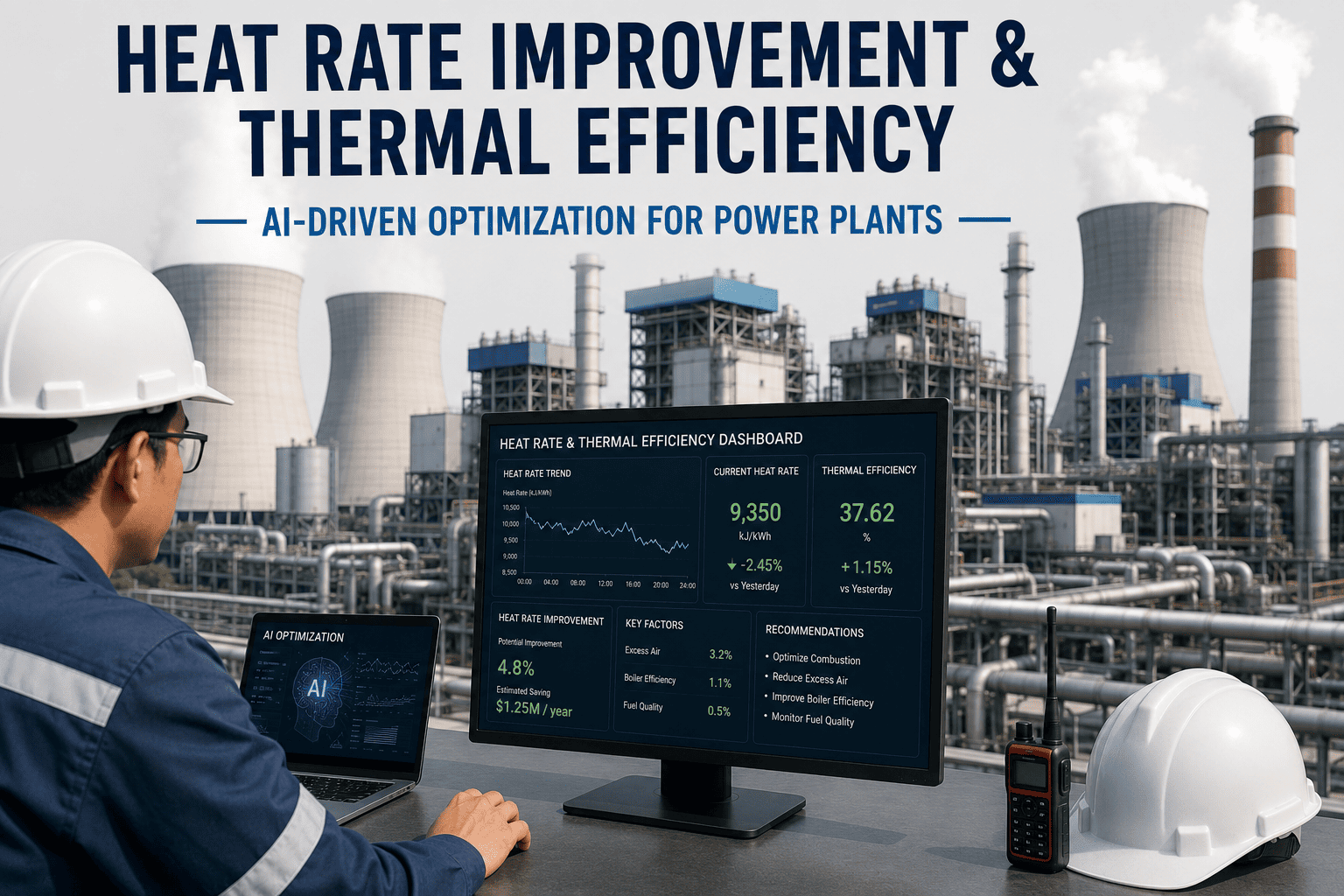
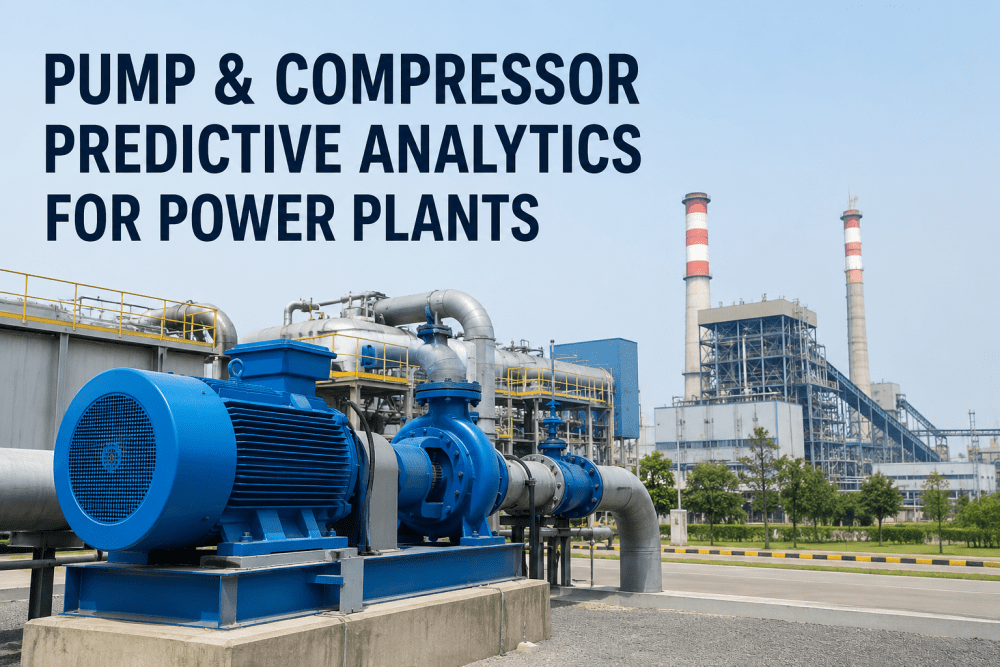
Every megawatt a power plant burns just to run its own pumps, fans, and compressors is a megawatt that never reaches the meter, and thermal generating units typically hand back 3 to 8 percent of gross output to auxiliary loads before a single unit is sold. Coal-fired plants running older fixed-speed equipment can lose as much as 15 percent of gross output this way, and in most facilities a small group of motors — boiler feed pumps, forced and induced draft fans, and circulating water pumps — accounts for more than 80 percent of that number. The gap between a plant's nameplate output and what actually reaches the grid is rarely a generation problem; it's an auxiliary system problem hiding inside a heat rate number that most teams have never fully broken apart, largely because auxiliary consumption gets buried in a single aggregate line item rather than tracked motor by motor. Book a demo to see where AI-driven auxiliary optimization can recover net output on your specific fleet.
PROCESS ENGINEER GUIDE · OEE & PERFORMANCE · AI AUXILIARY OPTIMIZATION
Your Plant Generates More Power Than It Sells — Auxiliary Systems Are Quietly Eating the Difference
iFactory's AI continuously analyzes pump, fan, compressor, and HVAC load against actual process demand, closing the gap between gross generation and net output without touching your protection logic or process setpoints.
3-15%
Of Gross Output Lost to Auxiliary Load
80%+
Of That Loss From Pumps, Fans & Compressors
60%
Fan Efficiency Swing Between Poor and State-of-the-Art Control
WHERE THE LOAD ACTUALLY IS
A Small Group of Motors Accounts for Most of Your Parasitic Load
Parasitic load is rarely spread evenly across a plant. A handful of large auxiliary motors — the ones running the boiler feed pumps, draft fans, and circulating water systems — dominate the auxiliary power bill, which means optimization effort delivers the most return when it targets these specific systems first rather than chasing smaller, distributed loads. Understanding this breakdown before starting an optimization program is what separates a project that recovers meaningful megawatts quickly from one that spreads limited engineering time across dozens of minor loads with little cumulative impact.
Boiler Feed Water Pumps
~35%
Circulating Water Pumps
~15%
Compressors & Pulverizers
~15%
HVAC, Lighting & Controls
~10%
Approximate share of total auxiliary power consumption by system in a typical thermal generating unit. Boiler feed pumps alone commonly represent the single largest opportunity.
WHY THE WASTE IS BUILT IN
Auxiliary Equipment Is Sized for Peak Load — But Rarely Runs There
Most pump, fan, and compressor systems are specified with margin for the worst-case design condition, then controlled with a fixed-speed motor and a throttling valve or damper to handle everything below that peak. That combination wastes power by design: the motor draws close to full load while the valve or damper simply destroys the excess pressure or flow instead of the plant avoiding it in the first place. The problem compounds as plants shift toward flexible, cycling operation, since equipment that was efficient at the original base-load design point becomes progressively less efficient the further the unit operates from that point.
Oversized Equipment
Conservative sizing margins mean pumps and fans are frequently operating well below their efficient design point during normal conditions.
Fixed-Speed Motors
Without variable speed control, output is throttled mechanically rather than reduced electrically, wasting the energy difference as heat and pressure drop.
Partial-Load Operation
As plants cycle to 50-70% capacity to follow renewable generation, fixed-speed auxiliaries waste proportionally more power than they did at full base load.
Static Setpoints
Auxiliary control setpoints are often set once at commissioning and never revisited as process conditions, fouling, or ambient factors change over time.
The Efficiency Gap Isn't in Your Turbine — It's in the Systems Running It
iFactory's AI identifies exactly which auxiliary systems are drawing more power than the process actually requires, ranked by recoverable megawatts, so your team knows precisely where to focus first.
HOW AI CLOSES THE GAP
Matching Auxiliary Output to Actual Process Demand, Continuously
AI-driven auxiliary optimization doesn't ask you to replace equipment or change your control philosophy — it works with your existing VFDs, sensors, and control system to keep every pump, fan, and compressor running at the load the process actually needs, not the load it was originally sized for.
Real-Time Load Matching
The model continuously compares motor speed and flow output against actual process demand, flagging where a VFD is running faster than the downstream system requires.
Multi-Pump & Fan Sequencing
Where multiple pumps or fans share a duty, AI determines the most efficient combination and staging to meet demand rather than running all units at partial load simultaneously.
Setpoint Drift Detection
Auxiliary setpoints that have drifted from their optimal value since commissioning are flagged automatically, replacing the "set once and forget" pattern with continuous tuning.
Cross-System Optimization
Cooling tower fan speed, condenser vacuum, and circulating water flow are optimized together rather than independently, since a change in one affects the efficient operating point of the others.
THE NET OUTPUT IMPACT
What a Smaller Auxiliary Load Actually Means at the Meter
Every megawatt recovered from auxiliary optimization is a megawatt of net generation that requires no additional fuel, no new equipment, and no change to gross output — it is pure margin recovered from the difference between what the plant makes and what it sells.
| Metric |
Before Optimization |
After AI Optimization |
| Auxiliary Power as % of Gross Output |
Fixed-speed baseline, 7-15% typical for coal units |
Reduced through continuous load matching and sequencing |
| Boiler Feed Pump Loading |
Runs near full load with valve throttling for control |
Speed-matched to actual feedwater demand via VFD control |
| Draft Fan Control |
Damper-throttled at fixed motor speed |
VFD-modulated to match actual draft requirement |
| Net Heat Rate |
Penalized by unnecessary auxiliary consumption |
Improved as auxiliary load drops relative to net output |
THE FINANCIAL CASE
Auxiliary Optimization Pays Back Faster Than Almost Any Other AI Use Case
Because parasitic load reduction requires no new generating equipment and typically works with VFDs and sensors already installed, it consistently ranks among the fastest-payback AI use cases in a power plant's improvement portfolio. Unlike combustion tuning or turbine upgrades, the savings compound continuously with no additional fuel input and no downtime required to implement.
4-8 Mo
Typical Payback Period
Auxiliary optimization projects commonly reach payback faster than capital-intensive efficiency upgrades.
5-12%
Reduction in Station Service Load
Achievable through continuous auxiliary optimization without any change to gross generating capacity.
60%
Fan Efficiency Recoverable From Control Upgrades
The documented swing between poor and state-of-the-art fan control technology in process industry studies.
No CapEx
Equipment Required for Most Deployments
Optimization typically runs on existing VFDs, sensors, and control infrastructure already installed in the plant.
FREQUENTLY ASKED QUESTIONS
Questions Process Engineers Ask About Parasitic Load Reduction
Does auxiliary optimization require installing new VFDs or replacing existing pumps and fans?
In most cases, no. The majority of deployments work with VFDs and instrumentation already installed in the plant, using AI to determine the optimal speed and sequencing setpoints rather than requiring new hardware. Where a critical auxiliary is still running fixed-speed with no VFD at all, the optimization assessment will identify it as a candidate for a future capital upgrade, but the AI layer itself typically deploys against your existing equipment.
Book a demo to see what auxiliary optimization looks like against your current VFD and control infrastructure.
How does the AI determine the right pump or fan speed without risking process upsets?
The model operates within the same process constraints your control system already enforces — minimum flow requirements, pressure limits, and safety interlocks are respected exactly as they are today. Rather than setting an arbitrary target, the AI continuously compares actual process demand against current auxiliary output and only recommends or implements changes that keep every constraint within its existing safe operating range.
Contact our support team to review how process constraints are configured for your specific systems.
Which auxiliary systems typically deliver the fastest and largest savings?
Boiler feed pumps, forced and induced draft fans, and circulating water pumps are usually the highest-value targets, since these large motors typically account for the majority of a plant's total auxiliary power consumption. A pre-deployment assessment analyzes your plant's specific motor loading data to rank auxiliary systems by recoverable megawatts, so optimization effort goes where the return is largest rather than being spread evenly across every motor in the plant.
Book a demo to get a ranked list of savings opportunities specific to your auxiliary systems.
How is auxiliary load reduction different from a one-time energy audit our plant has already done?
A traditional energy audit is a snapshot — it identifies savings opportunities as they existed on the day the audit was performed, and those setpoints often drift out of optimal range within months as process conditions, fouling, and ambient factors change. AI-driven optimization runs continuously, re-evaluating the optimal setpoint for every auxiliary system in real time rather than relying on a static recommendation that becomes stale as the plant's operating conditions evolve.
Contact our support team to discuss how continuous optimization compares to your last energy audit findings.
Will reducing auxiliary load have any measurable effect on our reported heat rate?
Yes, directly. Net heat rate is calculated using net generation, which is gross generation minus auxiliary consumption — so any sustained reduction in parasitic load improves net heat rate even if gross generation and fuel input stay exactly the same. This makes auxiliary optimization one of the few efficiency levers that improves a reported performance metric without requiring any change to combustion, steam cycle, or turbine performance.
Book a demo to see the projected heat rate impact for your specific unit.
Stop Paying to Generate Power You Never Sell
iFactory's AI continuously matches every pump, fan, and compressor to the load your process actually needs — recovering net output without new equipment or changed process setpoints. Book a session to map auxiliary optimization onto your plant.