A boiler that misses its jurisdictional inspection window does not stop generating steam — it keeps running, uninspected, while the certificate that legally permits it to operate quietly lapses in a filing cabinet. Pressure vessel and boiler code compliance under ASME Section I, Section VIII, and the National Board Inspection Code is one of the few compliance areas where a paperwork lapse can force an immediate shutdown order, not just a fine. Plant managers running dozens of pressure-retaining assets across multiple jurisdictions cannot track this on a wall calendar. Book an inspection-scheduling review to see your current vessel and boiler inventory mapped against every open inspection window.
Every Vessel. Every Jurisdiction. One Inspection Schedule.
AI-powered scheduling and documentation tracking for ASME Boiler and Pressure Vessel Code compliance, from internal inspections to jurisdictional filing deadlines.
Book a Demo Talk to a SpecialistWhy Boiler Code Compliance Cannot Slip
Unlike most compliance obligations, an expired boiler or pressure vessel certificate is not a paperwork problem you fix after the fact. Most jurisdictions require the asset to be taken out of service the moment its certificate lapses, regardless of whether the equipment itself is in good mechanical condition, and regardless of whether production depends on it running that day.
grace period most jurisdictions allow past an expired inspection certificate before mandatory shutdown
of forced pressure-equipment outages trace to a missed inspection window rather than an actual defect
separate jurisdictional authorities in North America, each with its own inspection interval rules
typical cost of an unplanned outage and expedited inspection to restore a lapsed certificate
The Code Structure Behind Every Inspection Date
ASME's Boiler and Pressure Vessel Code is not one document — it is a family of sections, each governing a different class of equipment, layered under the National Board Inspection Code and your specific jurisdiction's adopted schedule.
The umbrella code, revised every two years, defining design, construction, and inspection requirements for pressure-retaining equipment.
Power boilers — construction rules for boilers generating steam or high-temperature water above defined thresholds.
Pressure vessels — Division 1 and 2 rules covering design margins, materials, and fabrication for unfired pressure vessels.
National Board Inspection Code — governs in-service inspection, repair, and alteration once equipment is operating.
State, provincial, or local authority that adopts NBIC intervals and issues the operating certificate itself.
Inspection Interval Benchmarks by Equipment Class
Actual intervals vary by jurisdiction and by the risk-based inspection history of the specific asset, but these are the working ranges most plant managers plan against before a jurisdiction-specific review.
Why Inspection Intervals Get Miscalculated
Most lapsed certificates are not the result of neglect. They come from small, understandable gaps in how intervals get tracked across a large and varied equipment fleet, especially when responsibility shifts between maintenance, safety, and compliance staff over time.
Ownership changes mid-cycle
A maintenance lead who tracked an asset's schedule leaves, and the next owner inherits a spreadsheet without the context behind each date.
Risk-based intervals shift
A vessel's interval extends after a clean inspection history, but the new longer date is not updated everywhere it needs to be tracked.
New equipment added informally
A replacement vessel goes into service during an outage and never makes it onto the master tracking list before its first certificate comes due.
Jurisdiction rules change
A state updates its adopted NBIC edition or interval rules, and fleets running on the old assumption miss the revised requirement.
Never Discover a Lapsed Certificate From an Inspector
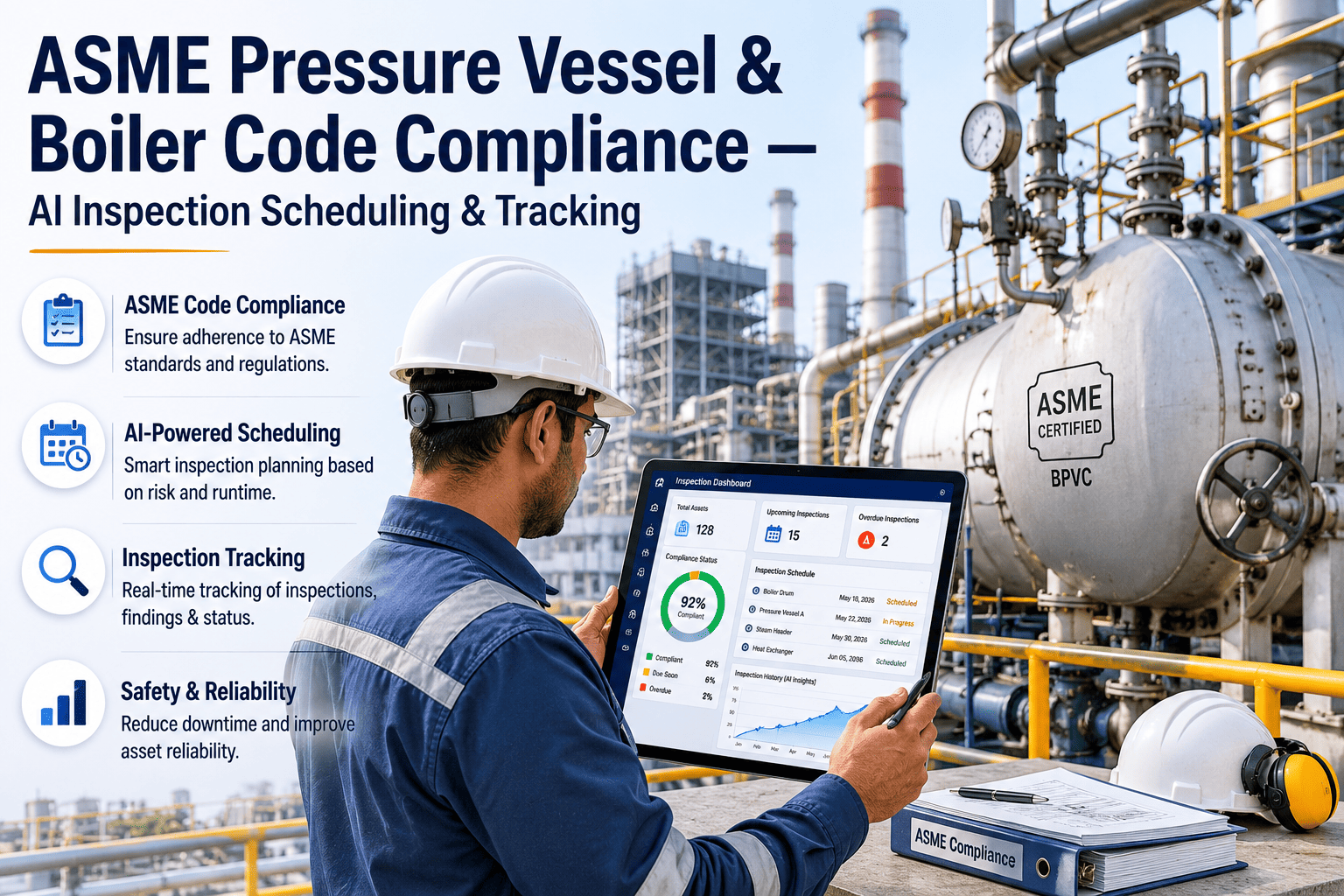
iFactory tracks every pressure-retaining asset's certificate status, jurisdiction, and next inspection window automatically, and alerts your team weeks before a window closes.
Book a Scoping Call Read a Case StudyWhat Happens When a Certificate Lapses
The consequence chain runs faster than most other compliance failures, because pressure equipment carries an immediate physical safety dimension that regulators do not treat as negotiable.
Certificate expiration date passes without a completed inspection on file.
Jurisdiction system flags the asset; in most states this triggers an automatic notice to the facility.
Operating authority for that specific vessel or boiler is suspended, often within 24 to 48 hours.
Plant must schedule an expedited inspection, frequently at a premium rate given short notice.
Production line dependent on that asset is down until the inspection clears and certificate reissues.
How iFactory Tracks Every Asset Automatically
The system builds a live registry tied to your actual equipment, not a generic template, and keeps every jurisdiction's specific rules attached to the right asset, so risk-based intervals, code editions, and prior inspection history all travel together instead of living in separate files.
Asset registry build
Every boiler, vessel, and relief device is logged with serial number, jurisdiction, code edition, and current certificate status.
Interval calculation
Risk-based and fixed intervals are applied per asset based on service history, inspection results, and jurisdiction rules.
Inspector coordination
Authorized inspector scheduling is queued automatically as windows approach, with lead time built in for jurisdiction booking delays.
Certificate archive
Completed inspection reports and reissued certificates are stored against the asset record, ready for the next audit or PSM review.
From a Plant Manager's Desk
We run 47 pressure vessels and boilers across two states with different jurisdictional rules. I used to find out about an expiring certificate when the authorized inspector called asking why we hadn't scheduled. Now the system tells me ninety days out, and the inspector is booked before it becomes a scramble.
Frequently Asked Questions
Does the system replace our authorized inspector?
No. Authorized inspectors remain required under NBIC and jurisdictional law to perform the actual internal and external inspections. What changes is that scheduling, documentation, and certificate tracking are handled automatically, so the inspector's time on site is spent inspecting rather than everyone chasing paperwork before and after the visit. Talk to a specialist about how the system fits your existing inspector relationships.
Can it handle assets across multiple states or provinces with different rules?
Yes. Each asset is tagged with its governing jurisdiction, and the system applies that jurisdiction's specific interval and filing requirements rather than a single generic schedule. Plants operating across state lines commonly have vessels on different cycles under the same roof, and the registry keeps them correctly separated.
What happens if an internal inspection reveals a defect requiring repair?
The system logs the finding against the asset record and tracks the repair or alteration through to NBIC-compliant sign-off before recommending the certificate be reinstated. This keeps a full chain of custody from the original finding through the repair documentation to the reissued certificate, which is exactly what a jurisdiction or PSM auditor will ask to see.
How far in advance does the system flag an approaching inspection window?
Default lead time is ninety days, configurable per asset class, which gives enough runway to book an authorized inspector even in regions where inspector availability runs tight. Critical assets such as high-pressure power boilers can be set to a longer lead time given the operational impact of an unplanned outage.
How long does it take to build the initial asset registry?
Most plants complete the initial registry build, including jurisdiction mapping and historical certificate data, within four to six weeks depending on fleet size. Book a scoping call and bring your current asset list to get a specific timeline for your facility.
Get Every Vessel and Boiler Onto One Tracked Schedule
Book a 30-minute scoping call. Bring your current asset list and iFactory will map jurisdiction, code edition, and inspection status for every pressure-retaining asset in your fleet.
Book a Demo Talk to a Specialist