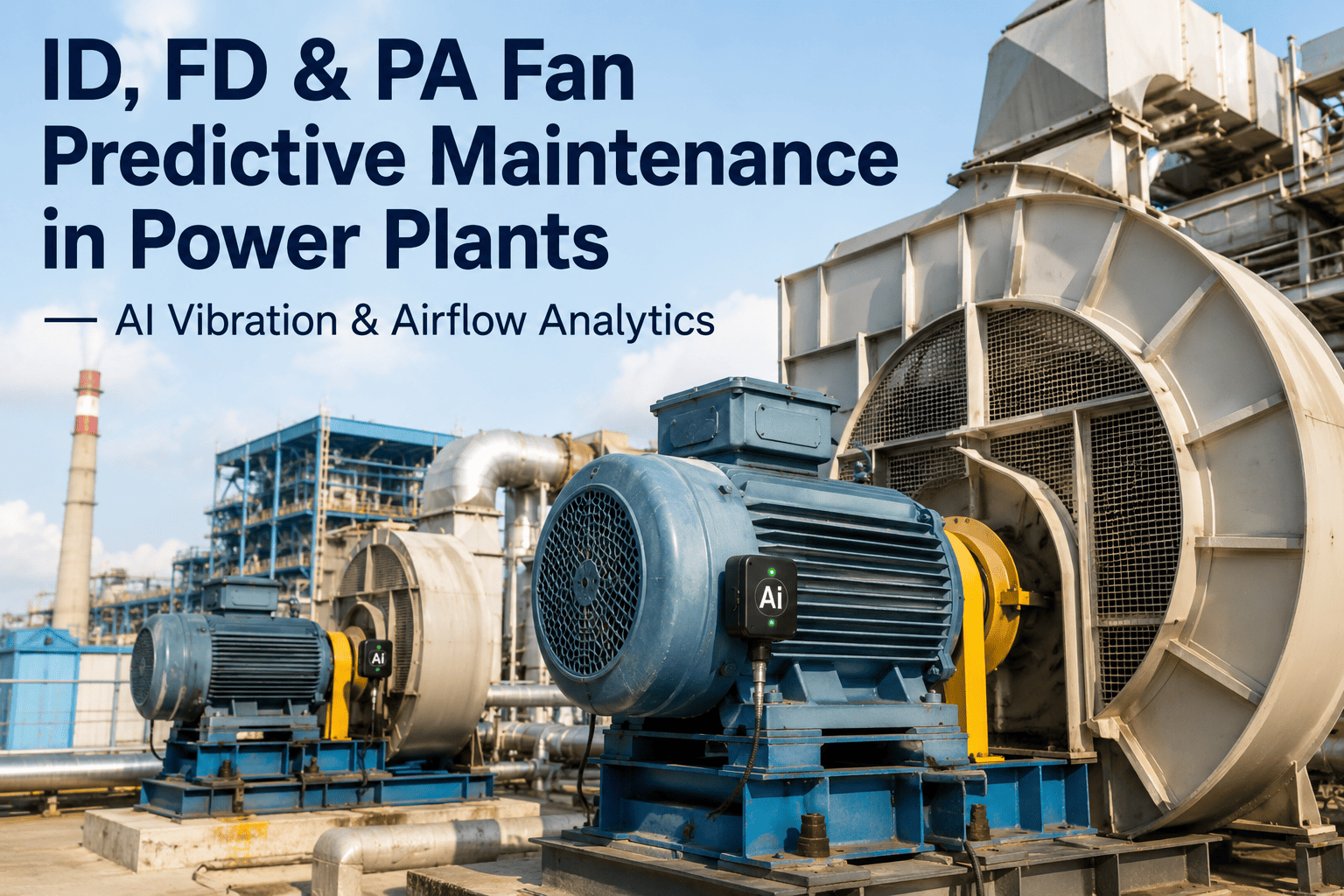
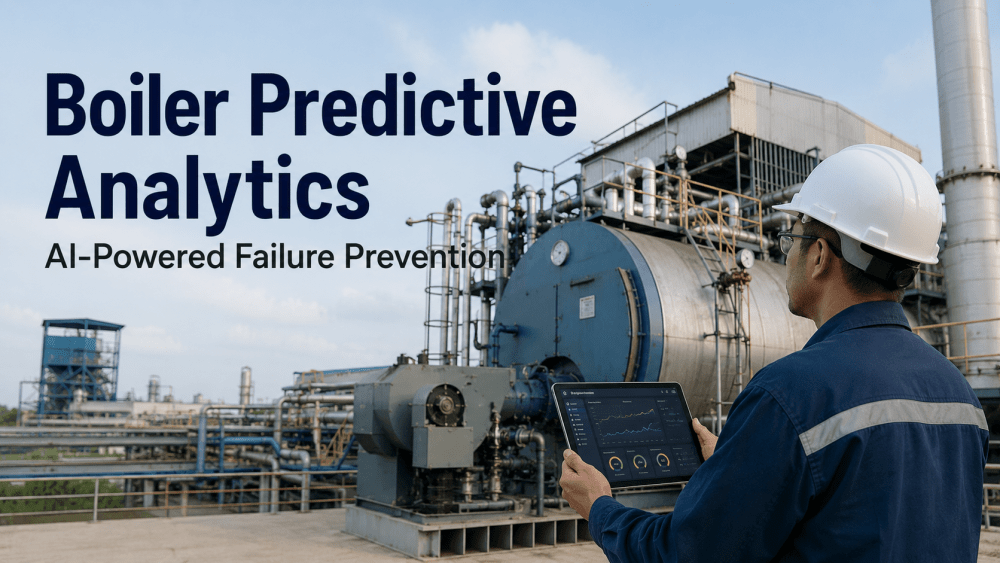
A boiler feed pump running at a coal or gas-fired unit has no backup path once it starts to degrade quietly. Bearing wear, seal leakage, and cavitation on BFPs, condensate extraction pumps, and circulating water pumps rarely announce themselves — they show up first as a fractional shift in vibration amplitude, three or four degrees of extra bearing temperature, or a suction pressure that drifts a few PSI off its normal curve. Reactive maintenance teams miss these signals because nobody is watching all three pumps continuously against a plant-specific baseline. iFactory's AI-driven analytics platform watches that baseline every minute, flags the deviation the moment it appears, and turns it into a scheduled work order instead of a forced outage. See how it works for your fleet at iFactory support.
AI-Driven · Rotating Equipment Analytics · Power Generation
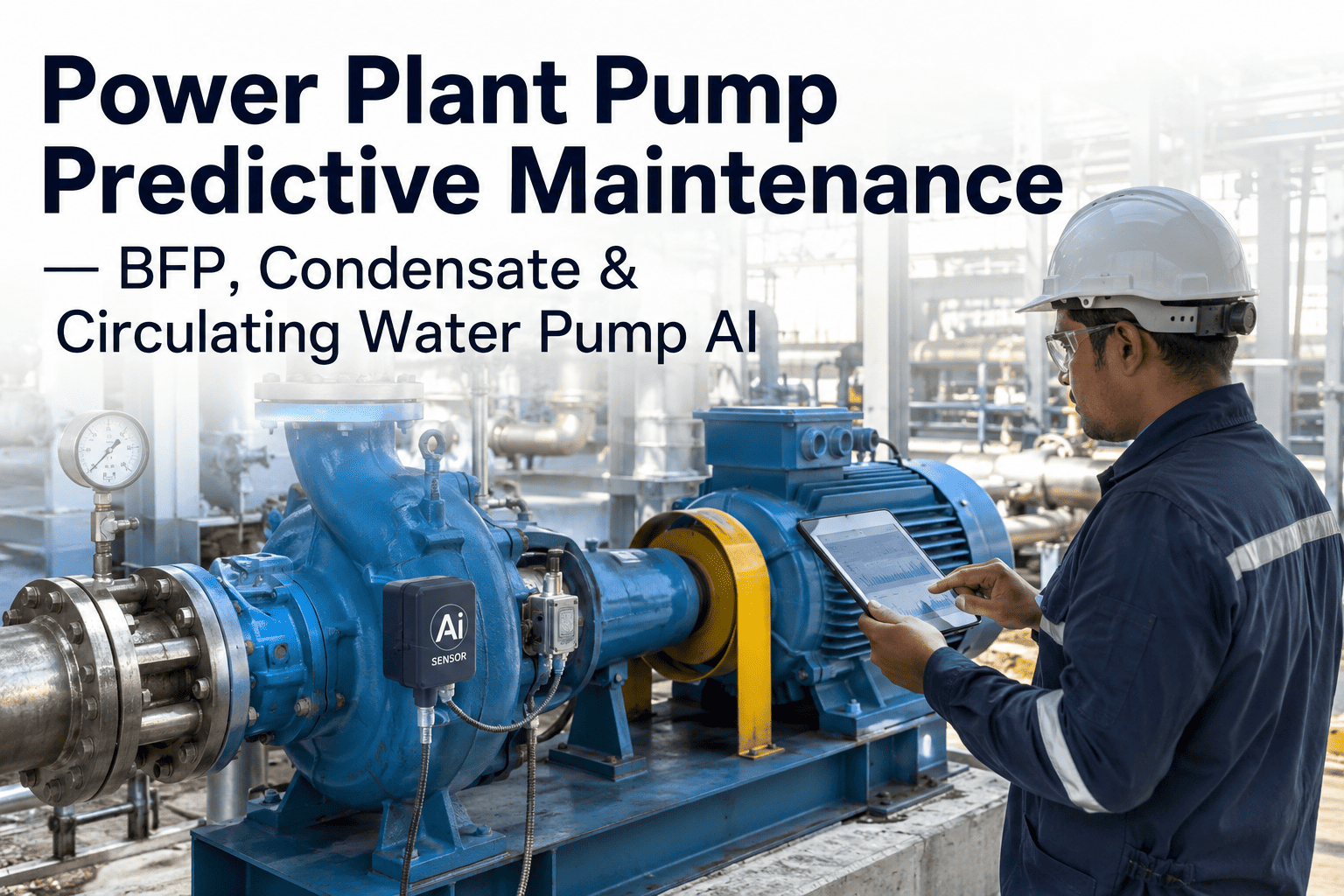
Power Plant Pump Predictive Maintenance: Catch Bearing, Seal, and Cavitation Failures on BFPs, CEPs, and Circulating Water Pumps Weeks Before They Trip the Unit
iFactory tracks vibration, bearing temperature, suction pressure, and flow signatures on every critical pump across the plant continuously — boiler feed pumps, condensate extraction pumps, and circulating water pumps — and converts the earliest degradation signal into a maintenance work order before it becomes a forced outage.
BFP-2 Inlet Bearing
Deviation Flagged
32 µm baseline → 37 µm current
CEP-1 Suction Pressure
Within Range
NPSH margin stable at design curve
CW Pump 3 Vibration
Trending to Alarm
Impeller erosion signature detected
The Reliability Gap
Three Pump Classes. Three Different Failure Signatures. One Blind Spot.
Boiler feed pumps, condensate extraction pumps, and circulating water pumps sit on three different points of the same steam cycle, and each one fails in a distinct way that generic vibration checks miss until the trend is already severe.
Boiler Feed Pump
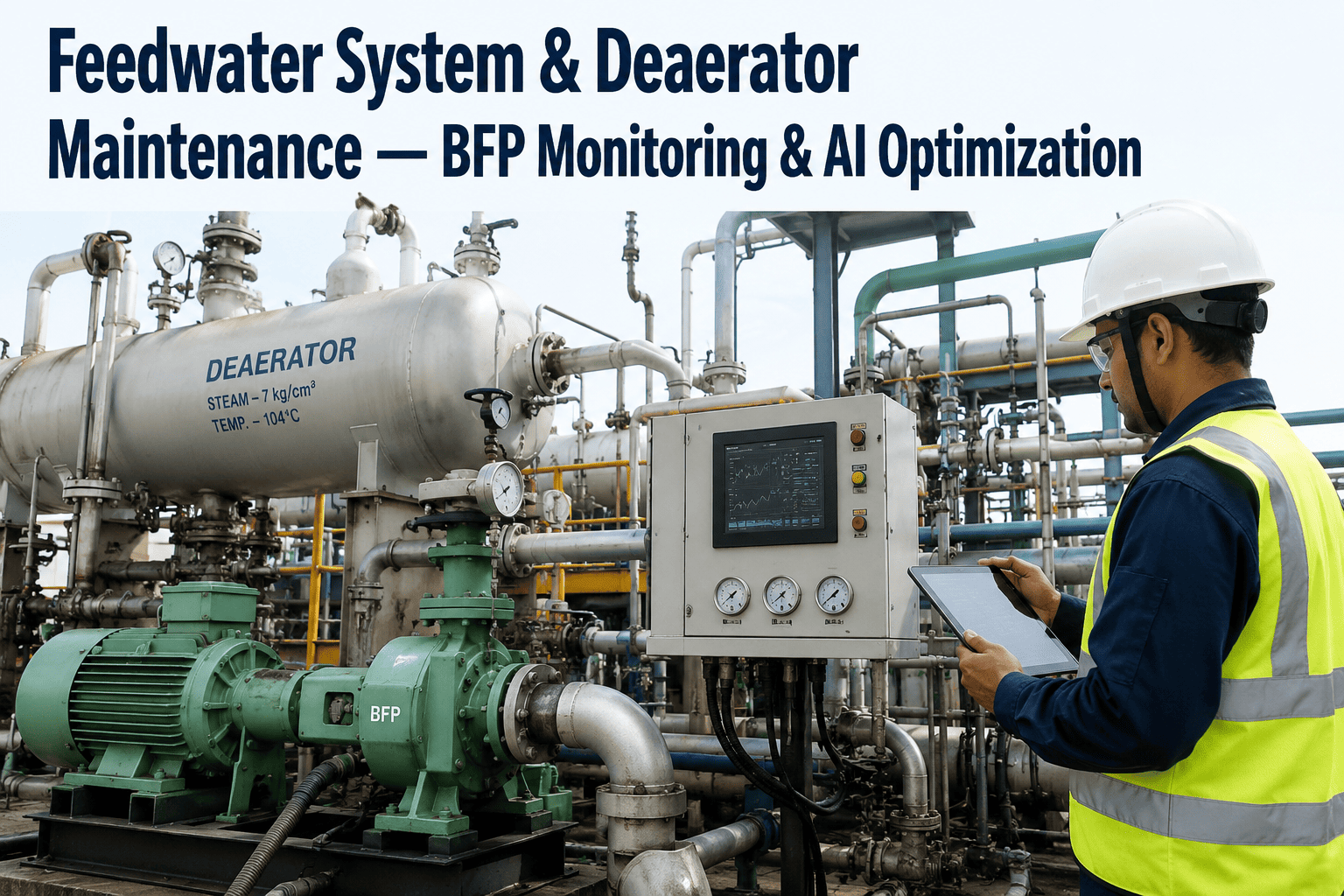
High-pressure multistage unit with no redundancy path on many units. Thrust bearing degradation, balance disc wear, and mechanical seal leaks are the dominant failure modes, and a stalled BFP can halt generation outright.
Condensate Extraction Pump
Low-NPSH vertical pump pulling condensate from the hotwell. Cavitation from insufficient suction head is the leading cause of failure, and it is detectable in the vibration signature well before impeller pitting becomes visible.
Circulating Water Pump
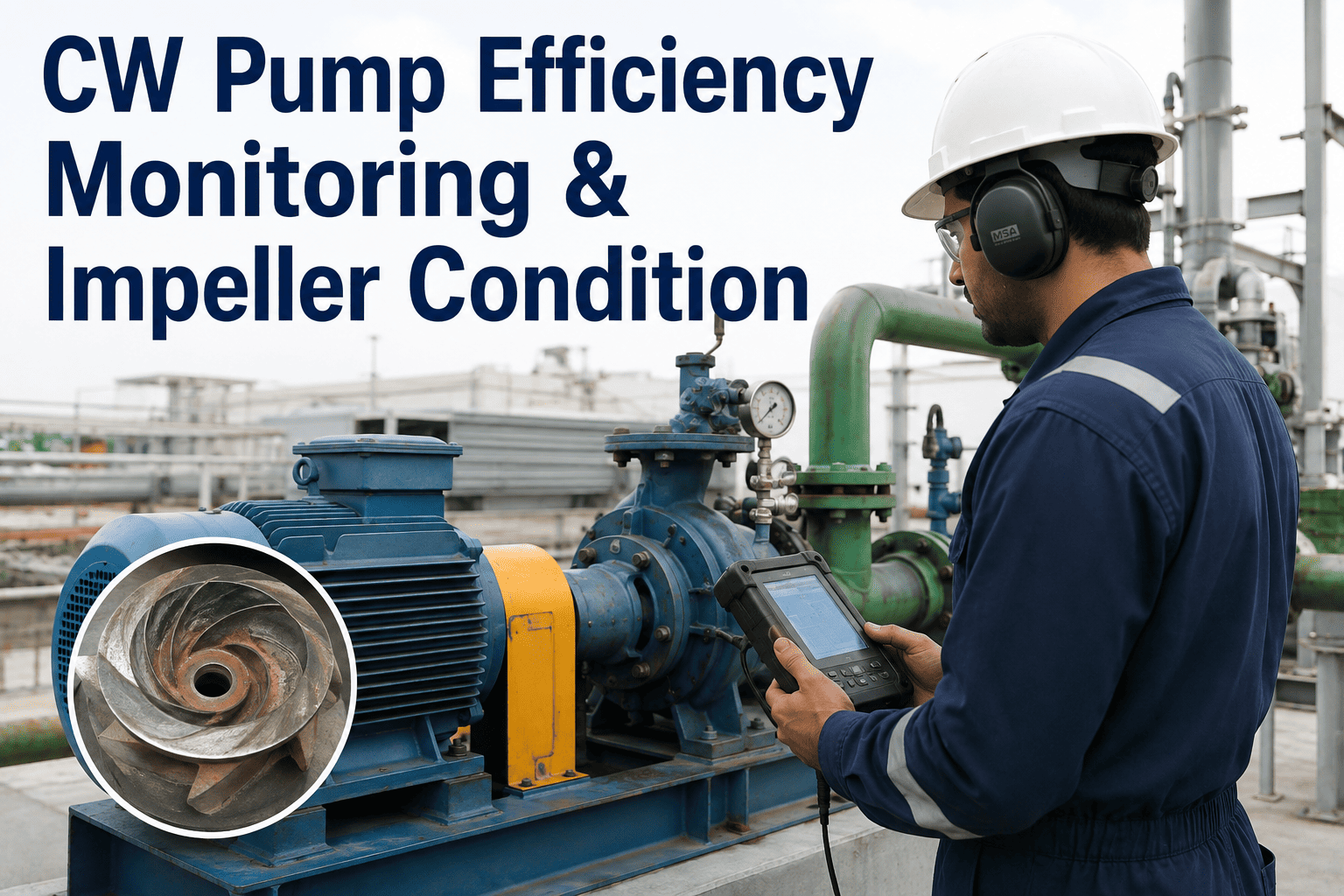
Large axial or mixed-flow pump serving the condenser cooling circuit. Impeller erosion, bearing wear, and hydraulic imbalance develop slowly over months and stay invisible without continuous performance trending.
The Shared Blind Spot
Each pump reports into a different monitoring silo — SCADA, a standalone vibration route, a manual log sheet — so no single view shows when a bearing, a seal, and a suction condition are drifting toward failure at the same time.
Degradation Lead Time
Pump Failures Follow a Curve. iFactory Reads It Weeks Before the Alarm Does.
Bearing wear, seal degradation, and cavitation do not happen instantly — they progress through a detectable curve with a signal window that opens long before a trip or an unplanned outage.
1
Signal Onset
Vibration frequency shift at 1x running speed, or bearing temperature drifting above seasonal baseline — the first measurable indicator, invisible on a simple threshold alarm.
2
Pattern Confirmation
iFactory correlates the signal against the pump's own operating history and matches it to a known failure signature — cavitation, imbalance, seal wear, or foundation looseness.
3
Predictive Work Order
A work order is generated automatically, referencing historical failure clustering — for example, feed pump bearing failures repeating at 6,000–6,500 run hours trigger replacement at 5,800 hours.
4
Planned Intervention
Maintenance is scheduled during an available outage window, replacing the bearing, seal, or impeller before the degradation reaches the point of a forced trip and lost generation.
Every Pump in Your Plant, Watched Against Its Own Baseline, Every Minute.
Boiler feed pumps, condensate extraction pumps, circulating water pumps, cooling tower pumps, and chemical dosing pumps — one AI-driven analytics layer, one alert queue, one maintenance calendar.
Before vs. After
Pump Reliability — Reactive Maintenance vs. iFactory AI-Driven Monitoring
Failure Mode
Without Continuous Monitoring
With iFactory Pump Analytics
BFP Bearing Wear
Detected at the next scheduled route inspection, often after temperature has already climbed sharply
Vibration deviation flagged within the shift it appears — weeks ahead of the alarm threshold
CEP Cavitation
Identified after impeller pitting has progressed and NPSH margin has already collapsed
Suction pressure and vibration signature correlated to flag insufficient NPSH margin early
CW Pump Imbalance
Found during a planned overhaul, months after the erosion or imbalance began developing
Hydraulic imbalance and impeller erosion trended continuously and flagged as it develops
Seal Leakage
Discovered visually on rounds, usually after leakage has already reached a reportable volume
Seal condition trended against baseline drift, work order raised before visible leakage begins
Maintenance Timing
Calendar-based replacement intervals that over-service healthy pumps and under-service failing ones
Condition-based work orders timed to each pump's actual degradation curve and run-hour history
Measured Outcomes
What Plant Reliability Teams See After Deploying iFactory Pump Analytics
11 days
Advance Warning on a BFP Failure
A 1,200 MW gas plant predicted a high-pressure feedwater pump failure 11 days ahead of the event using continuous analytics, avoiding a forced outage entirely.
$4.3M
Unplanned Downtime Avoided
The same early feedwater pump warning translated directly into avoided forced-outage cost at that facility in a single event.
$50K–$500K
Per-Hour Forced Outage Cost
This is the range plant operators report per hour of lost generation when a critical pump fails without warning — the exposure continuous monitoring is built to remove.
15–20%
Availability Improvement
Plants running AI-driven predictive models on rotating equipment report availability gains in this range compared to calendar-based maintenance alone.
Up to 30%
Maintenance Cost Reduction
Condition-based work orders replace fixed-interval bearing and seal replacements, cutting unnecessary parts and labor spend on pumps that were still healthy.
3–8 wks
Cavitation Signal Lead Time
Vibration amplitude shifts and frequency spectrum changes tied to cavitation, erosion, and misalignment surface this far ahead of a breakdown event.
Field Case
A Feed Pump Alert That Was Caught With Five Degrees of Room to Spare
A coal-fired plant running a two-pump feedwater configuration had one boiler feed pump flagged by its digital twin for an inlet bearing vibration deviation — a shift from 32 micrometers to 37 micrometers, a change well inside what a fixed-threshold alarm would have ignored. Because the plant's analytics layer compared the reading against that specific pump's own operating baseline rather than a generic limit, the deviation triggered a maintenance review while the pump was still fully operational and the second unit remained available in reserve. The bearing was inspected and replaced during the next planned outage window instead of failing in service, which on a two-pump configuration with no third unit in reserve would have meant an immediate derate of the boiler.
32→37 µmBearing vibration shift detected
0Unplanned trips from this pump
1Planned bearing replacement instead
Frequently Asked Questions
Power Plant Pump Analytics — What Maintenance Managers Ask First
Which power plant pump types does iFactory monitor?
iFactory's rotating equipment analytics module covers boiler feed pumps, condensate extraction pumps, circulating water pumps, cooling tower pumps, and chemical dosing or fuel oil transfer pumps. Each pump class is configured with its own baseline model, since a high-pressure multistage feed pump degrades differently than a low-NPSH vertical condensate pump or a large mixed-flow circulating water pump. Vibration frequency ranges, bearing temperature thresholds, and suction pressure curves are set per pump type and per manufacturer specification rather than applied as one generic limit across the fleet. For plants running multiple pumps in parallel with a standby unit, iFactory tracks each unit's individual condition while also reporting fleet-level reliability so the standby-versus-running rotation can be planned around actual pump health.
Book a Demo to confirm coverage for your specific pump models.
How early does iFactory detect a bearing or seal problem before it causes a trip?
Detection lead time depends on the failure mode, but continuous vibration and temperature trending typically surfaces bearing wear, seal degradation, cavitation, and hydraulic imbalance three to eight weeks before they reach an alarm threshold or cause a forced outage. The system flags deviations from each pump's own historical baseline rather than waiting for a fixed limit to be crossed, which is what allows early-stage signals like a small vibration amplitude shift or a few degrees of bearing temperature drift to be caught while the pump is still fully operational. Historical failure clustering is also factored in, so if a specific bearing position has failed repeatedly at a similar run-hour count, a predictive work order is raised in advance of that pattern repeating.
Does iFactory require new sensors on our existing pumps, or does it use what's already installed?
Most power plant pumps already carry vibration probes, bearing temperature RTDs, and suction and discharge pressure transmitters feeding into the plant's SCADA or DCS historian, and iFactory connects to that existing instrumentation through standard OPC-UA or historian API integration rather than requiring new hardware. For pumps with limited existing instrumentation, iFactory can incorporate periodic manual vibration route data or portable analyzer readings into the same baseline model, though continuous sensor data produces earlier and more reliable detection than route-based checks. The integration approach is matched to what each plant already has in place.
Contact support to review your current instrumentation and integration path.
How does iFactory tell the difference between a real degradation signal and normal operating noise?
Power plant sensor data is noisy by nature — vibration readings shift with load changes, bearing temperature moves with ambient conditions, and suction pressure varies with condenser vacuum and cooling water temperature. iFactory's baseline models account for these operating variables rather than comparing raw readings against a flat threshold, so a vibration change that is explained by a load swing is not flagged, while the same magnitude of change at constant load is treated as a genuine deviation. This is the same distinction that separates a useful predictive system from one that generates so many false alarms that maintenance teams start ignoring it.
How long does it take to get pump analytics live across the plant?
For a standard configuration with SCADA or DCS-based pump instrumentation already in place, iFactory's pump analytics go live in 10 to 14 days from integration start, covering data connection and signal mapping, baseline configuration for each pump using available historical operating data, and validation against known past events where possible. Plants with a larger pump fleet, multiple parallel trains, or limited historical data for baseline calibration typically take three to five weeks, since the baseline profiling period runs alongside the integration work rather than extending it.
Book a Demo to get a configuration timeline for your specific pump fleet.
Your Pumps Are Already Telling You What's Coming. iFactory Makes Sure Someone Is Listening.
Continuous vibration, bearing, and suction pressure analytics for boiler feed pumps, condensate extraction pumps, and circulating water pumps — configured to each pump's own baseline and live in as little as 10 days.